Hungary Suspends Gas Supply Auctions to Ukraine Amid Ongoing Energy Dispute

Hungary has suspended gas supply auctions for deliveries to Ukraine for the third quarter of 2026, following a decision signed by Prime Minister Viktor Orbán.

The measure affects auctions organised by the country’s gas transmission system operator, which are typically arranged in advance to secure supply flows. The move forms part of a broader shift in Hungary’s energy policy, with the government indicating that gas supplies to Ukraine will be gradually reduced.

According to officials, the decision is linked to the disruption of oil deliveries through the Druzhba pipeline, which has been interrupted since the end of January. Hungary and Slovakia have attributed the disruption to Ukraine, while Ukrainian authorities have said the pipeline was damaged during a Russian drone strike and is undergoing repairs.

The Hungarian government has stated that gas supplies to Ukraine will be scaled back until oil transit through the pipeline is restored. The Druzhba pipeline remains a key route for Russian oil deliveries to both Hungary and Slovakia, which continue to receive exemptions from European Union sanctions allowing such imports.

Ukraine’s foreign ministry has indicated that it has not yet observed any immediate interruption in gas flows from Hungary following the announcement.

The decree also includes a requirement to increase gas reserves, mandating an additional 800 million cubic metres of natural gas to be stored in Hungarian facilities above previously planned levels.

The development reflects ongoing tensions over energy supply routes and infrastructure, which have been affected by the broader geopolitical situation following Russia’s invasion of Ukraine in 2022.

Union Investment Secures 4,855 sqm of Office Leasing at Hamburg’s EMPORIO Tower

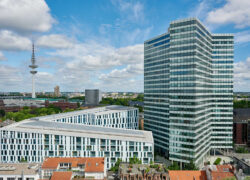
Union Investment has secured two office lease agreements totalling 4,855 sqm at Hamburg’s EMPORIO Tower, reinforcing occupancy at one of the city’s landmark office assets within its UniImmo: Deutschland portfolio.

The transactions include an early lease extension by Nord Event GmbH for 3,233 sqm, alongside a new agreement with CBRE for 1,622 sqm. CBRE will relocate within the building from the 16th to the 20th floor by the end of the year, maintaining its current footprint.

According to Union Investment, demand continues to favour centrally located office buildings that offer modern and adaptable workspace. The company noted that leasing performance at EMPORIO Tower remains strong, with rental levels consistently achieved at the upper end of the Hamburg market as demand outpaces available supply.

Nord Event highlighted that the ten-year lease extension reflects both the attractiveness of the location and the long-standing partnership with the landlord. The building’s offering is supported by additional amenities, including event spaces with panoramic views, a cooking lounge and conference facilities, which contribute to tenant appeal.

Located at Valentinskamp 70, the EMPORIO Tower comprises 23 floors and was originally completed in 1963. It underwent a major refurbishment between 2009 and 2011, including the addition of two floors, and has held listed building status since 2001. The property has also achieved LEED Platinum certification and is currently fully occupied.

Union Investment manages approximately 219,000 sqm of office space across Hamburg, with EMPORIO representing the largest asset in its local portfolio. The building has been held within the UniImmo: Deutschland open-ended real estate fund since 1989.

Periskop Poland Appoints New Managing Directors to Lead Land Banking Strategy

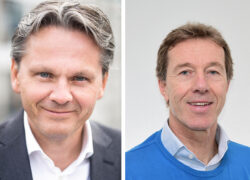
Periskop Poland has appointed Jacek Wachowicz and Christian Fojtl as Managing Directors, effective 1 March 2026, as part of a revised leadership structure focused on land banking activities.

Both join the management board of the Warsaw-based subsidiary of Periskop Partners AG. They replace Monika Murawska, who has left the company to take on a new role in the real estate sector.

Jacek Wachowicz brings more than 25 years of experience in investment management, development and advisory, with previous roles at companies including Catella Poland, Warsaw Property Partners, Immobel Poland, GTC and Heitman. Christian Fojtl has over 30 years of experience in European real estate and has held positions at Catella Poland, Warsaw Property Partners and Warimpex. Based in Vienna, he will work across both the Berlin headquarters and the Warsaw office.

The management team will continue to be supported by Paweł Jastrzębski, who remains involved in local transactions.

According to the company, the appointments reflect a continued focus on Poland as a target market for land banking strategies. While investor sentiment has been affected by geopolitical uncertainty, including the war in Ukraine, the company points to underlying demand drivers such as economic growth, rising space requirements and limited availability of development-ready land.

Poland is expected to record GDP growth above 3 percent in 2026, with demand for land particularly concentrated in major cities such as Warsaw, Kraków and Wrocław. At the same time, regulatory changes are being introduced, including a nationwide requirement for municipalities to adopt binding digital land-use plans and the launch of a central planning register.

Periskop Partners acts as an investment advisor to a Poland-focused land banking fund and indicated that its Warsaw office will play a key role in further expanding its activities in the country.

WACKER Takes Over New Production Facility in Karlovy Vary Developed by Panattoni and Accolade

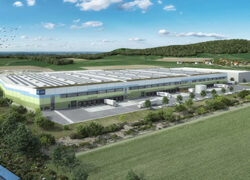
WACKER has taken over a newly completed production facility in Karlovy Vary, developed by Panattoni in partnership with Accolade. The site, with a total area of approximately 25,000 sqm, is now entering the phase of technology installation and is expected to create up to 200 jobs.

The facility will expand WACKER’s production capacity for specialty silicone products, including materials used in industries such as automotive, energy, electromobility, healthcare and electronics. Once operational, the plant will produce advanced types of silicone rubber designed for both room-temperature and high-temperature applications. The Karlovy Vary site will be the company’s second production facility in the Czech Republic, alongside its existing operations in Plzeň.

“Karlovy Vary will become a new and important pillar of our silicone activities in Europe. It will strengthen our position as a leading manufacturer of specialty silicones,” said Tom Koini, Head of the Silicones division at WACKER. “Our specialty silicones are in demand across all key growth markets. Megatrends such as electromobility, renewable energy and the expansion of energy networks are driving demand for advanced materials. With the new production facilities in Karlovy Vary, we are laying the foundations for future growth.”

The plant is located in the Bohatice area on the northeastern edge of the city and includes not only production space but also laboratories and testing facilities. It has been designed to support high-value manufacturing processes.

“Panattoni Business Park Karlovy Vary is an example of combining technology and innovation with an environmentally responsible approach and a contribution to the regional economy. We have created a space for WACKER that supports advanced production and R&D, as well as qualified employment opportunities for the region,” said Pavel Sovička, Managing Director of Panattoni for the Czech Republic and Slovakia.

The project is expected to contribute to local employment, particularly for skilled workers, and to support economic diversification in the region.

“The arrival of advanced manufacturing such as WACKER reflects the vision we apply across our European locations. We have been preparing this site since 2016 with the aim of attracting this type of investment. The region has strong potential, and we welcome a company that brings advanced technology and long-term commitment,” said Milan Kratina, CEO of Accolade.

The development incorporates energy-efficient technologies, including heat pumps, systems for heat recovery and rainwater management, and is prepared for photovoltaic installations. The building is targeting a BREEAM New Construction certification at the Excellent level.

Infrastructure improvements have also been carried out in cooperation with the city, including new access roads and pedestrian connections. The site benefits from proximity to major transport routes, including the D6 motorway and the E442 European road, as well as connections to rail and nearby cities such as Sokolov and Cheb.

Completion of D6 Motorway to Karlovy Vary Delayed to 2029 Due to Land Acquisition Issues

The completion of the D6 motorway connecting Prague and Karlovy Vary has been delayed, with the final sections now expected to be finished in 2029 instead of the previously planned 2028.

Czech Prime Minister Andrej Babiš confirmed the revised timeline during a visit to the Karlovy Vary Region. According to officials, the delay is mainly linked to difficulties in securing land required for construction.

Lukáš Hnízdil, director of the Karlovy Vary branch of the Road and Motorway Directorate of the Czech Republic, said the preparation phase has been slowed by property-related issues. Agreements with landowners have proven complex, with some cases involving repeated appeals during administrative procedures.

The most technically demanding section is expected to be the final stretch between Olšové Vraty and Karlovy Vary. While most motorway sections are typically built within 30 months, this segment is expected to require around 36 months due to its complexity.

This final section will be approximately eight kilometres long, with an estimated construction cost of CZK 4.3 billion. Around one-third of the route will be a standard motorway, while the remaining part will involve upgrades to the existing I/6 road as it connects to Karlovy Vary.

Construction activity on other parts of the D6 has continued. Work began last year on the Knínice–Bošov and Žalmanov–Knínice sections, while bypasses around Hořesedly and Hořovičky have already been completed. The opening of another section between Petrohrad and Lubenec has been postponed to spring 2026.

Further sections, including Olšové Vraty–Žalmanov, remain in preparation as the project progresses toward its revised completion date.

Garbe Industrial Holds Topping-Out Ceremony for 28,000 sqm Logistics Park in Kupferzell

Garbe Industrial has held a topping-out ceremony for its new logistics development, Garbe Industrial Park Kupferzell, located in the Heilbronn-Franconia region of Germany.

The project comprises approximately 28,000 sqm of space and represents an investment of around €45 million. Completion is scheduled for summer 2026. The development is being built on a 54,000 sqm site in the Greut industrial area in Kupferzell.

“With the acquisition of the site in 2023, we secured one of the last available areas with building rights in the economically strong Heilbronn area,” said Jan Philipp Daun, Managing Director of Garbe Industrial. He added that transport connections were a key factor, with access to the A6 and A81 motorways providing links to Stuttgart, Mannheim, Nuremberg and Würzburg. “However, the high demand for settlement and expansion opportunities from existing and regional companies in the commercial, production, logistics and light industrial sectors also spoke in favour of the Garbe Industrial Park Kupferzell.”

The building will offer flexible space that can be divided into units of around 8,700 sqm or larger, depending on tenant requirements. It will include 29 loading docks and three ground-level access doors. Goldbeck International has been appointed as general contractor.

The development is being designed in line with current ESG standards. It is expected to meet the BEG 40 energy efficiency standard and include a rooftop photovoltaic system. Heating will be provided through air-to-air heat pumps, and the developer is targeting DGNB Gold certification for the building.

Belgian Competition Authority Launches Dawn Raids Over Suspected Bid Rigging in Public Procurement Sectors

The Belgian Competition Authority has conducted unannounced inspections at several companies operating in the road signage and street furniture sectors, citing concerns over potential anti-competitive behaviour in public procurement processes.

The inspections, carried out on 3 March 2026, were prompted by indications of possible bid rigging and other practices that could breach both Belgian and EU competition rules, including Article IV.1 of the Code of Economic Law and Article 101 of the Treaty on the Functioning of the European Union. The authority has also indicated that certain conduct under review may involve potential abuse of a dominant market position.

Under its investigative powers, the regulator is permitted to access company premises without prior notice, including digital systems and electronic records. Investigators may review and copy data, secure documents or servers, and assess materials that may later be subject to verification regarding legal privilege or relevance. A formal report is compiled following each inspection, with any disputed materials sealed for subsequent examination.

Such dawn raids remain relatively infrequent in Belgium. Previous inspections were carried out in the bus transport sector in 2024 and in the personal care and retail sectors in 2025. These operations are often linked to leniency applications, through which companies or individuals voluntarily disclose information in exchange for reduced penalties or immunity. However, the use of such mechanisms has declined in recent years, although whistleblowing channels remain available.

The timeline of investigations can vary depending on the complexity of the case and the level of cooperation from the companies involved, including whether they opt for settlement procedures.

The latest inspections align with the authority’s ongoing focus on public procurement. Companies participating in tender processes are being reminded to ensure strict compliance with competition rules, particularly in relation to information sharing, joint bidding arrangements and the preparation of offers. Earlier this year, the regulator launched a revised guide on competition rules in public procurement for public consultation, outlining risks and offering practical recommendations for both companies and contracting authorities.

While certain industries may face increased scrutiny, the regulator has signalled that enforcement efforts will continue across all sectors where potential infringements may arise.

Source: CMS

Saudi Arabia Adopts National Arabic Language Policy, Setting New Expectations for Business Communication

Saudi Arabia has formally adopted the “National Arabic Language Policy” following approval by the Council of Ministers, marking a shift in how Arabic is positioned across public and private life. The move reflects a broader national direction that places the Arabic language at the centre of cultural identity, governance and business activity in the Kingdom.

The policy goes beyond administrative guidance and aligns with wider efforts to reinforce cultural identity amid increasing globalisation. As Saudi Arabia has deepened its integration into the global economy, concerns have emerged over the growing reliance on English and its potential impact on national identity. In response, the new framework reaffirms Arabic as a core element of social and cultural life. While Arabic has long been embedded in the Kingdom’s legal and institutional systems, the policy introduces a unified set of guiding principles for public, private and non-profit entities, rather than functioning as a standalone enforcement mechanism. Its stated aim is to strengthen linguistic sovereignty while influencing how organisations communicate and operate.

For businesses, the policy signals a clear expectation that Arabic should play a central role in market engagement. Companies entering Saudi Arabia are expected to give due consideration to the use of Arabic when presenting products and services. Working with licensed translation providers and localisation specialists is seen as a practical step to ensure compliance with cultural, legal and linguistic requirements, while also supporting effective market positioning.

The importance of Arabic is already reflected in existing legislation. Proficiency in the language is a requirement for individuals seeking Saudi nationality under Royal Will No. (5604/20/8) dated 22/2/1374H. Council of Ministers Resolution No. (266) dated 21/2/1398H requires foreign companies operating in the Kingdom to use Arabic in correspondence with government authorities, with penalties for non-compliance. High Orders issued in 1980 and 1988 reinforce the mandatory use of Arabic in official communications and adherence to its linguistic rules, while a 2012 High Order establishes that Arabic versions of bilingual international agreements carry equal legal weight.

Although the policy allows the use of other languages where necessary, particularly in technical or international contexts, it establishes Arabic as the principal language for governmental, administrative and business activities. In practice, this means that where another language is used, Arabic is typically required alongside it, and many authorities mandate that documents be submitted in Arabic or accompanied by certified translations.

The framework is built around several core principles that emphasise Arabic as a foundation of national identity and institutional practice. It confirms Arabic as the official language for public entities, with other languages used only as a supplement where required. It also encourages private and non-profit organisations to prioritise Arabic in communications and documentation. In a commercial context, the policy promotes the integration of Arabic across administrative processes, correspondence, recruitment and broader business functions, positioning it as a strategic asset. It also calls for greater visibility of Arabic in everyday settings, including contracts, signage, advertising, certificates and events.

For businesses currently operating in or entering the Saudi market, the policy highlights the need for a review of how Arabic is used across operations. This includes contractual documentation, customer-facing materials, internal communications, digital platforms and interactions with public authorities. Companies in regulated sectors or those with close links to government entities may be more directly affected as implementation progresses. Monitoring further guidance and sector-specific measures will be important, as will taking early steps to align with the evolving framework in order to reduce compliance risks and support smoother engagement with regulators and stakeholders.

Source: CMS

Manova Partners reports €535 million transaction volume in 2025

Manova Partners reported a total transaction volume of approximately €535 million in 2025, with acquisitions accounting for around €225 million and disposals totalling about €312 million. The company completed the sale of eight properties during the year, primarily office and logistics assets in the United States.

A significant share of acquisitions related to two large-scale properties in the US and Poland. In Warsaw, the firm acquired the Vibe A office property in the City Centre West submarket, while in the US it invested in a mixed-use development in Silicon Valley, California. The company indicated that it intends to continue its acquisition activity into 2026, with transactions worth €187 million already completed or at an advanced stage in the first quarter of the year.

Alongside transactions, portfolio management remained a key focus. New lease agreements covering approximately 410,000 sqm were signed in 2025, including 255,000 sqm in Europe, around 87,000 sqm in Latin America and about 72,400 sqm in the United States. Portfolio occupancy stood at around 93 percent at year-end.

The company also reported financing activity totalling approximately €530 million across 13 transactions that were either concluded or extended during the year. Assets under management reached €10.4 billion at the end of 2025.

Florian Winkle, Co-CEO of Manova Partners, said: “In 2025, our focus was on transactions. We capitalised on existing opportunities in the interests of our investors and divested office and logistics properties. Demand was particularly high for our logistics properties, and we were able to achieve good prices. In 2026, we intend to be more active on the buyer side again.”

Looking ahead, the company expects to maintain its focus on logistics while exploring additional sectors. Christian Göbel, Co-CEO of Manova Partners, said: “Our strategic focus remains on logistics properties in Europe and Mexico. Above all, we want to drive the growth of our European logistics property fund. We also plan to capitalise on cyclical opportunities in the office sector worldwide. We are also considering data centres in Europe as a complementary investment. We are currently conducting an intensive market review in this area. We find the Nordic countries particularly attractive as locations.”

The company also plans to expand its third-party asset management activities. “We see significant demand here and especially in challenging times, the demand for professional support in property management increases,” Göbel added.

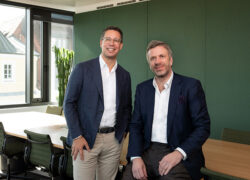
Photo: Florian Winkle and Christian Göbel, Co-CEOs of Manova Partners

Prague advances municipal rental housing pipeline with new permit applications planned

Prague’s municipal developer is continuing preparations for a series of affordable rental housing projects, with plans to submit permit applications for a further 1,500 apartments in 2026. The pipeline forms part of a broader programme that could result in building permits for around 3,000 apartments by 2028, subject to approvals.

The Prague Development Company (PDS) has been preparing projects for nearly six years. It is currently progressing the permitting process for an initial batch of 450 apartments, for which applications were submitted in June 2024 and remain under review. The company states that its activities to date have increased the value of municipal real estate assets under its management by CZK 4 billion.

Across its broader pipeline, PDS has received land from the City of Prague for the potential development of more than 8,000 apartments over the next 10 to 15 years. Of these, around 3,600 units have been approved by its investment committee, with approximately 3,000 endorsed by the Prague City Council. In parallel, the developer is preparing projects that include around 80,000 sqm of commercial space and associated civic infrastructure, including schools.

Petr Hlaváček, Deputy Mayor of Prague for Urban Development, said: “I am very pleased that PDS has succeeded in launching the preparation of affordable municipal housing and that another 1,500 units are set to be added this year to the first batch of 450 municipal apartments for which PDS has already applied for building permits. Together with the large-scale projects in Nové Dvory, if everything goes according to plan, the capital city could have permits for up to 3,000 new apartments by the end of 2028. Thanks to this, after 30 years, Prague will be able to begin rebuilding its housing stock in the form of new apartments intended for so-called priority professions (teachers, healthcare workers, and other municipal service employees) and for vulnerable groups (such as single parents and seniors living alone). In the next election term, the actual construction, long-term management, and other practical steps—such as specific criteria and the method of apartment allocation—will be addressed.”

Alexandra Udženija, Deputy Mayor of Prague for Social Affairs, Housing, and Health, added: “Housing affordability is one of the most pressing issues today, and we don’t just want to talk about it—we want to deliver concrete solutions. That is why, as early as this year, Prague will submit applications through PDS for permits for an additional 1,500 municipal apartments. However, the projects the city is preparing are not just about the apartments themselves—they are about creating fully-fledged urban neighborhoods. We want young families, seniors, people with disabilities, and professionals that Prague needs to find a home there. The projects will therefore also include schools and services—including social and health services. And, of course, parks and other public spaces where people can spend their free time. Our goal is to create places where people won’t just sleep, but where they can live well.”

The timeline for delivery remains dependent on the permitting process and regulatory environment. In Prague, the preparation and delivery of residential projects typically take between seven and ten years, with construction accounting for only a portion of that period. As a public entity, PDS operates under procurement rules that can extend preparation timelines compared to private developers. Ongoing changes to building legislation between 2024 and 2026 have also contributed to delays in project approvals.

PDS expects that the first building permits for the initial 450 apartments could be issued later this year. This would allow contractor selection to begin in 2026, with construction potentially starting in 2026 or 2027.

Petr Urbánek said: “Through PDS’s activities to date alone, the city’s real estate assets under its management have appreciated by 4 billion crowns. Their value will increase further with the start of the permitting process for 1,500 apartments this year and another 1,000 apartments in 2027–2028. The new political leadership following the fall municipal elections will be tasked with ensuring the construction and commissioning of nearly 3,000 apartments, for which PDS will secure building permits for the City of Prague over the next three years.”


front page info
LATEST NEWS