Refugees Face Persistent Barriers to Healthcare Access in Germany

Refugees in Germany continue to encounter major challenges when trying to access healthcare, particularly during the first years after arrival, according to a new study by the German Institute for Economic Research. Researchers found that long waiting times, financial pressures, travel distances and difficulties navigating the healthcare system frequently delay or prevent treatment.

The analysis, based on data from the IAB-BAMF-SOEP survey of refugees, indicates that healthcare access problems are most severe shortly after arrival in Germany. More than one quarter of refugees surveyed reported delays in receiving treatment because of lengthy waiting periods. Among refugees from Ukraine, the figure rises to around 40 percent.

Financial barriers also remain significant. Around one in five recently arrived refugees said they had forgone medical treatment due to costs, while approximately ten percent cited long travel distances as an obstacle to care. Researchers noted that these pressures gradually ease over time, although many difficulties persist.

The study also highlights broader problems in understanding and navigating the German healthcare system. Around one third of respondents said they struggled to find suitable medical services, while many reported difficulties understanding essential health information, including guidance on emergencies and treatments.

Preventive healthcare appears particularly affected. Roughly 37 percent of refugees surveyed said they found information about preventive check-ups difficult to understand. Mental health support also remains challenging, with nearly 39 percent reporting difficulties accessing or understanding care related to psychological problems.

According to the researchers, delayed access to medical treatment can have longer-term consequences both for refugees and for the healthcare system itself. They argue that untreated health issues may worsen over time and ultimately increase healthcare costs.

The report calls for measures to reduce barriers to access, including improved health communication through professional interpreters and clearer information in plain language. It also recommends reducing administrative and structural obstacles linked to appointment scheduling and access to services.

Researchers further warned that proposed changes affecting the legal status of Ukrainian refugees in Germany could deepen existing inequalities in healthcare coverage by limiting entitlement to benefits under the current system.

Source: BIW

Slovak economic sentiment improves in May despite weaker consumer confidence

Economic sentiment in Slovakia improved for the second consecutive month in May, although overall confidence levels remained below the long-term average, according to the latest survey data published by the Statistical Office of the Slovak Republic.

The Economic Sentiment Indicator (ESI) increased by 0.4 points month-on-month to 100.1, marking the first time this year that positive expectations slightly outweighed negative assessments. Compared with May 2025, the indicator was 3.4 points higher, though still 5.6 points below its long-term average.

The improvement was driven mainly by stronger confidence among companies in the services sector, retail trade and construction. However, sentiment among industrial companies and consumers weakened during the month.

In industry, the seasonally adjusted confidence indicator fell by 1.6 points to 0.7. The decline reflected weaker order books and lower expectations for industrial production over the next three months. Reduced demand was particularly visible in the manufacture of coke and refined petroleum products, while producers of basic pharmaceutical products reported weaker production expectations.

The services sector recorded the strongest improvement in sentiment. The confidence indicator rose by 3.7 points to 7, supported by better assessments of current business conditions and stronger demand expectations. Financial and insurance activities contributed significantly to the improved business outlook, while companies in real estate activities anticipated higher demand.

Consumer sentiment remained subdued. The seasonally adjusted consumer confidence indicator declined by 0.9 points to -28.3, reaching one of its weakest levels since March 2023. The indicator remains well below its long-term average, reflecting continued concerns among households about their future financial situation and savings capacity. Consumers were, however, slightly more optimistic regarding broader economic developments and unemployment expectations.

Retail trade sentiment improved moderately in May, with the confidence indicator increasing by 1.7 points to 2. Retailers reported better business activity over the past three months and lower stock levels. Improvements were particularly visible among online and non-store retailers, while specialised retailers of cultural and recreational goods recorded declining inventories.

Confidence in construction also strengthened, rising by 1.5 points month-on-month to -1.5. Construction firms reported improved order books, especially among companies involved in building construction, while employment expectations remained unchanged.

The latest survey suggests that while parts of the Slovak economy are showing signs of stabilisation, weak consumer confidence and softer industrial activity continue to weigh on the broader economic outlook.

Source: SOSR

MLP Group signs new lease with Stook Concept at MLP Bucharest West

MLP Group has signed a new lease agreement with  Stook Concept at its MLP Bucharest West logistics park in Romania, continuing the expansion of the developer’s flagship industrial project near Bucharest.

The Romanian company has leased a 3,600 sqm unit in building C2, comprising approximately 3,500 sqm of warehouse space and 100 sqm of office accommodation. The building is currently in the final stages of construction, with delivery scheduled later this quarter. Colliers advised Stook Concept during the leasing process.

Founded in 2023 and headquartered in Bucharest, Stook Concept operates in the e-commerce and retail sectors, focusing on consumer brands and non-food products. The company distributes products through online platforms including eMAG Marketplace and Altex Marketplace, while also developing its own brands.

Olga Melihov, Country Head Romania at MLP Group, said the tenant selected the park due to the quality of the logistics space, flexible leasing conditions and the location’s connectivity for distribution operations. She added that Romania remains a strategic growth market for the company as it continues to expand its logistics platform.

Robert Alesu, CEO of Stook Concept, said the new facility would support the scalability of the company’s operations and improve its ability to serve customers and partners.

Dan Dragomirescu of  Colliers Romania said the lease reflected continued demand for modern logistics space in well-connected locations around Bucharest.

Buildings C1 and C2 form part of the fourth phase of development at MLP Bucharest West. Each building will provide 10,600 sqm of space. The first three phases of the project delivered approximately 58,700 sqm, which the developer said is fully leased.

Located in the Chitila area in north-west Bucharest, near the city’s ring road, the Class A logistics project is being developed on an 18.3-hectare site. Once completed, the park is expected to provide approximately 99,000 sqm of warehouse space. The development is designed to meet BREEAM environmental certification standards.

MLP Group continues to operate under its long-term “build & hold” strategy, retaining completed assets within its portfolio and managing them directly.

German companies report growing pressure from payment delays and bad debts

Late payments and rising bad debts are placing increasing pressure on German companies, according to the latest payment behaviour survey published by Atradius.

The report found that 87 percent of surveyed businesses experienced payment delays in business-to-business transactions, above the Western European average of 77 percent. Companies cited customer liquidity problems, internal approval procedures, banking delays and complex payment processes among the main reasons for slower payments.

According to the survey, tighter lending conditions and higher borrowing costs are increasing dependence on supplier credit as a source of financing. At the same time, German companies continue to apply relatively cautious credit practices compared with other Western European markets.

Atradius said many suppliers now limit payment periods to a maximum of 30 days in an effort to protect liquidity and reduce exposure to delayed receivables.

The report also highlighted growing concerns over bad debts. Around 10 percent of surveyed companies stated that unpaid receivables accounted for at least five percent of their total B2B invoice value, creating additional pressure on profitability and working capital.

Approximately one in five companies surveyed said they had delayed payments to their own suppliers due to payment problems further along the supply chain.

Frank Liebold, Country Director Germany at Atradius, said the combination of economic weakness, geopolitical uncertainty and rising insolvencies continues to weigh on the business environment, particularly for export-oriented companies.

The survey found that 34 percent of respondents expect insolvencies to increase further, while 52 percent believe insolvency risks will remain at current elevated levels.

Businesses identified a further economic slowdown as the main threat to payment stability, followed by cost pressures and geopolitical risks.

The findings are based on a survey of 210 German companies conducted during the first and second quarters of 2026.

SCF expands Polish retail portfolio with acquisition of Janki Retail Park

SCF Group and its investment partners have completed the acquisition of Janki Retail Park near Warsaw, further expanding the group’s retail property portfolio in Poland.

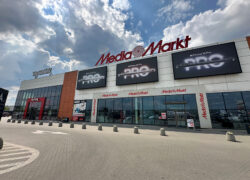
The retail park is located adjacent to the Janki shopping centre, which has already been part of the group’s portfolio for the past two years. The scheme includes stores operated by MediaMarkt and TK Maxx, with a combined leasable area exceeding 7,000 sqm.

The property was acquired from LCP Poland, part of M Core. Financial details of the transaction were not disclosed.

Josef Malíř, CEO and owner of SCF Group, said Poland remains one of the company’s main target markets for retail real estate investment in Central Europe. He added that the group continues to expand its local portfolio through acquisitions supported by its Warsaw-based team.

Magdalena Kowalewska Kasperowicz, Chief Operating Officer at LCP Poland, said the transaction aligns with the company’s portfolio management strategy, which remains focused on the continued development of retail parks under the M Park brand.

SCF entered the Polish retail market in 2024 through the acquisition of six shopping centres from Cromwell Property Group in a transaction valued at nearly EUR 300 million. Earlier this year, the company also acquired the Jantar shopping centre in Słupsk, which provides approximately 44,000 sqm of leasable space.

The group’s Polish retail assets are held within the SCF Eagle sub-fund, part of SCF Investment Partners SICAV.

Aareal Bank provided financing for the latest acquisition. Advisory services on the transaction were provided by JLL and Gleeds, while legal counsel was handled by Dentons.

Geosan Development launches final phase of residential plots in Choťánky

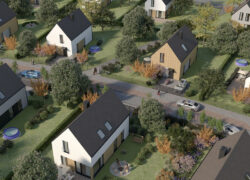
Geosan Development has started sales of the final phase of residential building plots in Choťánky near Poděbrady in the Central Bohemian Region.

The latest phase includes 30 plots designated for the construction of family houses, with sizes ranging from 640 sqm to 982 sqm. Infrastructure works are currently underway and are scheduled for completion by the end of 2026, after which buyers will be able to begin construction.

According to the developer, all plots will be connected to water, sewage and electricity networks, while the project will also include public lighting, roads and pavements.

Eliška Koderová, Sales Director at Geosan Development, said demand for the earlier phase of the project had been strong, with only two plots remaining available from the previous release of 30 parcels.

She added that the newly released plots are generally larger in size while remaining aimed at buyers seeking residential living outside Prague with access to urban infrastructure and transport links.

Choťánky is located approximately three kilometres from Poděbrady and around 30 minutes by car from Prague’s Černý Most district. The area is also accessible by train and bus connections to Prague.

Local amenities in the village include a grocery store and municipal services, while broader retail, healthcare, educational and leisure facilities are available in nearby Poděbrady and Nymburk.

The surrounding area also offers cycling routes and recreational facilities, including the Elbe cycling trail, sports centres and leisure areas around Poděbrady.

Polish economic indicator points to moderate growth trend

Poland’s Economic Indicator (WWK), which tracks expected economic trends, declined by 0.9 points in May compared with the previous month, suggesting that the economy continues to expand at a moderate pace.

Among the eight components of the index, one improved, four remained unchanged and two weakened.

Data from the industrial sector showed a slight increase in new orders. Although companies reporting lower order volumes still outnumber those seeing growth, the difference between the two groups narrowed compared with earlier this year.

The improvement was more visible among larger manufacturing companies. Producers of non-metallic mineral products and transport equipment recorded some of the strongest increases in incoming orders.

Analysts noted that higher EU-funded investment activity and increased defence spending may be supporting demand. Economic conditions in Germany have also shown some improvement in recent months.

At the same time, manufacturing companies continue to face pressure on profitability. Despite better financial results reported in official statistics for the first quarter, business managers do not yet report a broader improvement in financial conditions.

Higher producer prices and rising operating costs continue to affect margins, particularly where companies have not been able to fully pass increased costs on to customers.

Business sentiment surveys also indicate that companies remain cautious in their assessment of the broader economic situation.

Source: BIEC

Resi4Rent portfolio sale closes in major Polish PRS transaction

The sale of 18 completed residential rental projects from Resi4Rent to Vantage Development, part of the TAG Immobilien group, has been completed following approval from Poland’s competition authority.

The portfolio includes 5,322 rental apartments located across Warsaw, Kraków, Wrocław, Gdańsk, Łódź and Poznań. The transaction value exceeded PLN 2.437 billion, equivalent to approximately EUR 575 million.

According to the parties involved, the deal represents the largest transaction completed to date within Poland’s institutional private rented sector (PRS). The agreed purchase price reflects an estimated forward net operating income yield of around 6.3 percent for 2026.

Following the transaction, Resi4Rent will continue operating and developing its remaining portfolio, which includes nearly 4,000 units consisting of completed assets and projects currently under construction.

Rafał Mazurczak, COO of Echo Investment, said the transaction reflects the development of the institutional rental housing market in Poland and confirms continued investor interest in the sector. He added that the company intends to continue expanding its remaining portfolio across Poland’s largest urban markets.

Resi4Rent was established in 2018 as a joint venture between Echo Investment, which holds a 30 percent stake, and a global investment fund advised by Griffin Capital Partners, which owns the remaining 70 percent.

Tomasz Kosieradzki, Director at Griffin Capital Partners, said the transaction forms part of the planned rotation of stabilised assets within the portfolio. He added that the company continues to view Poland’s residential rental market as an attractive long-term investment segment supported by housing shortages, urbanisation trends and growing demand for professionally managed rental accommodation.

Resi4Rent currently manages the full rental process, including development, leasing and property management. The platform’s apartments are offered as furnished units under institutional management standards and currently house around 18,000 residents.

According to market estimates cited by the company, Poland’s institutional PRS market could expand from approximately 27,000 units by the end of 2025 to around 45,000 units by 2030.

Foundation works completed at new Musical Theatre project in Poznań

Construction works on the new headquarters of the Musical Theatre in Poznań have reached another milestone, with the completion of foundation works less than a year after the contract was signed with Dekpol Budownictwo, part of the Dekpol Group.

According to the project update, earthworks at the site have now been completed and the excavation area has been secured using a palisade system and diaphragm walls supported by steel structures.

The development team said that approximately 4,000 cubic metres of concrete and 412 tonnes of steel were used in the construction of the foundation slab, which covers more than 4,000 sqm. More than 35,000 cubic metres of soil were removed from the site during the excavation phase. Installation of the underfloor drainage and sewer systems has also been completed.

Construction is currently continuing on the underground sections of the building, including walls, columns and ceilings on level minus two.

The latest construction stage also included the installation of the largest of the project’s planned tower cranes, standing more than 61 metres high.

Part of the underground space within the new theatre complex is planned to function as a temporary emergency shelter capable of accommodating around 300 people during crisis situations. The project forms part of Poland’s broader efforts to expand collective protection infrastructure for use during emergencies, natural disasters or military threats.

The Wielkopolska Voivodeship administration has provided funding for the initial phase of adapting the underground garage areas for this purpose under the 2025–2026 Population Protection and Civil Defence Programme. The funding covers both design and construction works related to the emergency shelter facilities.

The new Musical Theatre project is being developed as both a cultural investment and part of wider public infrastructure improvements in Poznań.

Prague Moves Forward With Housing and Planning Reforms

Two major legislative and planning initiatives that could influence the future pace of residential development in Prague are advancing through the Czech approval process, as policymakers continue searching for ways to address the city’s long-standing housing shortage.

One of the proposals involves changes to the country’s building legislation aimed at simplifying and accelerating approval procedures for new developments. The amendment, which is moving through parliament, is expected to introduce a more centralised permitting structure and reduce administrative fragmentation between authorities involved in the approval process.

The reform package is also intended to provide greater consistency for large-scale residential developments and infrastructure projects. Industry groups and developers have repeatedly argued that the current permitting framework remains one of the main reasons for delayed construction activity across the Czech Republic, particularly in Prague.

The capital has faced years of limited housing supply while demand has continued to grow. Market participants frequently point to lengthy approval procedures as a major obstacle, with larger residential schemes often requiring many years to complete the planning process before construction can begin.

At the same time, Prague is approaching a key decision regarding its new Metropolitan Plan, which would replace the city’s existing zoning framework dating back to the late 1990s. The updated plan is designed to support a broader and more flexible approach to urban development, including the regeneration of former industrial and underused sites.

According to earlier estimates linked to the planning process, the new framework could create conditions for substantial future residential development across the city over the long term, particularly on brownfield land.

The revised planning model also places greater emphasis on transport infrastructure, public space and mixed-use urban development as Prague seeks to adapt to population growth and changing housing needs.

Although both measures are viewed by many in the real estate sector as important steps toward improving housing availability, their practical impact is expected to take time. The Czech construction and permitting system is still adjusting to previous regulatory reforms, and market participants continue to monitor how quickly new rules can be implemented in practice.

front page info
LATEST NEWS