REALOGIS reports higher take-up in Hamburg’s logistics and industrial market in 2025

According to REALOGIS Unternehmensgruppe, take-up in Hamburg’s owner-occupier and leasing market for logistics and industrial properties reached 335,000 sqm in 2025. This represents an increase of 22% compared with 275,000 sqm recorded in 2024, although the result remains 17% below the five-year average of 406,000 sqm.

The five largest transactions were concluded by Körber Technologies, Mickeleit, Scan Global Logistics Group, Garpa Garten & Park Einrichtungen GmbH and Heinrich Dehn. Together, these deals accounted for around 32% of total take-up during the year.

Commenting on the figures, Stefan Imken, Managing Director of REALOGIS Immobilien Hamburg GmbH, noted that the rise in take-up should be viewed as an indication of stabilisation rather than a return to peak market conditions. He added that a gradual recovery is expected in 2026, supported by steady to improving demand from logistics and industrial occupiers and largely stable rental growth.

Rental levels in Hamburg remained broadly stable in 2025. Prime rent stood at €8.30 per sqm at year-end, slightly above the €8.25 per sqm recorded a year earlier. After peaking at €8.40 per sqm in mid-2025, prime rents eased modestly in the second half of the year. Average rents increased to €6.40 per sqm at the end of 2025, compared with €6.25 per sqm in 2024, having reached €6.50 per sqm in mid-year.

Market activity continued to focus mainly on existing buildings. A total of 224,300 sqm was leased in existing stock, accounting for 67% of take-up, compared with 84% in the previous year. New-build space accounted for 110,700 sqm, or 33% of total take-up, with the vast majority of this volume attributable to developments on brownfield sites. Transactions in new buildings on former brownfield land reached 109,200 sqm, while greenfield developments played only a marginal role, accounting for just 1,500 sqm.

Leasing activity again dominated the market. Tenants were responsible for 274,700 sqm, representing 82% of total take-up, while owner-occupiers accounted for the remaining 60,300 sqm. By building type, big-box logistics space led the market with 175,000 sqm, followed by other standalone properties and business parks.

From a regional perspective, Hamburg South emerged as the most active submarket in 2025, recording 141,400 sqm of take-up and a 42% market share. This marked a significant rebound compared with 2024, when the area had seen limited activity. Hamburg East followed closely with 131,900 sqm, while the West and North recorded considerably lower volumes.

By occupier sector, logistics and distribution companies clearly dominated demand, accounting for 209,900 sqm, or 63% of total take-up. Manufacturing occupiers accounted for 52,000 sqm, while retail and wholesale users leased 44,700 sqm. Within the retail and wholesale segment, demand was evenly split between e-commerce and traditional retail operators.

Demand was strongest for large units above 10,001 sqm, which together accounted for 131,000 sqm, followed by transactions in the 5,001 to 10,000 sqm range. Smaller units below 1,000 sqm represented only a small share of overall activity, continuing a trend toward larger space requirements among occupiers.

Romania’s Flex Office Market: Small Today, Structurally Set for Acceleration

A CIJ EUROPE Q&A with Tudor Popp, Managing Partner, Beyond Space

Romania’s flexible office market remains modest in absolute terms, but the latest Beyond Space, Flex Office Market Romania Q4 2025 study suggests that this is precisely what makes it structurally compelling. With coworking representing only around 2% of total office stock in Bucharest, compared to over 5% in London and nearly 4% in Barcelona, the market remains significantly underpenetrated by European standards. Yet the structural demand drivers, hybrid work models, corporate flexibility requirements and landlord-led diversification strategies, are already firmly in place.

The report’s central conclusion is clear: Romania is no longer debating whether flex offices work, but how fast they will scale. Large occupiers are increasingly using coworking not as a temporary bridge solution, but as a strategic extension of their real estate footprint, particularly for teams of 20 to 100 people, regional hubs and market-entry scenarios. White-labelled offices, where companies operate fully branded spaces powered operationally by coworking platforms, are also emerging as a preferred model for enterprises seeking corporate identity without long-term lease risk.

From a landlord perspective, flex space is evolving from a perceived risk to a value-creation instrument. Developers are increasingly integrating coworking into office campuses and mixed-use projects through partnerships or management models, positioning flex not as a competing product, but as an amenity, tenant-mix strategy and service-driven revenue layer.

While Bucharest remains the anchor market with an estimated 80,000 sqm of flexible office space, secondary cities such as Cluj-Napoca, Timișoara and Iași are where the long-term growth narrative becomes more structurally interesting. Limited supply, active tech ecosystems and SME demand suggest latent rather than absent demand dynamics.

At a conceptual level, the study frames a deeper shift: office value is moving from cost per square metre to value per person. In this context, flex offices are not competing with conventional leases on price, but on experience, speed, adaptability and human performance — positioning hospitality, wellbeing and community as productivity infrastructure rather than lifestyle extras.

CIJ EUROPE spoke with Tudor Popp, Managing Partner at Beyond Space, about the structural transformation of Romania’s flex office market, persistent misconceptions, and why the next growth phase will be driven as much by landlords as by occupiers.

CIJ EUROPE: If you had to point to one misconception about flex offices in Romania that the market still hasn’t shaken off, what would it be, and why does it matter?

Tudor Popp: There are several stubborn misconceptions, but they all come from the same misunderstanding of what coworking actually is. Some see coworking as a temporary fix until you’re “big enough” for a proper office. That’s like saying taxis are for people who can’t afford cars — you’re ignoring flexibility and convenience. Others picture hipsters on beanbags in cluttered, noisy open spaces. And then there’s the corporate crowd who think “flex” just means serviced offices with shorter lease terms.

All of these miss the point entirely. Coworking isn’t about what you can or cannot afford, it’s not about design gimmicks, and it’s not just smaller offices with flexible contracts. It’s a fundamentally different operating philosophy — one that prioritizes hospitality, adaptability, experience, community and wellbeing over fixed assets and transactional space. Some of the world’s most valuable companies choose coworking not because they don’t have other options, but because the model delivers something traditional leases simply can’t.

CIJ EUROPE: Looking ahead three to five years, which segment of demand will shape the Romanian flex office market the most: corporates, startups or landlords, and why?

Tudor Popp: The next years won’t be shaped by one segment alone, they’ll be defined by the convergence of all three. Landlords are increasingly building flex into their core offering rather than treating it as a niche add-on. Corporates are moving from pilot programs to strategic adoption as hybrid work becomes permanent. And startups continue to drive innovation in how space is used.

However, if I had to emphasize the most important one, it’s the landlords, because once building owners embed flex as standard infrastructure rather than outsourcing it, the entire market dynamic will shift.

CIJ EUROPE: Bucharest still lags behind Western European cities in coworking penetration. Do you see that as a structural limitation or as untapped upside?

Tudor Popp: It’s partly structural. Bucharest lacks the abundance of characterful buildings you see in Berlin, Barcelona, London or Lisbon. Large, monotonous floorplates in sterile buildings and a shortage of high-quality refurbishments of historical or industrial assets mean fewer spaces with the kind of soul and texture that make compelling coworking environments.

But it’s also behavioral. Before the pandemic especially, there was a corporate herd mentality, everyone was mimicking Google’s office aesthetic without understanding the culture or work philosophy behind it. Ping-pong tables and bright colors don’t create innovation; they’re symptoms of something deeper that you can’t just copy-paste. Bean bags and breakout spaces became checkbox items rather than intentional tools, which is exactly how we ended up with so many spaces that maybe look innovative but feel lifeless.

The good news is that this conservative mindset is breaking down, and the supply constraint is actually an opportunity. Developers who plan for smaller floorplates, natural light and meaningful design will capture disproportionate value.

CIJ EUROPE: From your experience, what separates flex spaces that genuinely perform over time from those that struggle once the initial novelty wears off?

Tudor Popp: The critical difference is understanding that you’re not running a managed office or a “business center” — you are building a community and an experience. Managed offices are just spaces: four walls, a desk, Wi-Fi, a reception desk, a kitchenette. They’re transactional, soulless and uninspiring. They don’t help people do better work or feel better while doing it — they just provide a location. And they do not help member companies attract or retain talent.

Flex spaces that genuinely perform over time reject that entire premise. They recognize they’re in the business of human experience, not square metre management. That means obsessive attention to community, to programming, to design that responds to how people work, think and connect. It means prioritizing wellbeing. Once the novelty wears off, what remains? In a managed office: nothing. In a real coworking space: a reason to come back every day that has nothing to do with your “flexible” lease terms.

CIJ EUROPE: If a developer or occupier takes just one strategic lesson from your study, what should it be when planning their next office decision?

Tudor Popp: Stop optimizing for cost per square metre and start optimizing for value per person. The future of offices is diverse, adaptive and experience-driven. Whether you’re a developer or an occupier, the winners will be those who design for flexibility and human experience first, then work backward to the financials. If your decision-making process starts and ends with spreadsheet efficiency metrics, you’re designing for a world of work that’s already disappearing.

CIJ EUROPE: the message from the Beyond Space Q4 2025 study is clear: Romania’s flex office sector may still look small on paper, but its fundamentals mirror where Western European markets stood several years ago. With hybrid work now structurally embedded and occupiers prioritising agility over permanence, flex space is positioned to move from the margins to a standard component of Romania’s office landscape over the next three to five years.

© 2026 cij.world

Cordia begins construction of Centropolitan residential project in Bucharest

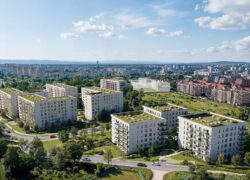
Cordia Romania, part of the Futureal Group, has acquired an 8,179 sqm land plot in Bucharest, located near Bucharest Mall and close to Alba Iulia Square. The site was purchased from Bog’Art Place and benefits from an issued building permit. Construction has now started on Centropolitan, a residential project comprising 274 apartments and approximately 3,345 sqm of retail space.

The land transaction was completed in September 2025. Cordia Romania was advised by Crosspoint Real Estate, international associate of Savills in Romania, together with the law firm Stratulat Albulescu.

Centropolitan will include one- to five-room apartments with sizes ranging from 42 to 156 sqm, most of which will feature terraces. The project also provides a range of shared amenities for residents, covering around 350 sqm, including a residents’ lounge, gastro bar, children’s play area, spaces for teenagers, coworking facilities, and fitness and yoga areas.

The development is planned as a mixed-use scheme, combining residential and retail functions. Its location places daily services and leisure options within short walking distance. Bucharest Mall is located nearby, while Alba Iulia Square and Unirii Square can be reached within a few minutes, supported by existing public transport connections and surrounding urban infrastructure.

Nicholas Brinckmann and Richard Apfelbacher appointed Managing Directors of BF.infrafinance

BF.infrafinance GmbH has appointed its co-founders Nicholas Brinckmann and Richard Apfelbacher as Managing Directors. The company, established in October 2025 as a joint venture between BF.direkt and the Fox Group, focuses on structuring debt solutions for logistics real estate developments on behalf of institutional investors.

BF.infrafinance’s mandate is to set up debt structures, primarily via Luxembourg vehicles, including funds and separate account mandates and to provide the resulting capital to property developers. The company reports a project pipeline with an aggregate loan volume of around €1.4 billion, of which approximately €300-400 million is currently under detailed review.

The firm is currently concentrating on whole-loan lending, with loan-to-cost ratios of up to 85%. Planned investment vehicles are expected to have maturities of six to eight years, while individual loans will typically run for about 24 months. Pricing is expected to reflect mid- to upper-single-digit annual interest rates, depending on project quality and planning status.

BF.infrafinance has assembled a team with experience across loan underwriting and servicing, including cash-flow management, covenant monitoring, reporting, collateral administration and compliance.

Richard Apfelbacher brings more than 20 years of investment experience. Prior to joining BF.infrafinance, he was Managing Partner at Sienna Real Estate (formerly L’Etoile Properties), where he led the expansion of the Germany platform and contributed to growth in assets under management across office, logistics and hospitality properties in Europe. He also serves on the advisory committee of the investment arm of an international logistics developer.

Nicholas Brinckmann previously spent nearly two decades as CEO of HANSAINVEST Real Assets (now SICORE Real Assets) and as Managing Director of HANSAINVEST Hanseatische Investment GmbH, both part of the Signal Iduna group. In those roles, he oversaw international real assets in 18 countries, including logistics portfolios of around €1.0 billion, and was responsible for establishing more than ten regulated investment vehicles. Earlier in his career, he held senior positions at MEAG MUNICH ERGO AssetManagement GmbH and Union Investment Real Estate GmbH.

Przystanek Karkonosze expands regional retail offer in Lower Silesia

Przystanek Karkonosze, a retail park developed by Redkom Development, opened in August 2025 and has since become an established part of the retail landscape in the Karkonosze region, an area traditionally dominated by local retail formats.

The scheme is located in Miłków, directly on a provincial road and at the junction of routes connecting Karpacz, Szklarska Poręba, Kowary and Jelenia Góra. This positioning provides convenient access for both local residents and visitors, supporting steady footfall throughout the year.

Przystanek Karkonosze offers approximately 15,400 sqm of gross leasable area. While the project’s architecture reflects its mountain surroundings, from a commercial perspective its wider catchment is of particular importance. The retail park attracts not only local customers but also international visitors, especially from the Czech Republic and Germany, who form a significant customer group in the region.

Key traffic generators at the site include Lidl Polska and a stand-alone McDonald’s restaurant with a drive-thru, both contributing to consistent daily customer flows.

The tenant mix has continued to evolve, with MR.DIY among the most recent openings. Other tenants include Lidl, Half Price, 4F, Martes Sport, Wojas, Sinsay, Ochnik, CCC, Rossmann, Pepco, Worldbox, Diverse, Action, New Yorker, Media Expert, TEDi and Douglas, alongside smaller service units such as a travel agency and a press shop.

Leasing at Przystanek Karkonosze is managed by Redkom Development in cooperation with Mallson Polska, with a focus on securing well-known retail brands across multiple categories.

Between 2023 and 2025, Redkom Development delivered more than 60,000 sqm of retail park GLA in Poland. Completed projects include Park Glinianka (now BIG Łubna) near Warsaw, Ozimska Park in Opole, Comfy Park Bielik in Bielsko-Biała and Przystanek Karkonosze near Karpacz. The developer is currently working on further schemes scheduled to open in 2026, totalling approximately 90,000 sqm of GLA, including projects in Bydgoszcz, Dzierżoniów, Lublin, Otwock and Białystok.

Logivest advises DSV on lease of approx. 9,000 sqm logistics space in northern Munich

Integrated logistics real estate advisor Logivest has advised Danish transport and logistics group DSV on the long-term lease of an existing property comprising close to 9,000 sqm of warehouse and office space in Garching, north of Munich.

DSV had been seeking a suitable location in the northern Munich area for one of its clients. Logivest identified an appropriate property in the Garching-Hochbrück industrial estate. The building benefits from direct proximity to federal roads B471 and B13, providing efficient access to the A9 and A92 motorways as well as the A99 Munich orbital motorway.

“Overall, we are seeing continued growth in demand for existing logistics properties,” said Alexander Dempfle, Consultant Industrial and Logistics Letting at Logivest in Munich. “Garching-Hochbrück offers high-quality space and benefits from its strategic position in the Munich metropolitan area, with strong links to the city centre, surrounding municipalities and Munich Airport.”

The property provides more than ten loading docks equipped with dock levellers, alongside ample external manoeuvring space to support efficient logistics operations.

DSV is scheduled to take possession of the facility in January 2026.

Electrolux Extends Lease at MLP Pruszków I

Electrolux Poland has extended its lease at MLP Pruszków I, continuing its long-term cooperation with MLP Group and maintaining its operations at the logistics park near Warsaw.

Under the new agreement, Electrolux Poland will retain 26,678 sqm of warehouse space and 310 sqm of office space. The facility has supported the company’s logistics operations for several years, serving as a distribution base for domestic and international markets.

Electrolux has been present at MLP Pruszków I since 2013. The lease extension reflects the ongoing relationship between the two parties and Electrolux’s decision to continue operating from the same location.

Tomasz Pietrzak, Leasing Director Poland at MLP Group, said the extension demonstrates the role of the park in supporting the operational needs of large international occupiers and highlighted its proximity to Warsaw.

MLP Pruszków I comprises nearly 170,000 sqm of warehouse and light industrial space and is occupied by close to 40 tenants. The park has been operating for over 20 years and includes internal infrastructure supporting tenant operations.

The site is fully fenced and monitored on a 24-hour basis. It also offers electric and hybrid vehicle charging points supplied by photovoltaic energy, as well as a city bike rental station. The park provides a high number of parking spaces and offers potential for future expansion to accommodate tenant requirements.

GARBE Industrial and Fortress to Develop 61,000 sqm Logistics Centre in Bucharest

GARBE Industrial has entered into a joint venture with Fortress Real Estate Investments to develop a logistics centre with a gross leasable area of 61,000 sqm in Bucharest.

The partners completed their first land acquisition for the project in December 2025, securing an 11-hectare site in the north-western part of Bucharest, close to the A0 ring road, near the Buftea / DN7 exit. The location provides direct access to the city and links to the main transport corridors serving the capital. Construction is expected to start towards the end of summer 2026, with the first tenant anticipated to occupy the building in early 2027.

For GARBE Industrial, the project represents its first development in Romania, in line with its strategy of expanding in core logistics markets with strong infrastructure connections. For Fortress, the joint venture marks its second project in the country, following the 2021 acquisition of Fortress Logistics Park Bucharest I, a 50,000 sqm scheme in Buftea.

“Romania stands out as one of the most attractive long-term markets globally for logistics and warehousing investment, underpinned by strong industrial and consumer growth potential and its close links to Central and Western Europe,” said Bartosz Klimek, Leasing and Asset Director Europe at Fortress Real Estate Investments. “As the sector continues to mature, there remains room for institutional-grade development and investment. We will remain selective, focusing on expanding our warehouse portfolio across Central and Eastern Europe.”

Andrei Jerca, Country Head for GARBE Industrial Real Estate Romania, said the company plans to apply the same development standards used across the CEE region. “This is our first project in Romania and it will be developed together with Fortress, which has an established presence in the region. Our aim is to deliver a modern logistics park that can support both logistics operators and manufacturing companies.”

The project, to be known as GARBE Park Bucharest, will be located between the A1 and A3 motorways, with direct access to the A0 ring road. The area offers good transport connectivity and access to labour in the wider Bucharest region.

The development will comprise a Class A logistics building with a clear height of 12 metres, suitable for medium and large-scale logistics and industrial occupiers. The specification allows for automation, mezzanine levels and fully integrated warehouse operations within a single facility.

CentrumRowerowe.pl to open store at M1 Zabrze in 2026

CentrumRowerowe.pl operates as an omnichannel retailer, combining online sales with a network of physical stores. Its offer includes more than 6,500 products, ranging from bicycles and components to accessories and sportswear for adults and children. The new store at M1 Zabrze will be one of seven stationary locations nationwide and will follow the brand’s standard format, featuring extensive product displays and in-store advisory services.

The opening will add to the centre’s sports retail segment, which has recently been expanded with the arrival of Alpine Pro, specialising in outdoor and sports apparel. These brands complement existing tenants such as 4F, Sports Direct and Martes Sport.

In parallel, M1 Zabrze has also broadened its offer beyond sports and leisure. Recent additions include Świat Książki, one of Poland’s largest bookstore chains, and Wakacje.pl, which operates a nationwide network of travel agencies.

CentrumRowerowe.pl operates as an omnichannel retailer, combining online sales with a network of physical stores. Its offer includes more than 6,500 products, ranging from bicycles and components to accessories and sportswear for adults and children. The new store at M1 Zabrze will be one of seven stationary locations nationwide and will follow the brand’s standard format, featuring extensive product displays and in-store advisory services.

The opening will add to the centre’s sports retail segment, which has recently been expanded with the arrival of Alpine Pro, specialising in outdoor and sports apparel. These brands complement existing tenants such as 4F, Sports Direct and Martes Sport.

In parallel, M1 Zabrze has also broadened its offer beyond sports and leisure. Recent additions include Świat Książki, one of Poland’s largest bookstore chains, and Wakacje.pl, which operates a nationwide network of travel agencies.

DIW Berlin proposal suggests inheritance tax reform could reduce taxpayer numbers and rebalance the burden

A reform of Germany’s inheritance and gift tax system that removes existing tax privileges, introduces lifetime allowances and simplifies tax rates could significantly reduce the number of taxpayers while generating additional revenue, according to new scenarios developed by German Institute for Economic Research (DIW Berlin).

The analysis, prepared by DIW tax expert Stefan Bach and his team, builds on earlier work conducted for the parliamentary group of Bündnis 90/Die Grünen and goes beyond the current reform proposal put forward by the Social Democratic Party of Germany (SPD). The researchers examined more than 20 reform scenarios and now present an additional approach aimed at improving fairness and administrative efficiency.

Inheritance and gift tax rules are currently under constitutional review. It is widely expected that the Federal Constitutional Court of Germany will rule existing tax privileges unlawful, as they conflict with the principle of equal treatment. According to DIW estimates, abolishing these privileges could increase tax revenue by around €7.8 billion, equivalent to approximately 65% of current inheritance tax receipts, with the additional burden primarily affecting the wealthiest households.

Bach argues that this additional revenue should be partially redistributed. In his proposal, lifetime allowances would be introduced alongside a simplification of the tax structure. While supporting the SPD’s call for lifetime allowances of €1 million for close relatives, he notes that the proposal does not address the complexity of the current rate system. DIW’s alternative would reduce the number of tax brackets from seven to four and simplify rates, while retaining a progressive structure. Combined with lifetime allowances, this approach would still generate an estimated €2.3 billion in additional revenue and reduce the number of inheritance tax cases from around 200,000 to fewer than 100,000, easing the administrative burden on both taxpayers and tax authorities.

Bach contrasts this with proposals for a uniform flat tax rate. “A flat tax would have to be at least 15 per cent if the current revenue is to be achieved, and that would be without increasing the allowances,” he said. He added that such a system would place a greater burden on smaller inheritances among close relatives, while reducing the tax load on large estates and transfers to non-relatives.

The DIW proposal also addresses business transfers, where Bach recommends transitional arrangements to avoid putting smaller and medium-sized enterprises at risk. “When abolishing tax privileges, a sense of proportion must be exercised so as not to jeopardise the continuation of small and medium-sized enterprises and their investments, especially in the current economic crisis,” he said. He suggests allowing inheritance tax liabilities to be paid over 15 to 20 years from operating income and considering additional measures, such as subordinating tax claims or linking them to company performance. While an additional allowance or lower rates for business transfers could be justified, Bach argues that such relief should no longer apply to inheritances worth hundreds of millions of euros.

Source: DIW

front page info
LATEST NEWS