Construction Materials Prices Rise by 15-30% 

The first months of 2026 brought significant changes to the construction sector in Romania, against the backdrop of a complex economic and geopolitical context, government decisions, internal economic instability and the effects of international conflicts, including the war in the Middle East, directly influencing the evolution of prices and the dynamics of investments in the field, according to an analysis carried out by a construction materials distribution company.


“Since the beginning of 2026, essential materials such as polystyrene, adhesives, waterproofing, iron, BCA and brick have increased in price by percentages ranging between 15% and 30%. Unlike other years, when price adjustments occurred less frequently, during this period we have also observed monthly increases, sometimes even for the same products. I am afraid that, at this rate, at the end of the year there will be products that we will purchase at prices perhaps 50-70% higher than in the same period last year”, said Dragoş Vlagali, director of Bauindustry DC.


On the other hand, the energy sector is also feeling the effects of price increases, resulting in an increase in prices, but also measures to maintain accessibility.

Action Retail Chain Opens Units in Two New Cities

The Dutch non-food company Action, which has always been entering the cities of Chitila and Orăştie, where it is hiring.


The company entered the local market in February 2025. From February 2025 to now, Action Retail has opened 14 stores in Romania, in Piteşti, Arad, Oradea, Hunedoara, Bragadiru, Turda, Râmnicu Vâlcea, Alba Iulia, Satu Mare, Drobeta Turnu Severin, Bistriţa, Aiud, Ploieşti, Târgovişte.


Currently, Action has over 3,300 stores in 14 European countries and positions itself in the low-price retailer segment, claiming that it “always has 1,500 products under RON 5” and has 150 new products weekly. The main competitors of the retailer Action in Romania are Pepco, Kik, Tedi.

Meta Estate Trust Invests EUR 1.5 mln in Real Estate project developed by Maurer Group

Meta Estate Trust announces an investment of EUR 1.5 million in the completion of a real estate project developed by the Maurer Group.


The investment is made from its own sources. The development is at an advanced stage of execution, with a degree of completion of approximately 96%, and deliveries to buyers are estimated to begin in the last quarter of 2026.


Meta Estate Trust recorded in the first quarter of 2026 total revenues of RON 4.73 million, net profit of RON 1.49 million, total assets of RON 136.3 million and an investment portfolio of RON 120 million, against the backdrop of a low level of indebtedness. In April, Meta Estate Trust signed with Penny for the development of a store in Galati County. The market value upon completion is estimated at over EUR 2.3 million.


Source: Profit.ro

THR Marea Neagră sells Siret Hotel for EUR 3.5 million

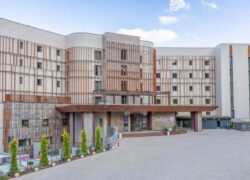
THR Marea Neagră SA has finalized the sale of the Siret Hotel Complex in the Saturn resort for EUR 3.5 million plus VAT. The transaction  marks the conclusion of a public auction procedure launched at the beginning of this year and the consolidation of the company’s liquidity through the full collection of the price.


This represents the company’s second major asset sale in the recent period, after the Măgura Hotel Complex in Eforie Sud was sold in April 2026 for EUR 2.5 million.


THR Marea Neagră SA, headquartered in Eforie Nord, is 75.34% controlled by Transilvania Investments Alliance SA. According to the financial data for 2024, the company reported a turnover of approximately EUR 3.09 million and a net profit of EUR 1.87 million, while total liabilities amounted to EUR 7.16 million.


CPI Property Group secures EUR 100 mln Financing for Sun Plaza shopping center

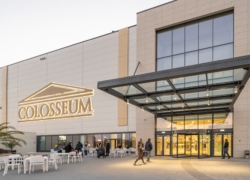
CPI Property Group announces that its subsidiary, CPI Europe AG, has successfully closed a new EUR 100 million financing for Sun Plaza shopping center. The financing was in the form of a club-deal from OTP Bank and ING Bank Romania, with each bank participating with equal commitments. The transaction also marks the beginning of a new cooperative relationship between CPIPG and ING Bank.


Inaugurated in 2010, Sun Plaza brings together 170 retail, HoReCa and entertainment concepts with a gross leasable area of ​​approximately 81,000 sq m. The center benefits from direct access to the Piața Sudului metro station and is BREEAM Excellent certified.


“This transaction demonstrates the continued confidence of the financiers in the premium retail assets in the CEE region. We appreciate the professional and constructive cooperation of OTP Bank and ING throughout the entire process and are particularly pleased that ING becomes a new partner of the Group,” said  Marketa Vecerova, Group Head of Real Estate Financing at CPI Property Group


Dentons acted as legal advisor to the financiers in the transaction.

Analysis: Falling Mortgage Rates Push Monthly Repayments Below Average Rent in Bucharest

Falling mortgage rates in Romania have pushed the monthly repayment required to purchase a mass-market apartment in Bucharest below the average asking rent for a comparable property, according to an analysis by online mortgage broker  Ipotecare.ro based on banking and residential market data.

The analysis shows that the average monthly repayment for an EUR 85,000 mortgage over 25 years, calculated at a fixed interest rate of 4.55% per annum, stood at approximately RON 2,469 in May. The loan scenario reflects the purchase of a mass-market one-bedroom apartment in Bucharest valued at EUR 100,000, built before 2000, assuming a standard down payment and current exchange rate levels.

The monthly repayment is only RON 49 higher than at the beginning of last year, despite the National Bank of Romania maintaining its benchmark interest rate at 6.50%.

By comparison, the average asking rent for a furnished and fully equipped one-bedroom apartment of the same category reached RON 2,693 per month in May, equivalent to around EUR 517. According to the analysis, this places average asking rents approximately 9% above the monthly mortgage instalment required to purchase a comparable property through bank financing.

Rental prices have also continued to increase throughout the year. Average asking rents were approximately 7% higher than at the start of 2026 and around 21.5% above the levels recorded at the beginning of 2025, with exchange rate movements also contributing to the increase.

“The most competitive mortgage offers currently available are almost 2.5 percentage points below the peak recorded three years ago. Financial institutions are working to keep borrowing attractive, and the current 4.55% rate on the best offers is significantly below the 6.50% monetary policy rate,” said Laurentiu Bogdan, Managing Partner of Ipotecare.ro.

Even so, mortgage financing costs remain above the lows recorded during the pandemic period. The best mortgage rates currently available are still around 1.2 percentage points higher than the market low seen at the beginning of 2021, when leading mortgage products were priced at approximately 3.23%.

The analysis also highlights the growing gap between income growth and housing costs in Bucharest. While the average monthly repayment required to purchase a mass-market one-bedroom apartment has increased by approximately 22% since 2021, average wages in the capital have risen considerably faster.

According to data from the  National Institute of Statistics Romania, the average net salary in Bucharest reached RON 7,173 in February 2026, compared with RON 4,313 in February 2021, representing an increase of roughly 66% over the period.

At the same time, the average asking rent for a furnished and fully equipped one-bedroom apartment in Bucharest completed before 2000 has increased by approximately 46% since 2021, reflecting continued pressure on the city’s rental market.

CEDER 2026 in review: The New Meaning of Luxury: A Shift To A Way of Living

The first Residential panel held at CEDER 2026 showed that the definition of luxury in Romania’s evolving residential market is undergoing an essential transformation. While premium real estate was once defined by prestigious addresses and expensive materials alone, the experts invited to take part in the panel suggest that the market has matured, shifting the focus toward personal well-being, time efficiency, and integrated communities.


Jan Demeyere, Architect and Co-founder of SPEEDWELL, emphasizes that luxury has moved beyond mere aesthetics, like marble or wood finishes. He argues that true luxury is now defined by the quality of one’s daily life, stating: “When we talk about luxury, that’s something very personal. How do you define luxury? What is luxury living? … For me, luxury really is being able to find a job very close to where you are, even change jobs, is to be able not to commute for 3, 4, 6 hours to your job, so you still have free time with your family, with your friends. That’s very important. And also, to have access to nature. That’s for me, luxury.”


This sentiment is echoed by marketing experts who see luxury as “an emotional purchase” rather than a simple acquisition of property. Andreea Dumitru, Chief Marketing Officer at Hagag Development Europe, explains that modern buyers are highly informed and travelled, seeking a an experience that validates their status: “People are not just buying square meters of an apartment… They are looking to buy something that elevates their lifestyle. So, they look for [a] curated experience, they look for floor to ceiling heights, they look for privacy, for wellness, and all these services that they didn’t have until now.”


A critical component of this redefinition is the concept of “buying time.” Irina Caraene of CORDIA notes that for clients with budgets exceeding €200,000, the priority is “complete urban living without compromises”. This often manifests in the “15-minute city” concept, where amenities like work hubs, gastro bars, and playgrounds are all within immediate reach.


Ultimately, the dividing line between upper-middle and genuine premium residential property is no longer just price or location, but the “depth of the product”. As Răzvan Brasla, CEO of Cloud9 Residence, puts it: “The upper mid products, they are selling good homes, and the premium developers are selling a way of living”.


In conclusion, the panelists agreed that nowadays, luxury is less about what a building looks like and more about the ecosystem it provides for a healthy, efficient, and connected life.

CEDER 2026 in review: Key Differentiators for Office Development in the Next 24 Months

Industry experts participanting in the second Office panel held at CEDER 2026 suggest that successful projects in the future 12- to 24-month timeframe will be defined by their ability to integrate technology, ensure deliverability, and prioritize the human experience over mere square footage.


According to Antoniu Panait, Managing Director of Vastint Romania, the rapid pace of technological evolution is now a fundamental divider. He argues that staying ahead of the curve on sustainability is no longer optional but a primary competitive advantage: “Evolution of technology in the last years, it’s exponential, it’s mind blowing how quickly it evolves everything and it starts to be applicable also in real estate. I think it’s all about getting as soon as possible carbon neutral, Paris-proof, and implementing as quick as possible new technologies. (…) I think this will be the differentiator between the old buildings and the new buildings”.


Practical execution is the second major differentiator. Bogdan Mărginean, Technical Subdivision Manager at Strabag, notes that the market is moving away from being impressed by “theoretical” beauty. Success will instead go to developers who can guarantee that a project is viable and sustainable in the long term: “I’m absolutely sure nobody or the market will (…) reward renderings, very attractive renderings. It will reward performance and performance from the predictive delivery of the project, first of all, of efficient leasing and sustainable operation”.


Dan Ungureanu of Renomia Gallagher emphasizes that mature risk management is what will attract cautious lenders. He suggests that the projects that move forward will be those led by teams that “have a very open mindset” and “a mature way of thinking”.


Finally, Florian Nițu, Managing Partner at Popovici, Nițu, Stoica & Asociații, points out that the most successful projects will treat office space as a service designed to foster employee happiness. He observes: “The most important element is that [of] office as a service, that delivers the so-called occupier wellbeing. And by occupier wellbeing you mean the happiness of the employees and partners of your tenant. If that’s in and if that wellbeing is combined with higher ethics, social responsibility undertakings (…) I’m absolutely convinced that this will be the successful project”.


Ultimately, the projects that succeed in the coming years will be those that transition from providing a commodity to delivering a high-performance, ethically grounded product.

CEDER 2026 in review: Navigating Legal and Practical Frictions

One of the conclusions of the second Office panel held at CEDER 2026 was that the office development landscape is undergoing a fundamental shift, moving away from simple space-leasing models towards complex, service-oriented environments. This transition introduces significant legal and practical frictions.


According to Florian Nițu, Managing Partner at Popovici, Nițu, Stoica & Asociații, the success of mixed-use projects has made legal iterations far more intricate. He notes that the traditional “triple net” lease is a concept of the past, replaced by complex partnerships. Nițu explains: “In legal terms, successful as mixed means complex from a legal standpoint, because the benefits of a mixed-use project translate into complex obligations and complex legal iterations in the contracts that are signed. Office space means a lease agreement that is doubled by a service agreement”. Furthermore, permitting remains a primary friction point, particularly in markets like Bucharest. Nițu advocates for a “strong, firm” stance toward authorities, including using judicial instruments when necessary to push developments forward.


On the practical side, the industry faces a “structural problem” regarding project delivery. Bogdan Mărginean, Technical Subdivision Manager at Strabag, argues that developers often focus too much on optimistic renderings and not enough on the viability of execution. He highlights the friction caused by treating construction as a “downstream activity” rather than an integrated part of the design process from the start: “The biggest risk is not if we are able to design attractive buildings, office buildings. The biggest risk is if this project is really deliverable, it is financially deliverable, technically, operationally and within the expected time… Too often projects are designed in isolation, are optimized only on paper, from theoretical point of view and only afterwards tested if the market is taking them on. On execution capacity, procurement constraints… this will create by default (…) loops in redesign, additional cost, additional time”.


Adding to these frictions is a lack of economic visibility. Antoniu Panait, Managing Director of Vastint Romania, emphasizes that developers must be prudent because they cannot “foresee what will happen in the next few weeks, not next few years” regarding interest rates or taxes.


As highlighted by Dan Ungureanu, Business Development Leader CEE & CIS at RENOMIA Gallagher, this uncertainty is mirrored in the insurance sector, where lenders now demand more rigorous due diligence to ensure projects remain bankable, and developers have become more open to insuring their projects: “It’s about the global environment we’re living in. So, on one hand you have the lenders which are being more careful in what they put their money in, and of course they’re forcing somehow the market to get to upper level. But on the other hand, you have also the developers, and we are living in a mature market in which you have very powerful developers in the market. And of course, they’re coming with a lot of know-how brought by their group level, by their past experience, by their key people within the companies, which saw a lot of aspects happening.”


Ultimately, the projects that overcome these frictions will be those that prioritize integrated delivery models and a partnership-driven approach to both legal and construction challenges.

CEDER & HOF Awards 2026: Measuring the Event’s Carbon Footprint

Carbon Tool and CIJ Europe continued their collaboration at the 2026 edition of the CEDER Conference & Exhibition and HOF Awards, reinforcing a shared commitment to transparency, measurable sustainability performance and more responsible event planning within the real estate industry.


Held at the Radisson Hotel in Bucharest, the 19th edition of CEDER once again brought together developers, investors, consultants, occupiers and service providers from across the market for a full day of discussions, networking and business opportunities, with sustainability remaining a central theme throughout the event.


As part of this partnership, CarbonTool calculated and analysed the carbon footprint generated by the event, helping transform sustainability objectives into measurable environmental data and actionable insights.


2026 Carbon Snapshot: Understanding the Impact


The total carbon emissions generated by the 2026 CEDER & HOF Awards reached 2,049 kgCO₂e, corresponding to an average of 6.83 kgCO₂e per attendee.

Here’s the breakdown of emissions by category:
• Food and Beverages: 1,090 kgCO₂e (53.2%)
• Commuting & CIJ Team Effort: 321 kgCO₂e (15.67%)
• Event Materials: 199 kgCO₂e (9.71%)
• Waste: 206 kgCO₂e (10.05%)
• Electricity: 233 kgCO₂e (11.37%)


As in previous editions, catering and transportation remained the largest contributors to the overall footprint, highlighting the importance of mobility choices and procurement strategies in the environmental performance of large-scale business events.


How Participants Traveled to the Event


Attendees were invited to submit their commuting method through a dedicated QR-code-based system, helping create a more accurate picture of transport-related emissions and participant mobility patterns.


The results showed a strong preference for lower-impact commuting methods — around 28% of attendees submitted their commuting data, and of those participants, more than 76% chose lower-impact transport methods. This is particularly encouraging considering that, compared to last year, the event welcomed a higher number of international participants, which naturally increases the likelihood of higher transport-related emissions. The results reflect growing awareness around mobility choices and a stronger openness toward more sustainable ways of traveling to professional events.


A Continued Commitment to Sustainable Events


The ongoing collaboration between Carbon Tool and CIJ Europe demonstrates how carbon measurement and environmental accountability can become part of major industry events without compromising business value or participant experience.


While reducing the environmental impact of events remains a complex challenge, initiatives like these show that progress starts with data, awareness and the willingness to continuously improve.


For more information on how Carbon Tool supports organizations in measuring, managing and reducing carbon emissions, visit CarbonTool.

front page info
LATEST NEWS