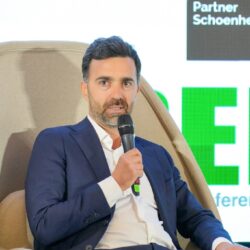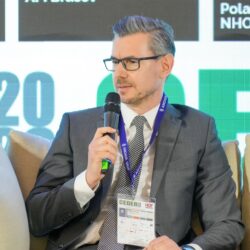
CEDER 2026 in review: From Boxes to Communities: The Transformation of Bucharest’s Office Sector

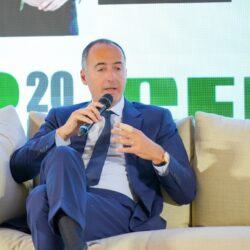
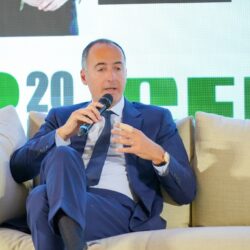
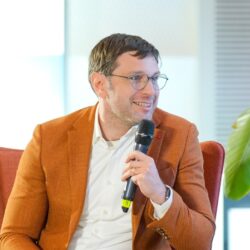
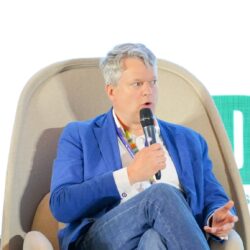
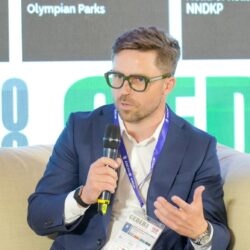
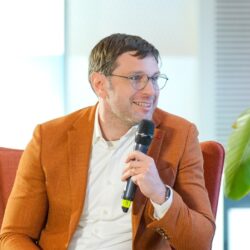
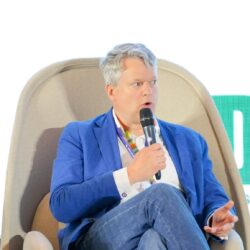
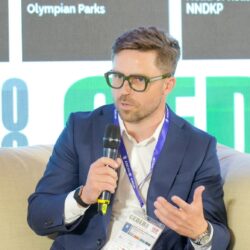
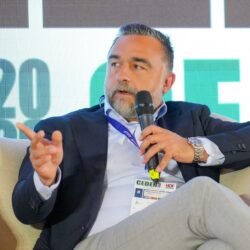
During the Educational Program panel held at the end of CEDER 2026, the experts invited to participate discussed how in modern Bucharest, the office development landscape is undergoing a profound shift, moving away from “isolated projects” toward integrated developments that actively “influence districts, communities and urban life”. This evolution marks a significant departure from the “chaotic” expansion seen before 2008, as reputable developers now prioritize urbanistic rules and the specific needs of the end-user.


A central theme in this new era is the transition of the office from a functional “box” to a vibrant community. Geo Mărgescu, Founder and CEO of Forte Partners, explains that office buildings have become “communities rather than simply boxes where employees are called to deliver”. In a post-pandemic world where repetitive work can often be done from home, the physical office has been reimagined as a space for collaboration, innovation, and creation. Tenants today demand unique environments that align with their corporate identity—spaces where “employees are feeling at home while working”.


The impact of these modern developments extends far beyond their own walls, often acting as catalysts for wider urban regeneration. A prime example is The Bridge project. Before its inception, the surrounding area was “completely dead,” dominated by old railway lines. Today, it anchors a thriving district with approximately 600,000 to 700,000 square meters of office and residential space. Similarly, the Sector Zero initiative—comprising the Millo and Tandem buildings—has revitalised downtown Bucharest by creating new pedestrian links and public squares.


International developers are also bringing a focus on efficiency and smart planning. Eric Drach, CEO of Hagag Development Europe, emphasizes that modern offices must be “planned smart, efficient, [and] green” to ensure long-term value for tenants. Location is also very important for office developments, as well as flexibility. This includes adaptable solutions like H Private, which offers flexible, short-term office leases along with the traditional long-term leases.

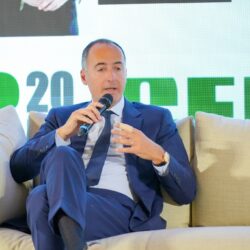
 

CEDER 2026 in review: The Optimistic Future of Bucharest

During the last panel held at CEDER 2026, dedicated to the past and future of real estate development in Bucharest, industry experts Geo Mărgescu and Eric Drach shared a profound optimism that the city is evolving into a more structured, community-focused metropolis. Geo Mărgescu, Founder and CEO of Forte Partners, describes himself as an “optimistic person as a structure” and expresses a strong conviction that Bucharest will look “completely different in the following five to six years”.


This optimistic outlook is rooted in the shift from building isolated structures to creating developments that “influence districts, communities and urban life”. Mărgescu believes that “the reputable developers are creating the trends” which educate the tenants and buyers, and explains “that the projects we are building now will be liked or will be judged by the generations which are not yet born today. And this is both the beauty and the responsibility of our job.” For Mărgescu, the ultimate goal is creating beauty that will “change the life of our children and grandchildren”.


Eric Drach, CEO of Hagag Development Europe, reinforces the positive sentiment, identifying a “very big potential” in the Bucharest market. From an international perspective, he observes that Romania’s real estate evolution has been remarkably fast, noting that the progress achieved since 2008 has often taken much longer in other global markets. Drach envisions a future where urban renewal acts as a “catalytic” generator for the city, creating new hubs for residential and commercial life. He emphasizes that the future belongs to projects with “long-term value” that place the “user at the center” and bring tangible benefits back to the local community.


The speakers also anticipate a more diversified urban landscape. Drach predicts that Bucharest will eventually embrace new asset classes like student housing and retirement homes, ensuring the city provides solutions for all generations. Meanwhile, Mărgescu foresees the rise of residential for rent (PRS) as a successful asset class to address the widening gap between demand and affordability.

Mega Company Invests EUR 10 Million in new Cold Storage

American industrial developer Mega Company has completed a new temperature-controlled cold storage. Mega Company has completed a EUR 10 million investment in a 4,500 sqm cold storage facility as part of the Mega MDO Logistics Park project in Chiajna, Ilfov County.


“The demand for temperature-controlled storage is constantly growing and we want to ensure that businesses have the capacity they need to operate safely and efficiently on a daily basis,” says Salah Turkmani, CEO, Mega Company


Mega Company’s portfolio currently includes: four industrial logistics parks, over 27 commercial properties, over 100,000 sqm of industrial space and 8,300 sqm of managed office space, and over 2.1 MWh of renewable energy production.

Romania: Construction, up 8% in Q1

Construction, which reached almost 9% of GDP, continued to grow in the first quarter of the year, a total increase of 8.2%, with a strong advance of the residential segment of 16%, followed by that of “new constructions”, of 10% and of “engineering constructions” (large investment works in infrastructure) of 8.5%.


The European Commission’s spring forecast mentions the residential and engineering constructions segments (motorways, hospitals) – among the factors that will keep the economy in the plus.


“The recovery in residential constructions is expected to continue, while investments in public infrastructure will intensify as the PNRR projects are completed,” the European Commission’s spring forecast says.

Duşu Family Opens EUR 10 million Hotel in Constanţa

Duşu family, who also control the port operator Socep, has invested EUR 10 million in opening the Millennium Hub & Hotel in Constanţa. The unit opens following a 6-year renovation process, with the building in which it operates being acquired by the investors in 2020.


With a total area of 4,200 sqm distributed over 10 levels, the hotel features 30 rooms, 10 suites for extended stays, the Atic Millennium restaurant, a café, conference rooms, a wellness area, and beach access during the summer season.


The hotel is controlled through the company DGN Romag, owned by Ion Duşu, Petrica Andra Elena Duşu, and George Duşu, whose main business activity is the renting and subleasing of real estate.

First Hampton by Hilton in Bucharest, at Promenada Mall Bucharest

NEPI Rockcastle has signed an agreement in principle with Lithuanian operator Apex Alliance Hotel Management to manage a new 4-star hotel in Bucharest. The unit will operate under the Hampton by Hilton brand and will be built as part of the expansion of the Promenada mall, located in the office area in the north of the capital. This will be the first Hampton-branded hotel in Bucharest and the third Hilton brand managed by Apex on the local market.


Apex Alliance won the competition to operate the hotel against the Baltic group Mogotel, which had proposed the Radisson RED brand.


The new accommodation unit will occupy an area of about 10,000 square meters, representing approximately half of the building under construction, and will have around 200 rooms. The delivery deadline for the building is the end of next year, with the operator needing up to 6 months to equip and launch the hotel.

CEDER 2026 in review: A City that Shapes the Generations to Come

The final panel held at CEDER 2026, entitled “The History of Real Estate in Romania” touched upon aspects about the past and future of real estate development in Bucharest and beyond. As showcased by this discussion, the evolution of modern cities has moved beyond the construction of isolated structures to a philosophy of integrated urban regeneration. As the real estate market matures, developers are increasingly focused on how buildings “shape the way people experience a city every day”. This shift marks a transition from chaotic expansion to projects that actively influence entire districts and communities.


According to Geo Mărgescu, Founder & CEO of Forte Partners, the foundation for successful regeneration lies in strict urbanistic rules. Referring to historical examples of “well-done urban development” like the Ioanid Lotization or the Grant Lotization, he notes that municipality-imposed regulations should be seen as “value-added attempts” rather than obstacles. These early 20th-century developments succeeded because they were planned as “complete neighborhoods” featuring public parks and specific architectural standards.


In the modern context, major developments have the power to breathe life into neglected zones. Mărgescu points to The Bridge project in Bucharest as a prime example of this influence. Before its completion, the surrounding area was “completely dead,” dominated by railway lines. Today, it anchors a district with hundreds of thousands of square meters of office and residential space, proving that a single project can “change the city for good”. Similarly, the Sector Zero initiative transformed a “dead and dark area” into a “sunny and joyful playground for the whole community”.


International perspectives also emphasize the developer’s duty to the public. Eric Drach, CEO of Hagag Development Europe, highlights the Israeli model of urban renewal where developers are encouraged to “bring something back to the community” in exchange for building rights. This might include community centers or essential services, such as the retail solutions integrated into the H Pipera Lake project. Drach argues that success is measured by long-term value, noting that a truly successful building attracts further investment and improves the “day-to-day living” of the surrounding neighborhood.


The ultimate goal of this new development wave is a profound societal shift. Mărgescu encapsulates this responsibility by citing Winston Churchill: “We are shaping the buildings, and the buildings are shaping us”. By creating beautiful streets and integrated neighborhoods, developers are not just building real estate; they are “shaping the generations to come”. As Bucharest moves toward a future of smart urban renewal, the industry is increasingly prioritizing the user at the center of every project.

CEDER 2026 in review: Navigating Uncertainty in Romania’s Industrial Market

While the Romanian industrial and logistics sector continues to show resilience, the industry leaders invited to take part in the Industrial panel held at CEDER 2026 were also open to discuss the risks that could undermine future growth.


One of the pressing concerns is the industry’s perceived lack of preparation for technological disruption. Alina Necula, Country Manager at Lion’s Head, warns that the sector is currently “superficial” in its approach to artificial intelligence, stating: “I think we in Romania, in real estate especially, we need to build a muscle for artificial intelligence. We don’t have that (…) It’s very important to understand it.”


This technological gap is compounded by “labor erosion”, a risk where long-term tenants find their business models failing halfway through a lease due to a vanishing workforce. Necula notes that manufacturing tenants can realize “in year five that they don’t have people anymore”, making strategic location near urban hubs and universities critical for survival.


Economic pressures are also mounting, particularly regarding energy and regulation. Roland Hofman, Co-Founder and CEO of Urbanity, points to a massive disparity in utility costs that threatens European manufacturing: “the gas prices are five times higher than in the States. This is [a] huge disadvantage that the European market is facing. So, this is something that puts much higher pressure on productivity, on finding the efficiencies.”


Furthermore, Gijs Klomp, Business Development Manager of WDP Romania, warns that Romania may be losing its competitive edge as a “low-cost” destination. He argues that increasingly rigid regulations—such as fire safety standards—are driving up development costs and, consequently, rents. Klomp observes that “the development yields and especially profits in Romania are, I would say, lower than they are in other more core Central European markets. It’s not that there is a lot of margin that you can surrender, which means it goes into rent. If it goes into rent, it goes back into the economy as inflation. And I think there we have to be cautious to find that optimum curve because in the end people will look at many countries, there are many options, and they will make an assessment of what are the benefits of Romania. And one of the benefits we had was a cost benefit and we have lost that. And we need to make sure that either we go up the productivity curve and we can offer higher productivity, because then people can accept costs, or we have to try to keep costs under control.”


Finally, there is a pervasive fear regarding the execution of critical infrastructure and political stability. While the connection to the Moldova region is highly anticipated, there is concern that if projects are not delivered on time, developers could lose vital financing. Ana Dumitrache, CEO of Olympian Parks, identifies political risk as a primary concern, questioning “how much is fundamental and how much is created by the political games, including the cost of energy”.


CEDER 2026 in review: The Next Phase of Romanian Industrial Growth

The experts invited to take part in the Industrial panel held at CEDER 2026 discussed the opportunities of growth present in the Romanian industrial and logistics market.


Ana Dumitrache, CEO of Olympian Parks, considers the market to be “underdeveloped” compared to regional peers like Poland and full of untapped potential for strategic expansion. She suggests that being behind in development is actually a “blessing” because it provides significant room for new, modern stock.


While the panel of experts acknowledges that demand has become more selective, it remains robust in specific niches, particularly for proximity-type developments near major cities that serve the “last mile” of logistics. Ana Dumitrache highlights the specific sectors that are currently in demand: “We see the demand coming a lot in these areas from the food industry, people who are actually delivering to the city. Pharma is again one sector where we’re having demand from. So, it’s this type of sectors which are still growing and especially coming closer to the cities with their logistics or changing the obsolete spaces they were occupying so far with more modern space.”


Beyond traditional logistics, manufacturing presents a significant opportunity for growth, particularly through near-shoring. Companies from high-cost countries like Germany, or those outside the EU wanting a foothold within the Union, are looking at Romania. This trend is expected to accelerate as infrastructure projects, specifically the long-awaited highway connection to the Moldova region, come to fruition. Gijs Klomp, Business Development Manager at WDP Romania observes: “A city like Iași is very interesting because you have a skilled labor force, you have an international airport. The only thing that was missing was a highway connection to bring the goods that you produce to the hinterland, to the markets, the consumer markets. And I think we will see that Moldova will start to develop because of that, clients will start seriously looking at that region.”


Growth in the current market is also being redefined by a shift toward operational efficiency. Modern tenants are increasingly preoccupied with the “total cost of occupation” rather than just base rent. The panelists indicate that developers can successfully charge for higher specifications if they result in lower utility costs. Klomp explains that if higher specs “bring added value for the customer in the sense that they are having benefits when it comes to energy consumption, (…) you have a case”.


Finally, the discussion suggests that the next phase of growth is tied to the digital and energy frontier. The electrical network is described as the “new highway”, essential for supporting the power-hungry requirements of Artificial Intelligence (AI) and data processing. Ana Dumitrache states: “I think there will be more and more demand for power, given the recent developments. I think we are all underestimating the power of AI and its recent developments and how much it will conquer our lives. And it will be necessary because it’s a huge amount of data, it needs to be processed and for that we need power. (…) The regions that have enough capacity, enough power and a stable network will be some poles of future development within the next five years.”

CEDER 2026 in review: The Place of Fitness in the Mixed-Use Concept

As the Romanian retail and mixed-use market transitions toward a focus on consumer experience, fitness facilities have moved from being peripheral amenities to central anchors of development strategy. Matei Filipidescu, CEO of World Class, highlights this shift, noting that World Class is no longer just a tenant but a core attraction that can “maximize the sale prices” for developers.


A primary driver for this inclusion is the concept of the “third space”—a destination between home and the office where people spend significant portions of their day. Unlike traditional retail, which faces pressure from e-commerce, fitness requires a physical presence. Filipidescu explains: “You may be able to buy online (…) but you cannot swim online, you cannot lift heavy weights online. And a properly located, visible and accessible gym or fitness center (…) ensures not three, four times once a week in traffic, but three, four times a week traffic”.


The synergy within mixed-use environments is particularly beneficial for fitness operators because it ensures a constant flow of users. While single-use buildings might only see traffic during specific hours, mixed-use projects provide a balanced ecosystem: “We have a gym here in the hotel. And that’s very well performing, because actually this is sort of a mix, right? You have the hotel, you have the shopping area, you have the restaurants, you have some office buildings. (…) In the morning you have the office. At noon you have either office or guys. In the afternoon you have the residents. So, throughout the day you have traffic in the gym.”


The scale and sophistication of these facilities are also increasing. For example, the extension of the Promenada Mall will feature a 4,000-square-meter World Class flagship store. This landmark project includes a semi-Olympic swimming pool and a fully integrated program ranging from kids’ activities to longevity services.


Ultimately, the inclusion of World Class in mixed-use projects is part of a broader mission to improve public health in a market where only 6% of the population currently uses a gym. Filipidescu concludes that the goal is to “reposition World Class as a provider of wellness and longevity services integrated,” stating: “the idea with longevity, for instance, and doing sports and prevention is not that you live longer, but you live better”.


front page info
LATEST NEWS