Arcadis chooses Business Garden Bucharest for their new office

Vastint Romania, part of VASTINT Group, announces the signing of a new leasing contract with Arcadis Romania, which will occupy 1,183 sqm in building A of Business Garden Bucharest.

„Over the past few years, we have seen a clear shift in the way international companies choose their offices. The discussion is no longer only about square meters or location, but about creating an environment that supports culture, collaboration, and long-term business evolution. Arcadis is a very good example of this new mindset. Companies like Arcadis are shaping the future of cities, infrastructure, and sustainable development globally, so their presence in Business Garden Bucharest is both a strong addition to our community and a confirmation that modern office projects today need to deliver much more than workspace alone.”, declared Maria Badea, Senior Leasing Manager Vastint Romania.

Business Garden Bucharest, located in the Orhideea–Grozăvești area of Bucharest, offers 43,000 sqm of leasable space and is home to tenants such as Sparkware Technologies, Sanamed, Regina Maria, IKEA, Schindler, Tchibo, Vel Pitar, Rail Cargo Group, and Pandora.

Business Garden Bucharest is the project with the highest LEED score in Romania – Building  A has received 98 points, the highest score in CEE, second in Europe and third worldwide.
SPEEDWELL expands SPACEPLUS concept to Poland and prepares launch of new Popești-Leordeni location

SPEEDWELL  announces the international expansion of the SPACEPLUS concept through the launch of its first project in Poland, while also preparing to begin construction works this June on the new SPACEPLUS location in Popești-Leordeni.

The new development follows the acquisition of a land plot of  6.48 ha in Warsaw’s Targówek district from European Logistics Investment (ELI). Located in one of Warsaw’s strong commercial hubs, near key retail anchors and a major road artery, SPACEPLUS Warsaw will deliver premium Small Business Units designed around flexibility, accessibility and operational efficiency.

“Expanding SPACEPLUS means more than simply launching a project in Poland. It validates a concept created in Romania and built around the real needs of SMEs, at a time when companies are increasingly looking for operational flexibility, efficiency and modern infrastructure. The fact that this model also works in a competitive market such as Poland confirms its regional potential and shows that the needs of companies across Central and Eastern Europe are becoming increasingly similar when it comes to accessibility, connectivity and logistics flexibility,” said Didier Balcaen, CEO and Co-Founder of SPEEDWELL.

In Romania, SPEEDWELL continues the development of the SPACEPLUS network through the new Popești-Leordeni location, where works are scheduled to start in June. The project will be located on DN4, between the existing ring road and the new A0 motorway, with fast access to the main logistics and commercial arteries in southern Bucharest, and will provide clients with a total leasable area of approximately 12.200 sqm. Designed for SMEs, SPACEPLUS Popești-Leordeni will offer Class A storage or production units for industrial and/or logistics use, following the same specifications as SPACEPLUS Chitila.

At the same time, SPEEDWELL is strengthening its team dedicated to the industrial-logistics segment with the appointment of Valentin Achim as Leasing & Property Manager Industrial Developments.


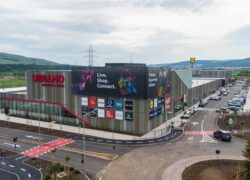
Nhood  Announces the Official Opening of URBANO Shopping & Living

Nhood  announces the official opening of URBANO Shopping & Living. This will be the largest commercial park in Transylvania, developed by URBANO Group in Florești, Cluj County, with an investment of EUR 40 million in the first stage. Nhood supports URBANO Shopping & Living through an exclusive leasing mandate, integrated property management, and operational marketing services.


“We are grateful for the trust that URBANO has placed in the Nhood team. Together, we succeeded in transforming the project’s vision into a strong operational reality. Our objective is to ensure high-performing tenant relationship management and elevated operational standards, so that URBANO Shopping & Living remains a relevant destination for the Cluj community in the long term,” stated Răzvan Ciobanu, Head of Property Management at Nhood.


The new shopping center brings together 37 stores and a dedicated drive-thru area spanning more than 1,000 sqm, featuring four major international brands: McDonald’s, Starbucks, Popeyes, and Burger King. The retail mix includes brands such as LIDL, HalfPrice, Sportisimo, Jysk, Benvenuti, Smyk, Sinsay, Deichmann, Farmacia Alma, Fressnapf, CCC, Mesopotamia, TEDi, Bosch, Oval Sport, Stay Fit Gym, Peak Toys, Prime Beef-Băcănia, Artigiamo Coffee, Plăcintăria Stan și Bran, Las Vegas Casino și Banca Transilvania.  DIY retailer Hornbach and cash&carry hypermarket Selgros are in the early stages of construction and are scheduled to open to the public in the first half of 2027.


“We are pleased that the Nhood team contributed its expertise to the successful leasing of the URBANO Shopping & Living project, which will undoubtedly establish itself as an important landmark for the local community. Our expertise is reflected in attracting major national and international brands, alongside local brands appreciated by Cluj residents, all of which chose the project due to its commercial potential, coherent concept, and strategic positioning,” stated Corina Toma, Leasing Manager at Nhood.


“URBANO Shopping & Living was designed as a modern, accessible destination connected to the real needs of the community in the Cluj metropolitan area. We are happy to officially open this project and offer the public a complete shopping experience, built together with strong partners and an involved team”, stated Ciprian Comșulea, Executive Manager of Urbano Group.

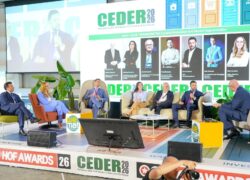
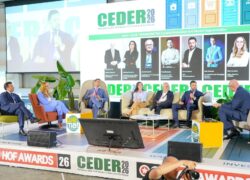
CEDER 2026 in review: Challenges and Pressures on the Residential Stage

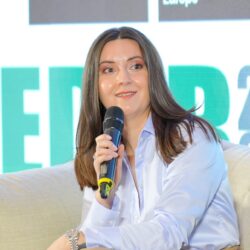
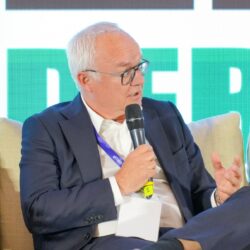
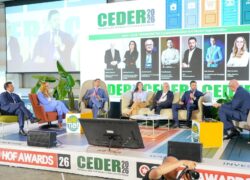
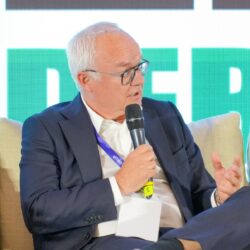
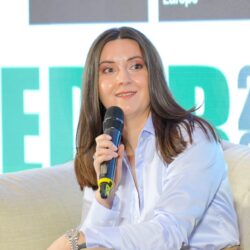
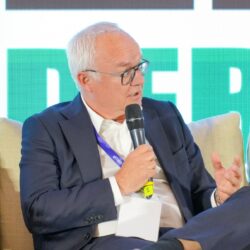
The experts gathered at the second Residential panel held at CEDER 2026 remarked that the Romanian residential market is currently characterized by a high-pressure environment where rising construction, financial, and logistics costs are forcing developers, lenders, and buyers to recalibrate their expectations in a price-sensitive climate.


Lenders have responded to this climate with a “forensic” scrutiny of project fundamentals. Claudiu Bisnel, Managing Partner of Brisk Group notes: “From the lenders’ perspective, there is caution associated with what’s happening, (…) basically looking more closely to construction costs, looking more closely to the actual contractors that are being brought on the project, their technical capabilities, their robustness in terms of finance and so forth. And also, the quality of the equity that is put in place in terms of the project from the developer’s side.” Despite this, he concludes on an optimistic note: “overall, we are in a position where with proper governance, with proper tools in place, from our perspective as consultants, project cost management tools, projects can be managed and brought to very successful delivery.”


Transactionally, the market is moving away from outright land acquisitions. To mitigate the permitting and financing risks, developers are increasingly seeking joint-venture-style partnerships with landowners. Silviu Stratulat, Managing Partner at Stratulat Albulescu Attorney at Law explains: “It’s not a joint venture per se. It’s not, but it is sort of a partnership structured in a different way between the landowner and the developer, because both the landowner, but especially the developer wants to share the risk. And the risk is all across. It is a financing risk; it is a contractor risk. Of course, the financing risk is usually (…) assumed by the developer. (…) The shift is I don’t want to acquire the land anymore and then take over, in addition to basically the risk of development, that sort of investment, risk of that investment in the land, but I will share it with the landowner.”


Developers are caught between rising input costs and a price-sensitive, more cautious consumer base. Bogdan Letcă, CEO of Bog’Art Residential, emphasizes that while developers may absorb some of the “shocks” of cyclic downturns, final prices are likely to see a “bump” as developers cannot cope with elevated costs alone. However, he stresses: “a thing that you cannot compromise (…) is the product. Because as long as you are reputable and you have the branding on your side, even on harsh times and (…) stormy weather, you cannot compromise the product. You know, the reputation takes many years to build and can be lost instantly.”

CEDER 2026 in review: A Call for Collaboration

The first Residential panel held at CEDER 2026 highlighted a necessity of collaboration over isolated competition on the Romanian residential market. Industry experts invited to participate in the panel suggest that there is ample reason to create integrated ecosystems that require developers to look beyond their own property lines.


Alex Skouras, Co-Founder and Managing Partner of Alesonor, argues that achieving the “15-minute city” ideal—where all essential amenities are within a short walk—requires a macro view of urban development. He emphasizes that developers must move past a narrow focus on their own plots to engage with the broader environment: “A proper, in my view, 15-minute city project is exactly what you mentioned, that you have to step out and zoom out. As I was saying earlier, talk to authorities, understand what they are able to deliver, where we can support them, where they can support us, have a proper collaboration (…) not only our project (…) but talking what’s happening all around the area.”


Jan Demeyere, Architect and Co-Founder of SPEEDWELL echoes this sentiment, noting that focusing solely on one’s own site can lead to inefficient and redundant services. He proposes a more practical, shared approach to infrastructure that benefits the entire community: “We are neighbors, we are doing a project next to each other. I can build a kindergarten; you can build a kindergarten. Maybe we should sit together and build a kindergarten together instead of working on our plot. And that’s the 15-minute city that’s sharing amenities with other developers around and not trying to do everything on your spot itself.”


Irina Caraene, Sales Director of CORDIA, identifies a lack of professional unity as a hurdle to progress, particularly when dealing with public authorities. She suggests that the path to successful urban regeneration is paved with stronger relationships between competitors. When asked what she thinks is wrong about the Romanian real estate market today, she explains: “I think not making very strong friendship with the competitors. Because we tried, all of us, we tried a lot of public-private partnership with the authorities and we didn’t succeed. And I think… us! [It] depends on us to get along [with] each other and to meet often and to have common projects… We have to get closer, more and to try to make very good ecosystems, especially in the areas where we are making urban regeneration.”


Ultimately, this shift toward collaboration is seen as a way to transition from seeking “short-term profits” to creating long-term value that elevates the quality of life for all residents.

CEDER 2026 in review: Shortage and Long-Term Appreciation of the Assets

As showecased by the first panel on Residential held at CEDER 2026, the Romanian residential market is currently undergoing a period of maturation, where the concept of luxury is shifting to integrated ecosystems and long-term value. According to the industry experts, this evolution is driven by increasingly sophisticated buyers who prioritize time, community, and wellbeing.

Răzvan Brasla, CEO of Cloud9 Residence notes that the difference between upper middle and premium real estate is now defined by the “depth” of the product. “So, it’s very important that the product has good architecture, good construction, it has energy efficiency, amenities and of course financial discipline. Because the buyers have become more educated and they want to be informed about the entire project”, he states.

Vlad Musteață, Founder & CEO of North Bucharest Investments, observes that the window for securing properties in the city’s most prestigious areas is rapidly closing. He identifies a specific class of clients who are “looking to buy just premium location, just in best areas”. Musteață emphasizes that these opportunities are becoming rare: “Let’s say we have one project in best location in two, three years… So, they understand that now is the last moment to buy this kind of perfect location and not cheap projects”.

The market is no longer driven solely by local investors. Musteață highlights a rise in international interest, noting that foreign buyers are often more decisive than locals because they recognize Bucharest’s growth potential relative to other European capitals. “A lot of people are very impressed how they see Bucharest who come for the first time (…) they understand the direction of the price (…) will be just growing,” he explains.

In the luxury segment, the demand for amenities has become non-negotiable, as buyers look for a “complete urban living” experience which aligns with the broader industry shift toward the 15-minute city concept, where work, leisure, and education are all within reach. As Irina Caraene, Sales Director of CORDIA puts it: “The client which is ready to offer more than €200,000 is more looking to buy time. To have city in 15 minutes (…). He wants complete urban living without compromises. So, for these reasons, from what we saw on the market, we are very glad that we are through those developers that want to fulfill the desire on the premium and luxury market and offer to all those clients beside a very good apartment with a very good finishing, a lot of amenities that the client can use.”


Vlad Musteață also notes that modern buyers are “not satisfied to have just good apartments and big number of square meters”. Instead, they demand functional surroundings: “They want to have a place for the kids, they want to have commercial space, and they want to have where to go outside in the evening, let’s say to make promenade”. He maintains that the high-quality projects being developed today will see significant appreciation and concludes that the buildings which successfully integrate these community elements will be “very, very, very appreciated from the buyers who buy today”.

Shortage and Long-Term Appreciation of the Assets

As showecased by the first panel on Residential held at CEDER 2026, the Romanian residential market is currently undergoing a period of maturation, where the concept of luxury is shifting to integrated ecosystems and long-term value. According to the industry experts, this evolution is driven by increasingly sophisticated buyers who prioritize time, community, and wellbeing.

Răzvan Brasla, CEO of Cloud9 Residence notes that the difference between upper middle and premium real estate is now defined by the “depth” of the product. “So, it’s very important that the product has good architecture, good construction, it has energy efficiency, amenities and of course financial discipline. Because the buyers have become more educated and they want to be informed about the entire project”, he states.

Vlad Musteață, Founder & CEO of North Bucharest Investments, observes that the window for securing properties in the city’s most prestigious areas is rapidly closing. He identifies a specific class of clients who are “looking to buy just premium location, just in best areas”. Musteață emphasizes that these opportunities are becoming rare: “Let’s say we have one project in best location in two, three years… So, they understand that now is the last moment to buy this kind of perfect location and not cheap projects”.

The market is no longer driven solely by local investors. Musteață highlights a rise in international interest, noting that foreign buyers are often more decisive than locals because they recognize Bucharest’s growth potential relative to other European capitals. “A lot of people are very impressed how they see Bucharest who come for the first time (…) they understand the direction of the price (…) will be just growing,” he explains.

In the luxury segment, the demand for amenities has become non-negotiable, as buyers look for a “complete urban living” experience which aligns with the broader industry shift toward the 15-minute city concept, where work, leisure, and education are all within reach. As Irina Caraene, Sales Director of CORDIA puts it: “The client which is ready to offer more than €200,000 is more looking to buy time. To have city in 15 minutes (…). He wants complete urban living without compromises. So, for these reasons, from what we saw on the market, we are very glad that we are through those developers that want to fulfill the desire on the premium and luxury market and offer to all those clients beside a very good apartment with a very good finishing, a lot of amenities that the client can use.”


Vlad Musteață also notes that modern buyers are “not satisfied to have just good apartments and big number of square meters”. Instead, they demand functional surroundings: “They want to have a place for the kids, they want to have commercial space, and they want to have where to go outside in the evening, let’s say to make promenade”. He maintains that the high-quality projects being developed today will see significant appreciation and concludes that the buildings which successfully integrate these community elements will be “very, very, very appreciated from the buyers who buy today”.


Construction Materials Prices Rise by 15-30% 

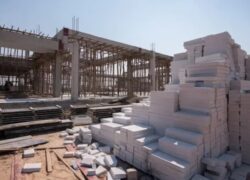
The first months of 2026 brought significant changes to the construction sector in Romania, against the backdrop of a complex economic and geopolitical context, government decisions, internal economic instability and the effects of international conflicts, including the war in the Middle East, directly influencing the evolution of prices and the dynamics of investments in the field, according to an analysis carried out by a construction materials distribution company.


“Since the beginning of 2026, essential materials such as polystyrene, adhesives, waterproofing, iron, BCA and brick have increased in price by percentages ranging between 15% and 30%. Unlike other years, when price adjustments occurred less frequently, during this period we have also observed monthly increases, sometimes even for the same products. I am afraid that, at this rate, at the end of the year there will be products that we will purchase at prices perhaps 50-70% higher than in the same period last year”, said Dragoş Vlagali, director of Bauindustry DC.


On the other hand, the energy sector is also feeling the effects of price increases, resulting in an increase in prices, but also measures to maintain accessibility.

Action Retail Chain Opens Units in Two New Cities

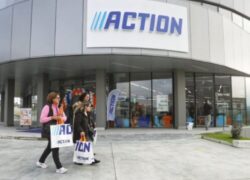
The Dutch non-food company Action, which has always been entering the cities of Chitila and Orăştie, where it is hiring.


The company entered the local market in February 2025. From February 2025 to now, Action Retail has opened 14 stores in Romania, in Piteşti, Arad, Oradea, Hunedoara, Bragadiru, Turda, Râmnicu Vâlcea, Alba Iulia, Satu Mare, Drobeta Turnu Severin, Bistriţa, Aiud, Ploieşti, Târgovişte.


Currently, Action has over 3,300 stores in 14 European countries and positions itself in the low-price retailer segment, claiming that it “always has 1,500 products under RON 5” and has 150 new products weekly. The main competitors of the retailer Action in Romania are Pepco, Kik, Tedi.

Meta Estate Trust Invests EUR 1.5 mln in Real Estate project developed by Maurer Group

Meta Estate Trust announces an investment of EUR 1.5 million in the completion of a real estate project developed by the Maurer Group.


The investment is made from its own sources. The development is at an advanced stage of execution, with a degree of completion of approximately 96%, and deliveries to buyers are estimated to begin in the last quarter of 2026.


Meta Estate Trust recorded in the first quarter of 2026 total revenues of RON 4.73 million, net profit of RON 1.49 million, total assets of RON 136.3 million and an investment portfolio of RON 120 million, against the backdrop of a low level of indebtedness. In April, Meta Estate Trust signed with Penny for the development of a store in Galati County. The market value upon completion is estimated at over EUR 2.3 million.


Source: Profit.ro

front page info
LATEST NEWS