2 Developers Build Luxury hotel on the Shores of Lake Paltinu in Valea Doftanei

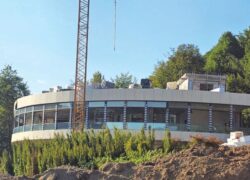
The developers of the Militari Residence residential complex in Bucharest, Constantin Căpăţînă and Iulian Robu, are building a luxury hotel complex on the shores of Lake Paltinu in Valea Doftanei. The project carried out through the company CRC Investment Project is expected to be completed by the end of this year.


The new complex  is located in the Poiana Paltinu area, on the land to the right of the current tourist stop. Based on the permit issued last year, the investment includes a main building with a multifunctional space and six bungalows housing four apartments each, totaling 24 apartments. The buildings are already erected, and fit-out work is progressing at a steady pace.


The project is part of a broader series of investments in the area, where other construction or expansion initiatives for accommodation units are also underway.

SVN: 4,000 Apartments under Development in Bucharest’s Aviatiei ‘corporate hub’

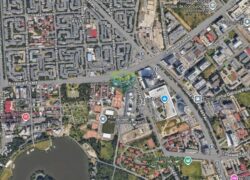
Approximately 4,000 apartments are currently under construction in the Aviatiei area, dubbed the ‘corporate hub’ due to its proximity to Bucharest’s main business district, Aviatiei – Barbu Vacarescu, according to an analysis carried out by real estate consultant SVN Romania.


On average, the starting price of a new one-bedroom apartment under construction in the Aviatiei area begins at EUR 158,000 + VAT, while the average starting price of a new two-bedroom apartment in the area starts at around EUR 214,000 + VAT, increasing according to the size of the units. As such, the average price of new apartments in the Aviatiei area is approximately EUR 3,230 per usable square metre, plus VAT.


“The northern area of Bucharest — and, implicitly, Aviatiei — has always been a desirable location for prospective buyers, and those who have purchased a home here, whether in the 1980s, the 1990s or after 2020, have consistently had above-average incomes, without necessarily being luxury buyers. The current average price of a new home under development in the Aviatiei area is around 40% higher than the city average, a level explained by the neighborhood’s good image and by its location in the heart of Bucharest’s most important business area,” explains Raluca Dobrisan, managing partner SVN Romania | Residentialist | Floreasca.


The nearly 4,000 apartments currently under development in the Aviatiei area are expected to be completed between 2026 and 2028, while SVN data shows that more than 7,200 additional new homes could be developed in the area over the medium and long term, taking into account the land plots held by investors active in the residential segment.

NBI Analysis: Bucharest Strengthens Its Position in CEE

Bucharest is entering a new stage of real estate market maturity. The pricing gap versus major Central and Eastern European capitals, a tightening residential supply pipeline and the strong performance of the hospitality sector are strengthening the investment case for Romania’s capital.


Bucharest’s real estate market is undergoing an accelerated process of maturation at a time when investors are placing greater emphasis on the balance between entry price, asset quality, liquidity and long-term appreciation potential. Bucharest retains a significant advantage: residential values remain competitive compared with more mature CEE markets, while new supply is becoming increasingly difficult to replicate in established locations and segments such as premium residential and hospitality continue to develop rapidly.


In 2026, the average asking price for new apartments in Bucharest reached approximately EUR 2,636/sqm. By comparison, regional benchmarks for new residential properties indicate levels of approximately EUR 4,330/sqm in Warsaw, €4,540/sqm in Bratislava, EUR 5,320/sqm in Budapest and EUR 6,400/sqm in Prague.


Even after the appreciation recorded in recent years, Bucharest therefore maintains a competitive entry price compared with major CEE capitals, alongside meaningful convergence potential as the market continues to mature.


The same trend is visible at macro level. In the first quarter of 2026, residential property prices in Romania increased by 7.8% year-on-year, above the 5.1% European Union average. While Romania is not leading the pace of appreciation in the region, the evolution confirms that the local market is participating in the broader repricing cycle across Central and Eastern Europe.


Vlad Musteată, CEO of North Bucharest Investments: “Bucharest should increasingly be viewed within a regional context. The gap compared with capitals such as Warsaw, Prague or Budapest is not simply a pricing differential; it also indicates the convergence potential that Bucharest still has ahead. We have an increasingly sophisticated urban economy, a significant concentration of business activity, strong residential and investment demand and a growing hospitality sector, while real estate values remain competitive within the region. For investors, this creates an attractive equation, but the next cycle will not lift the entire market uniformly. Value will increasingly concentrate in well-positioned assets supported by infrastructure, efficiency, services and liquidity. The differentiator will no longer be the square metre alone, but the property’s ability to generate and preserve value over time.”


One of the strongest structural arguments for the market comes from the opposing trajectories of residential prices and future supply. In Bucharest, housing prices have increased by approximately 60% over the past six years, while the number of building permits has declined by around 45% over the past three years. A reduced development pipeline limits the market’s ability to respond quickly to new demand cycles and increases the differentiation between standard products and assets that are difficult to replicate.


Within this equation, the scarcity of well-positioned assets is becoming a value driver in itself.


Market maturation is also redefining the premium segment. Beyond location, buyers are increasingly focused on quality, efficiency, technology, services and property liquidity. At the same time, demand is becoming more international, supported by entrepreneurs, regional executives, expatriates and the Romanian diaspora, who increasingly evaluate Bucharest against other European markets.


In 2025, Bucharest recorded a 12% increase in RevPAR – revenue per available room, the highest growth rate among the six CEE capitals analysed, outperforming Warsaw (+9.1%), Prague (+8.3%) and the regional average (+8.9%). Bucharest also ranks third within CEE-6 in terms of ADR and RevPAR levels, behind Prague and Budapest.


This performance confirms the continued development of the hospitality sector and supports the emergence of new asset categories, including aparthotels and serviced residences, driven by business travel, expatriates, bleisure and medical tourism. For investors, these segments add the potential for recurring income and professional asset management.


Bucharest’s investment case is therefore not built around a single indicator, but around the convergence of several trends: a competitive entry price compared with major CEE capitals, residential value appreciation, a tightening future supply pipeline, increasingly sophisticated demand and strong hospitality performance.


“We are already seeing a shift in the way investors assess Bucharest. The question is no longer simply how much a property costs today, but what return it can generate, how liquid it will remain five or ten years from now, and how the asset compares with alternative opportunities across the region. Bucharest is increasingly being evaluated not only as a local real estate market, but as a regional destination for capital. The combination of entry pricing, market maturation and limited supply could become one of the capital’s key competitive advantages over the coming years,” concludes Vlad Musteată, CEO of North Bucharest Investments.


 

West Group Reports EUR 43 million Revenue in H1 2026

West Group, a Romanian entrepreneurial group active in construction, real estate development, construction materials manufacturing, and logistics, recorded a turnover of EUR 43 million in the first half of 2026, supported by increased construction activity and its involvement in some of the most significant ongoing projects in Romania and Germany.


On the Romanian market, through its West Beton division (concrete production and delivery), the company contributed to the development of projects such as Nusco City, HILS Nord, HILS Sunrise, Media City Ghica 2 Apartments, Pipera H, Horizon City, The Edition 1011, Bucharest Metro Line 6, the Bucharest Ring Road and the A0 Motorway. In Germany, the company is involved in large-scale infrastructure and industrial projects.


“The first half of the year confirms the efficiency of our integrated business model and our ability to capitalize on opportunities in the market’s most dynamic segments. We currently have a balanced portfolio across infrastructure, residential development and the group’s complementary activities, which provides both stability and strong growth prospects”, said Dan Crăciunescu, Founder of West Group.


The company’s results come amid a favorable environment for the construction sector, which grew by 12.4% during the first five months of 2026, driven mainly by the residential segment and infrastructure projects, according to data from the National Institute of Statistics (INS). This trend is also reflected in West Group’s performance during the first half of the year, when infrastructure projects generated approximately 60% of the company’s revenue, while the residential segment contributed 35% and logistics activities accounted for 5%.

Spanish group Tendam Opens new Store at RIVUS Cluj-Napoca

The Spanish group Tendam, will consolidate its presence in Romania at the RIVUS Cluj-Napoca project, with three of its brands (Cortefiel, Springfield and Women’secret ) on a total area upwards of 1,000 square meters. Cortefiel is the fashion group’s original brand and marks a premiere for Romania.


“ We consider it a success that we were able to attract such a large group to our project, with three internationally acclaimed brands, synonymous with contemporary style, consistent quality, and a shopping experience appreciated by millions of customers,” said Oana Diaconescu, Head of Leasing IULIUS.


Tendam group recently marked a double opening in another project by companies IULIUS and Atterbury Europe. The two new stores are Springfield and Women’secret, which are operating in Iulius Town Timișoara starting this summer.


New Demand Reaches 73% of Bucharest Office Leasing in H1 2026

The Bucharest office market is showing signs of a recovery in corporate demand, with new demand accounting for 73% of total leasing activity in the first half of 2026, compared to 53% in the same period in 2025, according to the Marketbeat Office Q2 2026 report by consulting firm Cushman & Wakefield Echinox.


The evolution indicates, according to consultants, a resumption of companies’ development and expansion plans.


“One of the most relevant market signals at the moment is the increase in the share of new transactions and expansions, which indicates a return to corporate confidence in their development prospects,” says Mădălina Cojocaru, Partner Office Agency, Cushman & Wakefield Echinox.


In parallel, the office vacancy rate fell to 11.6% in the second quarter, the lowest level recorded since the third quarter of 2020, an evolution mainly supported by the increase in demand from companies in the IT&C sector.

Căpușan Family Acquires Sanex Industrial Platform in Cluj

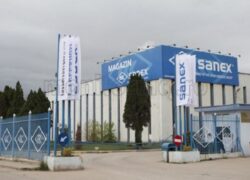
Căpușan family, which owns Tellus Invest developer, has acquired part of the Sanex land and buildings in Cluj Napoca, suitable for real estate projects, for EUR 40 million.


Prime Kapital was also interested of the 18 ha land of Sanex, but withdrew this year from the project. Prime Kapital planned to build a giant project, worth EUR 330 million, with a 130,000 sqm shopping center, one of the largest in Romania, as well as 12-story apartment buildings and office buildings.


Tellus Invest has so far completed around 3,000 homes in Cluj-Napoca, through complexes such as Grand Park Residence, Bonjour Residence and Junior Residence.


In parallel, Lasselsberger, the owner of Sanex, requested state aid through ConstructPlus for a new ceramic tile factory in Sănduleşti, in the same county, with a total investment of RON 699 million.

Apartment Prices in Romania Increased by 6% in July

In all cities in Romania, the cumulative average prices of new and old apartments with 1-3 rooms increased, on average, by 6% in July 2026 compared to the same month last year. Compared to the previous month, prices remained largely stable.


Cluj-Napoca remains the most expensive city among those analyzed, with a cumulative average price (new + old) of EUR 3,298/sqm, followed by Brașov, with EUR 2,342/sqm, and Bucharest, with EUR 2,160/sqm. The highest annual percentage increase in prices was recorded in Constanța.


In the new apartment segment, the highest annual percentage increase in prices was recorded in Constanța (+14%), followed by Sibiu (+11%), Iași and Oradea (+10% each).

BuildGreen: The energy crisis shows that decarbonization has become a competitive advantage for companies

The current energy crisis and the authorities’ call for companies to reduce consumption during peak demand periods demonstrate that energy has become one of the most important competitiveness factors for businesses. In this context, BuildGreen believes that decarbonization should be viewed not only as an ESG component, but also as a cost management tool and a way to reduce operational risks.


Companies that have conducted energy audits and developed efficiency strategies now have a tangible advantage, as they know exactly where energy is consumed, which processes are energy-intensive and where they can intervene quickly to reduce consumption without significantly affecting operations.


“During periods of pressure on the energy system, the difference between a company that has data and one that does not becomes critical. Organizations that have measured their energy consumption and invested in efficiency can make fast, well-informed decisions with an immediate impact on costs and operational continuity”, said Răzvan Nica, Founder and CEO of BuildGreen and CarbonTool.


This data-driven level of preparedness also enables participation in energy flexibility programs (demand response), through which large consumers temporarily reduce their energy demand during peak periods to help balance the power grid. The concept has been included for several years in the international LEED standard and was recently introduced into the BREEAM methodology, which encourages the design and operation of buildings capable of responding flexibly to electricity grid demands.


In practice, a high-performing building can temporarily reduce energy demand by optimizing heating, ventilation and air conditioning (HVAC) systems, adjusting indoor temperatures or shutting down non-essential equipment, without significantly affecting occupant comfort. In some markets, owners or operators are compensated for the capacity they make available to the energy system during such periods.


The current context confirms the structural vulnerabilities of the energy system. According to ANRE data, in March 2026, Romania’s energy production came from hydropower (28.2%), natural gas (22.7%), and nuclear energy (20.7%).


Together, hydropower and nuclear energy accounted for nearly half of the country’s electricity generation.


At the same time, the Danube River’s flow dropped to approximately 1,400 cubic meters per second, the lowest level recorded in the past 40 years, directly affecting two of the country’s most important energy sources.


Furthermore, data from the National Institute of Statistics shows that nuclear electricity production declined by 12.3% during the first five months of 2026 compared to the same period last year. Notably, this pressure on the energy system occurred even though electricity consumption was 3.4% lower than during the corresponding period in 2025.


“The data shows that energy volatility is no longer an exceptional scenario. For companies, the lesson is clear. Those that consume energy more efficiently and continuously monitor their energy performance will be less vulnerable to market shocks, rising costs and disruptions across operational value chains”, explained Răzvan Nica.


According to BuildGreen, an energy audit is one of the fastest ways for an organization to identify savings opportunities and build an investment plan based on return on investment. In many cases, the first measures can be implemented without significant capital expenditure, simply by optimizing operating schedules and eliminating unnecessary consumption.


For the industrial, logistics, retail, and residential sectors, where energy represents a significant share of operating costs, energy efficiency delivers direct benefits, including lower expenses, greater financial predictability and improved long-term competitiveness.


“For years, decarbonization was primarily associated with climate goals and reporting obligations. Today, we see that it also means productivity, cost control, and economic resilience. Companies that generate the same value with lower energy consumption will perform better in an economy marked by volatility”, concluded the BuildGreen CEO.

Cometex Opens Târgu Neamț Retail Park

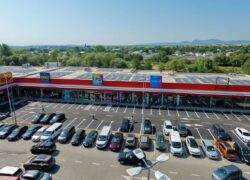
Cometex, the retail park developer belonging to Altex, has opened the 18th project in its national network, in Târgu Neamț, following an investment of 5 million euros.


This step marks Cometex’s first project in Neamț county and brings the local community access to brands such as Altex, Dr.Max, dm, Pepco and TEDi. The retail park has a commercial area of ​​4,300 sq m and is located in the immediate vicinity of the local Kaufland store.


Cometex is a company with 100% Romanian capital, specialized in the development, operation and management of shopping centers nationwide, with a focus on urban areas with sustainable growth potential. The company currently operates a network of 18 retail parks in 17 cities in Romania.


Source: economica.net

front page info
LATEST NEWS