U.S. office REITs lead real estate sector gains in early June

The U.S. office real estate investment trust (REIT) sector recorded the strongest performance among real estate segments during the first week of June. The Dow Jones U.S. Office REIT Index rose by 5.80%, marking the highest weekly gain across all tracked real estate sectors.

Industrial REITs also posted gains, increasing by 0.80%, while healthcare REITs saw a marginal uptick of 0.03%. In contrast, apartment REITs declined by 2.01%, and both retail and hotel REITs experienced slight decreases of 0.32% and 0.14%, respectively.

Broadly, the U.S. equity REIT market saw modest overall growth. The Dow Jones Equity All REIT Index rose by 0.22%, and the MSCI U.S. REIT Index (RMZ) gained 0.40%. These increases were more subdued compared to broader stock market benchmarks. The S&P 500 climbed 1.50%, while the Dow Jones Industrial Average advanced 1.17% over the same period.

Office REITs dominated the list of top-performing real estate stocks with market capitalizations above $200 million. Hudson Pacific Properties Inc. recorded the largest gain, with its share price rising 26.34% during the week. SL Green Realty Corp. and BXP Inc. followed with increases of 13.37% and 10.08%, respectively. Empire State Realty Trust Inc. and Kilroy Realty Corp. also posted strong results, up 9.66% and 8.45%.

On the downside, Mid-America Apartment Communities Inc., a multifamily REIT, experienced the largest weekly decline, with its share price falling 4.32%. American Homes 4 Rent and SBA Communications Corp. also saw losses, with declines of 3.09% and 2.68%, respectively.

The performance gap between office and residential REITs highlights ongoing sector-specific dynamics, as investor sentiment continues to shift in response to macroeconomic trends and evolving market conditions.

Source: S&P Global

Poland faces significant shortfall in gambling tax revenue amid regulatory challenges

Poland is experiencing a growing shortfall in gambling tax revenues due to continued dominance of unlicensed online casino platforms. Despite implementing a state-run monopoly in 2017 through the launch of Total Casino, the government has been unable to control a large portion of the market. In 2023, the country lost over PLN 0.5 billion in potential gambling tax revenue, as offshore operators, often based in jurisdictions like Malta or Curaçao, continued to attract Polish users.

The state monopoly was introduced as part of a broader strategy to combat gambling addiction and reduce the size of the unregulated market. However, instead of increasing state oversight, the approach has led to a parallel, unregulated system where over 40% of online casino activity continues outside the legal framework. These offshore platforms operate without adhering to Polish legal, tax, or consumer protection obligations and remain accessible to local users, often without their full understanding of the legal risks involved.

Since Total Casino began operations, the share of illegal operators in the market has remained high. Users are frequently directed to these sites through online advertisements, misleading content, and search engine-optimized materials that present unlicensed services as legitimate. Many players are unaware that using such platforms violates Polish law. As a result, those affected by fraud or unfair practices are often hesitant to report their experiences due to concerns over possible legal consequences.

The state’s attempt to control the online gambling market through exclusive operation has proved ineffective. Total Casino faces competition from offshore entities not subject to Poland’s tax or regulatory framework, including restrictions on advertising and operational costs. Estimates suggest that 83% of users continue to engage with unlicensed platforms, despite legal alternatives.

The scale of the issue has widened in recent years. Since 2018, the tax gap in the gambling sector has grown by more than 50%. Experts argue that the problem lies not with the existence of online gambling itself, but with the current regulatory model, which positions the state as a market participant rather than an independent regulator.

According to Piotr Palutkiewicz, Vice-President of the Warsaw Enterprise Institute, Poland could reduce the scale of the grey market and increase tax revenues by adopting a licensing model. “Most EU countries regulate online casinos through licensing systems, and Poland has already implemented such a framework for sports betting,” he noted. “A similar approach to online casinos could reduce the grey market to around 16%, increase annual tax revenues by over PLN 370 million, and generate new legal employment opportunities.”

Such a licensing-based model would also impose higher compliance requirements on operators, including obligations for anti-money laundering measures, responsible gambling tools, and data protection. Experts suggest that reform is necessary to establish a more effective regulatory environment—one that balances consumer safety, legal clarity, and fiscal responsibility.

Source: WEI

Slovakia’s housing prices surge amid market shift and demographic pressures

The Slovak real estate market is showing renewed signs of activity, with property prices increasing significantly in early 2025. According to the Statistical Office of the Slovak Republic, real estate prices in the first quarter rose by 13% year-on-year—the first double-digit increase since the third quarter of 2022.

This upward trend reflects growing demand in the housing market, supported by a gradual reduction in mortgage interest rates and a strong labor market, according to Matej Horňák, an analyst at Slovenská Sporiteľňa. However, he also highlights that the market is constrained by a limited housing supply, which continues to lag behind the country’s needs.

New properties recorded a 10% year-on-year increase, while prices for existing homes rose by 14%. Regionally, the most significant jump occurred in the Bratislava region, where prices climbed 27% compared to the previous year. Other regions, including Nitra, Košice, Žilina, and Prešov, also reported double-digit growth rates.

A contributing factor to the recent acceleration in housing prices is the recovery in mortgage lending. In April 2025, newly issued mortgage loans exceeded €680 million, the highest monthly volume since 2022. The average interest rate on new mortgages has dropped to 3.7%, down by 0.8 percentage points from its peak in the previous year. These developments are providing additional momentum to the housing market.

However, the supply side remains weak. Building activity is slowing, with a 15% year-on-year decline in housing starts and a 16% drop in the number of completed dwellings in the final quarter of 2024. As a result, new supply is not keeping pace with growing demand.

Horňák points out that Slovakia also faces structural challenges. With an average household size of 3.1 people—well above the EU average of 2.3—there is a clear need for more, and more affordable, housing. The current combination of strong demand, a favorable labor market, lower borrowing costs, and limited supply continues to push prices upward.

At the same time, the gap between housing prices and household incomes is widening again, which could act as a moderating force on future price increases. Horňák cautions that despite the current growth phase, the market will eventually face structural changes linked to Slovakia’s shifting demographics.

In the long term, population decline and ageing are expected to reshape housing demand. Changes in preferences related to space, accessibility, and amenities will affect both the type and quantity of housing required. “Over time, these demographic shifts may ease pressure on the market,” Horňák concluded.

Source: SITA

Cresco expands in central Košice with new property acquisition and development plans

A building located in the center of Košice has been sold, further signaling significant redevelopment plans for the area around the city’s main square. The project is linked to the broader transformation underway along Hlavná ulica and Južná trieda, where extensive residential construction is being planned.

The development, which includes the construction of over 1,100 apartments, has raised concerns among residents of nearby Palárikova and Ludmanská streets. Local opposition has included a petition submitted to the city council, involvement of the prosecutor’s office, and public protests, where residents expressed worries over the project’s growing scale.

The fenced land behind the local bus stops is owned by Košice Project Development, a Bratislava-based company whose managing directors are Ján Krnáč and Štefan Beleš, with corporate ties to entities in Cyprus. The developer behind the project is Cresco Real Estate, which has already completed projects in Košice, including the Mlynská Bašta residential complex.

The planned construction is currently based on a 2010 building permit originally granted for a hotel with 167 rooms. Cresco is now seeking to modify the permit to reflect changes in the project. Construction is expected to begin in 2026, with completion scheduled for 2028.

In April, it was revealed that a connected company, South City Development, acquired an adjacent 2,016-square-meter plot from the Social Insurance Agency. The state institution classified the land—located just beyond the protected historic zone—as surplus and sold it for €1.4 million. The site was once the location of a never-finished congress center.

Both South City Development and Cresco Real Estate share common ownership links through entrepreneurs Štefan Beleš and Ján Krnáč. Beleš is listed as the ultimate beneficial owner of both companies, while Krnáč serves in executive roles at each.

Cresco Real Estate stated it will publicly communicate its plans for the newly acquired plot once the project is clearly defined and ready to enter the permitting phase.

Source: SME

Eva Decroix appointed as Czech Minister of Justice following bitcoin donation controversy

Eva Decroix, Vice-President of the Civic Democratic Party (ODS), is set to become the new Minister of Justice today, replacing Pavel Blažek, who resigned following controversy surrounding a donation of bitcoins to the ministry. President Petr Pavel will formally appoint Decroix, and Prime Minister Petr Fiala, who also leads the ODS, will participate in the ceremony. The Czech News Agency will provide a live broadcast of the appointment from 12:10 p.m.

Although the Cabinet has seen several personnel changes over the past three and a half years, this marks the first ministerial replacement for the ODS during the current term.

On Monday, President Pavel met with Decroix for approximately 30 minutes. They discussed the bitcoin donation, worth roughly one billion crowns, which was accepted by the Ministry of Justice. The donation originated from Tomáš Jiřikovský, who was sentenced in 2017 for crimes including embezzlement, drug trafficking, and illegal arms trading. Blažek had defended the ministry’s acceptance of the bitcoins, stating that the transaction was not illegal and that it had not been proven the funds came from criminal activity. He also rejected claims that the donation amounted to money laundering.

Decroix has announced plans to commission an independent audit of the ministry’s procedures and regulatory framework. An external firm will conduct the review, with results expected to be made public by the end of August, ahead of the parliamentary elections. She also plans to present a detailed timeline of the case to the government and will propose the formation of an expert group to identify systemic measures for handling new technologies and cryptocurrencies. Additionally, Decroix intends to appoint an independent coordinator from the judiciary to ensure transparent communication about the matter.

Source: CTK
Photo: ODS

Czech unemployment drops to 4.2% in May, but remains higher than last year

Unemployment in the Czech Republic declined slightly in May 2025, reaching 4.2%, down from 4.3% in April, according to data released by the Labour Office of the Czech Republic. Despite the monthly improvement, the unemployment rate remains higher than it was a year ago, when it stood at 3.6%.

The total number of registered unemployed stood at 316,060 at the end of May, a month-on-month decrease of 2,480. However, compared to May 2024, unemployment rose by approximately 42,000 people. The number of available job vacancies increased modestly by 615 to 96,413.

Labour and Social Affairs Minister Marian Jurečka (KDU-ČSL) attributed the monthly decline to seasonal employment, particularly in the hospitality and tourism sectors, which are preparing for the summer season. More than 9,000 job openings in these sectors were listed through public employment offices.

Analysts agree that seasonal factors contributed to the monthly drop. According to Filip Pastucha of Deloitte, seasonal hiring typically leads to a temporary dip in unemployment. However, after adjusting for seasonal effects, unemployment appears to be gradually increasing due to persistent weakness in industrial demand. He noted that the current figures mask deeper structural challenges in the labor market.

Pavel Sobíšek, Chief Economist at UniCredit Bank, observed that the labor market is adjusting to lower economic growth. He expects unemployment to remain above 4% for the rest of the year but does not anticipate a sharp rise in the near term.

Regionally, unemployment was highest in the Ústí nad Labem Region at 6.5%, while Prague recorded the lowest rate at 3.1%. Among individual districts, Most (9.4%) and Karviná (9%) posted the highest unemployment levels. In contrast, districts such as Prague-East, Prague-West, Rychnov nad Kněžnou, Pelhřimov, Benešov, Zlín, and Jičín maintained unemployment below 3%.

The labour market imbalance is reflected in the ratio of job seekers to available positions. On average, there were 3.3 applicants per vacancy across the country, with the Karviná district experiencing the highest pressure, with 23.5 job seekers competing for each position.

Tereza Krček, an analyst at Raiffeisenbank, noted that regional disparities in job availability are contributing to a slight increase in long-term unemployment, highlighting unequal access to employment opportunities across the country.

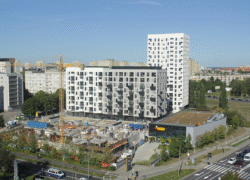
Millhaus brings sustainable and contemporary living to Bratislava’s Mlynské Nivy

Millhaus, a new residential project developed by Immocap, is shaping the future skyline of Bratislava’s Mlynské nivy district with a design and sustainability strategy that stands out in the city’s growing housing market. In a Q&A with Martin Marko, Board Member and Commercial Director at Immocap, CIJ EUROPE questioned how the project is setting new benchmarks for residential development.

The building’s distinctive architectural form is immediately noticeable. “The cantilevering elements, visible on the first three and the top three floors, give Millhaus a recognizable silhouette that will define the future Mlynské nivy boulevard,” Marko explained. Beyond design, sustainability plays a central role. The project incorporates low-carbon concrete, which is expected to achieve CO2 savings of up to 433 tons, reducing the building’s carbon footprint by 27%.

Green technologies further reinforce Millhaus’ environmental commitment. Photovoltaic panels and rainwater harvesting systems are key features. Rainwater collected on-site will be reused to irrigate the greenery surrounding the building. “To put the CO2 savings into perspective, it’s equivalent to the emissions from charging 35 million smartphones or driving a car nearly 1.8 million kilometers,” Marko noted.

In terms of its target residents, Millhaus has been designed with active urban dwellers in mind. “We envisioned young professionals and couples—people who value both function and aesthetics,” said Marko. Most apartments come with balconies and external blinds as standard features, providing added comfort and privacy.

The development also reflects contemporary trends in urban living. Positioned within the transforming Mlynské nivy area, Millhaus benefits from strong transport connections, including public transport and cycling infrastructure. It is part of the emerging 15-minute city concept, which aims to ensure that residents can meet most of their daily needs within a short walk or bike ride.

Construction of Millhaus is expected to be completed in the fall of 2026, with apartment handovers scheduled for the first quarter of 2027. Sales are progressing steadily, with more than 70% of the units already sold.

As Bratislava’s urban landscape evolves, projects like Millhaus demonstrate a growing emphasis on sustainable, functional, and well-integrated residential developments.

Germany’s automotive sector faces prolonged struggles amid global pressures, warns Atradius

Germany’s automotive industry continues to face a challenging outlook, marked by overcapacity, weak demand, and the threat of new tariffs from the United States. According to international credit insurer Atradius, the sector has yet to reach the bottom of its downturn. Jens Stobbe, Manager of Risk Services at Atradius, warns that without substantial restructuring, manufacturers and suppliers alike risk deeper financial distress.

Following a post-pandemic rebound that saw automotive production in Germany rise by 13.1% in 2023, the industry has entered a renewed decline. Production fell by 5.7% in 2024, with forecasts indicating further drops of 5.0% in 2025 and 2.6% in 2026. While large manufacturers can currently withstand this period of weak performance thanks to previously built-up financial reserves, Atradius cautions that these buffers are thinning rapidly.

Cost-cutting measures such as reduced working hours and salary reductions have so far been used to limit the damage, but Stobbe argues that these are temporary fixes. A more fundamental transformation is necessary. Many plants are operating well below capacity, and some may need to be closed permanently to restore profitability—a move that could be politically difficult but economically unavoidable.

In 2024, the German automotive sector lost 19,000 jobs, and Atradius anticipates a similar number of job cuts in 2025. The wider European market offers little relief: after a 5.1% decline in production across the EU last year, a further contraction of 3.7% is expected this year, followed by only a modest recovery of 0.4% in 2026. With consumer spending under pressure, new car sales are unlikely to rebound soon.

Suppliers are particularly vulnerable in this environment. Dependent on the production volumes and payment terms of carmakers, many now face eroding margins, rising payment delays, and growing insolvency risks. These challenges are most evident in Germany, Italy, and the UK, where Atradius notes deteriorating financial conditions.

The ongoing shift from internal combustion engines to electric drivetrains adds further pressure. Many Tier 2 and Tier 3 suppliers lack the technological or financial means to adapt to this transition and may be forced out of the market. “This could result in an exodus of suppliers over the coming years,” Stobbe warns.

Geopolitical risks are also mounting. The imposition of US tariffs on EU automotive exports poses a serious threat, especially to Germany and Italy, whose automotive sectors—and their supply chains in countries like Czechia and Slovakia—rely heavily on US sales. In 2023, the US accounted for 20% of the EU’s automotive export value. Atradius estimates that German and Italian car exports could fall by more than 5% in 2025 due to these tariffs.

Efforts to redirect exports to alternative markets are unlikely to fully offset the loss. European manufacturers face significant obstacles including differing consumer preferences, logistics challenges, and stiff competition from established players in Asia.

One of the most pressing competitive threats comes from Chinese electric vehicle (EV) manufacturers, who have established a strong advantage by offering more affordable models and demonstrating greater agility in addressing technical issues and market shifts. European producers will need to accelerate the development and launch of EVs in the lower and mid-price segments to remain competitive.

In the short term, European manufacturers may find some relief from punitive tariffs imposed on Chinese EV imports, but Atradius emphasizes that long-term survival will depend on a strategic overhaul of the industry. Without structural changes and renewed competitiveness, Germany’s flagship sector faces a protracted period of decline.

Polish companies increase due diligence amid record growth in corporate debt

A growing number of Polish companies are taking steps to assess the reliability of potential business partners before establishing cooperation. According to a study conducted for BIG InfoMonitor and the Credit Information Bureau (BIK), 82% of businesses now seek background information on prospective clients. Their primary focus includes financial condition, customer reviews, and publicly available data such as debt registers and online forums.

One in four entrepreneurs specifically checks whether a potential contractor has any arrears or is listed as a debtor in official registers. This cautious approach is increasingly justified, as data from the BIG InfoMonitor and BIK databases reveal a record-high number of companies with payment arrears in Poland. At the end of March 2025, the number of companies identified as unreliable payers reached 333,784, an increase of 4.5% compared to the same period last year.

The total value of overdue liabilities—covering both credit and non-credit debts that are more than 30 days past due and above PLN 500—exceeded PLN 44.1 billion. This marks a year-on-year rise of PLN 888 million, and a two-year increase of over PLN 3.7 billion. On average, each indebted company now carries more than PLN 132,000 in unpaid obligations to banks and other entities.

Debt accumulation was visible across most sectors of the Polish economy. The largest total liabilities were reported in trade (PLN 9 billion), industry (PLN 7 billion), construction (PLN 5.8 billion), transport and warehousing (PLN 3.2 billion), and real estate services (PLN 2.6 billion). The HoReCa sector (hotels, restaurants, and catering) recorded PLN 2 billion in outstanding payments. Each of these top sectors also saw a rise in the number of unreliable debtors.

Conversely, several sectors managed to reduce their debt volumes. Notable declines were observed in finance and insurance (down to PLN 1 billion), service activities (PLN 866.2 million), mining (PLN 686 million), agriculture (PLN 651.4 million), and culture, entertainment, and recreation (PLN 316.5 million). Among these, only the finance and insurance sector, as well as broadly defined services, also reported a decline in the number of debtor companies.

Although the overall share of unreliable debtors in the Polish economy remains at around 5%, some sectors show significantly higher rates. In transport and warehousing, 8.9% of companies are behind on payments. Elevated rates are also seen in waste management (7.5%), mining (7.4%), accommodation and catering (5.9%), and administrative services (5.4%).

Paweł Szarkowski, President of BIG InfoMonitor, emphasized the importance of carefully selecting business partners in light of these figures. He noted that while the national average for unreliable debtors is already substantial, certain sectors present a markedly higher risk. Verifying a contractor’s financial standing before entering into an agreement, he added, can help minimize payment risks and reduce the costs associated with debt recovery.

The study also found that nearly 87% of businesses attempt to recover overdue payments by issuing reminders. Over half manage this process internally, while around 20% engage legal support. Among companies that used BIG InfoMonitor to send payment notices, more than 35% reported successful debt recovery within seven days—up significantly from earlier years.

Increased engagement with business information services is also evident. As of early 2025, 38.6% of companies reported working with BIG InfoMonitor—an increase of nearly 10 percentage points since the third quarter of 2024. Among users, more than 36% said that registering a debtor in BIG’s database enabled them to recover the full amount owed, up from 30% in 2023 and just 9% in 2022.

Dr. Waldemar Rogowski, Chief Analyst at BIG InfoMonitor, noted that publicly listing debtors in the BIG register remains one of the more effective and accessible debt recovery tools for Polish businesses. The register is used by financial institutions and service providers in sectors such as telecommunications, energy, and utilities. Its goal, he said, is not only to alert others but also to encourage debtors to take responsibility and voluntarily settle their obligations.

Source: BIG InfoMonitor

Slovak exports decline in April, trade balance reaches record low deficit

In April 2025, Slovak foreign trade experienced a notable shift as exports recorded a year-on-year decline for the first time in seven months. Preliminary data from the national statistics office show that exports amounted to EUR 9 billion, representing a 0.3% decrease compared to April 2024. This marked the first decline since August of last year. Despite the downturn in exports, imports continued to grow, rising by 4.2% year-on-year and matching the export value at EUR 9 billion.

As a result, the foreign trade balance recorded a marginal deficit of just EUR 273,000. This is the smallest gap between exports and imports ever recorded, indicating an almost balanced trade position for the month.

The structure of exports revealed that only four out of ten key commodity sections posted year-on-year growth. The overall decline was primarily driven by a 2% drop in the “Machinery and transport equipment” category (SITC 7), which includes motor vehicles. This decline was partially offset by a 19% increase in the “Miscellaneous industrial products” category (SITC 8).

On the import side, nine of the ten main product sections reported year-on-year growth. Imports of miscellaneous industrial products contributed significantly, with their value increasing by 15.5%.

Machinery and transport equipment remained the dominant category in foreign trade, accounting for nearly 61% of exports and over 48% of imports in April.

Trade with European Union countries continued to play a central role. Almost 78% of Slovakia’s exports and nearly 64% of its imports were with EU member states. However, exports to EU countries declined by just over 1% year-on-year, while imports from the EU rose by a similar margin. In contrast, exports to non-EU countries rose by more than 4%, with imports from those regions increasing by 10%.

Slovakia posted a trade surplus of nearly EUR 1.3 billion with EU member states in April, offset by a nearly identical deficit in trade with non-EU countries.

For the first four months of 2025, total exports reached EUR 36.7 billion, up 4.5% compared to the same period in 2024. Imports rose by 10.2% to EUR 36.4 billion, resulting in a cumulative trade surplus of EUR 299.9 million. By comparison, the trade surplus for the same period last year was close to EUR 2.1 billion.

Revised data for the first quarter of 2025 show exports increased by 6.2% year-on-year to EUR 27.8 billion, while imports grew by 12.3% to EUR 27.5 billion. The trade balance for that period remained in surplus at EUR 300.2 million, though significantly lower than the EUR 1.7 billion surplus recorded in the first quarter of 2024.

Source: Statistical Office of the SR

front page info
LATEST NEWS