
German Housing Is Reopening to Institutional Capital – But on New Terms

Germany’s residential investment market is beginning to function again after several years in which higher interest rates, falling property values and uncertainty over financing brought large portfolio transactions close to a standstill. The recovery visible during the first half of 2026 does not represent a return to the conditions that drove the previous investment boom. Instead, a different market is emerging in which investors are placing greater emphasis on rental income, building quality, future renovation costs and the amount of equity required to finance acquisitions.

Approximately €4.4 billion of residential property changed hands during the first half of 2026 under one of the major market measures, while other advisers recorded volumes between roughly €3.6 billion and €4.1 billion because of differences in transaction definitions. More important than the precise total was the acceleration during the second quarter. Residential investment reached approximately €2.2 billion during Q2 under one widely followed dataset, while the value of portfolio transactions increased from around €450 million in the first quarter to more than €1 billion in the second.

The return of larger portfolio deals matters because it provides evidence that buyers and sellers are beginning to agree on values again. During the most difficult phase of Germany’s property correction, the problem was not simply a shortage of capital. Owners were reluctant to sell at prices reflecting higher financing costs, while buyers were unwilling to pay valuations established during the era of exceptionally cheap debt. Transaction activity collapsed as that gap widened. By mid-2026, the distance between those expectations appears to have narrowed sufficiently for more deals to proceed. The recovery remains modest compared with the enormous residential portfolios traded during the previous investment cycle, but the market is no longer dependent entirely on isolated transactions.

International investors are also returning. Foreign buyers accounted for approximately 40% of German residential investment during the second quarter under one major market dataset, deploying close to €900 million. Some have targeted geographically diversified portfolios that provide immediate scale across several German cities rather than concentrating entirely on individual properties in Berlin, Munich or Frankfurt.

This is an important change. International capital did not disappear because Germany stopped needing housing. It withdrew because the financial assumptions underpinning acquisitions became difficult to justify. Once borrowing costs increased, portfolios priced at extremely low yields no longer generated acceptable leveraged returns. The underlying housing market, however, remained exceptionally tight.

Germany has experienced a sharp reduction in new residential construction while population and household demand remain substantial in many cities. The number of completed homes fell significantly during 2025, and the development pipeline remains constrained by construction costs, financing conditions and lengthy project delivery periods. That imbalance is supporting rental income at the same time as property values begin to recover.

Transaction-based property data for the second quarter show German multifamily values approximately 1.6% higher than a year earlier. Office property moved in the opposite direction, with values falling about 1.2%. New multifamily rents increased by more than 3% over the same period. The divergence is significant for institutional investors.

Housing and offices experienced the same increase in interest rates, but their underlying occupier markets have developed very differently. Hybrid working and economic uncertainty have reduced demand for some office buildings, particularly older properties. German housing faces the opposite problem: too little supply relative to demand in many locations. Residential investors are therefore being offered a combination that was largely absent during the correction—stabilising property values together with continued rental growth.

That does not mean German housing has become an easy investment. Financing remains considerably more expensive than during the previous cycle, and German banks maintained cautious lending standards during the second quarter. Buyers need more equity, lower leverage or stronger cash flow to achieve the returns previously generated with inexpensive borrowing. This changes what investors can afford to buy.

A portfolio generating limited current income but offering theoretical future rental growth is much less attractive when debt costs several percentage points more than it did during the low-rate period. Investors increasingly need properties capable of producing acceptable returns from existing cash flow rather than depending heavily on future valuation increases.

Germany’s rental regulation makes that distinction particularly important. Many apartments have existing rents below the amounts achievable on newly marketed properties. On paper, this can create substantial potential income growth. But German landlords cannot necessarily capture that difference quickly. Rent increases on existing tenancies are regulated, while many tight housing markets also restrict the starting rents that can be charged when apartments are re-let. The framework allowing regional authorities to apply restrictions to new leases has been extended through 2029.

The result is that the difference between existing and market rents cannot simply be treated as immediately available income. For an institutional buyer, the timing matters almost as much as the amount. A portfolio might eventually generate considerably higher rents, but if achieving those increases takes five or ten years, the present value of that future income is very different from a business plan assuming rapid rental convergence.

The strongest investors will therefore need increasingly detailed information at apartment level. Existing rents, tenant turnover, local reference rents, legal restrictions and renovation requirements all affect the amount of income that can realistically be generated.

Energy performance introduces another layer of complexity. Germany contains a vast stock of residential buildings constructed before modern energy standards. Improving insulation, replacing heating systems, upgrading windows and modernising building services can require substantial capital. For investors buying thousands of apartments, apparently modest expenditure per unit can become an enormous portfolio liability.

A €20,000 average modernisation requirement across 5,000 apartments, for example, represents €100 million of future expenditure. That amount can materially alter the price an investor is prepared to pay. Energy performance is also becoming connected to financing. Banks increasingly differentiate between efficient properties and buildings requiring extensive modernisation. A portfolio with strong environmental performance can therefore benefit not only from lower future expenditure but potentially from more favourable financing conditions.

This is creating a new divide within the German residential market. Modern apartments with efficient heating systems and limited future capital requirements can command strong institutional interest. Older properties can also be attractive where the acquisition price adequately reflects the cost of improvement. The most difficult assets are likely to be those where low existing rents, extensive renovation requirements and regulatory restrictions occur simultaneously.

These buildings may look inexpensive when valued solely on a price-per-square-metre basis, but the apparent discount can disappear once future expenditure is included. This is why portfolio pricing is becoming more sophisticated.

There is no reliable nationwide percentage discount that can be applied to German residential portfolios. The difference between portfolio value and the theoretical value of selling apartments individually varies enormously according to location, building quality, tenant structure and the amount of capital expenditure required. There is nevertheless evidence that breaking portfolios into individual apartments can create substantial additional value.

Large German residential owners continue to achieve prices materially above portfolio carrying values when selling selected apartments individually. That demonstrates that bulk ownership and individual homeownership represent two different pricing markets. For investors, this can create embedded optionality.

A portfolio may be acquired primarily for rental income while selected apartments are gradually sold when tenants leave or when individual sale prices become particularly attractive. Disposal proceeds can then be recycled into debt reduction, renovation or further acquisitions. But this strategy requires patience and operational capability. It is not suitable for every institutional investor, and large-scale conversion of rental apartments into individual ownership can also be politically sensitive in markets already suffering housing shortages.

The return of international capital is therefore likely to favour investors capable of operating German housing rather than simply holding it. Asset management is becoming more important than financial engineering.

During the previous cycle, declining yields could generate substantial increases in portfolio values without dramatic changes to the underlying buildings. Investors could benefit simply from owning residential property while market pricing became progressively more aggressive. That source of return can no longer be assumed.

The next cycle is more likely to reward investors that can improve buildings, manage energy expenditure, control operating costs and increase rents within the legal framework while maintaining occupancy. Large institutional landlords have an advantage because they can spread these costs across thousands of apartments and access financing sources unavailable to smaller owners.

Germany’s largest residential groups are already demonstrating that access to capital markets is improving. Large landlords have been able to refinance billions of euros of debt at maturities extending several years, even though borrowing costs remain well above the levels available before the rate correction. That creates the possibility of another structural shift.

Smaller owners and highly leveraged investors may continue facing refinancing pressure while large institutions regain the ability to raise capital and acquire portfolios. The residential recovery could therefore generate consolidation. A portfolio owner facing a major refinancing event may have limited capacity to fund both higher interest payments and substantial energy renovation. Selling to a well-capitalised institutional investor could become the most practical solution.

This would gradually transfer housing assets from weaker balance sheets toward owners capable of financing long-term improvements. New residential development represents another opportunity.

Institutional investors are again showing interest in acquiring projects before completion. Forward-funded or forward-purchased housing allows long-term capital to secure modern apartments without inheriting decades of maintenance liabilities. These properties also generally have much stronger energy performance than older housing. For pension funds, insurers and other investors seeking predictable long-duration income, that can be attractive even when initial yields are relatively low.

Affordable and subsidised housing could become increasingly important within this market. Government support can improve project economics while long-term demand for lower-cost rental housing is extremely strong. Institutional capital accepting regulated returns may find subsidised residential projects attractive where public support reduces development or leasing risk.

This could make institutional investors part of the solution to Germany’s housing construction shortage rather than merely purchasers of existing apartments. Regional markets also deserve attention.

Large residential portfolio transactions during the second quarter were not confined to Germany’s seven largest property markets. Investors acquired portfolios across smaller cities and regions, suggesting that institutional residential capital is becoming more geographically flexible. Housing lends itself to this strategy more easily than offices.

A regional office portfolio can be heavily exposed to a small number of corporate tenants. Residential risk is distributed across hundreds or thousands of households. An investor can therefore assemble apartments across Leipzig, Dresden, Hanover, Nuremberg or other regional cities while maintaining considerable income diversification. Lower acquisition prices can further improve the economics.

This could make residential property one of the first asset classes through which international institutions expand beyond Germany’s traditional investment centres. The major question is whether the improvement seen in Q2 develops into sustained transaction growth.

Several conditions are now supportive. Property values have stabilised. Rents continue rising. Housing construction remains insufficient. International buyers are returning, and portfolio transactions are becoming possible again. But important obstacles remain.

Financing is still expensive. Economic growth is weak. Rental regulation limits how quickly landlords can increase income. Energy modernisation requires substantial capital, and political intervention in housing remains an ever-present risk. These constraints mean Germany is unlikely to recreate the residential investment boom that existed when borrowing costs were close to zero.

That may ultimately be healthy for the market. The previous cycle encouraged investors to pay increasingly high prices because cheap financing and continued yield compression appeared capable of compensating for low initial returns. When interest rates changed, that model became unsustainable.

The market emerging in 2026 is being rebuilt around more conventional property fundamentals. What rent does the portfolio actually generate? How quickly can that income increase legally? How much capital must be spent on the buildings? What will refinancing cost? How energy-efficient are the properties? And what price will another institutional investor realistically pay several years from now?

Those questions are replacing the assumption that residential property values will automatically rise. For long-term investors, that could make Germany more attractive rather than less.

The country’s housing shortage provides a powerful demand foundation, while the repricing of the past several years has reduced acquisition values from their previous extremes. If rental income continues growing while values stabilise, institutional investors can once again construct returns from the property itself rather than primarily from financial leverage.

The approximately €4 billion-plus invested during the first half of 2026 therefore matters less as a headline number than as evidence that a functioning market is returning. The acceleration of portfolio transactions during Q2 and the reappearance of substantial international capital are stronger signals.

German residential property is becoming institutional-grade again, but the definition has changed. The most attractive portfolios in the next investment cycle will not necessarily be those with the largest theoretical gap between existing and market rents. They are more likely to be properties combining durable housing demand, realistic rental growth, manageable renovation requirements, strong energy performance and financing structures capable of surviving higher interest rates.

Germany’s housing shortage remains the fundamental reason investors are interested. But it will no longer be enough on its own to justify an acquisition. The new residential investment cycle will be decided building by building and portfolio by portfolio, with investors paying as much attention to future expenditure and regulatory constraints as to rental growth.

Institutional capital is returning to German housing. It is simply returning with a much stricter definition of what is worth buying.

Source: CIJ.World Research & Analysis Team
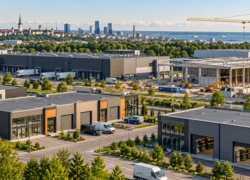
Tallinn’s Industrial Building Wave Is Increasingly Betting on Smaller Businesses

Tallinn’s industrial property market is sending two apparently conflicting signals. Developers remain busy bringing new premises to the market, while companies looking for warehouses, workshops and other industrial accommodation are becoming more cautious about making commitments. At the end of the second quarter of 2026, approximately 120,000 sqm of industrial and logistics property was being developed across around 30 projects in and around Tallinn. At the same time, leasing activity weakened during the quarter, negotiations became longer and the market vacancy rate stood at approximately 5.2%.

The numbers raise an important question about the next stage of Estonia’s industrial property cycle. Is construction responding to genuine requirements that have yet to translate into signed leases, or is Tallinn beginning to develop more space than occupiers currently need? The answer becomes more interesting when the construction pipeline is examined in greater detail. A substantial proportion of current development is not made up of the large distribution centres normally associated with the logistics sector. More than 46,500 sqm across 14 projects consists of stock-office developments, combining several commercial functions within relatively compact units.

These properties typically allow a company to operate its office, storage, showroom, workshop or light-industrial activities from the same location. Rather than requiring tens of thousands of square metres, individual businesses can occupy considerably smaller units tailored to their operational requirements. Their increasing presence could therefore indicate a change in the customer base supporting Tallinn’s industrial development market.

Instead of relying predominantly on large logistics operators, manufacturers and major distribution companies, developers can increasingly target smaller and medium-sized businesses requiring flexible premises. Distributors, online retailers, service companies, importers, trades and smaller manufacturers can potentially combine functions that would otherwise have been spread between several properties. For tenants, that can simplify operations. For developers, however, it creates a different leasing model. A conventional warehouse might depend on a handful of major occupiers, while a multi-unit project requires numerous smaller businesses to commit before the building reaches high occupancy. That distinction becomes increasingly important when companies are taking longer to make property decisions.

Tallinn’s main industrial locations also have different characteristics. Rae municipality and the areas surrounding important road connections have developed into major logistics and industrial destinations, while Tänassilma, Ringtee and other established business areas compete for companies seeking access to Tallinn, national transport routes and the wider Harju County economy. Not every project being constructed in these locations should therefore be considered part of a single logistics pipeline. Large distribution warehouses, facilities developed for specific occupiers, smaller industrial buildings and multi-unit business properties respond to different sources of demand and carry different leasing risks.

Land prices add another dimension to the development equation. Values for industrial plots in some Tallinn business areas have reportedly risen substantially, with increases of as much as one-third cited in parts of the market. Higher land costs matter because they increase the amount developers must recover through rents or eventual asset values. If construction costs and financing remain demanding at the same time that occupiers become more price-sensitive, the economics of speculative development become increasingly difficult.

Yet continued construction suggests developers still see reasons to expand. One explanation is that headline vacancy does not reveal the full condition of the market. A company requiring a modern warehouse, workshop and office combination in a particular location cannot necessarily use an older vacant industrial building elsewhere. Building specification, energy consumption, access, loading arrangements, unit size and location can make theoretically available properties unsuitable for individual businesses. This can produce the same division increasingly visible across other commercial property sectors: vacancy can exist while developers continue constructing buildings that better match current occupier requirements.

The growing stock-office segment could be one expression of that change. For Estonia’s smaller businesses, owning or leasing premises that combine administration, storage and commercial functions can be more practical than occupying a conventional office and separate warehouse. Developers able to divide projects into flexible units can consequently address a broader range of companies than would be possible with a single large warehouse.

The risk is that too many developers reach the same conclusion simultaneously. With more than a dozen stock-office projects under development around Tallinn, competition for smaller occupiers could increase considerably as buildings are completed. Projects in the strongest locations with appropriate unit sizes and competitive occupancy costs should have an advantage, while weaker schemes could take longer to fill.

The approximately 5.2% industrial vacancy recorded around the end of Q2 does not by itself indicate an oversupplied market. But combined with slower leasing decisions and approximately 120,000 sqm under construction, it provides a reason to watch completions and absorption carefully over the coming quarters. The crucial measure will not simply be how much industrial space Tallinn delivers. It will be how quickly companies actually occupy it.

If the pipeline leases successfully, the current development wave could demonstrate that Estonia’s industrial property market is broadening beyond conventional logistics towards a more diverse base of smaller businesses, light industry and mixed commercial operations. If demand remains hesitant, however, developers may discover that dividing warehouses into smaller units does not eliminate leasing risk. It simply distributes that risk across a much larger number of potential tenants.

Tallinn’s industrial construction boom is therefore becoming a test not only of how much space Estonia’s economy needs, but of exactly what kind of businesses will need it.

Source: CIJ.World Research & Analysis Team

From Hospitals to Health Villages: Africa’s Next Institutional Property Sector Is Taking Shape

Healthcare infrastructure is beginning to emerge as a potentially important new frontier for African real estate investment. While offices, logistics, shopping centres and increasingly rental housing have traditionally attracted most institutional property capital, hospitals, diagnostic facilities, outpatient centres and specialist medical buildings are creating a different category of long-term real estate opportunity. The development remains uneven. South Africa already has specialist institutional investors owning healthcare properties, while countries including Egypt, Kenya, Nigeria and Ghana remain predominantly development markets where substantial new medical infrastructure is required. The distinction is significant because constructing hospitals does not automatically create an institutional healthcare property market. For that to happen, buildings need experienced operators, sustainable income, investible ownership structures and eventually a sufficiently liquid market through which investors can acquire and sell assets.

South Africa currently provides the clearest indication of what that model could eventually look like elsewhere on the continent. During July 2026, a new health village was completed in Rosebank, Johannesburg, through Growthpoint Healthcare Property Holdings. Developed at a cost of approximately R100 million, the facility brings several healthcare functions together within one property, including primary medical care, specialist services, diagnostics, pharmacy and day surgery. The significance of the project extends beyond its relatively modest development value. Rather than treating healthcare simply as another tenant within a conventional commercial building, the investment model recognises medical property as a specialist real estate category requiring dedicated management, capital and operator relationships. Growthpoint’s healthcare portfolio had reached approximately R7.4 billion earlier in 2026 and includes hospitals and other healthcare-related properties. Its expansion into senior living has further broadened the definition of healthcare property beyond traditional hospitals, demonstrating how specialist real estate investment can extend across different stages of healthcare and ageing.

This provides an important precedent for the rest of Africa. A hospital does not necessarily need to own the land and building from which it operates. Institutional property capital can own the real estate while healthcare companies concentrate their resources on medical operations, staff, equipment and expansion. Such separation has long existed in more developed healthcare-property markets internationally and could eventually provide an additional source of capital for African healthcare companies seeking to grow. The model nevertheless carries risks that distinguish healthcare from conventional commercial property. A warehouse can often accommodate another logistics company if a tenant leaves, whereas a specialist hospital containing operating theatres, medical gases, diagnostic infrastructure and highly specific internal layouts has a much smaller pool of potential replacement occupiers. The financial strength and operating performance of the healthcare provider therefore become central to the property investment. A long lease is valuable only when the organisation responsible for paying the rent remains financially sustainable. This is one reason South Africa is currently better positioned for institutional healthcare property than most African markets, combining established private healthcare operators with a relatively mature commercial property industry and investors already familiar with specialist assets.

Elsewhere, the immediate opportunity is more heavily concentrated on development. Kenya provides one of the clearest examples. In August 2026, plans advanced for a programme of 13 new Level 5 referral hospitals, each intended to provide approximately 300 beds. If delivered at the proposed scale, the programme would add roughly 3,900 beds across the country. The geographical distribution is particularly relevant because Kenya’s requirement for healthcare infrastructure extends far beyond Nairobi, potentially creating substantial construction and development activity in secondary cities and county centres. For property investors, this raises a broader question about whether healthcare development can eventually follow the path already being established in logistics and industrial property. The first stage is creating modern infrastructure, the second is developing experienced operators and predictable cash flows, and only after those elements exist can a deeper institutional investment market begin to emerge. Kenya could be well positioned for such a transition because Nairobi already has one of East Africa’s more sophisticated commercial property markets, with international developers, institutional investors and increasingly specialised real estate sectors.

Egypt represents an opportunity on a much larger scale. During July 2026, discussions progressed around a proposed integrated medical complex in Cairo that could ultimately provide approximately 4,200 beds together with educational and residential components. Further proposals announced in August involved major medical-city developments in the New Administrative Capital and New Alamein. These projects remain proposals rather than completed investment assets, and that distinction is essential. Nevertheless, their scale demonstrates how healthcare could become part of Egypt’s wider urban-development strategy. The concept of a medical city is particularly relevant to commercial property because it moves beyond the traditional standalone hospital. A major healthcare campus can contain specialist hospitals, laboratories, educational facilities, rehabilitation centres, pharmacies, accommodation, residential property and supporting commercial uses. At sufficient scale, healthcare can therefore become an anchor for an entire mixed-use district. Egypt’s expanding new cities provide opportunities to incorporate this infrastructure at the planning stage rather than attempting to insert major medical facilities into already congested urban areas.

Nigeria demonstrates another part of the opportunity. The country’s enormous population creates substantial healthcare demand, but building large general hospitals is not the only way of addressing it. Investment is also moving into specialist treatment and diagnostic facilities, including programmes intended to expand oncology and diagnostic services through networks of facilities. This decentralised model could prove particularly important for African healthcare property. Cancer treatment, diagnostic imaging, laboratories, dialysis, outpatient surgery and other specialist services can create a category of medical property positioned somewhere between conventional consulting rooms and major hospitals. For real estate investors, these facilities may eventually offer advantages because smaller properties can be developed across multiple locations, creating portfolios rather than concentrating investment in a single enormous hospital. Standardisation may also become possible as operators expand networks across cities.

Ghana provides another example of this movement towards specialist healthcare infrastructure. Plans announced in Accra during July included a purpose-built diagnostic facility intended to accommodate advanced imaging and testing services. Although individual developments of this kind do not yet constitute an institutional healthcare-property sector, collectively they demonstrate how medical infrastructure is becoming increasingly specialised. Modern healthcare requires far more than hospital beds. Imaging, laboratories, outpatient treatment and specialist procedures require dedicated buildings containing expensive equipment and highly technical infrastructure. This also changes the economics of healthcare real estate because constructing the building represents only one part of the investment. Medical equipment can require substantial additional capital, while facilities need reliable electricity, backup generation, cooling, water, digital connectivity and specialised maintenance.

Energy resilience is particularly important. An interruption that would be inconvenient in an office can become critical in a hospital. Healthcare properties therefore require infrastructure standards considerably above those of many conventional commercial buildings. This can increase development costs but can also create stronger barriers to entry. Once an appropriately designed medical property is occupied by a successful healthcare provider, the relationship between operator and building can become extremely durable. Ethiopia illustrates the importance of the equipment side of this equation, where investment in companies providing and maintaining medical technology demonstrates that expanding healthcare capacity requires financing for both property and specialist equipment. The future African healthcare-property market may consequently require closer relationships between developers, healthcare operators, equipment providers, banks and institutional investors than are normally necessary for conventional commercial real estate.

The opportunity also extends beyond hospitals. Africa’s demographic expansion and rapid urban growth will create greater demand for neighbourhood medical centres, diagnostic facilities, outpatient clinics, rehabilitation centres, laboratories and specialist treatment facilities. At the other end of the demographic spectrum, growing demand for professionally managed senior living could create another healthcare-linked property category. South Africa is already demonstrating how these sectors can begin to overlap. A future African healthcare portfolio might therefore include acute hospitals, day hospitals, diagnostic centres, rehabilitation facilities, medical offices and senior-living properties, with different operators occupying the assets while institutional investors own the underlying real estate.

For pension funds and other long-term investors, the potential attraction is clear, but healthcare property should not automatically be regarded as defensive simply because medical demand continues through economic cycles. Operator risk, insurance coverage, affordability, regulation and the structure of healthcare funding can all affect the ability of providers to pay rent. A hospital serving a market where patients cannot afford treatment is not necessarily a secure property investment regardless of the underlying demographic requirement. Affordability may therefore be one of the largest constraints on the development of institutional healthcare property across Africa. The requirement for medical services is enormous, but healthcare need and commercially viable demand are not the same thing.

Governments and development-finance institutions are consequently likely to remain important participants. Public-private partnerships, concessional finance and development funding can help projects reach populations and locations where purely commercial healthcare investment would struggle to generate sufficient returns. The result is unlikely to be one uniform African healthcare-property market. South Africa can continue developing specialist institutional portfolios, Egypt could create enormous medical campuses connected with new urban districts, Kenya may combine public healthcare expansion with growing private investment, and Nigeria could develop networks of specialist treatment and diagnostic facilities, while Ghana and other smaller markets may initially generate opportunities through individual medical developments.

Over time, some of these buildings could become investible assets, and that transition is what commercial real estate investors should be watching. Africa’s healthcare infrastructure deficit is already widely recognised. The more interesting property question is what happens when the facilities being built to address that shortage begin producing predictable long-term income. If healthcare operators can demonstrate sustainable businesses, developers can deliver appropriate buildings and investors become comfortable with specialist operational risk, a new institutional property sector could gradually emerge.

South Africa suggests that this is already possible. The question for the remainder of the continent is whether today’s hospital developments, diagnostic centres and medical campuses eventually become tomorrow’s investment portfolios. If they do, Africa’s next major specialist real estate sector may not emerge from another office district, shopping centre or logistics park. It could develop around the infrastructure required to provide healthcare to one of the world’s fastest-growing urban populations.

Source: © CIJ.World Africa Research & Analysis Team

Latvia’s Investment Market Rebounds as Property Pricing Resets

Latvia’s commercial property market is showing signs of renewed momentum in 2026, but the recovery is taking place under very different conditions from those that shaped the previous investment cycle. Around €177 million of commercial property transactions were recorded during the first half of the year, approximately 70% more than during the same period in 2025. Activity strengthened particularly during the second quarter, with deals spanning offices, retail, logistics and properties offering redevelopment potential.

The increase in transactions would normally suggest that competition for assets is strengthening. Yet pricing indicators moved in the opposite direction. By the end of the second quarter, prime office yields in Riga were around 7.0%, shopping-centre yields approximately 8.0% and industrial yields about 7.25%. All three had moved outward by roughly 25 basis points compared with the previous quarter.

This creates one of the more interesting features of Latvia’s current property recovery. More capital is being deployed, but buyers are simultaneously requiring greater returns from their acquisitions. Rather than waiting for property values to return to the conditions of the low-interest-rate era, investors appear increasingly prepared to transact at pricing that reflects today’s financing environment and Latvia’s position as a smaller European investment market.

Domestic capital has been particularly important in keeping transactions moving. Latvian investors and Baltic investment managers remain prominent, alongside companies purchasing properties connected with their own operations and developers looking for opportunities to reposition existing buildings or develop sites.

One of the most significant transactions involved the Alojas Biroji and Zaļā 1 office buildings in Riga. INDEXO Real Estate Fund, managed by Provendi Asset Management, acquired the properties from Eastnine for approximately €38 million. Together, the buildings provide around 13,700 sqm of leasable space. The deal demonstrated that established Riga offices can attract substantial capital despite investors across Europe remaining cautious about the office sector. It also illustrated the increasingly important role played by regional investors in Latvia’s largest transactions.

Activity has not been confined to traditional investment funds. Maxima Latvija acquired the Grostonas retail property, while Eugesta purchased a logistics facility developed by VGP for the company’s operations. VGP generated approximately €26 million from the disposal after Eugesta exercised its option to acquire the property. Such transactions highlight another source of demand in Latvia. Companies that understand a building, location and their own long-term property requirements can approach an acquisition differently from an institutional investor whose strategy depends primarily on rental income and an eventual resale.

Redevelopment capital is also active. The sale of Blaumaņa 5A and the acquisition of land beside Skonto Stadium demonstrate demand for properties where much of the potential value lies in their future use. These investors are not necessarily purchasing existing income streams. They are acquiring locations where redevelopment, repositioning or new construction could create additional value.

The result is an increasingly diverse investment market. Latvia’s first-half transaction volume therefore does not represent a straightforward return of the institutional capital that dominated parts of the previous cycle. Instead, money is coming from investors with different objectives, including income, operational occupation, development and longer-term value creation.

That distinction matters when interpreting Latvia’s relatively high property yields. Riga remains a small investment market compared with the largest Central and Western European cities. The number of institutional-quality properties coming to market is limited, and the pool of potential purchasers for large assets is comparatively narrow. Investors consequently need to consider not only rental income and financing costs but also how easily an asset could eventually be sold.

Higher acquisition yields provide compensation for some of these risks. An office property generating a benchmark return of around 7%, an industrial asset at approximately 7.25% or a shopping centre around 8% presents a different investment proposition from the much lower returns investors accepted during the period of exceptionally cheap financing.

For domestic and Baltic investors, the current pricing environment can be particularly interesting. Local buyers often have detailed knowledge of Riga’s tenants, locations and development market. They may also be willing to hold properties for longer periods, reducing their dependence on finding an international institutional buyer within a predetermined investment period.

International capital faces a different calculation. Latvia must compete with Poland, the Nordic countries and larger European markets for investment allocations. Those markets generally offer greater transaction depth and, in some cases, easier exits. Riga therefore needs to offer investors sufficient additional return to compensate for its smaller scale. Current pricing may be beginning to provide that incentive.

The next stage of Latvia’s recovery will show whether international institutions agree with the values being established by domestic and regional buyers. If foreign investors begin returning in greater numbers while yields remain around current levels, Latvia could become increasingly attractive to capital seeking income rather than depending primarily on future increases in property values.

That would mark an important change from the investment model that dominated much of the previous decade. For years, European commercial property benefited from falling financing costs and progressively lower yields. Investors could generate substantial returns as property values increased, even when initial income returns were relatively modest.

The current Latvian market requires a different approach. Investors are paying closer attention to the income an asset can generate immediately, the quality of its tenants, the durability of leases and the opportunities to improve a property through refurbishment, redevelopment or more active management.

The approximately €177 million invested during the first half of 2026 suggests that this adjustment is not preventing transactions. On the contrary, the gap between buyers’ and sellers’ expectations appears to be narrowing sufficiently for deals to proceed.

It is still too early to conclude that yields of around 7% to 8% represent Latvia’s new long-term benchmark. Financing conditions could improve, international competition could strengthen and property values could rise again. What the first half of 2026 does show is that Latvia does not need to return immediately to the pricing of the previous cycle for its investment market to recover.

Transactions are increasing while investors continue to demand higher returns. That may ultimately prove more significant than the increase in investment volume itself. Latvia’s next property cycle could be built not around increasingly expensive assets and declining yields, but around stronger initial income, disciplined pricing and buyers willing to accept smaller-market risk when the potential return justifies it.

Source: CIJ.World Research & Analysis Team

Azerbaijan Tests How AI Can Expand Judicial Capacity Without Replacing Judges

Artificial intelligence is beginning to enter one of the areas where automation raises some of the most difficult questions about trust, accountability and human judgement: the justice system. Azerbaijan is developing a model in which AI assists citizens in understanding legislation and helps judges organise increasingly large volumes of legal information, while formally keeping judicial decisions and responsibility in human hands.

The approach was presented at AI4 2026 by the National Artificial Intelligence Center of the Republic of Azerbaijan, which has been developing legal AI tools alongside the country’s wider national artificial intelligence programme. Azerbaijan approved its Artificial Intelligence Strategy for 2025–2028 in March 2025, establishing a national framework covering skills, governance, infrastructure, research and public-sector adoption. The government has also explicitly included information-security assessment and responsible implementation among the requirements for AI used by state institutions.

One of the first visible results is E-Qanun.ai, an AI-based platform built on Azerbaijan’s unified legislative database. The system was officially presented in September 2025 after being developed by the National Artificial Intelligence Center in cooperation with the Ministry of Digital Development and Transport and the Ministry of Justice. Its purpose is to allow users to search and analyse legislation using ordinary language rather than relying exclusively on traditional legal-document searches.

The underlying problem is straightforward. Making legislation publicly available does not necessarily make it understandable. Citizens may have access to thousands of laws, regulations and amendments but still struggle to determine which provisions apply to an employment dispute, contract, administrative procedure or other everyday legal problem. Traditional search systems are often designed around document names, legal terminology and keywords, while citizens generally approach the law through practical questions about what they are allowed to do, what rights they have and what action they should take.

Azerbaijan’s approach is therefore to place a conversational layer over the legal database. Instead of requiring a user to know the correct article number or legal phrase, the system attempts to understand the question, locate relevant legislation by meaning and produce an explanation linked back to the official legal material. The important design principle is that the answer should remain verifiable. The AI is intended to guide the user towards the law rather than become an independent source of legal authority.

That distinction is particularly important in legal applications because a confident but incorrect answer could have serious consequences. The National Artificial Intelligence Center said during the AI4 presentation that the platform has indexed tens of thousands of legal documents and millions of individual sentences, while monitoring changes to legislation so that the underlying information remains current. The organisation also presented very high internal accuracy and citation-performance figures. These should be understood as performance metrics reported by the project team rather than independently audited measures of legal correctness.

The citizen-facing platform is only the first stage of the programme. Azerbaijan is also preparing an AI system intended to assist judges with case preparation. The proposed E-Court AI platform is designed to review case files, identify relevant facts and arguments, locate applicable legislation and precedents and prepare a structured draft that a judge can examine, amend or reject.

The distinction between assistance and decision-making was repeatedly emphasised during the presentation. The system is not intended to function as an autonomous judge. Judicial responsibility remains with the human judge, who continues to interpret the evidence, apply the law and issue the final ruling.

That design reflects the wider challenge facing governments adopting AI in justice systems. A legal process involves far more than retrieving information. Judges assess credibility, context, competing arguments and individual circumstances while operating within constitutional and procedural safeguards. Automating information preparation may be feasible much earlier than automating the judgement itself.

The potential efficiency gains nevertheless explain why judicial authorities are interested. Azerbaijan has a relatively small number of professional judges in proportion to its population. Council of Europe data for 2024 recorded approximately 6.2 judges per 100,000 inhabitants in Azerbaijan, compared with a 2023 EU median of 21.5. Azerbaijan’s judiciary has expanded in recent years, but the country remains well below the European benchmark in judicial personnel per capita.

This makes administrative productivity particularly relevant. A large portion of a judge’s working day can be consumed before substantive judicial reasoning begins: reading case files, identifying relevant claims, comparing previous decisions, locating applicable legislation and organising supporting material. These are precisely the activities where AI-assisted retrieval and document analysis may be most useful.

The National Artificial Intelligence Center presented modelling indicating substantial reductions in case-preparation time for some categories of proceedings. It suggested that simpler files could potentially be prepared in minutes and that even much larger cases could see significant reductions in preliminary document work. Those figures remain projections or project-level estimates and should not be interpreted as demonstrated productivity improvements across Azerbaijan’s judicial system.

Using those assumptions, the project team estimated that hundreds of thousands of judicial working hours could potentially be released and described the resulting capacity as equivalent to roughly 167 additional judges. The figure does not represent actual judicial appointments. It is a modelling exercise intended to demonstrate how administrative automation might increase the effective capacity of the existing court system.

That is an important distinction because AI productivity should not be confused with judicial capacity in the institutional sense. Adding a judge increases the number of legally authorised decision-makers. Automating case preparation only increases the amount of information existing judges may be able to process. The two are not identical, even if both can influence the speed at which cases move through the courts.

The project also raises an important question about feedback and accountability. Under the model described at AI4, judges would be able to accept, modify or reject AI-generated drafts. Their corrections could then provide information for improving the system over time. Such a feedback loop could make the platform increasingly aligned with judicial practice, although it also creates governance questions about which decisions should be used for training and how the system avoids reinforcing previous errors or inconsistencies.

Transparency will therefore be critical. If an AI system recommends a legal provision or precedent, judges need to be able to see where that information originated and why it was selected. A legal AI system that merely generates plausible text would be unsuitable for this type of application. Traceability to official legislation and case material is likely to be one of the fundamental requirements for broader judicial deployment.

There are also significant questions about bias and consistency. An AI system trained on historical court decisions can reproduce patterns embedded in those decisions. That does not necessarily mean the underlying precedent is incorrect, but it makes independent judicial scrutiny essential. Automated similarity between cases should support legal analysis rather than become a shortcut that predetermines outcomes.

Azerbaijan’s broader strategy is relevant because the legal projects are not being developed in isolation. The country is simultaneously investing in AI education, research capability, computing infrastructure and national standards. Its 2025–2028 strategy explicitly seeks to develop domestic expertise rather than relying exclusively on technology imported from abroad.

The National Artificial Intelligence Center also operates initiatives including an AI Academy and Datarace.ai, a competition platform through which public and private organisations can present problems for participants to solve. The intention is to create a domestic pipeline connecting education, practical public-sector problems, computing resources and deployable AI applications.

That approach reflects a broader trend likely to become increasingly important for governments. Countries are beginning to treat AI capability not merely as a collection of software products but as national infrastructure involving data centres, computing capacity, skilled workers, standards and trusted public-sector applications.

Justice could become one of the clearest tests of whether that infrastructure can be used responsibly. In sectors such as marketing or customer service, an incorrect AI answer may be inconvenient. In a court system, errors can affect rights, property, liberty and confidence in public institutions. The acceptable threshold for mistakes is therefore much lower.

Azerbaijan’s experiment is significant precisely because it separates different levels of automation. Citizens can use AI to navigate legislation. Judges can potentially use it to accelerate document preparation and legal research. But the authority to interpret the law and make the final decision remains human.

Source: CIJ.World Research & Analysis Team

China’s Commercial Property Shake-Up Is Creating a New Generation of Owners

China’s property downturn is usually measured through falling residential sales, weaker development activity and the financial difficulties of heavily indebted developers. A less visible transformation is taking place across the country’s commercial real estate market. Offices, shopping centres, logistics facilities, hotels and other operating properties are increasingly becoming part of decisions about debt reduction, portfolio restructuring and the allocation of capital. As owners reconsider which buildings they need to retain, China’s property correction is beginning to influence not only asset values but also who controls the commercial real estate created during the previous development boom.

The financial pressure behind this adjustment remains substantial. Real estate development investment across China fell 18% year-on-year during the first half of 2026, while funds available to developers declined by more than 20%. Investment in office development decreased by approximately 20%, spending on buildings intended for commercial business fell by more than 23%, and new office construction starts were down 35%. These figures describe an industry in which rapid expansion has become considerably more difficult and the efficient use of existing capital has assumed greater importance.

For owners with large property portfolios, mature commercial assets can provide one route to releasing capital. A completed shopping centre, office building, logistics facility or hotel can potentially be sold, refinanced or transferred into another investment structure, allowing the existing owner to redirect money elsewhere. The motivation is not necessarily financial distress. Some developers may be reducing debt, while others are concentrating on their strongest businesses, changing investment strategies or deciding that capital tied up in mature properties can generate better returns elsewhere.

This distinction is important. China’s commercial property restructuring should not be interpreted simply as a nationwide distressed-asset sale. Different owners are selling for different reasons, and many high-quality properties remain profitable operating businesses. What is changing is the assumption that the company that developed a commercial building will necessarily remain its long-term owner.

That creates opportunities for buyers whose objectives are very different from those of developers. Insurance companies and other domestic institutions can evaluate mature properties according to their potential to produce income over long holding periods. Chinese corporations can purchase buildings for their own occupation. Private investment managers can acquire properties requiring refurbishment or repositioning. Public REITs can provide another ownership structure for qualifying assets with sufficiently established operating income.

Shanghai already provides evidence of how quickly the buyer base can change. Companies purchasing commercial property primarily for their own occupation represented approximately 45% of investment activity during the second quarter of 2026, compared with around 18% across 2025. For businesses confident that they will occupy the same location for many years, corrected property values can make direct ownership worth considering alongside conventional leasing.

This introduces a buyer that evaluates property differently from a conventional real estate fund. A financial investor normally focuses heavily on rental income, yield, future capital expenditure and eventual resale value. A company buying its headquarters can also consider the operational benefits of controlling the premises it occupies. The same building can therefore produce different valuations depending on whether the prospective purchaser sees it primarily as an investment or as part of its business infrastructure.

China’s expanding public REIT market adds another dimension to this ownership transition. In June 2026, the first four public commercial-property REITs listed on the Shanghai Stock Exchange, raising approximately RMB 20.3 billion. Their arrival followed the expansion of the country’s REIT framework to a wider range of commercial assets and demonstrated that mature retail and office properties can enter publicly traded investment structures when they satisfy the required operating and income criteria.

For developers and other large property owners, this potentially creates an additional route for releasing capital from completed buildings. Instead of retaining an asset indefinitely or relying entirely on a conventional private sale, qualifying properties can potentially become part of listed investment vehicles. The development company can recycle capital while investors gain exposure to operating real estate without purchasing entire buildings directly.

This could become increasingly important as China’s property industry moves away from the expansion model that dominated the previous cycle. During the boom years, enormous amounts of capital flowed into land acquisition and new construction. As development contracts, more attention is likely to shift toward managing, improving, financing and transferring the enormous stock of property that already exists.

Retail provides a particularly interesting example. Successful shopping centres can produce recurring income but also require specialised management, continuous investment and an ability to adapt to changing consumer behaviour. A developer seeking to release capital may decide to sell a mature centre, while a specialist retail investor or REIT may value the same property precisely because its income is already established.

This creates a natural difference in objectives. The seller may prioritise liquidity, while the buyer may prioritise long-term income. A property that has reached the end of its strategic usefulness for one owner can therefore become an attractive investment for another.

Offices are undergoing a similar adjustment. China’s office market continues to experience elevated vacancy and declining rents, making investors highly selective. Yet good buildings in established locations can still attract domestic institutions and corporate buyers when acquisition prices reflect current market conditions. Properties suitable for headquarters use have another potential source of demand because businesses themselves can become purchasers.

The result is not simply a transfer from developers to financial institutions. Ownership can move in several directions. An office held as an investment can become a corporate headquarters. A developer-owned shopping centre can eventually move into a listed vehicle. A commercial building sold by an international fund can be acquired by domestic capital. A property requiring substantial improvement can move to a specialist manager prepared to invest in repositioning it.

Logistics presents another opportunity, although asset selection is particularly important. China’s modern warehouse sector expanded rapidly during the previous development cycle. National logistics absorption improved sharply during the second quarter of 2026, but vacancy remained around 18.5% and rents continued to decline. This means strong occupational activity can coexist with significant pressure on property income.

Warehouses close to major consumer centres, ports and established distribution corridors can remain attractive long-term assets. Properties in heavily supplied peripheral markets face a more difficult outlook and may require substantial repricing before investment capital becomes interested. Capital recycling therefore depends not simply on an owner’s willingness to sell but on whether buyers believe the underlying property can produce sustainable income.

Hotels add another dimension because their value depends on both real estate and operating performance. Location, brand, management quality, tourism and business travel can all influence what investors are prepared to pay. A hotel that no longer fits the strategy of a diversified developer may have greater value to a specialist hospitality investor capable of improving operations or repositioning the property.

Across these sectors, the property correction is creating a clearer distinction between buildings capable of moving easily between owners and those requiring substantial intervention before capital becomes interested. High-quality properties can attract several categories of buyers. Assets with recoverable problems can become investible after repricing or refurbishment. Buildings facing structural disadvantages may remain difficult to sell even after their owners reduce expectations.

Recent commercial-property disposals in Beijing and Shanghai illustrate how significant repricing can become. In a small group of five Shanghai properties for which previous acquisition values could be compared with subsequent sale prices, the later transactions occurred at values averaging more than 40% below the earlier purchase prices. The sample is far too limited to represent Shanghai commercial property generally, but it demonstrates that some owners have had to accept major adjustments before transactions could proceed.

For buyers with available capital, this can create opportunities that were unavailable during the previous cycle. Buildings that once traded at prices based on expectations of continuing rental and capital growth can now be evaluated against today’s income and occupancy. For sellers, however, accepting those prices can crystallise substantial losses.

That tension is central to China’s commercial property restructuring. Buyers increasingly want valuations that reflect current rents, vacancy, financing conditions and future capital requirements. Sellers must decide whether to accept those values, continue holding the property or invest additional capital in an attempt to improve performance.

Every completed transaction provides more evidence about where the market currently stands. This process of establishing new values can encourage additional activity because lenders, owners and prospective purchasers gain more comparable transactions against which to assess buildings.

The assets that fail to sell are equally important. Some properties may need refurbishment before buyers return. Others could require conversion, a new leasing strategy or a different ownership structure. In heavily oversupplied locations, a lower asking price alone may not be enough to restore investment demand.

This means the opportunity created by China’s property correction is not simply about purchasing assets cheaply. The more important question is whether a new owner can operate the property more effectively, finance it differently or use it for a purpose that creates greater long-term value.

That principle could shape the next stage of China’s commercial property market. Developers that once concentrated primarily on building new projects may increasingly dispose of mature assets and redirect capital. Specialist operators may acquire buildings where management can improve performance. Institutions may concentrate on properties offering dependable income. Corporate occupiers may purchase strategic premises. Public REITs can provide another destination for qualifying mature assets.

International investors will remain part of this market, but the ownership landscape is becoming more diverse. Domestic corporations, insurers, investment managers, state-linked capital and listed vehicles all have the potential to acquire properties released by existing owners.

The scale of the eventual ownership shift cannot yet be quantified. It would therefore be premature to describe the current restructuring as a completed transfer of China’s commercial real estate from one group of owners to another. What the evidence does show is that buildings developed during the previous expansion cycle are increasingly moving between different types of capital, raising the possibility of a significant redistribution of commercial-property ownership over the coming years.

This may ultimately become one of the most important consequences of China’s property correction. The previous cycle was largely about creating new buildings. The next could place much greater emphasis on determining who owns, finances and manages the enormous stock that has already been constructed.

For investors, that changes the central question. The opportunity is not simply to identify property being sold because its owner needs capital. It is to determine which assets can produce stronger and more sustainable performance under different ownership.

China’s property downturn has placed enormous pressure on the development industry, but it is also creating the conditions for commercial real estate to move toward owners with different capital structures, investment horizons and operating strategies. If that process continues, the restructuring of China’s property sector could ultimately be remembered not only for the developers and investors that lost value, but for the new generation of owners that emerged to control the assets left behind.

Source: CIJ.World Research & Analysis Team

Türkiye’s AI Ambitions Are About to Become a Land and Power Story

Türkiye’s new artificial intelligence programme contains an unusually large real-estate proposition hidden inside what initially appears to be a technology strategy. The country wants to establish at least 1 GW of computing and data-centre capacity, attract a minimum of USD 10 billion of predominantly private investment and create at least five dedicated AI development zones by the end of 2028. For the commercial property industry, those targets matter because artificial intelligence ultimately requires physical infrastructure. Large computing facilities need land, enormous quantities of electricity, resilient fibre connections, cooling infrastructure and access to locations where development can proceed quickly. Türkiye’s AI ambitions could therefore create a new competition between cities and regions for one of the world’s fastest-growing categories of infrastructure investment.

The proposed AI development zones are at the centre of that opportunity. Rather than expecting investors to assemble land, electricity and telecommunications infrastructure independently, the government wants to create locations capable of accommodating large data-centre and AI investments with much of the essential infrastructure already addressed. Faster planning and approval processes are also intended to reduce the time between an investment decision and construction. The concept could substantially change how international data-centre investors assess Türkiye. Conventional data-centre development frequently becomes a search for electricity before it becomes a search for property. A site can have excellent transport links, available land and attractive development costs, but without sufficient grid capacity it has little value to a large computing operator.

Türkiye’s 1 GW objective consequently makes electricity one of the most important property questions arising from the strategy. Providing that amount of capacity will require considerably more than constructing server buildings. Grid connections, substations, transmission infrastructure and potentially new generation capacity will all influence where projects can realistically be developed. This means the eventual locations of the country’s planned AI zones could be more important to property investors than the headline national investment target. Areas with available power, strong telecommunications networks and sufficiently large development sites could gain an advantage, while locations already struggling with electricity constraints may find it difficult to accommodate energy-intensive computing projects.

Istanbul will inevitably be part of the discussion because of its position as Türkiye’s principal corporate, financial and technology centre. But the scale of the programme raises the possibility that significant computing infrastructure will need to spread beyond the country’s largest business market. Data centres do not necessarily need to occupy the most expensive commercial locations. Large AI facilities can potentially operate in secondary cities or industrial areas if they have sufficient electricity, reliable fibre connectivity and appropriate physical security. That could give Türkiye an opportunity to create new technology investment locations rather than concentrating the entire industry in Istanbul.

The government is also seeking international capital. Türkiye wants global cloud and technology companies to consider the country as a regional computing location, supported by investment incentives and greater certainty surrounding the development and operation of large technology infrastructure. The USD 10 billion investment ambition provides an indication of the scale being considered, although it should not be interpreted as committed capital. The target depends largely on private investors deciding that Türkiye can provide competitive conditions for AI infrastructure and technology businesses. For property investors, that distinction is important. Government policy can make sites available and improve infrastructure, but private capital will ultimately determine how quickly the proposed development programme becomes physical real estate.

The potential opportunity also extends beyond hyperscale data centres. Türkiye plans regional technology centres where researchers, smaller businesses and technology companies could gain access to advanced computing resources and development facilities. Such locations could create demand for laboratories, research premises, offices and specialised technical buildings alongside the main computing infrastructure. Türkiye’s existing industrial base makes another part of the strategy particularly relevant to commercial property. The government wants artificial intelligence development to extend into robotics, autonomous technology, defence and advanced manufacturing. These industries require very different buildings from conventional software companies.

A company developing autonomous machines may need engineering space, laboratories, workshops and testing facilities. Robotics businesses can require combinations of office and light-industrial accommodation. Advanced manufacturers may need production halls with substantial power requirements and specialist technical infrastructure. AI investment could therefore begin influencing several property sectors simultaneously. Data centres would represent the most capital-intensive component, but laboratories, technology campuses, advanced factories, engineering facilities and conventional offices could form part of the wider ecosystem.

This is where the proposed development zones could have their greatest long-term effect. A successful computing campus rarely operates entirely in isolation. Contractors, equipment suppliers, engineering companies, telecommunications providers and technology businesses can develop around major infrastructure investments. If Türkiye succeeds in attracting international cloud providers and large AI investors, some of the resulting property demand could consequently appear outside the boundaries of the original data-centre sites.

The programme could also create a new type of competition for industrial land. Logistics developers traditionally assess sites according to motorway access, population, labour availability and proximity to major consumption centres. AI infrastructure introduces another hierarchy in which electricity and fibre capacity can outweigh many of those conventional considerations. A large site beside a motorway is valuable to a logistics operator, while for a data-centre developer a less obvious location with abundant electricity and multiple fibre routes may be considerably more attractive.

That could affect land values around suitable infrastructure nodes if the government’s programme begins attracting investment at scale. It could also place AI projects in competition with manufacturing, logistics and other electricity-intensive industries for grid capacity and development land. Environmental performance will become part of that equation. Türkiye’s programme calls for expansion of computing capacity while paying attention to energy efficiency and lower-carbon infrastructure. As AI computing becomes increasingly electricity intensive, the availability and source of power will become closely connected with the investment credentials of individual locations.

The timetable is ambitious. The initial period through 2027 is intended to establish the institutional structure, prepare computing investments and begin practical AI projects. From 2028 onwards, the programme is expected to move increasingly towards expansion, commercial deployment and international investment. At least five AI development zones are targeted by the end of 2028. Their locations, infrastructure specifications and development models will therefore be important indicators for the Turkish property market over the next two years.

There are still significant uncertainties. A national target for 1 GW of capacity does not mean that 1 GW of data centres has already been financed or commissioned. Likewise, the USD 10 billion figure represents an investment objective rather than signed transactions. The ultimate property impact will depend on whether private investors commit capital and whether suitable power and infrastructure can be delivered quickly enough. But Türkiye has provided something that data-centre investors increasingly require: a clear indication that computing infrastructure is being treated as part of national economic development rather than simply another category of commercial construction.

For the property industry, the next stage will be geographical. The key question is no longer simply whether Türkiye wants a larger artificial intelligence industry. It is where the electricity, land and fibre needed to support that industry will come from. Once the locations of the AI zones become clearer, so will the potential winners. Cities capable of combining large development sites with reliable power, telecommunications infrastructure, skilled workers and efficient approvals could attract an entirely new category of international investment.

Türkiye’s AI strategy may have been written as a technology programme, but achieving its biggest targets will require something considerably more physical: land, electricity and buildings. That could make the country’s artificial intelligence ambitions one of its most important emerging real-estate development stories.

Source: CMS

Croatia’s Property Investors Are Waiting for More Assets to Reach the Market

Croatia’s relatively modest commercial property transaction volumes do not tell the whole story about investor appetite. The country’s investment market appears to face a problem that is different from a simple shortage of buyers: good income-producing properties are not reaching the market frequently enough to generate significantly greater transaction activity. Market evidence from 2026 indicates continued demand for established properties capable of providing dependable rental income. However, Croatia remains a relatively small commercial real estate market, and the number of suitable assets actually available for acquisition at any given time is limited.

This creates an important distinction. A country can have interested investors without recording large transaction volumes if existing owners have little reason to sell. The situation is becoming more relevant as capital returns to Southeast European property. More than €340 million was invested across the wider region during the second quarter of 2026, with international investors representing the largest source of capital. Croatia is therefore competing within a regional market where investors can move between countries depending on the opportunities available.

Within Croatia, Zagreb remains the principal destination for commercial property investment, while Split and Rijeka provide additional concentrations of investible real estate. Retail has been particularly prominent, accounting for around 60 percent of volume in one recent market assessment. The strength of retail partly reflects the maturity of the sector. Croatia has established shopping centres and a growing network of retail parks with the size, tenant base and income characteristics that professional investors generally seek.

The difficulty is that ownership of an attractive property does not automatically translate into willingness to sell it. A shopping centre generating dependable rental income may be particularly valuable to its existing owner. Unless that owner wants to realise a return, reduce borrowing, restructure a portfolio or finance another investment, retaining the property can make more sense than selling it. The same principle can apply to retail parks. Development has increased the stock of modern retail property across Croatia, but completed assets can remain with their developers or long-term investors rather than immediately entering the transaction market. This means Croatia can contain substantial amounts of desirable commercial property while offering comparatively little of it for sale.

Zagreb’s office market presents another version of the problem. Modern buildings in good locations with established tenants can provide the type of predictable income sought by institutional investors. Yet the relatively small size of the market limits the number of large investment opportunities likely to become available simultaneously. For international capital, market depth matters. An investor may be prepared to purchase a single Zagreb office building, but entering a country becomes more attractive when there is a realistic prospect of acquiring additional assets later. Investors also need confidence that a functioning transaction market will exist when they eventually decide to sell. A limited flow of comparable transactions makes those decisions more difficult.

New office development could gradually increase that depth. Buildings being planned or constructed today may initially remain with their developers, but some could eventually reach the investment market after completion, leasing and stabilisation. This is one of the ways mature real estate markets continually create new investment opportunities. Developers construct properties, establish their rental performance and can later sell them to long-term investors, releasing capital for another round of development.

Croatia’s logistics sector could become particularly important to this process. Demand for modern warehouse space has expanded while availability has remained extremely limited. Development around Zagreb and its surrounding motorway corridors is consequently creating a larger stock of modern distribution property. The immediate purpose of those projects is to satisfy occupier demand, but their longer-term significance could be much greater.

Large logistics parks occupied by established retailers, manufacturers and distribution companies can eventually provide the scale and income profile sought by institutional capital. As Croatia’s modern warehouse stock expands, its logistics investment market could consequently gain greater depth. That does not mean projects currently under construction will necessarily be sold. Some developers and investors may retain properties for many years. But every additional professionally developed warehouse increases the potential pool of assets that could eventually enter the transaction market.

Hotels represent another major source of potential investment property, particularly along the Adriatic coast. Croatia possesses resort and urban hotels in locations where development opportunities are naturally constrained. Waterfront sites, historic cities and established tourism destinations can give existing properties scarcity value that is difficult to reproduce through new construction.

Hospitality property, however, operates differently from offices or warehouses. A hotel is both real estate and an operating business. Owners must consider management, branding, staffing and operating strategy alongside the value of the underlying property. For hotel groups and long-term owners, control of the real estate may also form an important part of their business model. As a result, a valuable Croatian hotel does not necessarily become available simply because investors would be interested in purchasing it.

Over time, different ownership structures could create more opportunities. Hotel companies may introduce investment partners, sell individual properties, restructure portfolios or separate ownership from hotel operations. Whether individual owners choose such strategies will depend on their own financial and corporate objectives. This illustrates why understanding Croatia’s investment market requires examining the motivations of sellers as closely as the intentions of buyers.

Different owners have very different reasons to transact. Developers can sell completed projects to recover capital for their next development. Companies may dispose of property to invest money in their principal operations. Investment vehicles can sell as part of portfolio strategies. Owners facing refinancing requirements may also consider disposals. Long-term private owners can behave very differently. If a property produces dependable income and carries manageable financing, there may be little economic pressure to sell.

Pricing adds another layer. An owner of a scarce, well-performing property may expect a premium valuation. A buyer must determine whether that price can be justified by rents, financing costs and the returns available from other markets. If those expectations remain too far apart, a transaction does not necessarily occur at a lower price. It may simply not occur at all.

This is why relatively low transaction volumes should not automatically be interpreted as evidence of a weak Croatian investment market. Liquidity and investor appetite are not the same thing. Croatia can simultaneously have investors searching for properties and relatively few transactions if suitable assets are not being offered, or if owners and buyers cannot agree on valuations.

The prominence of retail in recent activity provides an indication of how additional property stock could eventually change the market. Croatia already has enough established shopping centres and retail parks to generate transactions of meaningful scale. Offices and logistics currently provide fewer opportunities, but new development could gradually increase the number. That makes construction activity relevant to investors even when they are not financing the development themselves.

A warehouse completed in 2026 could become an investment transaction several years later. The same could happen with a newly built Zagreb office or a repositioned hotel. Development therefore does more than increase occupier supply. It creates potential future investment property.

For a relatively small market such as Croatia, the effect can be significant. A handful of large transactions can materially alter annual investment volumes. If several major properties were offered during the same year, Croatia could record a substantial increase in investment without any corresponding surge in underlying investor appetite. The buyers might already have been present. What changed would simply be the availability of assets.

Scarcity can occasionally benefit sellers because an exceptional property coming to market may attract several interested parties. But persistent scarcity can also work against the country. Capital does not have to wait indefinitely. An international investor unable to find an appropriate property in Croatia can examine opportunities elsewhere in Central and Southeast Europe. A lack of suitable properties can therefore eventually become a competitive disadvantage even when investors view Croatia positively.

The country’s longer-term challenge is to create a deeper and more continuous investment market. That will depend partly on development, but also on whether existing owners decide to recycle capital. More office and logistics construction can enlarge the pool of institutional-quality assets. Retail development can create additional investment stock outside the largest cities, while changes in hotel ownership and corporate strategies could bring rarely traded hospitality properties to market.

None of these developments guarantees higher transaction volumes. They would, however, provide investors with something Croatia currently offers in relatively limited quantities: choice.

The evidence from 2026 suggests that investor demand for Croatia’s strongest income-producing properties is healthier than transaction totals alone might imply. The constraint appears to be partly the limited flow of suitable assets available for acquisition rather than simply an absence of interested capital. That changes the central question for Croatia’s property investment market.

Instead of asking only how the country can attract more investors, it may be more useful to ask what those investors would purchase if substantially more high-quality property actually came onto the market. The next major expansion of Croatian property investment may therefore begin not when more buyers arrive, but when more owners decide to sell.

Source: CIJ.World Research & Analysis Team

Poland’s Property Recovery Faces a Longer Era of Expensive Debt

Poland’s commercial property market may have to operate with elevated financing costs well into 2027 after the National Bank of Poland maintained interest rates in September and expectations for further monetary easing moved further into the future. The Monetary Policy Council left the NBP reference rate at 3.75% at its meeting on 9 September. The lombard rate remains at 4.25%, while the deposit rate is 3.25%.

The decision was widely expected, but its importance for property investors lies increasingly in how long borrowing conditions could remain restrictive rather than in the September decision itself. The central bank is confronting a more difficult inflation environment than earlier in the year, with higher fuel and energy costs adding to price pressures. The RPP is also monitoring geopolitical developments, global commodity prices, fiscal policy, domestic economic activity and wage growth when assessing its next move.

NBP President Adam Glapiński has indicated that another reduction during 2026 is now unrealistic. This does not represent a formal commitment by the Monetary Policy Council to keep rates unchanged until a particular date, but it significantly changes expectations about the timing of cheaper money. Rates could remain at current levels into 2027 if inflationary pressures persist.

For commercial property, that potentially changes the assumptions behind Poland’s investment recovery. Investors that had expected progressively cheaper borrowing through 2026 and early 2027 may now have to assess acquisitions on the basis that today’s financing environment could last considerably longer.

The consequences are particularly relevant for leveraged investors. When borrowing remains expensive, acquisitions require stronger property income, more equity or purchase prices that provide sufficient returns relative to financing costs. This can restrict the number of investors able to compete for assets and strengthen the position of buyers that are less dependent on debt.

Refinancing presents another challenge. Owners whose loans mature over the coming quarters may have to replace financing agreed under more favourable conditions with debt carrying a higher cost. Well-let properties with predictable income should generally be better positioned, while buildings with significant vacancy, approaching lease expiries or substantial refurbishment requirements could require additional equity or alternative financing structures.

Development decisions could also remain more difficult. Higher interest costs increase the returns developers need before committing capital to new schemes. Projects with weaker economics can consequently be delayed even when underlying occupier or residential demand remains relatively healthy.

The residential market faces a similar constraint. Mortgage affordability remains sensitive to interest rates, limiting how much households can borrow and influencing demand for new homes. Developers therefore have to balance buyers’ purchasing power against land, construction and infrastructure costs.

The outlook remains uncertain. The RPP continues to base future decisions on economic and inflation data rather than following a predetermined timetable. A meaningful improvement in inflation could eventually create conditions for lower rates, while persistent price pressures or another increase in energy costs could keep monetary policy restrictive for longer.

For Poland’s property industry, the immediate issue is therefore less about predicting the precise month of the next rate reduction and more about adapting to the possibility that cheaper financing will not arrive soon. The investment market can continue recovering while the reference rate remains at 3.75%, particularly where strong occupier demand and equity-backed investors support transactions, but financing will continue to influence which deals can proceed.

Polish real estate may consequently be entering a different stage of its recovery. Instead of relying on falling interest rates to restore the financing conditions of the previous cycle, investors and developers increasingly need acquisitions and projects to work with the cost of capital available today.

ECB Rate Increase Raises New Financing Risk for European Property Markets

The European Central Bank has increased its key interest rate to 2.5%, signalling a renewed focus on inflation as higher energy costs create fresh uncertainty for the eurozone economy. The decision represents an important development for European property markets, where expectations of lower borrowing costs have played an important role in the gradual recovery of investment activity. A return to monetary tightening could make refinancing more expensive, restrict debt-supported acquisitions and delay improvements in development finance.

Marcel Fratzscher, President of the German Institute for Economic Research (DIW Berlin), described the increase as necessary to protect the ECB’s credibility and prevent expectations of persistently higher inflation from becoming established. “The ECB has taken a necessary step with the interest rate increase to stabilise inflation expectations and protect its credibility,” Fratzscher said. “However, the rate increase is unlikely to make any substantial difference to the currently high inflation, including over the coming year.”

According to Fratzscher, much of the latest inflationary pressure originates from higher energy prices associated with the conflict in the Middle East. This creates a difficult policy problem because higher interest rates can reduce domestic demand but have limited ability to address an externally generated increase in energy costs.

For commercial real estate, the renewed increase in borrowing costs could interrupt a recovery that has been developing unevenly across European markets. Transaction activity has been improving in several countries as buyers and sellers gradually adjust to a higher interest-rate environment, but investment economics remain sensitive to relatively small changes in financing costs.

Highly leveraged owners could face the greatest pressure, particularly where loans originated during the previous low-rate environment are approaching refinancing. Development projects could also become more difficult to finance if higher benchmark rates increase debt costs while construction and operating expenses remain elevated. Buildings with secure income, strong occupiers and limited capital expenditure requirements are better positioned to attract investors, while secondary properties requiring refurbishment or carrying greater leasing risk could face additional pricing pressure.

Fratzscher argued that the ECB’s action is also intended to reduce the danger that an initial energy shock develops into broader inflation through wage negotiations and corporate pricing decisions. “Inflation expectations in the eurozone remain well anchored, but today’s step gives the ECB better protection against possible second-round effects from companies and trade unions,” he said. “It sends a signal to all economic actors that it takes its price stability objective seriously and is also prepared to slow the eurozone economy to achieve it.”

The outlook remains heavily dependent on geopolitical developments. A further escalation in the Middle East could place additional pressure on energy markets, potentially keeping inflation higher for longer and complicating expectations for future interest-rate reductions.

At the same time, Fratzscher cautioned against an extended series of rate increases. Longer-term borrowing costs have already risen considerably, influenced partly by concerns about economic and political conditions internationally, particularly in the United States. “Caution is required not to go too far,” Fratzscher said. “Long-term interest rates have risen significantly, mainly because of doubts among businesses and markets about the ability of policymakers to act, not only, but particularly, in the United States. This reduces the pressure on the ECB to raise rates much further.”

For European property investors, the significance of the latest decision therefore extends beyond the immediate increase to 2.5%. The prospect that interest rates could remain elevated for longer changes assumptions about refinancing, asset values and the timing of a broader investment recovery.

The property market had been moving towards a new equilibrium following the repricing triggered by the earlier increase in European interest rates. Renewed monetary tightening introduces another challenge into that process. Unless inflationary pressures ease and market interest rates begin falling again, investors dependent on debt are likely to remain selective, while owners facing refinancing could come under greater pressure to inject additional equity or reconsider asset pricing.

front page info
LATEST NEWS