



CIJ Awards Romania 2026 Announces 44-Member Industry Jury

CIJ Awards Romania 2026 has announced its 44-member jury, bringing together senior executives and specialists from across the country’s property industry to evaluate this year’s nominations. The judging process will be moderated by RD Fletcher, CEO and Editor-in-Chief of CIJ EUROPE, with independent auditing conducted by Daniela Zar, Tax Partner at TPA Romania.

The panel includes representatives from property development, investment, construction, architecture, consultancy, legal services, sustainability and property management. Its composition reflects the range of expertise required to assess achievements across Romania’s residential and commercial real estate sectors, from individual developments and investment transactions to professional services and industry performance.

The competition operates a combined voting system in which the professional jury contributes 61% of the final result, while online voting accounts for the remaining 39%. Nominations will be assessed according to the requirements of their respective categories, with consideration given to demonstrated achievements, project quality, innovation, commercial relevance and supporting evidence. The evaluation criteria will reflect the nature of each submission, recognising the differences between development projects, completed transactions and professional services.

RD Fletcher will moderate the jury proceedings, coordinating discussions and ensuring that nominations are considered consistently within the established evaluation framework. Daniela Zar, representing TPA Romania, will independently audit the voting and results procedures, including verification of the consolidated scores. To protect the integrity of the assessment, jury members will be expected to declare relevant conflicts of interest and abstain from evaluating nominations involving their own companies or direct commercial interests.

The CIJ Awards Romania 2026 jury includes Adrian Stoichina, CEO of Prima Development; Alex Skouras, Managing Director of Alesonor; Alina Necula, Country Manager of Lion’s Head; Andreea Dumitru, Group Chief Marketing Officer at Hagag Europe; Andrei Lefter, CEO of DRS Architects; and Antoanela Comsa, Development Director at Bellemonde.

Also participating are Bogdan Gubandru, COO of REDPORT; Brîndușa Grama, Head of Leasing at Square 7, part of M Core; Catalin Duma, Managing Director of Coral Companies; Christophe Weller, Founder and CEO of COS; Corina Obretin, Business Development Manager at Optim Project Management; and Costin Nistor, Managing Director of Fortim Trusted Advisors.

The panel further includes Cristiana Rosu, Managing Director of RADOX; Cristina Dumitrescu, Managing Director of Hotspot; Dan Flesariu, CEO of WIREN; Dan Ungureanu, Business Development Leader CEE & CIS at Renomia Gallagher; Dan Voiculescu, CEO of REMAX Innovation; and Daniel Crainic, CMO of Imobiliare.

Additional members are Emma Toma, Head of Office Division at AFI Romania; Gabriel Biris, Managing Partner at Biris Goran; Horatiu Didea, Managing Director of Workspaces; Ioana Darie, Interior Designer and Founder of Yoda Interior Design; Ioana Roman, Partner at Filip & Company; and Iulia Istudora, Commercial Manager at VGP Romania.

The jury also brings together Joao Saracho de Almeida, Managing Director of SOLIDA Capital; Madalina Mitan, Partner at Schoenherr; Maria Badea, Senior Leasing Manager at VASTINT Romania; Marian Roman, Managing Director of Paval Holding Europolis Office Division; Mauricio Mesa Gomez, Chairman of the Board for Spain and Romania at Cordia Group; and Mihaela Petruescu, Country Director Property Services Romania & Poland at NHOOD.

Other members include Mihai Olaru, CEO of Omifa; Octavian Moroianu, Managing Director of WEMAT; Oliver Somers, Group CEO of Metigla; Rares Glod, Business Unit Manager Building Construction at STRABAG Romania; Razvan Brasla, CEO of Cloud9 Residence; and Razvan Nica, Managing Director of Build Green.

Completing the panel are Sergey Artemenko, Project Manager at RRG Real Estate; Silviu Stratulat, Managing Partner at Stratulat Albulescu Attorney at Law; Simona Iordache, Senior Marketing Executive at Bog’Art; Sorin Preda, Founder and CEO of Global Vision; Tatiana Popescu, Managing Director of Quadra Casa; Tudor Cartianu, CEO of Delta Studio; Vlad Musteata, Founder and CEO of North Bucharest Investments; and Vladimir Pilca, CEO of The Concept Group.

The involvement of professionals from different disciplines provides an opportunity to examine nominations beyond their immediate commercial achievements. Residential projects will be considered in relation to design, functionality and the quality of their living environments, while office, retail, industrial and logistics developments will be evaluated against relevant market requirements and operational considerations. Environmental performance and responsible development practices will also be considered where applicable, alongside the contribution of professional advisers and service providers to the wider industry.

The CIJ Awards were established in 2001 and have since become a longstanding feature of the Central and Eastern European property industry. The Romanian competition recognises achievements across the country’s real estate market, with the 2026 edition covering eligible projects, transactions and professional activities undertaken between December 2025 and November 2026.

The CIJ Awards Romania 2026 Gala is scheduled for 3 December 2026 at the Radisson Blu Hotel in Bucharest, bringing together property developers, investors, consultants and other industry representatives. The winners will be announced on the night.

Successful entries will progress to the HOF Awards 2027, taking place in May 2027 in Bucharest. The regional competition brings together national CIJ Awards winners from participating European markets, providing further recognition for projects, companies and professional achievements that have distinguished themselves within their respective countries.
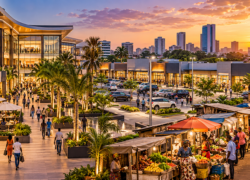

Africa’s Retail Growth Is Becoming More Local, Flexible and Diverse

Africa’s retail property market is becoming increasingly difficult to define by a single development model. Large destination malls remain important in many cities, but investment and expansion are increasingly spreading across neighbourhood centres, grocery-led schemes and smaller formats located closer to where consumers live. At the same time, traditional independent retailers continue to handle a substantial part of everyday spending in many African markets.

The change is particularly visible in East Africa. In Kenya, developers have become more selective about adding large volumes of shopping-centre space following earlier periods of rapid expansion. Smaller neighbourhood projects and mixed-use developments are becoming more prominent, while supermarket operators are extending their networks into residential catchments. By the end of 2025, Naivas had 113 stores, while Quickmart operated 63 locations and Carrefour 34, illustrating how competition for everyday consumer spending is spreading well beyond the largest shopping destinations.

This does not mean that established malls are becoming obsolete. Nairobi’s leading shopping centres continue to record occupancy above 90%, showing that well-positioned destinations can coexist with the expansion of smaller formats. The emerging distinction is increasingly between centres with strong locations, tenant mixes and established catchments and weaker properties that struggle to give shoppers sufficient reason to travel.

South Africa provides an even clearer example of this divide. Retail property attracted R7.5 billion of investment during 2024, accounting for around 30% of commercial real estate transaction volumes that year. Smaller convenience centres were frequently traded, demonstrating investor interest in assets serving everyday local demand. Yet the latest performance figures show that large shopping centres remain highly competitive. During the first quarter of 2026, super-regional centres produced some of the strongest growth in trading densities in the market.

New development is consequently taking several forms rather than converging on one model. Grocery-led centres remain attractive because food, pharmacy, services and other frequently purchased goods generate repeat visits from surrounding residential areas. South Africa’s R650 million GrandWest Mall development, where construction started in 2026, demonstrates that investors are still prepared to commit significant capital to convenience-oriented projects when the surrounding catchment and tenant demand support them.

Lagos is showing a similar movement towards proximity. Limited additions to the city’s conventional mall stock have coincided with greater attention to retail serving residential communities. In a market where household budgets and transport costs can strongly influence purchasing decisions, locations that allow consumers to combine grocery shopping, services and other everyday requirements within shorter journeys have an obvious advantage.

Alongside formal property development sits another part of the African retail economy that cannot be ignored. Independent shops, markets and neighbourhood traders remain central to consumer distribution in many countries. Their strength comes partly from their proximity to customers, ability to sell in small quantities and deep integration within local communities. Rather than disappearing as formal retail expands, these businesses are increasingly likely to exist alongside supermarkets, shopping centres and digital commerce.

There is also no single African retail model. Cairo, for example, continues to attract larger lifestyle and mixed-use developments combining shopping with restaurants, entertainment and leisure. South Africa supports both highly established regional malls and smaller community centres, while markets such as Kenya and Nigeria are seeing stronger interest in formats embedded within residential areas. What works in one city may therefore be unsuitable for another.

For property investors, this makes understanding the individual catchment increasingly important. Population density, household incomes, transport patterns, competing retail supply and the strength of informal commerce can matter as much as the overall size of a city. A smaller centre positioned around frequent household spending may outperform a larger development in one location, while a dominant regional mall can continue attracting consumers and international brands in another.

Africa’s retail story is therefore becoming less about replacing the shopping mall and more about building a wider range of formats around how people actually shop. The strongest opportunities are likely to emerge where developers match the scale, tenant mix and accessibility of a project to local spending patterns. In an increasingly diverse retail market, proximity and convenience are becoming more valuable, but the best destination malls remain firmly part of the investment landscape.

Source: © CIJ.World Africa Research & Analysis Team

Belgrade Office Vacancy Hits 4.5% as Leasing Activity Slows

Belgrade’s office market is sending two apparently conflicting signals. Modern buildings have very little available space and prime rents continue to rise, yet companies signed considerably less office space during the second quarter of 2026 than they did a year earlier. Office take-up reached approximately 33,400 sqm during Q2, reflecting a quieter leasing period compared with the same quarter of 2025. At the same time, the citywide vacancy rate stood at only around 4.5%, leaving occupiers with relatively few immediate choices when searching for alternative premises.

Part of the explanation lies on the supply side. Only about 6,000 sqm of new office space was completed during Q2, meaning there was little fresh stock available to accommodate companies considering relocations or expansion. In a market where existing modern buildings are already highly occupied, limited new construction can restrict leasing activity even when companies remain interested in moving. Lease renewals have consequently become an important part of the market. For companies already occupying good-quality offices, extending an existing agreement can be more practical than searching for another building offering the right combination of location, specification, size and price.

This means low vacancy and relatively weak leasing activity do not necessarily contradict each other. They may, in part, be different consequences of the same shortage of suitable space. The situation is particularly important in Belgrade’s better office locations, where modern buildings continue to attract occupier attention. Companies are increasingly selective about workplace quality, efficiency and accessibility, making headline citywide vacancy less useful as a measure of how much genuinely desirable office space is available.

This preference is creating a widening distinction between newer offices and older buildings. Prime properties can benefit from limited availability and stronger tenant demand, while ageing stock faces a different challenge. A building may technically provide vacant space without necessarily meeting the standards companies now expect from their workplaces. Prime rents have responded to these conditions, reaching approximately €19 per sqm per month. Rising rents alongside subdued leasing provide another indication that scarcity rather than rapidly expanding occupier requirements is influencing the market.

However, Belgrade is approaching a significant supply test. Approximately 139,000 sqm of office space was under construction during Q2, representing a substantial addition compared with the limited amount delivered during the quarter. Close to 60% of this pipeline is concentrated in the CBD, where available space remains particularly scarce. As these projects are completed, the market should gain a clearer picture of underlying occupier demand.

If new Grade A buildings lease quickly, it would suggest that current take-up figures have been constrained partly by a shortage of appropriate space. If absorption proves slower, the new supply could instead reveal that companies have become more cautious about expanding their office footprints. Hybrid working is likely to form part of that discussion, but it should not be treated as the sole explanation. Greater flexibility, more efficient layouts, economic uncertainty and tighter control of occupancy costs can all influence corporate requirements.

At the same time, companies that reduce their overall footprint can still demand better offices. A business moving from a larger older property into a smaller modern building may occupy fewer square metres while increasing the quality of its workplace. Such behaviour would strengthen demand for prime buildings without necessarily producing large increases in overall leasing volumes.

This creates an important challenge for owners of secondary offices. As new projects increase the amount of modern space available, older buildings may have to compete through refurbishment, more flexible leasing arrangements or lower rents. The current 4.5% citywide vacancy rate therefore hides potentially significant differences between individual properties and locations.

For developers, the timing of the pipeline will be equally important. Belgrade currently has enough scarcity to support prime rents, but the arrival of approximately 139,000 sqm of space currently under construction could alter the balance between landlords and occupiers. How quickly that space is absorbed will determine whether today’s shortage persists or begins to ease.

Belgrade’s office market is therefore not simply experiencing weak leasing or strong occupancy. Both conditions exist simultaneously. The city has very little immediately available modern office space, while companies are becoming increasingly selective about when, where and how much space they lease. The next wave of office completions should provide the clearest indication yet of what is driving the market. If occupiers move rapidly into the new projects, Belgrade’s subdued leasing figures may prove to have been largely a consequence of insufficient supply. If they do not, the city could discover that exceptionally low vacancy has been concealing a deeper change in corporate demand.

Source: CIJ.World Research & Analysis Team

front page info
LATEST NEWS
