



Housing Development Across Central Europe Shows an Uneven Recovery

Residential construction across Central and Eastern Europe is showing increasingly different patterns, with some countries reporting more homes under development while others face a reduction in new projects. Statistics for the second quarter and first half of 2026 indicate that housing supply is not developing at the same pace across the region, raising questions about how individual markets will respond to future demand.

Slovakia recorded a significant slowdown during the second quarter, with 2,368 homes completed nationwide, more than one-third fewer than a year earlier. Approximately 2,400 dwellings entered the construction pipeline, also representing a substantial annual decline. The Bratislava region was particularly affected, while residential property prices increased by 16.2% compared with the corresponding period of 2025. The combination of fewer construction starts and higher prices raises concerns about the availability of new housing in the coming years.

Romania experienced a different development, completing 20,082 homes during the second quarter, an increase of approximately 47% from 13,647 a year earlier. Bucharest–Ilfov accounted for 6,946 completions, compared with 3,201 in the corresponding quarter of 2025. The substantial increase reflects the delivery of projects initiated in earlier years, although it does not necessarily indicate that developers are preparing a similar volume of new housing.

Romania’s building approval figures suggest that future construction activity could follow a different pattern. During the first six months of 2026, authorities issued 15,939 permits for residential buildings, down 9.6% annually. Bucharest municipality recorded an increase during the second quarter, with 127 permits compared with 92 a year earlier, but activity weakened during July and August. These figures measure approved residential buildings rather than individual apartments, making direct comparisons with dwelling authorisations in other countries inappropriate.

The Czech Republic reported stronger construction activity, with work beginning on 13,081 homes during the second quarter, an annual increase of 63.7%. Prague accounted for 2,788 starts, while 1,240 homes were completed in the capital, representing growth of 64.5%. National completions nevertheless declined, illustrating the differences between residential development in Prague and other parts of the country.

Poland also recorded improvements during the first half of 2026. Approximately 94,900 homes were completed, an increase of 3.2% compared with the same period in 2025. Construction starts rose by 3.5%, while the number of dwellings covered by building permits and notifications increased by 18.9%. The figures suggest that developers were preparing more residential projects, although the pace of future construction will depend on financing conditions and buyer demand.

Hungary reported 6,278 completed homes during the first six months of the year, compared with 5,129 in the corresponding period of 2025. The number of dwellings authorised for construction increased to 16,588 from 12,830. During the second quarter, 7,297 homes received approval and 3,457 were completed. Budapest accounted for 2,926 authorised dwellings and 1,269 completions, confirming the capital’s substantial contribution to national residential activity.

The differences between these markets demonstrate why housing supply cannot be assessed solely through property prices or the number of completed apartments. Homes delivered today often received approval several years earlier, while newly authorised developments may face delays before construction begins. Changes in borrowing costs, construction expenses, planning procedures and household purchasing power can all influence whether developers proceed with their projects.

The available statistics also require careful comparison because national authorities use different reporting methods. Some countries publish the number of homes covered by construction approvals, while others report the number of permits issued for residential buildings. Figures for capital cities may also cover wider metropolitan regions, particularly around Bucharest and Bratislava. These differences need to be considered when comparing residential development activity across national markets.

For developers and investors, the more important question is whether the current volume of residential construction will translate into sufficient housing over the next several years. A market can record increasing completions while approvals for future projects decline, potentially creating shortages later. Equally, an increase in authorised developments does not guarantee that construction will proceed immediately.

The latest figures suggest that Central Europe’s residential markets are entering different stages of development. Slovakia faces weaker construction activity, Romania is recording a substantial increase in completed housing despite fewer national building permits, and Poland, Hungary and the Czech Republic show improvements in selected construction indicators. Whether these differences lead to greater housing availability or renewed pressure on prices will depend on how consistently developers can bring new projects to completion.

Source: CIJ.World Research & Analysis Team
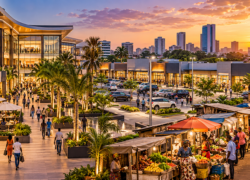
Africa’s Retail Growth Is Becoming More Local, Flexible and Diverse

Africa’s retail property market is becoming increasingly difficult to define by a single development model. Large destination malls remain important in many cities, but investment and expansion are increasingly spreading across neighbourhood centres, grocery-led schemes and smaller formats located closer to where consumers live. At the same time, traditional independent retailers continue to handle a substantial part of everyday spending in many African markets.

The change is particularly visible in East Africa. In Kenya, developers have become more selective about adding large volumes of shopping-centre space following earlier periods of rapid expansion. Smaller neighbourhood projects and mixed-use developments are becoming more prominent, while supermarket operators are extending their networks into residential catchments. By the end of 2025, Naivas had 113 stores, while Quickmart operated 63 locations and Carrefour 34, illustrating how competition for everyday consumer spending is spreading well beyond the largest shopping destinations.

This does not mean that established malls are becoming obsolete. Nairobi’s leading shopping centres continue to record occupancy above 90%, showing that well-positioned destinations can coexist with the expansion of smaller formats. The emerging distinction is increasingly between centres with strong locations, tenant mixes and established catchments and weaker properties that struggle to give shoppers sufficient reason to travel.

South Africa provides an even clearer example of this divide. Retail property attracted R7.5 billion of investment during 2024, accounting for around 30% of commercial real estate transaction volumes that year. Smaller convenience centres were frequently traded, demonstrating investor interest in assets serving everyday local demand. Yet the latest performance figures show that large shopping centres remain highly competitive. During the first quarter of 2026, super-regional centres produced some of the strongest growth in trading densities in the market.

New development is consequently taking several forms rather than converging on one model. Grocery-led centres remain attractive because food, pharmacy, services and other frequently purchased goods generate repeat visits from surrounding residential areas. South Africa’s R650 million GrandWest Mall development, where construction started in 2026, demonstrates that investors are still prepared to commit significant capital to convenience-oriented projects when the surrounding catchment and tenant demand support them.

Lagos is showing a similar movement towards proximity. Limited additions to the city’s conventional mall stock have coincided with greater attention to retail serving residential communities. In a market where household budgets and transport costs can strongly influence purchasing decisions, locations that allow consumers to combine grocery shopping, services and other everyday requirements within shorter journeys have an obvious advantage.

Alongside formal property development sits another part of the African retail economy that cannot be ignored. Independent shops, markets and neighbourhood traders remain central to consumer distribution in many countries. Their strength comes partly from their proximity to customers, ability to sell in small quantities and deep integration within local communities. Rather than disappearing as formal retail expands, these businesses are increasingly likely to exist alongside supermarkets, shopping centres and digital commerce.

There is also no single African retail model. Cairo, for example, continues to attract larger lifestyle and mixed-use developments combining shopping with restaurants, entertainment and leisure. South Africa supports both highly established regional malls and smaller community centres, while markets such as Kenya and Nigeria are seeing stronger interest in formats embedded within residential areas. What works in one city may therefore be unsuitable for another.

For property investors, this makes understanding the individual catchment increasingly important. Population density, household incomes, transport patterns, competing retail supply and the strength of informal commerce can matter as much as the overall size of a city. A smaller centre positioned around frequent household spending may outperform a larger development in one location, while a dominant regional mall can continue attracting consumers and international brands in another.

Africa’s retail story is therefore becoming less about replacing the shopping mall and more about building a wider range of formats around how people actually shop. The strongest opportunities are likely to emerge where developers match the scale, tenant mix and accessibility of a project to local spending patterns. In an increasingly diverse retail market, proximity and convenience are becoming more valuable, but the best destination malls remain firmly part of the investment landscape.

Source: © CIJ.World Africa Research & Analysis Team

Serbia’s Logistics Market Expands Beyond Belgrade

Belgrade remains the centre of Serbia’s modern logistics property market, but industrial development is increasingly spreading beyond the capital as manufacturers, logistics operators and developers establish facilities along the country’s principal transport and production corridors. The change does not mean that Belgrade is losing its position. The capital continues to offer Serbia’s largest concentration of modern warehouse stock, occupiers and professional developers, supported by access to the country’s largest consumer market and important motorway connections. What is changing is the amount of industrial activity taking place elsewhere.

Novi Sad and the wider Vojvodina region, Niš and southern Serbia, and the industrial areas around Kragujevac and central Serbia are becoming more relevant to the development market. Locations along the main motorway network are also attracting projects as companies look beyond the traditional Belgrade logistics zone for land, manufacturing capacity and distribution facilities. Professional market research during 2026 points to continuing development activity and stable occupier demand. Serbia’s industrial vacancy rate was around 4.3% during the second quarter, having declined from approximately 5.8% in Q1, while the development pipeline remains substantial. Earlier market estimates indicated around 256,000 sqm of industrial and logistics space scheduled for development during 2026.

Individual projects demonstrate how that expansion is spreading geographically. Novi Sad has attracted new production development, while Niš and Jagodina have secured occupiers for modern industrial facilities. Development activity is also visible around Merošina near Niš and in other regional manufacturing locations. Major industrial developers are responding by building networks rather than concentrating exclusively on the capital, with development platforms extending across locations including Novi Sad, Kragujevac, Jagodina, Niš and Sombor.

Manufacturing is an important part of this transformation. Serbia’s regional industrial property market is not developing purely because retailers and logistics companies require additional warehouses. Production investment can generate an entire chain of property requirements around a factory, including suppliers, component storage, distribution, third-party logistics and supporting businesses. This creates an opportunity for regional markets to develop beyond individual factories and owner-occupied industrial sites.

Once enough companies operate within a location, developers have greater justification for constructing buildings before a tenant has been secured. That transition towards speculative and multi-tenant development is particularly important for the creation of a deeper commercial property market. However, industrial construction alone does not make a location an institutional real estate investment market. A manufacturing company building its own factory may be economically significant without creating an asset that can subsequently be traded between property investors.

For institutional capital to become more active outside Belgrade, regional markets need a larger stock of professionally developed buildings occupied under leases that provide predictable income. Investors also need evidence of achievable rents, tenant demand, occupancy levels and transaction pricing. Perhaps most importantly, they need confidence that an asset purchased in a regional Serbian city can eventually be sold to another investor.

This is where Belgrade retains a substantial advantage. Its greater stock of modern buildings, deeper occupier base and longer history of professional development provide investors with considerably more information when assessing risk and value. Regional Serbia is still developing that evidence.

Novi Sad benefits from its position within Vojvodina, motorway connectivity and an established manufacturing economy. Niš provides access to southern Serbia and important transport routes towards Bulgaria and North Macedonia. Kragujevac has a strong industrial base, while Jagodina and other locations along the central motorway corridor can serve both production and distribution requirements. These markets should not necessarily be viewed as competitors for the title of Serbia’s second logistics capital. They perform different economic functions and serve different occupier bases, and their collective development may ultimately be more important than determining which individual city ranks behind Belgrade.

Infrastructure will play a decisive role. Motorway access, rail connections, labour availability, power capacity and proximity to manufacturing clusters increasingly influence where industrial occupiers locate. As Serbia improves transport connections and attracts further production investment, property development is likely to follow those economic corridors.

The next stage will be determined by whether regional development produces a sufficiently broad leasing market. A handful of large build-to-suit projects can establish an industrial location, but a functioning investment market requires repeated leasing activity across multiple occupiers and buildings. For property investors, that distinction is crucial. Regional Serbia may offer cheaper land and potentially higher returns than established Belgrade logistics locations, but those advantages have to be weighed against thinner transaction markets and fewer comparable investment deals.

Serbia’s logistics geography is therefore becoming more diverse, but the transformation is still underway. Belgrade remains the country’s dominant institutional logistics market while regional cities are building the industrial activity that could eventually support alternatives. The important question is no longer whether logistics and manufacturing development can take place outside the capital. It already is. The next test is whether those projects can create enough modern leased property, recurring occupier demand and transaction liquidity to turn Serbia’s emerging industrial corridors into markets that institutional investors are prepared to enter.

Source: CIJ.World Research & Analysis Team

front page info
LATEST NEWS
