Middle class in Czech Republic faces growing financial strain, expert warns

The middle class in the Czech Republic is increasingly struggling financially, despite the country maintaining low unemployment and rising wages. This paradox was highlighted by the latest Social Exclusion Index, an analysis conducted by the Agency for Social Inclusion. According to Lucie Trlifajová, an expert at the agency, the systems designed to protect the most vulnerable citizens are failing, leading to greater economic pressure on middle-income households.

The Social Exclusion Index, which has been compiled since 2016, examines indicators such as reliance on living allowances and housing benefits, foreclosure rates, long-term unemployment, and educational outcomes. The findings reveal that financial hardship is intensifying even in areas typically associated with economic stability.

Trlifajová pointed out that the decline in middle-class stability is not linked to rising unemployment, as might be expected, but to a significant fall in real wages. The Czech Republic, while boasting the lowest unemployment rate in the European Union, has experienced one of the steepest declines in real wages. This has contributed to an uptick in the number of people receiving housing benefits, with the most pronounced increases occurring in areas around Prague and other major cities.

Debt is another area of growing concern. According to Barbora Halířová, a debt expert at the agency, foreclosure rates have surged in the Central Bohemian Region. Halířová noted that counseling centers are now seeing more individuals from the lower middle class, including those with higher education, seeking financial guidance—an indicator of the broader economic strain affecting previously stable households.

High inflation, soaring energy costs, and changes to social support rules have further exacerbated the situation. Adjustments to housing benefit eligibility criteria and increased income thresholds have expanded the pool of beneficiaries. However, while the number of recipients of housing and child benefits has grown, there has been no corresponding rise in the number of people receiving benefits for material distress, suggesting that the most disadvantaged are not being adequately supported.

The minimum subsistence level, a key benchmark for determining eligibility for various social benefits, currently stands at CZK 4,860 per individual. This amount was last increased in January 2023 by 5.2%, but inflation has significantly eroded its real value. Trlifajová argued that the minimum subsistence level should have been CZK 7,082 last year to keep pace with inflation. She emphasized that the erosion of this benchmark undermines its ability to provide basic survival support and compromises the effectiveness of social safety nets.

The Social Exclusion Index also highlights a growing disparity among municipalities. In 2023, 241 municipalities were classified with the highest levels of social exclusion, compared to 191 the previous year. Simultaneously, the number of municipalities with minimal exclusion has declined, further reflecting the widening economic divide.

Trlifajová stressed that the middle class’s growing vulnerability signals deeper systemic issues. “If the middle class is struggling, the situation for the poorest must be deteriorating as well,” she said. Without significant policy interventions, the Czech Republic risks exacerbating social inequalities and increasing economic instability, with consequences that will ripple across all levels of society.

Source: CTK

Prague’s proposed budget for 2025 sparks debate over priorities and investments

Prague city councillors have approved the first draft of the 2025 budget, proposing revenues of CZK 110.92 billion and expenditures of CZK 113.49 billion. The difference, amounting to CZK 2.6 billion, will be bridged using funds saved for projects like Metro D, which the city has been earmarking for years. The budget now moves to committees for review, with final approval expected at the council’s last meeting of the year on December 12.

The proposed budget allocates CZK 22.29 billion for investments, a record-breaking figure, supplemented by CZK 14 billion from unspent funds from the previous year. However, opposition parties ANO and Prague Sobě have criticized the draft, citing a lack of new projects and insufficient time for city districts to review it.

City Councillor for Finance Zdeněk Kovářík defended the schedule and budget priorities, highlighting that transport remains the largest expenditure, with CZK 30.28 billion allocated, including CZK 15.22 billion specifically for transport investments. Key projects include the construction of Metro D (CZK 6.1 billion), the Libeň Bridge reconstruction, the Smíchov transport terminal, and new tram lines on Wenceslas Square.

Education is the second-largest spending category, with CZK 28.4 billion allocated, followed by health and social services (CZK 6 billion). Significant cultural investments include CZK 1 billion for the ongoing reconstruction of the Industrial Palace and CZK 830 million for repairs to the Vinohrady Theatre.

Opposition leaders have expressed concerns over the lack of visionary projects and new initiatives. Ondřej Prokop, chairman of Prague ANO, criticized the limited scope of investments, claiming the budget overlooks ambitious plans such as the redevelopment of Prague’s main railway station and the completion of the city ring road.

Adam Scheinherrov, leader of Prague Sobě, accused the coalition of focusing solely on inherited projects from previous administrations, such as the Dvorecký Bridge and Wenceslas Square renovations, while shelving plans for future developments. “The coalition has failed to initiate critical projects like the second stage of Metro D or the reconstruction of key city squares,” he stated.

The inclusion of CZK 355 million for an ice bear pavilion at the Prague Zoo drew particular ire. Scheinherr labeled it a misstep, arguing that essential infrastructure projects and affordable housing initiatives are more pressing needs.

With record investments on the table, the proposed budget reflects Prague’s commitment to infrastructure and public services but leaves room for debate on its long-term vision. The final approval will not only determine citywide finances but also enable individual districts to finalize their own budgets, ensuring alignment with Prague’s broader objectives.

As the December 12 deadline approaches, the balance between fiscal responsibility, strategic investments, and meeting public expectations will remain a focal point of discussions.

Source: CTK

CTP secures 30,000 sqm of new leases in Germany

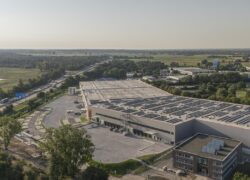
CTP has signed lease agreements for nearly 30,000 square meters of space at two key sites in Germany, further solidifying its presence in the region. The deals, involving logistics businesses Heinrich Hoppe GmbH and WP Holding GmbH, underscore CTP’s commitment to sustainable redevelopment and meeting modern ESG standards.

Heinrich Hoppe GmbH, an international freight forwarding and logistics service provider, has leased 12,500 square meters at CTPark Bremen in north-west Germany. Developed on a former landfill site, the park exemplifies CTP’s brownfield redevelopment expertise. With 28,500 square meters of gross lettable area (GLA), the park features innovative construction, photovoltaic panels, and air-source heat pumps, achieving DGNB Gold sustainability certification.

In Saxony-Anhalt, WP Holding GmbH has secured a newly refurbished 15,000-square-meter energy-efficient logistics building at CTPark Oschersleben. WP Holding, which specializes in integrated logistics solutions and process consulting, also has an option to expand into an additional 5,000 square meters.

Redeveloping brownfield sites and retrofitting older industrial properties have become central to CTP’s strategy, particularly in Germany, where emerging sectors such as semiconductors and clean tech are reshaping industrial demands. Occupiers are increasingly prioritizing sustainable facilities to meet their ESG goals, a trend CTP is capitalizing on with cutting-edge developments.

“We are delighted to welcome Heinrich Hoppe GmbH to CTPark Bremen and WP Holding GmbH to CTPark Oschersleben,” said Alexander Hund, Managing Director Germany at CTP. “The rapid evolution of European logistics markets, coupled with stricter energy efficiency regulations, has created exciting opportunities to redevelop and modernize sites into sustainable business parks tailored to today’s needs.”

CTPark Bremen boasts excellent connectivity via the Bremer Kreuz interchange, linking the A27 and A1 motorways. This location offers easy access to Germany’s major ports, including Bremen, Jade-Weser-Port, and Hamburg, making it an ideal logistics hub.

Meanwhile, CTPark Oschersleben is strategically located along the A14 motorway, providing direct links to Leipzig, Dresden, and international markets in Czechia and Austria. Sustainable features, such as EV charging stations for WP Holding’s fleet, enhance its appeal as a future-proof logistics center.

WING sells Honvéd Center office buildings to German investor

WING has finalized an agreement for the sale of the Honvéd Center office buildings in Budapest’s Central Business District. The property, spanning 6,500 square meters, will be acquired by Greve Honvéd Kft., a subsidiary of Hamburg-based Greve Group. This strategic transaction underscores the ongoing appeal of high-quality office assets in Budapest and is expected to close by mid-December.

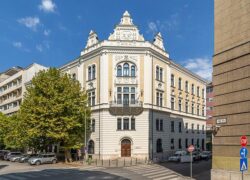
Honvéd Center is a standout property in the heart of Budapest, blending historic charm with modern functionality. The project includes two distinct buildings: a classical listed structure with a restored turn-of-the-century facade and elegant, modern interiors, and a contemporary office tower offering six floors of premium workspace, underground parking, and a newly renovated reception.

Situated in proximity to Parliament, ministries, courts, and shopping and dining venues, the complex benefits from its prime location within one of Budapest’s most vibrant neighborhoods.

“This transaction reaffirms our belief in the resilience and importance of office properties as a core component of the real estate market and a modern economy,” said Noah Steinberg, Chairman and CEO of WING. “We are committed to delivering buildings that align with our partners’ needs in terms of functionality and location. The Honvéd Center exemplifies this commitment, and its successful sale highlights the value of long-term investments in quality office assets.”

The funds generated from the sale will enable WING to pursue further real estate opportunities, reinforcing its position as a key player in Central Europe’s property market, with operations spanning Hungary, Germany, and Poland.

The seller was represented by Szécsényi & Partners and iO Partners, while Taylor Wessing Braner and Ódor és Társai Ügyvédi Iroda supported the buyer.

While the purchase price and transaction details remain confidential, the sale marks a significant milestone for both WING and Greve Group, illustrating Budapest’s enduring appeal to international investors.

A Night to Remember at the CIJ Awards Slovakia 2024

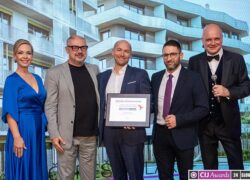
The CIJ Awards Slovakia 2024 lit up the night with glamour, celebration, and recognition of the best in the Slovak real estate industry. Held at Radisson BLU Carlton Hotel in Bratislava, the prestigious event brought together leading developers, investors, architects, and industry professionals for an unforgettable evening of networking and celebration.

The ceremony honored outstanding achievements across various categories, from innovative residential developments to groundbreaking commercial projects. The atmosphere was electric as winners were announced, showcasing the exceptional talent and vision driving the Slovak real estate market.

The evening wasn’t just about awards; it was a celebration of the industry’s resilience, creativity, and growth. Attendees enjoyed fine dining, engaging conversations, and an elegant setting that added to the night’s charm.

This year’s Winners:
Best Standard Residential Development of the Year – Čerešne Lake by ITB Development
Best Premium Residential Development of the Year – EUROVEA II by JTRE
Best Retail Shopping Development of the Year – Spektrum Ružomberok – Mayflower Group
Best Warehouse Development of the Year – Panattoni Park North (Lear Corporation) by Panattoni
Best Residential Upcoming Development of the Year – PARQ Zátišie by Atrios
Best Retail Shopping Upcoming Development of the Year – Point Liptovský Mikuláš by OPC Group
Best Warehouse Upcoming Development of the Year – ARETE Park Danajska Streda by ARETE
Best Commercial Property Investment Transaction of the Year – Retail park portfolio sold to Patria Investiční Společnost (KLM Real Estate/CBRE)
Best Warehouse Lease Transaction of the Year – Slovenske Elektrarne (JTRE/Colliers)
Best Asset Management Company of the Year – 365.invest
Best Real Estate Property Fund Management of the Year – IAD Investments
Best Performing Real Estate Property Fund of the Year – Wood & Company
Best Real Estate Bank of the Year – Slovenská sporiteľňa
Best Real Estate Law Firm of the Year – Kinstellar
Best Tax & Finance Advisor of the Year – TPA
Best Local Residential Real Estate Agency of the Year – HERRYS
Best Local Commercial Real Estate Agency of the Year – HOLLAND AND COMPANY
Best International Real Estate Agency of the Year – CBRE
Real Estate Leadership of the Year – Andrej Mardiak and Lukáš Šarközi – Mayflower Group
Best Overall Developer of the Year – JTRE

As the CIJ Awards Slovakia 2024 came to a close, it left attendees inspired and motivated for the year ahead, reinforcing its position as one of the most anticipated events in the real estate calendar.

The winners of the competition were selected in a three-stage voting jury committee process. These being a selected jury committee of 100+ recognised experts from the real estate, investment, architectural and construction industries.

The winners of each individual categories also advance as nominations for the Best of the Best CIJ HOF (Hall of Fame) Awards in 2025. The Hall of Fame Awards is the climax to the CIJ Awards series, pitting the winning projects and companies from around Central & Eastern Europe against each other to determine who the Best of the Best really are.

About CIJ EUROPE:
For almost 30 years, CIJ EUROPE has been reporting on new projects, properties, transactions and development initiatives, while also providing commentaries and detailed analyses of the market, statistics and information on the latest trends in Northern, Central and Eastern Europe and in the international real estate development community. It presents interviews with the people who shape the industry, influential politicians, and key officials who decide on planning and public tenders. It is an important and reliable source of information about the development, property and construction industry in CEE and Europe.

Union Investment welcomes Starbucks to Kettwiger Tor in Essen

Union Investment has announced a long-term lease agreement with AmRest Coffee Deutschland Sp. z o.o. & Co. KG, bringing a Starbucks Coffee House to the prominent Kettwiger Tor property in Essen. The new tenant, Starbucks, will replace the Hallhuber fashion store and is set to open its doors in spring 2025 after extensive renovation work.

Starbucks, one of the world’s largest coffee roasters and suppliers of specialty coffee, will occupy three floors of the building. The addition of the global coffee giant is expected to enhance the appeal of the property for both existing office and retail tenants and the surrounding area.

“We are delighted to welcome Starbucks as a successor to Hallhuber. This partnership will significantly benefit the property’s tenants and the wider community,” said Sven Lintl, Head of Asset Management Germany at Union Investment.

The Kettwiger Tor property is situated on a central street in Essen’s bustling city center, just 400 meters from the main railway station. Its strategic location ensures easy accessibility for commuters and shoppers alike.

Part of the UniInstitutional German Real Estate portfolio since 2014, the building has become a key asset for the institutional fund. Starbucks’ arrival marks a new chapter in the property’s history, further solidifying its position as a central hub for retail and office spaces in Essen.

Renovations for the new Starbucks Coffee House are set to begin shortly, with completion targeted for spring 2025.

LIP Invest reports continued growth in Germany’s logistics real estate market

LIP Invest, a leading provider of special real estate funds for logistics properties in Germany, has published its latest quarterly market report, LIP UP TO DATE – Logistikimmobilien Deutschland, for the third quarter of 2024. The report highlights ongoing growth in the logistics real estate sector, with a notable increase in investment activity and emerging trends that could shape the market’s future.

The report provides an in-depth analysis of transaction volumes, space take-up, new construction activity, and yield trends. It also offers an outlook for the fourth quarter, including the potential impact of political developments in Germany and the United States on market dynamics.

Market Overview: Steady Growth Amid Challenges

Germany’s logistics real estate market continued its upward trajectory in the third quarter, with transaction volumes exceeding the subdued levels of the previous year. While the market has yet to reach the record-breaking heights of 2021 and 2022, investor interest remains strong.

“The increasing availability of logistics properties is driving market activity, and we anticipate further growth in investment volumes,” said Sebastian Betz, Partner and Managing Director at LIP Invest. “Investors are expanding their focus beyond traditional logistics hubs, while falling interest rates are making value-add properties more attractive.”

Gross initial yields for prime properties showed signs of decline, standing at 4.80% to 5.05% in the third quarter. However, further developments will depend on external factors, including inflation trends and interest rate decisions in the EU and the US. A more significant recovery is expected in early 2025, potentially bolstered by anticipated political shifts in both countries.

Investment Market: Portfolio Deals Dominate

In Q3 2024, logistics property transactions in Germany reached €1.4 billion, bringing the total for the first nine months to €4.3 billion—a 12% increase compared to the same period in 2023. Around half of the transaction volume was driven by portfolio deals, including P3’s acquisition of 12 logistics properties in southern Germany, totaling 269,000 square meters of rental space.

Despite the steady activity, properties from earlier quarters that remain unsold were excluded from the potential investment volume, which reached €700 million in Q3. New offerings include production warehouses, indicating a diverse range of investment opportunities.

Stable Take-Up of Space

Logistics property take-up remained steady in Q3 2024 at 1.35 million square meters. The majority of leases were for spaces between 5,000 and 30,000 square meters, reflecting cautious expansion in light of economic conditions. Larger rental agreements were rare, though notable deals included Duvenbeck Logistics leasing 11,500 square meters in Mühldorf am Inn.

In the first three quarters of 2024, total take-up reached 3.85 million square meters, while 850,000 square meters of new logistics properties were completed in Q3. This brought the year’s total new construction volume to 2.95 million square meters, with further projects expected in Q4.

Sustainability Trends: Timber Construction in Logistics Properties

The use of timber in logistics property construction is gaining traction as developers prioritize sustainability. Modern timber structures can support large spans and provide CO2 emission reductions compared to traditional reinforced concrete. Timber buildings also offer advantages in the circular economy, as they can be dismantled and reused, extending their lifecycle beyond that of conventional materials.

Outlook for Q4 and Beyond

The German logistics real estate market is poised for continued growth, with political developments in early 2025 potentially spurring further optimism. Falling interest rates and an increase in high-quality investment opportunities are expected to attract additional capital to the market.

LIP Invest’s quarterly report, available for free download on their website, underscores the resilience of the logistics real estate sector and its capacity to adapt to shifting economic and environmental priorities. With €4.3 billion in transactions already completed and innovative trends such as timber construction gaining momentum, the sector is set to remain a cornerstone of Germany’s real estate market.

NEPI Rockcastle reports strong NOI growth and tenant sales, driven by resilient CEE consumers

NEPI Rockcastle has announced a 12.3% increase in net operating income (NOI) to €411 million for the first nine months of 2024 (9M 2024) compared to the same period in 2023. On a like-for-like basis, NOI rose 8.4%, fueled by higher rents, short-term income, and disciplined cost management. The company’s momentum reflects the resilience of Central and Eastern European (CEE) consumers and strong tenant performance, which also contributed to a drop in the EPRA vacancy rate to 2.3%, down from 2.7% in June 2024.

“We continue to see solid growth across our markets, driven by strong tenant performance and active asset management,” said Rüdiger Dany, CEO of NEPI Rockcastle. “Our properties are becoming increasingly attractive to consumers and retailers, which has helped reduce vacancy rates and deliver healthy NOI growth.”

Key Operational Highlights

• Tenant Sales and Footfall: Tenant sales increased by 9% (like-for-like, excluding hypermarkets), with Q3 2024 recording a 9.2% year-on-year increase. Footfall rose by 1.4% over 9M 2024, while the average basket size grew by 8.3%.
• Vacancy and Rent Collection: The EPRA vacancy rate fell to 2.3%, and rent collection for 9M 2024 was 99%.
• Leasing Activity: In Q3 2024, NEPI Rockcastle signed 345 new leases and renewals, covering over 71,200 sqm. International tenants accounted for 61% of newly leased space.

Strategic Investments and Major Deals

NEPI Rockcastle made significant strides in its investment strategy during Q3 2024:
• Green Bond Issuance: In September 2024, the company issued €500 million in green bonds maturing in 2032. The issue was six times oversubscribed, offering a fixed coupon of 4.25%.
• Acquisitions and Disposals: On 1 October, NEPI Rockcastle acquired the 100,000 sqm Magnolia Park shopping center in Wroclaw, Poland, for €353 million. Days later, it sold its last remaining Serbian asset, Promenada Novi Sad, for €177 million.
• Equity Raise: The company successfully raised €300 million through a new share issue in October.

With these moves, NEPI Rockcastle lowered its loan-to-value (LTV) ratio to 29.2% at the end of October 2024 and positioned itself for further acquisitions and developments.

Development Pipeline

NEPI Rockcastle’s development pipeline, valued at €788 million, includes major projects such as:
• Promenada Plovdiv: A 60,500 sqm retail development in Bulgaria, set for completion in late 2026.
• Galati Retail Park: A mixed-use scheme in Romania with 40,900 sqm of retail and 21,500 sqm of residential space, expected to open in Q4 2026.
• Green Energy Expansion: Phase two of its photovoltaic energy project, including 24 new locations outside Romania, is underway.

Sustainability Milestones

NEPI Rockcastle has made significant progress in ESG performance:
• Received a 5-star GRESB rating, up from 3 stars in 2023.
• Awarded EPRA Gold for Sustainability Best Practices Recommendations (sBPR).
• Completed phase one of its green energy project, generating €7.3 million in income during 9M 2024.

Positive Outlook for 2024

The company expects distributable earnings per share for 2024 to grow by approximately 5.5% compared to 2023, maintaining a 90% dividend payout ratio. Despite potential geopolitical and macroeconomic risks, NEPI Rockcastle remains confident in its ability to leverage market opportunities and deliver long-term sustainable growth.

With a robust portfolio valued at €7.4 billion and continued investments in sustainability and new developments, NEPI Rockcastle is well-positioned to capitalize on the growing resilience of the CEE consumer market.

Poland: Starting prices for affordable triplex units in new developments

What are the prices of the cheapest three-roomed flats in new housing projects? What is the square meterage? In which investments can we buy them? Can you count on a discount when paying in advance?

Tomasz Kaleta, managing director of sales and marketing at Develia
Currently, the cheapest three-room flats can be purchased in Gdańsk projects such as Szmaragdowy Park or Południe Vita. Their price starts at around PLN 500,000 and the metric area varies from 50 sqm to 64 sqm. These are projects under construction and further payments are made according to the progress of the construction work.

Agnieszka Majkusiak, sales director at Atal
In the Źródlana Residence project in Piotrków Trybunalski, we have a three-room flat of 48 sq m on sale for PLN 364,396. In Reda, in the Niebieski Bursztyn project, a three-room flat of 53 sq m is available at PLN 462,162. In Poznań’s Naramowice Odnova development, a three-room unit measuring 47 sq m can be purchased for PLN 491,000. A three-room flat in Panorama Reden in Chorzów is on offer for PLN 491,689. In the Nowe Miasto Polesie project in Łódź, a unit of 57 sq m is on offer for PLN 502,276.

Compared to the market, we maintain an attractive ratio of the quality and location of the offered flats to their price per square metre, which is confirmed by customer feedback. Our discount policy is quite conservative and takes into account current cost factors, such as increases in wages and rates for land and contractors. The promotional tools we use are mainly flexible payment schedules, tailored to the customer’s needs and non-residential benefits. In the case of a development under construction, payments follow the schedule. The developer does not dispose of the funds from the early payments; they are blocked in the escrow accounts until the relevant construction phase is reached in the project.

Agata Zambrzycka, sales and marketing director at Aurec Home
We design estates with the diverse needs of our customers in mind, offering a wide range of flats to suit different preferences and requirements. We carry out our investments in the green districts of Warsaw, such as Włochy, Ursus and Białołęka, where units of various sizes are available, including spacious and functional three-room flats.

The prices of ‘threes’ depend on the location and the specific investment. In Miasteczko Jutrzenki – Dzielnica Lavendy they start at PLN 13,750 per square metre, while in Fabrica Ursus they start at PLN 13,367. It is also worth noting the location of the flat in the building, which affects the view from the windows, the amount of natural light and the noise level. Flats on the ground floor, above garage entrances or close to staircase entrances are usually cheaper. Customers who decide to purchase a unit with cash can expect a discount.

Magdalena Gosk, Sales Leader BPI Real Estate Poland
The three-room flats in our offer are very popular with customers, especially in the already completed projects: Bernadovo, Czysta4 and Panoramiqa, in which flats are ready for collection. This type of premises is currently available in the offer of the Bernadovo investment in Gdynia, Czysta4 in Wrocław, Cavallia and Panoramiqa in Poznań. The prices and area of these flats vary depending on the project. They range from approximately PLN 10 500/sq m in the Panoramiqa project to PLN 20 300/sq m in the Bernadovo investment. The average square metre is around 68 sq m. For our customers, irrespective of the form they choose, we provide for various special offers and discounts.

Agnieszka Gajdzik-Wilgos, sales manager at Ronson Development
In our investments, the smallest three-room flats are available at prices starting from PLN 436,000, for a flat of 46 sqm in the Nowa Północ investment in Szczecin. In Nowe Warzymice in Poznań, you can buy a 67 sq m flat for PLN 710 thousand.

In the Grunwald Między Drzewami II investment, a flat of 52 sqm costs PLN 612 thousand. In Wrocław, in the Viva III project, one has to pay PLN 639 thousand for a 50-sqm unit.

In Warsaw, in Miasto Moim 58 sq m costs PLN 781 thousand. In Ursus Centralny, a 56-square-metre flat costs PLN 835 thousand, and in the Zielono Mi investment a 62-square-metre flat is priced at PLN 1.055 million.
In accordance with current regulations, we cannot accept a payment from customers that is greater than the amount corresponding to the advancement of construction work. The payment schedule is set depending on the progress of the project, and the method of financing, whether by credit or cash, does not affect the possibility of obtaining a discount.

Joanna Chojecka, sales and marketing director for Warsaw and Wrocław at Robyg Group
We have interesting offers of three-room flats in most of our investments in Warsaw, for example in the Jutrzenki 92 estate. In Gdańsk, in the Rosa Residence and Przystanek Tarnogaj projects, and in Poznań – Początek Piątkowo and Stacja Jeżyce. There is often a garage included in the price or other attractive bargains. Prices range from PLN 620,000 to PLN 800,000, depending on the location.

Michał Witkowski, sales director at Lokum Deweloper
Three-room flats are most often the choice of families with children or those planning to expand their family. Currently, we offer such properties in Sobótka and three developments in Wrocław. At the Lokum Porto estate, which combines the advantages of living in the city centre with the opportunity to relax in the natural surroundings, we have three-room flats ranging from 52.58 sq m to 72.03 sq m, with prices starting from PLN 799,000.

At our green estate-garden Lokum Verde, located in the tranquil Zakrzów district, we offer three-room flats from 49.68 to 66.16 sq m, which can be purchased at prices starting from PLN 639,000. Another option for those looking for such a property is the offer of the modern Lokum la Vida housing estate, located in Wrocław’s Sołtysowice, with convenient access to extensive urban infrastructure and green areas. Here, our offer includes three-room flats from 48.76 to 64.71 sqm. A unit in this segment can be purchased for PLN 714,000. We also have a proposal for those who want to live in an exceptional location – at the intimate Lokum Monte housing estate with a private wellness zone, situated in the picturesque surroundings of the Ślężański Landscape Park. Here, the cheapest three-room flat – a two-level of 70.44 sqm, with a spacious mezzanine (20.53 sqm) – costs PLN 889,000. It is worth adding that this price includes the finishing service in our Lokum turnkey programme.

Zuzanna Należyta, Commercial Director at Eco Classic
At the moment we have a promotion in two investments. In the Moja Północna project in Warsaw’s Tarchomin, the lowest price per sqm. – PLN 12,400 is offered for a four-room flat with an area of 91 sqm. In the Wolne Miasto project in Gdańsk, at the lowest price per sq m. – PLN 10 300 you can buy a four-room flat of 83 sq m.

Marek Starzyński, sales director at Okam Capital
We have three-room flats on offer in our current investments. In the NOW project in Łódź, a three-room flat with an area of 78 square metres costs PLN 10,000 per square metre. In the Warsaw Cityflow project, a 54-sq.m flat can be purchased for PLN 19 350 per sq.m., and in the Katowice Inspire project, a 60-sq.m flat costs – more than PLN 12,000 per square metre. Customers can take advantage of a special offer to purchase units in the NOW development – flats priced from PLN 350,000.

Piotr Rojek, Megapolis Customer Service Manager
The prices of our flats depend on many different factors, including: the location in relation to the world’s directions, the layout of the flats and the location of the investment itself. Our portfolio includes flats in various areas of cities, both near and far from their centres, which is why prices per square metre vary greatly. We have flats in our portfolio in various areas of cities, both closer and further from their centres, which is why prices per square metre vary considerably.

Triplexes are usually flats ranging from 49 sqm to 53 sqm. Our current investments include: the largest, located in the north of Krakow, Osiedle OZON, in Banacha Street, and the smaller LINK Bunscha estate in Krakow’s Ruczaj district, in Bunscha Street. Of the investments we are planning in the near future, it is worth mentioning the housing estate on Lindego Street, in the area of Bronowice in Krakow.

We are always open to discussion and we establish with each customer individually the commercial conditions for the purchase of a flat. We provide a comprehensive service, both the credit process related to the purchase of a flat and a guarantee of price invariability. Therefore, if a customer plans to take a loan, they can be sure that the price from the reservation contract will not increase. In turn, customers who have the cash they need to buy a flat can also count on preferential contract terms.

Damian Tomasik, CEO of Alter Investment
As a land developer, we do not offer to sell flats. In the projects we are preparing, such as Madalińskiego in Gdańsk, we plan three-room flats with optimal space for future residents. In September we sold the land with a building permit on the same street and we can expect to introduce flats for sale in the coming weeks, where three-room flats were also in the structure.

Source: dompress.pl
Photo: Centralna Vita Develia

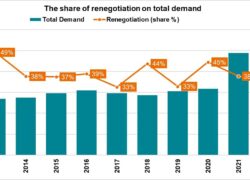
Renegotiations now account for nearly 40% of industrial real estate leases in the Czech Republic

Lease renegotiations, the extension of existing lease agreements, have become a dominant force in the Czech Republic’s industrial real estate market, according to the latest analysis by Savills. Over the past decade, renegotiations have consistently accounted for at least 30% of total leasing activity, with some years seeing this figure rise above 45%. In the third quarter of 2024 alone, renegotiations represented 38% of total leasing activity, with 20 lease renewals totaling 129,100 sq m.

“The data confirms a strong trend in lease prolongations,” said Lenka Pechová, Senior Research Analyst at Savills. “For the first three quarters of 2024, renegotiations accounted for roughly one-third of gross demand, reflecting the preference of businesses to stay put and avoid the costs and complexities of relocating.”

Companies often choose to renew leases to maintain continuity in their operations, especially when there are no compelling reasons to relocate. This decision helps businesses avoid the significant expenses associated with moving and adapting new spaces to meet specific operational requirements.

“Relocating even a short distance, such as 10 kilometers, can lead to the loss of up to 40% of a company’s workforce,” explained Ondřej Míček, Head of Industrial at Savills. “A move of 20 kilometers could result in losing as much as 80% of employees, making lease renegotiation a logical choice for well-established businesses in the area.”

Savills experts recommend that businesses planning to renew leases begin discussions at least 18 months before the original lease term ends. This early engagement ensures tenants have sufficient time to evaluate alternatives, including relocation or new developments, and negotiate favorable terms.

“Renegotiation is also worth considering when entering a new lease agreement, as it allows tenants to secure an extension option in advance. However, timely planning is crucial to keep all options open,” added Míček.

The rise of renegotiations parallels the growth and evolution of the Czech industrial property market. In the late 1990s and early 2000s, renegotiations were rare, reflecting the nascent stage of modern warehouse development. As the market matured and transparency improved, lease renewals became a natural outcome of increasing leasing activity. Over the last 15 years, renegotiations have grown into a vital component of the industrial leasing landscape, often involving modifications to existing agreements, such as adjusting the size of leased spaces.

With renegotiations accounting for nearly 40% of leasing activity, they now represent a cornerstone of the industrial real estate market in the Czech Republic. As businesses continue to value stability and proximity to their workforce, this trend is expected to remain strong, further cementing the importance of strategic lease planning in a competitive market.

Source: Savills

front page info
LATEST NEWS