Panattoni secures €75 million financing from Citibank for Sulechów Logistics Park expansion

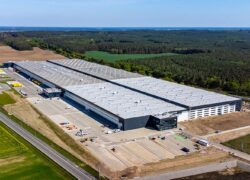
Panattoni has been granted a €75 million loan by Citibank’s London Branch to fund the development of Panattoni Park Sulechów III, one of the largest logistics centers in Poland’s Lubusz region. The project, tailored to meet the needs of a leading e-commerce operator, is a key milestone in Panattoni’s efforts to support the region’s growing demand for modern logistics infrastructure.

“Thanks to the confidence of our partner, Citibank, we were able to secure financing for this significant logistics hub. The facility offers an outstanding base for an international company to enhance its European operations, particularly in e-commerce. This project will undoubtedly strengthen our client’s market position,” said Emilia Taczewska-Trojańska, Head of Debt Finance Poland at Panattoni.

A Key Regional Hub with Expanded Capabilities

Initially planned as a 90,000 sqm facility, Panattoni Park Sulechów III has been expanded by an additional 46,000 sqm following the client’s decision to scale up the project. The center now spans 136,000 sqm, showcasing the significant potential and strategic importance of this development.

The facility is designed to the highest standards, accommodating specific client needs. One section of the building was elevated to house multi-level warehouse pick-towers, optimizing the available space for e-commerce operations. The expansion reflects the project’s adaptability and the increasing demand for advanced logistics solutions in the region.

Green and Employee-Centric Design

Panattoni Park Sulechów III has been certified with a BREEAM rating of “Excellent,” highlighting its environmentally conscious design. Key features include:
• Sustainability Innovations: Installation-ready roof for solar panels, intelligent lighting systems, and advanced Building Management Systems (BMS) for efficient energy use.
• Employee Comfort: Natural light access in offices and an outdoor relaxation area designed to enhance working conditions.

These features underline Panattoni’s commitment to combining operational efficiency with environmental and social responsibility.

Boosting the Region’s E-Commerce Potential

The completion of Panattoni Park Sulechów III positions the Lubusz region as a strategic logistics hub for European e-commerce operations. The facility offers cutting-edge infrastructure to support the client’s expanding activities and reinforces the region’s attractiveness for further investment in logistics and supply chain solutions.

With the backing of Citibank, Panattoni continues to lead in the development of high-quality logistics facilities, meeting the evolving needs of global e-commerce players while contributing to sustainable economic growth in Poland.

Q3 2024: Czech investors dominate real estate market as total volume reaches €188 million

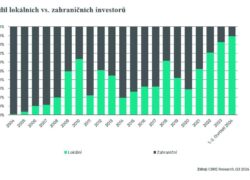
The Czech real estate market in the third quarter of 2024 was marked by a striking feature: 100% of all investment capital originated from domestic investors. Approximately €188 million was transacted across the country’s key real estate sectors during the quarter, one of the lowest volumes in recent years, according to the latest report by Colliers.

Despite the muted quarter, total investment volume for the first three quarters of the year exceeded €1 billion, spread across 34 transactions. Notably, nearly half of all deals involved properties outside Prague, signaling a growing confidence among domestic investors in regional markets.

Sector Breakdown and Key Transactions

The investment activity in Q3 2024 was evenly distributed across asset classes: retail (31%), industrial (30%), residential (27%), and smaller office transactions (12%). One of the standout deals of the quarter was REICO’s forward purchase of the G1 building in the Nový Opatov project, marking its entry into the build-to-rent (BTR) residential sector.

“The third quarter confirmed a clear trend: domestic investors are driving the market while international capital remains on the sidelines,” commented Josef Stanko, Director of Market Research at Colliers. “This dynamic has persisted throughout 2024, with Czech buyers showing a willingness to explore opportunities beyond the capital city.”

Retail Gains Momentum, Offices Await Recovery

The retail sector has shown signs of resurgence, benefiting from renewed investor interest, while the residential BTR segment continues to attract steady capital flows. However, the office market remains sluggish, reflecting the lingering challenges since the pandemic. With €235 million invested in offices year-to-date, the segment is performing at just 50% of its three-year average for the same period.

“The office market is still waiting for new opportunities,” added Stanko, noting that negotiations are underway for several major office properties, which could improve the sector’s outlook by year-end.

Prime Yields and Market Trends

Prime yields have remained stable throughout 2024, with office properties at 5.50%, industrial assets at 5.25%, and retail yields varying by submarket: 4.50% for high-street retail, 6.00% for shopping centers, and 6.25% for prime retail parks.

While pricing corrections appear to have bottomed out in many European markets, the Czech Republic is still catching up. The narrowing gap between supply and sale prices, combined with the European Central Bank’s recent interest rate cut to 3.25%, could boost transaction activity in Q4 2024.

“The potential for improved borrowing conditions may encourage investors to wait for better terms, but it also indicates an opportunity for more deals in the coming months,” noted Stanko.

Outlook for 2024

Economic and geopolitical uncertainties, including the impact of the recent U.S. presidential election, continue to influence investor sentiment. However, the Czech market has demonstrated resilience, buoyed by a strong base of domestic investors.

“The market remains active, particularly for smaller transactions,” said Stanko. “We anticipate the total annual investment volume to reach around €1.5 billion, which, given the challenges of the year, is a solid outcome.”

With sustained domestic investor interest and improving macroeconomic conditions, the Czech real estate market looks poised for a stronger finish to 2024.

Source: Colliers

INVESTIKA Real Estate Fund surpasses CZK 20 billion under management

INVESTIKA Real Estate Fund, an open-ended real estate mutual fund, has achieved a major milestone, managing over CZK 20 billion in assets by the end of 2024. After nine years of steady growth, the fund now boasts more than 80,000 retail investors from the Czech Republic and Slovakia, solidifying its position as the leading non-bank real estate fund in both countries and the second-largest open-ended real estate fund for retail investors in the Czech Republic.

Petr Čížek, Chairman of the Board of Directors at INVESTIKA, reflected on the fund’s remarkable progress: “We founded INVESTIKA Real Estate Fund in 2015 with a vision to make investing accessible to everyone, enabling them to grow their wealth through secure, passive investment in commercial real estate. Today, with over 80,000 investors and CZK 20 billion in managed assets, that vision has become a reality. Our conservative approach, offering annual returns of 4-6%, combined with a low entry threshold of CZK 100, makes this fund accessible to all.”

Diverse Portfolio Spanning Four Countries

INVESTIKA’s success is built on a robust and diverse real estate portfolio, comprising 50 properties across the Czech Republic, Poland, Croatia, and Spain. These properties, leased to around 350 tenants from various economic sectors, generate consistent rental income that underpins the fund’s long-term annual return target of 4-6%.

Key assets include:
• Poland: Office and logistics complexes in Warsaw and regional cities.
• Czech Republic: Office buildings such as Avenir E and Karla Englis 4 in Prague, the Bohemia Business Centre in Pilsen, and the Galerie Butovice shopping mall in Prague.
• Croatia and Spain: Luxury residential properties with high development potential.

Poland currently represents the largest portion of the portfolio, reflecting INVESTIKA’s strategic focus on high-demand office and logistics assets in Central Europe.

Commitment to Sustainability and ESG Standards

INVESTIKA Real Estate Fund is also at the forefront of sustainability initiatives, aiming to enhance the environmental performance of its portfolio. Since 2022, the fund has voluntarily monitored the sustainability of its properties, investing over CZK 100 million in 2024 to implement energy-saving measures and reduce carbon footprints.

This year, nearly all of the fund’s properties in the Czech Republic and Poland are expected to achieve BREEAM environmental certification. These efforts align with the fund’s newly adopted ESG strategy, approved by the Board of Directors in October 2024, which sets a clear roadmap for ongoing sustainability improvements.

Looking Ahead

With a geographically diversified portfolio, a strong commitment to ESG principles, and a growing base of retail investors, INVESTIKA Real Estate Fund continues to lead the way in providing accessible and sustainable investment opportunities in commercial real estate. As the fund celebrates its milestone, it looks poised to maintain its trajectory of steady growth and robust returns.

Germany: Outlook for the property investment market in 2025

The gradual return of institutional investors is driving the market, while family offices are very active
More funds will be launched in 2025, mostly in the form of individual mandates and club deals
Cologne/Berlin, 20 November 2024 – The property transaction market has bottomed out. After three difficult years for the real estate industry, conditions will improve in 2025. This is mainly due to the significant drop in inflation and lower interest rates as a result of the ECB’s key interest rate cuts this year. However, a further boom phase in the property market is not to be expected for the time being. The asset classes in particular demand among investors are residential and logistics. By contrast, the office sector needs to be considered in a very differentiated way. These are the key findings of the online press conference ‘Outlook 2025: Interest rates down, inflation down – Is everything going to be okay again in the real estate investment market?’ with Michael R. Baumann, Head of Capital Markets at real estate consultancy Colliers in Germany , Jan Philipp Daun, Managing Director at GARBE Industrial Real Estate, Carsten Demmler, Managing Director at HIH Invest Real Estate, Camille Dufieux, Managing Director at INTREAL, and Gerhard Lehner, Head of Germany at Savills Investment Management.

Institutional investors remain cautious

All participants agree that the first signs of an increase in transaction activity are already visible, but that a significant increase is still a long time coming due to the wait-and-see attitude of many industry participants.

Carsten Demmler, Managing Director of HIH Invest Real Estate, commented: ‘The transaction market will pick up again in 2025, because there are selectively favourable purchase opportunities. Nevertheless, the year is likely to continue to be characterised by portfolio adjustments in terms of investment strategies. The real estate ratios in the portfolios will remain stable, but investors will implement greater sectoral diversification within the real estate allocation.’

‘There is a bit more movement in the market than there was six months ago,’ said Camille Dufieux, Managing Director of INTREAL. ’We are receiving more requests for new products. Our fund partners are dealing with transactions more intensively than they were doing as recently as mid-year. I see this as a sign that the transaction market is slowly recovering.’

Even though the fall in prices is currently creating some new opportunities, none of the participants expect a boom phase to follow.

Gerhard Lehner, Head of Germany at Savills Investment Management, comments: ‘Institutional investors are still too cautious for that. In the last two years, German institutional investors have primarily focused on managing their existing portfolios. By contrast, family offices are currently very active on the investment side. They are taking advantage of the market correction, identifying opportunities and investing mainly in smaller properties in an anti-cyclical manner. We are also seeing larger investments by this group of investors in the triple-digit millions.’

Jan Philipp Daun, Managing Director at GARBE Industrial Real Estate, adds: ‘Institutional investors pursuing core strategies have practically not invested at all in the past two years. This is slowly changing. We have had some interesting discussions with German investors in recent weeks and are optimistic that the investment market has bottomed out.’

Michael R. Baumann, Head of Capital Markets at real estate consultancy Colliers in Germany, adds: ‘There are increasing signs that the odd opportunistic player who hasn’t been seen on the market in the last ten to 15 years is returning.’

Investors have very different focuses: residential and logistics are “everybody’s darling”, office properties face challenges

The mood on the transaction market is brightening overall compared to the last three years, but the slightly positive forecasts do not apply to all asset classes. Experts expect rising investor demand in the residential and logistics asset classes. Office properties, on the other hand, need to be considered on a case-by-case basis.

Michael R. Baumann explains: ‘Residential will remain attractive for investors in the long term due to factors such as demographic change, a continued high rate of immigration and the low quality of new construction. The same applies to logistics. Contrary to many assumptions, office properties in top locations and with good tenant structures continue to be attractive. On the other hand, there are non-ESG-compliant properties in locations where pricing is not yet established. These properties will continue to struggle in the coming year.’

Carsten Demmler adds: ‘We are seeing a very clear “flight to quality”. The office asset class is far from dead. In fact, under the right conditions, it is offering very attractive entry opportunities, especially to anti-cyclical investors.’

Markets with economic growth are particularly attractive for investments

The participants see the best investment opportunities in Germany as being office properties in the top 7 locations. However, both the macro and micro-location must be right. By contrast, the residential asset class also works in the metropolitan regions a little further away from the larger cities.

Outside Germany, Jan Philipp Daun sees the greatest opportunities in growth regions: ‘Capital markets hardly differ from one another. The tenant market is often more challenging. That is why we are concentrating primarily on countries and regions with high economic growth in the logistics sector, especially northern Italy and the Czech Republic. Germany is still attractive, but it takes much longer to sign a lease here.’

Gerhard Lehner adds: ‘Ultimately, the fundamental data and the different speeds of market corrections across countries are crucial. Outside Germany, we have recently identified attractive investment opportunities for our investors in the residential sector in Scandinavia, Spain and the Netherlands, for example.’
2025 will see the launch of a number of new funds – individual mandates and club deals are leading the way

All participants agree that significantly more funds will be launched in the coming year. According to Jan Philipp Daun, these will come primarily from large platforms: ‘Smaller fund boutiques that are less specialised and have little track record will have a hard time.’

In this context, Gerhard Lehner also emphasises the importance of existing funds: ‘When investing in established funds, investors benefit from investing in an already broadly diversified and return-generating portfolio. This process can take a few years from the time of subscription for a newly launched fund. In addition, the fund manager of an existing fund already has an extensive track record.’

According to Camille Dufieux, individual mandates and club deals will dominate: ‘In the current year, pool funds and blind pools have not worked. Investors are busy cleaning up their own portfolios, and that is of course much more difficult when they are dependent on co-investors. In 2024, we saw significantly more individual mandates and club deals – at least among those investors large enough to launch their own special fund. This trend will continue in the coming year. One product that some market participants had high hopes for is the ELTIF 2.0. However, it currently plays a minor role in the real estate sector.’

Outlook for 2025: light at the end of the tunnel

Now that the real estate transaction market has picked up speed again in recent months, the majority of participants expect a further upturn in 2025. However, everyone agrees that the industry will not return to the figures seen during the low-interest phase for the time being and that another real estate boom is not on the cards.

Carsten Demmler is somewhat more cautious in his assessment of the coming year: ‘For us, 2025 will be another year of transition. We have to completely disassociate ourselves from the expectations of the years 2018 to 2021. We won’t see these figures again for a long time. The industry needs to recalibrate and find a new normal that will tend to be more in line with the level between 2012 and 2016.’

According to Gerhard Lehner, asset management will play a major role in the coming years: ‘Investors rightly expect us to now realise the promised returns on real estate investments. In this context, it is all the more important to maintain and systematically improve the sustainability and ESG compliance of existing properties.’

Camille Dufieux also sees a positive side to the developments of recent years: ‘A market shakeout has taken place. The wheat has been separated from the chaff – we will certainly see fewer transactions in the coming years than before 2021, but they will be of higher quality. We may still be in the tunnel, but at least we can see the light at the end.’


Jaroslav Hloušek appointed Director of SAP Department at Eviden

Eviden, a prominent SAP implementation partner, has announced the appointment of Jaroslav Hloušek as the new Director of its SAP department. Bringing decades of experience from both public and private sectors, Hloušek is set to lead the company’s SAP initiatives, with a focus on migrating medium-sized businesses to the cutting-edge SAP S/4HANA platform.

Hloušek joins Eviden following a six-year tenure at Česká pošta, where he directed the ICT and eGovernment department. At Česká pošta, he oversaw critical operations, including infrastructure, application management, and cyber security, alongside developing innovative IT solutions such as IS data boxes, CzechPoint, and data warehouses.

In his new role, Hloušek is determined to bridge the gap for medium-sized enterprises hesitant to adopt SAP S/4HANA.

“One of the key tasks will be to demonstrate the advantages of integrating AI, cloud technology, and the SAP platform to midsize companies,” said Hloušek. “While large corporations have largely transitioned to SAP S/4HANA, midsize customers require more tailored support, clear arguments, and patience to fully appreciate the benefits of this innovation. My experience in state-run IT provides a valuable perspective in these conversations.”

A Veteran in ICT Leadership

Hloušek’s career in ICT spans over 25 years, beginning in 1998 when he directed the INVEX Computer Fair in Brno, Europe’s second-largest IT exhibition. Over the years, he has held senior leadership roles across organizations providing infrastructure and information systems, including:
• CEO of Anect: Delivered infrastructure projects for major government clients, such as the Ministry of Labour and Social Affairs and the Ministry of Finance.
• Director at Comint: Spearheaded the development of systems for the Ministry of Transport and created a portal for the Ministry of Justice.

In addition to his executive roles, Hloušek has contributed to ICT policy and governance as a member of the Board of Directors of the Association for Information Society, the Government Council for Information Technology, and as an advisor to the Minister of Transport.

Personal Background

At 52 years old, Hloušek balances his professional achievements with a dynamic personal life. Divorced with three children, he enjoys sports and the practice of hardening. Fluent in English, German, and Russian, his global outlook aligns with Eviden’s vision of expanding its SAP offerings across diverse markets.

With Hloušek at the helm, Eviden aims to solidify its position as a leading SAP implementation partner, empowering businesses to harness the full potential of modern IT solutions.

REAX Advisory guides INTREAL Luxembourg in optimising business operations for future growth

REAX Advisory GmbH has successfully completed a comprehensive consulting mandate with INTREAL Luxembourg S.A., a leading alternative investment fund manager (AIFM), to refine and optimise its operational model. The initiative focused on analysing current processes, uncovering untapped efficiency opportunities, and implementing strategies to sustain growth and bolster competitiveness.

Annika Dylong, Managing Director at REAX Advisory, highlighted the importance of agility in the financial sector: “The dynamic nature of the financial industry demands constant evaluation and evolution of business models. Our work with INTREAL Luxembourg S.A. identified significant optimisation opportunities, which we systematically addressed to enhance the company’s operational structure and long-term efficiency.”

Comprehensive Analysis and Strategic Implementation

The consultancy’s efforts involved an in-depth review of over 20 core processes, including risk management, fund issuance, data management, and reporting. This led to the development of 16 targeted optimisation measures, ranging from restructuring internal workflows to leveraging synergies between INTREAL’s Luxembourg operations and its headquarters in Hamburg, Germany.

Key outcomes of the project included:
• Enhanced Organisational Agility: A more flexible structure was introduced, supported by an optimised communication framework to ensure seamless coordination among stakeholders.
• Clearer Competency Definitions: Transparent ownership of tasks improved internal collaboration and accountability.
• Digital and Data-Driven Enhancements: A revised sales strategy, a roadmap for core system integration, and a new document management system were implemented.
• KPI-Driven Oversight: A performance monitoring dashboard now provides real-time insights into operational efficiency.

A Future-Ready Operating Model

Kai Nelson Dreisigacker, Managing Director at REAX Advisory, underscored the significance of the transformation: “Our work has equipped INTREAL Luxembourg S.A. with an operating model designed for sustained growth in a competitive and evolving market. The measures implemented foster efficient workflows, robust internal communication, and clearly defined responsibilities, paving the way for future success.”

The project’s success ensures that INTREAL Luxembourg S.A. is well-positioned to navigate a shifting financial landscape, leveraging its optimised processes to deliver value and maintain its competitive edge.

Žižkov emerges as Prague’s hottest property market with record price growth

Žižkov, a district long overlooked in Prague 3, has transformed into one of the city’s most desirable neighborhoods, leading the metropolis in year-on-year apartment price increases. Central to this transformation is the Park District Residence by CENTRAL GROUP, which has become Prague’s best-selling luxury apartment project. With additional large-scale developments underway, CENTRAL GROUP has cemented its position as the largest private investor and developer in Žižkov.

Once a neglected part of the city, Žižkov has undergone a dramatic metamorphosis in recent years. Abandoned industrial sites and brownfields have been revitalized into modern residential and commercial hubs, while existing infrastructure and amenities have been upgraded. These changes have not only attracted new residents but also enhanced the quality of life for the long-time community.

At the heart of this evolution is CENTRAL GROUP’s Park District Residence, located in Nový Žižkov. The project, which features luxury apartments in energy-efficient buildings, has seen overwhelming demand. The first phase, consisting of approximately 390 flats, is nearly sold out, while over a third of the apartments in the initial phase of a new city block were booked within a month of launch. Due to high demand, a further 60 flats have been made available at limited-time introductory prices, starting at CZK 5.7 million.

The development also offers premium living features, including air conditioning, underfloor heating, and expansive views of Prague from its top-floor sample apartments. According to CENTRAL GROUP’s Sales Director, Jana Martínková, the project’s popularity highlights the district’s rising appeal. “Nový Žižkov is taking over from Karlín and Holešovice as the brightest star in Prague’s real estate market. We are thrilled that our projects are leading this transformation,” Martínková remarked.

Žižkov’s desirability is further boosted by its proximity to central Prague, excellent public transport links, and a vibrant mix of cultural, recreational, and dining options. Green spaces such as Vítkov, Parukářka, and Malešický Park provide ample opportunities for relaxation, making it an attractive area for residents and investors alike. Housing prices in the district have surged by more than 16% year-on-year, the fastest growth in the city, with the trend expected to continue.

The Park District Residence exemplifies the revitalization of a brownfield into a thriving urban neighborhood. Built on the site of the former Žižkov Freight Station, the development integrates residential blocks with community features such as a six-class kindergarten, a 1.5-hectare park, and a promenade with water features. Commercial spaces on the ground floors of the buildings will house shops, restaurants, and services, fostering a dynamic metropolitan atmosphere.

Designed by prominent architect Jakub Cigler and nine leading studios, the development incorporates architectural elements inspired by the traditions of Vinohrady and Žižkov, including semi-enclosed city blocks and modern façade designs. The combination of exclusive materials such as glass railings and triple-glazed windows enhances both aesthetics and energy efficiency.

Beyond the Park District, CENTRAL GROUP is also developing the Centrum Nový Žižkov, designed by architect Eva Jiřičná, and the Nový Jarov projects. Together, these initiatives will deliver 4,600 apartments, school facilities, and extensive green areas, making CENTRAL GROUP the dominant player in Žižkov’s urban renewal.

As part of its broader investment in the locality, CENTRAL GROUP has already renovated Basel Square, contributing CZK 200 million to its reconstruction. The company plans further investments totaling more than CZK 750 million, underscoring its commitment to Žižkov’s development.

“When we launched sales for the first phase of the Park District in 2021, apartment prices started at CZK 4.4 million. Now, similar apartments cost nearly CZK 6 million, marking a 30% appreciation in just three years,” Martínková explained. “Žižkov is not only an exceptional place to live but also a promising investment opportunity.”

As the district’s transformation continues, Žižkov stands poised to solidify its reputation as one of Prague’s most sought-after and dynamic neighborhoods.

Source: CENTRAL GROUP

Fond Českého Bydlení expands portfolio with over 300 flats, valuing assets at EUR 40 Million

Fond Českého Bydlení, the Czech Housing Fund specializing in residential rental housing, has significantly expanded its portfolio with the acquisition of two apartment buildings in Beroun and Chomutov. This transaction, valued in the tens of millions of euros, adds 313 fully rented apartments spanning nearly 20,000 square meters to the Fund’s holdings. With this move, the Fund’s asset value has surpassed EUR 40 million (CZK 1 billion), more than doubling its portfolio size since inception.

The acquisitions, facilitated by Czech Home Capital, mark a milestone for Fond Českého Bydlení. Legal advisory services were provided by Glatzová & Co., while technical due diligence was conducted by Proficheck, s.r.o., and Bytecheck, s.r.o.

Since its founding in 2018 as the Czech Republic’s first fund focused solely on rental housing, Fond Českého Bydlení has consistently delivered strong performance. Co-founder Jakub Kořínek emphasized the strategic importance of the recent acquisitions.

“Our long-term goal is to maintain the Fund’s stable performance,” Kořínek said. “These acquisitions represent profitable investments and will help us achieve a yield competitive with or better than last year, when we achieved an 8.27% annual appreciation. Investors who joined at the Fund’s inception have already seen their investments grow by more than 50%.”

Kořínek also highlighted the Fund’s emphasis on regional rental housing markets as a key to sustained growth. “Investing in rental housing, particularly in smaller towns and catchment areas, has proven to be a smart strategy. It allows us to deliver consistent year-on-year appreciation. We are actively pursuing additional acquisitions to further strengthen our portfolio.”

The newly acquired properties are notable for both their size and their locations. The Beroun property features 55 apartments averaging 38 square meters, while the Chomutov building comprises 258 apartments with an average size of 56 square meters.

“Beroun is a very attractive town near Prague with full public amenities and excellent transport links,” Kořínek explained. “As property prices in major cities continue to rise, we are focusing more on smaller towns with strong growth potential.”

Chomutov, in particular, stands out due to the ongoing construction of the D7 motorway, which will significantly reduce travel times to Prague and other key areas. This makes it an affordable alternative for residents working in regions like Kladno, Slaný, and Louny.

Both properties are fully occupied by stable tenants, ensuring immediate cash flow. Kořínek noted that while the buildings have been well-managed, plans are in place for future revitalization to enhance their long-term value.

With the addition of these properties, Fond Českého Bydlení now manages a portfolio of 20 buildings across 12 locations in the Czech Republic and Slovakia. The portfolio includes 487 residential and non-residential units, encompassing a total lettable area of 29,327 square meters.

“Fond Českého Bydlení continues to position itself as a stable and promising investment vehicle in the rental housing sector,” Kořínek concluded. “Our focus on long-term value creation and sustainable yields makes us an attractive choice for investors.”

This latest acquisition underscores the Fund’s commitment to expanding its footprint while maintaining its reputation as a leader in the Czech rental housing market.

Savills report highlights Poland as a rising logistics powerhouse in Central and Eastern Europe

Poland is emerging as a key logistics hub in Central and Eastern Europe, driven by its strategic location, robust infrastructure development, and shifting global supply chain dynamics. A recent report by Savills, titled “Poland Express: All Aboard the Polish Logistics Freight Train,” underscores the country’s growing importance as a logistics and production center for Western Europe and Scandinavia, amid companies diversifying away from Asia.

Economic Growth and Consumer Trends

Poland’s economic transformation since 1990 has positioned it as a standout performer among OECD countries. Over the last decade, household incomes have surged by 31.2%, compared to a modest EU average of 5.5%. This economic progress has fueled a 46% increase in consumer demand over the same period, with an additional 13% growth projected by 2029.

The report highlights the rapid expansion of Poland’s e-commerce sector, which accounted for 8.7% of retail sales in 2024. This share is expected to grow to 23% in the coming years, driving demand for warehousing and logistics space. Global players like Amazon, Zalando, Shein, and VidaXL have already established operations in Poland to serve Western European and Scandinavian markets.

Infrastructure: A Key Driver

Poland’s infrastructure advancements have been a game-changer for its logistics appeal. Supported by €229 billion in EU funding from 2007 to 2027, the country has developed a modern network of roads, railways, and ports. The Port of Gdańsk, a critical player in the Baltic region, handled 79.6 million tonnes of cargo in 2023—an impressive 26.1% increase from 2022.

“Poland’s strategic location and well-developed road infrastructure make it the ‘centre of gravity’ for logistics operations across Europe,” said Katarzyna Pyś-Fabiańczyk, Director and Head of Industrial Services Hub at Savills.

Competitive Labour Costs and Foreign Investment

Poland’s labor market continues to attract international corporations, with average costs of €14.5 per hour—54% lower than the EU average. Foreign Direct Investment (FDI) has also surged, equating to 3.8% of GDP over the past three years, compared to the European average of just 0.2%. Manufacturing remains a major focus, accounting for 33.1% of FDI expenditure.

Strong Demand for Warehousing Space

Poland’s warehousing market consistently ranks among the top in Europe, often outperforming countries like France, Spain, and the UK. While 2023 saw a 25% year-on-year decline in logistics leasing to 3.37 million sqm, the figure was still 31% higher than pre-pandemic averages. Demand rebounded in the first half of 2024, increasing by 19% compared to the same period in the previous year.

Rents remain competitive, ranging from €54 per sqm annually in Central Poland to €60 per sqm in the Warsaw II zone, ensuring the country’s continued attractiveness for logistics investments.

Land Market Restructuring and Future Prospects

Changes in Poland’s Spatial Planning Act, set to take effect in 2026, will introduce new zoning regulations aimed at streamlining industrial and service areas. While this is expected to provide greater predictability for investors, it may also limit the availability of new land for logistics development, particularly in high-demand regions like Warsaw, Kraków, and the Tricity area.

“We retain a competitive edge over neighboring Central European countries in terms of land availability, particularly in Special Economic Zones,” said Rafał Bochenek, Land Acquisition Manager at Savills Industrial Agency. “However, plots suitable for logistics parks in key transport hubs are dwindling, leading to rising land prices.”

Poland’s Logistics Future

Poland’s appeal as a logistics hub lies in its proximity to Western Europe, competitive operating costs, and growing domestic consumption. The report concludes that Poland is well-positioned to remain a leader in the logistics sector, particularly as nearshoring trends accelerate across Europe.

This rising status as a logistics hub reinforces Poland’s reputation as a central player in the reshaping of global supply chains.

CBRE marks 25 years in the Czech Republic: Evolution of commercial real estate

CBRE, a global leader in commercial real estate services, marks 25 years of operations in the Czech Republic. Over this period, the country’s commercial real estate sector has transformed dramatically, evolving into a mature, competitive market that attracts both domestic and international investors.

From Offices to Diverse Investment Portfolios
In its early years, the Czech commercial real estate market focused heavily on office properties. However, as the market developed, other sectors—such as retail, industrial and logistics, and even emerging asset classes like student housing and medical facilities—began to capture investor interest.

“Over the past quarter-century, we’ve witnessed pivotal moments, such as the Czech Republic’s entry into the EU in 2004, which boosted investor confidence, and the resilience shown during the 2008 financial crisis. These events shaped the robust market we see today,” said Jakub Stanislav, Head of Investment Properties at CBRE.

While peak investment years like 2016, 2017, and 2019 saw annual transactions exceeding €3 billion, the market now stabilizes at an average of €1.9 billion per year, supported by growing interest in sustainable and alternative investments.

Office Market: Adapting to New Work Models
Since CBRE established its Czech branch in 1999, Prague’s office market has tripled in size, expanding from 1.3 million sq m to 3.9 million sq m today. The pandemic reshaped workplace dynamics, accelerating the adoption of hybrid work models and sparking demand for flexible office spaces.

“The vacancy rate in Prague stands at a low 8.1%, the best among CEE capitals. Future growth will be driven by technological innovation, employee well-being, and sustainability,” said Helena Hemrová, Head of A&T Office at CBRE.

CBRE has played a key role in securing spaces for major clients, including Raiffeisenbank, Siemens, and Seznam.cz, contributing to the development of prominent office hubs like Pankrác and Karlín.

Retail Market: From Hypermarkets to E-Commerce
The Czech retail landscape has grown eightfold in the last 25 years, with shopping center spaces now totaling 2.6 million sq m. The market transitioned from hypermarkets to integrated shopping and entertainment hubs.

“E-commerce and digitization are redefining retail. While shopping center footfall remains slightly below pre-pandemic levels, sales have surpassed 2019 figures, partly due to inflation,” noted Jan Janáček, Head of A&T Retail.

CBRE has been instrumental in the expansion of global brands like Samsung, Versace, and Ralph Lauren into the Czech market, solidifying the country’s position as a retail hotspot.

Industrial and Logistics: An E-Commerce Catalyst
The Czech industrial and logistics sector has grown from 502 km of highways in 1999 to 1,388 km today, creating a foundation for a 12.1 million sq m leasable market. EU integration and foreign investment, particularly from Germany and South Korea, have driven this expansion.

“The pandemic sparked unprecedented demand for logistics space. While the market is normalizing, it remains strong, with growing interest from manufacturing companies,” said Jan Hřivnacký, Head of Industrial Leasing.

CBRE facilitated the development of key logistics hubs near Prague, Brno, and Ostrava, and brokered major transactions for developers like Panattoni and P3.

The Next Chapter
Looking ahead, sustainability, technology, and flexibility are expected to shape the Czech real estate landscape. As CBRE celebrates its 25-year milestone, its contributions to the sector underscore its role in driving innovation and growth in one of Central Europe’s most dynamic markets.

Source: CBRE Czech Republic

front page info
LATEST NEWS