Union Investment boosts 2024 sales, strengthens liquidity for future growth

Union Investment has successfully navigated the challenging real estate market in 2024, achieving a sales volume of approximately €2.75 billion across 28 transactions. The company strategically focused on selling assets in the hotel and shopping center segments, leveraging the high quality of its real estate portfolio to bolster liquidity reserves and create flexibility for future investment opportunities. Despite market uncertainties, the sales have provided financial stability and contributed to the resilience of Union Investment’s open-ended mutual property funds.

In a year marked by cautious investor sentiment, the company maintained its commitment to long-term value creation. The properties sold delivered impressive annual value contributions over an average holding period of 11.2 years, generating returns that exceeded their book values by approximately €330 million. The overall performance of Union Investment’s funds ranged from 3.18% to -0.18%, reflecting the strategic divestment approach and proactive asset management efforts.

CEO Michael Bütter emphasized the importance of diversification across asset classes in maintaining stability amid fluctuating market conditions. He noted that the company’s focus on flagship funds with broad asset mixes, coupled with a defensive expansion strategy, has positioned Union Investment to capitalize on market shifts and continue generating value for investors.

The company’s divestment strategy in 2024 centered on hotels and shopping centers, with operator-run properties accounting for €1.4 billion of total sales revenue. Notable transactions included the sale of three hotel properties in Germany, Austria, and the U.S., totaling approximately €204 million, and four retail properties valued at €1.16 billion. The highlight transactions in the retail sector were the sales of the Fünf Höfe in Munich and the Magnolia shopping center in Wrocław.

Union Investment also made significant progress in the office sector, selling 12 properties across Europe and the Asia-Pacific region for a combined total of €633 million. While office properties have faced challenges in the current market, the company’s portfolio, particularly in prime locations, continues to attract buyers due to its high quality and long-term potential. Looking ahead, Union Investment plans to consider selective acquisitions in this segment once market conditions stabilize.

Looking forward to 2025, the company intends to focus on consolidating its portfolio rather than pursuing aggressive acquisitions. Union Investment anticipates that stronger purchasing opportunities may not materialize until 2026, pending a normalization of market conditions and further interest rate cuts. In the meantime, efforts will be concentrated on maximizing the value of existing assets and maintaining high occupancy levels across the portfolio.

Union Investment’s funds remain well-positioned, with a gross liquidity ratio of between 15% and 18% for its three open-ended real estate funds marketed in Germany—UniImmo: Deutschland, UniImmo: Europa, and UniImmo: Global—well above the statutory minimum of 5%. Despite divestments, rental income across the portfolio increased by 2.2% year-on-year, driven by strong leasing activity. In 2024, the company successfully leased or re-let approximately 1.1 million square meters of commercial space, with office properties accounting for nearly half of this total.

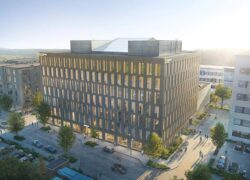
As part of its long-term sustainability strategy, Union Investment continues to enhance the environmental and operational efficiency of its holdings. The completion of 15 new projects in 2024, with a total volume of €2.0 billion, further strengthens the company’s earnings potential. Among the newly added assets are the Ara Almelo logistics property in the Netherlands, the 25hours Hotel Paper Island in Copenhagen, and the Aura office building in Helsinki.

Despite ongoing market challenges, Union Investment remains confident in the future of real estate investment, with institutional clients showing renewed interest in asset classes that have reached a turning point, such as hotels and residential properties. The company is also managing a major mandate from the Versorgungsanstalt des Bundes und der Länder (VBL), the largest supplementary pension institution for public sector employees, further solidifying its position as a trusted investment partner.

With a focus on financial stability, asset quality, and strategic growth, Union Investment is poised to navigate the evolving real estate landscape while delivering long-term value to its investors.

Tritax Big Box acquires Heathrow site for GBP 70 million to develop major UK data centre

Tritax Big Box REIT has acquired a 74-acre site in Heathrow, London, within the Slough Availability Zone, aiming to develop one of the largest data centres in the UK. The acquisition, valued at £70 million, includes a 50% stake in a joint venture with a leading European renewable energy provider. This strategic move ensures accelerated power delivery through pre-existing grid connections, expediting the timeline for a 147 MW data centre project.

The first phase of the project will see the development of a 107 MW facility spanning 448,000 square feet across three floors. Construction is expected to commence in the first half of 2026, with completion and income recognition projected for the second half of 2027. Tritax estimates a yield-on-cost of 9.3%, significantly exceeding the typical 6-8% return in logistics investments.

The JV partnership provides grid connections to two independent substations, enhancing power resilience while incorporating utility-scale battery storage. Tritax expects to fund the project through existing financial resources and its capital recycling program. Additionally, the company has outlined a future pipeline of data centre opportunities across the UK, leveraging access to approximately 1 GW of power.

Aubrey Adams, Chairman of Tritax Big Box, emphasized that the acquisition represents a major step into the data centre sector, capitalizing on the growing demand for cloud and AI-driven infrastructure. The project benefits from its prime London location and the strategic partnership with a renewable energy provider, positioning Tritax as a key player in the UK data centre market.

EIB grants EUR 225 million loan to Malmö for energy-efficient housing project

The European Investment Bank (EIB) has approved a SEK 2.6 billion (approximately €225 million) loan to the Swedish city of Malmö to support the construction of more than 1,500 energy-efficient apartments. The initiative aims to advance European Union climate objectives while assisting Sweden in achieving its energy-efficiency targets.

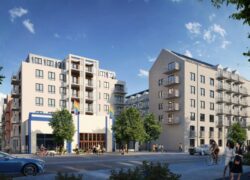
The municipal housing company MKB Fastighets AB will oversee the development of 13 residential buildings, which will provide a total of 1,547 apartments across the city. The construction is planned to take place in phases, with full completion expected by 2029. The newly built homes will meet energy efficiency standards that surpass Sweden’s national benchmarks.

EIB Vice-President Thomas Östros emphasized the bank’s dedication to sustainable urban development, stating, “This investment underscores our strong commitment to supporting sustainable and inclusive urban development across Europe. By providing long-term financing for initiatives like this, we help cities like Malmö, known as the City of Parks, lead the way in tackling climate change while improving the quality of life for their residents.”

Malmö, Sweden’s third-largest city with a population of around 360,000, is experiencing growth that exceeds the national average. The city serves as a crucial economic hub in the region, benefiting from its strategic location and its connection to Denmark via the Öresund Bridge, which facilitates collaboration with Copenhagen through a shared shipping port.

MKB Fastighets AB CEO Marie Thelander Dellhag highlighted the environmental significance of the project. “Reducing the climate impact of our new housing projects is crucial,” she said. “The financing from EIB confirms that our projects meet the high standards needed to achieve our climate goals. Efficient energy usage and ambitious climate targets are key to making MKB and Malmö more sustainable.”

The EIB’s latest financial support represents the seventh loan provided to Malmö, continuing a collaboration that began in 1995. The project aligns with EU regulations on energy performance and efficiency in buildings, reinforcing the city’s commitment to environmentally friendly development.

Claes Ramel, Head of Treasury for the City of Malmö, described the funding as a vital component in supporting the city’s expansion. “The financing facility from the EIB is an important tool in meeting the funding needs of our growing city,” he said. “It adds to Malmö’s financial platform and confirms the high environmental standards of our investments. This substantial funding allows us to pursue our development plans with confidence.”

With the EIB’s backing, Malmö is set to make significant strides in sustainable housing, enhancing its reputation as a leader in green urban living.

EBRD achieves record EUR 26.8 billion in financial mobilisation in 2024

The European Bank for Reconstruction and Development (EBRD) has significantly increased its private-sector mobilisation efforts in 2024, reaching an all-time high of €26.8 billion in total financial mobilisation. This achievement underscores the Bank’s commitment to supporting clients and economies in meeting their investment needs across its regions of operation.

The EBRD’s mobilisation efforts comprised both direct and indirect financing. Direct mobilisation reached a record €4.82 billion, reflecting the Bank’s intensified collaboration with commercial banks, insurance firms, and institutional investors. Indirect mobilisation, which includes public-sector partnerships and syndicated lending, accounted for €21.97 billion. These figures highlight the EBRD’s strategic approach to leveraging external capital to enhance the economic resilience of its member countries.

For over three decades, the EBRD has played a crucial role in facilitating the transition of economies towards open, market-oriented systems. Mobilisation of private-sector funds has been a key component of its operations, enabling the Bank to expand financing capabilities and contribute to sustainable economic growth.

Christian Kleboth, Head of Debt Mobilisation at the EBRD, emphasized the importance of collaboration in achieving these results. “Through intensified efforts and strong cooperation with our commercial banking and investor partners, we were able to significantly boost our direct mobilisation delivery in 2024,” Kleboth said. “This achievement ensures that nearly €27 billion in additional financing is flowing to our clients and economies, helping to drive positive change. Moving forward, we will continue to introduce innovative mobilisation products that attract institutional investors and enhance co-financing opportunities.”

The EBRD’s efforts align with the broader objective of multilateral development banks (MDBs) to attract private investment for development projects worldwide. The need for private capital has become particularly pressing in climate finance, where the funding gap is expected to require additional investments of up to US$ 2.8 trillion (€2.6 trillion) annually by 2030 to meet global climate goals.

At the COP29 climate conference in Baku, MDBs collectively projected that their annual private climate mobilisation efforts will reach US$ 130 billion (€120.2 billion) by 2030. The EBRD has positioned itself as a leader in this space, having mobilised US$ 26.7 billion (€24.7 billion) in 2023 alone, reinforcing its pivotal role in driving climate-focused investments.

Looking ahead, the EBRD remains committed to expanding its mobilisation initiatives to further support economic development, climate action, and private-sector growth in its target regions.

Photo: Christian Kleboth, EBRD Head of Debt Mobilisation

Skanska to construct office and parking complex in Skövde, Sweden for approx. EUR 29.9 million

Skanska has secured a contract with municipal company Kreativa Hus Skövde AB to construct a state-of-the-art office building and an adjacent parking garage in central Skövde, Sweden. The project, valued at approximately SEK 340 million (approximately EUR 29.9 million), will be included in Skanska’s order bookings for Sweden in the first quarter of 2025.

The planned seven-story office building will encompass a gross area of 11,100 square meters and feature modern, flexible office spaces designed for efficiency. At the heart of the building will be an atrium, envisioned as a central gathering place that fosters collaboration and interaction among occupants. Additionally, the project will incorporate an innovative energy-sharing solution that allows the newly constructed building to exchange electricity and cooling with neighboring properties, enhancing overall energy efficiency. The development will also see the transformation of an existing parking lot into a vibrant public square, further enhancing the urban landscape.

The accompanying four-story parking garage will span a gross area of 4,500 square meters and will be integrated with the office building. To align with Skanska’s sustainability goals, the construction will utilize climate-reduced concrete for the structural frame, while the use of steel will be minimized to reduce the project’s environmental impact.

Construction is set to commence soon, with completion expected in the first half of 2027.

Ares Management secures EUR 30 billion for European direct lending strategy

Ares Management Corporation a global alternative investment firm, has successfully closed its sixth European direct lending fund, Ares Capital Europe VI (ACE VI), surpassing its fundraising target and reaching its hard cap of €17.1 billion. This milestone makes ACE VI the largest institutional direct lending fund globally based on limited partner (LP) equity commitments.

The final fund size represents a substantial 53% increase from Ares’ previous fund, Ares Capital Europe V, which closed in 2021 at €11.1 billion. With related vehicles and anticipated leverage, Ares’ European Direct Lending strategy now boasts approximately €30 billion in available capital. Combined with its recent $33.6 billion capital raise for Senior Direct Lending Fund III (SDL III), Ares has secured an impressive $64.5 billion across both strategies, reinforcing its position as a global market leader in private credit.

Blair Jacobson, Partner and Co-Head of European Credit at Ares, highlighted the firm’s growing influence in the European lending market, stating, “The final closing of ACE VI underscores the strength of Ares’ European direct lending platform and the demand for flexible capital solutions. We are grateful to our investors for their continued trust in our approach.”

Michael Dennis, also a Partner and Co-Head of European Credit, emphasized the firm’s pan-European reach and expertise. “Our local presence across key European markets, combined with our deep sector knowledge and longstanding sponsor relationships, enables us to identify attractive investment opportunities with high-quality borrowers,” he said.

ACE VI is designed to provide flexible financing solutions to market-leading European companies across defensive sectors, targeting businesses with EBITDA exceeding €10 million. The fund primarily focuses on senior-secured positions to ensure capital preservation and reduce volatility. Since its launch, ACE VI has already committed approximately €6.4 billion across more than 50 investments.

Ares’ European Direct Lending strategy is supported by a robust team of approximately 90 investment professionals operating from key financial hubs, including London, Paris, Frankfurt, Stockholm, Amsterdam, and Madrid. As of September 30, 2024, the division managed over $74 billion in assets and has executed nearly 380 transactions totaling more than €70 billion since inception.

Looking ahead, Matt Theodorakis, Partner and Co-Head of European Direct Lending, expressed confidence in the firm’s ability to capitalize on emerging opportunities. “Our platform’s scale, experience, and innovative approach allow us to navigate market complexities while maintaining disciplined capital deployment and delivering value to our investors,” he noted.

The latest fundraising achievement further cements Ares’ reputation as a powerhouse in the global direct lending space, with its continued expansion reflecting strong investor appetite and growing demand for private credit solutions in Europe.

Hungary’s average gross earnings reach HUF 695,100 in November 2024, up 11.9% YoY

In November 2024, full-time employees in Hungary saw their average gross earnings reach HUF 695,100, reflecting an 11.9% increase compared to the same period in 2023. Meanwhile, average net earnings, including tax benefits, stood at HUF 478,000, up by 11.8% year-on-year, according to recent data. Adjusted for inflation, real earnings increased by 7.9%, driven by a 3.7% rise in consumer prices.

Regular gross earnings, which exclude premiums and one-off bonuses, were recorded at HUF 613,700—also reflecting an 11.9% growth over the previous year. Sector-specific figures show that the business sector reported regular gross earnings of HUF 609,500 (up 11.3%), the budgetary sector HUF 613,000 (up 13.7%), and the non-profit sector HUF 657,100 (up 11.9%).

The median gross earnings for the month reached HUF 550,800, surpassing the previous year’s level by 12.5%, while median net earnings, including tax benefits, rose by 13.3% to HUF 383,400.

For the period from January to November 2024, average gross earnings stood at HUF 639,500, while net earnings excluding tax benefits were HUF 425,200, and HUF 440,200 with tax benefits included. Compared to the same period in 2023, average gross earnings and net earnings (excluding tax benefits) increased by 13.5%, and net earnings (including tax benefits) rose by 13.3%.

The consistent growth in earnings reflects the country’s economic resilience and wage growth trends, with increases observed across various sectors.

CBRE Romania brokers major sale of Rus Savitar factory to global furniture giant UE Furniture

CBRE Romania has successfully facilitated a major transaction in the furniture production sector, overseeing the sale of a factory owned by Rus Savitar to UE Furniture. The transaction includes a total area of 120,000 square meters of land and 60,000 square meters of buildings, marking a significant move in Romania’s furniture manufacturing landscape.

Rus Savitar, a family-owned business founded in 1994, has grown into one of Romania’s largest furniture and chipboard manufacturers. Over more than three decades, the company has established itself as a key player in the industry. According to Mădălin Aresmerițoaie, Senior Consultant for Industrial & Logistics at CBRE Romania, the deal not only preserves local traditions in furniture production but also brings significant economic benefits to the community.

UE Furniture, a global leader in the production of chairs, armchairs, and sofas, was the first Chinese company in its sector to be listed on the stock exchange. With over 20 years of experience in the industry, the acquisition of the factory in Dudeștii Noi marks its second investment in Romania, following the establishment of a production facility in Orăștie several years ago.

Cristian Rusu, owner and General Manager of Rus Savitar, highlighted the strategic focus of the company in recent years, emphasizing efforts to eliminate debts and achieve profitability. He expressed confidence that the partnership with UE Furniture will contribute to the company’s continued growth and provide new opportunities for its employees.

CBRE Romania played a pivotal role in the transaction by representing Rus Savitar and ensuring that both parties reached a mutually beneficial agreement. The consultancy firm’s expertise was instrumental in navigating the complexities of the deal and finding innovative solutions to facilitate the process.

Photo: Mădălin Aresmerițoaie, Senior Consultant for Industrial & Logistics at CBRE Romania

IC Immobilien Gruppe secures Hannover Leasing property management mandate

IC Immobilien Gruppe has been entrusted with the commercial, technical, and accounting property management of a substantial commercial real estate portfolio, comprising approximately 154,000 square meters of leasable space. The mandate, awarded by Hannover Leasing, covers a diverse mix of retail, office, and hotel properties located across northern, western, and southern Germany. The official commencement date for the contract was January 1, 2025.

Sabine Giesen-Kirchhofer, Managing Director of IC Property Management GmbH, expressed satisfaction with the expanded collaboration, stating, “We are delighted to strengthen our partnership with Hannover Leasing. This new mandate highlights the trust in our capabilities and demonstrates our ability to efficiently take on complex, large-scale portfolios across Germany, even within tight timeframes.”

The portfolio consists of ten properties strategically positioned in key regions of Germany, enhancing IC Immobilien Gruppe’s growing presence in the commercial property management sector. The contract reaffirms the company’s expertise in handling diverse property types and its commitment to delivering comprehensive management solutions.

Photo: Sabine Giesen-Kirchhofer, Managing Director of IC Property Management GmbH

Lagardere Travel Retail expands Costa Coffee in Poland with new openings and upgrades

Lagardere Travel Retail has announced ambitious plans for Costa Coffee in Poland, aiming to open six new cafes and renovate 24 existing locations in 2025. The expansion strategy will focus on prime locations, including shopping centers and key travel hubs such as airports and railway stations. The first new outlet of the year has already been launched at Wola Park shopping mall in Warsaw.

Maciej Gajkowski, Managing Director of Foodservice at Lagardere Travel Retail in Poland, emphasized the company’s commitment to enhancing the Costa Coffee experience in the country. “Since acquiring Costa Coffee in Poland, we have implemented numerous changes to drive the brand in a new direction. Our focus is on expanding the network by selecting prime locations and modernizing existing cafes to align with contemporary trends and customer preferences. High-traffic areas such as shopping malls and travel hubs are key to our growth strategy, enabling us to offer a seamless coffee experience to a wide customer base,” said Gajkowski.

The 24 cafes scheduled for renovation will be transformed in line with Costa Coffee’s updated visual identity and design standards. Patrons will experience the refreshed interiors at popular locations such as Świętokrzyska Street in Warsaw, the Main Market Square in Krakow, and Wrocław Railway Station.

In 2024, Costa Coffee expanded its footprint in Poland with the addition of three new locations—at Modlin Airport, Galeria Katowicka, and the Gdańsk Railway Station. Simultaneously, ten existing cafes underwent significant refurbishments, including those at Złote Tarasy in Warsaw, Warszawa Centralna Railway Station, Manufaktura shopping center in Łódź, and the Silesia City Center in Katowice.

Lagardere Travel Retail operates across three core sectors—Travel Essentials, Duty-Free & Fashion, and Foodservice. The company manages a network of over 5,000 stores in airports, railway stations, and other licensed spaces across 42 countries and regions, bringing world-class retail experiences to travelers worldwide.

The planned expansion and upgrades in 2025 highlight Lagardere Travel Retail’s ongoing investment in Poland’s thriving coffee culture and its commitment to providing top-tier service and ambiance to Costa Coffee patrons.

Source: Lagardere Travel Retail and ISBnews

front page info
LATEST NEWS