Dom Development launches 313 new apartments in Wrocław

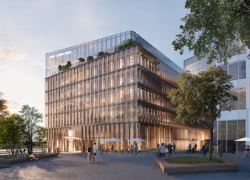
Dom Development has recently introduced 313 new apartments across three locations in Wrocław, enhancing its portfolio in the Lower Silesia region. With these additions, the company now offers a total of 1,200 apartments across 10 different projects in the city.

The first phase of the Hubska 100 development features 129 units, varying in size from 30 to 100 square meters, catering to diverse residential needs. Additionally, the Rhapsodia Housing Estate on Różanka will see the rollout of 130 new apartments in its initial stage. Furthermore, at the eastern end of Great Island, construction has commenced on 54 apartments located on Gierymski Brothers Street, which includes options ranging from two to five rooms.

Dom Development has been a prominent residential developer on the Warsaw Stock Exchange since 2006 and is included in the mWIG40 index. With its commitment to expanding housing options in Wrocław, the company continues to play a significant role in the local real estate market.

Source: Dom Development and ISBnews
Photo: Hubska 100

Galaxy shopping centre in Szczecin expands its offer with new brands and redesigned stores

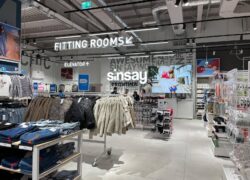
The Galaxy shopping and entertainment centre, owned by EPP, has recently welcomed four new brands, further enhancing its retail offerings. The new tenants include the region’s first Peek & Cloppenburg multibrand store, along with popular clothing brands JOOP! and Pierre Cardin, and jeweller SAVICKI. These additions contribute to a significant redesign of the facility, with lease and extension agreements covering nearly 5,000 square meters.

According to Marcin Ziółkowski, Asset Manager at EPP, “Recent months have been a time of intense change at Galaxy. The expansion of our tenant mix with strong representatives from the fashion and jewellery segments allows us to create an environment for premium brands. It also responds to the expectations of consumers seeking a diverse selection in one location. The new brands attract customers who value direct access to high-quality products from well-known global companies, making Galaxy one of the most attractive shopping destinations in the region.”

The Peek & Cloppenburg store, located on level 0, offers a wide array of clothing suitable for everyday wear, work, and special occasions. Customers can choose from more than 100 leading brands, including Ralph Lauren, Calvin Klein, and Marc O’Polo, with personalized advice available from qualified staff.

JOOP!, a distinguished German premium brand, adds to the lineup with its extensive portfolio that includes women’s and men’s clothing, fragrances, and accessories, all characterized by high quality and timeless style. Pierre Cardin further enriches the shopping experience with its offerings of modern, elegant clothing for both men and women, including suits and accessories.

Jeweller SAVICKI is making a mark with its innovative showroom layout, featuring the TryOn® table for customers to freely try on over 300 models of rings and wedding bands. A dedicated VIP Room allows clients to view diamonds under magnification and design custom jewellery.

Changes are also underway for existing tenants. Hexeline, known for its elegant designs, has moved to a larger space to provide an expanded product range. Meanwhile, the Mango store has undergone a transformation, showcasing a fresh concept that incorporates a warm colour palette and natural materials like wood and marble. Customers can also explore H&M’s updated autumn collection and the newly redesigned Douglas perfumery.

As the largest and most popular shopping and entertainment destination in the West Pomeranian region, Galaxy is strategically located at a major transport junction in Szczecin. The centre features approximately 190 shops, including Auchan, Reserved, CCC, and many others.

Since January 2020, Galaxy has also introduced FOODPORT, a new food hall inspired by Szczecin’s iconic locations, offering a diverse range of global cuisines. Popular food options include Popeyes®, Burger King, KFC, and more, catering to a wide variety of tastes and preferences.

With its ongoing expansions and redesigns, Galaxy continues to solidify its status as a premier shopping destination in the region.

Over 300 Polish agreements signed for social development projects worth PLN 10.4 billion

The Ministry of Funds and Regional Policy (MFiPR) has announced that more than 300 agreements have been signed for social development projects funded by the European Funds for Social Development (FERS), totaling PLN 10.4 billion from a pool of PLN 20.9 billion.

This milestone marks an important advancement in the implementation of the European Funds for Social Development program, with the ministry noting that the contracting process has reached its halfway point. “Half of the funds allocated to social development under this program have already been secured through signed contracts for specific projects,” the ministry stated.

The agreements encompass various key areas of investment, including:

• PLN 3.8 billion for the expansion of nursery care,
• PLN 3.3 billion aimed at improving qualifications and acquiring new skills,
• PLN 1.9 billion for support services for excluded individuals and health care,
• PLN 699 million dedicated to removing architectural and communication barriers,
• PLN 105 million for social innovation initiatives.

These signed agreements will facilitate the implementation of numerous projects targeting diverse social groups. The program aims to create over 102,000 new childcare placements in nurseries, children’s clubs, and day-care services, which will receive funding for their operations during the first three years.

Additionally, the initiative will enhance the skills of key professionals, with plans to support 2,900 doctors and 19,540 academic staff members. More than 15,000 adults are expected to benefit from preferential loans for education, which will boost their competitiveness in the job market.

FERS-funded projects will also develop models, standards, and guidelines to enhance accessibility to public places and services. A total of 220 local government units and 60 cultural institutions will improve their facilities to accommodate individuals with special needs.

Furthermore, 250 patient specialist care facilities will increase the availability and standard of services for patients with specific needs, with 900 medical staff set to enhance their competencies.

The ministry highlighted that several thousand employees will participate in training programs to upgrade their skills, contributing to the competitiveness of Polish enterprises. Additionally, 6,900 individuals will receive preferential loans to launch their own businesses.

The ministry expressed optimism regarding the potential impact of these agreements on social development across Poland.

Source: MFiPR and ISBnews

Poland: Analysis reveals decline in apartment prices on secondary market in Q3

Recent analysis indicates a downward trend in the average offer prices of secondary market apartments across provincial cities during the third quarter of 2024. The report, which examined data from 18 provincial capitals, revealed that prices for studios and larger apartments saw more declines than increases.

According to the findings, average offer prices for studio apartments fell in eight cities, while two-room apartments decreased in six locations, and three-room apartments saw declines in eight cities. Additionally, many areas experienced price stabilization at levels similar to the previous quarter.

Rafał Bieńkowski from Nieruchomosci-online.pl noted, “Sellers, faced with the challenging market conditions, are finally adjusting their price expectations. Particularly for two- and three-room apartments, there are only a handful of cities where price increases were recorded last quarter.”

The analysis revealed that average prices for studios decreased by 2% to 6% in cities such as Białystok, Gorzów Wlkp., Kraków, Łódź, Opole, Rzeszów, Szczecin, and Wrocław. Conversely, prices in Warsaw, Bydgoszcz, and Toruń remained stable, with fluctuations reported at less than 1%.

Two-room apartments saw average bidding rates drop by 2% to 7% per square meter in various cities, including Białystok, Olsztyn, Opole, Rzeszów, Szczecin, and Toruń. Notably, prices in Gdańsk, Katowice, Kielce, Kraków, Łódź, Warsaw, Wrocław, and Zielona Góra remained steady, reflecting the market stabilization observed since the second quarter.

The quarterly adjustments for three-room apartments were slightly less pronounced, with decreases of 1% to 3% noted in cities like Białystok, Katowice, Kielce, Łódź, Olsztyn, Opole, Rzeszów, and Szczecin. However, Bydgoszcz and Lublin were exceptions, where slight price increases were recorded. In other cities, price changes were minimal, typically less than 1%.

Bieńkowski remarked on the current market sentiment, stating, “This marks a significant shift from the first half of the year when price reductions were infrequent. There is noticeable uncertainty among buyers and sellers, with some awaiting the government’s proposed housing program while others anticipate interest rate cuts next year. This situation should not be interpreted as a market collapse; rather, sellers are beginning to recognize that price adjustments are necessary to attract buyers.”

Looking ahead, real estate agents predict that apartment offer prices are unlikely to rise in the fourth quarter of 2024. A recent mood survey conducted by Nieruchomosci-online.pl indicated that only 29% of intermediaries expect price increases in the near future.

Source: Nieruchomosci-online.pl and ISBnews

Brumlovka office building in Prague undergoes major renovation

The complete reconstruction of Administrative Building B in the Brumlovka complex has resulted in a remarkable reduction in energy consumption, achieving more than a 50% decrease since its renovation. Originally built in 1999 by Passerinvest Group, a.s., the revitalized building was completed in 2020 and now boasts upgraded energy-efficient technologies and a new facade.

The nine-storey building, which encompasses 14,600 square meters of leasable office space and 1,250 square meters of commercial area, underwent extensive renovations that included the complete overhaul of its exterior and roofing. These updates not only improved the building’s aesthetics but also enhanced the quality of the indoor environment. As a result, Building B now meets the energy label category B, indicating efficient and economical operation.

According to measurements taken before and after the renovation, electricity consumption has plummeted from approximately 3.6 MWh in 2018 to around 1.7 MWh in 2022, representing a reduction of over 50%. Additionally, the carbon footprint associated with electricity and heat consumption has been cut by 65% compared to the building’s original state.

Martin Unger, Technical Director of Passerinvest Group, emphasized the importance of energy efficiency in the decision to renovate. “One of the main reasons for the renovation was the need to enhance energy efficiency, which the building no longer met. Our goal was a comprehensive revitalization that would reduce energy consumption, lessen environmental impact, and improve tenant comfort,” he explained.

Following the renovation, Passerinvest further optimized the operation of ventilation, heating, and cooling technologies in 2022 to maximize energy efficiency. As a result, additional reductions in energy consumption and CO2 emissions were achieved in 2023. “The optimization involved modifying the building’s measurement and control systems, implementing algorithms for HVAC units based on occupancy, and adjusting central temperature settings according to seasonal changes,” Unger noted.

One notable initiative was the introduction of a hygienic material press, which significantly reduced the volume of hygienic paper waste. An analysis conducted in May 2023 revealed that monthly waste included a substantial amount of paper towels, which was subsequently reduced by 17 containers of 1,100 liters each.

The renovation also incorporated blue-green infrastructure features, such as roof gardens and a high-capacity rainwater catchment tank, contributing to sustainable water management around the building.

With a total investment of CZK 470 million (approximately €19 million), the renovation of Building B underscores Passerinvest’s commitment to sustainable practices and enhanced tenant experiences in the evolving landscape of modern office spaces.

CIE Metal CZ expands again at CTPark Hranice, doubling tts space since 2021

CIE Metal CZ, part of the CIE Automotive Group, is set to double its footprint at CTPark Hranice with a second major expansion since 2021. CTP, the park’s developer, announced that an additional 5,200 square meters will be added to CIE Metal CZ’s existing facilities, with completion expected in the first half of 2025.

CIE Metal CZ, which designs and manufactures components for the global automotive industry, first leased space in CTPark Hranice in 2021. Located strategically near key transport routes, the park provides direct access to motorways connecting to Olomouc, Ostrava, and Poland, making it an ideal hub for automotive and high-tech supply chains.

The decision to expand at CTPark Hranice aligns with the trend of nearshoring, where companies move production closer to their customers in response to shifting geopolitical dynamics. The proximity of the park to CIE Metal CZ’s existing plant in Valašské Meziříčí and its end customers was a crucial factor in the expansion. CIE’s total production capacity in the park will now exceed 13,000 square meters, reflecting growing demand for its services.

The new expansion, located in warehouse HR5, will allow for seamless integration between production and storage, improving operational efficiency. The site is designed to meet CIE’s advanced manufacturing needs, focusing on electromobility and robotics, with facilities optimized for automation.

“Our cooperation with CTP is proving crucial to our long-term goals and development. With each new expansion at CTPark Hranice, we have been able to efficiently increase production capacity while optimising logistics processes. CTPark Hranice has thus become an ideal location for our production and logistics operations, especially thanks to its strategic location and high quality. We are convinced that this new expansion will bring further opportunities for the development of our innovative projects.” explained Michal Curylo, CIE Metal CZ.

“The long-term cooperation with CIE Metal CZ is a great pleasure for us and proves how efficiently the client’s expansion and growth can take place thanks to the flexibility of the premises and quality facilities. The second expansion of the premises in CTPark Hranice beautifully demonstrates that it is possible to grow gradually, adapt to demand and respond to market developments, which is key for us and our clients,” said Vojtěch Peřka, Senior Business Developer at CTP in the Czech Republic.

PTEC: Decarbonising Poland’s heating sector could cost up to PLN 466 billion by 2050

The decarbonisation of Poland’s heating sector will require significant investment, with costs projected between PLN 299 billion and PLN 466 billion by 2050, according to a report by the Polish Society of Thermal Energy (PTEC), formerly known as the Polish Society for Thermal Power Plants (PTEZ). The report emphasizes that achieving these goals will require collaboration among all participants in the heat market.

PTEC has also rebranded to reflect its new mission of promoting sustainable heating solutions in line with European Union climate and energy policies. “Today, district heating in Poland provides thermal comfort for over 15 million people. However, most of the heat still comes from coal,” said Dariusz Marzec, President of PGE Polska Grupa Energetyczna and PTEC. He highlighted that nearly PLN 500 billion is needed for the sector’s transformation, underscoring the importance of creating a supportive legal and regulatory environment, fostering cooperation, and developing financial tools to meet climate neutrality milestones.

The report identifies key technologies that will drive the decarbonisation of Poland’s heating systems, including:

• Gas sources
• Biomass
• Geothermal energy
• Large-scale heat pumps
• Electrode boilers powered by renewable electricity
• Waste heat recovery
• Decarbonized gases

PTEC’s analysis shows that implementing the EU’s “Fit for 55” climate package will require substantial spending across multiple areas:

• PLN 102-211 billion on production infrastructure
• PLN 82-106 billion on transmission and distribution networks
• PLN 115-149 billion on modernizing collection systems

The total investment needed by 2050 ranges from PLN 299 billion to PLN 466 billion, depending on the scenario. The report stresses that effective decarbonization will depend on the involvement of all heat market participants, as their actions are interdependent.

Among its recommendations, PTEC suggests regulatory changes to accelerate the transformation, including:

• Compensating key units for availability in the national power system
• Introducing support mechanisms for Power-to-Heat technologies
• Qualifying heat from renewable sources for energy efficiency metrics
• Expanding the market for trading guarantees of renewable heat origin

Krzysztof Zamasz, Vice President of Veolia Energia Polska, emphasized the importance of financial support for energy companies, as well as the need to adjust heat tariffs to accommodate the sector’s decarbonization. “Investment-backed companies need broad access to financial resources to achieve these goals,” Zamasz stated, noting that simplifying administrative procedures will be essential to accelerating the transformation.

The report concludes that speeding up the investment process, especially regarding environmental impact assessments and heating network upgrades, is critical for Poland to meet its decarbonization targets.

Source: PTEC and ISBnews
Photo: Dariusz Marzec, President of the Management Board of PGE Polska Grupa Energetyczna

World on the brink of a new age of electricity, says International Energy Agency

The International Energy Agency (IEA) has declared that the world stands at the threshold of a new era of electricity, as demand for fossil fuels is projected to peak by the end of the decade. In its newly released World Energy Outlook, the IEA suggests that a surplus in oil and gas supplies could pave the way for significant investment in green energy. However, the agency warns of substantial uncertainty due to ongoing geopolitical conflicts in the Middle East and Russia, both key oil and gas producers. Additionally, this year’s elections in countries responsible for half of the world’s energy consumption add to the unpredictability.

“In the second half of this decade, we could be facing a new energy landscape where sufficient—or even excess—oil and gas supplies exist, depending on how geopolitical tensions evolve,” said Fatih Birol, the IEA’s Executive Director. Birol explained that such a scenario could lower fossil fuel prices and provide countries with the resources to accelerate the transition to clean energy, marking the dawn of what he called the “age of electricity.”

The IEA reported that 2023 saw a record 560 gigawatts (GW) of renewable energy capacity commissioned globally. Looking ahead, an estimated $2 trillion will be invested in clean energy this year, nearly double the investment in fossil fuels. This shift underscores the world’s movement toward decarbonization.

Under current government policies, global oil demand is forecasted to peak at nearly 102 million barrels per day before 2030, before falling back to 99 million barrels per day by 2035, driven primarily by the increasing use of electric vehicles in the transport sector.

The IEA also pointed to rising energy demand from air conditioning as a significant factor in the future. With increasing global temperatures and growing incomes, the demand for air conditioning is expected to surge by 280% by 2050. This will require an additional 697 terawatt hours (TWh) of electricity by 2030, more than three times the demand from computer data centers. Electric vehicles will require even more energy, with an additional 854 TWh needed by the end of the decade.

Oil prices are projected to decline from $82 per barrel in 2023 to $75 per barrel by 2050 under the IEA’s current scenario. However, if governments commit to aggressive emissions reductions in line with net-zero targets, oil prices could drop as low as $25 per barrel by 2050.

This forecast signals a pivotal shift in the global energy landscape, with the potential for cleaner and more sustainable energy sources to take center stage in the coming decades.

The full reporter can be found on the link below:

Source: IEA and CTK

HIH renews lease with Instant Offices at Budapest’s White House complex

HIH Invest Real Estate (HIH Invest) has successfully extended its lease agreement with Instant Offices for 6,116 square metres at the White House office complex in Budapest. The renewal secures the UK-based co-working provider’s presence in the building for another five years, with the space exclusively allocated to a British carmaker.

The White House, completed in 2018, offers a gross lettable area of 22,300 square metres and was acquired by HIH Invest in 2019 for an institutional fund. With nearly full occupancy, the office complex hosts prominent tenants such as fund manager BlackRock and co-working provider Spaces, in addition to Instant Offices. Located on Váci út in Budapest’s 13th district, the property is well-connected to the city’s core via rail, underground, tram, and bus routes.

Oliver Scholtz, Senior Fund Manager at HIH Invest, expressed satisfaction with the lease renewal, citing the active asset management strategy and tenant-focused approach that persuaded Instant Offices to remain. “Our excellent property specifications and responsiveness to tenant needs played a significant role in retaining this valuable client,” said Scholtz.

In terms of sustainability, the White House recently achieved a LEED O+M (Operations and Maintenance) Gold certificate, enhancing its existing LEED Platinum status. This makes it Hungary’s highest-rated building under the LEED system. The LEED O+M certification focuses on the operational efficiency and maintenance practices of the property, underscoring HIH’s commitment to environmental sustainability and tenant wellbeing.

“We place great importance on the environmental aspects of building operation and maintenance, as they contribute to long-term cost savings and enhance indoor environment quality,” explained Malte Wallschläger, Head of Asset Management International at HIH Real Estate. He also highlighted the recent refurbishment of the on-site cafeteria as part of ongoing efforts to improve tenant amenities.

With its prime location and robust sustainability credentials, the White House office scheme continues to attract major international tenants, solidifying its reputation in Budapest’s competitive office market.

PATRIZIA Report: European residential sector expands, offering strong investment opportunities

The European living sector is more expansive and diverse than ever, presenting solid fundamentals for investment, according to PATRIZIA’s newly released European Residential Insights 2024/2025 report. The report, a comprehensive analysis of Europe’s housing markets, highlights stabilizing trends and new opportunities, particularly in the student housing and co-living sectors.

Key insights from the report, which has provided annual analysis of the European residential market for over a decade, show that the housing market remains robust, supported by structural tailwinds. The report emphasizes that despite evolving regulatory challenges, housing markets across Europe are stabilizing, making it an attractive sector for investors with moderate risk appetites.

Positive Outlook for Residential Market

Mahdi Mokrane, PATRIZIA’s Head of Investment Strategy & Research, Co-Head Fund Management, and Head of Fund Management Real Estate, remarked, “PATRIZIA has been successfully investing in residential real estate for 40 years, and the expanding living sector will continue to be a key growth area for the company as we aim to become a EUR 100bn global real assets manager.” Mokrane added that the report offers crucial insights into the residential sector’s underlying drivers and highlights niche sub-sectors, like co-living and student housing, which are becoming increasingly attractive due to ongoing socio-demographic shifts.

The report underlines that the European residential sector remains resilient and continues to grow, driven by strong demand in the occupational market. With the “living” opportunity expanding, the sector is becoming larger and more diverse for institutional investors.

Stabilizing Market Conditions

PATRIZIA’s Chief Urban Economist, Dr. Marcus Cieleback, who leads the report, noted that despite challenges posed by regulatory changes, the market’s fundamentals remain strong. “The market is stabilizing, with trends in prices, valuations, and transaction activity suggesting that we are approaching a bottoming out of the market,” Cieleback said. Improvements in credit markets, driven by increased debt availability and easing credit standards, are further bolstering market conditions. He added, “As interest rates begin to decline and mortgage rates improve, we expect more people will be able to purchase homes, alleviating pressure on the rental market.”

Opportunities in Green Housing and Purpose-Built Student Accommodation

The report also examines the evolution of housing policy over the decades, highlighting the growing importance of “brown-to-green” strategies aimed at upgrading older housing stock for energy efficiency. Many of Europe’s residential buildings were constructed between the 1960s and 1980s, often prioritizing speed over quality due to housing shortages at the time. These older buildings now represent a significant opportunity for green retrofitting.

Additionally, the report underscores the growing demand for affordable housing and purpose-built student accommodation (PBSA). Dr. Cieleback explained, “There is a shortage of affordable housing today, partly due to past regulations that opened social housing stock to the free market. Meanwhile, the student housing market is experiencing a surge in demand, particularly as traditional rental markets struggle to keep up with supply. PBSA represents a strong growth opportunity, as education remains a priority in economically challenging times.”

front page info
LATEST NEWS