KINGSTONE RE acquires residential developments in Mannheim, Nuremberg, and Fürth from Ten Brinke

KINGSTONE Real Estate (KINGSTONE RE), has acquired three residential development projects located in Mannheim, Nuremberg, and Fürth. The purchase, valued at approximately €74 million, marks a strategic expansion for KINGSTONE’s newly launched institutional real estate fund, “KINGSTONE Bezahlbares Wohnen Deutschland.” The seller, Ten Brinke, is both the developer and contractor for the projects.

The acquisition encompasses 180 residential units across a total rental area of 15,700 square meters, with the majority of the apartments designated as affordable housing. The portfolio is bolstered by construction grants exceeding €10 million and low-interest loans amounting to over €30 million, providing significant financial advantages to the investment.

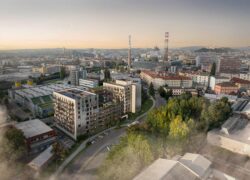
The Mannheim development, located along the Altrhein river, will feature 60 apartments, while the Nuremberg project will offer 77 residential units in a prime central location. In Fürth, 43 units are being developed. The Mannheim and Fürth properties will adhere to the KfW Efficiency House 55 EE standard, while the Nuremberg development will be built to the higher KfW Efficiency House 40 NH standard, reflecting a commitment to sustainable construction.

Simon Lieb, Managing Director at KINGSTONE Residential Investments, expressed enthusiasm for the new acquisitions: “Our new fund has generated strong interest from institutional investors. Subsidized housing is a particularly appealing segment due to its secure, predictable cash flows and attractive yields. These new developments not only address the urgent demand for affordable housing in Germany but also align with ESG standards, making them highly sustainable investments.”

Ansgar Pape, Managing Director at KINGSTONE Residential Investments, highlighted the financial structuring behind the deal: “We leveraged subsidies and low-interest loans to balance the developer’s requirements with investor return expectations. The long fixed-interest periods on the development loans also protect us from fluctuating debt financing rates.”

Jens Wantia, Managing Director of Ten Brinke Projektentwicklung Deutschland, emphasized the importance of collaboration in delivering affordable housing: “The demand for affordable apartments in Germany’s metro areas is significant. The successful development of subsidized housing depends on strong partnerships between public authorities, funding bodies, investors, and developers.”

The “KINGSTONE Bezahlbares Wohnen Deutschland” fund, advised by KINGSTONE Residential Investments in partnership with Pallino Real Estate, is poised for further growth in the subsidized housing market. Legal and tax due diligence for the acquisition was handled by Heussen Rechtsanwaltsgesellschaft mbH, with Case Real Estate, Arcadis Germany, and iib Consult conducting technical due diligence.

This transaction underscores KINGSTONE’s commitment to expanding its portfolio of affordable, sustainable housing in key urban areas across Germany, meeting both investor demand and pressing social needs.

Czechia Q3 2024: Construction pipeline surges ahead of new supply

Q3 2024: Construction Pipeline Surges Ahead of New Supply

October 2024 – The third quarter of 2024 saw a significant rise in the amount of space under construction, far outpacing the volume of newly delivered supply. This trend signals an ongoing construction boom, particularly in sectors such as office, industrial, and residential real estate, as developers race to meet growing demand despite persistent market challenges.

According to industry data, the total space currently under construction across major markets is substantially larger than the supply delivered to date in 2024. This gap reflects both the robust demand for new properties and the lengthier timelines required to complete large-scale developments, many of which are slated for delivery in late 2024 or 2025.

Experts attribute the surge in construction activity to several factors, including sustained demand for modern, sustainable office and industrial spaces, as well as strong interest in high-quality residential projects in key urban areas. However, developers are also contending with ongoing supply chain disruptions, labor shortages, and rising construction costs, which have delayed some project completions.

“The volume of space under construction demonstrates the confidence that developers and investors have in the market’s future growth. Despite the hurdles, the pipeline remains robust, driven by demand for better and more sustainable buildings,” said a market analyst.

As the year progresses, it is expected that the gap between under-construction space and new supply will begin to narrow, with several large projects slated for completion in the coming months. However, the significant volume of space still in development suggests that the construction boom will extend into 2025 and beyond, as the real estate sector continues to evolve in response to changing market demands and sustainability targets.

Source: Industrial Research Forum

LeopoldQuartier sets new standard for timber hybrid construction in Vienna

Timber is increasingly being recognized as a renewable and deconstructable building material with immense potential in structural engineering, though its full capabilities remain largely untapped. However, large-scale projects like Vienna’s LeopoldQuartier are providing valuable insights and demonstrating what timber can achieve in modern construction.

Austria is witnessing a surge in timber construction, with about 25% of the floor space in high-rise buildings now incorporating wood, particularly in the residential sector, which accounts for 53% of these projects. “Sustainable urban living spaces can be efficiently developed using timber, a material that aligns with the principles of the circular economy,” said PORR CEO Karl-Heinz Strauss. “Every year, 30 million cubic meters of wood regrow in Austria, with 90% of it used and recycled. This equates to the creation of 2,000 single-family homes daily, contributing to a ‘second forest’ of houses that also sequesters carbon dioxide.” However, the rarity of large-scale timber projects has limited comprehensive experience, product approvals, and certifications.

Leading this movement is LeopoldQuartier, Europe’s first timber-framed urban district, under development by UBM on Vienna’s Donaukanal. Covering nearly three hectares, the project aims to set a benchmark for sustainable construction. “Choosing LeopoldQuartier means actively contributing to the fight against climate change,” said Peter Schaller, CEO of UBM Development AG.

The centerpiece of the project is a 22,000 sqm office building featuring a timber hybrid construction. The load-bearing structure, composed of laminated timber columns, cross-laminated timber walls, and timber-concrete composite ceilings, will rise from the first to the ninth floor. Approximately 2,800 cubic meters of timber will be used, with CO2 savings estimated at 2,700 tons compared to conventional reinforced concrete construction. The office building is slated for completion by October 2025.

LeopoldQuartier’s residential component, known as LeopoldQuartier Living, includes 253 apartments, making it Austria’s largest timber-based residential project. It will utilize 3,800 cubic meters of prefabricated timber elements, including 20,000 sqm of cross-laminated timber ceilings and walls, and 7,000 sqm of timber frame exterior walls. The rapid assembly of 204 prefabricated bathroom units is expected to accelerate the construction timeline, with completion anticipated in early 2026.

Sustainability extends beyond construction materials in LeopoldQuartier. The project will be powered by 200 geothermal probes and three wells, complemented by photovoltaics and heating/cooling panels. The office building is targeting DGNB Gold certification, a mark of sustainable building practices.

UBM is positioning itself as Europe’s leading developer of timber hybrid buildings, with an ambitious EUR 1.9 billion project pipeline. Over 90% of its developments are located in Germany and Austria, with 59% dedicated to residential spaces and 41% to light industrial and office buildings. Notable projects include Timber Factory in Munich, and Timber Peak and Timber View in Mainz.

PORR, a pioneer in timber and timber hybrid construction, is at the forefront of eight major projects across Austria, including LeopoldQuartier, the “Vis à Vis” in Vienna and Graz, and the European Patent Office in Munich. These projects provide a testing ground for the evolving standards and certifications required for large-scale timber construction.

LeopoldQuartier offers PORR a rare opportunity to execute an office and residential project on an unprecedented scale in Austria. “Flagship projects like this push the boundaries of current construction standards and help refine serial timber construction methods, unlocking the full potential of timber for large-scale developments,” Strauss emphasized.

With each successful timber project, the industry moves closer to realizing timber’s vast potential as a sustainable building material for the future.

Savills Poland strengthens landlord representation department with key appointments

Global real estate advisory firm Savills has expanded its Landlord Representation team within the office space division, announcing the addition of two seasoned consultants, Kamila Bartosik-Budecka and Michal Porzycki. This move is aimed at enhancing the firm’s ability to support landlords in adapting their leasing strategies to evolving market conditions and tenant needs, ultimately boosting the attractiveness and value of properties.

Kamila Bartosik-Budecka, appointed as Associate, brings extensive experience in the real estate industry, having worked with major players such as Immofinanz/CPIPG, Solida Capital, and GLL Real Estate since 2015. In her new role at Savills, she will focus on developing tailored leasing strategies, attracting tenants, and coordinating marketing initiatives for property owners, helping them to maximize the value of their portfolios.

Michal Porzycki, also joining as an Associate, returns to Savills with more than 13 years of experience in commercial real estate. His career has included advising on office leasing transactions totaling nearly 120,000 sqm while working with firms such as BNP Paribas Real Estate, CBRE, and Hamilton International. At Savills, Porzycki will be responsible for guiding landlords through leasing processes, with a focus on enhancing the value and profitability of their properties.

The Landlord Representation team at Savills provides a comprehensive range of services for property owners, including leasing strategy implementation and commercial space management. With the addition of Bartosik-Budecka and Porzycki, the team is set to offer even more effective support to clients in a competitive market.

Daniel Czarnecki, Head of Landlord Representation, Office Agency at Savills, highlighted the importance of these new appointments. “By advising property owners, we become a trusted partner they can rely on. With the addition of new experts and increased resources, we can even more effectively support our clients in achieving their business goals. Strengthening the Landlord Representation department allows us to better align various leasing strategies with market conditions, accelerate commercialization processes, and increase the value of real estate in an increasingly competitive environment.”

Savills has a strong track record of building long-term relationships with landlords, earning numerous industry accolades for the effectiveness of its strategies. The growing Landlord Representation team continues to play a key role in advising on major market transactions and guiding property owners through the commercialization process, further solidifying the firm’s leadership in the real estate sector.

Raben Group opens state-of-the-art warehouse at CTPark Warsaw West

Raben Group has officially opened its newest warehouse facility at CTPark Warsaw West. The facility, developed by CTP, boasts advanced features designed to optimize warehouse operations and supply chain efficiency.

The new facility spans two buildings, WARW02 and WARW05, covering a total area of 110,000 sqm. Located in Wiskitki, adjacent to the A2 motorway and near the planned Central Transport Port, the complex provides a strategic location for logistics operations. The buildings received occupancy permits in early October, and Raben Group has now commenced contract logistics services, including warehouse operations and value-added services like co-packing.

Raben Group’s newest warehouse is equipped with cutting-edge technology, including 15 metres of usable height, temperature and humidity control systems, and an extensive underfloor heating system with 150 km of piping—the first of its kind in Poland on such a scale. The facility also features high-bay racking zones that offer 20 percent more space than typical reference halls. More than half of the warehouse, 60,000 sqm, is dedicated to Very Narrow Aisle (VNA) trucks, allowing for optimized storage capacity in narrow aisles.

Jolanta Sawińska, Regional Director of Raben Logistics Polska, expressed pride in the project, emphasizing its complexity and scale. “The opening of this branch strengthens Raben Group’s presence in Central Poland. This project posed significant challenges, not only in its size but also in the technical requirements we set for our partners. The halls’ advanced systems—particularly the 15-metre height, climate control, and underfloor heating—are a milestone for our operations. This is a tremendous achievement for our team and a crucial development for Raben Group and our customers,” Sawińska remarked.

The Raben Group warehouses account for nearly 40 percent of the target floor space of CTPark Warsaw West. The facility was built using the Build to Suit (BTS) system, tailored to meet the specific needs of the company. The warehouse also boasts more than 7 megawatts (MW) of power capacity to support various equipment and operations, further enhancing its logistics capabilities.

CTP’s Regional Construction Director in Poland, Michał Orzechowski, highlighted the longstanding relationship between CTP and Raben Group. “We frequently collaborate with companies in the third-party logistics (3PL) sector, and this project is particularly noteworthy for its scale and technological sophistication. CTPark Warsaw West is the 13th business park in the CEE region where Raben will operate. We’ve delivered a highly customized logistics infrastructure that will significantly support Raben’s operations and growth,” Orzechowski said.

CTPark Warsaw West is one of five CTP developments currently under construction in the Warsaw area, with the company expanding its footprint in the region. CTP has also acquired additional land for future projects, including CTPark Warsaw Janki and CTPark Warsaw Nowy Konik, signaling continued growth and investment in Poland’s logistics market.

Cordon Electronics Polska secures new facility at MLP Pruszków II logistics centre

In a significant development for the logistics and electronics industry, Cordon Electronics Polska has signed a lease for approximately 5,100 sqm of space at the MLP Pruszków II warehouse complex, located near Warsaw. The company will fully occupy the facility starting in December 2024, following a deal brokered by 88 Group.

The agreement marks another major long-term lease for MLP Group at its Pruszków II logistics centre, a prime hub for warehousing and logistics. Of the total space leased by Cordon Electronics Polska, 5,000 sqm will be dedicated to warehousing operations, while 130 sqm will serve as a modern office area. This new facility will enable Cordon Electronics to expand its services in Poland, offering advanced solutions for electronics maintenance, reverse logistics, supply chain management, and e-commerce logistics.

Tomasz Pietrzak, Leasing Director Poland for MLP Group S.A., expressed his enthusiasm for the deal, highlighting the advantages of the MLP Pruszków II site. “MLP Pruszków II is our largest warehouse complex, with substantial potential for further expansion. Its strategic location near the Warsaw metropolitan area and excellent connectivity through modern road infrastructure are key factors attracting tenants. In line with our strategic approach, the facilities adhere to the highest standards and undergo BREEAM certification.”

Cordon Electronics Polska, part of the global Cordon Group, sees this move as a vital step in strengthening its presence in the region. Michael Leseux, Eastern Europe Director Poland for Cordon Group, stated, “I am thrilled to announce our expansion into the Warsaw district at MLP Pruszków II with the upcoming launch of our new site. This strategic move allows us to offer tailored reverse logistics solutions for our clients, enhance operational efficiency, and create new job opportunities.”

The MLP Pruszków II logistics centre is located in the municipality of Brwinów, just five kilometres from Pruszków, and is the largest facility of its kind in the region. The complex, designed to accommodate over 424,000 sqm of space, has earned the prestigious BREEAM certification for its environmental standards. It features a rooftop solar PV system and offers excellent transport links, including proximity to the A2 motorway and international railway lines, ensuring seamless logistics for both domestic and international distribution.

As part of MLP Group’s “build & hold” strategy, the Pruszków II facility will remain within its portfolio for long-term management. The park’s adaptability and state-of-the-art infrastructure provide flexible conditions for tenants, allowing them to combine production, warehousing, and logistics functions.

Martyna Krężel, Managing Partner at 88 Group, which facilitated the transaction, praised the collaboration between Cordon Electronics and MLP Group. “With its prime location and state-of-the-art infrastructure, MLP Pruszków II provides an ideal solution for companies seeking efficient space. On behalf of 88 Group, I wish Cordon Electronics and MLP Group long-term success with this partnership.”

The new facility is set to become a critical asset in Cordon Electronics Polska’s continued growth in the region.

P3 Czech Republic’s Aleš Zacha discusses the evolving landscape of logistics real estate

In an exclusive CIJ EUROPE interview with Aleš Zacha, Head of Development of P3 Czech Republic, shared insights into the logistics and warehousing sector’s growth and transformation in the wake of the pandemic.

CIJ EUROPE: The logistics and warehousing sector has seen significant growth post-pandemic. How do you foresee the future of logistics real estate evolving, particularly in the Czech Republic?

Zacha noted that while the post-pandemic landscape was initially challenging, the logistics sector, particularly e-commerce, experienced remarkable growth. “We were all waiting to see what would happen, but we realized that demand continued to grow. Rent levels increased quarterly, which was amazing, especially in our portfolio around Prague. We witnessed zero vacancy rates; any available space had a queue,” he remarked.

However, he highlighted the impact of geopolitical factors, particularly the war in Ukraine, which led to a decline in demand in 2023, a trend that has persisted into 2024. “E-commerce drove growth, but supply chain disruptions from Asia due to pandemic-related issues highlighted the need for companies to stock inventory within Europe,” Zacha explained. This shift is leading to near-shoring strategies as companies aim to mitigate risks associated with global supply chain vulnerabilities.

CIJ EUROPE: What role does near-shoring play in the future of logistics and manufacturing in the Czech Republic?

Zacha elaborated that the trend toward near-shoring is gaining traction in both logistics and manufacturing. “It’s not a quick process; relocating manufacturing takes time and careful planning. While logistics can shift more rapidly, manufacturers require more substantial investments and timeframes,” he said. He also noted that big Asian e-commerce platforms are increasingly seeking to establish warehouses in Europe to better serve their customer bases.

CIJ EUROPE: How is P3 Parks addressing the growing importance of sustainability in logistics real estate?

Sustainability is a priority for P3 Parks, according to Zacha. “We have implemented various green initiatives, including adhering to BREEAM certification standards for new constructions and incorporating solutions for rainwater usage and renewable energy sources,” he stated. “We are also installing EV charging stations and ensuring our buildings meet modern sustainability criteria.”

However, Zacha acknowledged the challenge of balancing sustainability with client demands. “While many clients want sustainable systems, not all are willing to invest in the necessary upgrades. We believe this will change over time, as supply chain pressures will compel companies to embrace more sustainable practices,” he added.

CIJ EUROPE: What are P3 Parks’ plans for further expansion in the Czech Republic?

Zacha outlined P3’s growth strategy, which includes new developments and acquisitions. “We are focused on land banking and identifying new development opportunities, with a current lettable area nearing 9 million square meters and a portfolio value approaching €10bilion. We aim to grow even more,” he stated.

When considering new land acquisitions, Zacha emphasized the importance of accessibility to highways and workforce availability. “We are looking for locations beyond just prime areas like Prague and Brno. Our focus is on finding opportunities with good access to key markets and industries, particularly those connected to the German market,” he explained.

CIJ EUROPE: Urban logistics is gaining traction as cities grow. How is P3 Parks adapting to this trend?

While P3 primarily focuses on large logistics parks, Zacha acknowledged the rising demand for last-mile delivery centers. The company is currently exploring redevelopment opportunities in urban areas across Europe, including the Czech Republic. “We are aware that securing land in urban settings can be challenging due to higher competition from residential and office developers. Nonetheless, we remain open to opportunities, particularly in Prague,” he said.

CIJ EUROPE: What do you see as the biggest opportunities and risks in the industrial market in the coming years?

Zacha pointed out the automotive sector as both a risk and an opportunity. “The situation in the automotive market is uncertain, especially with the ongoing transition to electric vehicles,” he explained. He also identified rising energy costs in Europe as a significant risk, stating that energy prices are considerably higher than in the US and Asia, which poses challenges for manufacturing and logistics companies.

Conversely, Zacha remains optimistic about e-commerce growth and advancements in technology and production, particularly in sectors like semiconductors. “Czech Republic’s position in the heart of Europe, along with a skilled workforce, keeps it an attractive market for investment,” he said.

CIJ EUROPE: Finally, what does the future hold for P3 Parks in the next ten years?

Zacha envisions continued growth, with a focus on expanding their portfolio through acquisitions and new developments. “Our strategy remains consistent, with a commitment to sustainable, high-quality buildings. We want to ensure our developments are aligned with market demands for carbon neutrality and efficiency, which will ultimately enhance the value of our properties,” he concluded.

As the logistics and warehousing landscape continues to evolve, P3 Parks is strategically positioning itself to navigate challenges and seize opportunities in the Czech Republic and beyond.

Source: ©CIJ EUROPE

Poland ranks 31st among 38 OECD countries in 2024 Tax Competitiveness Index

Poland has been ranked 31st out of 38 countries in the 2024 OECD Tax Competitiveness Index, improving by two places from last year, according to a report. The top countries in the ranking include Estonia, Latvia, New Zealand, and Switzerland, while Colombia, Italy, and France were placed at the bottom for their tax competitiveness.

The Tax Competitiveness Index (ITCI) assesses countries based on how their tax systems promote neutrality and competitiveness. The report highlights both strengths and weaknesses of Poland’s tax policies.

Among the strengths of Poland’s tax system are:

• A corporate tax rate of 19%, lower than the OECD average of 23.9%.
• An extensive network of double taxation agreements with 87 countries.
• Corporate capital relief, limiting tax preferences based on debt.

However, the report also points out significant weaknesses, including:

• Multiple property taxes that separately affect real estate transactions, assets, banking assets, and financial transactions.
• Limited capacity for companies to offset net operating losses against future profits and no ability to use losses to reduce past taxable income.
• Companies in Poland can only deduct 33.8% of the real costs of industrial buildings, compared to the OECD average of 47.2%.

According to the OECD, corporate taxes are the most detrimental to economic growth, followed by personal income taxes and consumption taxes. Property taxes are seen as having the least impact on growth. Additionally, tax regulations that remain neutral, avoiding preferences for consumption over saving, tend to support more balanced economic activity.

The report emphasizes that as tax systems become more complex, their neutrality diminishes, potentially harming economic performance.

The Warsaw Enterprise Institute (WEI) has suggested that comprehensive tax reforms could significantly improve Poland’s ranking, potentially raising it to 14th place. The WEI’s “Agenda Polska 2030” report proposes reforms such as unifying VAT rates, replacing personal income tax (PIT) with a uniform payroll tax, and overhauling corporate income tax (CIT) with a new tax on corporate income.

“Reforming the PIT, CIT, and VAT systems could also increase fiscal revenues in the long term, contributing to greater financial stability for Poland,” the WEI concluded.

Source: OECD and ISBnews

Czech National Bank to sell Historic branch building in Ústí nad Labem

The Czech National Bank (CNB) has announced plans to sell its branch building in Ústí nad Labem, a move aligned with the ongoing digitization of its banking services. Starting on 1 November, the CNB will close its cash desk at this location, and by 2027, all cash circulation and payment operations in Ústí will cease, according to CNB spokeswoman Petra Vlčková.

The closure of the cash services at the Ústí branch is part of a broader effort by the CNB to streamline operations and embrace digital banking. “All positions connected to cash services in Ústí nad Labem have been eliminated,” said Vlčková, noting that the affected staff have not been offered replacements. Across the bank’s offices, a total of 43 positions will be cut as part of the digital transformation, with similar closures planned for branches in Plzeň and České Budějovice.

Although the cash desk will close, citizens will still be able to exchange damaged banknotes and coins at commercial banks, which are legally required to provide this service. For the exchange of invalid banknotes, customers can visit CNB branches in Prague, Brno, Ostrava, or Hradec Králové, or send them by post.

The CNB will not adjust its office hours following the closure of the Ústí cash desk. However, by 2027, all staff involved in cash operations will no longer be present at the branch. “We are working to find new roles within the CNB for employees currently engaged in financial market supervision in Ústí nad Labem,” added Vlčková.

The iconic branch building, constructed in the early 1990s in a post-modern style, is set to be sold in a competitive tender. The CNB hopes to secure the highest possible offer for the property. While parts of the building have been leased to various tenants, the bank will not pursue new rental agreements as it prepares the site for sale. Designed by architects Michal Gabriel and Miroslav Johanovský, the building is a notable post-revolution addition to the city center, featuring a distinctive pendulum on its façade.

This sale marks a significant change for Ústí nad Labem, where the building has been a landmark since the early 1990s.

Source: CNB and CTK

PSN begins major renovation of apartment building in Žižkov, adding seven commercial spaces

PSN has commenced a full-scale renovation of an apartment building in Prague’s Žižkov district, which will see the creation of 54 new units – 47 residential apartments and seven commercial spaces. The project will feature upgraded communal areas and a refreshed exterior with modern design elements. Additionally, PSN plans to develop a community zone with seating in a tranquil courtyard. A model apartment will be available from November 2024 for prospective buyers interested in contemporary urban living. The renovation is expected to be completed by June 2025, with owners moving in by the third quarter.

The Jeseniova project will offer 47 apartments with layouts ranging from 1+1, 2+kk, to 2+1, and floor areas between 48 to 103 sqm. Each unit will come with a new basement. The seven commercial spaces will retain the building’s original character while incorporating modern elements, such as new shop windows and updated window fittings.

The seven-story building, including an underground floor, will undergo a thorough renovation. This will include a new facade, refreshed staircases and railings, updated flooring, and modernized utility systems. A glass elevator will be added to enhance accessibility. To elevate the aesthetic, the common areas will feature marble tiles, cut-glass lighting, and designer mailboxes. The renovation will also ensure minimal maintenance costs in the future.

For added security, oak security doors with chip access systems and a camera system will be installed. Residents will also benefit from practical touches such as a designated cleaning room and a landscaped courtyard with raised beds, creating a relaxing communal space.

“The careful renovation will preserve the building’s historic charm while adapting it to modern living needs. It will offer a serene home environment for individuals, couples, and families,” said Jaroslav Macháč, Director of Residential Projects at PSN. He added, “The Jeseniova project also presents a strong investment opportunity, as Žižkov remains a highly desirable area for rental properties. The commercial spaces are perfect for shops and services.”

Žižkov is renowned for its vibrant cultural scene, offering a wide variety of restaurants, bars, and cafes. The area around the Jeseniova project is well-served by businesses, schools, and healthcare facilities, including the Královské Vinohrady University Hospital. The nearby Aero Cinema provides diverse entertainment options, while excellent transport links, including a tram stop directly outside the building, ensure convenient access to central Prague within 15 minutes by car.

Nature is also easily accessible, with the Vítkov Monument park just minutes away, offering jogging trails, bike paths, and picnic spots with stunning views of the city. Parukářka Park and Židovské pece, both ideal for outdoor activities, are nearby, as is the Pražačka sports complex.

front page info
LATEST NEWS