Slovakia’s hospitality sector sees strong growth in 2024, turnover exceeds EUR 600 million

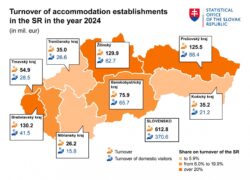
Slovakia’s hospitality sector experienced a solid year in 2024, with turnover from hotels, guesthouses, and other accommodation establishments reaching nearly EUR 613 million. This marked a year-on-year increase of almost 9%, driven largely by domestic visitors, who contributed over 60% of the total revenue.

The country’s top three tourism regions—Bratislavský, Žilinský, and Prešovský kraj—continued to dominate, generating more than half of the total accommodation turnover. In the fourth quarter alone, accommodation providers recorded EUR 143 million in revenue (excluding VAT), reflecting a 13% year-on-year increase. However, this growth rate was significantly lower than the previous year’s surge between 2022 and 2023.

Domestic tourism remained the primary revenue driver, with the highest turnover recorded in Prešovský, Žilinský, and Banskobystrický kraj, which together accounted for nearly two-thirds of Slovakia’s domestic accommodation revenue. Meanwhile, international visitors generated EUR 242 million, or 40% of the total turnover, with Bratislavský kraj leading in foreign visitor spending at EUR 89 million. In this region, foreign guests contributed 68% of total accommodation revenue, far surpassing the share of international visitors in other parts of the country.

The year also saw an increase in available accommodation capacity. In the fourth quarter of 2024, Slovakia had 4,623 accommodation establishments, 176 more than the previous year. These properties collectively offered 70,000 bedrooms and 191,000 bed places, including camping facilities. The net occupancy rate for permanent beds stood at 23.3%, while room occupancy reached 28.5%.

For the entire year, a total of 5,265 accommodation establishments operated in Slovakia, an increase of 234 compared to 2023. The hospitality sector provided an average of 64,000 bedrooms and 150,000 permanent bed places daily, with a net occupancy rate of 27.7% and a room occupancy rate of 32.4%.

With growing domestic demand and an expanding accommodation network, Slovakia’s tourism industry remains on an upward trajectory, further solidifying its position as a key economic sector.

Source: Statistical Office of the SR

Czech business confidence rises, consumer sentiment dips in February

The Czech economy displayed mixed signals in February, with business confidence improving slightly while consumer sentiment weakened, according to the latest data from the Czech Statistical Office (CZSO). The composite confidence indicator, which measures economic sentiment across industries and consumers, edged up by 0.4 points to 97.8 compared to January. This increase was primarily driven by a rise in business confidence, which climbed 0.5 points to 98.0, whereas consumer confidence declined by 0.5 points to 96.6. Despite the month-on-month fluctuation, all indicators remain at higher levels than in February 2024.

The industrial sector recorded a slight improvement in sentiment, with the confidence index rising by 0.3 points to 93.5. A smaller proportion of businesses reported negative demand assessments, while finished goods inventories increased slightly. Expectations for production activity growth over the next three months saw a minor uptick, while anticipated price increases in the sector remained largely unchanged following a notable decline in January. Compared to the same period last year, confidence in the industry sector remains stronger.

In the construction sector, confidence saw a significant increase, rising by 3.0 points to 114.7. Fewer entrepreneurs reported concerns about current demand for construction work, and expectations for employment growth over the next three months improved slightly. Forecasts for construction price hikes, however, remained unchanged for the second consecutive month. On a year-on-year basis, confidence in construction has strengthened considerably.

Similarly, business confidence in the trade sector rose sharply, increasing by 3.7 points to 99.9 from the previous month. Companies expressed a more optimistic outlook regarding their overall economic situation, and a greater number of respondents anticipated improvements in their economic conditions over the next three months. Inventory levels remained stable, while expectations for price increases declined slightly. Business sentiment in the trade sector is also higher compared to February 2024.

Meanwhile, confidence in selected service sectors, including finance, remained steady at 100.5, unchanged from January. While fewer businesses expressed positive views on current demand, there was an increase in the number of firms expecting demand to rise in the coming months. However, expectations for price increases declined slightly but remained above the long-term average. Overall, year-on-year confidence levels in the services sector are up.

Conversely, consumer confidence in the Czech economy dipped slightly in February, with the confidence index falling by 0.5 points to 96.6. A growing share of consumers expects the overall economic situation in the country to deteriorate over the next twelve months, continuing a trend observed over the past three years. The outlook for personal financial situations remained unchanged from January, though expectations for improvement in household finances weakened slightly. The number of respondents who do not plan to make major purchases in the coming year remained steady, while concerns over rising unemployment increased. Expectations of further price hikes, which had risen slightly in January, remained stable. Despite the monthly decline, consumer confidence is higher compared to the same period last year.

These findings indicate that while businesses, particularly in construction and trade, are seeing stronger sentiment, consumers remain wary of economic uncertainties, including potential inflation and job market instability. The evolving confidence trends will be closely monitored as they shape expectations for economic growth and stability in the coming months.

Source: Czech Statistical Office

CTP expands partnership with Delamode, adding over 30,000 sqm in CTPark Bucharest

CTP has expanded its partnership with Delamode, a leading provider of freight management services. In a move that strengthens their collaboration, Delamode is extending its lease at CTPark Bucharest and increasing its occupied space to 30,350 sqm.

Delamode first established its presence at CTPark Bucharest in 2017, initially leasing 18,500 sqm to support its expanding logistics operations. As business demand grew, so did Delamode’s storage needs, progressively increasing to 25,000 sqm. Now, with its latest lease extension and an additional 5,500 sqm of space, the company is reinforcing its commitment to the location, ensuring continued operational efficiency and service excellence.

According to Adrian Nica, General Manager of Delamode Romania, the expansion represents a strategic move to enhance storage capacity and maintain high service standards in logistics and distribution. He emphasized CTP’s role as a reliable and flexible partner, capable of accommodating Delamode’s growing operational demands while providing top-tier logistics spaces.

CTP Romania’s Senior Business Developer, Nicoleta Gavrilă, highlighted that the expansion underscores the trust and confidence businesses place in CTP’s industrial and logistics solutions. The ability for companies to scale up operations within the same park without disruption is a key advantage for logistics providers, ensuring seamless business growth.

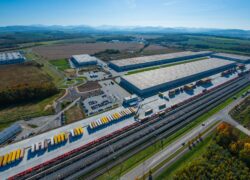
Strategically located along the A1 Motorway at kilometer 13, CTPark Bucharest offers a prime logistics hub just 15 minutes from the Păcii and Preciziei metro stations. Covering 57.9 hectares with 570,000 sqm of built space, the park is designed to support a variety of tenants, from logistics equipment distributors to e-commerce and retail companies. It also features key amenities such as a canteen, a medical center, and green spaces, ensuring an optimal working environment.

Photo: Nicoleta Gavrilă, Senior Business Developer, CTP Romania

PORR reports strong growth in 2024 with increased orders and profitability

Construction giant PORR has reported significant growth across all key financial metrics in 2024, with strong order intake, a rising backlog, and an improved operating result. Preliminary figures confirm that the company achieved a production output of EUR 6.7 billion, a 2.6% increase compared to the previous year, with particularly robust growth in Romania and Austria. The order backlog also saw an uptick, reaching EUR 8.5 billion, while EBIT improved by 12.9% to EUR 158.4 million.

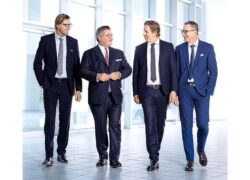
CEO Karl-Heinz Strauss expressed confidence in PORR’s broad market presence, stating that the company had successfully delivered on its objectives. “PORR delivered in the business year 2024. The EBIT margin stands at 2.6%, and the order situation remains highly positive. The numerous new orders, particularly in infrastructure, industrial construction, and healthcare, highlight the strength of our diverse portfolio,” Strauss noted.

The company’s order intake reached EUR 6.8 billion, demonstrating its strong foothold in civil engineering, which accounted for 55.4% of new projects, while industrial construction doubled. Among PORR’s latest major contracts are a large data center project in Germany worth nearly EUR 200 million, the renovation of Austria’s Luegbrücke bridge, a 34-kilometer high-pressure natural gas pipeline, a factory for wind power components in Poland, and the expansion of Prague’s motorway bypass in the Czech Republic.

PORR continues to solidify its position as a leading construction firm in Europe, leveraging its expertise across multiple sectors. While civil engineering remains a key growth driver, the company also sees rising opportunities in infrastructure, data centers, healthcare, and residential construction. CEO Strauss highlighted expectations for significant expansion in Poland and Romania in 2025, alongside a gradual recovery in Austria’s residential sector.

With its financial health strengthening, PORR maintains a dividend payout policy of 30-50%. The final figures for the 2024 financial year will be released in the PORR Annual and Sustainability Report on 27 March 2025.

Scallier expands Romanian retail portfolio with seventh Funshop Park in Arad

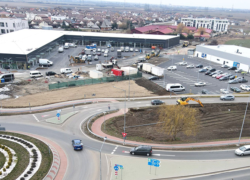
Poznań-based real estate company Scallier continues to strengthen its presence in Romania with the opening of its seventh retail park under the Funshop Park brand. Located in the Arad district, the newly developed retail park spans approximately 10,000 square meters and is set to officially open on March 6, 2025.

The new facility has already attracted a lineup of well-known brands, including DM, Sinsay, Pepco, KIK, Tedi, and Agroland. A popular fitness chain, Stay Fit Gym, will also be part of the retail park, along with several restaurants, an outdoor food court, and a playground. Lidl, the anchor tenant, has been operating at the site since December 2024, catering to the growing demand for modern retail services in the area.

According to Wojciech Jurga, Managing Partner at Scallier, the company sees Romania as a key market for expansion, leveraging the country’s rapid economic growth and significant investment in retail infrastructure. “The Romanian retail market is currently among the most dynamic in Europe, with over 800,000 square meters of modern retail space under construction—twice as much as in Poland. The country is benefiting from substantial EU funding and experiencing rapid retail sales growth that far exceeds the EU average. This creates an ideal environment for the development of new retail projects,” Jurga stated.

Scallier has identified significant gaps in Romania’s retail landscape, particularly in suburban and regional locations where modern retail offerings remain limited. While Romania’s total retail stock is significantly lower than Poland’s—by nearly three times—consumer demand for accessible shopping destinations is rising. “By strategically focusing on underserved areas, we aim to expand our retail park network and solidify our market presence in Romania,” Jurga added.

The new Arad investment marks the latest milestone in Scallier’s Romanian expansion. The company has already delivered a total of approximately 60,000 square meters of gross leasable area (GLA) across six other Funshop Parks in Roșiorii de Vede, Focșani, Timișoara, Turda, Vaslui, and Moșnița. All Scallier retail parks meet the highest sustainability standards and have received BREEAM certification.

Arad, a city in western Romania with a population of approximately 150,000, was chosen as the latest location due to strong demand for modern retail space. The development aligns with local consumer preferences for convenient, community-based shopping experiences.

Currently, about 95% of the Arad retail park’s space has been leased, reflecting strong tenant interest and market potential. The center will feature a mix of international retail brands and Romanian businesses, offering a diverse range of shopping and service options tailored to the needs of the local community.

Digital technologies drive sustainable resource recovery in the construction industry

The construction industry is navigating a complex landscape, facing simultaneous demands for faster project completion and stricter environmental sustainability standards. As one of the largest contributors to environmental pollution, the sector is under increasing pressure to adopt circular economy principles, emphasizing responsible material management and waste reduction. According to Adam Heres Vostárek of PlanRadar, while individual companies ultimately decide how to integrate these principles, their collective actions will shape the industry’s future.

“In an era where the construction industry significantly impacts the environment, a proactive approach is essential for sustainable progress. Digital solutions play a crucial role by enabling comprehensive monitoring of materials throughout a project’s lifecycle, maximizing their reuse and reducing waste,” says Heres Vostárek.

Transforming Material Management with Digital Solutions

Specialized digital tools, such as PlanRadar, are revolutionizing material tracking in construction projects. By consolidating all project data on a single platform, construction teams can monitor material movement in real time, streamlining decision-making processes. Using mobile devices like smartphones and tablets, workers can record material usage on-site through checklists, photos, audio recordings, and notes. This system enables seamless documentation of material recycling and reuse decisions, simplifying project management from initial planning to the demolition of existing structures and the implementation of new developments.

Enhancing Recycling Efficiency Through Digital Documentation

Modern digital tools provide instant access to detailed building documentation, significantly aiding the recycling of materials after demolition. With historical records of construction phases, structural designs, and material specifications, companies can plan demolition projects more efficiently and optimize material sorting processes. Digital registration systems categorize materials based on technical parameters, dimensions, and weight, making the sorting and reuse process far more efficient.

When demolishing buildings, materials such as bricks, concrete, and steel can be systematically sorted and repurposed. High-quality steel beams, for example, can be reused in new projects, while crushed demolition debris can be incorporated into concrete mixes or used as a foundation layer for paved surfaces. Additionally, materials can be sold to specialized firms, with comprehensive documentation providing buyers with transparency on material quality and history, increasing trust in recycled building components.

Reducing Waste in New Construction Projects

Beyond recycling, digital tools also play a crucial role in preventing material waste during new construction. Architects and designers can leverage these technologies to optimize material use from the outset, minimizing excess and waste. Furthermore, they enable the integration of design-for-deconstruction principles, ensuring that buildings are designed with future dismantling and material reuse in mind.

According to the European Environment Agency, Europe leads globally in resource efficiency, with productivity rates over 2.5 times the world average. Nearly half of all waste is recycled. However, the average European still consumes 14 tonnes of materials and generates 5 tonnes of waste annually, one of the highest rates worldwide. The construction industry plays a major role in this footprint and must be part of the solution.

A Digital Future for Sustainable Construction

“If we aim to reverse the negative impacts of climate change, construction companies must act now to implement sustainable practices. The future of the industry lies in sustainability, and digitalization is the key to unlocking its potential,” concludes Heres Vostárek.

By integrating digital solutions into everyday operations, the construction industry can significantly improve material efficiency, reduce environmental impact, and transition toward a truly circular economy.

JD.com expands in Poland with new logistics hub at MLP Pruszków II

JD.com is strengthening its presence in Poland by securing a lease at MLP Pruszków II. Through its logistics subsidiary, JINGDONG Logistics, the Chinese retail giant will take over 9,600 sqm of modern warehouse and office space tailored to its operational needs. The company is set to commence operations at the site in March, with full facility availability expected by July 2025. BNP Paribas Real Estate Poland represented JINGDONG Logistics in the transaction.

JINGDONG Logistics, a global leader in advanced supply chain solutions, continues to expand its international reach. As the logistics arm of JD.com, it specializes in servicing key sectors such as FMCG, fresh produce, apparel, household goods, and children’s products. Headquartered in Beijing, JD.com ranked 47th on the Global Fortune 500 list in 2024. The company operates an extensive network of over 1,600 warehouses in China and nearly 100 worldwide, amounting to a total of 32 million sqm of logistics space.

The logistics provider has gained a strong reputation for setting new industry standards with innovations such as same-day delivery and 24-hour local market distribution. Leveraging AI, big data, cloud computing, and the Internet of Things (IoT), JINGDONG Logistics has embraced automation and digital operations, driving efficiency and intelligent decision-making across its supply chain.

“2025 will be a transformative year for JINGDONG Logistics Poland as we expand our warehousing network to shorten delivery times and enhance efficiency. Poland is a market with enormous potential, and we are committed to strengthening our position here,” said Veysel Isik, Country Manager of JD Logistics Poland.

The choice of MLP Pruszków II as the company’s new Polish base underscores the attractiveness of the location. As the largest logistics complex in the Warsaw region, the facility offers a total target leasable area of 420,000 sqm. Strategically positioned in the Brwinów municipality, just five kilometers from Pruszków and near the A2 motorway, the site ensures excellent transport links to Warsaw and other key regions in Poland and Europe.

JINGDONG Logistics’ decision to establish its Polish hub at MLP Pruszków II reflects the growing appeal of Poland as a prime destination for global logistics operators. Tomasz Pietrzak, Leasing Director Poland at MLP Group, emphasized the flexibility and sustainability of the park’s facilities: “With our built-to-suit solutions, we can adapt spaces to tenants’ specific needs, offering modern and environmentally friendly infrastructure.”

The transaction also highlights Poland’s role as a strategic gateway for international supply chains. “This deal reinforces Poland’s significance as a top logistics destination in Europe. JINGDONG Logistics will benefit from state-of-the-art facilities in a prime location, significantly enhancing its European operations,” said Michał Rdzanek, Director at BNP Paribas Real Estate Poland.

As JD.com and JINGDONG Logistics continue to expand in Europe, their investment in MLP Pruszków II signals a long-term commitment to the Polish market, further cementing the country’s role as a central hub for e-commerce logistics.

Concens Investments expands Ostrava Airport Multimodal Park with new construction for BMW Group

Developer Concens Investments has commenced construction on the third phase of the Ostrava Airport Multimodal Park (OAMP) at Leoš Janáček Airport in Mošnov. The latest expansion, which will be used by the BMW Group as an overseas logistics center, is a significant milestone in the continued development of the strategically located industrial park.

The construction of three new logistics halls is expected to be completed by the first quarter of 2026. This expansion is a result of a long-term lease agreement signed with BMW Group, reinforcing the site’s importance as a major logistics hub. “Thanks to this partnership, we can continue developing a location where we have been operating since 2018. It is unique due to its geographical position and the ideal combination of air, truck, and cargo rail transport,” said Tomáš Novotný, CEO of Concens Investments.

BMW Group’s decision to expand its operations in the Czech Republic further strengthens its presence in the country. “I’m very pleased about the expansion of activities and the increased importance of the Czech Republic for BMW Group. Alongside the Future Mobility Development Center near Sokolov, this unique logistics center in Ostrava will play a crucial role in our operations,” said Maciej Galant, General Manager of BMW Czech Republic.

Concens Investments has been actively developing the Ostrava Airport Multimodal Park in phases since 2018. The first phase saw the construction of four halls, covering a total of 138,000 sqm, which were leased to leading logistics and manufacturing companies. This phase also included a railway terminal spanning 151,000 sqm. In 2021, part of the complex, along with an industrial park in Nošovice, was sold to U.S. real estate investment fund EQT Exeter.

The second phase, currently under construction, involves the development of four additional halls totaling 120,000 sqm of commercial space. These A-class facilities are designed for logistics and light manufacturing and are available for leasing.

The newly launched third phase, now underway, is being built on a 513,000-sqm plot acquired by Concens Investments from the Statutory City of Ostrava. The development includes three new halls that will serve as BMW Group’s distribution center under a 10-year prelease agreement. Construction also includes access roads and a private railway terminal to facilitate transport efficiency.

Looking ahead, a fourth phase is in preparation, which will feature a 97,500-sqm industrial hall on a 155,000-sqm site. With a valid building permit already secured, this phase will further expand the park’s capacity.

Once fully completed, the Ostrava Airport Multimodal Park is expected to exceed 550,000 sqm of gross leasable area, positioning it as one of the largest and most advanced logistics hubs in the region. The expansion aligns with the Czech Republic’s growing role as a key European logistics and manufacturing destination, particularly for automotive and industrial sectors.

Sonar Real Estate focuses on portfolio optimization and market expansion

Sonar Real Estate navigated a year of subdued transaction activity in 2024 by strategically optimizing its managed portfolios, expanding its workforce, and positioning itself as a key player in workout advisory services. Despite a challenging market, the company ended the year with a strong asset base, increasing its assets under management to approximately EUR 3.0 billion. Staffing across its five branches in Germany grew from 51 to 59 employees, reinforcing its operational capabilities.

CEO and Managing Partner, Christoph Wittkop, reflected on the past year, emphasizing the company’s proactive approach in enhancing operational efficiency. “As expected, 2024 saw fewer transactions. Nevertheless, for Sonar, it was a good year, as we benefited from our diversified business areas. More importantly, we utilized this period to optimize the portfolios under our management, which comprise 144 individual properties. Alongside a series of lettings, we implemented ESG initiatives, capital expenditure investments, and refurbishment projects totaling approximately EUR 95 million. The property management team we established in 2023 has proven highly effective, playing an increasingly vital role in our business,” Wittkop stated.

Throughout 2024, Sonar successfully closed three transactions, including two sales and one acquisition, amounting to a total volume of approximately EUR 90 million. The company also secured new asset management mandates as investors shifted their preferences, including the management of a large office property at Berlin’s BER Airport. Sonar anticipates further mandates in 2025 as asset managers realign their strategies.

In leasing activity, Sonar secured agreements for approximately 63,000 square meters of space, with 31,000 square meters of new lettings and 32,000 square meters in lease extensions. A key achievement was the completion of the revitalization of Chausseestrasse 23 in Berlin-Mitte, where the company successfully handed over the fully modernized office building to a new long-term public-sector tenant. The 21,500-square-meter office property had undergone a sustainable value-add transformation following the previous tenant’s departure in 2021.

Sonar Development, the company’s development arm, embarked on a major office-to-residential transformation in 2024. Acting on behalf of an institutional investor, it began repurposing two vacant office buildings at 71–79 and 87 Eschborner Hauptstrasse into approximately 200 modern residential units. This project, designed to address the growing housing demand in the region, integrates sustainable solutions and aims to achieve the KfW-55 energy efficiency standard. A comprehensive feasibility study was conducted in collaboration with planning partners to maximize the use of existing structures while ensuring sustainable redevelopment.

The company also made significant strides in workout advisory services, securing mandates to assist lenders with restructuring and asset management solutions for distressed portfolios. Sonar has already taken on assignments involving senior or partially secured loans, with a total volume in the triple-digit million range. The firm anticipates an increase in workout mandates from banks, pension funds, insurance companies, and insolvency administrators, particularly as lenders tighten their pressure on investors and developers amid looming refinancing challenges in 2025 and 2026.

Looking ahead to 2025, Sonar expects only a gradual recovery in transaction activity. Instead, market trends will continue to be driven by ESG initiatives, refurbishments, and potential changes in property usage. These endeavors require capital investment, which remains difficult due to high interest rates and cautious lending by traditional banks. “However, our experience demonstrates that implementing ESG measures does not necessarily entail high costs. We aim to showcase economically feasible solutions, leveraging the expertise of Sonar Development, which is in demand for both new builds and refurbishments,” said Wittkop.

With banks exercising caution, alternative financing sources such as real estate debt funds are becoming increasingly relevant. However, questions remain about whether the return expectations of these financiers will align with available financing options. While office properties in prime locations are expected to recover as an investment class, residential and logistics assets are likely to remain dominant in 2024. Foreign capital remains abundant, with investors actively seeking value-add opportunities, though transaction volumes have been constrained by significant pricing gaps and a limited number of distressed asset sales.

“Current workout mandates remind me of the final phase of the last crisis. However, rather than individual properties or projects, we are now seeing entire portfolios in distress,” Wittkop noted.

Sonar Real Estate has positioned itself as a strategic partner for investors, offering expertise in capital raising, redevelopment, and asset repositioning. The company’s capabilities extend to the disposal and transformation of underperforming assets, which are attracting growing interest from value-add investors. “With our nationwide presence and in-house capabilities in development and revitalization, we provide real estate investors with sustainable, future-oriented solutions,” Wittkop concluded.


Trei sells third U.S. multi-family development and expands residential pipeline

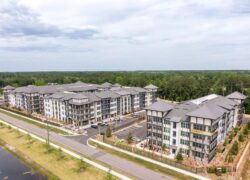
Trei Real Estate has successfully sold its third multi-family development in the United States, marking another milestone in its expansion strategy. The “Queens Wedgewood-Houston” project in Nashville, Tennessee, was acquired by a U.S. investor. Developed in partnership with Proffitt Dixon Partners, the 220-unit rental complex was completed in May 2024 at a total investment cost of approximately €58 million.

Between May 2024 and January 2025, Trei completed four multi-family projects, including developments in Jacksonville, Charlotte, and Raleigh, in addition to the Nashville property. Collectively, these projects delivered 1,153 rental apartments. Meanwhile, construction began on the company’s latest project in Nashville, “Chamberlain House” (formerly “Germantown Stockyard”), which will provide 345 rental apartments upon completion in 2026. The total investment volume for these five developments amounts to approximately €406 million.

The sale of “Queens Wedgewood-Houston” reflects the strong demand for rental housing in Sunbelt states. “Selling this project allowed us to free up capital for new residential developments. The rental housing segment in the Sunbelt remains highly attractive for both developers and investors, as evidenced by this transaction, which achieved an internal rate of return of approximately 15%,” said Trei Real Estate CEO Pepijn Morshuis. He emphasized Nashville’s strategic importance to Trei’s U.S. portfolio, reaffirming the company’s commitment to continued investment in the region.

In addition to ongoing projects, Trei is actively acquiring land for new developments. Upcoming projects include a site on Merritt Island in Florida’s “Space Coast,” an area experiencing economic growth driven by the aerospace industry and the Port Canaveral facilities. Another land acquisition is planned in Charlotte, North Carolina, home to Trei’s U.S. headquarters.

Morshuis highlighted the company’s confidence in the southeastern U.S. multi-family market, citing strong population growth, sustained rental demand, and favorable investment conditions. “The region offers an ideal environment for long-term property development with attractive construction costs and reliable returns. Our expansion strategy aligns with these economic trends, ensuring steady growth in our residential portfolio,” he added.

front page info
LATEST NEWS