Brookfield and Segro announce €470 million deal to split Tritax EuroBox

In a significant move within the European logistics and industrial real estate market, Brookfield Asset Management and Segro have announced an agreement to split Tritax EuroBox, the pan-European logistics specialist, in a transaction valued at approximately €470 million. The deal, aimed at boosting both firms’ portfolios in Europe, involves the division of Tritax’s assets, marking a strategic expansion for Brookfield and Segro in high-demand logistics real estate across key European markets.

Under the terms of the agreement, Brookfield will acquire roughly half of Tritax EuroBox’s prime assets, enhancing its logistics footprint across Europe amid a sustained e-commerce boom and increased demand for large-scale distribution centers. Segro, a UK-based real estate investment trust and leading developer of logistics facilities, will take over the remaining assets, strengthening its position as one of Europe’s largest logistics property owners.

The assets being split between Brookfield and Segro include Tritax’s strategically located logistics sites across Germany, Spain, Italy, and the Netherlands. These markets have seen rapid growth in demand for high-quality logistics space, driven by the expansion of online retail and the evolving supply chain needs of major corporations. For Brookfield, this acquisition aligns with its strategy to deepen its reach within European logistics, a sector it has identified as one of its highest-growth investment areas.

Segro, which has a significant existing portfolio across Europe, expects this acquisition to complement its existing assets and expand its client offerings, particularly in the core European logistics corridors. The company has been focused on sustainable development, and Tritax’s modern, high-quality assets are expected to integrate well with Segro’s existing portfolio.

Tritax EuroBox was created to capitalize on Europe’s rapidly evolving logistics sector, which has experienced record demand due to structural shifts in consumer habits, particularly post-pandemic. The €470 million deal between Brookfield and Segro signals continued confidence in the sector’s growth potential despite broader economic uncertainties.

Analysts view the transaction as indicative of a wider trend among institutional investors targeting logistics and industrial assets, seen as more resilient against economic downturns due to stable cash flows from long-term leases with creditworthy tenants.

For both Brookfield and Segro, the split of Tritax EuroBox underscores an optimistic outlook on logistics real estate in Europe, where vacancy rates remain low, and rental growth has outpaced other property segments. With both companies emphasizing sustainable operations, the deal also reflects an industry-wide push toward greener logistics solutions.

This acquisition represents a bold strategic step for Brookfield and Segro, poised to reshape the European logistics real estate landscape by reinforcing their presence in major logistics hubs. The deal is expected to close following regulatory approvals, with both companies planning to announce further integration strategies for the assets in the coming months.

Linkcity launches one of Czech Republic’s first regional residential timber buildings in Pardubice

Linkcity, with support from parent company Bouygues Construction, has begun construction on one of the Czech Republic’s first residential timber buildings outside Prague. The multi-story structure will be part of the final phase of the Nová Tesla district in Pardubice, transforming a former brownfield site into a sustainable urban hub. As wood construction remains relatively new in Czech regions, Linkcity’s initiative marks a significant step toward sustainable building practices in the country.

Kristýna Zavrtálková, CEO of Linkcity, emphasized the environmental benefits of timber buildings, stating, “Wood construction is a critical step toward a sustainable future. Wood absorbs carbon dioxide, helping reduce the carbon footprint by up to 20% compared to concrete buildings. Its thermal properties also reduce heating costs.” She noted that timber interiors contribute to a healthier environment, naturally regulating humidity, lowering stress, and enhancing productivity.

The three-story residential building at Nová Tesla will use 152 Cross-Laminated Timber (CLT) panels, reducing the construction timeline by nearly six months. The structure will house 11 modern apartments, featuring natural wood elements like exposed CLT ceilings, larch paneling, and large wooden windows. Situated near the Chrudimka River, the project offers easy access to the city center, nearby parks, and cycling paths.

Bouygues Construction, Linkcity’s parent company, has been a global leader in timber construction, with specialized subsidiary We Wood advancing wood building technologies worldwide. Clément Duclos, Deputy CEO of Linkcity, highlighted the company’s commitment, saying, “We’re proud to bring our expertise to the Czech Republic, where renewable materials represent the future of construction, supporting environmental goals and enhancing residents’ quality of life.”

The Czech government has set a goal for public projects to incorporate 20% timber, in line with its Raw Materials Policy. Linkcity’s Pardubice project is part of a broader vision to use timber in various sectors, including public buildings, schools, and commercial properties, contributing to a greener future for Czech real estate.

Photo: Weidmatt Lausen 2020 LM ©Upperview Productions

Will the Polish government’s DOM Portal with housing prices prove useful to buyers

The draft amendment to the Real Estate Development Act envisages the creation of a DOM Portal to increase the transparency of the market in terms of, among other things, the transaction prices of first- and second-hand flats. How do developers assess this idea? To what extent can the portal really help buyers?

Tomasz Kaleta, managing director of sales and marketing at Develia
Until we know the details of the DOM portal, including its design and, above all, the quality of the data and the way it is presented, it is difficult to make a clear opinion on it. According to its assumptions, the portal is supposed to present appropriately aggregated statistical information on residential real estate transaction prices, however, preventing the identification of details of specific transactions. This type of quarterly data for individual cities is already published by, among others, the National Bank of Poland.

Easier access to data will certainly be helpful not only for buyers, but also for developers. However, I do not think that the mere availability of this data will have an impact on the reduction of housing prices. Property prices are volatile and market-dependent, and the purchase process from the moment of booking a flat, during which the price is ‘frozen’, to the signing of the developer’s contract can take several weeks to several months. Therefore, the data available on the portal may not be fully up-to-date.

In addition, the price of a particular flat within a single development depends on several factors, such as the layout of the rooms, the area, the floor, the orientation with respect to the world, or the size of the balcony or terrace. As a result, the price per square metre of a flat may differ by up to 6 thousand within the same development. Differences in finishing standard and sales policy between neighbouring projects should also be taken into account.

Mateusz Bromboszcz, vice-president of Atal
We are one of the few developers who openly inform about flat prices on the websites of their investments. This simplifies the purchasing process, allows customers to choose the unit best suited to their possibilities and to plan financing. A database facilitating price comparisons in a specific location may be useful, but insufficient without an analysis of the other characteristics of a given property. This is because individual investments differ in terms of standard, scale and many individual parameters, such as energy efficiency.

I am of the opinion that price transparency is a good market standard, but it is difficult to expect property prices to suddenly fall after the introduction of the planned instrument. Only bidders, especially those operating in the secondary market, will realise their initial expectations.

It will be easier to assess the effects, as well as the obligations towards developers, related to the implementation of the tool at a more advanced legislative stage, when the specific solutions and requirements are known.

Agata Zambrzycka, sales and marketing director at Aurec Home
The draft amendment to the Development Act assumes that the DOM portal will enable the comparison of housing offers with actual transaction prices, supporting informed purchasing decisions. It will also assist companies, including us developers, in planning investments and public institutions in analysing and adapting housing support tools. The portal is expected to generate statistics on the housing market, such as the number of transactions, property prices and the demographic profile of buyers.

However, regardless of whether the planned changes will actually improve the housing situation in Poland, they will certainly introduce additional, broad powers for public administration bodies, as well as for the Insurance Guarantee Fund, in terms of obtaining information on real estate market transactions.

Zuzanna Należyta, Commercial Director at Eco Classic
The DOM portal is a good solution and we support its creation, provided, of course, that ‘at the end of the day’ it does not turn out that reporting is so labour-intensive for developers that they have to create new jobs.

Andrzej Gutowski, Sales Director of Ronson Development
We have been operating on the Polish market for over 24 years. We support all initiatives that increase the transparency of the industry. We are committed to transparency, believing that access to reliable information strengthens clients’ trust and raises standards in the entire sector.

We view positively the idea of creating a DOM Portal to publish transaction prices in the primary and secondary markets. This portal can help buyers make more informed decisions by providing them with a better insight into current market conditions.

Joanna Chojecka, sales and marketing director for Warsaw and Wrocław at Grupa Robryg
Increasing the availability of housing for Poles is very important and any solution that increases transparency in the residential property market is vital. How this idea is implemented will of course be key, but I am convinced that developers will be happy to engage with the government on this issue.

Marcin Michalec, CEO of Okam Capital
At this stage, we still know too little about the final shape of the DOM Portal project. In its outline form, it seems to be an interesting initiative that could further improve the transparency of the residential property market from the buyers’ point of view. It would be a tool to support informed purchasing decisions, based on the prices of units on the primary and secondary markets gathered in one place and providing the possibility to compare them. At the same time, for developers and sellers of flats, this would involve reporting sales data to the portal.

Anita Makowska, Senior Business Analyst at Archicom
The draft amendment to the Development Act, which assumes the creation of the DOM Portal, is a step towards greater transparency of the real estate market, which may bring benefits, both for buyers and developers. Access to transaction prices in the primary and secondary markets will certainly facilitate more informed purchasing decisions. However, the proposed method of presenting prices based on a minimum of six transactions raises doubts, especially in smaller cities where the number of transactions may be limited, making it difficult to obtain representative data as a result.

In addition, the failure to take into account the standard of the property, especially in the secondary market, may lead to an incomplete picture of the value of the offers presented. The long period between the conclusion of a contract on the primary market and the delivery of the premises may also prove problematic, with the result that the transaction price may not always reflect current market realities.

The portal can be a useful tool, especially for more experienced market participants. However, without proper education of users, who may not be familiar with the subtle differences between the offer price, the transaction price and the market price, we run the risk of potential buyers misinterpreting the information.

Damian Tomasik, CEO of Alter Investment
The draft amendment to the Development Act, which assumes the creation of the DOM Portal, may bring significant changes to the real estate market, both at the level of transactions and transparency of the entire purchasing process.

From a land developer’s perspective, such a portal indeed has the potential to increase access to information on actual transaction prices in the primary and secondary markets. Offering access to such data will have a positive impact on market transparency, which can help buyers make more informed decisions. Price transparency is also a factor that can reduce uncertainty among buyers, especially at the bid comparison and negotiation stage.
In terms of developers’ responsibilities, the DOM Portal is likely to involve the need to report more data on sold properties. This may require adapting reporting processes and working with the administration to ensure compliance with the new regulations. For us as a land developer who deals with investment projects from the ground up, the new obligations may require additional work in the area of documentation and market monitoring which will have an impact on the cost of our business and therefore on housing prices, but in the long term they may contribute to stabilising the real estate sector.

Despite the potential administrative burdens, I believe that the implementation of the DOM Portal could prove beneficial, both for developers and buyers, as transparency and availability of data are key to building trust in the property market. In this way, the project can also help to increase competitiveness in the market, which will ultimately improve the quality of the products and services offered.

Source: dompress.pl
Photo: Cavallia, BPI

Carrier extends lease at Warsaw’s Konstruktorska Business Centre

Carrier, a global leader in heating, ventilation, and air-conditioning solutions, has renewed its lease for another six years at the Konstruktorska Business Centre in Warsaw’s Mokotów business district. The company will continue to occupy over 500 sqm on the second floor of the building, owned by Golden Star Group.

Known for pioneering modern air conditioning, Carrier operates as part of Carrier Global Corporation, delivering innovative climate and energy solutions worldwide. The company employs over 53,000 people across 51 manufacturing plants and 39 research centers globally. Its Polish headquarters have been based in Konstruktorska Business Centre since 2013.

Ewa Dragunajtys, Senior Leasing Manager at Golden Star Estate, expressed pride in Carrier’s renewed commitment, noting, “We strive to create a safe, comfortable, and inspiring workplace for our tenants, and we’re pleased to see this reflected in their satisfaction. We thank Carrier for their trust and wish them continued success.”

The renewal was facilitated by Cushman & Wakefield, which advised Carrier during the negotiation process.

Konstruktorska Business Centre, a seven-story, Class A office building, offers a total leasable area of 49,500 sqm. It boasts one of the region’s largest floor spaces at 7,000 sqm, along with energy efficiency credentials backed by a BREEAM “Very Good” certification. The building features two internal courtyards, 1,050 parking spaces, and facilities for cyclists. Located about 15 minutes from downtown Warsaw and 10 minutes from Chopin International Airport, the center’s strategic location and amenities have attracted tenants like Procter & Gamble, MoneyGram, and Sunday Polska.

CTP builds 30,000 sqm of distribution space for Redcare Pharmacy

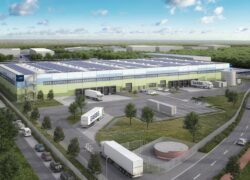
CTP today began the construction of a new distribution centre of more than 30,000 sqm at CTPark Blatnice in the Czech Republic for Redcare Pharmacy. The building is scheduled for completion in July 2025.

Redcare Pharmacy N.V. is the leading e-pharmacy in Europe, currently active in seven countries: Germany, Austria, France, Belgium, Italy, the Netherlands and Switzerland. Today, Redcare Pharmacy offers almost 12 million active customers a wide range of more than 150,000 products at attractive and fair prices. This logistics centre is being developed to serve the Austrian market of Redcare Pharmacy and deliver orders faster in the future to their customers in Austria.

“We are thrilled to be able to develop such an important project together with Redcare Pharmacy. CTPark Blatnice will provide an optimal environment for development thanks to its modern facilities and strategic location, as well as our speed and expertise in delivering large and technically challenging projects. The emphasis on sustainability and innovative technologies such as heat pumps or photovoltaic panels show CTP’s commitment to ESG as a long-term owner of industrial and logistics real estate, said Jakub Kodr, Head of Business Development CTP Czech Republic.

“Finding a partner who understands the specific needs of the pharmaceutical industry was crucial for us. CTP not only has experience in this sector, but offered us premises with a high standard of sustainability and technologies that ensure safe and efficient storage of pharmaceuticals. We look forward to working together and successfully delivering this project,” comments Theresa Holler, COO and responsible pharmacist of Redcare Pharmacy.

The project is characterized by its emphasis on sustainability and modern technologies, which are required for the storage standards of pharmaceutical products. The warehouse will be equipped with indoor climate control and innovative technologies such as ground-to-air heat pumps, thermal sensors or special protective films on the skylights to ensure optimal indoor temperature control and protect the space from overheating. Such a concept guarantees that the warehouse and pharmacy operations will meet the strict standards and regulations of the State Institute for Drug Control (SÚKL).

CTP is focusing on the use of renewable energy sources in the project, including the planned installation of photovoltaic panels on the roof of the building. In addition, the project includes electric vehicle charging stations, advanced technologies for rainwater retention and reuse, and biodiversity measures such as pools, lizard houses and habitats to protect local fauna.

CTPark Blatnice is a modern logistics park located directly on the D5 motorway, 17 km from Pilsen and only 7 km from the container terminal in Nýřany. The park offers excellent conditions for domestic and international logistics operations. It currently occupies an area of 58,600 sqm with a planned expansion of another 20,748 sqm. Thanks to its proximity to technical universities and good connections to transport infrastructure, the park is also well placed to attract a skilled workforce.

Is the logistics industry ready for 2/3 of occupiers targeting net zero carbon in 5 Years?

Panattoni has co-authored a major report which examines key sustainability metrics and indicators for businesses operating within the logistics and supply chain sector.

The most important factor driving sustainability activity for European logistics businesses is the desire to make a positive environmental impact, according to the report. The need to meet regulatory and legislative requirements is less of a driver of action, acknowledging that logistics operators, retailers and manufacturers are much more in step and aware of the sustainability requirements being made of their companies.

The third European Logistics & Supply Chain Sustainability Report, produced this year by Panattoni, HFW, the international law firm, Pledge, the sustainability software platform and Analytiqa, the research specialist, places sustainability in the context of financial pressure on supply chains as a key theme. European supply chains continue to operate in challenging market conditions and the return to ‘normal’ trading post-Covid has still not been fully realised.

The report shows that that there is a growing willingness among logistics businesses to operate out of green buildings and to pay a rental premium for a green building, but invariably with an eye on cost savings – 42% of companies would be willing to pay a rent premium equivalent to the total operating cost savings to move operations to a ‘green’ building from a standard ‘non-green’ building.

Almost two-thirds of logistics businesses remain challenged by the financial cost of sustainability solutions and more than half suggest that lower costs of implementing sustainability solutions would improve their company’s future sustainability efforts, the report adds. It is likely to be smaller companies, with fewer resources available to devote to sustainability, that are less likely to have sustainability programmes in place, or an understanding of their obligations to report emissions or the emissions associated with their products or services.

The availability of financial incentives, such as grants and subsidies, are seen as an important factor to encourage companies to improve the future sustainability. Almost one in five companies state that they would be willing to pay extra for environmental certifications, because it adds value to their sales efforts and just 16% of respondents either do not know, or would not be willing to pay a rent premium to move operations

to a ‘green’ building. Only 13% of respondents either do not know, or would not be willing to pay a premium to move transport operations to a ‘green’ fleet.

Emilia Dębowska, Head of Sustainability Europe at Panattoni, said: “The challenge of defining or measuring financial returns on sustainability measures has decreased, despite financial constraints and the fact that these efforts often lead to higher investment costs. It may indicate progress in the ability to quantify the benefits of sustainability efforts or to understand the positive impact of the transition over the longer term”.

Other key findings of the report include:
• Making a positive environmental impact by landscaping trees, lawns and biodiversity is notably more important amongst respondents this year, as is investing in battery storage (for onsite renewable energy generation), especially for logistics operators
• Energy-saving solutions remain the most important sustainability feature for a company’s warehouse operations, whilst the provision of electric vehicle charging points, with many new warehouse specifications now incorporating these as ‘standard’, is seen as increasingly important
• Elements of uncertainty remain, however, and companies are still demanding greater clarity from both industry and at a government level regarding future fuel choices, new technologies and the cost of alternative solutions to facilitate decarbonisation targets of road fleet operations

The report, which drew responses from 102 logistics businesses, including logistics service providers, manufacturers and retailers, working across 16 European countries, examines key ESG metrics and indicators for businesses operating within the logistics and supply chain sector, including the key relationship between financial costs and sustainability.

The findings also show a steady increase in the inclusion of sustainability targets in contractual agreements, with 33% of companies (up from 32% last year and from 28% in 2022) incorporating such goals as binding obligations. Matthew Gore, Partner at HFW, said: “In 2024, we see a growing trend of companies embedding sustainability targets as formal obligations in contracts. Notably, more than half of respondents insist on the right to terminate agreements if these targets are not met. This reflects a shift towards holding service providers accountable for their sustainability performance”.

Union Investment acquires Newtown Gardens residential complex in Dublin

Union Investment has officially taken over the newly completed Newtown Gardens residential development, located in Blackrock, a prime suburb in southern Dublin. This addition joins the portfolio of the UniImmo: Deutschland, an open-ended real estate fund, after the acquisition agreement was set in motion in 2022. The purchase was arranged through a forward deal with Glenveagh Properties, a prominent Irish residential project developer.

Positioned in one of Dublin’s most desirable residential areas, Newtown Gardens includes five detached apartment blocks totaling 124 residential units. The development also boasts an underground car park with 68 spaces, complemented by an additional 18 outdoor parking spots at ground level. The apartments are primarily one and two-bedroom units, catering to the growing demand for modern, high-quality living spaces in Dublin.

“We expect Newtown Gardens to attract significant demand given its outstanding build quality and highly desirable location,” stated Friedrich Warmbold, Head of Investment Management Residential at Union Investment. “Blackrock is recognized as one of Dublin’s most sought-after residential addresses, benefiting from close proximity to Blackrock Village, Sandyford Business Park, and excellent public transportation links to Dublin city center.”

This acquisition marks Union Investment’s third residential property in the Dublin area, reinforcing its expansion in the Irish residential market. The company first entered the market in 2021 with the acquisition of “8th Lock,” another residential development located in northwest Dublin. Today, Union Investment’s Irish residential portfolio totals approximately 700 units across three complexes, all strategically situated in the Greater Dublin Area, supporting the fund’s growth strategy and commitment to high-demand residential markets.

Energy poverty on the rise in Czech Republic: 1.3 Million people affected

A rising number of Czechs are unable to afford adequate heating and energy, with figures climbing to 1.3 million last year, according to the Powerty Watch 2024 report, presented today by the European Network Against Poverty and Social Exclusion (EAPN). The report sheds light on the alarming increase in “energy poverty,” as more people are forced to spend over two-fifths of their net income on energy or struggle with energy debts. In just a few years, the number affected has nearly doubled, from 770,000 people in 2020.

“We’re witnessing a worsening crisis every year. The statistics are alarming. More and more people lack access to basic needs like heat and light, and mounting energy debts are trapping families, including children, in hardship,” said Iva Kitchenová from Charity of the Czech Republic, a co-author of the report.

This year’s findings focus on households that struggle with heating costs, with around one-fifth of the poorest households impacted. In 2020, 440,000 households were affected, which housed 770,000 people. By last year, that number had surged to 690,000 households, covering 1.3 million individuals. The report attributes this rise to low incomes, soaring energy costs, and inefficient energy use.

Co-author Jiří Vraspír referenced a related report on housing exclusion, indicating that over half a million Czech households face excessive housing costs, with nearly 860,000 adults and children living under financial strain. The report also reveals that 160,900 people, including 62,300 children, are currently in precarious or temporary housing, or are homeless.

Former ombudsman Anna Šabatová expressed concern, calling the findings “pessimistic” and attributing them to long-standing policy shortcomings. “Every indicator is worsening, and things are likely to continue deteriorating. Decades of flawed policies have left us with a system that inadequately supports basic needs,” she said. Former Prime Minister Vladimír Špidla also criticized current policies, stating that inflation has drastically eroded the value of subsistence benefits, making them ineffective.

To address the crisis, the Czech EAPN network advocates for housing support legislation, a review of state assistance criteria, and a simplified benefits system. The report calls for reforms that would merge four existing benefits into one and increase wage levels to better support families.

This year’s Powerty Watch report also covers migration, employment of foreign workers, and long-term care needs. Representatives from organizations, government, Prague City Hall, and academia convened to discuss the findings, highlighting the urgency of policy reform to counteract poverty and social exclusion in the Czech Republic.

Source: CTK

HIH Invest sells Michelkontor office and commercial building in Hamburg to PAMERA Real Estate

HIH Invest Real Estate GmbH (“HIH Invest”) has successfully sold the Michelkontor office and commercial building in Hamburg’s Neustadt district to PAMERA Real Estate Partners GmbH, a family-owned real estate office. Located at Englische Planke 2, Michelkontor was originally built in 2002 by Quantum AG and acquired by HIH Invest in 2014 on behalf of the real estate fund of the Norddeutsche Versorgungswerke superannuation scheme.

The Michelkontor building offers 4,630 square meters of leasable space, with 4,600 square meters dedicated to office areas and 30 square meters for storage. The property also includes 36 parking spaces in an underground garage and is fully occupied, with prominent tenants like Barmenia AG health insurance and logistics company Dachser SE.

Commenting on the transaction, Daniel Asmus, Team Head of Transaction Management Office Germany at HIH Invest, said, “Our sale of Michelkontor in Hamburg demonstrates that family offices remain strongly interested in high-end office assets in prime locations of Class A cities.”

Christian Kramp, Senior Fund Manager at HIH Invest, highlighted the success of their asset management strategy: “Through active management, we achieved 100 percent occupancy, creating an attractive asset for the market while securing an excellent return on investment for our clients.”

The sale was brokered by Grossmann & Berger, and the financial details of the transaction remain undisclosed.

365.invest Slovakia interview: Providing added value to investors

CIJ EUROPE spoke with Tomáš Cár, who represents the Real Estate Transactions at 365.invest, in a Q&A about the company’s activities and the key priorities driving their work.

At 365.invest, providing added value to our investors is at the heart of everything we do, says Tomáš Cár, who represents the Real Estate Transactions team. “Our goal is not just to deliver solid financial returns but to create long-term, sustainable value that benefits communities, preserves cultural heritage, and contributes to the growth and transformation of urban landscapes,” he explains. The company’s approach focuses on responsible development that enhances the built environment while ensuring profitability for investors.

A key part of 365.invest’s strategy involves revitalizing underperforming properties into high-value assets. Across Slovakia, Cár and his team have been overseeing the transformation of retail and residential properties to meet the changing demands of the market.

One major initiative has been the conversion of old retail premises in six regional cities—Pezinok, Lucenec, Nove Zamky, Ruzomberok, Levice, and Rimavska Sobota—into modern, high-performing retail parks. “In collaboration with local developers, we’re transforming outdated, underutilized retail spaces into thriving hubs,” says Cár. By redesigning these spaces to maximize their potential, the team attracts top-tier tenants and ensures stable rental income for investors. The modernization process also boosts the aesthetic and functional appeal of the properties, enhancing customer experiences and increasing retail sales, which leads to property value appreciation. Sustainability is also key, with eco-friendly building practices incorporated throughout the projects.

“We aim to create long-term value by incorporating energy-efficient designs and green building materials, reducing operating costs while appealing to eco-conscious tenants,” Cár adds. The result is a portfolio of assets that not only provide consistent income but also stand out in the market due to their environmental sustainability and strategic location.

In addition to retail parks, 365.invest is also focused on urban revitalization, particularly through the transformation of old houses and mixed-use buildings into modern residential apartments. Cár points out that the growing demand for high-quality urban housing drives this project. “We are targeting young professionals and urban dwellers by creating stylish, compact living spaces that offer both modern design and functionality,” he says. These apartments are typically located in prime areas with excellent connectivity to business districts, transportation, and entertainment, which helps generate high rental yields. The repurposing of undervalued properties into desirable living spaces also boosts asset value and ensures strong returns on investment.

One of the most exciting projects that Cár and his team are working on is the conversion of office and mixed-use buildings into residential units in Bratislava. “With the changing dynamics of the office market, we’ve seen a rise in demand for residential properties, and repurposing office spaces is an efficient way to meet that demand,” Cár explains. This approach not only maximizes the potential of existing buildings but also reduces construction waste, making it a more sustainable option. By contributing to the city’s urban regeneration, these projects support economic growth and help shape Bratislava into a modern, vibrant city.

“These redevelopments provide investors with significant capital appreciation, as Bratislava continues to grow into a modern urban hub,” he adds. With lower redevelopment costs compared to new construction, these projects offer efficient capital deployment and high returns.

Through these strategic developments, 365.invest is creating sustainable, culturally rich, and economically resilient real estate assets. Tomáš Cár highlights that the company’s focus on thoughtful development ensures that their projects are not only profitable but also positive contributions to the cities they are located in.

“Investing with us means participating in the growth of thriving urban centers,” says Cár. “We offer innovative real estate solutions that deliver both financial returns and lasting impact, shaping the future of Slovakia’s cities.”

© CIJ EUROPE

front page info
LATEST NEWS