Red Bull joins Churchill Square office complex managed by Českomoravská Nemovitostní

The investment group Českomoravská Nemovitostní (ČMN) has announced that Red Bull is the newest tenant at Churchill Square II, a prestigious office complex managed by the company. This addition underscores the continued demand for high-quality office space in Prague and boosts the building’s occupancy rate, which now stands at an impressive 95% of its 33,000 sqm leasable area.

The Churchill Square office complex is celebrated for its prime location in Prague 2 and its modern facilities, which cater to the needs of international companies. Nicol Bejček Panská, Head of Asset & Property at ČMN, commented:

“We are delighted to welcome Red Bull as a new tenant at Churchill Square. We are confident that our modern and inspiring space will support their dynamic team’s growth and success. We look forward to a long-term and fruitful collaboration.”

In November 2024, ČMN finalized the acquisition of the remaining 25% interest in Churchill Square, achieving full ownership of the project in a transaction valued at CZK 4 billion. Alongside Red Bull, other prominent tenants include Deloitte and Fortuna, further demonstrating the complex’s appeal to high-profile companies. This significant investment aligns with ČMN’s strategy to strengthen its position in the premium office market.

Josef Eim, Vice-Chairman of the Board of Directors at ČMN, highlighted the market dynamics:

“Prague offices remain a stable investment with promising growth potential. However, challenges such as administrative hurdles and rising costs complicate the development of new projects.”

ČMN has solidified its reputation as a leading player in the Prague office market. Its portfolio includes not only Churchill Square but also Blox, City West C1 and C2, Václavské náměstí 62, and Crystal. Additionally, through its NEMO fund, ČMN manages properties such as Corso Karlín, Apeiron, Mezi Vodami, and Aragonit. With high occupancy rates and a diversified portfolio, ČMN demonstrates resilience and a strong growth trajectory in the real estate sector.

Minimalism or a wealth of features: How companies view offices

The office market showcases two polar opposite trends in how companies approach leasing and arranging spaces, which can be described as a wealth of features and minimalism.

Two Dominant Tenant Strategies

The first approach focuses on companies trying to cater to the needs of all employees—both those working in the office and remotely. To attract as many people as possible back to the office, such firms invest in new layouts and designs. However, this often leads to spaces that ultimately serve no one. Incorporating too many concepts into one space results in a lack of cohesion, failing to achieve the intended goals and even discouraging employees from returning to stationary work.

Most companies, however, adopt the second approach, prioritizing cost reduction. They renegotiate lease terms to remain in the same location, frequently downsizing their space. These companies insist employees return to the office but avoid major redesigns. Instead, they optimize the existing layout, implement minor updates, or leave the space unchanged. Often, firms take no action, conscious of rising office maintenance costs, focusing instead on calculating whether changes are truly necessary.

Optimization, Optimization, Optimization

A flagship example of this cost-conscious strategy is a project we are managing for a large publishing company. It is based on the renegotiation of a lease agreement covering several thousand square meters for a large media sector company, with the contract being extended for another five years at this location. Previously, during the pandemic, the office underwent a complete overhaul. This time, the focus is solely on financial terms, as the space remains modern, functional, and well-suited to the company’s needs. Moreover, the office is heavily utilized, making this a noteworthy trend compared to other projects.

Another striking example is the transaction involving Kruk, a company in Wroclaw. After 15 years, the company relocated from its office in an older facility within a technology park, where it occupied over 10 thousand sq m., to the modern B10 building in the Business Garden complex, where it took up 6 thousand sq m. However, this move marked a significant improvement in quality. The new office was designed based on Workplace surveys, addressing organizational and employee needs in terms of functionality, technology, and design.

Shifting Narratives

Overall, the market is seeing a predominance of lease renegotiations, increasingly driven by financial pressures rather than redesigns. High construction costs are forcing companies to optimize expenses by making use of existing layouts. The traditional open space remains the standard for most office layouts.

When design changes are made, they are often based on Workplace surveys, analyzing team needs, space functionality, and interdepartmental connections. Discussions on new workplace functionalities and evolving narratives—such as designing spaces for active office workers rather than persuading remote employees to return—were covered in our recent report, ‘25 Trends That Will Transform Offices by 2025.’

A growing trend is designing offices for employees who regularly use them. This involves creating smaller zones for teamwork and hubs for small groups, with modular layouts revitalizing office interiors. Flexible solutions, such as adjustable acoustic panels, sliding doors, and movable curtains, allow for easy reconfiguration to meet changing needs.

Flexibility in Leasing

Flexibility in leasing is becoming increasingly important. The flex space and co-working sector is growing rapidly, especially in Warsaw. These spaces are no longer the exclusive domain of startups and small businesses; larger organizations now use them for specific operations. Flexible offices, once primarily chosen by IT firms, are now appealing across industries.

Demand for office space in Poland’s major markets has remained stable compared to last year. Utilization rates vary by sector and organizational culture, with hybrid work (three days in the office and two remotely) being the most common model. In IT, a sector that adopted hybrid work even before the pandemic, employees continue to return to offices less frequently. This sector, historically a growth driver, is now downsizing due to globalized recruitment and remote work preferences.

Clients often optimize space by reinvesting savings from smaller office spaces into modern offices in better locations, aligning with ESG trends. Warsaw, home to corporate headquarters, is experiencing a supply gap, particularly in prime central areas. While the city’s average office vacancy rate exceeds 10 percent, central areas and Wola district have much lower rates, whereas Mokotow experiences vacancy rates of several dozen percent. Regional markets, however, maintain a stable supply.

Subleasing

A new market standard is the 7-year lease agreement. Previously, 5-year leases came with substantial financial incentives and turnkey design services. Today, such benefits are increasingly tied to leases longer than seven or even ten years.

Sublease clauses are also becoming more common, alongside assignment clauses. Landlords are open to subleases, provided certain conditions are met, such as the subtenant’s financial standing, alignment with the building’s profile, and adherence to non-compete rules. Subleasing offers security for landlords due to the joint liability between the original tenant and the subtenant, increasing its appeal.

Author Mateusz Strzelecki, Partner/Head of Tenant Representation at Walter Herz

NEPI Rockcastle finalizes €405 million acquisition of Silesia City Center in Katowice

NEPI Rockcastle, Europe’s third-largest listed retail real estate company, has completed the €405 million acquisition of the Silesia City Center mall in Katowice, located in Poland’s Silesia province. This marks one of the most significant shopping center transactions in Central and Eastern Europe (CEE) in recent years. The sellers in this landmark deal are Allianz, Kamsa Luxco, and Cura.

Spanning 88,400 m² of gross lettable area (GLA), Silesia City Center stands as the dominant retail destination in Katowice, an economically robust city where per capita spending surpasses the national average by 35%.

The acquisition was largely funded by NEPI Rockcastle’s €300 million equity raise in October, further underscoring the company’s robust financial strategy. This deal follows the €373 million purchase of the Magnolia Park shopping center in Wroclaw earlier this year, which was the largest single-asset retail transaction in the CEE since 2022.

The addition of Silesia City Center to NEPI Rockcastle’s portfolio—the largest in the CEE—is expected to enhance the mall’s operational performance. The company plans to leverage its asset management expertise to unlock long-term value growth opportunities.

Rüdiger Dany, CEO of NEPI Rockcastle, commented: “We deeply appreciate the trust of our investors during the recent equity raise, which enables us to pursue acquisitions like Silesia City Center. This premier shopping destination holds a commanding position in Katowice, one of Poland’s largest and most affluent cities. We are eager to apply our asset management capabilities to drive further value in this strategic investment.”

Silesia City Center enjoys an unparalleled market position in the Katowice region, with a prime location offering easy accessibility and visibility. Its immediate catchment area includes over 280,000 people within a 15-minute drive, while the broader regional catchment extends to nearly 2.2 million people within a 45-minute drive. The mall is also well-connected by car and public transport.

Currently boasting a 98.4% occupancy rate, the shopping center hosts prominent anchor tenants such as Cinema City, Half Price, H&M, Kaufland, Media Markt, Primark, Reserved, TK Maxx, and Zara.

Katowice itself is a dynamic hub, balancing a legacy of heavy industry with a growing focus on modern business services, research, and development. This industrialized and urbanized region remains one of Europe’s most significant economic areas, further solidifying the strategic importance of this acquisition.

Real estate lending sentiment rises for fifth consecutive quarter: BF.Quartalsbarometer Q4 2024

The latest BF.Quartalsbarometer reveals a continued improvement in sentiment among real estate lenders in Germany. For the fifth straight quarter, the sentiment index has climbed, rising by 3.9 points to -9.89 in Q4 2024 from -13.79 in Q3. While the index still falls below the neutral zero mark, this progression highlights a steady recovery from its record low of -20.22 in Q3 2023.

Key Trends Driving the Recovery

1. Revival in New Lending Activity

A notable factor behind the improved sentiment is the growing optimism in the new lending business. According to the survey, 38.9% of respondents reported stable or increasing new lending activity—a 17.7 percentage point jump from Q3. Meanwhile, only 19.4% noted a decline in new lending, a significant drop from 36.3% in the previous quarter.

2. Improved Financing Conditions

The perception of financing conditions has also brightened. The proportion of respondents with a negative outlook fell dramatically from 72.7% in Q3 to 38.9% in Q4. Moreover, a small but notable group (8.3%) expressed a progressive or positive view, marking a return to optimism after several quarters of stagnation.

Industry Perspectives

Francesco Fedele, CEO of BF.direkt AG, highlighted the market’s changing dynamics:
“We’ve seen a clear shift in sentiment since the Expo Real trade fair in October, which has translated into more financing transactions. I expect this positive trend to continue into 2025 as confidence rebuilds.”

However, caution remains. Professor Dr. Steffen Sebastian, chair of real estate financing at the University of Regensburg and scientific advisor to the Quartalsbarometer, emphasized the persistent challenges:
“The index is still below zero, reflecting ongoing difficulties. External factors like the war in Ukraine, Germany’s weak economic growth, and preparations for Basel III regulations pose significant risks. Banks are adjusting margins and building capital buffers in response to these challenges.”

Key Financial Metrics: Margins and Ratios

Margins

Financing margins saw an increase of approximately 10% in Q4. Margins for inventory financing rose by 22.3 basis points to 239.5 basis points, while development financing margins increased by 25 basis points to 337 basis points. These increases reflect banks’ efforts to adjust to evolving regulatory and market conditions.

LTV and LTC Ratios

Loan-to-Value (LTV) and Loan-to-Cost (LTC) ratios also experienced moderate growth. The LTV ratio for inventory financing rose by 2.0 percentage points to 60%, while the LTC ratio for property developments increased by 1.4 percentage points to 68.7%.
“These trends indicate easing strain in the market,” Fedele noted. “However, value adjustments in properties may be influencing these ratios, and this should be closely monitored.”

Challenges Ahead

Despite the positive trajectory, significant uncertainties remain. Banks are preparing for the next phase of Basel III regulations, set to take effect in January 2025, which will impact capital adequacy requirements. Additionally, geopolitical instability and weak economic performance in Germany continue to weigh on lender sentiment.

About the BF.Quartalsbarometer: The BF.Quartalsbarometer, compiled by bulwiengesa AG for BF.direkt AG, offers a detailed analysis of sentiment and business conditions among real estate lenders in Germany. The quarterly survey collects insights from over 110 experts directly responsible for loan approvals across a range of financial institutions. Key factors evaluated include changes in financing terms, new lending performance, risk tolerance, and liquidity costs.

Nearshoring momentum grows as CTP signs 19,000 sqm deal with Chinese manufacturer in Serbia

CTP has signed a lease agreement with Shanghai Huizhong Automotive Manufacturing Co. Ltd. (SHAC), a prominent Chinese supplier of automotive parts and systems. The deal includes 19,000 sqm of warehouse and office space at CTPark Novi Sad East in Serbia.

Located in northern Serbia, CTPark Novi Sad East offers strategic advantages with its proximity to the European Union border (just 100 kilometers away) and Belgrade (90 kilometers to the northwest). Its direct access to the international railway network and the A1 highway enhances connectivity, making it an ideal hub for cross-border business operations. Novi Sad, recognized as an industrial and financial center, provides an optimal base for SHAC to efficiently serve the European market.

This site will host SHAC’s first European manufacturing facility, marking a significant step in the company’s global expansion strategy. The facility will initially focus on producing chassis components for BMW, with construction of Phase I slated to begin in February 2025. Operations are expected to commence by December 2025. The first phase encompasses 19,000 sqm, with room for future expansion to 30,000 sqm.

SHAC’s investment underscores the increasing trend of nearshoring, as multinational companies move production closer to their key markets to mitigate supply chain disruptions and adapt to shifting geopolitical dynamics. Nearshoring reduces logistical complexities, shortens supply chains, and enhances access to European customers.

Petar Kolognat, Business Development Director at CTP, emphasized the significance of the deal:
“With an increasing number of Asian companies expanding in Central and Eastern Europe, we are proud to support SHAC as they establish their first European manufacturing facility. This highlights the growing appeal of the region for global manufacturers, particularly Asian companies, which accounted for 20% of our leases in 2024. Demand across industries remains robust, and we expect the nearshoring trend to accelerate.”

Gong Min, Deputy General Manager at SHAC, commented on the milestone: “We are thrilled to establish our first manufacturing facility in Europe at CTPark Novi Sad East. The site’s strategic location and excellent connectivity to regional markets allow us to enhance our production capabilities and deliver products efficiently to our OEM customers. This facility will serve as a cornerstone for our growth and expansion in the region.”

Liberty welcomes new tenants, expanding its diverse occupant base

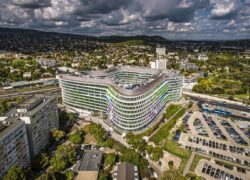
The Liberty mixed-use complex, developed by WING, continues to attract high-profile tenants, reinforcing its reputation as a premier destination for businesses. Recent leases include Zenitech Consulting Zrt. (formerly Autsoft), which has secured 1,500 square meters of office space, and the Hungarian representative office of a major international corporation, leasing an additional 2,000 square meters. These agreements bring Liberty’s occupancy rate to nearly 80%, further solidifying its position in the Hungarian real estate market.

The tenant base at Liberty is complemented by an expanding range of amenities designed to enhance the working environment. Notably, the newly established Gourmenza restaurant, which opened in September, adds to the list of premium services available to current and future occupants.

The recent leasing agreements were facilitated by CitiReal Advisors and iO Partners Hungary, highlighting the strategic appeal of the Liberty complex.

Gábor Angel, Deputy CEO responsible for WING’s office portfolio, emphasized the significance of Liberty’s growing tenant base: “We are honored that Liberty has been chosen by such prominent companies. This is a strong validation of our project’s unique position in the Hungarian market. By offering diverse services and maintaining a steadfast commitment to ESG principles, we provide an environment where tenants from any sector can thrive. We extend our gratitude to the new tenants and are confident Liberty’s innovative features and services will support their success.”

Krisztina Major, Director of Office Transactions at iO Partners Hungary, echoed these sentiments: “We are delighted to have advised on the 2,000 sqm lease agreement with an international FMCG company at Liberty. The project aligns perfectly with the tenant’s global standards for ESG compliance, architectural solutions, and employee-focused services. This collaboration strengthens Liberty’s position as a top-tier option for quality and sustainability-conscious businesses.”

Liberty is among WING’s most forward-thinking developments, integrating high-quality office spaces with a hotel, restaurants, and commercial units. The building meets the strictest sustainability standards, as evidenced by its BREEAM Excellent and Access4you Gold certifications. Tenants benefit from premium services, including a skybar, conference rooms, and seamless access to additional amenities at the adjacent Telekom Campus.

Located at the intersection of Könyves Kálmán Körút and Albert Flórián Út, Liberty offers excellent transport links, serving as a gateway to central Budapest and Liszt Ferenc International Airport.

Liberty’s construction was made possible with public funds from the Real Estate Fund sub-programme of the Baross Gábor Capital Programme, managed by the Hungarian Development Bank. These investments supported Liberty’s energy-efficient, green development, fostering increased investment activity and sustainability within the Hungarian real estate market.

As Liberty continues to attract prestigious tenants and set benchmarks for sustainability, it establishes itself as a model for mixed-use developments in Hungary. With its combination of innovative design, premium amenities, and strategic location, Liberty is poised to remain a top choice for businesses seeking a high-quality, environmentally conscious workspace.

What Does It Take to Make ESG a Reality in Real Estate?

In 2024, Environmental, Social, and Governance (ESG) considerations have become central to commercial real estate activities, driven by increasing regulatory pressures. While investors increasingly view ESG as a value-added opportunity rather than a burden, the market continues to grapple with significant challenges, says Radosław Jodko, investment expert at RRJ Group.

Is ESG Making a Real Difference?

Companies across industries are introducing ESG reporting, spurred by investor, tenant, and customer demand for sustainable practices. However, questions remain: Are these sustainability policies truly impactful, and to what extent?

Investors and stakeholders are scrutinizing companies’ operations for adherence to sustainable development principles, yet there is much work ahead to overcome persistent barriers.

Key Challenges in the ESG Landscape

1. Data Scarcity and Costly Analysis Tools

A critical hurdle is the lack of comprehensive ESG data and the high cost of analysis tools.
“Insufficient market data hinders the accurate valuation of risks associated with sustainability transitions,” explains Jodko.

New regulations, such as the Corporate Sustainability Reporting Directive (CSRD), are raising the stakes, requiring companies to adopt more robust reporting practices. Collecting and analyzing the necessary data has become a major challenge for many.

2. Decarbonization and Building Modernization

Retrofitting existing buildings to meet sustainability standards presents another significant obstacle.
“Many companies still lack the strategies or technologies to effectively reduce CO2 emissions,” Jodko points out.

The Buildings Directive adopted by the European Parliament mandates that the worst-performing non-residential buildings must undergo energy efficiency renovations by specific deadlines:
• 16% of such buildings by 2030
• 26% by 2033

By 2050, all buildings are expected to be zero-emission. However, modernizing older properties remains a costly and complex challenge, limiting their market attractiveness and increasing financial risk for owners.

3. Lack of Uniform ESG Reporting Standards

The absence of a unified ESG reporting standard adds to the complexity.
“A consistent market practice for ESG reporting is still lacking. I expect this to start taking shape by 2025,” Jodko predicts.

Without standardization, companies face difficulties in demonstrating compliance, and those failing to implement ESG practices risk restricted access to financing and reduced asset valuations.

The Role of Tenant Expectations

Tenants are increasingly factoring ESG considerations into their choices, particularly in office spaces.
“ESG aspects now play a key role in creating competitive advantages in the property market,” notes Jodko.

Under the CSRD, approximately 50,000 companies in the EU—and 3,500 in Poland—must report on their environmental and community impact, along with management standards. This includes emissions from the buildings they occupy, making landlords’ ESG compliance essential for tenants.

Failure to provide accurate data can lead to severe consequences, including criminal tax liability, equivalent to penalties for unreliable financial reporting.

Looking Ahead to 2025

To make ESG a reality in real estate, the industry must overcome these challenges:
• Develop accessible, cost-effective tools for data collection and analysis
• Establish clear, standardized reporting practices
• Accelerate modernization of older buildings to meet stringent sustainability targets

As tenants, investors, and regulators continue to prioritize ESG, companies that adapt proactively will secure a competitive edge.
“The costs of inaction are significant, driving investors and tenants to favor sustainable options. Meeting ESG expectations is not just a regulatory requirement—it’s a business imperative,” concludes Jodko.

The path to fully integrating ESG is complex, but with collective effort and innovation, the real estate sector can rise to the challenge and lead the transition to a sustainable future.

Author: Radosław Jodko, investment expert at RRJ Group

ALDI extends partnership with Supersam Katowice

ALDI, the established supermarket operator at Supersam Katowice, has extended its lease agreement, continuing a successful partnership that has already lasted nine years. This renewal underscores the enduring appeal of Supersam as a premier retail and office destination in Katowice.

Supersam, following its extensive revitalization in December 2023, continues to expand its diverse range of retail and service offerings. The extension of ALDI’s contract reflects the facility’s strong market position and ability to meet the needs of modern urban customers. By attracting and retaining key tenants like ALDI, Supersam cements its reputation as a preferred shopping destination in the region.

“We are proud that such a key partner as ALDI has decided to continue its long-term cooperation with us. This extension demonstrates the strength of our strategy for Supersam’s development, recognized by both tenants and customers. Supersam combines popular brands, affordable prices, and a convenient shopping experience, meeting the growing demand for dynamic urban retail spaces,” said Barbara Wójcik, Asset Management and Leasing Director at Globalworth.

The ALDI supermarket, located on Level -1 with an area of over 1,000 sqm, underwent partial modernization earlier this year. The updates were designed to align the store layout with the preferences of urban shoppers, focusing on convenience and efficiency.

“Our format is tailored to central urban locations where high foot traffic necessitates quick, seamless access to daily essentials. At Supersam, we offer a carefully curated assortment in a clear and efficient layout, emphasizing speed, convenience, and competitive pricing, which have become increasingly important to our customers,” said Agata Biernacka, Head of Communications at ALDI Polska.

ALDI’s decision to renew its lease reinforces its commitment to Supersam and its values of transparency and social responsibility.

“Long-term cooperation with a trusted partner like ALDI is vital for us. Their presence enhances Supersam’s reputation as a dependable, customer-centric destination,” Wójcik concluded.

C.S.CARGO expands logistics network with new facility in Northern Bohemia

C.S.CARGO is enhancing its operations in Northern Bohemia by leasing 4,200 sq m of industrial space at CTPark Kadaň. This strategic move, facilitated by Savills, strengthens the company’s logistics network in a key region close to major transport routes and the German border.

The new facility, set to be completed by summer 2025, will support C.S.CARGO’s commitment to providing efficient and high-quality logistics services across Central and Eastern Europe. “Kadaň’s strategic position near the German border and its excellent connectivity to major transport routes make it an ideal location for our expansion. The modern development meets the latest technological, operational, and sustainability standards, ensuring we can quickly begin operations to serve our clients efficiently,” said Petr Volák, CEO of C.S.CARGO a.s.

The facility at CTPark Kadaň has been specifically designed to meet C.S.CARGO’s operational needs, including dedicated spaces for storing plastic components and tires. “CTP specializes in customizing developments to our clients’ requirements. For C.S.CARGO, we reduced the building’s clear height, created dedicated outdoor areas for safe loading, and modified drive-ins and docks to optimize their operations. This partnership reflects our commitment to providing tailored solutions and enabling rapid expansion,” said Michal Přib, Senior Business Developer at CTP Czech Republic.

The new facility adheres to BREEAM sustainability standards, underlining C.S.CARGO’s dedication to environmentally responsible operations. The premises will feature energy-efficient technologies and eco-friendly operational solutions, ensuring minimal environmental impact.

Northern Bohemia is becoming a hotspot for logistics and industrial developments. “The Kadaň facility will complement C.S.CARGO’s existing network of storage facilities, supporting its operations across Central and Eastern Europe. Northern Bohemia offers extensive opportunities for companies seeking modern industrial spaces, whether for immediate lease or custom-built facilities,” said Jana Čožíková, Associate in the Industrial Agency at Savills.

Currently, 137,500 sq m of new industrial premises are under construction in the Ústí nad Labem Region, with 90,000 sq m available for lease. An additional 450,000 sq m of space has been permitted for future development, presenting significant opportunities for businesses looking to establish or expand operations in this strategically located region.

The Kadaň expansion follows C.S.CARGO’s existing operations at CTPark Liberec, further solidifying the company’s partnership with CTP and its footprint in the Czech Republic. By leveraging state-of-the-art facilities and focusing on sustainability, C.S.CARGO is poised to continue its growth as a logistics leader in Central Europe.

With its strategic positioning, customized solutions, and commitment to sustainability, the new Kadaň facility represents a significant step forward in C.S.CARGO’s mission to deliver excellence in logistics.

Bidli unveils new housing project near Poděbrady with modern flats and plots for family homes

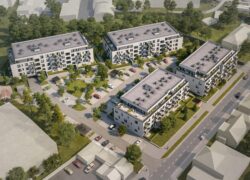
Bidli has announced its latest development project in the village of Úmyslovice, near Poděbrady and Nymburk. The project will feature six low-energy triplex houses offering a total of 18 flats and 12 plots of land for individual family home construction. Combining modern living with the tranquility of nature, the development provides easy access to urban amenities and major cities, including Prague.

The six planned three-storey houses will offer 18 energy-efficient 3-bedroom flats, each covering 85.5 m² of floor space. These duplex-style units are designed to mimic the feel of terraced houses, ensuring maximum privacy. Each unit comes with a private garden ranging from 162 to 526 m², as well as two parking spaces.

Future homeowners will have the option to personalize interiors, choosing flooring, doors, and tiles to suit their tastes. The houses, built with environmentally friendly timber construction, are designed to be both modern and sustainable.

In addition to flats, the project offers 12 fully serviced plots ranging from 903 to 1,437 m². These plots are ready for construction of two-storey family homes, with permits already secured for houses featuring a 5+ bedroom layout.

“We understand that each client has unique needs when choosing their dream home. Our plots are carefully selected for optimal orientation, and we assist with everything from obtaining building permits to designing custom interiors,” says Roman Weiser, Director of Bidli Development.

All properties in the project will incorporate energy-efficient technologies, reducing dependency on public electricity grids. Each flat will include a photovoltaic power plant for generating electricity and an air-to-air heat pump for heating and hot water. These features will ensure minimal operating costs, making the homes both economical and environmentally sustainable.

“This project meets the highest standards for modern, comfortable living. It’s perfect for families or anyone seeking a peaceful home close to nature without losing access to city conveniences,” Weiser adds.

Úmyslovice, first mentioned in the 13th century, offers a quiet setting with convenient access to larger towns and cities. Prague is just 40 minutes away, while Nymburk is reachable in 15 minutes. A bus stop only 180 meters from the development and nearby train connections provide fast and reliable transport options.

Local amenities include a kindergarten, sports ground, and grocery store, with additional facilities available in nearby Poděbrady, just eight kilometers away. Poděbrady offers schools, restaurants, shopping centers, and medical facilities, while Nymburk provides a range of indoor and outdoor sports options. The surrounding region is also popular for its natural beauty, cycling routes, and walking trails.

Bidli’s project in Úmyslovice combines modern design with sustainability and flexibility, catering to a variety of buyers. With its emphasis on environmentally friendly construction and proximity to urban amenities, the development is poised to become a desirable community for up to 30 families.

The company also offers comprehensive services to buyers, including financing assistance, architectural consulting, and customized interior solutions, ensuring a seamless journey to homeownership in this picturesque location.

front page info
LATEST NEWS