CBRE highlights hotel transaction activity and Romania’s investment outlook

CBRE reported a year of strong activity for its Hotels Central and Eastern Europe (CEE) team, advising on close to €1 billion in hotel transactions across the CEE and SEE regions, alongside around 20 operator search and selection processes. Among the most significant transactions was the sale of Hilton Prague, one of the largest single-asset hotel deals recorded in the region.

The firm’s activity also included advisory work, valuations, and operator search mandates in major regional capitals and leisure destinations, linking local opportunities with international investors and hotel brands.

According to CBRE data, Romania’s hotel market recorded 20 million overnight stays in 2024, an increase of 2% compared to the previous year. Bucharest was the main driver of growth, with overnight stays rising 8% and international arrivals up by 12%. Air traffic also supported growth, with Romanian airports handling 26 million passengers in 2024, a 6% increase year-on-year.

Leisure tourism remained resilient, with Constanța on the Black Sea coast and mountain resorts in Brașov and Prahova among the strongest performers. Hotel investment has accounted for between 4% and 8% of total real estate activity in recent years, and the proportion continues to trend upward.

Local investors remain most active, particularly in mid-sized transactions and hotel conversions. International investors tend to focus on prime assets in Bucharest and established leisure markets, often seeking branded hotels and institutional-grade properties.

With over 13 million passengers in 2024, Bucharest’s air traffic remains below that of Warsaw, Prague, and Budapest, but the capital has seen stronger relative growth, driven by limited branded hotel supply and rising international demand. New branded projects in the upscale and lifestyle categories are expected to help narrow the gap with other CEE capitals within the next three to five years.

“Romania’s hotel market is entering a new growth cycle, supported by healthy demand and a clear shift towards branded projects that raise the bar for quality,” said Iulia Szabo, Consultant, Investment Properties & Hotels, CBRE Romania. “Interest from both domestic and international investors is rising, with Bucharest leading the way and regional leisure destinations increasingly on the radar. The next few years will bring significant opportunities for those ready to invest in upgrading assets and introducing fresh concepts to the market.”

Currently, unbranded hotels dominate the Romanian market, many of which require substantial investment to meet international standards. Developers also face lengthy permitting and urban planning processes, while market liquidity remains lower than in more mature CEE countries.

Growth over the next three to five years is expected to be supported by rising international arrivals, infrastructure improvements, and the opening of new branded hotels in Bucharest and regional cities. Resort areas on the Black Sea coast and in the Carpathian Mountains are also seen as having untapped potential. CBRE is currently advising on projects in Bucharest, Brașov, and other leisure markets, including both new developments and repositioning of existing hotels.

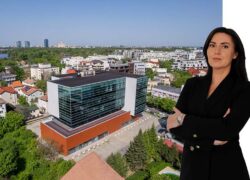
Photo: Iulia Szabo, Consultant, Investment Properties & Hotels, CBRE Romania

Construction progresses on Hila building in Brumlovka

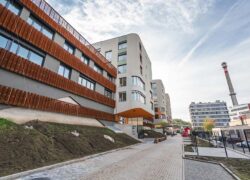
Passerinvest Group is continuing construction of the multifunctional Hila building in Prague’s Brumlovka district. The project combines office, retail, and residential space within a single complex. Work has now entered the above-ground phase, with the second floor nearing completion. A new floor is expected to be added each month, allowing the shell of the office section to be finished by the end of 2025. The fifteen-story building is scheduled for completion at the end of 2026, with rental apartments on the upper floors set to be available in the first half of 2027. Final works will include resurfacing Jemnická Street and planting 48 new trees.

According to Eduard Forejt, Director of Development and Sales at Passerinvest Group, construction is proceeding on schedule and the building is expected to be ready for occupancy by January 2027. With more than 20,000 square meters of office space, Hila is among the larger projects currently underway in Prague, where new supply remains limited. Forejt noted that demand for the building is already visible among prospective tenants.

On the eastern side of the development, two rainwater retention tanks with a combined capacity of 200 cubic meters are under construction to support irrigation of more than 50 trees around the site. The building is being equipped with heat pumps, photovoltaic systems, and a smart building management system. Additional planned features include an air ionization system, enhanced fresh air supply, and radiant ceiling systems for heating and cooling, which are expected to improve comfort and reduce operating costs. Hila is designed to meet LEED Gold certification, achieve an A-rated energy performance certificate, and comply with EU Taxonomy requirements.

The project will combine three primary functions. The ground floor will house 2,300 square meters of retail space, while floors two through eight will provide 20,200 square meters of offices. The ninth to fifteenth floors will contain 71 rental apartments ranging from one-room to four-room units, all with loggias. The development will also include 418 underground parking spaces, with charging stations for electric vehicles.

NEPI Rockcastle reports 12.1% NOI growth as portfolio surpasses €8 billion

NEPI Rockcastle N.V., Europe’s third-largest listed retail real estate company by portfolio value, reported strong results for the first half of 2025. The company’s net operating income rose by 12.1% year-on-year to €307 million, supported by acquisitions completed in 2024 and active asset management across its portfolio. This performance lifted the value of the group’s investment property portfolio to more than €8 billion for the first time in its history, with vacancy at just 1.6%.

Chief Executive Officer Rüdiger Dany said the first half of 2025 consolidated growth achieved through consistent investment in premium properties. “We also continue to add value through developments, not least in the renewable energy sector, which has the potential to become an important growth segment for the Group once the current ongoing major investments therein are completed,” he noted. He added that distributable earnings per share increased by 3.1% compared to the first half of 2024, while the company maintained a conservative loan-to-value ratio of 32.1%. According to Dany, this balance allows NEPI Rockcastle to distribute 90% of its earnings as dividends, a rate higher than most peers.

The Board declared a dividend of 27.95 euro cents per share for the first half of 2025, corresponding to a 90% payout ratio. Shareholders may elect to receive the payment as a capital repayment in cash or as a dividend out of distributable profits.

Operational metrics showed resilience in consumer spending. While footfall was largely stable, tenant sales rose 3.9% on a like-for-like basis, excluding hypermarkets, with the average basket size increasing by 9.7%. Categories such as entertainment and health and beauty recorded double-digit growth, while fashion sales edged up by 0.7%. By mid-August, the company had collected more than 99% of reported revenues for the first half of the year. The European Public Real Estate Association (EPRA) occupancy rate stood at 98.2% as of 30 June 2025.

Leasing activity remained strong, with 167,000 square metres of space signed in new leases or extensions during the period. New leases accounted for just over a quarter of this figure, including agreements with international retailers such as Chanel, Sports Direct, and Tous. Rental uplifts averaged 5.3% above indexation.

The group continued to advance development projects and renewable energy investments. About €66 million was invested in developments, photovoltaic plants, and capital expenditure in the first half of 2025. Major ongoing projects include the extension of Promenada Bucharest, scheduled to open in early 2027, and the redevelopment of Bonarka City Center in Krakow, set for completion in 2026. Refurbishment at Arena Mall in Budapest is due in 2028, while expansions are underway at Pogoria Shopping Centre in Poland. In addition, the company is progressing with large-scale photovoltaic projects in Romania, including a 54 MW plant expected to be operational by year-end and a 105 MW facility targeted for 2026.

NEPI Rockcastle maintained a solid financial position with liquidity of €1.1 billion, including €386 million in cash and €690 million in undrawn committed credit facilities. The company reported no significant debt maturities until October 2026 and secured a portfolio fair value gain of €108 million compared to year-end 2024. Fitch Ratings affirmed its investment grade at BBB+ with a stable outlook, while S&P upgraded its outlook to positive, reflecting improved credit strength.

Looking ahead, the Board revised its guidance upward, now expecting distributable earnings per share for 2025 to be 2.5–3% higher than the 60.17 euro cents reported in 2024. This outlook assumes stable trading conditions and does not account for potential disruptions from geopolitical or macroeconomic instability.

INTREAL reports mid-year growth in assets under administration

IntReal International Real Estate Kapitalverwaltungsgesellschaft mbH (INTREAL) reported an increase in assets under administration (AuA) during the first half of 2025, reaching approximately €68.7 billion by the end of June. This represents growth of €2.1 billion, or 3.2 percent, compared to the end of 2024.

The number of real estate funds under management rose from 325 to 330, and the number of properties grew by 34 to a total of 2,807. The company also expanded its workforce, employing 545 people as of 30 June 2025, after six new hires in the second quarter. Recruitment focused in particular on automation and artificial intelligence expertise.

Camille Dufieux, Managing Director of INTREAL, said: “Our growth regained momentum during the first six months of 2025 when compared to the same period last year. During the first half of 2024, our AuA increased by 483 million euros while increasing by approximately 2.1 billion euros during the first half of 2025. In other words: we grew approximately four times faster during the first half of 2025 than we did during the prior-year period. I therefore take an optimistic view for the second half of the year. We are aware of several new funds being prepared – even if their number still falls short of the number we saw prior to the interest rate reversal.”

The Partner Funds division remains the company’s largest business unit, managing around €36.6 billion across 160 funds, which accounts for over 53 percent of total AuA. The division added €229 million in the second quarter and €407 million in the first half of the year. It also onboarded Hauck Aufhäuser Lampe Privatbank (HAL REIM) as a new fund partner, with one institutional real estate fund already launched.

The AIFM Services division, which provides administrative support to other licensed AIF management companies, was the main driver of growth in the second quarter. AuA in this division rose by €758.6 million, reaching €32.1 billion. This segment now represents 47 percent of INTREAL’s total AuA. Services offered by the unit include reporting, management accounting, fund accounting, equity investment management, and risk management.

Commenting on the division’s performance, Managing Director Malte Priester said: “The fact that many AIFMs require more flexibility and an efficient back office has resulted in an increasing demand for our services. In this context, our strong position in the areas of digitisation and automation plays a crucial role in the decision to collaborate with us.”

Oil prices slip below $70 amid oversupply concerns and geopolitical talks

Oil prices dropped below USD 70 per barrel in early August after briefly touching a five-week high at the end of July, according to the Oil Market Monthly Report – August 2025 published by Kamco Invest. The report states that Brent crude and WTI both fell to around USD 66 per barrel as markets reacted to speculation that the United States may soften its stance toward Russia, easing fears of fresh sanctions that could disrupt supply.

Earlier strength in oil prices was attributed to expectations of tighter restrictions on Russian and Iranian exports, but the outlook shifted as negotiations signaled possible changes in U.S.–Russia relations.

The report highlights that additional downward pressure came from weaker U.S. economic data, fresh production increases announced by OPEC+, and ongoing doubts about the pace of demand recovery in China. However, renewed speculation about potential U.S. Federal Reserve interest rate cuts provided some support for crude prices.

OPEC+ has pledged further hikes in production, raising concerns of a growing supply glut. Refiners and traders are also monitoring demand signals in Asia, particularly in China, where sluggish economic momentum continues to weigh on oil consumption forecasts.

Despite near-term headwinds, Kamco Invest notes that any substantial policy shift by major central banks or unforeseen supply disruptions could quickly alter the outlook (Kamco Invest, Aug. 2025). The report concludes that oil market volatility is expected to persist in the coming months as geopolitical and economic developments continue to shape supply and demand dynamics.

Source: Kamco Invest, Aug. 2025

Logicor to open public green park at logistics complex in Mysłowice

Logicor is developing Serenity Park, a 40,000 m² green space within its logistics center in Mysłowice, with completion expected in October 2025. The project, fully funded by the company, will combine ecological, educational, and recreational uses, making it the first initiative of its kind in Poland. According to Ernest Ziółkowski, Head of Project Management CEE at Logicor Poland, the park reflects the company’s strategy of creating shared spaces that serve both employees and the local community. Planned features include walking and cycling paths, community seating areas, children’s play zones, a scenic viewpoint, educational boards on local flora and fauna, and habitats designed to support wildlife. Located near the S1 expressway and A4 motorway, Serenity Park will be integrated into the Logicor Mysłowice complex, which provides A-class warehouse facilities. The company emphasizes that the initiative demonstrates how logistics development can incorporate sustainable design and community-oriented infrastructure alongside its industrial operations.

Integrated Investment Plans: Opportunities and Challenges for Residential Construction

Integrated Investment Plans (ZPI), replacing the special housing law, could streamline residential construction through urban planning agreements, offering developers clearer pathways for projects. However, challenges remain in negotiating with municipalities, navigating administrative complexity, and ensuring market adoption.

Karol Dzięcioł, member of the management board of Develia 
Integrated Investment Plans (ZPI) can significantly unlock the potential of land previously excluded from investment opportunities. However, this will largely depend on the decisions of local authorities and the resolutions adopted on their basis. ZPI must also be consistent with the General Plan of the Municipality in terms of land use, which in practice may limit their use. Although the formula looks promising for larger projects, the wider application of Integrated Investment Plans may also be hampered by the organizational complexity of the process, as well as issues related to the implementation of material and financial outlays resulting from the urban development agreement and, at a later stage, the financing of the investment.

At present, it is difficult to estimate the real impact of the new regulations, as detailed standards and relevant regulations are still lacking. However, we are observing considerable interest in the ZPI formula within the industry and are ourselves considering investments using this formula. Our dedicated team, Develia Land Development, is responsible for preparing projects based on the new procedures.

In terms of the availability of investment land, the new regulations create an opportunity for a relatively quick change of land use, particularly in the case of residential projects. Thanks to public consultations and negotiations of the urban planning agreement with the city, it is possible to reach a compromise on the planned development. As ZPI applicants, developers can provide valuable buildings to the municipality as part of their projects, participating in the development of technical and social infrastructure.

Dariusz Skalski, Development Manager, BPI Real Estate Poland
The introduction of Integrated Investment Plans is a step towards streamlining and increasing the transparency of planning processes. Although the IPAs are intended to replace the special housing law, their use will depend on the openness of local governments to entering into urban development agreements with developers. This tool has the potential to enable the implementation of projects in areas where there are no local development plans, but the practice of applying the regulations by municipalities will be crucial.

We are looking at the possibility of implementing projects under the ZPI procedure, especially in locations that require a flexible planning approach. The main opportunities are the possibility of co-shaping urban space and investing in local infrastructure in a coordinated manner. However, the length of procedures and the lack of a uniform approach by local governments may pose a challenge.

Joanna Chojecka, Sales and Marketing Director for Warsaw and Wrocław at Robyg Group
The introduction of Integrated Investment Plans (ZPI) as a tool replacing the so-called lex deweloper, i.e. the special housing law, may have a significant impact on the housing market in Poland. IPIs have the potential to become one of the key planning tools for developers, but their effective use will depend on cooperation with local authorities and the ability to engage in urban dialogue. Many companies will likely consider this option for large, strategic projects, especially where there are no current local zoning plans and where the municipality is willing to cooperate.

ZPI is a tool that enables the implementation of housing investments based on a local plan adopted by the municipality, created at the request of the investor and negotiated as part of an urban planning agreement. This means an increased role for spatial planning. Investments will be better aligned with municipal spatial policies, which promotes sustainable development but may also lengthen the decision-making process. ZPI introduce the need for cooperation with local governments. Unlike the special act, which allowed for faster proceedings, ZPI require dialogue and consensus, which may be more difficult in municipalities with a reluctant attitude towards new investments.

Investors will have to participate in the costs of public infrastructure, such as roads and schools, which increases investment costs but also improves the quality of the environment. ZPIs have the potential to become an important tool for development companies, especially in locations where there are no current local zoning plans. Where local plans are lacking or outdated, ZPIs can enable faster development opportunities.
Larger development projects, such as housing estates with more than 100 units, can be better implemented under ZPI, especially in cooperation with the city. This is particularly true in larger cities, where local governments are better prepared administratively to conduct the planning procedure in this mode. However, it should be remembered that this process is more formalized than the special act. It includes negotiations, consultations, preparation of a draft plan, and its adoption by the municipal council.
Concluding urban development agreements may be attractive, provided that the municipality is open to cooperation and has the resources to carry out the process efficiently. The costs associated with the implementation of infrastructure are predictable and can be spread over time. The processing time is shorter than in the traditional process of adopting a local zoning plan, which is one of the main expectations of investors.

Tomasz Czuchra, Vice-President of the Management Board of Waryński S.A. Holding Group
The introduction of Integrated Investment Plans is a step in the right direction. Any new tool that allows for a faster and more flexible response to the needs of dynamically developing cities is very much needed today. In many cases, the existing local spatial development plans (MPZP) do not keep pace with reality, do not reflect current development trends, and do not respond to local needs.

Until now, decisions on building conditions were often the only solution in the absence of a plan, but as practice has shown, they did not always guarantee urban coherence. The special housing law (Lex Developer) made it possible to change the function of areas that had ceased to fulfill their previous role. However, its procedures were long and often complex.

We hope that the ZPI, developed jointly with local governments, will allow for more effective and efficient planning of new investments. We are open to implementing projects in this mode, although we are aware of the challenges, especially those related to the time-consuming nature of the process and the possibility of increased costs during the negotiation of urban planning agreements.

On the other hand, ZPI clarifies the issue of developers’ participation in the costs of infrastructure construction, both technical and social, which was previously vague. In the context of increasing difficulties in finding available land for residential development in cities, we see the IPI as a realistic and necessary tool that can fill a gap in the current spatial planning system.

Damian Tomasik, President of the Management Board, Alter Investment
The introduction of Integrated Investment Plans (ZPI) is a step towards streamlining the investment process, but its effectiveness depends on the practical application of regulations at the local level. In theory, ZPI can replace the special housing law, but they require efficient cooperation with local governments and the willingness of the administration to conclude urban planning agreements.

We are considering investments in this mode, especially where there are no Local Spatial Development Plans in force. The main opportunity is to increase the predictability of the investment process, while the time-consuming nature and inconsistent approach of municipalities to the new regulations are obstacles.

Joanna Launer-Kubik, Head of Formal Investment Services at Archicom
Integrated Investment Plans are a tool that may significantly influence the dynamics of residential construction in Poland in the next few years. Their main advantage is the possibility of implementing projects in areas without local spatial development plans, which opens up access to new, attractive locations. Thanks to the urban planning agreement, investors also gain greater influence over the shaping of the environment, including road infrastructure and the availability of services, which promotes the creation of coherent, functional spaces.
ZPI may become a widely used tool, provided that municipalities have the appropriate competences and resources, and the process of negotiating urban planning agreements remains predictable. The key challenge at present is the lack of experience on the part of local governments and the risk of overly high expectations regarding investor participation in infrastructure costs. It is important that this mechanism is based on partnership and that financial requirements do not reduce the profitability of projects. Otherwise, this tool may lose its potential.

From our perspective, ZPI offers a significant opportunity to accelerate investment processes, but it requires time to refine practices and standardize the interpretation of regulations. We are considering investments in this mode, provided that municipalities apply the solutions in a transparent and partnership-based manner.

Photo: Ceglana Park-Develia
Source: dompress.pl

SES begins construction of S-PARK Varaždin on former Varteks site

SES Spar European Shopping Centers has started construction of S-PARK Varaždin, a new retail park on the former site of the “Varteks” textile factory. The project, located on Zagrebačka ulica near the city center, involves demolishing the existing structures before work begins on the new development later this year. Completion is scheduled for 2027.

The 11,500-square-meter retail park will feature 12 shops, restaurants with outdoor seating, and a range of services. A key component will be the region’s first INTERSPAR hypermarket. SES is investing more than EUR 28 million in the development, which will also include 430 parking spaces, e-charging stations, and bicycle facilities.

The project has been designed to incorporate elements of the site’s industrial past. Portions of the original brick architecture will be retained and combined with modern construction. Sustainability measures include LED lighting, infrastructure for e-mobility, and provisions for photovoltaic systems.

According to SES CEO Christoph Andexlinger, the project will make use of the historic site while providing new shopping and service options for the city and surrounding areas. Varaždin’s deputy mayor, Miroslav Marković, welcomed the investment, emphasizing its potential for job creation and improved local services.

With a population of around 46,000, Varaždin is regarded as one of Croatia’s stronger regional economies. SES expects the new retail park to serve both the city and nearby residential districts, complementing local amenities such as the football stadium and swimming pool.

SES has been active in Croatia since 2009, operating the King Cross Zagreb shopping mall since 2018. The company manages 31 shopping locations across Central and Eastern Europe, with a total leasable area exceeding 855,000 square meters. The S-PARK Varaždin project marks a further step in SES’s regional expansion.

CEVA Logistics opens international Road Transport Center in Alashankou, China

CEVA Logistics has opened a new International Road Transport (TIR) Center in Alashankou, China. The 4,300 square meter facility, located in the local eCommerce Industrial Park within the Comprehensive Bonded Zone, is the company’s first TIR center dedicated to consolidating international road transport shipments for both imports and exports. The facility includes 1,000 square meters specifically equipped for handling dangerous goods.

Alashankou, situated on the border with Kazakhstan, is a key gateway to Central Asia, the Caucasus, and Europe. The location offers preferential customs conditions, expedited clearance procedures, and duty-free storage, which together support the flow of cross-border trade and the growth of e-commerce and manufacturing clusters in the region.

The new center will be used to consolidate less-than-truckload (LTL) shipments, enabling multiple shippers to share cargo space and reduce costs on long-haul routes such as those between Europe and China. According to CEVA, combining the TIR system with the new facility is expected to shorten transit times by nearly 30 percent and reduce transportation costs by around 15 percent.

The center is designed to strengthen CEVA’s international road transport network, connecting approximately 30 cities across 15 countries in Central Asia, the Caucasus, and Europe. Kelvin Tang, Vice President of Road and Rail Transportation for Greater China and Global Leader of Multimodal and Cross-Border Transportation at CEVA Logistics, described the facility as a step toward building more reliable Euro-Asian supply chains, noting that the TIR model and regional policies allow for faster and more transparent deliveries.

Colliers: Retail and Residential Fuel Romania’s Land Market in 2025

A recent Colliers research report, supplemented by insights from a CIJ EUROPE Q&A with Sînziana Oprea, Director of Land Agency at Colliers Romania, highlights renewed activity in the country’s land market. After a subdued 2024 shaped by political uncertainty and cautious investor sentiment, the first half of 2025 has seen momentum return. Land acquisitions for commercial real estate projects (excluding industrial) approached €200 million, slightly below last year’s volume, yet market sentiment points to stronger activity in the second half of the year and a recovery trajectory into 2026.

Retail and residential plots remain the most active segments. Developers and retail chains are expanding into small and medium-sized cities where land values are moderate but transaction volumes are high. In Bucharest and other major cities, residential land continues to draw attention from established developers, despite slower economic growth and recent fiscal changes.

In the capital’s northern metropolitan area, investors are increasingly targeting large tracts of land for housing estates or villa compounds, reflecting a trend toward lower-density living. Retail demand is similarly expanding, with interest from both established developers and new entrants seeking proximity-based projects such as retail parks, built-to-suit formats, and shopping galleries.

“The land market is being driven by retail operators and major developers, complemented by new buyers and growing interest in niche projects such as medical, education, or data centres,” said Sînziana Oprea, Director of Land Agency at Colliers Romania. “This diversity shows the market is maturing and confirming its long-term potential.”

Demand for office development plots remains weak, with many sites being repurposed for residential or student housing projects, better aligned with current market realities and flexible work patterns.

Meanwhile, industrial land is experiencing rising demand, particularly near major cities and along new infrastructure corridors. Developers are securing plots for logistics parks and manufacturing facilities, driven by regional supply chain realignments. Colliers notes this trend could position Romania as an attractive hub for industrial investment, with spillover benefits for local economies.

The changing fiscal environment is shaping buyer strategies. Speaking to CIJ EUROPE, Oprea noted that some developers are pausing expansion plans, while others see opportunities to negotiate better deals. “Buyers are more cautious on pricing and are seeking transaction structures that minimize risks. However, prime, well-located plots with permits remain highly competitive,” she said.

Due diligence now focuses heavily on permitting risks. Delays in securing zoning and building approvals have created a divergent pricing trend, with permitted plots appreciating while non-permitted sites are losing value.

Foreign investors are also reshaping their strategies. Supply chain realignments and Romania’s infrastructure upgrades are spurring new interest, particularly in retail and logistics. “Competition for prime land often drives up prices by 5–10% when multiple developers target the same site,” Oprea explained.

With real estate projects typically requiring at least two years to deliver, many investors are positioning themselves for the expected economic recovery in 2027–2028. “Developers with long-term strategies see current uncertainty as an opportunity,” said Oprea. “Lower competition allows them to secure strategic sites now at attractive prices, ensuring that by the time projects are delivered, the market will be in recovery.”

Colliers also highlights a steady pipeline of new plots coming onto the market, often from investors refocusing on core businesses. While uneven pricing persists—urbanised, well-located plots command premiums while poorly connected sites see price drops—the outlook remains moderately optimistic.

“As the cycle of projects conceived now will align with the anticipated economic rebound in 2027–2028, the land market should remain dynamic,” Oprea concluded.

front page info
LATEST NEWS