Czech government considers widening scope of housing support law

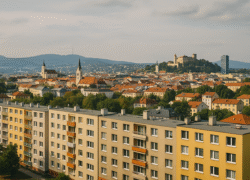
The Czech government is set to deliberate on expanding eligibility under the Housing Support Act. Currently, households earning up to 1.43 times the subsistence or “minimum living standard” qualify for assistance. A proposal now under review aims to raise that threshold to 1.6 times to extend support to working families, pensioners, and people with disabilities.

According to government documents, the proposed adjustment would bring relief to vulnerable groups—such as single working mothers in lodging houses, retirees receiving pensions just above CZK 10,000, and individuals receiving third-degree disability pensions—who are currently excluded by the tighter limit . Experts associated with the “For Housing” initiative argue the current coefficient excludes up to one-third of those in housing distress, a scenario the adjustment seeks to mitigate.

However, the timing of the debate presents challenges. With early October parliamentary elections approaching and no sessions scheduled over the summer—and with the chamber undergoing renovations—debate before then is unlikely. Discussions may resume in September if parliament convenes.

For those concerned about affordability in a broader policy context, the OECD has previously noted that households with “residual incomes” below 1.6 times the subsistence threshold are particularly vulnerable to housing cost burdens, signaling that this proposed limit aligns with international definitions of housing need.

Real estate regains investor interest amid lower rates and strong developer valuations

The Polish real estate sector is drawing renewed investor attention, supported by record developer stock valuations, falling interest rates, and growing demand for mortgage loans. Analysts note that while optimism is returning to the market, investors are also increasingly considering opportunities outside major cities, with regional and holiday destinations gaining prominence.

At the end of July, the WIG Real Estate Index reached 5,666 points, its highest level since November 2007. The milestone reflects investor confidence in the sector’s growth potential and the profitability of residential developers.

“We are seeing a classic example of the inverse correlation between interest rates and the housing market. The July interest rate cut of 25 basis points to 5% was the catalyst for the current growth. Each 0.5 percentage point reduction increases the creditworthiness of Poles by about 5%, which directly translates into demand. Although today, it must be emphasized, cash buyers are the most important players on the market,” said Radosław Jodko, investment expert at RRJ Group.

Shares of major developers have also risen. Dom Development reached PLN 240 per share, Murapol remained at PLN 40, and Atal traded at PLN 55. mBank’s brokerage unit recently raised its recommendations for the four largest developers, forecasting growth of 11–15% over the next year. With WIBOR falling below 5% for the first time in three years, real estate investments are increasingly seen as more attractive than bank deposits.

“With interest rates falling, real estate is becoming an even more attractive form of capital investment. The market expects further rate cuts amid falling inflation, which makes investing in an apartment for rent, for example, much more profitable than keeping money in a deposit account,” Jodko added.

New investment directions are also emerging. “What is clearly visible today and worth taking into account is that more and more investors are paying attention to holiday locations, but not only those popular so far, such as the seaside or the mountains. Masuria is attracting more and more attention, where the market for holiday properties and investment apartments is just developing,” said Jodko.

He added that Masuria currently seems to be one of the most promising investment destinations in Poland: “With a well-planned investment, the return on rent can reach up to 8–10% per annum, which is very attractive given the current interest rates.”

Despite strong momentum, experts caution about longer-term demographic trends. Analysts at Alior Bank estimate that demand for housing in cities may start to plateau by 2028. Jodko noted, however, that other factors could sustain demand: “Demographics are a major economic challenge across Europe. But broader trends are influencing the real estate market, such as migration, with people increasingly looking for less populated areas, away from the heat so characteristic of the Mediterranean basin. And, of course, we are currently seeing rapid growth in the institutional rental market, which may mean that demand will remain high for longer than demographic data alone would suggest.”

Looking ahead, Jodko believes both traditional urban apartments and resort properties offer opportunities: “For long-term investors, I recommend apartments in large cities with good locations and access to public transport. For those looking for higher returns and willing to make a greater commitment, holiday apartments in Masuria or in the mountains may be an interesting alternative. However, it is crucial to conduct a thorough analysis of the location and rental potential.”

Generali Deutschland to relocate headquarters to Munich’s Werksviertel district

Generali Deutschland has acquired the Momenturm project in Munich’s Werksviertel district from Art-Invest Real Estate and will establish its new corporate headquarters there. The transaction was executed by Generali Real Estate S.p.A. on behalf of Generali Deutschland, which will continue to develop the property into a modern, energy-efficient office complex.

The new headquarters will consolidate Generali’s operations in Munich and Augsburg, bringing together approximately 1,500 employees under one roof by the end of 2028. The Momenturm project involves redeveloping the existing office building at Rosenheimer Straße 139, which Art-Invest purchased in 2019. The current 11,000 square metres of rental space will be expanded to around 28,000 square metres. In addition to accommodating Generali’s headquarters, the building will also provide office space for other tenants.

Standing 60 metres high, the building has been designed by Munich-based OSA Ochs Schmidhuber Architekten. From the fifth floor upwards, tenants will have unobstructed views of both the city skyline and the Alps.

Generali Real Estate highlighted the acquisition as a strategic addition to its German portfolio. “The office space will provide innovative working environments while meeting high sustainability standards,” said Lukas Jeckel, Head of Region Central Northern Europe at Generali Real Estate.

Art-Invest Real Estate emphasised that the project reflects its vision of future-oriented office buildings. “Momenturm was conceived as more than just a workplace. We are pleased that Generali Deutschland has chosen it as its new headquarters,” said Tobias Wilhelm, Managing Director of Art-Invest Real Estate in Munich.

The purchase price was not disclosed. Art-Invest Real Estate was advised by GSK Stockmann, while Poellath acted as legal advisor to Generali Deutschland.

Czech industrial market slows despite strong development pipeline

The Czech industrial real estate market showed slower demand in the second quarter of 2025, with both gross and net take-up falling well below long-term averages. According to Colliers’ quarterly survey, gross demand reached 304,900 m², 34% below the five-year average, while net demand (excluding renegotiations) stood at 169,600 m², 40% below the same benchmark.

Despite weaker leasing activity, the market continued to grow, with 131,600 m² of new space delivered in the quarter. Although this represents a 32% increase year-on-year, it remains 30% under the five-year average. Since January, total stock has expanded by 344,700 m², bringing the market to 12.7 million m², equivalent to 5% year-on-year growth.

While completions were modest, construction activity is at a record level. Around 1.7 million m² is currently being built across 171 logistics parks, more than half of which is scheduled for delivery this year. Colliers notes, however, that some projects could be delayed into 2026 if demand continues to soften.

Prague and the Central Bohemian Region account for 26% of current construction, followed by Moravian-Silesian with 19% and Karlovy Vary with 18%. The latter is largely driven by a 200,000 m² automated warehouse project in Cheb, the largest of its kind in the country.

The vacancy rate increased to 4% in Q2, equivalent to 511,000 m², up 1.3 percentage points year-on-year. When including vacant space in ongoing developments, available capacity is nearly double. More than half of all space under construction—approximately 958,300 m²—remains without tenants, with many projects tailored to end-user requirements.

Tenant activity in H1 2025 was shaped by a major renegotiation in the logistics sector, which accounted for 62% of gross demand. Manufacturing represented 23%, distribution 6%, and other sectors the remaining 9%.

Prime rents remained stable at €7.00–7.50 per m² per month, the highest in Central and Eastern Europe. However, landlords are increasingly under pressure as tenant bargaining power grows, particularly in regions such as Plzeň and Moravia-Silesia, where rents are beginning to adjust downward.

Colliers points to structural issues constraining the Czech market. Lengthy permitting processes, higher labour costs, and administrative barriers are limiting competitiveness compared with neighbouring countries. These conditions are prompting some investors, particularly from the Asia-Pacific region, to redirect expansion toward markets such as Poland, Hungary, and Serbia, where incentives and operating conditions are more favourable.

“While the Czech economy is expanding, the industrial property sector is in a phase of recalibration. Demand has slowed, but the impact on rents remains limited. The development pipeline is strong, though future growth will depend on how structural challenges are addressed,” said Josef Stanko, Director of Market Research at Colliers.

Source: Colliers Czech Republic

Newgate Investment acquires Fabryka Park Katowice

TDJ Estate, advised by Colliers, has completed the sale of Fabryka Park Katowice to Newgate Investment (NGI). The transaction was also supported by REALM, BatiPlus, and the law firm KNP.

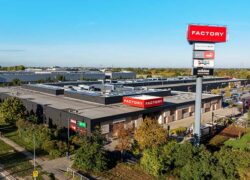
Fabryka Park Katowice is a retail park with 8,900 square metres of leasable space, located on Armii Krajowej Street in the southern part of the city. Opened in December 2023, the property was fully leased from the outset and is anchored by tenants from convenience, electronics, interior design, and drugstore categories. Brands present include Jysk, Woolworth, Rossmann, Media Expert, Action, TEDi, and T-Mobile. The centre also provides around 260 parking spaces for customers.

The site has potential for expansion, with land available for an additional 19,400 square metres of leasable area. Its location on national road No. 81, close to both bus and train stations, offers strong transport links. The catchment area includes more than 150,000 residents within a 15-minute drive, with the broader Upper Silesia region providing access to a population of over 2 million.

Representatives from both sides of the transaction noted the property’s strong performance and potential for growth. TDJ Estate highlighted the successful commercialisation of the project, while Newgate Investment emphasised the retail park’s tenant mix and expansion opportunities, as well as the strategic importance of the Silesian region.

According to Colliers, the deal reflects continued investor interest in retail assets in Poland. “The retail property market remains one of the most attractive in Central and Eastern Europe. Fabryka Park Katowice is a modern, fully leased retail park with strong tenants and clear growth potential, fitting well into NGI’s expanding portfolio,” said Marek Paczuski, Senior Director in Colliers’ Investment Advisory Department.

Revetas appointed to oversee $4 billion US real estate portfolio repositioning

Revetas Group, a global real estate firm specializing in special situations, has been appointed to manage the repositioning of a $4.0 billion US property portfolio owned by a German investment manager representing several German pension funds and institutional investors.

The mandate follows a strategic review and aims to adapt the portfolio to current market conditions. Revetas will assume management of the US-based management company overseeing the assets, bringing governance, restructuring, and capital markets expertise to the process.

The portfolio comprises life sciences, multifamily housing, student accommodation, partially completed developments, and offices across several major US cities. Revetas’ role includes evaluating individual strategies for each property, ranging from repositioning and refinancing to selective sales and capital restructuring, while ensuring continuity for tenants, lenders, and partners.

“Revetas has been mandated as an independent fiduciary to maximize value for all investors in the portfolio,” said Eric Assimakopoulos, Founding Partner of Revetas Group. “By combining investors’ platform knowledge with Revetas’ operational toolkit, we can identify the most suitable solutions for each asset.”

To support the process, Revetas has partnered with Marty Burger, Founder and CEO of Infinite Global Real Estate Partners and former CEO of Silverstein Properties. Burger will work alongside Revetas in leading the turnaround program.

Burger commented that the current environment, shaped by post-pandemic repricing, presents opportunities for institutions to address legacy challenges while repositioning portfolios for long-term growth.

Revetas, founded in 2002, has managed more than $6 billion in real estate investments across Europe and the US, with a focus on value-add, distressed, and special situation strategies. Recent mandates include €600 million in institutional capital from South Korea for investments in the US and Europe.

Polish warehouse market shows signs of stabilisation in H1 2025

Poland’s industrial and logistics real estate sector maintained steady growth in the first half of 2025, with total stock increasing by 7% year-on-year to 36.03 million square metres. Despite this expansion, developer activity slowed, with new completions falling by 30% year-on-year to 1.15 million square metres, and new construction starts declining by 26% to 1.47 million square metres.

Leasing activity reflected a changing market dynamic. Gross take-up reached 2.95 million square metres, up 10% year-on-year, but the growth was largely driven by renegotiations rather than new leases. Net take-up, covering new leases and expansions only, dropped by 17% to 1.34 million square metres. Analysts note that many companies have opted to renew contracts signed during the 2020–2021 demand peak rather than pursue relocation or expansion in the current economic climate.

The highest leasing activity was recorded in Mazowieckie, Śląskie, and Dolnośląskie voivodships, with Wrocław standing out for strong demand from e-commerce occupiers. Vacancy rates remained stable at 8.2% nationwide, with regional disparities: Lubuskie and Świętokrzyskie reported double-digit vacancy rates, while core markets such as Dolnośląskie, Mazowieckie, and Łódzkie accounted for the largest volumes of available space.

Investment activity strengthened, with transaction volumes in the warehouse segment reaching €694 million, a 135% increase year-on-year. The sector accounted for 40% of total commercial real estate investment, supported by a growing number of sale-and-leaseback transactions. The largest deal in the first half involved Realty Income’s €253.5 million acquisition of two facilities from window manufacturer Eko-Okna.

Rental rates remained broadly stable, with big-box facilities ranging from €3.6 to €6.5 per square metre per month. Prime locations such as Warsaw and Kraków continued to command higher rates, often above €6.0. Incentives such as rent-free periods and fit-out contributions were common, particularly for larger tenants, while service charges rose in response to higher energy and labour costs.

AXI IMMO’s latest report highlights that the Polish warehouse sector is entering a phase of selection and stabilisation. Analysts point to a maturing market characterised by a higher share of renegotiations, a preference for pre-let and build-to-suit projects over speculative development, and a growing emphasis on ESG criteria in leasing decisions. Despite macroeconomic uncertainties, Poland remains one of Europe’s most active logistics markets, supported by strong fundamentals and continuing investor demand.

Source: AXI IMMO

WING’s Polish subsidiary concludes major residential transaction

WING’s Polish subsidiary has concluded one of the largest transactions in Poland’s residential rental market, with the planned sale of more than half of Resi4Rent’s portfolio to Vantage Development, part of the TAG Immobilien Group.

According to the preliminary agreement signed on 16 August, Vantage will acquire 18 residential projects comprising 5,322 rental units across Warsaw, Cracow, Gdansk, Wroclaw, Lodz and Poznan. The transaction is valued at PLN 2,405 million (EUR 565 million) and remains subject to approval from the Polish antimonopoly authority.

Resi4Rent, founded in 2018, is a rental housing platform developed and co-owned by Echo Investment – majority-owned by WING – alongside a global investment fund advised by Griffin Capital Partners. The company currently operates nearly 10,000 units and is Poland’s largest institutional residential rental provider. Following the transaction, Echo Investment will continue to develop and expand the remaining portfolio, which includes approximately 1,700 operational units, 2,200 under construction and more than 600 in planning.

The portfolio being transferred is almost fully leased, with occupancy close to 100%. The deal reflects a yield of 6.3%, highlighting continued investor demand for rental housing in Poland’s largest cities. Echo Investment stated that proceeds from the sale will be directed toward financing new development projects.

Resi4Rent’s business model covers the full investment cycle, from planning and design through construction, property management and leasing. The platform provides furnished, fully equipped units that currently accommodate around 18,000 residents.

For WING, one of Hungary’s largest real estate development and investment companies, the sale further consolidates its regional presence. Through its residential brand LIVING, the company has delivered more than 2,000 apartments in Budapest and is pursuing additional residential projects in Hungary and internationally.

Poland: Job offers for Science graduates continue to grow, while overall market remains steady

The Job Offer Barometer, compiled by the University of Information Technology and Management in Rzeszów together with the Office for Investment and Economic Cycles, recorded a slight increase in July to 258.5 points from 255.6 in June. This marks the first rise after three consecutive months of decline, although overall job offer numbers have remained stable for the past 18 months.

Compared to July 2024, the volume of job advertisements was largely unchanged. Notable growth was recorded in vacancies for science graduates, continuing an eight-month upward trend. The increase is driven primarily by renewed recruitment in IT roles and the construction sector. In contrast, offers for manual workers have declined for four months, while job availability in the social sciences and services sectors has remained steady.

Regionally, the largest month-on-month increases in online job offers were seen in the Lubelskie, Podkarpackie, and Zachodniopomorskie provinces. Declines occurred only in Lubuskie and Warmińsko-Mazurskie. Several provinces, including Podkarpackie, Kujawsko-Pomorskie, Lubelskie, Podlaskie, and Wielkopolskie, reported more vacancies than a year earlier, while Lubuskie and Śląskie posted year-on-year decreases.

In professions linked to social sciences and law, stable demand continues for call centre staff, financiers, HR specialists, and banking professionals. Marketing roles have seen modest growth over the past six months, while vacancies in real estate, legal, and office positions have been falling for several months. Legal roles, in particular, have recorded five consecutive months of decline.

Among science and engineering roles, all categories except traditional engineering posted increases in July. Programming positions have grown for nine straight months following earlier steep declines, though the trend is concentrated among a small number of large employers. R&D roles and occupational health and safety positions also saw gains, with OHS vacancies remaining high by historical standards.

In services, the education sector registered its largest single monthly increase in several years. Media industry vacancies rose slightly but remain on a long-term downward trend. Tourism job offers fell slightly but remain comparatively high, while logistics saw its fifth consecutive monthly decline, extending a three-year downward trend.

The registered unemployment rate, excluding seasonal workers, rose in June by 0.3 percentage points to 5.4% — the highest level and largest monthly change in several years.

Source: BIEC

NEAR Living residential project to deliver over 200 apartments near Karlín and Palmovka

Developer Fidurock has announced plans for NEAR Living, a residential project located between the districts of Karlín and Palmovka in Prague. The development, which is scheduled for completion in late 2027, will provide 212 apartments, 101 underground parking spaces, commercial units, and a 425 m² community garden.

The apartments will range from studios to two-bedroom units. According to the developer, the buildings will achieve an EPC energy rating of B, with features including underfloor heating and a heat recovery ventilation system. The design was prepared by Ian Bryan Architects, and sales will be handled by Luxent real estate agency.

Construction is set to begin in September 2025. The structural phase is expected to be completed in the fourth quarter of 2026, with final approval scheduled for the third quarter of 2027.

The project is located within reach of Karlín, Palmovka, and Holešovice, in an area that has seen significant redevelopment in recent years. Local amenities in the vicinity include shops, restaurants, schools, healthcare facilities, and cultural venues.

Further details on pricing, unit layouts, and the number of apartments available will be released on October 1, 2025.

front page info
LATEST NEWS