Galeria Katowicka Develops Accessibility Programme for Diverse Users

Galeria Katowicka is continuing to expand its accessibility initiatives, focusing on improving conditions for visitors with different needs in a high-traffic retail environment. Located at a major transport hub, the centre experiences high levels of noise and activity, which has influenced the development of measures aimed at reducing sensory overload and improving comfort.

The centre is building on its existing “Katowicka for Autism” initiative, one of the earlier programmes of this type in Poland’s retail sector. The project has been extended into a broader framework known as “Spectrum of Understanding”, introduced by APSYS across its managed properties. The programme is designed to support a wide range of users, including neurodivergent individuals, people with disabilities, older visitors and caregivers.

One of the key elements is a designated quiet room, intended to provide a space where visitors can reduce exposure to noise and other stimuli. The room is scheduled for further upgrades, supported by specialists in neurodiversity.

“Noise, light, announcements and heavy footfall can lead to sensory overload and reduce the comfort of using the retail space. The quiet room is a response to these challenges,” says Dorota Bartosiak.

“Public spaces still lack places conducive to quiet and regeneration, yet these have a significant impact on well-being,” adds Joanna Bylinka.

Additional measures include adjustments in selected retail units, where lighting and sound levels can be modified. The centre also provides a sensory guide and access to noise-cancelling headphones at the information desk.

Quiet hours have been introduced on a regular basis. During these periods, background music is turned off across the centre to create a more suitable environment for visitors sensitive to stimuli.

Staff training is also part of the programme, with sessions aimed at improving awareness of neurodiversity and supporting more effective communication with customers.

“April is Autism Awareness Month and a good opportunity to remind ourselves that inclusivity is now an integral part of responsible retail centre management,” says Anna Szczerkowska.

The initiatives are intended to improve the overall visitor experience and may serve as a reference for similar solutions in other retail locations.

Ada Walentek Appointed Head of Asset Management at Nhood for Poland and Romania

Ada Walentek has been appointed Head of Asset Management at Nhood for Poland and Romania. She will oversee asset management activities across both markets, including operational, financial, legal and technical aspects. She continues to serve as Head of Market for Nhood Services Poland.

In her new role, Walentek will be responsible for implementing the company’s asset management approach across the two countries, with a focus on performance, tenant relations and long-term value.

“The Polish and Romanian commercial property markets exhibit a similar investor structure and asset profile, as well as comparable operational challenges,” says Ada Walentek.

Walentek joined Nhood in 2021. Prior to that, she worked at Ceetrus Polska, where she held management roles, including managing director. Her earlier experience includes positions at Plaza Centers Management, Neinver and Klepierre.

She has been active in the real estate sector since 2001 and holds degrees from the University of Łódź and the Warsaw School of Management and Marketing, as well as a property agent licence.

MLP Group Signs Lease for New Warehouse Project in Gorzów Wielkopolski

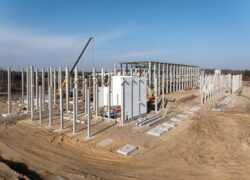
MLP Group has signed a long-term lease agreement with a logistics operator for a new warehouse development at MLP Gorzów Wielkopolski. The project will be delivered as a single-tenant facility, with completion scheduled for the fourth quarter of 2026.

The tenant will occupy approximately 9,500 sq m, including around 8,800 sq m of warehouse space and 650 sq m of office and staff areas. The building will be designed to support logistics and courier operations.

“The signing of this lease confirms the attractiveness of MLP Gorzów Wielkopolski for logistics operators,” says Agnieszka Góźdź of MLP Group.

MLP Gorzów Wielkopolski is being developed as a logistics park with a planned total area of approximately 56,700 sq m. The project will include multiple buildings and is intended to meet current environmental standards, with certification planned under BREEAM New Construction at the Excellent level.

The development will incorporate energy and infrastructure solutions such as heat pumps, electric vehicle charging points and facilities for cyclists.

The site is located in the western part of Gorzów Wielkopolski, near the S3 expressway, providing access to domestic and international transport routes. It is situated approximately 53 km from the German border and around 135 km from Berlin, making it suitable for cross-border logistics operations.

HAVI Becomes First Tenant at Panattoni Business Park Kladno

Logistics company HAVI has taken over space at Panattoni Business Park Kladno, becoming the first tenant in the industrial scheme developed on the former Poldi Kladno site.

HAVI will occupy approximately 10,000 sq m in the project, where it will operate a facility focused on the storage and distribution of chilled and frozen goods. The move expands the company’s logistics capacity in the region and supports its distribution network.

“This new distribution center represents a significant milestone in HAVI’s continued development and the strengthening of our logistics network throughout the region,” says František Houška.

The development is being delivered by Panattoni, with investment from RSJ Group. The site is being redeveloped as a logistics and manufacturing park, with two planned buildings totalling around 88,500 sq m.

HAVI has leased space in Hall B, which will provide approximately 32,900 sq m in total. The building is designed to meet modern environmental and technical standards and is targeting a BREEAM New Construction rating at the Excellent level. The design includes energy management systems, heat recovery and rainwater reuse, as well as rooftop photovoltaic panels.

“HAVI’s decision to locate its logistics operations at Panattoni Business Park Kladno confirms our ability to deliver tailored industrial space,” says Jan Andrejco.

The project represents a redevelopment of a former industrial brownfield site, with elements of the original structures reused during construction. A second building, Hall A, with a planned area of approximately 55,600 sq m, is scheduled for future development.

“Handing over the keys to our first tenant marks an important step in the redevelopment of the former Poldi Kladno site,” says Marcel Kolesár.

The site is located around 30 km from Prague, with access to major road connections including the D5, D6 and D7 motorways. Rail access is also available nearby, with further infrastructure improvements planned in the area.

The development forms part of a broader trend of industrial regeneration, where former manufacturing sites are being repurposed for logistics and modern production uses.

German Economy Faces Another Test as Industrial Pressure and Weak Demand Persist

German companies are entering 2026 in a fragile position, as a combination of external shocks and structural challenges continues to weigh on the economy. After several years of limited or negative growth, the outlook remains subdued, with only modest expansion expected in the near term.

“The resilience of companies will be put to the test once again in 2026,” says Dietmar Gerke, Head of SRM Germany, Austria and Switzerland at Atradius Germany, pointing to the impact of geopolitical tensions and ongoing supply chain disruptions.

Recent forecasts from leading economic institutes suggest growth will remain below one percent, reflecting continued weakness in industrial output and cautious business sentiment. While easing interest rates were expected to support a recovery, global developments have complicated that trajectory.

Tensions affecting trade routes, particularly in the Red Sea, have increased transport costs and extended delivery times, adding pressure to production processes that rely on timely inputs. At the same time, dependence on external suppliers for key raw materials continues to expose manufacturers to volatility. “Against the backdrop of the supply chain issues that have persisted for years, companies’ efforts to diversify their trade routes are now clearly evident,” says Gerke.

Germany’s industrial base remains under pressure. Energy-intensive sectors such as chemicals, steel and metals continue to face higher cost levels compared to international competitors. This has weighed on margins and investment decisions, while also contributing to a broader slowdown in manufacturing activity. Other sectors, including automotive and mechanical engineering, are dealing with weaker demand, trade barriers and rising competition.

Inflation has stabilised compared with earlier peaks, but cost pressures linked to energy and logistics remain. “Depending on how long the conflict persists, price pressures could increase further, while growth prospects may weaken,” Gerke notes.

Households are also contributing to the cautious outlook. Rising costs for energy and everyday goods have affected purchasing power, while uncertainty has led many consumers to delay major spending decisions. “Consumer sentiment has already deteriorated significantly. Many households are saving more and postponing or cancelling larger purchases,” he adds.

From an investment perspective, the current environment presents a mixed picture. While subdued growth and cost pressures are affecting corporate performance, the need to strengthen supply chains and improve efficiency is supporting demand in areas such as logistics, infrastructure and industrial modernisation.

Overall, Germany’s economy is entering another year characterised more by adjustment than recovery. Although its industrial base remains significant, the combination of external risks and domestic constraints suggests that growth will continue to be gradual and uneven, with resilience remaining a key factor for businesses and investors.

Zagreb Steps Into Autonomous Transport With Launch of Driverless Taxi Service

A new phase in urban mobility is beginning in Zagreb, where Croatia-based company Verne has started operating a driverless taxi service. The initiative marks one of the first real-world introductions of this type of transport in Europe, moving beyond testing into everyday use, albeit on a limited scale.

The service has been developed in cooperation with international partners, combining local operations with established ride-hailing platforms and autonomous driving technology. After several years of preparation, the rollout signals a shift from controlled trials to practical deployment, with vehicles now carrying passengers in selected parts of the city.

For now, the operation remains gradual. The service is being introduced step by step, with clear geographic limits and continued supervision as the system adapts to real traffic conditions. This measured approach reflects a broader pattern across Europe, where new mobility solutions are being introduced cautiously, with an emphasis on safety and public acceptance.

The project is linked to Croatia’s growing reputation in advanced automotive and technology development, particularly through its connection to the Rimac Group. Public funding and European support programmes have also played a role in enabling the initiative, highlighting the strategic importance placed on innovation in transport.

Compared with developments in the United States and China, where autonomous vehicles are already operating at a larger scale, Europe has taken a slower path. Regulatory complexity and stricter safety requirements have delayed wider adoption, but they have also created a more controlled environment for testing new systems.

Zagreb’s experience suggests that smaller cities may become key starting points for this type of technology. By introducing services in a more manageable setting, companies can gather operational data and refine their systems before expanding into larger and more complex markets.

The longer-term outlook will depend on how quickly these services can grow beyond their initial footprint. Wider adoption will require not only technological reliability but also clear regulatory frameworks and viable business models. For now, the launch in Zagreb represents an early step in what is expected to be a gradual transformation of urban transport across Europe.

Airports Drive Real Estate Expansion as Prague Emerges Among Europe’s Fast-Growing Hubs

The recovery of air travel across Europe is increasingly influencing real estate activity, particularly in sectors linked to tourism and transport infrastructure. Passenger traffic reached record levels in 2025, reinforcing the role of airports not only as transport nodes but also as catalysts for development in surrounding areas.

According to data from ACI Europe, European airports handled around 2.6 billion passengers in 2025, marking a year-on-year increase of approximately 4.4 percent and confirming a return to steady growth following the post-pandemic rebound  . Growth has been driven primarily by international travel, which continues to account for the majority of passenger volumes across the region  .

Within this context, secondary airports in Central and Eastern Europe have recorded some of the strongest increases. Passenger traffic at Václav Havel Airport Prague has grown at a double-digit pace, placing it alongside other expanding regional hubs such as Kraków and Budapest. Industry data shows that airports in this size category have been among the fastest-growing segments, supported by rising leisure travel and improved connectivity  .

The expansion of air traffic is translating into increased interest from investors, particularly in sectors directly linked to passenger flows. Hotels, retail schemes and food and beverage operators are expanding near major transport hubs, while logistics and distribution facilities are also benefiting from improved connectivity. This pattern reflects a broader trend in which airport infrastructure supports wider economic activity beyond aviation.

At the same time, major European hubs are pursuing long-term capacity growth, although progress varies. Projects such as the expansion of Heathrow Airport and the continued development of Istanbul Airport highlight the scale of investment required to accommodate future demand. Istanbul, in particular, is expected to play an increasingly important role due to its position between Europe and Asia.

Airport operators across Europe are also investing in infrastructure upgrades. The Spanish operator Aena has outlined a multi-billion euro investment programme aimed at expanding capacity in key markets, reflecting strong passenger growth and rising demand for air travel.

The link between aviation and real estate is becoming more pronounced as passenger numbers increase. Higher volumes of travellers support demand for accommodation, retail and services, while also reinforcing the need for logistics and office space in areas with strong transport connections. This is particularly visible around regional airports, where growth is opening new locations for development that were previously overlooked.

Looking ahead, industry forecasts point to continued expansion in European air traffic, with moderate annual growth expected over the next decade. While this trajectory is subject to economic and geopolitical conditions, the current trend suggests that airports will remain an important factor shaping real estate markets, especially in cities where capacity is expanding and connectivity is improving.

Sources: Colliers and CIJ EUROPE Analysis Team

Skanska Agrees Lease for Future Norwegian Headquarters in Oslo

Skanska has signed a ten-year lease for approximately 7,500 square metres of office space at Christian Krohgs gate 2 in Oslo, where it plans to establish its new Norwegian headquarters. The building is being developed through a joint venture between Skanska and Entra.

Following the agreement, the property is around 35 percent pre-let. Skanska is expected to move into the new premises in the fourth quarter of 2029.

The project is located in the Vaterland area, close to Oslo Central Station and well connected to public transport. The existing structure will be refurbished and extended, with the completed development expected to provide around 21,200 square metres of office space. The design aims to combine modern workspace requirements with elements reflecting the site’s industrial background.

The development is being delivered with environmental targets in place, including certification under BREEAM-NOR at the Very Good level. Plans also include the use of a fossil-free construction process, reduced emissions from building materials and measures to limit waste and increase reuse. The completed building is intended to meet high energy performance standards.

Panattoni Secures €22.5 Million Financing for ZREW Facility in Łódź

Panattoni has obtained €22.5 million in financing from Bank Pekao for the development of a build-to-suit manufacturing facility in Łódź for ZREW Transformatory.

The project will include a production hall along with office and staff areas, designed to accommodate the assembly and testing of high-power transformers. The facility is expected to support an increase in the company’s production capacity and create approximately 200 jobs.

The building will incorporate technical specifications required for heavy industrial use, including increased floor load capacity and specialised foundations for large-scale equipment. The production space will also feature variable ceiling heights to meet operational requirements.

Construction is scheduled to be completed by the end of summer 2026, with the start of production planned for later in the year.

The development will be delivered in line with sustainability standards and is expected to undergo BREEAM certification at the Excellent level.

Romania’s Private Credit Market Remains Niche as Investors Turn Selective Across Europe

Europe’s private credit market is entering a more disciplined phase after a prolonged period of expansion, with Romania reflecting the broader shift while maintaining its own structural characteristics. Rising borrowing costs, slower transaction activity and heightened geopolitical uncertainty have collectively reshaped investor behaviour, pushing capital providers towards more selective and risk-aware strategies.

Across Europe, private credit has remained an established asset class, but the conditions that supported rapid growth have weakened. Tighter monetary policy has kept financing costs elevated, while reduced deal volumes have limited exit opportunities and constrained liquidity. At the same time, renewed geopolitical tensions, including the conflict involving Iran, have added inflationary pressure and reinforced a reassessment of risk across both public and private markets.

Within this environment, Romania presents a distinct case. According to Andrei Drosu, Director Capital Markets at iO Partners, private credit remains relatively underdeveloped locally. He notes that while several players have attempted to establish a presence, their impact has been limited, leaving the segment uncommon in the Romanian market.

This is largely due to the continued strength of the banking sector. Drosu explains that banks remain highly active and competitive in providing real estate financing, offering pricing that is often more attractive than private credit structures. He points to large-scale transactions in 2025, where developers such as AFI Europe and Iulius Group secured loans ranging between €300 million and €550 million, highlighting the capacity of traditional lenders to support major projects.

In this context, private credit in Romania is not positioned as a direct substitute for bank financing. Instead, it functions as a complementary solution, typically used in situations where bank lending is constrained or unable to address specific structuring needs.

Investor appetite for private credit is nevertheless evolving. Valentin Neagu, Managing Director at Crosspoint Real Estate, observes that interest in the asset class is gradually increasing, although growth remains moderate due to ongoing economic and geopolitical uncertainty. He notes a clear shift in investor behaviour, with capital deployment now focused on stronger downside protection, tighter collateral requirements and greater visibility on exit strategies.

Neagu also highlights the growing role of domestic capital in Romania, which is now more active than at any point in the past decade. This trend, combined with increasing intra-regional investment flows across Central and Eastern Europe, has helped strengthen market resilience, even as international investors adopt a more cautious and selective approach.

Higher interest rates and reduced liquidity have further influenced decision-making across private markets. According to Neagu, investors are showing a preference for familiar markets and are taking longer to complete transactions. While international capital has become more selective, domestic investors are increasingly filling the gap, particularly in mid-market deals where local expertise and execution speed provide a competitive advantage.

Reduced liquidity in exit markets is also creating opportunities for private credit. Assets that cannot be sold at acceptable pricing levels still require financing, opening the door for structured capital solutions that were less visible during periods of higher liquidity.

Across the region, geopolitical developments are playing a more prominent role in shaping investment decisions. Neagu points to the growing influence of political events, including elections, on real estate activity across neighbouring markets, underscoring the interconnected nature of capital flows within CEE.

This shift towards selectivity is echoed in broader research. Vlad Saftoiu, Head of Research at Cushman & Wakefield Echinox, notes that investor appetite has moved away from broad risk-taking towards more disciplined, data-driven underwriting. While fundraising volumes have increased globally, capital is becoming more concentrated among larger managers, with a stronger emphasis on protecting portfolios against uncertainty.

Saftoiu adds that volatile interest rates and uneven liquidity have heightened sensitivity to exit and refinancing risks, pushing investors towards assets with strong income visibility and resilient cash flows. In Romania and across the wider CEE region, this has translated into a clear preference for quality, with secondary assets facing widening pricing gaps.

Looking ahead to the second half of 2026, market participants expect this trend to continue. Neagu anticipates that private credit activity will concentrate on clearly defined segments. Prime office assets in Bucharest with strong occupancy, industrial and logistics properties supported by stable income, and well-performing retail schemes in regional cities are expected to attract capital. At the same time, opportunities are emerging in value-add and opportunistic strategies, including under-leased office assets, redevelopment projects and structured residential financing.

Saftoiu similarly expects investors to prioritise assets with durable cash flows and lower capital requirements, with housing and industrial sectors continuing to draw strong interest at a European level.

Despite these developments, private credit in Romania remains closely tied to the availability and competitiveness of bank financing. As long as traditional lenders continue to provide attractive terms and large-scale funding, alternative financing is likely to remain a targeted tool rather than a mainstream solution.

For investors, the current environment signals a transition rather than a contraction. Private credit continues to play a role in bridging financing gaps and supporting complex transactions, but success increasingly depends on disciplined capital deployment, careful risk assessment and the ability to navigate a market shaped by both economic and geopolitical uncertainty.

© 2026 cij.world

front page info
LATEST NEWS