Poland: Leading Economic Indicator Edges Lower as Order Intake Remains Weak

The Leading Economic Climate Indicator (WWK), which signals expected economic trends in the coming months, declined by 0.6 points in February 2026 compared with January. The drop was modest relative to the gains recorded in previous months and does not interrupt the broader upward trend. However, weak inflows of new orders in the industrial manufacturing sector continue to weigh on the outlook.

Out of the eight components that make up the indicator, only one, the WIG stock exchange index, recorded a noticeable improvement. Four components remained broadly unchanged, while three deteriorated compared with the previous month.

The most persistent weakness remains the limited growth in new orders for manufacturing companies. Order backlogs have been shrinking for nearly two years, particularly among small and medium-sized enterprises. Larger companies have generally shown greater resilience, while producers of transport equipment are among the few segments reporting improvement. Analysts link the subdued order environment to slower economic activity in Germany and ongoing geopolitical uncertainty.

The limited inflow of new business is reflected in corporate finances. Since autumn 2025, the share of companies reporting a worsening financial position has exceeded those reporting improvement by around ten percentage points.

Business sentiment also failed to improve in February. Although January saw a temporary rise in optimism, this was not sustained as companies reassessed the economic environment.

Money supply data show that the real value of the M3 aggregate declined in January 2026, mainly due to lower deposits held by non-financial corporations. Economists note that a reduction in money supply at the start of the year is a recurring seasonal pattern.

On the capital markets, positive sentiment has continued to dominate trading on the Warsaw Stock Exchange for nearly three years and remained in place in February. However, structural challenges persist, including a limited number of new listings. In 2025, only three companies debuted on the exchange, while 15 were delisted. The market also continues to be characterised by the significant weight of large state-controlled enterprises.

Source: BIEC
Redkom Development Starts Construction of Świderek Retail Park in Otwock

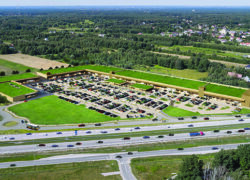
Redkom Development has commenced construction of Świderek Retail Park in Otwock, a new retail scheme located in the Warsaw metropolitan area. The project will deliver more than 23,000 sqm of gross leasable area across approximately 40 units.

The tenant mix will include a food anchor operated by Lidl, alongside local and convenience operators such as bakery Wanda, butcher and delicatessen Kiszeczka, and Żabka. The retail park will also host fashion brands including HalfPrice, New Yorker, Sinsay and Worldbox, as well as footwear retailers e-obuwie and CCC. Jewellery tenants Yes and Apart are also planned.

Home and interior brands will include Agata Meble, JYSK and Dr Materac. Discount operators Pepco, TEDi and Action are expected to join the scheme, while Rossmann will provide drugstore and personal care products. Martes Sport will cover sporting goods.

Leisure and service components will include an Xtreme Fitness club and a children’s sports and education facility operated by Xtreme Kids. The food and beverage offer is set to comprise Italian restaurant Semolino, Asian concept Viet Point and a drive-through restaurant.

The retail park is being developed along the S17 Warsaw–Lublin expressway at Andrzeja Sołtana Street, near a Circle K service station. The location provides road access for residents of Warsaw’s Wawer district as well as nearby municipalities including Józefów, Otwock, Karczew and Kołbiel.

Architecturally, the scheme is designed with references to the regional Świdermajer style and will incorporate green roofs. The developer has indicated that the project is targeting BREEAM certification.

Mallson Polska is acting as strategic advisor and is responsible for the commercialisation strategy. The architectural design has been prepared by BM Architekci, while PHUB ŁUCZ-BUD has been appointed as general contractor.

Świderek Retail Park is scheduled for completion and opening in the fourth quarter of 2026.

Family Offices Prioritise Residential and Direct Investments as Real Estate Exposure Remains Elevated

Real estate continues to hold a central position in the portfolios of family offices, despite geopolitical uncertainty, regulatory pressures and ongoing structural shifts across European markets. A recent webinar held as part of the “Macro Matters – The KINGSTONE Real Estate View” series highlighted that more than half of family office wealth remains allocated to property, with a strong emphasis on direct ownership and residential assets.

During the discussion, industry representatives examined current allocation strategies, risk management considerations and structuring approaches in a changing macroeconomic environment. “Family offices operate within a stress field of macroeconomic changes and structural mega trends. What matters is how these factors are translated into a viable long-term allocation strategy,” said Maximilian Radert, Head of Product Development & Research at KINGSTONE Real Estate.

According to findings presented from the KINGSTONE Family Office Real Estate Report 2025, based on interviews with 32 family offices in the DACH region, around 80 percent of real estate investments are made directly rather than through fund structures. Dr. Tim Schomberg, CEO & Co-Founder of KINGSTONE Real Estate, described this as reflecting a broader mindset: “Many family offices see real estate not just as an investment product but as an entrepreneurial stance. Being in control and exerting influence plays a key role.”

Participants confirmed that maintaining direct oversight of assets remains a priority. Direct ownership allows for closer control over management decisions and strategic direction, particularly in domestic markets where investors feel they can leverage local knowledge and networks.

Residential real estate continues to represent the largest allocation within portfolios, with multi-family housing accounting for the biggest share. Office assets remain part of the mix but are subject to more selective screening amid structural shifts in workplace demand. Several speakers indicated that current market conditions are creating opportunities to increase residential exposure over the medium term, particularly where pricing adjustments have improved entry levels.

Real estate’s primary role within portfolios was described as stabilising, with capital preservation and steady performance taking precedence over opportunistic strategies. While selective higher-yield investments are considered, they are typically positioned as complementary rather than core allocations. Operational asset classes such as hotels or care facilities currently play a limited role in the strategies discussed.

Geopolitical tensions and regulatory intervention, particularly in the housing sector, are influencing risk assessments. Investors are factoring in international conflicts, domestic regulation and potential changes in statutory frameworks. However, these considerations have not led to a fundamental shift in strategy. Instead, participants emphasised disciplined underwriting and conservative scenario planning to ensure investments remain viable under varying regulatory conditions.

Long-term structural drivers, including demographic change, decarbonisation requirements and evolving work patterns, were also cited as key elements shaping allocation decisions. These factors are increasingly integrated into acquisition criteria and asset management strategies.

Taxation and structuring considerations remain central to decision-making. Attention was drawn to the expected ruling by Germany’s Federal Constitutional Court on inheritance tax, although no legislative change is anticipated before 2027 at the earliest. The current valuation environment, however, is seen as offering strategic flexibility for asset transfers and structuring, particularly in the real estate segment.

In terms of performance expectations, most family offices are targeting annual returns in the range of four to six percent. Safety-focused investors prioritise capital preservation, while others pursue higher returns through more growth-oriented positioning. As Schomberg noted, “Either approach is legitimate as long as it is consistently implemented.”

Looking ahead, most family offices plan a measured increase in their real estate exposure over the next year. Direct acquisitions remain in focus, with investors seeking to capitalise on the current phase of the market cycle through selective, carefully structured transactions, particularly in Germany.

Two-speed office market in Slovakia sharpens focus on asset quality and obsolescence risk in 2026

Slovakia’s office sector is entering a more clearly divided phase, with modern prime buildings continuing to capture the strongest tenant interest while older properties face a more demanding leasing environment. As the market moves through 2026, the performance gap between top-tier and secondary offices is becoming a central theme for landlords and investors.

Recent market data from Bratislava shows that occupier activity remains heavily focused on newer, high-quality buildings. Companies are showing a clear preference for offices that offer strong technical standards, efficient layouts and credible environmental credentials. This concentration of demand has reinforced the position of prime schemes, particularly in the capital’s core business locations.

At the same time, the flow of new space remains relatively limited. Development activity is subdued compared with earlier cycles, and the pipeline of upcoming completions is modest. Many of the prime projects currently under construction have already secured a substantial share of their future tenants. The constrained availability of new, top-quality space is supporting rental levels at the upper end of the market. Prime headline rents in Bratislava reached around €21 per sq m per month by late 2025 and are expected to edge higher during 2026 if supply remains tight.

Conditions are more challenging for older office buildings. Secondary assets, especially those with weaker technical performance or higher operating costs, are experiencing longer leasing periods and a greater need to offer incentives to attract occupiers. While well-maintained mid-tier buildings can still compete in certain locations, ageing stock without meaningful upgrades is gradually losing ground as tenants become more selective.

Environmental performance is increasingly reinforcing this divide. A significant portion of Bratislava’s office inventory now carries green certification, and occupiers are placing greater emphasis on energy efficiency and workplace quality when evaluating space. Buildings that do not meet these expectations risk seeing their competitive position weaken unless owners invest in modernisation.

The Slovak office market is no longer moving uniformly across all asset types. Liquidity and tenant demand are increasingly concentrated in modern, well-located properties, while older buildings face rising pressure to reposition. For investors, this means underwriting assumptions must pay closer attention to capital expenditure requirements and potential leasing risk in secondary stock.

With prime rents holding firm and the development pipeline relatively thin, tenants have fewer reasons to relocate unless a clear improvement in quality is available. This dynamic continues to favour the best-performing buildings and raises the competitive bar for the rest of the market.

Looking ahead, obsolescence risk is set to become a more prominent strategic issue for owners of ageing offices in Slovakia. Refurbishment programmes, energy upgrades and amenity improvements are likely to move higher on landlord agendas, and in some cases broader repurposing strategies may come into focus. In 2026, success in the Slovak office market will depend less on overall market momentum and more on the individual quality and future readiness of each asset.

Source: CIJ.World Research & Analysis Team

DIW Economic Barometer Rises Above Neutral Level in February

The economic barometer of the German Institute for Economic Research (DIW Berlin) increased to 101.6 points in February, marking a rise of nearly seven points compared with January. The reading moves above the neutral 100-point threshold for the first time in almost three years, signalling a return to average growth conditions in the German economy.

“The signs that Germany will find its way out of economic stagnation this year are becoming stronger,” said Geraldine Dany-Knedlik, Head of Economic Forecasting at DIW. “In particular, fiscal policy measures are increasingly having an effect and should support overall demand in the remainder of the year.”

Sentiment among businesses and households has improved in recent weeks, although uncertainty continues to weigh on the recovery outlook. DIW noted that it remains unclear how quickly allocated public funds will translate into tangible investments and added value. Potential delays in planning, approval and implementation could weaken short-term economic effects. External risks also persist, including ongoing trade policy uncertainty linked to US tariff developments, which continue to affect Germany’s export-oriented industries.

Industrial indicators show early signs of stabilisation. Order intake has increased recently, while the business climate improved in February according to ifo surveys. The Purchasing Managers’ Index (PMI) for German manufacturing rose above the 50-point expansion threshold for the first time in nearly four years. However, production growth remains subdued, reflecting weak global demand and ongoing structural adjustments in sectors such as automotive and chemicals.

“There are signs of a recovery in industry, but the development remains fragile for the time being,” said DIW economic expert Laura Pagenhardt. “While we are seeing initial signs of recovery, the ongoing uncertainty surrounding domestic and international economic conditions is likely to continue to dampen private investment in particular.”

The services sector has also shown improvement. Business expectations have strengthened, according to ifo data, and the services PMI continued to rise in February. DIW links this trend partly to a modest improvement in consumer confidence, suggesting a gradual return in household spending. A stabilising labour market is also contributing to the more positive outlook.

“The long-awaited upswing should now slowly become a reality,” said economic expert Guido Baldi. “For sustained long-term growth, it is now crucial that the German government’s substantial financial resources stimulate concrete investments and that economic policy reform efforts progress rapidly.”

Retail assets outside Bucharest led Romanian investment market in 2025

Retail properties located outside Bucharest accounted for the largest share of Romania’s commercial real estate investment volume in 2025, representing nearly 40% of total transactions, according to the Romania Marketbeat Investment H2 2025 report. Office buildings in Bucharest ranked second, with a 30% share.

Among the retail assets transacted during the year were Focsani Mall and Shopping City Suceava, alongside a portfolio of seven retail parks totaling approximately 32,000 sqm of gross leasable area in Slobozia, Focsani, Ramnicu Sarat, Targu Secuiesc, Sebes, Fagaras and Gheorgheni. Other completed deals included Winmarkt Cluj-Napoca and Tulcea, La Cocoș Ploiești, Module Shopping Center Târgoviște and Joy Retail Park Calafat. The combined value of retail transactions reached around €200 million.

The UK-based group M Core was the most active buyer during the year, expanding its footprint in Romania and becoming the country’s fourth-largest retail property owner.

In the office sector, all recorded transactions took place in Bucharest. Ten office buildings changed ownership, totaling nearly 70,000 sqm, with a combined value of approximately €155 million. Notable deals included Equilibrium I and Ethos House in the Floreasca-Barbu Văcărescu area, as well as Victoria Center in the CBD.

Although occupier demand for industrial and logistics space reached record levels in 2025, the segment was less visible on the investment side. Transaction volumes in this sector declined from nearly €300 million in 2024 to about €45 million in 2025, contributing to the overall market slowdown.

Total commercial real estate investment volume in Romania reached approximately €514 million in 2025, representing a 31% year-on-year decrease and the second-lowest annual result since 2013. The absence of large-ticket transactions was a key factor, with the biggest deals closing in the €50-60 million range.

Among the largest transactions were the strip mall portfolio sold by MAS RE and Prime Kapital, the Equilibrium I office building sold by Skanska, the IRIDE office platform in Pipera, Focsani Mall and Shopping City Suceava.

Cushman & Wakefield Echinox advised on three of the five largest transactions of the year and provided consultancy on 10 deals totaling €190 million. The portfolio included shopping centres, a hotel in Mamaia, office buildings, a logistics park near Bucharest and high-street retail units.

Cristi Moga, Head of Capital Markets at Cushman & Wakefield Echinox, said: “2025 was a year marked by a high activity levels and interest across all property sectors despite the lower transaction volume compared with previous years and to other markets in the region. 2026 has started on an optimistic note, with investors already allocating around €100 million to office buildings in Bucharest and Cluj-Napoca. The macroeconomic environment stabilization, along with improving occupancy rates, infrastructure development and better financing conditions are creating the premises for a growth year, with higher volumes across all segments.”

Across Central and Eastern Europe, investment volumes in income-generating real estate assets reached nearly €11.8 billion in 2025, an increase of 33% compared to 2024. Poland and the Czech Republic accounted for almost 75% of the regional total, while Romania contributed 4.4%, ranking fifth among the seven analysed markets.

Prime yields remained broadly stable throughout 2025. The only notable movement was a 25-basis-point compression for high-street retail assets on Calea Victoriei, where yields reached 7.00%. Prime yields for office buildings and shopping centres were estimated at 7.25%, while industrial assets stood at 7.50%.

Photo: Cristi Moga, Head of Capital Markets at Cushman & Wakefield Echinox

Family offices maintain strong focus on residential and direct real estate investments

Family offices continue to allocate a significant share of capital to real estate, with a clear preference for direct investments and residential assets, according to a recent KINGSTONE Real Estate webinar focused on family office strategies in the current market environment.

More than half of family office wealth remains invested in property, and around 80% of these holdings are structured as direct investments rather than via funds. The findings are based on the KINGSTONE Family Office Real Estate Report 2025, which surveyed 32 family offices across the DACH region.

Participants in the discussion noted that many family offices view real estate ownership as part of an entrepreneurial investment approach, favouring direct control over assets and asset management. This preference continues to shape allocation strategies despite geopolitical uncertainty and regulatory pressures.

Residential assets lead allocations

Residential property remains the dominant segment. Multi-family housing accounts for the largest share of allocations at 37.5%, followed by office assets at 25%. While offices continue to be assessed selectively, residential assets are gaining further attention, supported by perceived entry opportunities in the current market cycle.

Investors generally position real estate as a stabilising component within broader portfolios, prioritising capital preservation and steady performance. Opportunistic strategies are used selectively rather than as a primary focus. Operational real estate sectors such as hotels and care facilities currently play a limited role in most family office strategies discussed.

Risk awareness shaping decisions

Family offices are increasingly factoring geopolitical developments and regulatory risks into their investment frameworks, particularly in relation to the housing market. However, these considerations have not triggered a fundamental shift in allocation strategy.

Structural trends—including demographic change, decarbonisation requirements and evolving workplace models, are also influencing long-term investment planning.

Tax and structuring remain key considerations

The discussion highlighted the importance of fiscal planning. Market participants are monitoring the expected inheritance tax ruling by Germany’s Federal Constitutional Court, although legal changes are not anticipated before 2027. In the meantime, advisors see continued opportunities for asset structuring and transfers within real estate portfolios.

Moderate expansion expected

Return expectations among family offices typically fall in the 4-6% range, depending on risk appetite. Most investors indicated plans to moderately increase their real estate exposure over the next 12 months, with Germany remaining a primary target market. Demand for direct investments is reported to be particularly strong as investors seek selective acquisitions in the current phase of the cycle.

Czech household debt climbs to CZK 4.05 trillion in 2025

Household debt in the Czech Republic continued to grow in 2025, rising by 12 percent year-on-year to CZK 4.05 trillion, marking the fastest increase since 2021. The figures come from the Banking and Non-Banking Client Information Registers operated by CRIF (Czech Credit Bureau).

The expansion was driven primarily by housing-related borrowing. Mortgage and building-savings loans reached CZK 3.37 trillion at the end of the fourth quarter of 2025, representing a 12.7 percent annual increase. Consumer lending also grew, though at a slower pace, rising by 9.4 percent to CZK 675.9 billion.

Despite the overall increase in borrowing volumes, the number of clients with housing loans continued to decline slightly. According to the Banking Register, the total fell by about 7,800 year-on-year, a drop of less than one percent. Compared with five years ago, the number of housing borrowers is lower by nearly 60,000, even as the total volume of long-term housing debt has expanded by roughly CZK 1.2 trillion over the same period.

The data also point to a gradual rise in credit risk. The volume of non-performing household debt increased by 7.5 percent year-on-year to CZK 35.2 billion. Within this, overdue housing debt—defined as payments more than 90 days past due, reached CZK 4.9 billion, up six percent compared with 2024. The pace of deterioration in housing arrears was roughly double the rate recorded a year earlier.

Non-performing consumer debt exceeded CZK 30 billion after rising by about eight percent year-on-year, although the growth rate slowed compared with the previous year. The sharpest increase in problematic short-term borrowing was recorded among borrowers aged 35 to 44, where the volume of overdue consumer debt climbed by 12 percent to CZK 8.2 billion. This age cohort now accounts for more than one quarter of total non-performing consumer debt, with roughly 43,600 clients in default at the end of the year.

Overall, the 2025 figures suggest that Czech households are taking on more debt, largely linked to the housing market recovery, while credit quality is beginning to show early signs of pressure in selected segments.

Source: CTK

Czech housing prices rose 12% in 2025 as transaction activity and mortgage demand strengthened

Residential property prices in the Czech Republic continued to climb in 2025, even as buyer activity picked up. The average price of flats and family houses increased by around 12 percent year-on-year, while the number of housing transactions grew by approximately 11 percent, according to data from the Flat Zone real estate analytics platform and the Czech Banking Association.

The figures suggest that demand remained resilient despite higher affordability pressures. Interest in home purchases was also reflected in the mortgage market, where lending volumes expanded by 41 percent year-on-year, making 2025 the second-strongest year on record. The number of newly issued mortgages rose by about 15 percent.

Regional disparities remain pronounced. Older apartments in Prague and Brno continue to command roughly double the prices seen in other major Czech cities, while homes in smaller towns with fewer than 10,000 residents can be priced at roughly one-third of levels in the two largest metropolitan areas.

According to Flat Zone Managing Director Milan Roček, improving affordability will depend heavily on accelerating construction in high-demand locations. He noted that the Czech housing market continues to suffer from insufficient development in Prague, Brno and other regional centres where long-term demand remains strongest.

In absolute terms, approximately 6,500 more residential properties were sold in 2025 compared with the previous year. Demand for older apartments was particularly strong in Prague and the Ústí nad Labem region, while new-build units saw the highest interest in the capital, South Moravia and the Central Bohemian region.

Among property types, older apartments recorded the fastest price growth, rising by about 18 percent year-on-year. Prices of new-build units increased by roughly 9 percent in first sales and around 13 percent in subsequent transactions, while family houses posted average price growth of approximately 14 percent.

The Czech housing stock remains heavily weighted toward privately owned apartments. Last year, nearly two million flats and more than 2.1 million family houses were in private ownership nationwide, with a significant share of apartments located in panel and brick residential buildings concentrated in major urban areas.

The rental market also showed notable movement. Outside Prague, more than 18,500 apartments were offered for long-term lease, an increase of nearly 7,000 units compared with 2024. In contrast, the number of long-term rental listings in the capital declined slightly to around 5,000 units. Rents typically rose between 4 and 6 percent across most regions during the year, although some locations recorded increases approaching 10 percent. In Prague, rental growth ranged roughly from 4 to 12 percent depending on the district.

From a financing perspective, the Czech Banking Association noted that housing affordability continues to be constrained by high property values and the size of mortgage loans. By the end of 2025, the average newly granted mortgage approached CZK 4.5 million, pushing the typical monthly repayment to just under CZK 22,800. That represents an increase of about 8.6 percent compared with 2024 and outpaced growth in average nominal wages.

Looking ahead, the combination of resilient demand, limited construction in key urban markets and still-elevated borrowing costs suggests that affordability will remain one of the central issues shaping the Czech residential sector in 2026.

Source: CTK

Prime office rents rise while yields stabilise across Europe, Catella reports

Catella’s latest Office Market Overview for Q4 2025 indicates continued moderate rental growth in Europe’s prime office segment alongside broadly stabilising yields, suggesting that the repricing cycle for core CBD assets may be nearing completion.

The research covers 27 cities across 16 European countries. Average prime office rents reached €48.35 per sqm per month, representing annual growth of approximately 3.9%. Demand for high-quality, centrally located space remained the main driver, reflecting the ongoing “flight to quality” trend.

London’s West End remained the most expensive office market in Europe, with prime rents at €174.00 per sqm per month. Among the strongest year-on-year rental increases were Frankfurt (+9.6%), Rotterdam (+9.1%) and Stockholm (+9.1%). Markets including Dublin and Luxembourg recorded stable rental levels, and no city in the survey reported a decline in prime rents.

Prime yields averaged 4.80% and showed limited quarter-on-quarter movement. Catella notes that yields remain relatively elevated due to the impact of higher interest rates, increased vacancy levels, and structural shifts in office demand linked to hybrid working. However, the recent stability suggests that valuation adjustments in many core markets may largely be complete.

Katharina Ganschow, Research Manager at Catella Investment Management, said that continued rental growth in the prime segment could gradually support capital values, provided financing conditions continue to improve.

The report also highlights growing divergence between office and residential markets, which is influencing investor strategies. While prime office capital values have generally declined across many markets since 2020, London’s West End has been an exception, recording approximately 34% growth over the period. In contrast, residential values in many cities have continued to rise amid structural housing shortages.

This widening gap is increasing interest in office-to-residential conversions. Catella identifies Madrid, Berlin, Dublin, Warsaw and Rotterdam as markets with notable potential for such repositioning. However, the firm cautions that feasibility depends heavily on asset-specific factors including building design, technical standards and planning regulations. It adds that execution risk remains relatively high, making careful asset selection and clearly defined capital expenditure requirements essential.

front page info
LATEST NEWS