Garbe Industrial leases logistics property near Regensburg

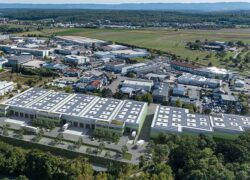
Garbe Industrial has leased an existing logistics property in Nittendorf near Regensburg, Bavaria. Amtoimport Electronic Commerce GmbH will take over the facility, which totals approximately 17,700 sq m, to store, pick, pack and ship a range of consumer goods, including household, garden and fitness equipment as well as office furniture, for international e-commerce customers.

The property sits on a 33,400 sq m site on the edge of the Pollenried district, directly adjacent to the A3 motorway connecting the area to Nuremberg and Frankfurt to the northwest and Regensburg and Passau to the southeast. Regensburg city centre lies roughly 17 kilometres away, with Nuremberg around 100 kilometres to the north.

The partially two-storey building comprises around 13,700 sq m of storage and handling space, approximately 3,200 sq m of mezzanine areas and around 800 sq m of office and social space. The facility includes a fully racked special storage area, 15 loading ramps and a low-ramp delivery zone for truck handling.

To accommodate battery storage, the property is being upgraded with enhanced fire protection measures. “We are delighted that the necessary conversion work has enabled us to fully meet the tenant’s requirements for the property and that we were able to conclude a long-term lease within a few weeks,” said Faika Biriz, Regional Head of Real Estate Management at Garbe in Stuttgart. She emphasised the effective collaboration between the tenant, landlord and agents. Terrae Immobilien GmbH and logistics consultants Logivest acted as intermediaries.

West Beton delivers 200,000 m³ in 2025, plans €2.5m investments for 2026

West Beton, part of West Group, produced and delivered more than 200,000 cubic meters of ready-mix concrete in 2025 across its three production sites. More than 90% went to residential projects, including HILLS Nord, the third phase of Nusco City, and developments by Hagag and Pedro Construct. The remaining volumes served major infrastructure works such as Bucharest Metro Line 6 and several sections of the A0 motorway.

“In the context of a significant decline of the ready-mix concrete market in 2025, West Beton’s output increased by 25%. This result is a direct consequence of the investments worth over EUR 2.5 million that we made this year in this West Group business line, which generated almost one third of the Group’s consolidated turnover in Romania and Germany,” said Dan Crăciunescu, founder of West Group. “In 2026 we will continue our investment plan, with a budget similar to this year’s, of over EUR 2.5 million, and our objective for next year is to expand into other regions of Romania and achieve a sustainable 25% increase in West Beton’s production,” he added.

Investments in 2025 focused on upgrading the vehicle fleet—now comprising 25 truck mixers and four pumps—and on modernising the three production sites to support higher quality standards and lower environmental impact. The company reports a combined production capacity of 350 cubic meters per hour across its facilities.

“To reduce our carbon footprint, we started, in the summer of this year, to optimize concrete mix designs by using new-generation superplasticizers, which allow us to reduce the amount of water and binder consumption, as well as by optimizing the particle size distribution curve, thereby lowering cement requirements and CO₂ emissions,” said Ionuț Vasile, development director at West Beton. “Another important step was launching, in October 2025, the international certification process for issuing Environmental Product Declarations (EPDs), essential for projects aiming for BREEAM, LEED or EDGE certifications,” he added.

For 2026, West Group plans to expand the fleet further and introduce three additional concrete types—self-compacting, pervious, and concrete designed for aggressive environments. The company also intends to evaluate ISO 14067 certification to measure product-level carbon footprints.

EU Capital Markets Integration Proposal: Key Measures and Implications for Firms

The European Commission has presented an extensive legislative package aimed at reducing market fragmentation, easing cross-border activity and modernising supervision across the EU’s capital markets. Announced on 4 December 2025, the initiative consists of a “Master Regulation”, a “Master Directive” and a new Settlement Finality Regulation. Together, these measures amend a wide range of frameworks, including MiFIR, EMIR, CSDR, the Cross-Border Distribution Regulation (CBDR), the DLT Pilot Regime, MiCA, UCITS, AIFMD and MiFID II. The proposals now move to trilogue discussions with the European Parliament and the Council.

The package is designed to support further market integration, improve supervisory consistency, encourage innovation such as tokenisation, and reduce administrative and national-level duplications. Much of its focus lies in trading, post-trading and asset management—areas where differing national interpretations and overlapping requirements continue to hinder passporting and raise operational costs.

A central element of the proposal is the creation of a harmonised MiFIR “single rulebook” for trading venues, replacing significant parts of MiFID II with uniform EU-wide requirements. The Commission sets out a new Title in MiFIR covering the authorisation and operation of regulated markets, as well as the applicable rules for MTFs and OTFs, with the aim of creating a consistent regulatory baseline across all Member States. Cross-border rights would be expanded, allowing regulated markets, MTFs and OTFs to offer services across the EU through either a branch or a services passport. Member States’ ability to impose additional establishment conditions would be restricted.

A new designation, the Pan-European Market Operator (PEMO), would allow a single legal entity to operate multiple venues in different Member States under one licence. If such an operator acquires an already authorised venue, that venue would remain situated in its original Member State for areas not fully harmonised at EU level, such as certain transparency or tax matters.

The Commission also proposes stricter open-access and post-trade neutrality rules. CCPs and trading venues would face clearer requirements to avoid unjustified refusals or delays in granting access, and “preferred clearing” models would be prohibited where interoperability already exists. Trading participants would gain the right to select any EU CSD for settlement. Improvements to the equity and ETF consolidated tape include mandatory venue identification at EBBO, deeper order-book information and a volume-weighted closing price calculated across all venues.

In the post-trade sphere, CSDR would be modernised to improve settlement efficiency and support technological neutrality. Updated definitions—covering book-entry systems, cash accounts and securities accounts—are written to accommodate DLT-based CSD services. The framework would introduce risk-management requirements for settlement in commercial bank money and e-money tokens. Cross-border arrangements for CSDs would be harmonised, with obligations to increase inter-CSD links in proportion to their significance and to join T2S for relevant currencies. Transparency obligations on fees and enhanced reporting on settlement fails and pricing by settlement internalisers would also be introduced.

For asset management and fund distribution, the package moves all cross-border marketing rules for UCITS and AIFs into the CBDR and introduces a “passporting upon authorisation” system. Under this regime, managers would specify intended host markets at the point of authorisation. Once the home authority transmits the information to ESMA’s central platform, cross-border marketing in those Member States could begin immediately. Notification and de-notification procedures would be aligned, and Member State marketing fees and conditions would be published in ESMA’s public register. Host-state powers would be codified to limit divergence. ESMA’s wider role would include oversight of cross-border supervisory issues, the coordination of reviews of the largest cross-border fund groups, and the ability to suspend marketing rights in cases of serious breach.

The legislative proposals significantly expand the DLT Pilot Regime. The aggregate activity cap would rise to EUR 100 billion and product-specific thresholds would be removed. DLT infrastructures could operate combined MTF/OTF models, and a simplified regime would be available for smaller infrastructures handling up to EUR 10 billion in instruments. Permissions would no longer be time-limited, addressing industry concerns about legal uncertainty. Related amendments to CSDR and other frameworks provide legal clarity for DLT-based issuance, record-keeping and settlement.

Supervisory arrangements would also change. ESMA would assume direct supervision of major trading venues with cross-border relevance, PEMOs, significant CSDs and all crypto-asset service providers. Governance reforms, fee-setting principles and mechanisms for mutual recognition and assistance in recovering administrative fines are included. ESMA would receive broader “no-action letter” powers, enhanced breach-of-Union-law procedures, and binding mediation rights in defined cases. It could also require national authorities to consult ESMA opinions and take corrective action where material supervisory shortcomings appear.

The transition would be phased. ESMA’s new MiFIR powers would apply 12 months after the legislation enters into force, while supervision transfers for venues and significant CSDs would generally follow after 24 months.

Although details may shift during trilogue negotiations, the direction of travel is clear: a more harmonised EU framework for trading and post-trading, streamlined fund distribution mechanisms, expanded and more practical DLT arrangements, greater EU-level supervision of systemically important market infrastructures, and a strengthened mandate for ESMA to drive supervisory convergence. Firms are advised to monitor developments closely as the legislative process moves forward.

Source: EC and CMS

Marc O’Polo expands presence in FACTORY outlet centres

Marc O’Polo is increasing its footprint in NEINVER’s FACTORY outlet network in Poland. The brand has opened a new store in FACTORY Gliwice and expanded its existing unit in FACTORY Annopol in Warsaw. With these changes, the company is now present across all FACTORY centres in the country.

Marc O’Polo, a Scandinavian-founded brand offering casual and formal clothing, has operated internationally for several decades. The company emphasises simplicity, natural materials and a design approach shaped by sustainable development principles.

Marc O’Polo has maintained a long-standing presence in FACTORY centres, forming part of their premium fashion offer. The new store in FACTORY Gliwice occupies more than 200 sqm, while the shop in FACTORY Annopol has expanded to 270 sqm. The brand also operates in NEINVER outlets in Poznań, Kraków and FACTORY Ursus in Warsaw.

“Since its inception on the Polish market, Factory has consistently built its position as an industry leader in the outlet segment, and the key to our success is our partnership-based approach to cooperation with our commercial partners – the tenants. Thanks to stable and trusting relationships with brands and the consistent development of our offering, we create an attractive and stable business environment that attracts both our commercial partners and a growing group of retail customers. The consistent development of the Marc O’Polo brand in FACTORY outlets is a perfect example of this,” said Andrea Aburra, Head of Leasing NEINVER in Poland and Italy. “With further openings planned, including a new Ochnik store just before Christmas, we are continuing to strengthen the strong momentum of FACTORY Gliwice.”

According to NEINVER, customer interest in FACTORY outlets remains steady, which the company views as an indication of the continuing relevance of the outlet model for both shoppers and brand strategies. Marc O’Polo joins a wider group of fashion brands present in FACTORY centres, including Hugo Boss, Joop, Karl Lagerfeld, Calvin Klein, Tommy Hilfiger and Guess.

In the newly opened and expanded stores, Marc O’Polo offers a broad selection of clothing, including shirts, jackets, trousers, dresses, knitwear, jeans and T-shirts, along with coats, jackets, shoes and accessories. The brand’s collections are made primarily from natural materials and follow a muted, pastel colour palette.

Products in Marc O’Polo’s FACTORY stores are offered at prices reduced by 30 per cent year-round, with seasonal discounts reaching up to 70 per cent.

Walter Herz and Syrena Invest complete another land transaction in Warsaw

Walter Herz, working with Syrena Invest, has completed another land acquisition for a residential development in Warsaw. The latest transaction concerns a site on Głębocka Street in the Białołęka district, where a project consisting of 79 apartments and an underground garage is planned. The scheme will offer around 4,300 sqm of usable floor area. This deal follows an earlier acquisition for Syrena Invest at 29 Siennicka Street.

“We value Walter Herz’s advisory services and comprehensive support in investment processes, which often require a high pace of action, strong commitment, and the ability to develop effective solutions at various stages. Another transaction in Warsaw confirms that together we are able to successfully identify and close valuable opportunities in the residential segment,” said Marianelly Hernandez Reyna, General Director at Syrena Invest.

Walter Herz advised throughout the acquisition, including analysis, project preparation, negotiations and completion of the transaction. The team’s responsibilities included evaluating the investment potential and structuring conditions acceptable to both sides.

“This was a demanding, multi-stage transaction, successfully completed thanks to thorough analysis, consistency in negotiations, and a cooperative partnership between the parties. The obtained building permit increases the project’s value and allows for faster implementation of the investment,” said Damian Karkosiński from Walter Herz. “Following the successful land transaction at 29 Siennicka Street, this is another joint project that confirms the quality of our business relationship. We are very pleased to continue our cooperation with Syrena Invest and are glad to support the development of their project portfolio in the Warsaw residential market, where Białołęka remains one of the most promising locations,” he added.

Syrena Invest has operated in the Warsaw property market since 2007, focusing on residential and commercial development as well as investor support. Its portfolio includes completed projects on Jaktorowska Street, within Miasteczko Wilanów, on Mińska Street in Praga-Południe, on Klukowska Street in Targówek, and on Racławicka Street in Mokotów, along with the ongoing project at Siennicka Street in Grochów. The company is a member of the Polish Association of Developers and the Polish-Spanish Chamber of Commerce.

CBRE Investment Management adjusts leadership structure for EMEA Direct Real Estate

CBRE Investment Management has announced changes to the leadership structure of its EMEA Direct Real Estate business. The firm says the adjustments are intended to support the continued scaling of its integrated investor-operator platform and to strengthen investment execution.

Under the revised model, Rik Eertink will take on the role of President and Chief Investment Officer for EMEA Direct Real Estate. He has served as President of the division for the past five years.

“This evolved model leverages the strengths of our platform and positions us to enhance investment performance for our clients,” said Adam Gallistel, Co-CEO and CIO of CBRE IM.

Eertink will work with four senior leaders who are assuming expanded responsibilities within the EMEA Direct Real Estate business: Hannah Marshall, Bas Tiemstra, Jan-Willem Bastijn and Niels Kokkeel.

“The elevation of top talent is a priority focus area for us,” said Andy Glanzman, Co-CEO and President of CBRE IM. “This team has deep experience, strong track records and a shared commitment to delivering differentiated outcomes for our clients.”

The company also confirmed that Paul Gibson is leaving to take up a senior position elsewhere in the European real estate sector. CBRE IM expressed its appreciation for his contributions to the business.

Yareal unveils final phase of SOHO by Yareal: SOHO HUB

Yareal unveils final phase of SOHO by Yareal: SOHO HUB

Yareal has presented SOHO HUB, the fifth and final stage of the SOHO by Yareal mixed-use complex in Warsaw’s Kamionek district. The scheme, based on the 15-minute city concept, will conclude the development with new buildings, the refurbishment of historic structures and the revitalisation of a protected heritage asset. According to the schedule, works planned for 2026–2028 will add more than 5,000 m² of office space, nearly 2,500 m² of retail and service areas, and a PRS element.

The complex, designed by HRA Architekci, combines residential, office, retail, leisure and culinary functions. SOHO by Yareal holds a BREEAM Communities certificate and incorporates post-industrial buildings into contemporary architecture. Public spaces include a linear park, courtyards, terraces and areas designed for community use, supported by limited car traffic.

The main commercial addition within SOHO HUB will be the Mińska 39 building, a multi-volume structure that draws on the site’s industrial heritage. It will contain 3,100 m² of Class A office space across the first two floors, with 66 rental apartments on the upper levels ranging from 28 to 45 m². The building will also provide an underground garage with 146 parking spaces, 11 of them equipped with EV chargers, and a portion designated for short-term public use.

Further office space will be created in B.55, a three-storey heritage-listed building that has served numerous industrial and manufacturing functions since 1899. The Conservator-approved refurbishment will reinstate original architectural elements, including its historic window arrangement, and the building will deliver 1,300 m² of office space for a single tenant.

Jacek Zengteler, CEO of Yareal Polska, said: “SOHO by Yareal is Yareal Polska’s first mixed-use project – a development whose scale, multifunctional nature and exceptional location have required, and continue to require, an above-standard approach. It is a complex in which the residential component plays a key role, and its attractiveness naturally depends on complementary functions. Therefore, in line with the 15-minute city concept, we consistently enrich SOHO by Yareal with additional elements: retail, services and gastronomy. SOHO HUB crowns this process – it introduces modern office spaces and a PRS component to the complex, responding to rising demand for high-quality workplaces on the eastern side of the Vistula River in Warsaw. As a result, SOHO by Yareal becomes a fully balanced urban ecosystem.”

The fifth stage also includes the modernisation of the historic building marked by its brick chimney, which is set to become a dining complex opening in the second half of 2026. It will host concepts developed by Aleksandra and Jacek Dojnikowski, known for Baken, Bułkę przez Bibułkę and Pollypizza Neapolitan. A separate fitness-club building will be constructed between the KARDAN apartment building and B.55. Building No. 58 is also undergoing revitalisation and will house the architectural studio WWAA, along with office and exhibition space.

Commenting on the commercial offering, Paulina Petynka, Leasing Director at Yareal Polska, said: “With SOHO HUB, we are introducing diverse office solutions to the market – spaces suited to large organisations as well as medium and small businesses or freelancers. Atmospheric, highly adaptable interiors, loft-style offices, and a standalone heritage building with a unique layout – all delivered to the highest technological standards and with environmental certification. The rapidly developing neighbourhood and the wide range of amenities within SOHO by Yareal offer excellent on-site convenience, enhancing working conditions and supporting work–life balance.”

Construction of the final residential buildings—SOHO 10, SOHO 12 and NEFRYT—has recently been completed. The residential part of the complex now comprises 10 multifamily buildings and 870 apartments. The 300-metre linear park remains the central feature of the project, and Stage V will add a further 4,000 shrubs and 69 trees.

SOHO by Yareal includes more than 11,300 m² of retail and service space across numerous units, occupied by tenants such as Baken, Waszyngton x SOHO, Green Caffè Nero, Przystanek Piekarnia, Ramenownia, Carrefour, Hebe, Bawiarnia OHO, Słoneczna Kraina kindergarten, OSSKA Design, BABA Body & Social Club, Flower Bar, beauty services and a children’s therapy clinic.

As part of agreements with the Municipal Roads Authority, Yareal will also carry out road, pavement and lighting upgrades and build new cycling routes around the development. These works are planned for completion between late 2027 and early 2028.

Hybrid work reshapes expectations. ČMN outlines what younger employees want from office space

Hybrid work is changing how offices are used, and younger employees are redefining what they expect from workplace environments. A 2025 Deloitte survey shows that 73% of Czech Gen Z respondents and 85% of millennials prioritise meaningful work, collaboration opportunities, and conditions that support well-being. Českomoravská nemovitostní (ČMN), the third-largest office landlord in Prague, is adjusting its properties accordingly, focusing on flexible layouts, sustainable features and community-oriented spaces.

As work habits evolve, the role of the office is shifting from a place for individual performance to a setting for collaboration, informal exchange and maintaining company culture. “Generation Z has specific demands—it expects flexibility, an inspiring environment, and a strong emphasis on well-being,” says Pavel Kadera, ČMN’s asset management expert. “Companies that want to remain attractive to young talent must reflect these needs in their office design.”

Although people are spending less time at the office than in previous years, expectations regarding the quality and functionality of workspaces are increasing. “Gen Z doesn’t want an office that just looks good. They want an environment that supports collaboration, concentration, and offers different types of work zones,” Kadera notes. According to Deloitte, long hours and limited flexibility remain key sources of stress for younger workers, and the office is therefore expected to be a place that employees choose to use, rather than a location they feel obliged to attend.

Trends in workplace design have moved away from decorative or playful features toward practical, purpose-driven environments. Companies are now requesting spaces that combine open areas with rooms for quiet work, along with shared cafés, lobbies and kitchens that encourage informal interaction. Well-being features such as natural light, good air quality, quiet areas and the option to work outdoors are gaining importance. Sustainability is also becoming central, with greenery, energy-efficient technologies and environmentally responsible materials increasingly incorporated into designs. Deloitte’s survey indicates that 69% of Czech Gen Z employees actively follow their employer’s ESG commitments, reinforcing expectations that office spaces reflect these values.

ČMN is adapting its buildings to reflect hybrid work patterns, combining flexibility, community interaction, opportunities for focused work, sustainability and technological readiness. One example is the Smíchov Gate building, where outdoor work zones with electrical connections have been installed to allow employees to work in fresh air. These areas are intended to support comfort and balance during the working day.

Community spaces are being expanded as well. The lobbies and cafés in the Blox and Churchill buildings have become regular meeting points, while a similar role is played by the coffee corner in the Mezi Vodami building in Modřany. To address the need for concentrated work, ČMN is creating quiet rooms and private zones that reduce the interruptions common in open-plan offices. Cooperation with coworking providers such as Scott.Weber and Cafedu extends the range of available work environments, allowing tenants to choose between quiet spaces, meeting areas and flexible coworking zones depending on their daily needs.

Technological upgrades and sustainability measures accompany these changes. ČMN buildings are being prepared for hybrid meetings, improved digital connectivity and modern workplace tools. At the same time, energy-efficient systems and green features are being introduced across the portfolio in response to growing expectations among younger employees, who increasingly consider ESG principles when evaluating employers.

“Location remains key—but today, a good address is no longer enough,” Kadera concludes. “The office must be a place where people want to go—not where they have to be.” ČMN says it aims to reflect these expectations in its building design and in its strategies for working with tenants.

Panattoni sells Rzeszów logistics park as interest in south-eastern Poland remains strong

Panattoni has completed the sale of Panattoni Park Rzeszów Airport III, a 33,000 sqm logistics complex, to an international industrial infrastructure group and an investment fund.

“The sale of Panattoni Park Rzeszów Airport III confirms the attractiveness of assets that combine strategic location, sustainable standards, and long-term value for tenants and investors. We consistently deliver projects that respond to the trends of nearshoring, reindustrialisation, and the growing demand for modern production and distribution space. Rzeszów is becoming one of the most promising markets in Poland, and this transaction reflects that perfectly — especially as it is our second Rzeszów disposal this quarter,” says Marek Dobrzycki, Partner at Panattoni.

The fully leased park comprises two buildings. One is a build-to-suit facility for a logistics operator, while the other accommodates companies from logistics, e-commerce, manufacturing, and public services. The project holds a BREEAM Excellent certification.

Located between the A4 motorway and Rzeszów–Jasionka Airport, the site offers direct access to regional and international transport routes, including Wrocław, Kraków, and Lviv.

“This transaction confirms the maturity of the Polish industrial market. Assets combining excellent location, top technical standards, and strong environmental performance continue to attract international capital. Rzeszów is one of the best-performing warehouse markets in Poland, and this project is another example of how our parks deliver stable, long-term value for investors,” says Michał Stanisławski, Co-Head of Capital Markets Poland at Panattoni.

The complex neighbours several other Panattoni projects, including Rzeszów Airport I and II, Rzeszów North, and multiple BTS developments, such as a factory under construction for BSH Group. Panattoni has delivered more than 330,000 sqm of industrial space in the Podkarpackie region and is developing a further 110,000 sqm, all of which is currently leased.

How Long Do Europeans Work to Pay for Christmas?

The cost of the festive season varies across Central and Eastern Europe, but one measure makes the differences in purchasing power easy to see: the number of working days needed to set aside a typical Christmas budget. Using the amount planned by Polish households this year—about 1,387 zł—and converting it into local currencies, it becomes possible to compare how long employees in the region must work to prepare for the holidays.

In Poland, this year’s Christmas spending represents just under five days of work for someone earning the national average salary. A typical full-time employee takes home slightly more than 6,300 zł per month, which translates into roughly 290 zł per working day. Setting aside the planned holiday budget therefore requires about 4.8 working days. For those earning the minimum wage, the situation looks different: with daily income roughly half the national average, the same amount requires around eight and a half days of work.

Czech employees face almost the same level of effort as their Polish neighbours. Converting the Polish Christmas budget into Czech crowns gives a value slightly above 7,600 CZK. With average net monthly earnings around 33,000 CZK, a Czech worker earns a little over 1,500 CZK per day, meaning that accumulating the same Christmas budget takes just under five days. The result closely mirrors the Polish calculation, reflecting similar income levels and living costs.

A comparable picture emerges in Slovakia. When the Polish holiday budget is expressed in euros, it amounts to slightly more than 300 EUR. The average Slovak take-home salary is roughly 1,300 EUR per month, or a little over 60 EUR per working day. On this basis, a Slovak employee would need around 4.9 days to put aside the equivalent festive budget, almost identical to the situation in Poland and Czechia.

Romania is the one country in the group where preparing for the holidays takes noticeably longer. Converting the Polish budget into Romanian lei produces an amount close to 1,600 RON. With an average net wage of around 5,650 RON and daily earnings of roughly 270 RON, Romanian workers need close to six working days to save the same sum. The difference reflects lower average wages rather than higher holiday spending, and it highlights the gap in purchasing power even within a broadly similar regional context.

Taken together, the comparison shows that workers in Poland, Czechia and Slovakia devote roughly a week of labour to fund a standard holiday budget, while in Romania the effort is higher by almost an additional day. Although each country faces its own patterns in wage growth and household spending, the regional picture demonstrates that the financial weight of Christmas remains broadly similar across Central Europe, with Romania standing out due to lower average incomes.

Source: Personnel Service and CIJ EUROPE Analysis Team

front page info
LATEST NEWS