Union Investment sells retail park in Gothenburg

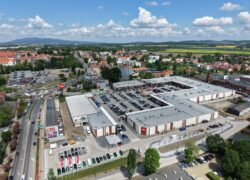
Union Investment has sold the Sisjö Entré retail park in Gothenburg, Sweden. The property has been held in the portfolio of the DEFO-Immobilienfonds 1 special real estate fund since 2008. The buyer is Swedish real estate company Bygg-Göta. The purchase price was not disclosed.

According to Union Investment, the transaction was completed as part of a portfolio strategy review. The company cited improving investment conditions in the Swedish retail market as a factor supporting the decision to divest. Proceeds from the sale are expected to be reinvested during 2026, with a focus on grocery-anchored retail parks in markets including Sweden, Spain and the Netherlands.

The Sisjö Entré retail park is located approximately 10 kilometres south of Gothenburg’s city centre. The property comprises around 15,300 sq m of leasable area and is currently 98% occupied.

Union Investment was advised on the transaction by Gernandt & Danielsson, KPMG and Drees & Sommer. Panreal acted as broker and commercial advisor to the seller.

Navigating Romania’s Real Estate Transactions: An Interview with Oana Bădărău, PeliPartners

Over the past decade, Romania has established itself as one of the most active real estate markets in Central and Eastern Europe, attracting sustained interest from both regional and international investors. Despite shifting market cycles, regulatory complexity and evolving financing conditions, transactional activity has remained resilient, albeit more selective and structured in recent years.

Against this backdrop, PeliPartners has played a consistently prominent role in shaping the Romanian real estate transaction market. The firm has been involved, on average, in around two-thirds of the country’s major real estate deals year on year, giving it a broad and practical perspective on how development, investment and exit strategies are evolving.

To gain insight into current transaction dynamics, legal challenges and market expectations, CIJ spoke with Oana Bădărău, Partner and Head of Real Estate at PeliPartners. In the following interview, she shares her views on development structuring, regulatory and construction challenges, due diligence priorities, seller preparation and how transaction timelines in Romania have changed in today’s more cautious and disciplined investment environment.

CIJ EUROPE: From your experience leading the Real Estate & PPP practice at Peli Partners, how does your team typically support clients in the development phase of real estate projects in Romania – from land acquisition to permitting, construction contracts, and financing?

Oana Bădărău: We typically support projects across their full lifecycle. This starts with structuring and executing land acquisitions, continues through zoning and permitting, construction contracting, financing, leasing, and often extends to refinancing and exit. In Romania, development work is rarely linear, and the landscape is continuously evolving, with new regulatory requirements and market dynamics affecting project timelines and risk allocation. Legal advice must therefore be closely aligned with commercial decision-making, sequencing, and timing. Our role is not just to ensure compliance, but to help clients anticipate friction points early, structure projects in a way that remains bankable and transferable, and ultimately support the execution of complex developments with multiple stakeholders involved.

CIJ EUROPE: What are the most significant legal and commercial challenges you see in real estate development today in Romania – for example, related to urban planning, construction law (including FIDIC frameworks), or public-private partnership frameworks?

Oana Bădărău: Permitting and urban planning remain the most material challenges. The legal framework is complex, frequently amended, and applied inconsistently by local authorities, which creates uncertainty around timing and sometimes outcomes. Developers often face extended administrative procedures, overlapping requirements, and occasional ambiguities in how rules are interpreted, all of which may significantly affect project schedules and financial planning. On the construction side, risk allocation under FIDIC-based contracts and claims management have become increasingly prominent topics, particularly in a context of cost volatility. Stakeholders are increasingly focused on proactive risk management and contractual clarity to mitigate potential delays or disputes. Overall, navigating the regulatory environment in Romania requires both solid expertise and practical experience with how rules are applied in practice.

CIJ EUROPE: When preparing a seller for an exit or divestment in Romania, what specific legal and strategic considerations do you focus on to ensure the transaction is marketable and minimizes post-closing risk?

Oana Bădărău: A well-prepared seller generally achieves a smoother exit and preserves value. We focus on identifying and addressing potential legal issues well ahead of the process, including title matters, permitting gaps, construction documentation and lease standardization (in terms of meeting institutional-quality standards). The objective is to reduce uncertainty for bidders, limit the scope for price adjustments or post-closing claims, and enhance overall marketability of the asset. In today’s Romanian market, which is more selective and deliberate than in previous years, preparation is often the difference between a clean, efficient process and a protracted negotiation. Over the past 20 years or so we have been involved in a large portion of major Romanian real estate transactions that used external counsel, including approximately two-thirds of such deals in 2024 and 2025 as well, giving us a broad perspective on the practical challenges sellers may face and how to navigate them effectively. This proactive approach not only protects value but also increases confidence among buyers and financiers, contributing to a more predictable closing timeline.

CIJ EUROPE: For buyers conducting due diligence on Romanian real estate assets or projects, what are the key areas that often require deeper scrutiny – including any Romania-specific legal or regulatory risks?

For buyers conducting due diligence on Romanian real estate assets or projects, permitting compliance (both in terms of zoning/construction and operational permits) is always a key area of focus, particularly where projects have evolved over time. Title history, past ownership, and restitution risks also still require careful examination. Romania-specific risks tend to be less about the substance of regulation and more about excessive formalism and procedural complexity, which often leads to the question of whether administrative decisions are robust enough to withstand judicial review. Buyers are increasingly attentive to potential gaps or ambiguities that could affect financing, development potential, or future transfers. In practice, a thorough due diligence process helps anticipate post-closing challenges and ensures that the asset is truly marketable and operationally ready for the next stage of investment.

CIJ EUROPE: How have timing and overall transaction processes evolved in Romanian real estate deals – from initial offer to closing – and what are the common bottlenecks or challenges that can impact deal timing?

Oana Bădărău: Transactions today generally move at a more gradual pace compared to previous market peaks. Decision-making is more deliberate, due diligence is deeper, and closing timetables are often extended. Common bottlenecks relate primarily to permitting, administrative approvals, and the time needed to resolve any regulatory ambiguities, which can delay execution and require careful coordination between all parties. While deal flow remains active, timing has become a strategic variable rather than a given. Romanian transactions may take longer to reach closing, reflecting both the complexity of local regulatory procedures and the thoroughness with which parties now approach risk mitigation. In this context, having experienced legal support is crucial.

CIJ EUROPE – Conclusion: As Romania’s real estate market continues to mature, transactions are increasingly shaped by regulatory complexity, more rigorous due diligence and a heightened focus on risk allocation. While deal activity remains present across sectors, execution has become more disciplined and timelines more deliberate. As Oana Bădărău underlines, successful outcomes now depend less on speed and more on preparation, clarity and experience. In this environment, legal advisors who combine technical expertise with a deep understanding of local practice play a central role in supporting developers, investors and financiers through each stage of the transaction lifecycle.

© 2026 cij.world

REALOGIS reports recovery in Berlin logistics property market in 2025

The logistics and industrial property market in Berlin showed clear signs of recovery in 2025, according to REALOGIS Unternehmensgruppe. After two weaker years, total take-up in the Berlin region reached 433,000 sq m, representing an increase of 47% compared with 2024. Despite this rebound, activity remained 24% below the five-year average of 569,900 sq m.

The five largest transactions accounted for a significant share of the market. Deals concluded by Netto, a large industrial occupier, Bär & Ollenroth KG Berlin, the Radeberger Group and Tesla together represented 165,600 sq m, equivalent to 38% of total take-up.

Alexander Ego, Managing Director of REALOGIS Immobilien Berlin GmbH, said: “The Berlin market gained significant momentum over the past year. We expect this positive trend to continue in the current year. At present, we are seeing further growth in demand for logistics properties, driven in particular by Asian and US companies choosing Berlin as a base for their expansion.”

Rents continued to rise during 2025. Prime rents increased by €0.60 per sq m, or 6%, to reach €10.50 per sq m, extending an upward trend that has been in place since 2016. Average rents rose more moderately by €0.20 per sq m to €8.10 per sq m. Most of the rental growth occurred in the first half of the year, with both prime and average rents stabilising in the second half.

New developments on greenfield sites played a stronger role in market activity. Take-up in these schemes reached 183,800 sq m, almost doubling year on year. Lettings in existing buildings totalled 181,400 sq m, slightly below the previous year. For the first time, new developments on former brownfield sites accounted for a more meaningful share of activity, with 67,800 sq m leased, supported in large part by a single transaction exceeding 30,000 sq m.

By building type, large-scale logistics units dominated the market, accounting for 294,600 sq m, followed by business parks with 84,800 sq m and other formats with 53,600 sq m. The market remained clearly tenant-driven, with lettings representing 81% of total take-up. Owner-occupier activity increased sharply year on year, reaching 82,800 sq m.

From a geographic perspective, the Berlin city area remained the largest submarket with 132,800 sq m, although its share declined compared with 2024. The northern Berlin region recorded a strong increase in activity to 118,300 sq m, while the southern and western regions followed with 85,800 sq m and 49,600 sq m, respectively. The eastern region recorded the lowest take-up at 46,500 sq m.

Retail and wholesale occupiers continued to dominate demand, accounting for 42% of total take-up. Within this segment, traditional retail was the main driver, while e-commerce activity continued to decline, with take-up roughly halving compared with the previous year. Manufacturing ranked second among occupier groups, followed closely by logistics and distribution.

Large units of 10,001 sq m and above remained the main engine of the market, contributing more than half of total take-up. REALOGIS notes that the renewed focus on larger space requirements underlines the return of confidence among occupiers, even as overall activity has yet to return to long-term average levels.

AFI reports stable performance and full occupancy of rental portfolio in the Czech Republic in 2025

AFI closed 2025 with stable performance across its residential and office portfolios in the Czech Republic, maintaining high occupancy levels and continuing the expansion of its rental housing platform. During the year, the company also strengthened its management structure, with Karin Shalev Shogol appointed as CEO for the Czech Republic.

According to AFI, all residential projects under the AFI Home brand reached full occupancy in 2025, reflecting sustained demand for professionally managed rental housing in Prague. The company views this as confirmation of its long-term build-to-rent strategy, which focuses on developing rental housing in established locations, maintaining construction quality and sustainability standards, and expanding the portfolio through land acquisitions.

“2025 was another successful year for AFI. We achieved full occupancy in our AFI Home rental housing projects, confirming the strong demand for high-quality, professionally managed housing in the Czech Republic,” said Karin Shalev Shogol, CEO of AFI in the Czech Republic. “This result also confirms the correctness of our long-term build-to-rent strategy, which is based on the systematic development of rental housing in attractive locations, an emphasis on quality of construction, sustainability, and professional management, as well as the continuous expansion of our portfolio through the acquisition of suitable land for future rental housing projects.”

AFI currently has two residential schemes under construction. AFI Home Strašnice is being developed in two phases and will deliver a total of 519 apartments, while AFI Home Nová Elektra, comprising 291 apartments, recently reached the shell-and-core stage.

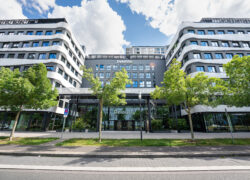
The company also reported progress in the office segment. In 2025, AFI signed an agreement to acquire the Port7 office project in Prague, located in the Holešovice district. “We have also been successful in the commercial sector, where we have concluded an agreement to acquire the Port7 office project in Prague’s Holešovice district. This represents a significant step in further strengthening our office portfolio and confirms the AFI Group’s long-term interest in high-quality projects that are exceptional in terms of architecture and urban planning,” Shogol said.

AFI currently operates five office buildings in Prague, all with near-full occupancy. The company attributes the stable performance of its office portfolio to demand for well-located, energy-efficient buildings and an active asset management approach. The Port7 acquisition, together with adjacent land for future development, further expands AFI’s presence in the Prague office market. The project holds LEED and WELL certifications and places emphasis on workplace health and tenant-oriented community programmes.

Beyond portfolio growth, AFI plans to increase its involvement in local communities. As part of the AFI City project in Vysočany, the company intends to build a nursery school that will be accessible not only to residents of the development but also to families from the surrounding area.

AFI Home currently comprises nearly 900 rental apartments across four completed residential schemes, all of which are fully let. Alongside physical expansion, AFI continues to invest in digital tools aimed at improving tenant communication and operational efficiency, including further development of the AFI Home mobile application based on user feedback.

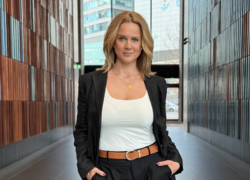
Photo: AFI, CEO, Karin Shalev Shogol

Renewables accounted for nearly half of EU electricity consumption in 2024

Renewable energy sources supplied 47.5% of gross electricity consumption in the European Union in 2024, up 2.1 percentage points from 2023, according to the latest data. The share has risen steadily over the past two decades, from 15.9% in 2004 to 28.6% in 2014, reaching close to half of total consumption last year.

Wind and hydropower remained the main contributors to renewable electricity, accounting for 38.0% and 26.4% of renewable generation respectively, together representing almost two-thirds of the total. Solar power followed with a 23.4% share, while solid biofuels and other renewable sources contributed 5.8% and 6.4%. Solar continued to expand rapidly, increasing from 1% of renewable electricity in 2008 to 304 terawatt hours (TWh) in 2024.

At country level, renewables dominated electricity consumption in several member states. Austria recorded the highest share at 90.1%, largely due to hydropower, followed by Sweden at 88.1% (mainly hydro and wind) and Denmark at 79.7% (predominantly wind). Shares above 50% were also reported in Portugal, Spain, Croatia, Latvia, Finland, Germany, Greece and the Netherlands.

By contrast, renewables accounted for less than a quarter of electricity consumption in Malta (10.7%), Czechia (17.9%), Luxembourg (20.5%), Hungary and Cyprus (both 24.1%), and Slovakia (24.9%).

The figures reflect long-term growth in renewable capacity across the EU, supported by continued expansion of wind and solar generation and sustained contributions from hydropower.

Dvory Vysočany secures permit for next phase as Corwin launches apartment sales

Corwin has advanced its first project in Prague with the launch of apartment sales for the initial phase of Dvory Vysočany and the receipt of a building permit for the second stage of the development.

The first phase, which has been under construction for several months, comprises 229 apartments and is now available for sale. At the same time, Corwin has secured approval for a second phase that will add 266 apartments, along with additional public spaces and civic amenities.

“We see that people today are not just looking for a nice apartment, but a functional urban environment where they want to stay for the long term – we have already sold approximately 15% of the apartments in the pre-sale phase,” said Jakub Dobrý, Country Manager for Corwin in the Czech Republic. “At the same time, we have a valid building permit for the second phase, which will add another 266 apartments in two blocks and complement the neighborhood with new public spaces and services.”

The Dvory Vysočany project is being developed on a five-hectare brownfield site in Prague 9. Over time, it is expected to deliver more than 1,000 apartments, alongside offices, retail units and everyday services. The urban concept was prepared in cooperation with Jan Gehl, David Sim and the Czech architectural studio OVA, with a focus on human-scale design, walkability, greenery and well-defined public and semi-public spaces.

Construction is being carried out in individual stages, each designed as a complete urban block. The aim is to connect these blocks gradually into a cohesive district, allowing residents to move into a functioning neighbourhood rather than a long-term construction site. Courtyards inspired by traditional Prague residential developments are intended to provide quieter, greener spaces for residents.

The project distinguishes itself through a wide range of apartment layouts. Around 100 different floor plans are planned, with units ranging from 1+kk to 4+kk, and prices starting from CZK 5.6 million. According to the developer, the intention is to offer greater diversity in apartment design compared with more standardised residential schemes.

The second phase, scheduled to start construction in 2027, will be predominantly residential and will also include approximately 725 sq m of retail and service space. Underground parking will be provided, allowing surface areas to be used for landscaping and public spaces.

Dvory Vysočany marks Corwin’s entry into the Czech market, which the developer sees as a key growth area alongside its established activities in Bratislava and Ljubljana. The overall development of the Vysočany site is expected to take place in stages over eight to ten years.

Central European Companies Struggle to Turn Sustainability Disclosures into Financial Insight

A recent regional study by Deloitte Central Europe suggests that companies across Central and Eastern Europe are still finding it difficult to clearly show how sustainability issues translate into financial outcomes, despite new reporting obligations now being in force.

The analysis reviewed more than 120 sustainability reports issued by large companies and public-interest entities in nine Central European countries, covering their first year of reporting under the new European sustainability framework. The focus was on whether companies were able to connect environmental, social and governance matters with figures that affect profits, cash flows, investments and long-term financial stability.

According to the study, most organisations have made progress in describing sustainability topics in narrative form, but far fewer have managed to express these matters in financial terms. Where financial impacts were mentioned, they were often qualitative, difficult to locate within reports or limited to areas where disclosure was unavoidable. In many cases, companies openly acknowledged that they currently lack the tools or data needed to estimate financial effects linked to sustainability risks or opportunities.

Climate-related issues and workforce matters were most commonly identified as significant across sectors, reflecting regulatory pressure and immediate operational relevance. By contrast, topics such as biodiversity or impacts on local communities were less frequently prioritised. The report notes that while sector-specific differences exist, national approaches across the region remain broadly similar at this early stage of implementation.

The study also points to limited use of sustainability-related targets in executive pay. Fewer than half of the reviewed companies included such elements in management incentive schemes, and when they did, the focus was typically on environmental goals. Social and governance factors were used less often, indicating that sustainability performance has not yet become a standard driver of remuneration decisions.

One of the most challenging areas identified was the disclosure of how sustainability factors influence current and future financial results. Only a small proportion of companies provided numerical estimates, while many relied on general explanations or transitional exemptions. Even when information was disclosed, it was rarely linked clearly to financial statements, making it harder for investors and other stakeholders to assess its relevance.

Investment and operating costs connected to sustainability actions were most visible in relation to climate initiatives. For other environmental or social areas, financial information was frequently missing or unclear. Differences in calculation methods and units further reduced the comparability of data between companies.

The review also found a noticeable gap between activities that companies consider environmentally eligible and those they classify as fully aligned with European green criteria. This suggests that, while many businesses have taken initial steps towards sustainable activities, fewer have met the stricter conditions required for full alignment.

From an assurance perspective, the study highlights that shortcomings in data quality, materiality assessments and sustainability metrics remain common reasons for auditor concerns. These issues are expected to receive increased attention as reporting practices mature and regulatory oversight intensifies.

Overall, the findings indicate that sustainability reporting in Central Europe is still in a transition phase. While compliance levels are improving, the next challenge for companies will be to turn sustainability information into decision-useful financial insight, strengthening both transparency and long-term resilience rather than treating reporting as a purely regulatory exercise.

Redstone advances student housing project near Palacký University in Olomouc

The development group Redstone has taken a further step toward delivering a new student housing project in Olomouc, after receiving a positive environmental assessment from the regional authorities. The decision allows the developer to continue preparing detailed project documentation for a scheme located close to the city centre and the main campus of Palacký University.

The planned development is intended to provide purpose-built accommodation for students and is designed to deliver several hundred residential units with a total capacity approaching 1,000 beds. The site is situated near the Sokol sports complex, in an area that has previously been only partially accessible to the public. According to the developer, the project aims to open up the inner block, introduce landscaped areas and incorporate elements of the city’s historic fortifications into the overall layout.

In addition to accommodation, the project is expected to include services at street level and underground parking. Redstone has stated that the scheme is currently in the stage of technical refinement, with further discussions to follow as part of the standard permitting process.

Olomouc has a strong university character, with students accounting for a significant share of the city’s population. Existing university-operated dormitories provide accommodation for only part of the student body, and demand for affordable housing regularly exceeds supply, pushing many students into the private rental market.

Redstone is active across several Czech cities, including Prague, Olomouc and Pardubice. In Olomouc, the group is behind projects such as the Galerie Šantovka shopping centre, the Envelopa Office Center and healthcare-related developments. The student housing project represents a further expansion of its portfolio in the city, focused on residential and mixed-use schemes linked to long-term urban demand.

SK: Wages rise faster than inflation in most sectors, while employment continues to decline

Average wages in Slovakia continued to grow in November 2025, with pay increases outpacing inflation in the majority of monitored sectors, according to data released by the Statistical Office of the Slovak Republic. At the same time, the downward trend in employment persisted, particularly in sectors with larger workforces.

In November, the average nominal monthly wage rose year on year in nine out of ten observed sectors. Wage growth ranged from 2.7% in accommodation services to 6.6% in food and beverage service activities. In half of the monitored sectors, nominal wages increased by more than 5%. The only sector to record a decline in nominal wages was the sale and repair of motor vehicles, where pay fell by 1.8%, marking the first such decrease since March 2021.

After adjusting for inflation, real wages increased in eight out of ten sectors. Real wage developments ranged from a decline of 5.3% in the sale and repair of motor vehicles to growth of 2.8% in food and beverage service activities. Real pay also rose by more than 2% in retail trade and selected market services.

Looking at the cumulative period from January to November 2025, nominal wages increased in all ten monitored sectors, while real wage growth was recorded in nine of them. Over this eleven-month period, real wage developments ranged from a 1.2% decline in selected market services to growth of 4.5% in food and beverage service activities.

Employment trends remained weaker. In November 2025, the number of employed persons declined year on year in six out of ten sectors. The sharpest drop was recorded in wholesale trade, where employment fell by 3.1%. Declines of up to 2% were also observed in selected market services, retail trade, construction, industry, and transport and storage.

By contrast, employment increased in several service-oriented sectors. Accommodation recorded the strongest year-on-year growth, with employment rising by 5.4%. Smaller increases, ranging from 0.5% to 3.6%, were also seen in information and communication, the sale and repair of motor vehicles, and food and beverage service activities.

For the period from January to November 2025 as a whole, employment declined year on year in five out of ten monitored sectors. The most pronounced reductions, exceeding 2%, were recorded in wholesale trade and in transport and storage. Accommodation remained the main sector with sustained employment growth, recording an increase of more than 2%.

The Statistical Office noted that the figures are based on monthly surveys, cover a limited group of ten sectors, and remain preliminary.

Top Tower remains in preparation following key planning approvals

The Top Tower development by Trigema continues to progress through the planning phase after obtaining major zoning approvals. The project is planned for the Nové Butovice area of Prague, close to an established transport hub and an existing concentration of office and commercial buildings.

The scheme is designed as a mixed-use high-rise combining residential, office and service functions. The residential component is intended primarily for rental use, while office and commercial areas are planned to complement surrounding business activity. Publicly accessible functions are expected at ground level, alongside supporting infrastructure and underground parking.

With a proposed height exceeding existing buildings in the Czech Republic, the project would become the country’s tallest structure once completed. The design includes a distinctive architectural element integrated into the upper part of the building, as well as publicly accessible areas at higher levels.

As part of the planning process, the developer has agreed to financial contributions toward improvements to local infrastructure and public spaces in the surrounding area. These measures are intended to support pedestrian movement, transport links and public amenities near the site.

The project has been subject to ongoing public and professional discussion, particularly in relation to Prague’s broader approach to high-rise development and the preparation of the city’s Metropolitan Plan. While the project has secured key approvals, it remains under preparation and is not yet in construction.

As of early 2026, no construction start date has been announced. The development remains one of the largest high-rise projects currently planned in Prague and continues to be monitored within the context of the city’s evolving planning framework.

front page info
LATEST NEWS