Romania has the Highest Growth in Photovoltaics in Europe This Year

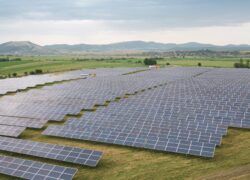
The photovoltaic market in Romania, in 2025, recorded the highest percentage growth in installed capacity among the top ten European markets, according to data from the latest report by Solar Power Europe, the European photovoltaic industry association.


Romania entered the top 10 of the largest photovoltaic markets in Europe for the first time in 2024 and consolidated its position this year, adding 2.5 GW of installed capacity in 2025, compared to 1.7 GW newly added in 2024.


Solar Power Europe estimates that, at the end of this year, the total installed capacity in Romania (parks and prosumers) will be 7.6 GW, which places it in 12th place in the EU in this regard.


Source: economica.net


Popeyes Opens New Restaurant in Oradea

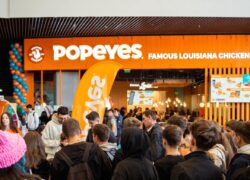
Popeyes will inaugurate its first restaurant in Oradea, the fifth city in Romania where Popeyes is expanding its presence in 2025, after Iași, Cluj-Napoca, Sibiu and Constanța. The opening will take place in the food-court area of ​​the Lotus Center shopping center.


“Popeyes’ expansion outside the Capital is part of a more ambitious plan by the company to expand into more areas and cities in Romania. The inauguration of the first Popeyes restaurant in Oradea represents an essential step in our expansion plan for 2025 in Romania,” the company announced.


Popeyes launched in Romania three years ago, currently having a total of 19 restaurants, including seven in Bucharest, two in Iași, two in Constanța and one each in Pitești, Craiova, Buzău, Ploiești, Brașov, Cluj-Napoca, Sibiu and Oradea.

Dedeman Expands with New Store

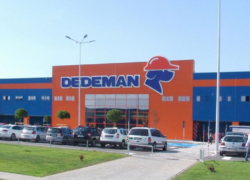
Dedeman continues to consolidate its national network by opening a new store in Mediaș. Located on Șoseaua Sibiului, on a 5.8-hectare plot, Dedeman Mediaș has a built-up area of ​​approximately 10,500 sqm and involved a total investment of EUR 15.7 million. The new store has 448 parking spaces and has created 150 jobs.


“We are happy to end this year, placing Dedeman store number 65 on the map of the country and thus strengthening our commitment to constantly investing in the development of the network. It is an important milestone, possible thanks to the efforts of our team, but also to the trust that our customers give us every day. We want our presence in Mediaș to be truly useful to the community,” says Dragoș PAVĂL, President of Dedeman.


Thus, the Dedeman network reaches 65 physical stores nationwide, consolidating the company’s sustained pace of investment and development.


Olympian Park Constanța Palas and SAMEDAY Report the First Successful Black Friday Together

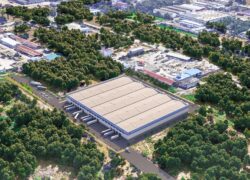
Olympian Parks, part of Helios Phoenix Group, has supported a successful Black Friday 2025 for Sameday, with a brand-new 5,000-sqm last-mile logistics facility in Constanța delivered just in time for record delivery volumes. Constanța Palas processed over 400,000 parcels, achieving a peak of more than 21,000 parcels delivered in a single day.


“We are very happy to welcome SAMEDAY in what is now shaping as a very successful business community, i.e. our park in Constanța. It is the only up to date green and energy efficient facility in the city, just perfect for last mile, e-comm, cross-docking, and all storage, logistics, light industrial purposes. With Phase I now fully occupied, we will deliver Phase II next year to accommodate the clients on our waiting list.” – Olympian Parks


The logistics center is equipped with a state-of-the-art sorter capable of handling 7,000 parcels per hour. It also features eight loading ramps, including three for trucks and three drive-in ramps, ensuring efficient handling and dispatch of shipments.


The lease transaction was supported by Simon, Iuga & Partners.

Navigating Europe’s Mandatory Building Energy Efficiency Regulations

Not long ago, energy performance was a nice-to-have. A green label on your building said something about your values, but rarely influenced whether tenants signed a lease or investors backed up your portfolio. Today, it’s a different story. Across Europe, managing energy usage is no longer just a bonus – it’s a regulatory baseline. And for the business sector, whether it’s offices, the hospitality industry or retailers, that baseline is moving fast.


The laws driving change

At the heart of this shift are two legislations from the European Union: The Energy Performance of Buildings Directive (EPBD) and the Energy Efficiency Directive (EED). Together, they form the backbone of the EU’s strategy to decarbonize one of its most emissions-heavy sectors: buildings. According to the European Commission1, buildings are responsible for 40% of the EU’s energy consumption and over one third of the EU’s energy-related GHG emissions come from buildings.

1 Source: Energy Performance of Buildings Directive

The aim of the EPBD is to achieve a fully decarbonized building stock by 2050 to contribute to the EU’s energy and climate goals. Of course, this doesn’t happen overnight and there are several steps to take in between to get there. From 2030 onwards, all newly constructed buildings must be zero-emission. For public buildings, that deadline comes even sooner: 2028. And for the vast majority of existing office stock across Europe, national governments are rolling out mandates to push renovations of the worst-performing buildings.

It doesn’t stop there. The EED adds another layer of urgency, compelling public authorities to renovate 3% of their building stock2 every year – expanding the obligation to all public buildings, including those at local and regional levels. As part of a broader energy savings target, the expectation is clear: doing nothing isn’t an option.

2 Source: Public buildings


Rethinking the building space

Reaching compliance can seem like a daunting task, but everyone in the sector should see it as an opportunity to drive transformation. It’s not just about meeting new rules, but it is an invitation to rethink how buildings should function in a world that demands more: from energy, from resources, and from the working environments we create.

And it’s not just a technical challenge, it’s also about meeting tenants’ needs. Today, they are asking more questions and corporate users are under their own pressure to make continuous progress in their net-zero roadmap. A high-performing energy label is no longer a vanity metric; it’s part of their ESG reporting and a growing factor in their leasing decisions. Buildings that don’t keep up risk falling out of favor, or off the market altogether.

Furthermore, suppliers like Samsung Climate Solutions are continuously driving innovation to support building owners and facility managers. Not just in terms of the latest modern HVAC systems but also when it comes to smart technologies. For example, we recently introduced our SmartThings Pro software solution which enables business owners and site managers to monitor and control climate control devices in commercial buildings. Its user-friendly interface lets users check the status of various IoT devices across different locations3. The dashboard is equipped to improve the efficiency of managing additional facility equipment with device status checks and remote-control options. This will help owners and managers enhance the tenant experience and improve the long-term value of their portfolios.

3 Is only available with SmartThings Pro Advanced License model codes: HD-DASHBDST1A1 and HD-DASHBDST2A1.


The retrofit reality

Of course, not every building is easily upgraded and the reality is more complex. Did you know that 85% of buildings in Europe were built before 2000 and amongst those, 75% have a poor energy performance? Emphasizing that action is needed. However, the fact is that Europe’s office landscape is filled with aging, space-constrained, or architecturally protected structures where a full revision isn’t always straightforward.

Compact systems which are optimized for energy efficiency4 – like Samsung’s HVM Chiller systems – offer a modular concept, allowing building owners to connect up to 16 outdoor units to meet their needs. Since they have a compact and lightweight design, it’s possible to combine and install multiple units even when space is limited. And its flash injection technology and a highly efficient heat exchanger increase the heating performance during heating mode in low ambient conditions. Helping building owners make critical upgrades to their buildings.

4 HVM Chiller outdoor units have a SEER (Nominal Cooling) of 5.7 and SCOP (Nominal Heating) of 4.3. Tested based on the AG042 model at test conditions: Water 35 without pump input. Results may vary depending on environmental factors and individual use.


Leading by example

There is a lot of work to be done, but this transition isn’t fully uncharted territory. Across Europe and Asia, forward-looking building owners have already embraced integrated systems that connect climate solutions with smart building management. By combining modular retrofits with integrated climate platforms, they’re proving that transformation is not only feasible — it’s happening now.

One of the examples is the Warsaw Hub, a multifunctional office complex in Warsaw, Poland, combining office spaces, collaboration hubs, and hotels. Two connected towers, standing at 130m and 86m respectively, house advanced building management systems, including Samsung’s DVM S Water for centralized cooling. A total of 2,101 indoor units have been installed throughout the building, ensuring seamless integration with a variety of systems. Samsung’s b.IoT solution was used here to enable monitoring and control of the HVAC systems, optimizing energy use and providing ease of operation. Samsung’s cutting-edge algorithm-driven system meets the demands of large-scale centralized AC systems.

This is just one example, but there are countless more to show others have paved the way and you don’t have to reinvent the wheel. Besides, it’s important to keep the benefits in mind: buildings with optimized climate solutions are more comfortable to work in, easier to lease, and increasingly attractive to tenants with their own corporate responsibility goals. They suffer less downtime, and send a clear message to the market: we are ready for the future.


A structural shift, not a passing trend

The regulatory shift currently sweeping through Europe is not a passing storm. It’s a structural transformation of the built environment, and it’s moving faster than many expected. But amid the pressure lies an enormous opportunity. For those ready to invest, adapt, and lead, this moment can mark the beginning of a modern and more resilient office portfolio.


Dragos Dobrescu and George Toader to develop DraculaLand project, an investment of over EUR 1 bln

Real estate investor Dragos Dobrescu and businessman George Toader want to develop, together with a series of international partners, the DraculaLand project, a private investment of over EUR 1 billion, designed to become the largest entertainment, retail and technology destination in Europe. The project will have 160 hectares, 20 minutes from Bucharest and 15 minutes from Otopeni Airport.


The concept includes DraculaLand Theme Park – over 780,000 sqm, 6 immersive thematic areas and over 40 major attractions, a multifunctional arena – approximately 80,000 sqm built, 22,500 seats for concerts, festivals, esports competitions and international events, Fashion&Home-Deco Luxury Outlet – approximately 9,000 sqm built by retail and 3,000 sqm built by F&B, with over 70 brands, concept developed together with Piuarch Milano and The Mall Firenze Team, as well as Dracula Grand Hotel (4 stars), Dracula Family Hotel (3 stars), Dracula Inn (3 stars) – 1,200 rooms, conference spaces and premium facilities.


In addition, the complex would have Aqua Park & ​​Thermal Spa – approximately 50,000 sqm built, over 30 water attractions and one of the largest wave pools in Europe, Racing Track & Motor Park – a circuit of approximately 4.5 km and a Business Accelerator & Tech Hub – approximately 15,000 sqm built, over 1,000 jobs for startups in gaming, AI and creative digital industries.

Meta Estate Trust Exits Greenfield Residential Project

Meta Estate Trust exits Greenfield residential project. The investment process in the Greenfield residential project, located in the Băneasa area of ​​Sector 1 of Bucharest, was initiated in 2021, and the final portfolio included 5 apartments and 5 parking spaces, with a total value of EUR 515,000, with the project being completed in 2024. The exit from this project was achieved in the last quarter of 2025, generating total revenues of approximately EUR 633,000, in line with Meta’s objective of efficient capital recovery and optimization of exposures in high-dynamic projects.


Meta Estate Trust (MET) achieved total operating revenues of RON 8.96 million in the first semester, 39.58% lower than the RON 14.83 million  in the same period last year. During the mentioned period, the company sold housing units in 6 residential complexes.


Source: Profit.ro


Hercesa Romania Starts Construction of the Fourth Building in Stellaris

Following the success of the first three buildings in the first phase of Stellaris Residencias, the project that Hercesa Romania is developing next to the Steaua stadium in Bucharest, the company has decided to start works on the last block of this stage, which will have 114 apartments, just six months after the start of construction on the third building, with its 112 units. These add to the developer’s portfolio of apartments currently under construction, comprised of the 124 units in building 2 of Stellaris Residencias, the 105 in the Vivenda Prime project and the 167 in block D of Vivenda Residencias.


“We are at the end of a year marked by economic volatility and significant tax changes, such as the removal in August of the reduced 9% VAT rate, with inflation at 9.8%, the highest in the European Union, and the key interest rate kept at 6.5%”, said Alejandro Solano, General Manager of Hercesa Internacional. “The residential market in Bucharest, the second most important in our portfolio, has nevertheless proved resilient, and this is why we have decided to accelerate our development plans, launching new phases in the two projects, Stellaris and Vivenda, and targeting the premium segment through Vivenda Prime”, added Alejandro Solano.


One United Properties Acquires 34,800 sqm Plot of Land in Constanţa

One United Properties announces the signing of a preliminary sale and purchase agreement for a 34,800 sqm plot of land in Constanța, on the Black Sea coast. The land that the company is set to acquire from the Alezzi Group, a well-known local real estate developer, is located in the Faleză Nord-Pescărie area, one of the most highly rated districts in the city, with easy access to both the beach and the main points of urban interest.


The land benefits from access to Mamaia Boulevard and is located in the northern part of the city, right next to the entrance to Mamaia resort. The building permit already issued for this land allows for the construction of seven tower blocks, six of which will be residential and one a 5-star hotel, a commercial and leisure area, a school and kindergarten, a restaurant area, a gym/spa, a promenade, as well as the necessary parking spaces for the complex. On this land, One United Properties intends to build a residential development with integrated commercial functions. The gross development value is estimated at approximately EUR 500 million. The land already has a building permit, so work will begin in about a year, and completion is estimated in about three years from the start of construction.

CIJ Awards 2025: Carbon Footprint Journey with CarbonTool

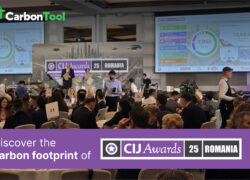
For the third consecutive year, the CIJ Awards partnered with CarbonTool to measure and communicate the environmental impact of our event. What began as a simple calculation effort in 2023 has evolved into a defining part of our sustainability journey, one that helps us track our progress and understand our influence.


This year, CarbonTool once again introduced a live carbon footprint dashboard, allowing guests to follow the event’s environmental impact as the evening unfolded. Attendees were able to contribute their commuting method, directly shaping the final results and making the assessment more accurate and more reflective of real mobility choices.


Event Carbon Footprint Results


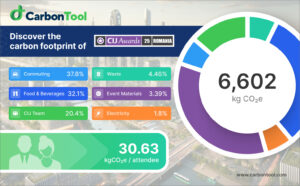
The total carbon footprint of the CIJ Awards 2025 amounted to 6,602 kgCO₂e, covering all major activity categories assessed for the event. The distribution across key categories is as follows:


  • Commuting: 2,497 (37.8%)
  • Food & Beverages: 2,118 (32.1%)
  • CIJ Team: 1,350 (20.4%)
  • Waste: 294 (4.46%)
  • Event Materials: 224 (3.39%)
  • Electricity: 119 (1.8%)


When viewed per attendee, the footprint translates to 30.63 kgCO₂e, offering a clear and comparable indicator of the event’s environmental performance. These results provide a solid baseline for guiding future improvements and ensuring we continue moving in the right direction.


Making the Data Meaningful


To make the overall impact more intuitive, CarbonTool translated the event’s total footprint into a set of accessible, real-world equivalences. These visual comparisons helped attendees better understand the scale of emissions at a glance, turning technical data into something tangible, relatable, and easier to communicate. This approach continues to encourage meaningful conversations about sustainability among participants, partners, and the broader community.


Commuting Insights from Attendees


Mobility plays a central role in any event’s environmental impact, and this year’s data offered several encouraging insights. Commuting contributions from attendees highlighted car travel, walking, and rail-based public transport as the top three modes. This mix reflects a balance between convenience and lower-impact choices: while many relied on cars, a notable share of guests chose to walk or use urban rail systems, an optimistic sign of increasing accessibility and environmental awareness.


These patterns not only enrich our understanding of how participants travel but also point to clear opportunities for future editions to further promote low-carbon commuting options and strengthen our overall impact reduction efforts.


Looking Ahead


The findings from this year’s assessment reinforce a hopeful message: change is possible, and it’s measurable. Each year, the CIJ Awards becomes more sustainable. Not through dramatic shifts, but through consistent, cumulative improvements supported by data, transparency, and collaboration.


With CarbonTool’s support and the engagement of our community, we remain committed to setting a positive example for responsible, sustainability-focused event management.


front page info
LATEST NEWS