Meta Estate Trust plans to expand into the Romanian retail market

Meta Estate Trust, a holding company active in the Romanian real estate sector, announces its intention to invest EUR 10 million this year in the Romanian retail real estate sector. Meta Estate Trust’s retail investment plan includes the acquisition of retail parks completed with food anchors, fully operational, respectively with lease agreements concluded for periods of 10 – 15 years.

“We have been closely following the retail market in the country since the middle of last year, with the securing of the portfolio of four stand-alone assets that are to be developed and leased to the international food retail brand Penny. The evolution of the retail sector in recent months, both in terms of new developments and confirmations of expansion plans by large retailers, shows us that our decision to enter this market, as early as 2024, was a very inspired one. We are counting on the development of this sector in 2025 and we have a competitive advantage, we are very agile in analysis which allows us to make decisions quickly,” said Alexandru Bonea, CEO of Meta Estate Trust.

The investment selection criteria target projects completed or in the process of completion in 2025, with an investment value between EUR 2 and 6 million, which benefit from reference tenants.

NBI: Accelerated growth in 2024, even more promising prospects for 2025

With a total of almost 1,300 real estate transactions, North Bucharest Investments (NBI) managed to triple its sales volume compared to 2023, and the total value of transactions reached EUR 146 million in 2024. This amount reflects an increase of 133% compared to the previous year and consolidates the company’s leading position on the real estate advisory market in the capital.

The ascension was possible thanks to the expansion of the project portfolio by almost 50% compared to 2023. North Bucharest Investments now represents 184 residential complexes, villas and houses, 79 of which are large-scale projects.

Among the most important projects in the portfolio are Nusco City, Nusco Green Homes, Yacht Kid, Prima Vista, Up Site, Quartier du Nord, Ivory Residence, Oxford by Victoria Homes, Quartier Azuga, Quartier Ferdinand, High Garden East, Avrig Park Residence, Britwood 144 by ANSI Real Estate, SkyLight Residence, Elie Sabb by Metropolitan, Avalon Estate or Bellmonde.

“With this portfolio, North Bucharest Investments succeeded in 2024 in attracting the attention of investors, who accounted for more than 60% of the total transactions. The projects that we have in our portfolio have generated high-performing figures, with the average returns last year being around 21%. Residential end-customers account for 40% of our total sales, and this category includes families with children as well as individuals who want a home close to the office, well connected to transport, educational facilities and shopping centers. Areas such as sectors 1, 2 and 3 in Bucharest have been important points on the housing sales map,” says Vlad Musteață, CEO of North Bucharest Investments.

Among the most valuable transactions in 2024 were the sale of an exclusive penthouse in the Up Site development for EUR 1.65 million, a EUR 1.1 million apartment in the same development and a EUR 700,000 property in Brick. These transactions confirm the high interest in premium properties, as well as the trend in the real estate market to increasingly focus on premium developments.

NBI’s offering brought in a record number of requests during 2024. Over 11,000 people contacted the company through www.northbucharestinvestments.ro, an increase of 112% on the previous year. To respond promptly to enquiries and ensure the highest level of professionalism in the advice provided, the NBI team expanded significantly to 158 members, up 285% on 2023.

NBI also started 2025 with promising results. In January, the company recorded a total of 114 transactions, a doubling in volume compared to the same period of the previous year. The cumulative value of transactions in January 2025 totaled EUR 14.3 million.

“We aim to expand into other areas of the capital in 2025, by taking on large-scale projects from developers with whom we are already working, as well as by attracting new strategic partnerships. We will also focus on integrating innovative, sustainable and trend-aligned projects. NBI will continue to be a key player in the transformation of the real estate market in Romania and we are also interested in landmark projects in Romania’s major cities, such as Cluj, Iași and Brasov, where the economy is booming and attracting more and more investors”, said Vlad Musteață – CEO – NBI.

The company targets for 2025 to further support professional training in the real estate industry, and the North Bucharest Investments Academy through which it trains its employees will provide the market with expertise for the highest standards.

Colliers: Romania’s construction market entered 2025 under significant pressure

Romania’s construction market entered 2025 under significant pressure, driven by rising material costs, uncertain public investment, and new fiscal measures affecting the labor force. While the sector remains highly active, the 4% decline in 2024 compared to the record year of 2023 signals the first signs of a slowdown, according to Colliers’ annual report. Construction material prices have returned to 2022 record levels, while a budget deficit of nearly 9% of GDP casts doubt on the future of large EU-funded projects. Additionally, the removal of tax relief for construction workers is further straining companies in the sector, potentially leading to higher costs in 2025.

“Romania’s construction market maintained a high level of activity in 2024, despite a slight 4% decline from the previous record year, according to data from the National Institute of Statistics. Compared to 2018, construction activity in 2024 was 78% higher, reflecting significant industry growth. This expansion has been driven by large-scale public investment and a stable private sector, though growth rates vary across segments. However, these investments are heavily reliant on European funds, which in turn depend on the implementation of post-pandemic reforms. Delays in reform execution and a budget deficit nearing 9% of GDP raise concerns about the future of major projects. As spending cuts become increasingly inevitable, public investment could slow down, leading to a sector-wide re-prioritization”, explains Alexandru Atanasiu, Board Member & Head of Construction Services at Colliers.

Romania delivered in 2024 approximately 200 kilometers of express roads, expanding the national motorway network to around 1,200 kilometers – a significant improvement compared to the annual average of 35 kilometers recorded over the previous decade. Currently, more than 600 kilometers of motorway are under construction, alongside major rail and healthcare infrastructure projects. The private sector also holds strong growth potential, as all segments of the real estate market remain less developed than in other Central and Eastern European countries, with an even wider gap compared to Western Europe.

However, the current economic climate has made developers more cautious, with challenges varying across sectors. In the residential market, uncertainty and administrative bottlenecks have put many projects on hold. Industrial developers are also exercising caution due to the slowdown in the European economy, while the retail segment continues to expand, with major projects planned for the coming years. In fact, Colliers consultants note that retail is the only real estate sector showing significant acceleration, following an already strong period of growth.

“After construction material prices dropped in 2023 from their 2021-2022 peaks, the market appeared to be stabilizing. However, this trend has now reversed due to global geopolitical tensions, which continue to fuel uncertainty in international markets. In some respects, the situation is even more unpredictable than the post-pandemic period, when supply shortages led to massive price increases. The London Metal Exchange Index, which tracks aluminum, copper, and zinc prices, has surged nearly 12% over the past year, with copper reaching a new record high in 2024. Meanwhile, data from the Office for National Statistics shows that the decline in building material prices observed in 2023 has been completely reversed, with costs returning to 2022 record levels. At a time when developers are struggling to pass these higher costs onto customers and tenants, this trend could pose a serious challenge in 2025. If geopolitical tensions persist and new trade conflicts emerge between major economies, prices could continue to climb”, says Silviu Pop, Director CEE & Romania Research la Colliers.

Another factor driving up construction costs has been the shortage of labor. Compared to the pre-pandemic period, total employment in the economy has grown by only 3%, while the construction sector has expanded by 14%. This growth has been supported by competitive wages, which – when adjusted for the cost of living – are now comparable to those in Western Europe. However, Colliers consultants expect this dynamic to shift by 2025 with the removal of income tax relief for construction workers. With workforce retention already a challenge, companies in the sector will have to absorb additional costs, which will likely lead to further price increases.
“The Romanian construction sector is undergoing a period of accelerated transformation, driven by significant economic and fiscal changes. On one hand, infrastructure investment and the expansion of the real estate market are creating major opportunities. On the other hand, developers and investors are navigating an increasingly complex regulatory framework. To ensure the sustainability and profitability of projects, it is essential to adapt quickly to new tax regulations, including the impact of the CBAM pollution tax on imported construction materials and changes to VAT deductibility”, explains Alex Milcev, Tax & Law Services Leader at EY Romania&Moldova.

In this context, 2025 is shaping up to be a transitional year for the Romanian construction market, marked by significant adjustments in both the public and private sectors. Rising costs, uncertain public investment, and fiscal pressures will compel industry players to adapt their plans and find solutions to maintain operational stability. In the longer term, the pace of development will depend on the market’s ability to navigate these challenges, alongside external factors such as European funding and the geopolitical climate. In this complex economic landscape, flexibility and efficiency in resource allocation will be essential to sustaining long-term growth in the construction sector.


nZEB Residential Design Guide

In the heart of Bucharest, where history intertwines with modernity, a visionary project was set to redefine urban living. Mosaic Residence, renowned for its innovative developments in Brașov, where it has completed and handed over 355 apartments, embarked on its inaugural residential venture in the capital. This ambitious project aimed to introduce a new standard of luxury and sustainability to Bucharest’s skyline.

To bring this vision to life, Mosaic Residence Bucharest collaborated with Mihaela Oroian, a real estate professional with over two decades of experience in the industry. Mihaela’s expertise in urbanism and real estate development, complemented by her commitment to sustainable building practices, made her the ideal partner for this endeavor. One of the standout features of this development was its commitment to sustainability, being nZEB certified, according to law 372/2005 republished in 2020. Designing an nZEB (nearly Zero Energy Building) residential project involves strategic planning to maximize energy efficiency, integrate renewable energy, and ensure long-term sustainability.

Here’s how the project was tackled in 5 steps:

1. Analyze the opportunity:
● Market demand for energy-efficient residential buildings
● EU & local regulations requiring nZEB compliance
● Financial incentives and subsidies available
● Growing consumer interest in sustainable living

2. Set the Key Objectives:
● Minimize energy consumption
● Maximize renewable energy use
● Ensure long-term cost savings and ROI

3. Summarize The Site & Feasibility Analysis
● Project location & key advantages
● Site conditions & solar orientation
● Regulatory compliance & permits
● Financial feasibility: upfront cost vs. long-term gains

4. Implement the following:
● Passive Design Strategies
● Energy-Efficient Systems
● Renewable Energy

5. Update the Financial Model & ROI
● Upfront Costs vs. Energy Savings Over Time
● Break-even Period & Long-Term ROI
● Available Incentives, Tax Benefits & Green Financing

Why Invest in This Project?
● High market demand & future-proof design
● Strong ROI with reduced energy costs
● Green financing & government incentives
● Premium property value & consumer appeal

Potential Green Financing & Incentives
● EU & National Grants: Covers up to 30-50% of additional costs
● Tax Reductions: Lower property taxes for certified green homes
● Green Mortgages: Lower interest rates for energy-efficient properties
● Net Metering: Savings from selling excess energy back to the grid

Long-Term ROI
● 25-50% Higher Resale Value due to green certification
● Up to 90% Reduction in Energy Bills
● More Attractive for Rental Market (Airbnb, Long-Term Renters)

The collaboration between Mosaic Residence and Mihaela Oroian resulted in a residential space that not only met the demands of modern city life but also anticipated the future needs of its inhabitants. This development set a new benchmark for residential projects in Bucharest, exemplifying how thoughtful design and strategic partnerships can create spaces that resonate with both functionality and beauty.

The success of this inaugural project will pave the way for further developments, solidifying Mosaic Residence’s reputation as a trailblazer in the Romanian real estate market. For Mihaela Oroian, the delivery of the first project for Mosaic Residence in Bucharest (scheduled for Q4 2025) is another testament to her unwavering commitment to excellence and her vision of creating spaces that truly benefit the community.

The rising energy costs are stimulating innovation and increasing demand for nZEB and especially ZEB-compliant housing. In a previous material published by Romania Insider, “Real estate investment – The Impact of the potential S&P downgrade of Romania to Junk Status in 2025”, Mihaela recommended the focus on Green Certified Buildings as future-proof homes contributing to decarbonization benefiting of low tax and energy price efficiency.

Connect with Mihaela Oroian: If you consider expanding your business into the Romanian real estate market and covering your business with any potential risks you can check with her what is needed to secure a profitable investment.

Find details at https://mihaelaoroian.com/ to develop top-performing residential projects and differentiate your assets on the market.

Winmarkt shopping mall owner begins exit from Romania

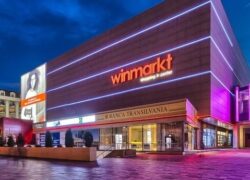
The Italian group Imobiliare Grande Distribuzione, which entered the local market 17 years ago by taking over the Winmarkt shopping mall network, has sold its first mall in Romania, with the ultimate goal of selling the entire local business.

The Italians have collected EUR 8.3 million for the shopping center in Cluj-Napoca. The project has a gross leasable area of 7,873 sqm, over 11,000 sqm of total area and includes 35 stores.

“The company will continue with determination in implementing a program that aims, as we have seen, to consolidate our capital and financial structure and maintain a firm focus on the Italian market,” says Roberto Zoia, CEO and general manager of IGD. The company intends to use the money obtained to reduce its debts.
IGD owns 14 shopping centers and an office building on the local market, a portfolio valued at over EUR 163 million.

Two Romanian entrepreneurs develop luxury residential project in Pipera

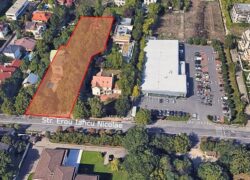
Entrepreneurs Valentin Herea and Sorin Istrate are preparing their entry into the luxury residential market with a project located on Erou Iancu Nicolae Street in Pipera.

After leaving the Contexpert business, Sorin Istrate founded NDSA Group, with the aim of developing luxury residential projects in Bucharest. NDSA Group entered into a partnership with Romcity Property, a company owned by Valentin Herea, and together they joined two plots of land with villas on them, located next to the Lidl store on Erou Iancu Nicolae Street. The investors’ plan is to demolish the existing buildings, to free up the land of about 4,000 square meters, and to build in its place two other buildings with two basements, a ground floor and 3 floors, which will group 46 luxury apartments with average areas of over 130 square meters, not including balconies.

The apartments will be distributed 6 on each floor of the two buildings, plus 5 on the ground floor. 127 parking spaces will be arranged in the basements of the buildings. The investment value in this project was estimated at EUR 4.6 million.

Source: Profit.ro

Bucharest will have a new metro line

The Ministry of Transport has approved a new metro line, the extension of the M4 between Gara de Nord and Gara Progresul.

According to an announcement by the Minister of Transport, Irinel Ionel Scriosteanu, the new section will be 11.94 km long. The new line will also have an above-ground depot at Progresul, as well as 13 new metro stations: Ştirbei Vodă, Bogdan Petriceicu Haşdeu, Uranus, George Rozorea, Chirigiu, Filaret, Eroii Revoluţiei 2, George Bacovia, Toporaşi, Nicolae Cajal, Luică, Giurgiului, Progresul.

The connection with the existing Main Line will be made at Gara de Nord 2 Station by continuing the axes of the Line 1 and Line 2 tracks.
The total value of the investment is EUR 3.43 billion (including VAT), and the source of financing is provided from non-reimbursable European funds, the state budget and other legally established sources of financing.

The duration of the investment is 50 months, i.e. 4 years.

Dutch retailer Action opens stores in the Capital and Cluj

Action, one of the largest European discount retailers, continues its expansion and enters the Romanian market with new stores in Bucharest and Cluj. The company is now in the process of recruiting employees for these units.

Action has a portfolio of over 6,000 products in 14 different categories. Their range includes everyday essentials, such as cleaning and sanitary products, but also other types of useful items. A distinctive aspect is the price: more than two-thirds of Action’s products cost under 2 euros.

Founded 30 years ago in Enkhuizen, the Netherlands, Action has expanded rapidly, becoming one of the largest non-food discounters in Europe. The retailer has over 2,600 stores in 12 countries and over 72,000 employees from 159 nationalities.

Ovidiu Budeanu in talks with Carrefour to take over Supeco Bacău land

Entrepreneur Ovidiu Budeanu is discussing with French retailer Carrefour the conditions under which he will take over the Supeco Bacău land in exchange for a space inside the strip mall that will be built in the expansion of the Arena Mall shopping center and where a Carrefour Market with a sales area of about 2,000 square meters can be set up.

“We are in talks with Carrefour to offer them a space of about 2,000 square meters in the future strip mall area for a modern supermarket. In return, they will give us the land that Supeco currently operates on and which we intend to use for a future expansion of Arena Mall,” said Ovidiu Budeanu.

Ovidiu Budeanu is now working on expanding the Arena Mall area, for which he has set the inauguration date for March 2026. In addition, he will build a strip mall and a 4-star hotel affiliated with the Mercure network on top of it, both with a completion date of the last quarter of 2026. As part of the expansion works, a 1,000-space parking lot has already been arranged, and at the end of February, the first block with 90 apartments in the 3 buildings designed to complete the commercial area is planned to begin construction.

Source: Profit.ro

Herc Gradnja acquires Igalo hotel for EUR 11.3 million

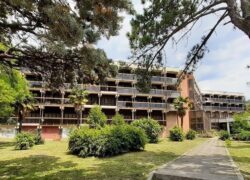
Montenegrin company Herc Gradnja has bought the Adriatic hotel Igalo for EUR 11.325 million at the second auction for the hotel’s sale. The purchase price is below the starting price of 18.85 million euro at the first auction that failed to attract any buyers in January.

“We are going to pay the full amount in 15 days,” said the owner of Herceg Novi-based Herc Gradnja, Bratislav Pidzula. He said that, depending on administrative procedures, he hopes to launch a planned investment within a year.

So far, hotel Igalo belonged to troubled local hotel operator Vektra Boka. Its sale was organised by a public bailiff with the aim of allocating the proceeds to settle creditor claims. If Vektra Boka enters bankruptcy, domestic lender CKB would be the first, and perhaps the only creditor to have its claims settled as the sale of the company’s assets would not raise enough money to cover all claims.

front page info
LATEST NEWS