Logivest facilitates Deufol’s logistics hub in Nittenau

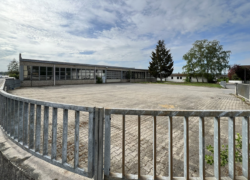
Global logistics provider Deufol has expanded its operations in the Upper Palatinate, securing a 5,000-square-meter property for logistics and storage in Nittenau, with assistance from real estate advisor Logivest. The property, located at Bayerwaldstraße 4 and owned by a private individual, offers Deufol close proximity to a key client, a prominent machinery and component manufacturer, enabling efficient goods flow management within the region.

The site includes a robustly built 2,500-square-meter hall with ground-level access gates, complemented by an additional 2,500 square meters of open space. “Positioned between major routes B16 and B85 and near the A93 freeway, the location provides quick access to Regensburg, where Deufol operates several branches,” said Alexander Meiringer, Consultant for Industrial and Logistics Letting at Logivest. “The proximity to the Czech border also enhances its value for international logistics.”

Deufol has already commenced operations at the new facility, strengthening its strategic foothold in the region.

Poland’s GDP to grow 3.1% in 2024 with rate cuts expected by March, EY forecasts

Poland’s economy is projected to expand by 3.1% in 2024, with growth accelerating to 3.6% in 2025 before moderating to 2.9% in 2026, according to EY economists. Inflation is expected to remain a challenge, with forecasts suggesting it will peak at 5% in 2025 — the highest rate in the EU. EY predicts the National Bank of Poland (NBP) will initiate an interest rate cut cycle in March 2025, starting with a 25-basis-point reduction.

“Central and Eastern Europe (CEE) is set to lead in GDP growth, driven by strong wage growth and inflation expected to stay below 5%,” EY noted. The region’s growth will be bolstered by EU fund absorption, relaxed monetary policies, and a rebound in Western European export demand.

Poland’s competitive labor market is enhancing productivity, as shown by a 9% rise in real GDP per hour in Q2 2024 compared to pre-pandemic levels. This outpaced gains in both the U.S. and Europe. The report highlights that Polish economic expansion is fueled by increasing real income, continued wage growth, rising investments, and robust exports supported by the EU Recovery Fund and defense spending.

Meanwhile, EY forecasts the euro area to see modest growth rates of 0.8% in 2024, 1.3% in 2025, and 1.5% in 2026. Germany faces particular economic challenges, with issues in key sectors and a restrictive fiscal approach dampening its recovery, according to EY’s Chief Economist for Europe and Central Asia, Marek Rozkrut.

Poland, Hungary, Croatia, and Slovakia are experiencing significant price pressures, particularly in services, driven by wage increases above 10%. EY anticipates Poland to record the highest inflation rate in the EU in 2025, with energy price deregulation adding to the pressure.

The National Bank of Poland is expected to introduce four rate cuts of 25 basis points from March to September 2025, followed by a larger 50-basis-point cut in 2026, aiming to curb inflation below 3.5% by that year. Interest rates are projected to settle at 4.25% by 2026, reflecting Poland’s strong economic momentum, EY concluded.

Source: EY and ISBnews

Polish government moves to strengthen homeland defense with recruitment and education amendments

The Polish government aims to adopt an amendment to the Homeland Defense Act and Higher Education and Science Act in the fourth quarter, aiming to streamline recruitment for military service and offer financial incentives for soldiers pursuing studies abroad. The proposed changes are outlined in the Council of Ministers’ legislative agenda.

The draft amendment proposes enhancements to the Armed Forces’ recruitment process, including provisions for soldiers to study abroad with potential reimbursement upon completion, stronger data privacy protections, and funding support through the Armed Forces Support Fund. It also includes measures for improved participation in training exercises and the creation of new disciplinary bodies with clearly defined competencies.

Additional updates include easing regulatory requirements by reducing certain administrative steps in granting allowances and incentives for both professional and non-professional soldiers. Military education is also a focal point, with the amendment clarifying that subsidies to military universities for educating civilian students will not count as defense spending.

Other proposed adjustments address military family support, such as limiting simultaneous travel assignments for soldier spouses caring for young children, and allowing inactive reserve soldiers to take on roles within NATO, EU, and international organizations stationed in Poland.

The amendment reflects the government’s ongoing commitment to strengthening Poland’s defense readiness and supporting the personal and professional development of its military personnel.

Source: ISBnews

Budimex Mobility eyes expansion with nearly 500 new e-car charger locations

Budimex Mobility, the electric vehicle (EV) charging division of Budimex Group, is preparing to significantly expand its network with nearly 500 potential new charging station locations currently under review. The company already operates 170 active chargers and anticipates reaching 460 stations by the end of 2026, according to Cezary Łysenko, Board Member and Director of Infrastructure Construction.

“Today, Budimex Mobility operates 170 active chargers, including both AC and high-speed DC chargers,” said Łysenko in a press conference. “We are seeing greater demand for DC chargers, so we are transitioning some AC stations to DC to meet this need. Currently, we are evaluating nearly 500 new sites for expansion.”

Łysenko added that Budimex is considering partnerships with external investors to fund further mobility projects, given the capital-intensive nature of the business. The company projects its EV charging network will reach profitability around late 2026 or early 2027.

Budimex, a prominent player on the Warsaw Stock Exchange and part of the WIG20 index, is majority-owned by Spain’s Ferrovial. In 2023, the company reported consolidated revenues of PLN 9.8 billion.

Source: Budimex Mobility and ISBnews

Emotional farewell as Czech Airlines ends flights under iconic code OK

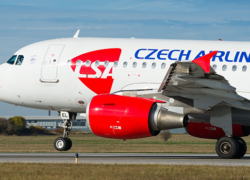
In an emotional farewell, the final Czech Airlines (CSA) flight landed at Prague Airport late Saturday night, marking the end of nearly a century of operations under the iconic code OK. Arriving from Paris just before midnight, the fully booked flight was met by dozens of aviation enthusiasts, former employees, and members of the public who gathered to commemorate the airline’s legacy.

Among the passengers was Michal Pupcsik, who flew to Paris specifically to experience the final CSA flight. “I’m completely moved now,” Pupcsik said upon arrival, recalling the captain’s emotional message to the passengers, urging the Czech people to remember the importance of the airline’s legacy. Similarly, frequent flyer Petr Lang, who also booked a seat on the flight, expressed disappointment that the traditional “Vltava” tune was not played upon arrival, a hallmark of CSA landings.

A crowd of onlookers watched from the observation deck, many clapping and waving as the plane touched down. Former steward Jiří Veselovský, who served CSA for over 40 years, described it as a “funeral for the CSA we remember,” joined by ex-colleague Daniela Koláčová, who reflected on the company’s struggles in recent years. Fans, including Mr. Jaroslav from Plzeň, also came to witness what he called a “milestone, albeit a sad one.”

With this final flight, CSA operations will be fully transferred to its parent company, Smartwings, which will use its own code, QS, though CSA’s logo and branding will remain. Founded in 1923, CSA was one of the world’s five oldest airlines. Following financial turmoil and changes in ownership, the airline has now been fully integrated into the Smartwings Group.

The farewell was also marked by the Czech Civil Aviation Authority, which flew the national and European Union flags at half-mast in honor of CSA’s long legacy in Czech aviation.

Source: CTK

Czech older property prices surge amid rising demand and accessible mortgages

The Czech real estate market has seen a continued rise in the price of older properties throughout the third quarter of 2024, largely driven by increased demand and improved mortgage availability. Apartment prices climbed by an average of 11% year-on-year and 5% since the previous quarter, with regional areas seeing the highest surges in prices, outpacing traditionally popular locations, according to data from real estate platform Bezrealitky.cz.

The average price of older flats in Prague reached CZK 128,000 per square meter, marking a 1% quarterly increase and a 9% jump from last summer—equivalent to the price of new-build apartments in the capital. In the Central Bohemian Region, flat prices surged 6% from the second quarter and 9% year-on-year, crossing CZK 80,000 per square meter for the first time. Meanwhile, in Brno, prices climbed to around CZK 94,000 per square meter, up 9% quarterly and nearly 16% annually.

Notable regional hikes were recorded, with six areas experiencing double-digit percentage increases. The Ústí nad Labem region saw prices rise by 20%, followed by Liberec at 18% and České Budějovice at 17%. Year-on-year, flats in the Moravian-Silesian and South Bohemian regions have become more than a quarter more expensive. Bezrealitky analysts attribute these surges to pent-up demand from weaker housing activity earlier in the year.

Single-family home values also rose significantly, up by 10% compared to last year and 1% quarter-on-quarter, though some regions saw slight declines. Home prices fell by 2% year-on-year in both the Ústí nad Labem region and Vysočina, while Pardubice and Olomouc saw increases of nearly 33% over 2023, with values in Moravian-Silesian and Plzeň regions up by a quarter.

Rising property values have also put pressure on the rental market, which has seen a marked increase in interest this year. Demand for rentals traditionally cools in summer but remained high, continuing into the start of the fourth quarter without seasonal dips.

“Rental price maps are being completely rewritten,” said Bezrealitky director Martin Ponzer. “Over the past five years, monthly rent for a 65-square-meter apartment has risen by over CZK 6,000 in Prague, CZK 5,000 in Brno, and CZK 4,300 in Central Bohemia. The country is moving toward the Western model, where rent makes up over half of household expenditures.”

Demand in Prague remains high, with about 73 people vying for each rental apartment. The city saw rental prices increase by 5% this quarter, averaging CZK 386 per square meter. In Brno, rental rates rose by 6% to CZK 301 per square meter, with 35 applicants per unit, while Central Bohemia saw a 5% increase, reaching CZK 271 per square meter.

Source: CTK

Poland: Economic outlook dims as forward-looking indicator drops, new orders decline

The Forward Looking Indicator (WWK), a key economic measure forecasting future trends, slipped by 0.2 points in October 2024, marking a continuous decline since the start of the year. Cumulatively, the index has dropped by 1.5 points, underscoring a persistently bleak economic outlook.

A key factor driving this downturn is the ongoing decrease in new manufacturing orders, affecting both international and domestic markets. With sluggish economic activity across much of Europe, foreign demand has weakened, while signs of shrinking domestic demand—previously a growth engine—are also emerging. The hardest-hit sectors include metals, machinery and equipment, electronics, and textiles.

This reduced demand has led to an unusual surge in the stockpiling of finished goods. Despite months of efforts to reduce inventories and scale back production, companies are finding their warehouses unusually full. This inventory build-up is particularly concerning, as firms typically clear out space in anticipation of holiday production needs. The implication is that further production cuts may be on the horizon.

While industrial output remains weak, there has been a slight improvement in the financial outlook among manufacturing companies. Some firms have adapted to cost pressures from minimum wage increases, while downsizing inventory has helped lower operating costs. However, sentiment remains largely negative, with over 15 percent of companies reporting financial deterioration compared to those seeing improvement.

Business leaders across the sector also express a grim outlook for the broader economy, resulting in a cautious approach to investment. This year and next, most firms plan to rely on their own funds for capital expenditures, with only 25% seeking bank loans to supplement financing.

The M3 money supply saw a modest rise compared to last month, though it has largely stagnated this year. Corporate investment remains low, as reflected in muted demand for business loans. While household borrowing is relatively stronger, mortgage interest has dipped significantly since June, indicating broader financial caution among consumers.

Panattoni Park Bolesławiec welcomes first tenant, Toyota Boshoku Poland

Panattoni has officially inaugurated its newly constructed 50,300 sqm logistics park in Bolesławiec, Lower Silesia, with Toyota Boshoku Poland signing on as the first tenant. The automotive supplier will occupy a 6,500 sqm warehouse in the development, strategically located near Toyota Boshoku Poland’s headquarters to facilitate efficient logistics and operations.

Toyota Boshoku Poland, a subsidiary of the global Toyota Boshoku Group, specializes in the production of car seats, components, and interior fittings. The company’s choice to establish a warehouse at Panattoni Park Bolesławiec reflects both the location’s proximity to its main production center and its access to critical transport routes for markets in Western Europe. The warehouse will enhance Toyota Boshoku’s ability to support nearby production facilities and expedite the movement of products across borders.

“Leasing space in Park Bolesławiec is essential to meet our logistics needs,” said Kamil Suchorski, Vice-President of Toyota Boshoku Poland. “The location’s proximity to our main factory—where we produce parts for over 500,000 vehicles annually—combined with excellent road links, makes it ideal for managing our supply chain efficiently.”

Damian Kowalczyk, Development Director at Panattoni, celebrated the partnership: “We are thrilled that Toyota Boshoku Poland has chosen Panattoni Park Bolesławiec. This lease aligns with our strategy to deliver modern warehouse solutions in prime locations. Lower Silesia is increasingly viewed as a gateway to Europe, and our facilities are becoming vital links in the logistics chains of global players.”

Panattoni Park Bolesławiec offers exceptional road connectivity, located just 50 km from the German border via the A4 motorway toward Dresden and 80 km from the border via the A18 toward Berlin. The park is equipped with 184 parking spaces for cars, twelve HGV spaces, and 91 loading docks, making it an ideal site for logistics, e-commerce, and manufacturing enterprises looking to expand their European footprint.

Mateusz Gessler extends lease for ĆMA and Warszawski Sen at Hala Koszyki for five more years

Renowned restaurateur Mateusz Gessler has renewed the lease agreements for his acclaimed Warsaw eateries, ĆMA and Warszawski Sen, securing their place in Hala Koszyki for another five years. Both restaurants, fixtures in the iconic Hala Koszyki since its launch, recently celebrated eight years of serving Warsaw’s food lovers and cultural enthusiasts.

Hala Koszyki, Poland’s pioneering food hall, has established itself as a culinary and social landmark in Warsaw, attracting locals and tourists alike with its unique mix of dining experiences. Combining food, art, and atmosphere, Koszyki has redefined the city’s gastronomic landscape. Gessler’s restaurants, which have been integral to this evolution, are widely recognized for shaping Warsaw’s contemporary food culture. The renewal reflects a continued partnership between Hala Koszyki and Gessler, along with his co-managers Łukasz Henryk Sagan and Joel Birman.

“I’m thrilled to remain part of this innovative project that has transformed Warsaw’s dining scene,” said Gessler. “We approach each day with the same passion we had at the beginning, constantly seeking new ways to delight our guests and make their time with us memorable.”

ĆMA, a 24-hour restaurant inspired by urban cuisine, will soon undergo a renovation aimed at appealing to a new generation of patrons, including Gen Z diners. With its compact 122-square-meter space, ĆMA has built a loyal following by merging modern aesthetics with Polish culinary traditions, offering a unique venue for both dining and conversation.

Meanwhile, Warszawski Sen, a 280-square-meter venue designed with sleek, dynamic interiors, offers a modern Polish menu developed by Gessler and head chef Robert Kondziela. The space, which hosts events for up to 100 guests, provides patrons with a full sensory experience, blending culinary and visual artistry.

Piotr Krowicki, Marketing Manager of Hala Koszyki at Globalworth Poland, praised Gessler’s contributions: “Through ĆMA and Warszawski Sen, Mateusz Gessler has helped craft the unique atmosphere that defines Hala Koszyki. We share a vision of creating a space that combines culinary, artistic, and social experiences, honoring local flavors and traditions while keeping pace with the city’s vibrant pulse.”

Hala Koszyki is currently expanding its food and beverage offerings, with renovations planned for Tuk-Tuk, a Thai restaurant, and Curry Leaves, a celebrated Indian eatery. These upgrades are part of Koszyki’s commitment to evolving alongside Warsaw’s dynamic culinary scene.

The venue’s impact extends beyond dining, as demonstrated by recent accolades. Hala Koszyki was a finalist in the 2024 Food Business Awards and was recently awarded the Superbrands Emblem for the second time, underscoring its status as a trusted and beloved destination. Additionally, Koszyki hosts an ongoing calendar of festivals, concerts, and themed events, enhancing its role as a community hub where Warsaw’s diverse crowd can meet, enjoy, and be inspired.

For eight years, Hala Koszyki has remained a magnet for unique culinary experiences, and with Gessler’s extended commitment, it’s set to remain a cornerstone of Warsaw’s gastronomic and cultural landscape.

Germany: Residential real estate sentiment rises amid mixed office outlook

In an encouraging shift, the real estate market sentiment for residential property has brightened, with investor optimism edging higher compared to the previous year. Institutional investors, asset managers, and other stakeholders expressed growing confidence in apartment buildings and condominiums, with expectations set for price increases in these segments over the next year, according to the 2024 sentiment survey by RUECKERCONSULT, commissioned by HIH Invest Real Estate and Ypsilon Steuerberatungsgesellschaft. The survey, drawing responses from 161 real estate market players, highlights a year-over-year improvement in market sentiment while remaining slightly in negative territory overall.

Market Mood Warms, Led by Residential and Logistics Sectors

The overall sentiment index posted a score of -0.06 on a scale from -3 (very poor) to +3 (very good), reflecting a modest year-over-year improvement of 0.37 points. Institutional investors and property managers rated market conditions most favorably, with respective scores of 0.40 and 0.63. Although project developers remained the least optimistic, their sentiment rose by 0.8 points, suggesting a positive shift following two challenging years. Peter Lenz, partner at Ypsilon Steuerberatungsgesellschaft, observed, “The industry appears to be gradually moving back to a more neutral mood, a sentiment echoed at recent events like Expo Real.”

Residential and Logistics Top Investment Preferences; Office Sector Faces Challenges

The survey forecasts a continued appetite for residential properties, with 79% of respondents predicting strong investor interest in rental apartments and 42% favoring logistics real estate. Demand for office and retail real estate, on the other hand, is expected to soften, with 57% of respondents anticipating lower office demand and 54% forecasting declining investor interest in office properties. Carsten Demmler, Managing Director at HIH Invest, commented on residential demand, stating, “Population growth and the trend toward smaller households continue to drive demand, especially given the limited supply of new housing.”

Rent Expectations: Strength in Residential, Weaker Prospects for Office and Retail

In the coming year, residential rent increases appear likely, with 94% of respondents forecasting rises, while 62% expect rents to climb by around 5%. Logistics rents are also poised to increase, with 43% of survey participants expecting a 5% rise, and a smaller group anticipating even stronger growth. Conversely, the outlook for office rents remains muted. Approximately 76% of respondents expect office rents to either decline or stagnate, with 45% predicting a decrease and only 24% expecting growth. According to Felix Meyen, HIH Invest’s Managing Director, “While demand for prime office space in central business districts remains steady, outdated stock in secondary locations will likely struggle, increasing rent disparities.”

Price Forecasts: Rising Values for Residential and Logistics, Declines for Office and Retail

Notably, residential price expectations have shifted upward. In 2023, most respondents anticipated falling prices for multi-family buildings, but this year, 63% expect values to rise. The logistics segment follows a similar trend, with 52% forecasting price increases. Meanwhile, the commercial outlook remains less optimistic: 59% anticipate falling prices for office properties, and 49% expect retail prices to drop.

A-Cities Remain Preferred Office Investment Markets; B-Cities Dominate Residential and Logistics

A-cities hold the highest appeal for office investments, with 73% of respondents pinpointing these areas as top opportunities, while residential and logistics investments are expected to perform best in B-cities. Notably, 47% of respondents favor B-cities for residential investments, reflecting a strategic shift as investors seek high-growth potential beyond the primary cities.

The sentiment survey, conducted from late August to late September 2024, underscores a resilient residential and logistics market in the face of broader challenges, with institutional investors positioning themselves for long-term growth across diversified sectors.


front page info
LATEST NEWS