STRABAG PFS Secures Facility Management Contract for German Aerospace Center Sites

STRABAG Property and Facility Services (STRABAG PFS) has been appointed to provide technical facility management at two locations of the German Aerospace Center, in Oberpfaffenhofen and Augsburg.

The contract covers the management of technical systems at both research sites, which are part of Germany’s wider aerospace and innovation infrastructure. STRABAG PFS will oversee the operation and maintenance of complex building systems, with a focus on reliability and continuity.

The company stated that its core areas of expertise include “the safe operation, availability, precise maintenance and fault prevention of technical systems,” reflecting the requirements of facilities where uninterrupted performance is essential.

At the Oberpfaffenhofen site, one of the country’s largest research hubs, activities span aviation, space, robotics, earth observation and digital technologies. The operational demands of such an environment require closely monitored and resilient technical infrastructure.

Under the agreement, STRABAG PFS will deploy digitally supported maintenance processes and monitoring tools. The company will also implement its “eco 2 state” service model, which integrates energy analysis, data-driven operational tools and optimisation of building systems over time.

The company noted that it will be responsible for “the trouble-free operation of the complex systems,” supported by modern control technologies and data-based solutions applied during ongoing operations.

Gdynia Plans New Central Park with Private Sector Support

The city of Gdynia is preparing to deliver a new public park in its central district, as part of a wider effort to upgrade underused urban space and introduce more greenery into the city centre.

The project will transform a neglected area into an open-access park designed for daily use, with pedestrian paths, seating areas and landscaped greenery. Plans also include lighting, bicycle facilities and features aimed at improving water management and supporting biodiversity, such as rain gardens.

Invest Komfort is contributing to the project under an agreement with the municipality, covering around half of the construction costs. The company’s financial contribution amounts to nearly PLN 1.8 million, with the total value of the investment estimated at approximately PLN 3.6 million. Completion is scheduled for autumn 2026.

The park will be located next to the Miasto GDY development, a residential and mixed-use scheme currently under construction on Władysława IV Street. The project will include 86 apartments and ground-floor commercial units, aimed at introducing additional activity and services to the area.

“The city park in the heart of Gdynia fits into the vision for the city centre, in which we deeply believe and which naturally combines residential buildings, services and public space,” said Michał Ciomek, Deputy Chairman of the Management Board at Invest Komfort. “We treated our development, Miasto GDY, right from the design stage as a gateway leading directly from the hustle and bustle of Władysława IV Street to the tranquillity of the park and the existing buildings on Abrahama Street.”

The Miasto GDY scheme has been designed by JEMS Architekci, drawing on architectural elements typical of Gdynia’s modernist heritage, including light façades and extensive glazing. The project will also feature shared spaces and underground parking, alongside private outdoor areas for each apartment.

Invest Komfort’s involvement extends beyond the residential scheme. In addition to financing part of the park’s construction, the company has also supported the preparation of design documentation for the public space.

“The new urban layout will revitalise this part of the city, enabling both existing service premises and new tenants to operate more effectively, introducing natural pedestrian traffic and complementing everyday functions. It will become a catalyst for movement, energy and relationships,” Ciomek added.

According to the city’s timeline, the park is expected to be completed by the end of November 2026, while the residential development is scheduled to be launched in the second half of the year.

Polish FSA revises draft guidance on insurance distribution

The Polish Financial Supervision Authority has released an updated draft of its recommendations for insurance distribution, introducing a number of changes to proposals first consulted in 2025. The revised version reflects feedback from market participants and is intended to replace the regulator’s existing 2014 guidelines.

The draft aims to align supervisory expectations with current legislation, including the Act on Insurance Distribution and the Solvency II framework. Although comments were invited until the end of March 2026, the regulator expects the final recommendations to take effect from January 2027, with some investment-related provisions deferred until mid-2028.

A central element of the revised draft remains the concept of product value. Insurers are expected to ensure that products provide appropriate value to customers, measured in part by the relationship between expected benefits and premiums. The guidance sets minimum thresholds, including lower requirements for low-premium products. Compared to earlier rules, this approach is now extended across a broader range of products and distribution channels, while maintaining certain exclusions such as large-risk coverage and selected pension products.

For life insurance products that include a savings component, the draft introduces a separate test limiting the annual cost impact.

In the area of remuneration, the regulator steps back from earlier proposals for more prescriptive structures. Insurers are still expected to maintain internal policies governing pay and incentives for employees and intermediaries, but the focus shifts to ensuring that remuneration does not conflict with the obligation to act in the customer’s best interest. The use of qualitative indicators, such as complaints or customer satisfaction, is recognised as part of remuneration frameworks.

The revised draft also adjusts expectations around cooperation with agents. While insurers remain responsible for oversight, the emphasis is placed on monitoring compliance, providing support and taking corrective measures where needed. More detailed requirements regarding the verification of relationships between agents and sub-agents have been removed, with greater reliance placed on proportionality.

Changes are also visible in how insurers assess customer needs. The updated draft adopts a more flexible approach, removing earlier proposals that could have prevented policy conclusion if a client declined to complete questionnaires. For renewals, insurers may rely on previously collected information, provided customers are informed and able to update their data.

In relation to brokers, the regulator no longer proposes restrictions on performance-based remuneration. Instead, the focus is on maintaining independence and managing conflicts of interest, signalling a less interventionist approach to contractual arrangements.

The recommendations are expected to operate on a “comply or explain” basis, requiring insurers that diverge from the guidance to justify their approach to the regulator. Market participants, including domestic insurers, branches of foreign companies and EU-based firms operating in Poland, are expected to assess the potential impact of the proposals on product design, distribution processes and internal governance ahead of their formal introduction.

Source: CMS

IMF trims global growth outlook as geopolitical tensions weigh on 2026 prospects

The International Monetary Fund has lowered its global growth expectations for 2026, citing the ongoing conflict in the Middle East and its impact on energy markets, trade flows and investor sentiment.

In its latest World Economic Outlook update, the IMF now forecasts global GDP growth at 3.1% in 2026, a downward revision of 0.2 percentage points compared to its January outlook, while maintaining its 3.2% projection for 2027. 

The revision reflects a combination of offsetting factors. While lower tariffs, continued policy support and stronger-than-expected economic performance at the end of 2025 provided some resilience, these gains were partially outweighed by the economic consequences of the conflict and associated disruptions in energy supply chains. 

The IMF warned that risks remain tilted to the downside. In a more severe scenario, global growth could fall close to recession levels, declining by 1.3 percentage points in 2026, accompanied by a sharp rise in inflation. 

Energy markets remain central to the outlook. Oil prices are expected to average just above $82 per barrel in 2026, supported by supply disruptions linked to transport constraints and reduced flows through key routes such as the Strait of Hormuz. Gas markets are expected to experience even greater volatility due to limited alternative supply capacity. 

Diverging regional impacts

Advanced economies are projected to grow by 1.8% in 2026, easing slightly to 1.7% in 2027, with relatively limited direct exposure to the conflict. However, energy-importing regions, including Europe, are expected to face more persistent pressure from higher costs and currency effects. 

The euro area is forecast to expand by 1.1% in 2026, reflecting weaker industrial performance and elevated energy prices, before a modest recovery in 2027. The United Kingdom is expected to slow more sharply, with growth declining to 0.8% in 2026 before recovering the following year. 

Emerging markets are expected to experience a more pronounced impact. Growth projections for developing economies were revised down to 3.9% in 2026, reflecting their higher exposure to commodity price volatility and external financing conditions. 

The Middle East and North Africa region faces the most significant downgrade. Growth expectations for 2026 have been cut to 1.1%, primarily due to lower output among oil-exporting countries and infrastructure disruptions. A rebound to 4.8% is projected for 2027, assuming a stabilisation of production and transport conditions. 

Inflation and trade outlook

Global inflation is expected to rise to 4.4% in 2026, driven largely by higher energy and food prices, before easing to 3.7% in 2027. 

Despite these pressures, global trade is projected to remain relatively resilient, with volumes expected to grow by 2.8% in 2026 and 3.8% in 2027, supported by adjustments in supply chains and front-loaded shipments. 

Outlook remains conditional

The IMF notes that the baseline scenario assumes a gradual normalisation of energy production and transport routes. However, the outlook remains highly sensitive to geopolitical developments, particularly in energy markets.

Should disruptions persist or intensify, both growth and inflation trajectories could shift materially, with emerging markets expected to bear a disproportionate share of the downside risk.

Source: Kamco Invest

Panattoni advances InPost BTS project in Sosnowiec

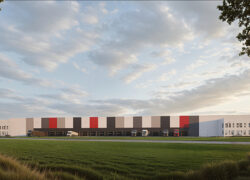
Panattoni has begun construction of a build-to-suit (BTS) logistics facility for InPost at Panattoni Park Sosnowiec V, expanding its presence in Poland’s Silesian industrial hub.

The 11,000 sqm warehouse is being developed to support InPost’s parcel sorting and distribution operations, with completion scheduled later this year and operations expected to start in September.

“The project for InPost is an example of a tenant-tailored investment that supports its continuous growth through the use of advanced technological solutions. This is yet another project we are carrying out together, which confirms the trust placed in our experience and expertise,” said Marek Dobrzycki, Partner at Panattoni.

The cross-dock facility will be fitted with upgraded sorting systems, designed to exceed the capabilities of the operator’s existing terminals, alongside infrastructure aimed at improving energy efficiency and reducing environmental impact.

Panattoni Park Sosnowiec V is planned as a 52,000 sqm logistics scheme. Its first phase, expected to be completed by the end of 2025, will deliver over 33,000 sqm of space. The scheme has already secured Hebe as an initial tenant.

Located in Sosnowiec, approximately 16 km from Katowice and 19 km from Katowice Airport, the park benefits from access to the S1 expressway and the A4 motorway, positioning it within one of Poland’s key logistics corridors.

The development is targeting a BREEAM Excellent certification.

Nowy Rynek C in Poznań receives Category 1 protective structure certification

Nowy Rynek C, developed by Skanska Commercial Development Europe, has received certification confirming compliance with Category 1 protective concealment requirements, marking a first for an office building in Poland.

The technical assessment was carried out by experts from the Protective Construction Center at the Military University of Technology. The certification confirms that key structural components, including the underground garage, meet the highest protection standards defined for this category.

“Nowy Rynek C project assumed compliance with stringent safety requirements from the very beginning – even before the so-called shelter law,” said Roland Jarosz. “Obtaining the certificate is the result of over two years of work, dozens of safety analyses, and the application of advanced engineering solutions during construction.”

According to the assessment, the structure is designed to withstand impacts such as natural disasters, debris loads and falling structural elements.

“Thanks to the expert assessment carried out by our team, we are confident that Nowy Rynek C effectively provides protection against the effects of natural disasters and debris,” said Jarosław Siwiński. “This demonstrates that modern construction can set standards for public protection based on the latest technical knowledge.”

Nowy Rynek C is scheduled for completion in 2027 and will provide approximately 28,700 sqm of gross leasable area across six floors. The building is designed to operate independently of district heating and will be powered by renewable energy.

Poland investment volumes exceed €1bn in Q1 as activity shifts to larger deals

Poland’s commercial real estate investment volume reached €1.02 billion in the first quarter of 2026, marking a 43 percent year-on-year increase and the strongest opening to a year in four years, according to market data.

The result was driven by a smaller number of larger transactions, with deal volume falling to 29 from 42 a year earlier, indicating lower liquidity but higher average ticket sizes. Activity included transactions exceeding €100 million across all major sectors.

The industrial and logistics segment accounted for the largest share, with approximately €447 million invested, supported by continued demand for income-secured assets and sale-and-leaseback structures.

“The pricing consensus between buyers and sellers is becoming more common, which is reflected in the recovery in investment activity, primarily driven by foreign capital inflows,” said Bartłomiej Krzyżak, Senior Director, Investment.

Retail investment totalled €318 million, with activity supported by a large portfolio transaction and ongoing demand for retail parks and grocery-led assets.

“Poland’s retail sector continues to attract strong investor interest,” said Artur Czuba, Director, Investment. “The wide variety of product makes the market accessible to both domestic and international capital.”

The office sector recorded €245 million in transactions, including several prime assets in Warsaw and Kraków. While regional markets accounted for the majority of deals, their share of total volume remained limited.

Domestic investors represented around 9 percent of disclosed activity. Overall, the market continues to show signs of recovery, with capital focusing on core assets and larger-scale opportunities.

Source: Avison Young

Prague begins construction of new primary school in Košíře

Representatives of the City of Prague and the Prague 5 district have laid the foundation stone for a new primary school in the Košíře area, marking the start of a project aimed at expanding education capacity in the city.

The school, named ZŠ V Cibulkách, will be built between Na Výši and V Cibulkách streets and is expected to accommodate around 330 pupils. It will operate as a branch of ZŠ Nepomucká, with the first students scheduled to begin classes in autumn 2027.

“Every new school is an investment in Prague’s future. I know how important it is for parents to have a quality school within walking distance, and that is exactly what this project delivers,” said Bohuslav Svoboda.

Local officials described the development as a response to growing demand for school places in the Cibulky Hill area. “We began preparing for this project during the previous election term,” said Lukáš Herold, noting that the city has provided substantial financial support.

The project is also intended to deliver modern learning conditions. “This school will not only be a much-needed facility but also a modern and inspiring space for the education and development of children,” said Zdeněk Kovářík.

Construction began last summer, with early works including excavation complicated by bedrock conditions. The initial phase will provide ten standard classrooms and one preparatory class for younger pupils.

“This is one of our shared priorities. I am glad that the capital city was able to contribute 200 million crowns to this project,” said Antonín Klecanda.

Further development is already being considered, with plans for an additional building on the site in the future to serve elementary school students. “The decision was driven by the location of the site in the centre of the Cibulky area, allowing children to walk to school from across the neighbourhood,” said Martin Damašek.

The project follows the demolition of older buildings previously used for special education. The site was transferred to the district as part of a land exchange agreement with the city.

The school has been designed by Škarda Architekti, with project documentation prepared by Sial architekti a inženýři. Construction is being carried out by SYNER, with project management provided by Fetters management.

Total construction costs are expected to exceed CZK 450 million excluding VAT, with CZK 200 million provided by the city.

IF&B Mille Sapori leases space at MLP Pruszków II logistics park

IF&B Mille Sapori has signed a lease for 4,118 sqm of warehouse space at MLP Pruszków II, a logistics complex developed by MLP Group near Warsaw.

The space is located in a building currently under development, with completion scheduled for October. The facility will include dedicated cold storage and freezer areas, alongside 172 sqm of office and staff space. The tenant is expected to gain early access in September, ahead of full handover later in the autumn. The leasing process was supported by Coldwell Banker Commercial.

IF&B Mille Sapori supplies Italian food products, including cheeses, cured meats, pasta and olive oil, primarily to the HoReCa sector in Poland.

“MLP Pruszków II is a versatile and fast-growing logistics park that successfully responds to the needs of companies from a wide range of sectors,” said Agnieszka Góźdź. “Welcoming IF&B Mille Sapori further confirms that our offer meets the expectations of companies with diverse business profiles and advanced operational needs.”

The tenant said the new location will support its operational expansion. “The new central warehouse location at MLP Pruszków II will enable us to scale our operations and provide even more effective support to our business partners and branches across Poland,” said Waldemar Dimke.

Michał Mazurek added that the investment is aimed at improving efficiency: “The new central warehouse space represents a step towards further operational optimisation and increased supply chain efficiency.”

From the advisory side, Tomasz Rąba commented: “It is a demanding undertaking, both technologically and in terms of timing, but thanks to the commitment of all parties, the technical details were efficiently agreed and negotiations were conducted in a positive atmosphere.”

MLP Pruszków II is located in the Brwinów municipality, approximately 5 km from Pruszków and close to Warsaw. The project is planned to reach 427,000 sqm of leasable space, positioning it among the largest logistics parks in the region. The site benefits from access to the A2 motorway and proximity to rail connections, supporting both domestic and international distribution. Selected buildings are being developed in line with sustainability standards, including BREEAM certification and the use of rooftop photovoltaic systems.

Garbe Industrial signs lease agreements with Goodcang Logistics for nearly 100,000 sqm in Germany

Garbe Industrial has agreed two lease transactions with Goodcang Logistics covering close to 100,000 square metres of logistics space across Germany.

The larger portion of the space, approximately 67,500 sqm, is located at Niedersachsenpark in Rieste near Osnabrück, while a further 30,500 sqm has been leased at a logistics property in the port area of Duisburg. The agreements support Goodcang Logistics’ expansion in Germany, increasing its capacity to serve online retailers operating on e-commerce platforms.

“Especially in these challenging economic times, we are delighted with this double success. The hard work put in by our asset management team over the past few weeks has paid off,” said Tom Herrschaft.

At Niedersachsenpark Rieste, the tenant will occupy two buildings completed in 2022, with a combined area of around 67,500 sqm. The assets were developed in line with current sustainability standards and have received certification from the German Sustainable Building Council. The lease transaction was supported by BNP Paribas Real Estate.

Garbe Industrial also manages an additional fully let logistics asset in the same park, totalling around 23,000 sqm, occupied by a logistics operator and a manufacturer of photovoltaic mounting systems.

In Duisburg, Goodcang Logistics will take space at a property within the Logport area in the Rheinhausen district, one of Germany’s established logistics hubs. The leased space includes approximately 28,500 sqm of warehouse area, along with office and mezzanine space. The site benefits from proximity to the Duisburg Intermodal Terminal, providing access to combined water, rail and road transport. The lease was advised by Realogis Immobilien Düsseldorf.

Legal advice for both transactions was provided by Taylor Wessing.

front page info
LATEST NEWS