Poland: How Have Flat-Building Costs and Land Prices Changed?

In recent years, investment land prices have risen sharply, adding pressure to the economics of residential development. Since 2020, the costs of building new flats have also increased, driven by higher material prices, labour expenses, and financing conditions. Regulatory changes have played an additional role in shaping final sale prices. Adjustments such as the withdrawal of strict parking standards have helped limit potential cost growth, as analysts estimate that enforcing such requirements would have made each square metre of housing significantly more expensive.

Tomasz Kaleta, Managing Director of Sales and Marketing at Develia
Over the last few years, the costs of building flats in Poland have risen steadily, mainly due to inflation, rising land prices, construction materials and labour costs. Although the pace of growth is currently slowing down, key factors such as high prices of investment plots and raw materials remain unchanged. According to data from the Central Statistical Office (GUS), in the second quarter of 2025, the average cost of constructing 1 sq m of new residential building was PLN 6,973. This is less than at the beginning of the year, but still more than in the same period a year earlier.

In view of high construction costs and limited land supply, it is important to manage the investment process effectively. Two years ago, Develia Construction was established within our group, which is responsible for the implementation of 20-25 per cent of projects. This gives us better control over the costs and quality of our investments.

For development companies, the predictability of the regulatory environment is crucial, as it enables responsible investment planning. The proposal to introduce a standard of 1.5 parking spaces per flat in many locations, especially in the centres of large cities, where the availability of land and underground space is limited, could significantly increase construction costs and limit the number of new flats. Ultimately, it was abandoned, leaving the decision to local authorities, which will increase design flexibility and allow investments to be better adapted to local conditions.

Marek Straszak, Regional Construction Manager, Matexi Polska
In the last five years, housing construction costs have undergone two significant upheavals. First during the pandemic and then after the outbreak of the conflict in Ukraine. In both cases, the key factors were disruptions in material supply chains and limited availability of workers, which translated into a sharp increase in costs. From 2020 to mid-2025, the costs of building flats increased by a total of around 50 per cent.

Legal regulations are an additional factor influencing prices. Energy efficiency regulations require the use of increasingly better technical solutions, from high-quality window frames, through more advanced insulation, to heat recovery ventilation systems. From January 2026, a regulation on emergency shelters will also come into force. In practice, this means that the underground parts of buildings will have to be reinforced, which will require significantly more steel and concrete, and thus further increase costs.

It is worth noting that the withdrawal of the so-called parking standard from the amendment to the act was crucial for the economics of many projects, especially in central locations where available plots are small. The requirement to provide 1.5 parking spaces per flat would often force developers to design up to three storeys of underground garages. This solution would increase the cost of the investment by an additional 10-15 per cent, which would translate into even higher flat prices.

Witold Kikolski, member of the management board of MS Waryński Development S.A.
In recent years, the costs of building flats have fluctuated significantly. In 2021–2022, material prices rose by more than 30 per cent year-on-year, while in 2023 the market slowed down. Currently, we are seeing stabilisation and even slight declines in many categories. On the other hand, labour costs continue to rise by 8-10 per cent annually, which means that total investment expenditure is still slowly increasing, according to data from the Central Statistical Office (GUS) – by an average of about 3 per cent per year.

At the same time, investment land prices in large cities remain high, especially in Warsaw, where demand for good locations remains very strong. This means that the difference in production costs between projects implemented in Katowice and Warsaw, for example, is as high as several per cent.

Legal regulations are an additional factor affecting costs. The new development law and stricter energy efficiency requirements have increased investment expenditure by several per cent. However, the greatest burden was borne by the regulations on parking standards, which until recently required investors to provide up to 1.5 parking spaces per flat. This meant that additional floors of underground garages had to be built, which in practice could significantly increase the cost of the entire investment. We therefore welcomed the decision to abolish the rigid standard in August 2025 and transfer the competence to local authorities. This gives greater flexibility in design and allows us to offer customers more reasonable prices, especially in well-connected locations.

Piotr Dobrzyński, Head of Operations and Technical BPI Real Estate Poland – Builder
In the last five years, the costs of building flats, and thus of construction projects, have increased by about 30-50 per cent due to inflation. Labour and material production costs have increased due to higher energy costs. Not all materials have increased in price by the same amount; some, such as steel, polystyrene, mineral wool and wood, have seen a large speculative jump – up to 100 per cent during the pandemic and at the beginning of the conflict in Ukraine. Today, material prices are at fairly low levels due to a decline in demand. Nevertheless, the overall increase in the cost of building materials since 2020 has been around +40%.

As for the impact of new building regulations on flat prices, such as parking standards, due to lower demand for flats, it can be considered that this is not noticeable at the moment. Nevertheless, higher parking standards increase the total area of a building, and thus the non-saleable area, increasing the construction costs of the entire building. With a constant amount of usable floor space, i.e. the so-called PUM, this translates into an increase in the price per square metre of PUM. The amount of the increase depends on the project, but is usually a few or several percent. In special cases, related to the size of the plot, the increased standard could make a given investment unprofitable, as it would be necessary to build, for example, another underground storey, which could result in the investment not being profitable in a given location. Contrary to appearances, the sale price of a parking space in an underground car park does not usually cover the costs of its construction.

Renata Mc Cabe-Kudla, Country Manager at Grupo Lar Polska
Construction costs have risen significantly in recent years due to inflation and the increase in labour costs. Due to the shortage of investment land, its prices are rising every year. Since 2020, we have seen a greater increase in costs than in previous years, partly due to high inflation. New building regulations and the city’s growing expectations regarding the infrastructure built by developers have a very significant impact on the increase in flat prices.

Damian Tomasik, President of the Management Board of Alter Investment
Over the last five years, construction costs have risen steadily, both in terms of materials and labour. The most dynamic growth was observed in 2021–2022, when the prices of steel, concrete and wood increased by as much as several dozen per cent year-on-year. Since 2023, the pace of increases has slowed, but costs are still higher than before the pandemic. At the same time, investment land has become more expensive, in large cities by as much as 40-50 per cent since 2020. New regulations, such as energy efficiency standards and environmental requirements, raise the entry threshold for developers, which naturally affects flat prices. If the provision on mandatory parking standards had been maintained, flats in many projects would have been up to 10-15 per cent more expensive.

Jakub Serek, Director of Construction Cost Planning at Archicom
Construction costs have changed very dynamically in recent years, with many factors influencing their level. Since 2020, we have seen a significant increase in both material prices and labour costs, especially during the pandemic and subsequent spikes in inflation. Currently, the situation is more stable, and the annual increase in costs is within the limits of inflation, which allows for more effective investment planning. However, it is not possible to talk about a single source of increases. In addition to material prices and wages, other important factors included local government obligations to develop infrastructure in the vicinity of housing estates, such as roads, recreational areas and public facilities.

In turn, changes in building regulations, often necessary from the perspective of quality and safety, also increase the costs of investment implementation. An example is the obligation to provide emergency shelters, which will come into force in 2026. Today, however, it is difficult to clearly assess its potential impact. It is therefore clear that the final price of a flat is the result of many overlapping factors, from the costs of land, labour and materials to legal regulations.

Source: dompress.pl
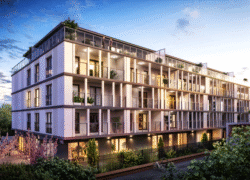
Photo: Develia – Vivre Wroclaw
Slovenia’s Real Estate Market Holds Steady in First Half of 2025

Slovenia’s property market showed resilience through the first half of 2025, with steady activity across offices, retail, logistics, hotels and residential. Investment volumes remain modest, but several notable deals confirm continued investor interest in a small but active market.

In the Ljubljana office sector, prime rents edged around €20 per square metre per month, with vacancy staying exceptionally low at below three percent. No new schemes were completed in the first half, though a significant pipeline is moving forward. The largest projects include the Vilharia development of more than 30,000 square metres, the WestLink Campus, and offices within the long-delayed Emonika complex, now scheduled for delivery in late 2027. Market watchers estimate that roughly 90,000 square metres are in progress, underscoring the capital’s role as the focal point for occupiers and investors alike. “Ljubljana’s office market remains supply-constrained, with occupiers competing for modern space and developers focusing on a handful of landmark projects,” noted Colliers in its H1 2025 market review.

Retail remains highly developed and competitive, with activity dominated by established shopping centres and retail parks. The most prominent transaction was SES’s acquisition of the Arkadia Retail Park in Domžale. Consumer spending has been buoyed by rising wages, while retail turnover recorded a modest year-on-year increase. The Emonika project also includes a 22,000 square metre shopping component, which is expected to further reshape the retail landscape when it opens in 2027. CBRE has observed that Ljubljana’s retail market continues to show stable prime rents and yields, with new development opportunities limited, reinforcing the importance of landmark projects like Emonika.

Logistics continued to benefit from strong occupier demand, particularly around Ljubljana and at key motorway junctions. Vacancy stayed low at under five percent, while prime rents ranged from €6.5 to €8 per square metre, with the best locations achieving higher levels. The delivery of LOGspot in Logatec added more than 26,000 square metres of modern warehouse space, while further schemes are planned near Brnik airport and in Sežana. Cushman & Wakefield described Slovenia’s logistics segment as “one of the most undersupplied in the CEE region,” highlighting the potential for new development despite rising construction costs.

Tourism maintained its upward trend, with arrivals rising by about eight percent in the first half and overnight stays reaching nearly seven million. Foreign guests accounted for more than two-thirds of the total. Hotels absorbed more than half of all overnight stays, supported by both business and leisure demand. New capacity is planned at Ljubljana’s main station as part of the Emonika development, alongside a hotel project at Brnik airport.

Residential remained active, with more than 2,500 transactions in the first quarter valued at approximately €420 million. Prices were up just over three percent year on year, driven by gains in existing apartments, while new units saw a slight decline. Permits for new dwellings fell compared to last year, suggesting future supply could tighten.

On the investment side, transactions totalled about €75 million in the first half. Ljubljana accounted for nearly two-thirds of activity, with average deal size around €18 million. In addition to SES’s Arkadia purchase, Generali sold the Stekleni Dvor and Tivoli Centre office towers to Serbia’s Agromarket, while SPAR expanded its logistics capacity near its Ljubljana headquarters.

Yields across all major asset classes remain comparatively high, with prime offices and retail around seven percent and hotels slightly higher. While Slovenia’s investment market is small and often dominated by local or regional buyers, the pipeline of new developments and ongoing occupier demand underline the sector’s stability.

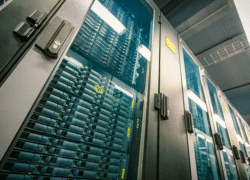
How Cooling Systems Are Shaping the Future of Poland’s Data Centres

Poland’s data centre market is emerging as one of the most dynamic investment destinations in Central and Eastern Europe. With more than 120 facilities already in operation, forecasts suggest national IT load capacity could approach or exceed 500 MW by 2030, nearly three times the current level. While power supply and location remain decisive, industry experts note that the real differentiator for competitiveness is increasingly found in heating, ventilation and air-conditioning (HVAC) and advanced cooling systems.

Cooling has become one of the largest components of running costs, with studies showing that it can account for around a third of a facility’s electricity demand. Although advanced systems require higher upfront capital expenditure, they can lower overall Power Usage Effectiveness ratios and reduce long-term energy bills. Investors are therefore scrutinising whether such systems can pay back within the lifecycle of a facility, which typically stretches to two decades.

The technological challenge is being driven by soaring power density. Only a few years ago, cooling a rack designed for five to ten kilowatts was standard. Now, artificial intelligence and machine learning workloads are creating demand for configurations reaching 50 to 100 kilowatts per rack. This shift is putting pressure on operators to move beyond conventional air cooling toward liquid-based solutions.

Liquid cooling is no longer seen as experimental. Global cloud operators such as Microsoft, Google and AWS have announced facilities across Europe designed with liquid cooling as standard, reflecting a wider industry forecast that as much as 40 percent of data centres worldwide could deploy such systems by the middle of this decade. The technology allows significantly higher computing capacity within the same space and provides a pathway to improved profitability.

Environmental performance is also becoming decisive in investment decisions. Operators are expected not only to disclose their carbon footprint but also to demonstrate concrete decarbonisation measures, such as the recovery of waste heat for use in district heating networks. As European Union regulations on building performance tighten, these elements are shifting from optional features to central requirements for attracting long-term tenants and contracts.

The greatest risk for investors is the rapid pace of technological change. Facilities designed around traditional air cooling may become obsolete within just a few years, prompting developers to focus on modular and upgradeable designs that allow for reconfiguration without shutting down operations. Compliance with forthcoming EU rules on energy reporting and carbon reduction strategies will also require careful planning.

With major global players already present and further capacity coming online in Warsaw, Kraków and Wrocław, Poland is consolidating its position as a regional hub. The competitiveness of its facilities will increasingly depend not only on their scale and location but also on the efficiency and sophistication of their cooling systems.

Source: Marcin Kosieniak, co-owner of the PM Projekt design office

Mortgage Costs Rise as Wages Struggle to Keep Pace in Romania

Romanian households face growing pressure from mortgage repayments in 2025, as a combination of higher property prices and elevated interest rates weighs on affordability.

According to data from the National Institute of Statistics (INS), the average net monthly wage in July stood at around RON 5,517 (€1,088), only modestly higher than a year earlier. Over the same period, housing prices in Bucharest have continued to climb. Market records compiled by the National Agency for Cadastre and Land Registration (ANCPI) point to apartment prices in the capital averaging close to €1,800–1,900 per square metre, with new-build units often exceeding €2,000 per square metre.

At these levels, a typical 50 square metre apartment in Bucharest can cost between €90,000 and €105,000. Financing such a purchase with a 25-year mortgage exposes buyers to interest rates that have risen steadily since 2022. Figures from the National Bank of Romania (BNR) show that average mortgage rates on new loans hovered between 5.5% and 6.0% in mid-2025, reflecting the central bank’s decision to maintain its benchmark rate at 6.5%.

This combination of rising prices and higher borrowing costs means monthly repayments now absorb a larger share of household income. A €90,000 loan at current rates translates into repayments of roughly €580–600 per month, while a €105,000 loan requires closer to €670 per month. Measured against the average national wage, this represents over half of monthly earnings. For residents of Bucharest, where salaries are typically about a quarter higher than the national figure, the burden is somewhat lighter but still significant.

Regulators remain alert to the risks. The BNR enforces a ceiling that limits monthly debt service to 40% of net income when banks grant new loans, a safeguard introduced to reduce the likelihood of defaults. Even so, households taking on mortgages at today’s rates often need higher incomes, larger down payments, or family support to stay within the limits.

The picture contrasts with the boom years before the global financial crisis, when many borrowers were granted loans that far exceeded sustainable income ratios. Although affordability is again tightening, Romania’s housing finance market remains better capitalised and more conservative than in the past.

Looking ahead, analysts note that further wage growth and a gradual easing of interest rates would be needed to restore balance between incomes and borrowing costs. Until then, mortgage affordability will remain a pressing concern, particularly for first-time buyers in Bucharest and other large cities.

Poland and Ukraine Expand Cooperation on Drone Technology and Defence Industry

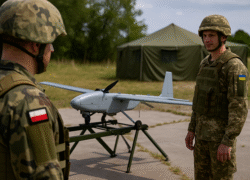
Poland and Ukraine have deepened their defence partnership with new agreements focused on unmanned systems, training, and industrial collaboration. The measures were announced during the Polish defence minister’s visit to Kyiv in mid-September.

At the centre of the package is a Joint Working Group on Unmanned Aerial Systems, designed to pool Ukrainian battlefield experience with Polish technical capacity. The memorandum commits both ministries to closer cooperation on developing and countering drones, while also setting up regular channels for information exchange. Reuters has reported that training activities will include a Polish facility in Lipa, though specific details remain under discussion.

The initiative is closely linked to the NATO–Ukraine Joint Analysis, Training and Education Centre (JATEC) in Bydgoszcz, which was launched in February 2025. JATEC’s mission is to capture Ukrainian frontline lessons—particularly in drone warfare and electronic countermeasures—and integrate them into NATO doctrine and training. By aligning with this centre, Poland aims to reinforce its position as a key hub for allied innovation and certification in counter-UAS technologies.

For the Polish Armed Forces, the cooperation offers access to tested battlefield methods such as managing drone swarms and protecting systems against electronic warfare. Defence planners argue that integrating this knowledge into procurement decisions will reduce the risk of investing in equipment unsuited for modern combat.

The ministries have also signalled intent to promote joint ventures involving Polish, Ukrainian and US companies. These ventures are expected to focus on co-design, production and servicing of equipment in Poland. Analysts note that the effectiveness of such projects will depend on how far Warsaw allows competition and private investment to play a role, rather than relying solely on state monopolies and lengthy tender processes.

The agreements reflect broader momentum among NATO members to adapt quickly to emerging threats. At the Warsaw Security Forum in late September, Ukrainian officials urged allies to build a shared “drone shield” for Europe, offering training and technology transfer as part of the effort.

For Poland, the new cooperation provides both strategic and industrial opportunities: frontline knowledge from Ukraine, a stronger position within NATO’s innovation agenda, and potential growth for its domestic defence sector. Whether it delivers long-term benefits will depend on the ability to combine battlefield lessons with open market principles to drive faster, cheaper and more resilient solutions.

Source: Warsaw Enterprise Institute (WEI)

Grieshaber Logistik Secures 31,000 sqm Lease in Rothenburg ob der Tauber

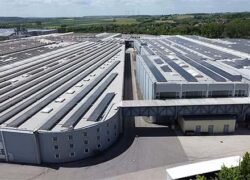
Grieshaber Logistik GmbH has taken up around 31,000 square metres of logistics and office space in Rothenburg ob der Tauber, Bavaria. The deal was arranged by real estate consultancy Logivest, with the property owned by Livos Group.

The contract logistics provider was seeking a new hub for handling white goods with direct access to Germany’s motorway network. The site on Erlbacher Straße offers connections to the A7 north–south corridor and lies about 15 minutes from the Feuchtwangen junction with the A6 east–west route, giving it strong regional and international reach.

“The Nuremberg metropolitan area, which includes Rothenburg ob der Tauber, is highly attractive for logistics thanks to its central position and strong transport links,” said Stefan Moor, Head of Industrial and Logistics Letting at Logivest in Nuremberg.

The property forms part of the Südost industrial park and sits within a larger logistics complex. It provides 24/7 secured access, multiple loading ramps and a rooftop photovoltaic installation. Grieshaber has already occupied nearly 30,000 square metres of warehouse space along with around 1,200 square metres of offices.

IntReal Luxembourg Strengthens Management with Appointment of Krzysztof Dudek

IntReal Luxembourg S.A., the Luxembourg subsidiary of IntReal International Real Estate Kapitalverwaltungsgesellschaft mbH, has appointed Krzysztof Dudek to its Management Board as Conducting Officer, effective 1 October 2025. His remit will cover compliance, risk management and outsourcing, subject to approval by Luxembourg’s financial regulator (CSSF). He succeeds Stephan Schilken, who has left the company by mutual agreement to pursue new opportunities.

Dudek brings nearly two decades of experience in the financial sector, including more than ten years in Luxembourg as a conducting officer. A graduate of the University of Gdańsk with a degree in economics, he began his career in 2005 at GE Capital as a credit and market risk analyst. He later held senior risk management positions at several financial institutions before being appointed Head of Risk Management and Conducting Officer at MUFG Lux Management Company in 2013. There, he oversaw the risk management of more than 150 fund vehicles with assets totalling about €20 billion.

In 2017, Dudek joined EQT Fund Management in Luxembourg as Risk Director and Conducting Officer, leading the company’s risk, compliance, valuation and IT functions. From 2022 to 2023 he also served as Group Risk Director for the EQT Group.

Commenting on the appointment, Andreas Ertle, Managing Director of INTREAL and Chair of the Board of Directors of IntReal Luxembourg, said Dudek’s leadership experience and international network make him a strong addition to the management team. Ertle added that the move is part of INTREAL’s broader internationalisation strategy, positioning the Luxembourg office to provide a wider range of services to international clients while leveraging the resources of the group.

Crestyl Launches New Investor Fund Backed by Flagship Prague Projects

Crestyl has introduced a new investment vehicle designed for qualified investors, aimed at raising capital for its residential and commercial developments in Central Europe. The fund will focus on projects in Czechia and Poland, spanning everything from early-stage planning to operational assets.

The company, which has been active in the market for more than two decades and manages assets worth around €1.4 billion, is positioning the fund as a way to broaden its financing base while keeping control over its own pipeline. Among the first schemes expected to benefit are Prague’s large-scale Hagibor and Savarin projects, as well as the BOKA Pankrác development.

According to Crestyl, the vehicle is structured to provide investors with a priority return of up to seven percent annually, though actual performance will depend on market conditions. Investments are expected to start from CZK 250 million per project, with the overall portfolio targeted to reach between CZK 2–3 billion.

The fund is being distributed through AVANT Investment Company, which specialises in managing qualified-investor vehicles in the Czech market. Entry levels begin at around CZK 1 million, with the recommended holding period set at several years.

For investors, the attraction lies in gaining exposure to some of Prague’s most prominent urban regeneration projects at a time when planning approvals and construction activity are beginning to move forward. Savarin, a mixed-use redevelopment in the city centre, recently cleared key permitting steps, while Hagibor, a multi-phase residential-led scheme in Prague 10, has already begun delivery.

Market observers note that while development-linked funds can offer direct access to high-profile schemes, they also carry risks tied to construction, permitting and the timing of sales. Crestyl argues that its size, established track record and diversified pipeline provide a measure of resilience as it seeks to draw institutional and private wealth into its next stage of growth.

Image: Hagibor, Crestyl

WELL PACK Expands Lease at CTPark Budapest West

WELL PACK Hungária has expanded its space at CTPark Budapest West in Biatorbágy to 5,200 square metres, strengthening a relationship with CTP that has been in place since 2018.

The additional space is part of renovated halls at the park, which carry a BREEAM “Very Good” rating. According to CTP, the buildings feature energy-efficient systems including heat pumps and are being fitted with rooftop solar panels. WELL PACK said the expansion provides both stability and flexibility for its operations in Hungary.

CTP describes the deal as another step in a partnership built on long-term growth. “The expansion of WELL PACK is particularly gratifying for us, as we are deepening our cooperation with a long-standing partner,” said András Kiss, Regional Business Development Manager at CTP Hungary.

WELL PACK is active in pallet inspection and repair as well as wider logistics services. The company applies circular economy principles at its Biatorbágy site, including re-use, repair and recycling practices. “Our relationship with CTP has proven its strength and viability many times over the past years. Now that we are expanding again, we can count on the same cooperation and flexibility,” said Petr Bělohradský, Head of Business Development at WELL PACK.

CTPark Budapest West is Hungary’s largest logistics and industrial park, strategically located at the intersection of the M0 and M1 motorways, providing connections to Budapest, western Hungary and international markets. With a built-up area of around 300,000 square metres, the park houses a wide range of tenants and continues to attract expansions from existing occupiers.

ROSSMANN to Open Largest Czech Distribution Hub at CTPark Prague North

CTP has agreed a lease with drugstore chain ROSSMANN for a new 30,000 sqm logistics centre at CTPark Prague North, with completion scheduled for 2026. The scheme will become the retailer’s largest distribution hub in the Czech Republic, designed to support both store expansion and e-commerce growth.

ROSSMANN is investing more than CZK 500 million (€20.6 million) in the facility, its biggest single outlay since entering the Czech market over 30 years ago. CTP is reported to be contributing a further CZK 750 million in construction costs.

The building will be fitted with advanced logistics technologies including AI-supported inventory management, automated pick-tower systems and goods-to-person flows, which are expected to reduce picker walking distances from around 12 kilometres to just two kilometres per shift. Sustainability is also central to the project, which is being developed to achieve a BREEAM Outstanding certification.

Situated on the D8 motorway north of Prague, CTPark Prague North offers direct links to the capital and the wider country. The park provides extensive on-site amenities through CTP’s Clubhaus concept, including a cafeteria, amphitheatre, medical point, minimarket and sports facilities.

The transaction was brokered by Cushman & Wakefield. Karol Jakubek, Managing Director of ROSSMANN Czech Republic, said the new distribution hub will serve as the heart of the company’s national network, with full utilisation expected by 2027.

front page info
LATEST NEWS