European sustainable funds show resilience amid market shift and rebranding

European sustainable investment funds experienced a notable shift in Q1 2025, posting their first-ever quarterly outflows of USD 1.2 billion after a period of consistent growth. Despite the outflows, which represented less than 0.05% of the total USD 2.7 trillion in sustainable assets as of March 31, 2025, investor loyalty remains strong. The shift may reflect a recalibration of strategies and expectations rather than a retreat from sustainable investing.

Between 2018 and 2023, sustainable global-equity funds consistently outperformed conventional peers and the broader MSCI ACWI Index. However, in 2024, these funds began to underperform — largely due to their limited exposure to defense companies, which saw strong returns. For example, companies with weapons exposure in the MSCI Europe Index posted an average annual return of 29% in 2024 and came to represent more than 10% of the index by mid-2025. This divergence in performance has prompted some asset managers to revisit exclusionary policies around weapons while seeking to uphold ethical standards.

Importantly, investors in sustainable funds appear more committed than those in conventional funds, with less sensitivity to short-term underperformance. Research indicates a weaker correlation between fund flows and three-year returns among sustainable equity and fixed-income funds, suggesting that investors remain focused on sustainability goals, impact, and regulatory alignment over immediate gains.

Contrary to concerns, widespread fund renaming in response to EU regulatory changes has not triggered significant outflows. More than 800 Article 8 and Article 9 funds underwent rebranding between May 2024 and June 2025, following new naming guidelines by the European Securities and Markets Authority. However, renamed funds did not experience greater outflows than those that retained their original titles. Only one of the six sustainability funds on the top-outflows list in Q1 2025 had been renamed, pointing to broader market or geopolitical influences as the more likely driver.

Further analysis shows that nearly 90% of renamed funds maintained a clear sustainability focus, indicating that fund managers remain committed to responsible investing regardless of branding. Investors also seem to be evaluating funds based on their actual portfolio characteristics rather than just names. In some cases, rebranded funds have attracted a broader base of investors looking for less constrained, more diversified sustainability strategies.

The commitment to sustainability is evident not only in dedicated ESG products but also in conventional funds. Among the top 25 European fund houses by assets under management, all but one — Vanguard — integrate financially material sustainability factors in their investment processes. These firms collectively manage over EUR 6.3 trillion in retail funds, showing the depth of sustainable integration across the European asset management industry.

While Q1 2025 marked a moment of correction, it may also signal maturation within the ESG space. Investors remain focused on both sustainability values and financial performance, and fund managers are adapting by balancing ethical considerations with long-term value creation. The sector’s resilience, particularly the loyalty of its investor base, suggests that sustainable investing in Europe is not in decline but rather evolving to meet more nuanced expectations.

Source: MSCI ESG Research

Asset selection remains key driver of real estate portfolio performance, study finds

An in-depth analysis of 1,086 real estate portfolios from the first quarter of 1999 through the first quarter of 2025 has revealed that asset selection was the primary driver of performance differences across portfolios. According to the study, asset selection accounted for an average of 67% of the variance between individual portfolio returns and country-level benchmarks, indicating that decisions about specific properties consistently had a greater impact on returns than broader allocations by property type or geography.

However, this dynamic began to shift around 2015 as the performance gap between property types widened. Industrial real estate began to significantly outperform other sectors, while retail and office assets struggled, leading to a temporary decline in the influence of asset selection. Between 2020 and 2022, sector allocation became increasingly important, particularly in the U.K. and U.S. markets, where asset selection contributed to less than half of overall tracking error in portfolios.

Since the onset of the post-pandemic market correction, however, the trend appears to be reversing. The dispersion of returns among individual assets within the same sector or region has widened, reaffirming the role of asset selection in driving performance. In this more volatile environment, the unique characteristics of each asset—such as quality, location, and income potential—have become increasingly important.

For institutional investors and asset managers, the findings suggest that portfolio construction must strike a balance between top-down allocation strategies and detailed, bottom-up asset analysis. In times of economic dislocation and correction, performance is increasingly tied to the ability to identify and manage assets that can maintain occupancy, drive rental income, and preserve or enhance value.

The study’s results highlight that, while market conditions can temporarily elevate the importance of broader allocation decisions, long-term performance remains strongly tied to the selection and management of individual properties.

Source: MSCI

Czech Republic sees highest number of new companies since 2017 despite rising closures

In the first half of 2025, a total of 16,944 new companies were established in the Czech Republic, marking a 9% increase compared to the same period last year and representing the highest number of new firms since 2017. According to analysis by CRIF – Czech Credit Bureau, this growth occurred despite a parallel rise in company closures. From January through June, 8,961 companies ceased operations, up 15% year-on-year, resulting in a net market gain of 7,983 companies.

Analyst Věra Kameníčková from CRIF noted that although closures are rising faster than new formations, the overall net growth for the first half of the year was 4% higher than in the same period last year. Over the past 12 months (July 2024 to June 2025), 32,360 new companies were formed—a 10% increase—while 18,237 companies shut down, 14% more than the previous year. This yielded a net gain of 14,123 firms, a 6% increase compared to the prior year-long period.

Geographically, almost half of all newly established companies in the first half of the year were based in Prague (8,806), followed by the South Moravian Region (2,091), and the Moravian-Silesian Region (1,118). The Olomouc Region experienced the highest percentage growth in new company formations at 21%, with the Pilsen and Karlovy Vary regions also seeing double-digit increases. However, the Zlín Region recorded a 14% drop in new companies compared to the first half of 2024.

Company closures followed a similar regional pattern, with Prague registering the most closures (4,312), followed by the South Moravian Region (969) and the Ústí Region (555). The Liberec Region saw the sharpest increase, with closures nearly tripling year-on-year. Other regions, including Pardubice and Vysočina, also experienced substantial increases in company dissolutions. In contrast, Prague, Central Bohemia, and Moravian-Silesia saw relatively stable figures.

Net growth remained concentrated in Prague, which accounted for 56% of all net new companies (4,494). The South Moravian Region added 1,122 companies. However, the Liberec Region saw a net loss of 259 companies, and Ústí nad Labem recorded a loss of 62.

Sectorally, the most new companies were created in trade (2,079), construction (1,806), and manufacturing (1,756). The transport and storage sector saw the fastest growth, up 19%, while services like repairs, cosmetics, and textile cleaning also recorded notable increases. However, the financial and insurance industries saw a 19% decline in new firms, and real estate management dropped by 17%.

The business and real estate sectors also saw the most company closures, with 2,730 and 1,607 closures respectively. Professional, scientific, and technical activities followed with 1,215. Sectors with the sharpest increase in closures included electricity, gas, and heating utilities (up 57%), miscellaneous services (up 46%), and cultural and recreational activities (up 45%).

Over the past year, the fastest-growing sector was “other activities,” which includes personal services, with 62 new companies for every 10 closures. Health and social care and education sectors also posted strong ratios of growth compared to closures.

The age structure of defunct companies showed a shift toward older firms. The share of companies operating for 31 to 35 years among those that closed rose from 10% to 14% year-on-year. Meanwhile, companies established after 2015 now represent a smaller share of closures, indicating a maturing business environment in the Czech Republic.

Source: CRIF

Czech association warns U.S. AI strategy may undermine national tech sovereignty

The Czech Association of Artificial Intelligence has expressed concern that the new U.S. Action Plan for Artificial Intelligence, unveiled on Wednesday by President Donald Trump, could impact the technological sovereignty of other countries, including the Czech Republic. According to the association’s director, Lukáš Benzl, the strategy marks the most extensive AI policy initiative ever presented by the U.S. government and signals a shift toward more aggressive global positioning in the field.

The American plan is structured around three central pillars: innovation, infrastructure, and diplomacy and security. Benzl noted that the strategy represents a clear ambition by the U.S. to achieve and maintain technological dominance in AI, with wide-reaching consequences. He warned that this approach, based on significant investment, industrial self-sufficiency, and regulatory flexibility, is designed to accelerate innovation by empowering the private sector and reducing restrictions on experimentation. In contrast to the EU’s regulatory-heavy model, the U.S. is prioritizing speed and geopolitical leverage.

Benzl emphasized that the document should serve as a wake-up call for Europe and the Czech Republic, not just as a signal of U.S. intent but as a challenge to develop a more robust and proactive strategy. He argued that the Czech Republic and the EU must treat AI development as a matter of strategic importance and act accordingly.

He urged full implementation of the European Action Plan for AI, calling for competitive infrastructure, stronger diplomatic engagement in AI governance, and the development of open-source European AI models. Benzl also suggested the European Commission should reassess the speed and complexity of current regulatory proposals under the AI Act, noting that the Czech Republic has taken the lead in advocating for a delay in the enforcement of inactive provisions of the legislation.

The Czech AI Association sees the U.S. plan as a geopolitical move that places additional pressure on Europe to assert its own technological and strategic independence in the evolving landscape of artificial intelligence.

Source: CTK

New rules on building heights expected to boost wooden apartment construction in Czech Republic

A forthcoming change in Czech building standards will allow for the construction of taller wooden buildings, potentially ushering in a new era for multi-storey wooden apartment blocks in the country. Starting August 1, wooden buildings up to 22.5 meters in height will be permitted under revised fire safety regulations. Until now, the height limit was capped at 12 meters, except under special conditions.

Minister of Industry and Trade Lukáš Vlček stated that this regulatory change is expected to increase the number of apartment buildings constructed using wood. While wooden single-family houses have become more common—rising from about 3% to 14–15% of new homes over the past decade—wood remains a rarity in the apartment sector, currently representing just a tenth of a percent of projects. Vlček said the ambition is to accelerate the growth of wood-based construction across all residential categories.

The fire safety standard amendment also enables the use of certain building materials for multi-storey structures that were previously not considered compliant. Vlček emphasized that this shift could lead to greater use of domestic timber resources, reducing reliance on exports and generating more value for the Czech economy. The country produces around 15 million cubic meters of wood annually, yet only processes about a third of it domestically. Much of the raw timber is exported and then reimported as finished products, which Vlček called a missed economic opportunity. He noted that greater local processing would benefit public finances, especially since much of the forest land is owned by the state and municipalities.

The potential of tall wooden buildings is already being tested. In Prague’s Řeporyje district, developer UBM recently completed the Timber Prague project, part of the Arcus City development, which includes four wooden buildings—two four-storey and two three-storey structures. Elsewhere, 34 affordable rental apartments made of wood are being built in Žďár nad Sázavou by Available Housing Česká spořitelna.

Experts in sustainable construction have welcomed the move. Marta Gellová, director of the Chance for Buildings Alliance, said that new regulations on wooden construction are an opportunity to meet environmental targets while modernizing the sector. Wooden buildings, she said, can support the shift to lower-emission development. Similarly, Simona Kalvoda of the Czech Green Building Council praised the ministry’s efforts to promote the use of alternative and recycled materials, saying multi-storey wooden buildings are poised for a “new epoch.”

The revision of the fire safety standard is seen not only as a regulatory update, but as a strategic step toward reshaping the Czech Republic’s construction industry in line with sustainability goals and resource efficiency.

Source: CTK

Unemployment concerns grow among Czechs, but fewer willing to accept lower pay

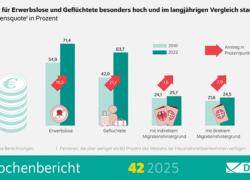
In June 2025, 42 percent of working-age Czechs expressed concern about unemployment, according to a new report by the STEM analytical institute. While this marks a slight increase from May, the figure remains among the lowest recorded since STEM began tracking in 1998. The rise in anxiety was especially notable among younger respondents, aged 18 to 29, though fears also persist among middle-aged and older workers.

STEM found that unemployment fears are more pronounced among individuals who are financially insecure, but concerns have also begun to rise among those who describe themselves as financially comfortable. While long-term trends show that older workers—especially those aged 45 to 59—routinely express higher levels of concern, the recent uptick among younger age groups reflects growing uncertainty in the labor market.

Despite the increase in concern, the survey revealed a significant shift in how people are responding to potential job loss. Willingness to accept lower wages in exchange for new employment has declined sharply. Only 55 percent of respondents said they would agree to work for reduced pay if faced with losing their job—the lowest level since STEM began collecting this data. By contrast, during the height of the COVID-19 pandemic in May 2020, 73 percent of Czechs were open to lower wages. During the economic downturn between 2008 and 2014, that figure hovered around 80 percent.

STEM analyst Kateřina Duspivová explained that this decline is likely driven by financial pressure. “The willingness to start another job for a lower wage continues to decline, because people simply cannot afford a further decrease in income,” she said.

The survey also explored other strategies people might consider in the face of unemployment. While a large majority—88 percent—said they would be willing to work in a different field, only 36 percent were open to relocating to another region for work.

According to official figures from the Czech Labour Office, unemployment stood at 4.2 percent in June, unchanged from the previous month. This remains one of the lowest rates in the European Union. At the end of June, there were 315,465 unemployed individuals registered across the country. Year-on-year, the unemployment rate rose by 0.6 percentage points.

STEM conducted the survey between June 12 and 22, gathering responses from 1,059 individuals aged 18 and over. The findings suggest that while fears about job security are slowly increasing, Czechs are becoming less willing—or less able—to accept compromises in income, signaling growing tension in the face of broader economic uncertainty.

Source: STEM and CTK

Experts warn of persistent Russian influence in the Czech Republic and post-Soviet space

Russian influence remains an ongoing threat in the Czech Republic and across the broader post-Soviet region, particularly through hybrid tactics and disinformation campaigns. Experts consulted by the Czech News Agency note that while some pro-Russian structures have been weakened—especially following the 2022 invasion of Ukraine and events like the Vrbětice affair—Moscow’s strategy has evolved rather than disappeared. Instead of overt support for Russia, the focus has shifted to dividing societies, undermining trust in democratic institutions, and spreading confusion.

According to Petr Havlíček of the Association for International Affairs, Russia’s standing in the Czech Republic has deteriorated significantly, yet anti-system movements have adjusted their messaging. Rather than openly praising Russia, many have redirected their criticism toward Ukraine and its people. Havlíček also pointed to cyber activities and financial crime, particularly money laundering, as ongoing challenges. Despite efforts, the Czech government has struggled to tackle these issues effectively. Data from the monitoring firm Datlab shows that more than 12,000 companies in the Czech Republic have links to Russian nationals, though the true number may be higher due to opaque ownership structures.

This form of influence falls within the broader scope of asymmetrical conflict, where a weaker actor uses non-military tactics such as disinformation, sabotage, and cyberattacks to destabilize stronger adversaries. As Eva Klusová of the Czech Academy of Sciences explains, the goal is to erode public trust in the state and its institutions. If citizens no longer value or believe in democracy, they are less likely to defend it, giving adversaries an advantage without direct confrontation.

Government officials and analysts have noted a concerning gap in the Czech Republic’s preparedness for hybrid threats. While there have been improvements in cybersecurity, other areas such as strategic communication and misinformation response remain underdeveloped. Havlíček warned that this vulnerability could have political consequences, especially in the lead-up to elections.

The Czech Security Information Service reported that in 2024, Russia continued efforts to re-establish intelligence operations under diplomatic cover. Although early stages of the Ukraine invasion saw a lull in activity, Russian cyber operations have returned to previous levels. While major sabotage incidents have been avoided, the intelligence services have recorded lower-level security breaches.

Experts agree that Russia’s disinformation efforts in the Czech Republic are not intended to sway public opinion in favor of Russia, but rather to create division and doubt. The strategy involves flooding the information space with contradictory messages to confuse and polarize audiences. This approach is often implemented through domestic actors who, knowingly or not, amplify Kremlin-aligned narratives.

Josef Šlerka, a specialist in information warfare, emphasized the sophisticated nature of Russian influence campaigns. He noted that while some individuals genuinely support pro-Russian views, others—including public figures and politicians—may disseminate such narratives without direct links to Russia, often gaining visibility through Russian state media. The most sensitive cases, he added, involve those with suspected connections to Russian financial networks.

Šlerka highlighted a shift in Russia’s approach to information warfare since the start of the Ukraine invasion. Before 2022, these campaigns were largely aimed at shaping Western opinion and policy, particularly in relation to sanctions. Since then, they have become a more integral part of wartime strategy, focused on weakening Western resolve. He cautioned that influence operations are long-term efforts, often playing out over years rather than months.

Analyst Roman Máca identified social media platforms such as Facebook, YouTube, and Telegram as key tools for Russian propaganda, often through channels linked to intelligence services. These messages are spread further by public profiles and politicians, amplifying their reach.

Strengthening media literacy and critical thinking is seen as a vital countermeasure. Havlíček noted that many in the Czech public remain unaware of the manipulative techniques used in propaganda, making them vulnerable to disinformation. Šlerka added that while Russia has failed to convince most Czechs of its legitimacy—the number of strong pro-Russian sympathizers remains small—the larger goal of disrupting social cohesion is showing signs of success. Kremlin-aligned narratives have begun to seep into mainstream discourse, contributing to political polarization and mistrust.

The experts conclude that while Russia’s direct influence may have diminished in some areas, its strategic objectives remain consistent. The challenge for the Czech Republic lies in recognizing and responding to these evolving tactics with resilience, coordination, and public awareness.

Source: CTK

Montenegro secures EBRD and EU financing for key highway project

The European Bank for Reconstruction and Development (EBRD) and the European Union (EU) are providing significant financial support for Montenegro’s Bar–Boljare highway, with the aim of improving the country’s internal and regional transport connectivity. The new financing will cover construction of the Matesevo–Andrijevica section of the highway, which will run approximately 22 kilometers through challenging terrain and link Montenegro’s underdeveloped northern regions with its central and southern areas.

The EBRD is extending a sovereign loan of up to €200 million to fund the detailed design, construction, and supervision services for this highway segment. In parallel, the EU is contributing an investment grant of up to €150 million, of which €100 million is being formalized immediately, with the remaining €50 million expected later in 2025. This follows a previous EU grant of €4.7 million for project feasibility and design, provided under the Western Balkans Investment Framework (WBIF).

The highway is considered a strategic infrastructure project by the Montenegrin government. It forms part of the Trans-European Transport Network (TEN-T) and is intended to strengthen national cohesion, improve mobility, and promote regional economic development by linking the Adriatic coast with the Serbian border and onward to Central Europe. The project is expected to reduce regional disparities, improve road safety, and stimulate investment.

Monteput, the state-owned company responsible for Montenegro’s highway network, will implement the project. EBRD Regional Director Matteo Colangeli emphasized the highway’s potential to boost economic development, tourism, and trade, noting that this marks the EBRD’s 100th project in Montenegro since it began operations in the country in 2006.

EU Ambassador Johann Sattler described the highway as a foundational element of sustainable economic development and reaffirmed the EU’s broader commitment to Montenegro’s European integration. The EU has already supported various transport projects in the country with more than €350 million in non-repayable grants, including €110 million for railway upgrades along the same corridor.

Montenegro’s Minister of Finance, Novica Vuković, and Prime Minister Milojko Spajić both highlighted the agreements as examples of effective international cooperation. They emphasized the broader goals of balanced development and improved living standards, positioning the project as a step toward stronger regional ties and EU accession.

The EU and EBRD’s joint efforts reflect a long-term strategy of combining grant funding with development loans to lower Montenegro’s financial burden while enabling large-scale infrastructure development aligned with European standards. Since 2007, the EU has provided more than €988 million in combined technical and financial support for Montenegro’s transport sector through partnerships with the EBRD and European Investment Bank (EIB).

Household consumption and income decline across Euro area and EU in Q1 2025

Household real consumption and income per capita declined in both the euro area and the European Union during the first quarter of 2025, according to newly released data from Eurostat.

In the euro area, real household consumption per capita fell by 0.2% compared to the previous quarter, when it had risen by 0.4%. At the same time, real income per capita dropped by 0.1%, reversing the 0.2% gain recorded at the end of 2024. The EU recorded similar trends, with household consumption per capita down 0.3% and real income falling by 0.2%, following previous quarterly increases of 0.4% and 0.3%, respectively.

The decrease in real consumption and income comes despite a nominal rise in household gross disposable income, which increased by 0.8% in the euro area and 1.0% across the EU. This nominal growth was mainly driven by a strong contribution from employee compensation. However, this was partially offset by higher current taxes and net social contributions, which had a negative effect.

The household saving rate saw a modest increase in the first quarter. It rose by 0.1 percentage points in the euro area and by 0.2 percentage points in the EU. Among the countries that reported data, Hungary registered the most significant rise in saving rate, climbing 1.6 percentage points. Belgium and the Netherlands also recorded increases of 0.7 percentage points each. In contrast, Greece and Portugal experienced the largest declines, with saving rates falling by 3.6 and 3.0 percentage points, respectively.

The household investment rate remained unchanged in both regions. Four countries reported increases in investment rates, six saw no change, and five experienced declines. The Netherlands posted the largest gain at 0.6 percentage points, followed by Denmark with 0.2 percentage points. The most notable decreases were seen in Belgium (-0.5 pp), Greece (-0.3 pp), and Hungary (-0.2 pp).

The report also provides a broader comparison of household indicators by country. While some economies such as Belgium and Hungary showed strong nominal income and consumption growth, others, including Greece and Portugal, struggled with contracting disposable income and falling household investment. On average, the euro area’s saving rate stood at 15.2%, while the investment rate remained stable at 9.1%. The EU figures were slightly lower, with a saving rate of 14.6% and an investment rate of 8.7%.

These figures highlight ongoing pressures on household finances across Europe, as inflation, taxation, and muted income growth weigh on real purchasing power despite nominal gains in income. The next update of household sector data is scheduled for release on 28 October 2025.

Intel abruptly cancels factory plans in Germany and Poland amid major restructuring

Intel has officially abandoned its plans to build semiconductor manufacturing and assembly plants in Germany and Poland. The decision was confirmed as part of a wider restructuring strategy unveiled by the company amid ongoing financial pressure and a shift in corporate priorities.

The cancelled projects include a long-delayed chip fabrication facility in Magdeburg, Germany, and an assembly and test plant in Poland. Both were previously touted as major components of Intel’s ambitions to expand its global manufacturing footprint and support Europe’s drive for semiconductor self-sufficiency. Intel had initially committed tens of billions of euros to the European ventures, with strong backing from local governments and the European Union.

According to Intel’s new CEO, Lip-Bu Tan, the company is no longer pursuing large-scale manufacturing investments that are not directly supported by customer demand. He stated that Intel would only proceed with new facilities if they make clear economic sense and are aligned with real-time market needs. This marks a significant shift away from the expansive investment strategy previously championed by the company’s leadership.

The cancellation comes as Intel reported a net loss of $2.9 billion for the second quarter of 2025, with its foundry business posting an operating loss of $3.17 billion. In response to the losses, the company is undergoing deep cost-cutting measures, including a planned reduction of its global workforce by roughly 24,000 jobs. Intel is also consolidating its existing operations in other regions, such as shifting assembly functions from Costa Rica to larger facilities in Asia.

With the European factory plans now shelved, Intel’s focus appears to be narrowing to existing projects in the United States and Asia, where customer pipelines are more established. The decision casts doubt on the EU’s semiconductor ambitions and leaves thousands of prospective jobs in Germany and Poland unfulfilled.

front page info
LATEST NEWS