KINGSTONE RE and Fiera Partner to expand German access to Canadian real estate

KINGSTONE Real Estate (“KINGSTONE RE”), an investment manager based in Munich, and Fiera Real Estate, an affiliate of Fiera Capital Corporation (“Fiera Capital”) (TSX: FSZ), a global asset manager headquartered in Montreal, will enter into a collaborative venture. The objective is to open up the Canadian real estate market for German investors. To this end, KINGSTONE RE will handle share sales to German investors and manage their accounts. The company will focus on superannuation schemes and insurance companies, among other investors. These will be able to acquire shares in target strategies of Fiera Real Estate via institutional strategies yet to be launched in Luxembourg. Fiera Real Estate has approximately CAD 11.6 billion in real assets under management (“AuM”) (as of 31st March 2025). Globally, Fiera Capital has approximately CAD 161.6 billion in AuM (as of 31st March 2025) and more than 800 employees on its payroll (as of 31st March 2025).

The first target strategy is the Fiera Real Estate CORE Strategy, an open-ended core investment vehicle with approximately CAD 5 billion in AuM that focuses on logistics, residential, office and retail real estate. Going forward, there will be an option to buy into other Canadian target strategies of Fiera Real Estate as add-on investment.

Dr. Tim Schomberg, CEO and co-founder of KINGSTONE RE, commented: “As an internationally active enterprise, collaborating with a major and well-established partner like Fiera Real Estate is an important milestone for us. The collaboration combines our European structuring and fundraising competency with the Canadian market and real estate know-how of Fiera Real Estate.”

Wenzel Hoberg, Global Head of Real Estate at Fiera Real Estate, said: “Canada stands out as one of the world’s most stable and attractive real estate markets, supported by strong demographics, a predictable regulatory environment, and political stability. Cities like Toronto and Vancouver continue to see some of the fastest population growth in North America, driving long-term demand across key asset classes. Through this partnership with KINGSTONE RE, we’re opening the door for German investors to access these opportunities through our proven Canadian strategies.”

Friedrich von Carlowitz, Managing Director of the subsidiary KINGSTONE Capital Advisory GmbH and responsible for the fundraising, added: “In addition to many macroeconomic arguments that unambiguously speak in favour of Canada, we were equally impressed by Fiera Real Estate and its outstanding track record. The Fiera Real Estate CORE Strategy outperformed the MSCI/REALPAC Canada Quarterly Property Fund Index in 40 out of 46 quarters as of 31st March – notably as a result of stable rental income and active asset management.”

Alain Meyer, Managing Director, Head of Dach at Fiera Capital, commented: “We are delighted to provide German investors with access to our Canadian real estate strategies through this collaboration with KINGSTONE RE. Investor appetite for resilient, income-generating real estate remains strong, and our proven track record across Canada’s most robust asset classes, particularly logistics, residential and offices, positions us well to meet that demand. Partnering with KINGSTONE RE is a natural fit given their strong reputation and deep understanding of the German institutional market.”

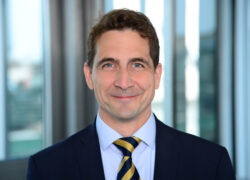
Photo: Wenzel Hoberg, Copyright: Fiera Real Estate, Friedrich von Carlowitz, Copyright: KINGSTONE RE, Alain Meyer, Copyright: Fiera Capital and Dr. Tim Schomberg, Copyright: KINGSTONE.

CIJ Awards Czech Republic 2025: Honouring a Quarter Century of Excellence in Real Estate

One of the Czech Republic’s most prestigious real estate events returns this winter as the 25th edition of the CIJ Awards Czech Republic is set to take place on 1st December 2025 at the elegant Marriott Hotel in Prague. Marking a significant milestone, this landmark edition will celebrate a quarter century of recognising excellence, innovation, and leadership in the built environment.

This year’s theme, “Future Real Estate in the City,” underscores the event’s forward-thinking focus and its dedication to spotlighting the visionaries shaping tomorrow’s urban spaces. From developers and investors to architects, consultants, and legal professionals, the CIJ Awards Czech Republic will bring together the most influential players in the property sector for an evening of celebration and industry reflection.

The gala evening will be complemented by an elevated dining experience, featuring locally sourced ingredients transformed into imaginative culinary creations. Guests will also be treated to a curated entertainment program, designed to enhance the festive and sophisticated atmosphere of the awards presentation.

Robert Fletcher, CEO and Editor-in-Chief of CIJ EUROPE and the CIJ Awards Czech Republic, remarked, “This year’s 25th edition of the CIJ Awards Czech Republic will feature a distinguished lineup of entertainment acts curated specifically for this milestone occasion. I look forward with great anticipation to presenting what promises to be a memorable and celebratory gala evening.”

With more than 30 award categories spanning development, transactions, asset management, and professional services, the CIJ Awards continue to highlight the very best achievements across all segments of commercial and residential real estate. Among the most anticipated honors are:
• Best Commercial Property Investment Transaction of the Year
• Best Asset Management Company of the Year
• Best Adaptive Reuse / Urban Regeneration Project
• Best Flexible Workspace / Hybrid Office Project of the Year
• Leadership of the Year
• Grand Prix – a jury-selected distinction for overall excellence.

The event also features a strong promotional platform for sponsors, with tailored partnership packages offering extensive exposure across CIJ Europe’s media channels, awards guidebooks, newsletters, and event branding. Opportunities include general and associate partnerships, welcome drinks sponsorships, and individual category presentation rights.

With 25 years of tradition, the CIJ Awards Czech Republic continues to set the benchmark for recognition within the real estate sector. This year’s edition promises to be not only a celebration of past accomplishments but also an inspiring look ahead to the future of property in Central Europe.

For nomination submissions visit: www.awards.cijeurope.com

CIJ Awards Czech Republic 2025
– Marriott Hotel, Prague
– 1 December 2025
– Celebrating the present and future of real estate.

ESG, Flexibility, and Investment Shifts

ESG, Flexibility, and Investment Shifts: CBRE’s Jana Prokopcová on the Future of Czech Commercial Real Estate

In a recent CIJ EUROPE Q&A with Jana Prokopcová, Head of Research at CBRE Czech Republic, we discussed how ESG standards, changing occupier expectations, and evolving investment strategies are reshaping the Czech commercial real estate market. From retrofitting legacy office and retail assets to emerging trends in sustainability and flexibility, Prokopcová offers a detailed look at how developers, landlords, and investors are responding to new pressures and opportunities across the sector.

How are developers and landlords in the Czech Republic responding to the growing pressure to retrofit or reposition older office and retail properties to meet ESG and tenant expectations?

Developers and landlords in the Czech Republic are increasingly focused on retrofitting older properties to meet modern ESG benchmarks and tenant expectations. In the office segment, outdated buildings are being upgraded to improve energy performance, reduce environmental impact, and enhance indoor comfort. Renovations often involve modernizing infrastructure and creating flexible, hybrid-ready workspaces to keep pace with shifting workplace models and maintain market competitiveness.

What specific ESG-related requirements—such as certifications, energy efficiency upgrades, or reporting obligations—are now most critical for maintaining asset liquidity and investor interest?

ESG performance is becoming central to maintaining asset value and liquidity. Energy efficiency improvements—particularly those that result in better EPC (Energy Performance Certificate) ratings—are seen as essential. Certifications such as BREEAM, LEED, and WELL are also increasingly important. Banks and financial institutions are aligning green financing terms with a building’s energy profile, making high EPC ratings a key factor in securing capital and attracting institutional investors.

From an occupier perspective, how have tenant demands changed in recent years and what are the most important features now being requested in office and retail leasing negotiations?

Office occupiers now prioritize flexibility, modular layouts, and health-focused features like air quality and natural light. Hybrid work models have led to new requirements in space planning. Sustainability is also a major driver: according to CBRE’s European Office Occupier Sentiment Survey, 84% of occupiers now consider sustainable building features a priority, with growing demand for bike and scooter storage (80%) and EV charging stations (69%). In retail, tenants increasingly focus on experiential environments, integrated digital capabilities, and operational efficiency tied to sustainability targets.

How are investment strategies evolving in light of increased regulatory oversight and sustainability criteria, particularly for legacy retail or non-core office assets?

Older retail and office assets are now viewed through a value-add lens—provided they can be upgraded to meet current regulatory and ESG expectations. Investors are split in their strategies: some are divesting from underperforming assets without viable ESG potential, while others are acquiring properties that can be repositioned to meet higher standards. The direction depends on risk appetite and long-term investment horizon, but ESG compliance is becoming a fundamental consideration in both cases.

What types of commercial properties are currently seen as most resilient or attractive in the Czech market and how important is flexibility in use or design to future-proofing their long-term value?

The Czech commercial real estate investment market had a strong start to the year, with €2.2 billion transacted in H1 2025—already exceeding the full-year 2024 volume of €1.98 billion. We’re seeing investment activity across all sectors. In H1, industrial assets led with a 27% share of total volume, followed by hotels (23%) and offices (17%). However, these proportions are likely to change over the course of the year, depending on the successful closing of several large ongoing transactions.

Flexibility in design and use is becoming increasingly important—not only to accommodate evolving tenant requirements but also to safeguard long-term asset value. Investors are also diversifying into alternative sectors such as rental housing, student accommodation, and healthcare facilities to hedge against market volatility and enhance resilience.

Rhomberg Sersa secures new logistics space in Berlin with Logivest’s support

Rhomberg Sersa Gleisbau GmbH has signed a long-term lease for a new logistics property in south-east Berlin, facilitated by real estate consultancy Logivest. The nearly 3,000-square-metre site is owned by LIBERTAS Gesellschaft für Stadtentwicklung GmbH.

Located on Grünauer Straße 210–216 in the Köpenick district, the property includes approximately 1,000 square metres of warehouse space divided into five hall sections, along with 2,000 square metres of open storage. Rhomberg Sersa will use the facility for storing components and materials required for track construction, as well as for welding operations. The halls feature ground-level delivery access, while the outdoor space will accommodate larger track elements.

“This site has a strong industrial heritage, having previously housed the Grünau concrete plant,” said Lucas Rauhut, Consultant for Industrial and Logistics Letting at Logivest in Berlin. “It now hosts a range of tenants from industrial, logistics, and manufacturing sectors. The property offers several crane systems with capacities up to 20 tonnes, and there are plans to reactivate a port facility on site, reconnecting it to the federal waterway network. Combined with access to the B96a highway and proximity to Schönefeld Airport, the location provides strong logistical advantages.”

The company is scheduled to occupy the new premises by the end of 2025.

Romania’s industrial and logistics sector posts strong first half, driven by rising demand

The Romanian industrial and logistics real estate sector recorded significant growth in the first half of 2025, with total leasing activity surpassing 500,000 square metres. According to the Romania Industrial Marketbeat Q2 2025 report by Cushman & Wakefield Echinox, this represents a 25% increase compared to the same period in 2024 and ranks as the third-best H1 performance since 2014. Leasing activity during this period was 45% above the average for the past 12 years.

The strong performance in the first six months sets the stage for a potential full-year take-up volume approaching 1 million square metres, a threshold previously reached only in peak market years. Net take-up accounted for 66% of total leasing activity, reaching approximately 340,000 square metres. Bucharest remained the dominant location for leasing, representing 70% of the national total, with approximately 359,000 square metres leased. Timisoara followed as the second-largest logistics hub, capturing 13% of the total.

Rodica Târcavu, Partner in the Industrial Agency at Cushman & Wakefield Echinox, noted that the sector’s resilience is particularly notable given the broader economic environment, which has been affected by a slowdown in industrial production. “Despite these challenges, the industrial and logistics market continued to expand due to strong domestic consumption,” Târcavu stated. She also highlighted that demand is increasingly led by logistics and retail operators, indicating a shift toward a distribution-centric model within supply chains. Manufacturing’s share, by contrast, was limited, reflecting broader trends in regional economic restructuring.

The two largest lease agreements in Q2 2025 were renewals: Kyocera renegotiated 16,000 square metres in CTPark Timisoara Ghiroda, while Sarantis extended its lease for 11,000 square metres in WDP Park Dragomiresti. Logistics and distribution companies accounted for the largest share of leasing activity (160,000 square metres), followed by retail, e-commerce, and FMCG companies, which collectively leased 133,000 square metres. Manufacturing and automotive tenants represented a smaller portion of the market, contributing just under 6% of the total.

At the end of the second quarter, Romania’s modern industrial and logistics stock stood at 7.75 million square metres. Developers delivered new projects totalling 184,100 square metres during the first half of 2025, marking a 77% increase over the same period last year. The national construction pipeline remains active, with approximately 370,000 square metres under development.

Vacancy rates rose slightly to 5.8% nationwide, though this trend may reverse in the coming quarters due to limited speculative development. Prime rents in Bucharest have remained stable, but moderate increases were observed in other regional hubs such as Timisoara and Brasov. Asking rents in top-tier projects ranged between €4.30 and €4.70 per square metre per month in Q2. Cushman & Wakefield Echinox anticipates possible further increases by year-end, driven by rising construction and land acquisition costs.

Source: Cushman & Wakefield Echinox

DIW Berlin: Renminbi unlikely to replace Dollar or Euro in global trade in the near term

Efforts by the Chinese government to expand the international use of the renminbi have made limited headway in challenging the dominance of the US dollar and euro in global trade. According to a new study by the German Institute for Economic Research (DIW Berlin), while the renminbi has gained ground as a billing currency, its use remains mostly confined to transactions with China and varies significantly by sector.

The study, authored by Sonali Chowdhry from DIW Berlin’s Business and Markets Department, analysed detailed French customs data covering the period 2011 to 2017—the early phase of China’s renminbi reforms. During this time, the share of French exports invoiced in renminbi rose from less than 1% to approximately 10%, primarily driven by firms in the consumer goods sector. However, the currency made little impact in sectors dominated by the US dollar, such as raw materials.

Chowdhry notes that China’s long-term goal is to reduce reliance on the US dollar by increasing the use of its own currency in global trade. This objective aligns with China’s broader strategy to enhance its geopolitical position and lower transaction costs for domestic firms. Despite these efforts, the renminbi remains a marginal player globally. Of the French exports examined in the study, only 0.5% of renminbi-denominated invoices were used by firms without prior trading experience with China. Furthermore, 99% of all renminbi transactions were conducted exclusively with Chinese counterparts, indicating limited cross-border adoption beyond bilateral trade.

The study also suggests that the euro could benefit from shifts in global currency preferences, particularly amid rising uncertainty in US economic policy. Chowdhry argues that the euro’s position could strengthen further if structural measures were introduced, such as wider access to euro liquidity through swap lines and the development of a digital euro to reduce transaction costs.

While Chinese policymakers have made visible progress in promoting the renminbi, DIW Berlin concludes that the shift towards a multipolar currency system will be gradual and uneven across sectors and regions. The dollar and euro continue to dominate global trade invoicing, underscoring the entrenched nature of existing financial systems.

Source: DIW Berlin

Colliers Appoints Blanka Klawińska-Okonek as Office Manager in Poznań

Colliers has announced the appointment of Blanka Klawińska-Okonek as Office Manager of its Poznań branch. In her new role, she will oversee the day-to-day operations of the office, manage client relations, and support the firm’s advisory and consulting activities in the Greater Poland region.

Klawińska-Okonek has been with Colliers since 2016, joining the office space department led by Paweł Skałba. Since then, the Poznań team has completed more than 100 lease transactions totaling nearly 158,000 square meters.

According to Paweł Skałba, Senior Partner in the Office Division at Colliers, her appointment reflects the company’s intent to further solidify its presence in the regional market. He cited her experience in the business services sector and knowledge of the local commercial real estate landscape as key strengths.

Commenting on her new responsibilities, Klawińska-Okonek noted the competitiveness of the Poznań office market and emphasized the importance of maintaining Colliers’ leading position in tenant representation. She expressed her intention to foster a collaborative work environment while continuing to deliver advisory services that support clients’ evolving needs.

Prior to joining Colliers, Klawińska-Okonek worked in the Investor Services Department of the City of Poznań, focusing on investment promotion and cooperation with shared service centres. She holds a master’s degree in international relations from Adam Mickiewicz University in Poznań, with a specialization in international business and global economy.

She has also been recognized for her contributions to the business services sector, including an ‘Outsourcing Stars’ award and a 2014 accolade from the City of Poznań for her involvement in the WorkGate initiative.

Global residential real estate market reaches €260 trillion, Czech Republic ranked 34th

The global residential real estate market was valued at approximately €260 trillion (CZK 6,500 trillion) at the end of 2024, according to an analysis by Savills World Research. This marks a 2.7% year-on-year decline, yet the total value remains 19% above pre-pandemic levels recorded in 2019, reflecting long-term growth trends following the COVID-19 recovery period.

Despite the annual drop in total value, the majority of countries saw an increase in residential real estate driven by rising property prices and expanding housing stock. The Czech Republic is positioned 34th globally, with an estimated residential property value of €1 trillion (roughly CZK 25 trillion), based on Savills data.

China and the United States continue to dominate the global residential landscape. China accounts for 29% of the total value, while the U.S. contributes 18%, which represents a 5.1% increase compared to the previous year. Other top-ranking countries include Japan, Germany, the United Kingdom, France, Canada, Australia, South Korea, and Italy. Together, these ten markets make up 71% of the global residential real estate value.

Australia and Italy are among the latest entrants into the top ten. Australia rose from 11th place in 2019 to 8th in 2024, while Italy advanced from 12th in 2022 to 10th in 2024. Within Europe, the Netherlands and Spain have also made notable gains. The Netherlands climbed from 19th to 15th position between 2019 and 2024, and Spain moved up from 20th to 17th, largely due to constrained housing supply pushing up property prices.

Paul Tostevin, Head of Savills World Research, noted that while increasing residential value may reflect economic growth and market expansion, it can also be indicative of declining housing affordability in key global cities. Tostevin further emphasized that residential wealth remains unevenly distributed. Europe holds roughly 25% of the global residential real estate value despite comprising only 10% of the global population. Similarly, North America accounts for 22% of value while housing just 6% of the world’s population. In contrast, Asia and Africa, which are home to the largest shares of global population, hold significantly lower proportions of residential wealth.

Savills highlights India as a prime example of untapped potential. Although it is the world’s most populous nation, India currently ranks only 16th globally in terms of total residential property value, underscoring the scope for future market expansion in rapidly developing regions.

These findings illustrate not only the global concentration of residential wealth but also point to regions where demographic and economic shifts may drive future growth. The data underlines the enduring structural imbalances in global housing markets and the continued importance of policy measures to manage both supply and affordability.

Source: Savills World Research

Warsaw office market sees surge in new supply amid decline in development pipeline

The Warsaw office market experienced a significant increase in new office space completions in Q2 2025, with nearly 80,000 sqm delivered—the highest quarterly volume since late 2022. This uptick was driven by major projects such as The Bridge by Ghelamco (47,000 sqm), Office House by Echo Investment (27,800 sqm), and Nowa Bellona (4,800 sqm), all of which were completed in the Rondo Daszyńskiego area. The data comes from BNP Paribas Real Estate Poland’s latest Review: Warsaw Office Market, Q2 2025.

Despite the surge in completions, the development pipeline is contracting. At the end of June, only around 150,000 sqm of office space was under construction—the lowest level recorded in several years. This suggests that new, modern office space, particularly in prime locations, may become more limited in the near future.

Key projects currently under construction include Upper One (35,500 sqm), V Tower (30,800 sqm), and Studio A (26,600 sqm), all of which are located in central Warsaw.

Demand for office space remains steady. Gross leasing activity in Q2 2025 totalled 154,700 sqm, bringing the H1 total to more than 300,000 sqm, which represents a year-on-year decrease of 5%. Lease renewals dominated Q2 transactions, accounting for 59% of activity, while new leases made up 34% and expansions 6%. Pre-lease agreements remained limited, contributing just 4.1% to the total, according to BNP Paribas Real Estate Poland.

The largest transaction in the quarter involved Polkomtel, which extended its 22,000 sqm lease at Multimedialny Dom Plusa in Służewiec. Other large transactions included an 18,000 sqm lease by an undisclosed tenant at Generation Park X in City Centre West and PZU’s 6,500 sqm renewal at Konstruktorska Business Center.

Vacancy rates across Warsaw stood at 10.8% at the end of June 2025, with 683,000 sqm of space unoccupied. The vacancy rate in the city centre declined to 7.8%, while in non-central areas it rose to 13.3%. The highest rate was observed in Służewiec (21.1%), while City Centre West and Ursynów-Wilanów recorded the lowest (5.4% and 7.3%, respectively). Buildings completed in the past five years had the lowest vacancy rate at 4.9%, compared to 7% for buildings aged six to ten years and 13.7% for those over ten years old.

Rental levels have remained stable, particularly in central locations. According to Ewa Nicewicz, Senior Consultant at BNP Paribas Real Estate Poland, prime rents in the city centre range from EUR 22.50 to EUR 26.00 per sqm per month, with top-end developments reaching up to EUR 28.00. Rents in non-central zones vary between EUR 14.00 and EUR 18.00 per sqm, with service charges reaching PLN 40 per sqm.

This mix of robust leasing activity and a shrinking development pipeline signals that availability in Warsaw’s office market could tighten, particularly in central zones, if new supply does not increase in the coming quarters.

Source: BNP Paribas Real Estate Poland

DIW Economic Barometer signals sluggish German recovery amid ongoing uncertainty

Germany’s economic recovery remains uneven, according to the latest data from the German Institute for Economic Research (DIW Berlin). The DIW Economic Barometer for July dropped slightly to 92.3 points, down from 93.2 in June, moving further below the neutral 100-point benchmark that signals average economic growth.

While June had marked a two-year high, July’s decline underscores continued volatility. DIW’s Chief Economist, Geraldine Dany-Knedlik, stated that the recovery is proceeding as anticipated, but not without disruptions. She noted that a temporary boost in exports during the first half of the year—prompted by anticipated tariff hikes from the United States—has now faded. Meanwhile, recently announced investment measures aimed at stimulating public and private spending are expected to have a delayed impact.

Germany’s export sector is under pressure from structural challenges, including declining international competitiveness and persistent trade policy tensions. Although a recent agreement between the European Union and the United States has helped reduce immediate uncertainty, its long-term stability and implications remain unclear. According to Dany-Knedlik, this environment of unpredictability is likely to encourage continued caution among businesses and consumers.

German industry has shown signs of modest improvement since the downturn experienced last winter. Industrial production increased in May, but order intake remains low. Government investment packages may support higher order volumes in the future, although concerns about high production costs and weak global competitiveness persist. The ifo Business Climate Index showed a slight improvement in July, suggesting that clearer policy signals are helping firms with planning and forecasting, despite ongoing tariff effects.

The services sector has yet to show meaningful signs of recovery. Retail activity has been stagnant, and consumer sentiment remains subdued amid ongoing labour market pressures. Job security and income stability remain top concerns, contributing to weak household spending. Analysts expect that any noticeable rebound in consumption is unlikely before 2026.

Economic expert Guido Baldi of DIW Berlin suggested that Germany will need to remain patient as it waits for momentum to build. He highlighted the broader geopolitical context as a continuing constraint but noted that forthcoming government investments could begin to produce tangible economic benefits in the near term.

Source: DIW Berlin

front page info
LATEST NEWS