Smart Zoning: How Modular HVAC Systems Are Transforming Industrial Energy Use

Industrial developers are rethinking how they manage energy in production halls. Rising electricity costs, tighter ESG standards, and increasingly flexible manufacturing processes are pushing the sector to replace traditional, centralised HVAC systems with modular designs that can adapt to real-time conditions.

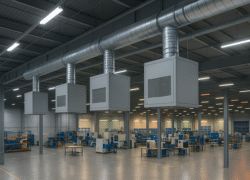
In older production buildings, a single large ventilation unit often ran continuously, consuming energy even when only a fraction of the space was in use. The new approach divides halls into smaller, independently operated zones, each managed by its own air-handling module. This design allows airflow and temperature to be regulated according to need, reducing power waste and operating costs.

According to Marcin Kosieniak, co-owner of PM Projekt, the shift represents more than a technical upgrade—it is a strategic response to new industrial realities. Smaller modular systems can be activated individually and expanded more easily when production grows. They also offer redundancy, meaning that if one module fails, others continue to operate without disrupting the entire process.

The evolution of these systems goes hand in hand with advances in automation. In many modern facilities, HVAC operations are now linked to building management platforms capable of exchanging data with production planning systems. This enables the ventilation to react dynamically to production schedules, machine activity, or staff shifts. A well-integrated system can, for instance, pre-condition work zones before a shift begins, ensuring a stable indoor environment as operations start.

Kosieniak emphasises that such functionality must be planned from the beginning. Retroactively adapting buildings for smart integration is often costly and inefficient. “The traditional ‘build first, adapt later’ model is no longer sustainable. Flexibility must be built into the system from the concept stage,” he says.

Research from industrial sites in Germany supports this new direction. Facilities using predictive control methods—where algorithms analyse historical data, weather forecasts, and upcoming production plans—have reported energy savings of up to one-third compared to conventional HVAC systems. The technology anticipates changing conditions hours or even days in advance and adjusts system performance automatically.

Similar pilot projects in Central Europe, including Poland and the Czech Republic, are beginning to test these adaptive systems, combining production management data with energy optimisation tools. Although still at an early stage, the results show clear potential for long-term efficiency gains and improved sustainability metrics.

As industrial real estate becomes more competitive, the energy performance of buildings is emerging as a defining factor in attracting tenants. Properties equipped with modular HVAC systems not only offer lower running costs but also align with the growing demand for sustainable operations. “In today’s market, production flexibility must extend to the building itself,” Kosieniak concludes. “Smart zoning is not a luxury feature—it’s fast becoming an essential part of industrial design.”


Slovakia Revises GDP Growth Downward, Reflecting Slower Economic Momentum in 2024

The latest update from the Statistical Office of the Slovak Republic shows that the country’s economy expanded more modestly in 2024 than previously estimated. The revised figures, published as part of the regular autumn review of national accounts, indicate a slightly weaker growth pace across the past two years.

According to the updated data, Slovakia’s economy grew by 1.9% in 2024, down from the 2.1% estimated in the spring. In real terms, gross domestic product reached €104.3 billion, a revision of around €114 million compared with earlier figures. The adjustments are based on new annual survey data and refined statistical inputs gathered over recent months.

The revised data also made smaller changes to previous years. Growth in 2023 was adjusted from 2.2% to 2.1%, while 2022 saw a marginal upward revision from 0.4% to 0.5%. The figures for 2021 remain unchanged. Officials said these adjustments reflect the integration of new business data and other verified economic indicators, which help improve accuracy and comparability across years.

Quarterly results were also slightly modified. Three of the four quarters in 2024 were revised down by 0.2 percentage points, with the second quarter unchanged. For 2023, only the first quarter showed a marginal improvement, while two others were revised slightly lower. The most notable change came in late 2022, where a previously recorded decline of 0.1% was corrected to show a mild increase of 0.2%.

The revisions form part of Slovakia’s biannual data refinement process, conducted each spring and autumn in coordination with Eurostat and the European Central Bank. These reviews ensure that Slovakia’s economic statistics meet EU standards and reflect the most up-to-date information available.

In addition to the GDP update, the Statistical Office also introduced an updated classification for household spending, known as COICOP 2018, which expands the number of expenditure categories from 12 to 13 and refines their definitions. The update affects the entire historical data series dating back to 1995, providing a clearer picture of household consumption trends over time.

While the revisions show slightly slower economic growth, analysts say the overall picture remains stable. The Slovak economy continues to show resilience, supported by domestic demand and industrial output, even amid tightening financial conditions and slower growth in key trading partners.

Source: SOSR

Slovakia’s Economy Grew More Slowly Than First Estimated, New Data Shows

Slovakia’s economy expanded at a slightly slower pace in 2024 than previously estimated, according to the latest update from the national statistics office. The autumn review, part of the country’s regular twice-yearly assessment of economic data, found that overall growth was weaker than earlier projections suggested.

The revised figures show that economic output increased by 1.9% in 2024, down from the earlier estimate of 2.1%. In total, the Slovak economy generated around €104 billion in constant prices, a modest adjustment from previous calculations. Officials said the changes reflect more detailed data gathered from annual surveys and updated information from businesses and public institutions.

The review also made smaller adjustments to previous years. Growth for 2023 was trimmed slightly to 2.1%, while 2022 saw a marginal upward revision to 0.5%. The 2021 figure was unchanged. Analysts said the overall differences are minor but offer a more accurate picture of economic activity and household consumption.

Quarterly data showed a similar trend, with small downward adjustments to most 2024 results, except the second quarter, which remained stable. The last quarter of 2022, initially reported as a slight decline, has now been revised to show a small gain, suggesting a steadier performance than previously thought.

These updates form part of Slovakia’s ongoing effort to refine its national economic accounts in line with European standards. Revisions such as this, carried out each spring and autumn, incorporate new sources and statistical improvements to ensure consistency with other EU countries.

Alongside the GDP update, the statistics office also introduced a new system for classifying household spending, expanding the number of expenditure categories and updating their definitions. The change affects long-term data sets dating back to the mid-1990s, offering a more detailed view of how Slovak households allocate their budgets.

While the revisions indicate slightly weaker growth, economists say the broader trend remains stable. Slovakia’s economy continues to expand moderately, supported by manufacturing, services, and household demand, even as global headwinds and tighter financing conditions weigh on output.

Source: SOSR

Slovakia’s Budget Deficit Widens in 2024 as Public Debt Nears 60% of GDP

Slovakia’s public finances weakened last year, with the government’s deficit rising to 5.5% of GDP and total debt approaching 60% of national output, according to new data from the Statistical Office. The shortfall, amounting to around €7.2 billion, was higher than earlier estimates published in the spring and reflects slower tax collection and continued pressure from public spending.

The latest figures show that Slovakia’s deficit grew by roughly €600 million compared with 2023, when it stood at 5.3% of GDP. The central government accounted for most of the shortfall, recording a loss of €7.4 billion, while local administrations also ended the year in deficit. Social insurance funds, however, generated a small surplus, helping to offset part of the imbalance.

Officials said the deterioration was partly due to weaker revenue from corporate and personal income taxes, as well as a decline in the so-called solidarity levy, which was introduced to support budget stability. At the same time, higher social contributions and payments linked to energy-price compensation schemes added modestly to income.

Public debt rose by almost €9 billion to reach €77.7 billion, representing about 59.7% of GDP. That marks an increase from 55.8% in 2023 and puts Slovakia close to the European Union’s fiscal ceiling. The rise was attributed to additional borrowing and new liabilities connected to renewable-energy support measures.

Analysts say the results underline the need for tighter budget discipline as Slovakia continues to face pressure from slowing economic growth and high public-sector spending. The figures are part of the country’s regular update submitted to Eurostat, which will release comparable data for all EU members later this week.

While the government has pledged to gradually reduce the deficit in the coming years, the pace of consolidation remains uncertain amid political debates over taxation, social benefits, and energy subsidies. Economists warn that unless stronger reforms are introduced, Slovakia’s debt could surpass 60% of GDP in 2025, placing additional strain on public finances and testing investor confidence.

Source: SOSR

Brno’s Housing Market Hits Record Highs as Demand Outpaces Supply

Apartment prices in Brno have reached new highs this year, with the average price for new developments rising to around CZK 143,000 per square metre. Developers say demand continues to exceed supply, even as borrowing costs remain high and the pace of new construction remains slow.

According to market data compiled by local developer Trikaya, the price increase marks a roughly nine percent rise since January. Despite higher costs, sales of new apartments edged upward compared with last year, reflecting buyers’ determination to secure homes in a market still struggling with limited availability.

Smaller apartments continue to attract the most interest, particularly compact one-room and two-room layouts. These units offer greater affordability and are being bought quickly once released to the market. Trikaya’s managing director, Dalibor Lamka, noted that nearly every well-prepared project finds buyers within weeks, adding that the pace of approvals rather than demand remains the key barrier to stabilising prices.

Brno’s property market typically slows during the summer months, but around 300 new apartments were sold in the third quarter—well above the city’s long-term seasonal average. By the end of September, more than 40 residential projects were active, offering roughly 1,500 apartments. However, most of these are smaller units, leaving limited options for families seeking larger homes.

Developers and analysts agree that the market’s main obstacle lies in administrative delays. Recent attempts to centralise planning offices and digitise the permitting process have not yet produced the expected efficiencies. As a result, even projects with full financing and completed designs face months of waiting before approval.

Lamka cautioned that until these bottlenecks are resolved, the imbalance between supply and demand will persist—keeping Brno among the Czech Republic’s most expensive and competitive housing markets.

Independent data from property analysts confirms the broader trend. Average prices in Brno rose steadily throughout 2025, following a sharp recovery in demand and a shortage of new projects entering the pipeline. Analysts expect prices to continue rising into 2026, though at a slower pace if mortgage rates begin to ease and administrative reforms take effect.

Source: CTK

Czech Republic Narrows Budget Deficit in 2024, But Debt Edges Higher

The Czech Republic managed to reduce its budget shortfall in 2024, reflecting stronger economic activity and tighter spending control, according to the latest data confirmed by Eurostat. Government accounts showed an overall deficit equivalent to 2.2 percent of national output last year, an improvement from the 3.8 percent recorded in 2023.

Public debt, however, continued to rise, reaching roughly 43.6 percent of GDP — about one percentage point higher than a year earlier. The increase was attributed to higher borrowing costs and continued investment spending, although economic growth helped prevent a sharper rise in the debt ratio.

Officials from the Czech Statistical Office noted that government revenues grew faster than expenditures in 2024, supported by tax collection and corporate income growth, while spending increases were more modest. Analysts said this suggests a gradual return toward fiscal balance after the pandemic-related disruptions and the energy-price interventions of previous years.

Despite the modest uptick in debt, the Czech Republic remains comfortably within the European Union’s fiscal thresholds, which cap annual deficits at 3 percent of GDP and public debt at 60 percent. The figures mark one of the lowest debt levels among Central European economies, underscoring the country’s relatively cautious fiscal approach.

Economists say the improvement provides some breathing room for the incoming budget cycle, though risks remain. Rising public sector wage pressures, planned infrastructure spending, and uncertain global conditions could all test the government’s ability to maintain its current trajectory.

As the Czech economy adjusts to slower growth in key export markets and higher interest rates, fiscal prudence will likely remain a key theme heading into 2026. The government is expected to present its updated fiscal strategy later this year, outlining steps to sustain stability while supporting long-term investment priorities.

NEPI Rockcastle Launches Romania’s Largest Solar Power Plant for Commercial Use, Advancing CEE Retail Real Estate’s Green Transition

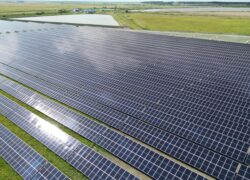
NEPI Rockcastle, Central and Eastern Europe’s leading retail real estate investor and operator, has inaugurated Romania’s largest photovoltaic power plant dedicated to commercial infrastructure. The new facility, located in Chișineu-Criș in western Romania, marks a major step in the company’s €100 million renewable energy programme across the region.

The solar plant, developed on a greenfield site, is designed to generate over 70,000 MWh of renewable electricity per year — enough to power roughly 29,000 homes and prevent around 21,000 tonnes of CO₂ emissions annually. The project brings NEPI Rockcastle’s renewable energy capacity to 159 MW and represents the most significant investment of its kind in Romania’s retail and logistics real estate sector.

With operations spanning eight countries and more than 60 properties valued at over €8 billion, NEPI Rockcastle expects its renewable power generation to meet about 45% of its total electricity needs once all planned installations are complete. This would make the company the largest producer of green electricity within the retail property industry in Central and Eastern Europe.

“We took the decision at the height of the energy crisis in 2022 to invest in our renewable energy programme, and it has proven both commercially sound and environmentally impactful,” said Marek Noetzel, Chief Operating Officer at NEPI Rockcastle. “We are helping our retail partners meet their sustainability targets while reinforcing our own commitment to decarbonisation and long-term energy efficiency.”

The company’s renewable rollout is progressing in three phases, combining rooftop and parking canopy solar systems with larger-scale photovoltaic projects. A second major solar development in Romania’s Prahova region is scheduled to begin construction in early 2026, which will expand total capacity to approximately 212 MW.

Romania, which represents around 35% of NEPI Rockcastle’s portfolio value, already sources nearly half of its electricity from renewables — primarily hydro power. However, solar energy still accounts for a relatively small share of the mix, though production has surged more than 60% in the first half of 2024, according to the Romanian Photovoltaic Industry Association. NEPI Rockcastle’s projects are expected to play a significant role in accelerating this growth over the next two years.

Poland, the company’s second-largest market, has also seen a turning point, with renewables surpassing coal in the national energy mix for the first time in 2025, according to the Financial Times. NEPI Rockcastle plans to extend its renewable energy investment strategy there, targeting a long-term goal of fully covering its power demand from in-house sources.

“Investing in renewable infrastructure enhances both sustainability and operational resilience,” Noetzel added. “Our developments in Romania demonstrate how disciplined financial management and responsible growth can go hand in hand, creating value for tenants, investors, and the communities where we operate.”

NEPI Rockcastle’s strategy aligns with the broader energy transition across Central and Eastern Europe, positioning the retail property sector as a key participant in achieving regional climate and energy efficiency goals.

Romania’s Property Agency Expands Digital Access with Nearly Two Million Documents Issued Online

Romania’s National Agency for Cadastre and Real Estate Advertising (ANCPI) is reporting another major step in its digital transformation, with close to two million property documents now being issued online this year. The shift marks growing public use of Romania’s e-government tools for property ownership and verification.

Between January and September 2025, the agency processed more than 1.9 million requests through its online portals, allowing citizens, businesses, and legal professionals to obtain official property records without visiting local offices. Owners can access their documents free of charge via the MyTerra platform, while other users—such as notaries, banks, and developers—can order certified digital versions through the ePay system for a modest fee.

The documents most frequently requested include ownership extracts and cadastral maps showing property boundaries. Most digital copies are available for download within minutes, while others are provided within two working days if still undergoing digital conversion.

In September alone, more than 130,000 online requests were registered, and thousands of new users signed up for the service. The growing adoption reflects Romania’s broader transition to paperless administration, with ANCPI confirming that over 26 million properties are now registered in its nationwide digital system.

The agency, which operates under the Ministry of Development, Public Works and Administration, notes that the online documents are legally recognised by government offices, banks, lawyers, and notaries, ensuring full validity without the need for physical signatures.

The continued expansion of ANCPI’s online services is part of a wider national effort to streamline access to public records, reduce administrative delays, and bring more transparency to the real estate sector.

Source: ANCPI

Foreign Investors Extend Buying Streak in GCC Markets as Saudi Arabia Leads with Strong Q3 Gains

Foreign investors maintained their positive momentum in Gulf Cooperation Council (GCC) stock markets for the seventh consecutive quarter, purchasing a net USD 4.8 billion in equities during Q3 2025, up from USD 4.2 billion in Q2, according to Kamco Invest’s GCC Trading Activity Quarterly Report – Q3 2025.

Cumulative net buying by foreigners reached USD 11.7 billion in the first nine months of 2025, a 35% increase year-on-year. Saudi Arabia remained the region’s primary destination for foreign capital, attracting USD 2.8 billion in Q3, followed by Abu Dhabi (USD 798.7 million), Dubai (USD 614.9 million), Kuwait (USD 283.3 million), and Qatar (USD 267.2 million). Bahrain recorded a modest inflow of USD 22.9 million, while Oman saw continued outflows with USD 38.7 million in net sales.

For the first nine months of 2025, the UAE led regional inflows, with foreign investors purchasing USD 5.9 billion in shares, ahead of Saudi Arabia (USD 4.5 billion) and Kuwait (USD 1.7 billion). Foreign investors were net sellers only in Oman, with cumulative sales of USD 527.5 million.

Kamco’s analysts said that Saudi Arabia’s recent decision to lift its foreign ownership cap beyond 49%, pending final approval, is expected to further boost investor appetite and potentially add USD 10 billion in new inflows once implemented.

The MSCI GCC Index advanced 4.6% in Q3, closing at 767.9 points—its strongest quarterly performance in nearly two years. Oman led the rally with a 15.1% rise, followed by Kuwait (4%), Saudi Arabia (3%), and Qatar (2.8%). Dubai, Abu Dhabi, and Bahrain posted smaller gains between 0.2% and 2.3%.

Saudi Arabia’s market dynamics were particularly active. Local investors turned net sellers, offloading SAR 10.5 billion worth of shares, while foreigners and GCC investors bought SAR 10.1 billion and SAR 456.9 million, respectively. September saw the highest monthly inflows, coinciding with a 5% one-day surge in the Saudi benchmark index following reports of eased foreign ownership limits.

Trading activity across GCC exchanges rose 15% quarter-on-quarter, with 108.9 billion shares traded in Q3. Kuwait led with a 38% increase in volumes, while Oman’s activity more than doubled. By contrast, Qatar, Abu Dhabi, and Dubai saw slight declines.

The aggregate value of traded shares remained stable at USD 151.3 billion, down marginally from Q2. The banking sector accounted for the largest share, with traded value rising 22.9% year-on-year to USD 35.9 billion. Al Rajhi Bank topped the list with USD 5.7 billion in trades, followed by Saudi National Bank and Alinma Bank.

Sector-wise, consumer services, real estate, and diversified financials showed positive contributions, while materials, capital goods, and F&B recorded sharp declines. Over the first nine months of 2025, total GCC trading value fell 10.4% year-on-year, reaching USD 478.9 billion, though real estate and banking posted respective gains of 61% and 18%.

Kamco Invest noted that consistent foreign inflows underscore sustained confidence in the GCC’s economic fundamentals, despite uneven performance among member states. The anticipated regulatory changes in Saudi Arabia and ongoing infrastructure investments across the region are expected to support further capital inflows into 2026.

Source: GCC

Lufthansa Technik AG to Open New Office in Wrocław’s Infinity Building

Lufthansa Technik AG, a global provider of maintenance, repair, and overhaul services for civil aviation, has leased more than 860 square metres of office space in the Infinity building on ul. Legnicka in central Wrocław. The company plans to move into its new headquarters in April 2026 under a seven-year lease agreement.

Lufthansa Technik AG, part of the Lufthansa Group, is among the world’s leading technical service providers for the aviation industry. The company employs over 22,000 people worldwide and operates across numerous international locations. Its portfolio includes the maintenance and modification of aircraft, engines, and components, as well as digital fleet support and cabin innovation.

The new Wrocław office will be located on the building’s fourth floor. “We are pleased to welcome Lufthansa Technik AG as a new tenant,” said Marta Kiernicka-Szarska, Wrocław Leasing Director at Avestus Real Estate. “This cooperation confirms the building’s quality and attractiveness for international companies seeking a modern and sustainable workspace.”

Maja Motylewska Siech, Office Manager at Lufthansa Technik AG, said the move marks an important step for the company’s Polish branch. “The new location in the city centre provides an excellent working environment and supports collaboration within our team. The long-term lease gives us stability and room to grow,” she noted.

The lease process was supported by Brookfield Partners and JLL, which represents Avestus Real Estate. The transaction also involved the law firm Clyde & Krasnodębski, Kulińska i Wspólnicy sp.k.

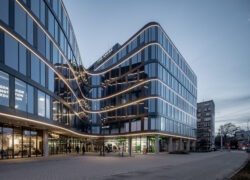
Infinity is a seven-storey Class A office building offering 18,700 square metres of office space and 1,500 square metres of retail and service areas. The property features a landscaped lobby, rooftop terraces, a digital building management platform by spaceOS, and a three-level underground car park with 311 spaces. Facilities for cyclists include 128 racks, locker rooms, and showers.

Developed by Avestus Real Estate in cooperation with Alchemy Properties, Infinity meets BREEAM Excellent and WELL Health-Safety certification standards, confirming its focus on sustainability, energy efficiency, and occupant wellbeing.

Other tenants at Infinity include Avenga, Divante, Dom Development Wrocław, FutureMeds, NATEK Poland, The Shire-Beyond Coworking, and SPCG. Retail and service occupiers include Medicover Stomatology, Enel-Med, Gorąco Polecam Smaki z Piekarni, a Żabka convenience store, and the UP Fitness Club.

The building was designed by AD Studio, with Eiffage Polska Budownictwo as the general contractor and JLL handling commercialization. Infinity is located at pl. Jana Pawła II at the intersection of Nabycińska, Legnicka, and Sokolnicza streets, offering easy access to Wrocław’s central business district.

front page info
LATEST NEWS