Squarepoint signs first lease at Skyliner II in Warsaw

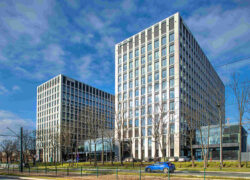
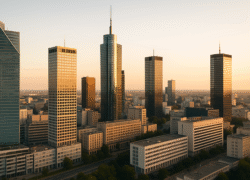
Karimpol Group has signed the first lease agreement for Skyliner II, the second phase of its Skyliner office complex in Warsaw’s Central Business District. The inaugural tenant is Squarepoint, a global quantitative investment management firm, which will lease close to 2,200 sq m of office space.

Squarepoint operates in 17 cities worldwide, including Warsaw, and specialises in systematic, data-driven investment strategies supported by advanced research and technology. The firm traces its roots back to 2000 and has operated as an independent, privately held company since 2014.

“Welcoming Squarepoint as the first tenant of Skyliner II is an important moment for us. Skyliner II continues the architectural, technological and sustainability standards set by Skyliner I, offering premium workplaces designed for the needs of future-oriented companies. We are proud that a global firm such as Squarepoint has chosen to expand within our complex,” said Michał Orłowski, Head of Leasing & Asset Management at Karimpol Polska.

Squarepoint was represented by CBRE in the leasing process, while Karimpol received legal advice from Argon Legal.

Construction of Skyliner II is currently underway, with completion scheduled for the fourth quarter of 2026. The 130-metre-tall tower will comprise 28 floors and offer approximately 24,000 sq m of leasable space, including around 23,000 sq m of offices and nearly 1,000 sq m of retail and service space at ground level. Typical office floors will provide around 1,100 sq m.

The upper levels of the building will include landscaped terraces totalling almost 900 sq m, connected by external staircases and served by an additional lift. In total, the building will be equipped with 10 lifts. Skyliner II will be connected to the first tower via a shared podium of around 4,500 sq m, providing retail and service amenities for tenants and the surrounding area.

The development will also include a five-level underground car park with 217 parking spaces and 100 bicycle stands. Skyliner II has received a BREEAM New Construction Outstanding certification and, in line with Karimpol’s approach for the first phase, is planned to be powered entirely by renewable energy.

The project was designed by APA Wojciechowski Architekci, with WARBUD S.A. acting as general contractor. Project management on behalf of the investor is being overseen by Hill International.

HIH Invest acquires 38.5 MWp solar park in Brandenburg from Trianel

HIH Invest has acquired a solar park with a total capacity of approximately 38.5 MWp in the Havelland district of Brandenburg for its HIH Green Energy Invest special fund. The asset was purchased from Trianel Energieprojekte GmbH & Co. KG, a wholly owned subsidiary of the municipal utility cooperation Trianel based in Aachen. The parties have agreed not to disclose the purchase price.

The solar park was developed by Trianel on former agricultural land located on both sides of an ICE railway line. Soventix acted as the general contractor, delivering the project on a turnkey basis. The facility was connected to the grid and commissioned in April 2025. Electricity generated by the park is sold on the market via ongoing direct marketing and benefits from state-guaranteed EEG feed-in tariffs for the first 20 years of operation. HIH Invest will assume responsibility for the commercial management of the asset.

“The acquired solar park stands out due to its yield-optimised design, the use of high-quality components from well-known manufacturers and the professional project development and construction carried out under Trianel’s responsibility,” said André Rolff, Head of Transaction Management Infrastructure at HIH Invest. “We are pleased to have secured another asset for our investors that strengthens and further diversifies the fund’s portfolio.”

HIH Green Energy Invest follows an investment strategy aligned with Article 9 of the EU Sustainable Finance Disclosure Regulation. The fund focuses on the acquisition of ready-to-build and operational wind and photovoltaic assets, primarily in Germany, France, Italy and Spain, as well as in the Benelux countries, the United Kingdom, Ireland, Poland, Portugal and Scandinavia.

“With HIH Green Energy Invest, we enable investors to participate in the future of Europe’s electricity supply,” said Kristof Krull, Head of Infrastructure at HIH Invest. “With an annual electricity generation of around 42.75 million kWh, the solar park can supply up to 11,000 households with renewable energy and thus contributes to the energy transition.”

Maurice Jäckel, Senior Investment Manager at Trianel, commented: “As a project developer, we focus on the holistic development of modern wind and solar parks and high-performance battery storage systems – from the initial concept to turnkey completion. Our integrated approach allows us to make optimal use of site potential and to advance the expansion of future-oriented energy storage solutions in Germany. We are pleased to have once again demonstrated the quality of our work to the HIH Group and would like to thank them for the constructive and trusting cooperation.”

HIH Invest was advised by Vesthaus on legal matters. Technical due diligence was carried out by K&S Ingenieurpartnerschaft Krug & Schram, while RSM Ebner Stolz provided tax and economic advisory services. GGW reviewed the project’s insurance arrangements.

Skanska invests approximately SEK 250 million in residential project in Uppsala

Skanska is investing around SEK 250 million in the third and final phase of a residential development in the Närheten block in the Kungsängen area of Uppsala, Sweden. The phase will comprise 66 condominium apartments as well as three commercial units.

The apartments will range from one to five rooms with kitchens, with most units featuring a balcony or patio. According to the developer, sustainability considerations have been incorporated throughout the project. The building will be constructed in concrete with a reduced climate impact, while energy performance will be supported by high-efficiency façades and windows.

The project will also include rooftop solar panels and systems for recovering waste heat in order to lower energy consumption and operating costs. As with Skanska’s other residential developments in Sweden, the buildings are planned to be certified under the Nordic Ecolabel scheme.

Construction of the final phase is scheduled to begin in February 2026, with completion and occupancy expected in autumn 2027.

MB Advisors acquires residential assets in Berlin for BlueRock Group

MB Advisors, a Berlin- and Manchester-based investment and asset management firm, has acquired three residential and mixed-use properties in Berlin on behalf of Zurich-based BlueRock Group. The assets are located in the districts of Wedding, Mitte and Schöneberg and were purchased from private owners.

MB Advisors managed the entire acquisition process, including deal sourcing, due diligence and transaction execution. The firm will also take over ongoing asset management responsibilities for the properties.

One of the acquisitions is a residential building in Berlin-Wedding, originally constructed in 1900, comprising 27 apartments and three ground-floor commercial units. The property offers a total lettable area of approximately 2,350 sq m. Michael Schick Immobilien acted as the broker on the transaction.

In Berlin-Mitte, MB Advisors acquired a residential and commercial building dating from 1904, which includes 32 residential units and two commercial units. The total rental area of the property is around 2,100 sq m, with Krossa & Co. Immobilien advising on the transaction.

The third asset is located in the Schöneberg district and was built in 1903. It comprises 28 residential units and one commercial unit, with a total lettable area of approximately 2,430 sq m. Büttner Immobilien-Management provided advisory services.

According to MB Advisors, the acquisitions form part of a longer-term strategy to build a Berlin-focused residential portfolio with value-add potential for BlueRock Group. MB Advisors will remain responsible for the active management of the assets going forward.

HVAC systems as a strategic ESG investment in hotel real estate

Heating, ventilation and air-conditioning (HVAC) systems are increasingly moving to the centre of hotel investment strategies, as owners and operators respond to rising environmental requirements and growing investor focus on ESG performance. In both renovation and expansion projects, modern HVAC solutions are no longer viewed solely as a comfort feature, but as a core element of sustainable property management.

Hotel buildings typically consume a high proportion of energy for heating, cooling, ventilation and domestic hot water. Improving the efficiency of these systems therefore offers one of the most direct ways to reduce operating costs and emissions, while also improving the quality of the indoor environment for guests and staff.

“Replacing traditional gas boilers with heat pumps can reduce CO₂ emissions by up to half, while also lowering operating costs in the long term,” says Marcin Kosieniak, MEP specialist and co-owner of the PM Projekt design office. “The social dimension, on the other hand, can be achieved by ensuring optimal thermal comfort and indoor air quality.”

Efficiency and renewable integration

Contemporary hotel modernisation projects increasingly combine high-performance HVAC systems with intelligent control solutions. Heat recovery from exhaust air, variable air flow systems and occupancy-based controls allow ventilation and air conditioning to respond to actual use rather than operate continuously, reducing unnecessary energy consumption.

“Recuperation systems allow heat to be recovered from exhaust air, significantly reducing the energy required to heat fresh air, while variable ventilation air flow systems save energy by precisely supplying air when rooms are occupied by guests,” explains Kosieniak. “Intelligent management systems, on the other hand, allow air conditioning parameters to be adjusted to the actual occupancy of rooms, eliminating energy waste in unused spaces.”

The use of VRF technology further enhances efficiency by enabling different parts of a hotel to be heated and cooled simultaneously, using internal energy transfer between zones.

The integration of renewable energy sources is also becoming more common. “The combination of heat pumps with photovoltaic installations or solar collectors can provide – depending on the facility – up to 70 per cent of the energy demand of air conditioning systems, significantly improving the facility’s ESG indicators,” Kosieniak points out.

Health, comfort and governance

Beyond energy performance, modern HVAC systems contribute to the social pillar of ESG by supporting healthier indoor environments. Advanced filtration, humidity control and CO₂ monitoring help maintain air quality, an issue that has gained additional importance in the post-pandemic context.

From a governance perspective, building management systems play a growing role. “Transparent reporting of energy consumption and emissions, made possible by BMS systems, builds investor confidence and supports the hotel’s competitive position,” says Kosieniak.

Managing refurbishment in operational hotels

Upgrading HVAC systems in existing hotels requires careful planning to avoid disruption to day-to-day operations. Detailed energy audits are typically the starting point, allowing owners to identify where the greatest efficiency gains can be achieved.

“Staging the work allows for operational continuity – starting with technical areas and back-of-house facilities, through guest rooms during periods of lower occupancy, to common areas,” explains Kosieniak. Referring to a current project in Germany, he adds: “In one of the hotels being modernised and expanded in Hanover, our scope of work includes the development of detailed designs for the HVAC and PLB systems, as well as design support for the contractor implementing the project.”

A long-term value driver

As regulatory expectations rise and investors increasingly link financing to sustainability performance, HVAC upgrades are becoming a rational business decision as well as an environmental one. “Investments in energy-efficient HVAC systems are not only a response to regulatory requirements and stakeholder expectations, but above all a rational business decision that brings measurable financial, environmental and image benefits,” Kosieniak concludes.

For hotel owners seeking to future-proof their assets, modern HVAC systems are proving to be one of the most effective and measurable ways to align operational performance with ESG objectives.

Savills expands asset management capabilities with Karolina Pawłowska joining AMS team

Savills has strengthened its Asset Management Services (AMS) team with the appointment of Karolina Pawłowska as Associate Director, reflecting the growing emphasis on active value management in the office sector.

Pawłowska brings 20 years of experience in the commercial real estate market, with a focus on office and retail leasing as well as asset management. Her background spans work on the developer, investor and advisory sides of the market. Prior to joining Savills, she held roles at companies including Atenor Poland, Vastint Poland and BNP Paribas Real Estate. Her professional experience includes projects such as Lakeside, University Business Centre, FORT 7, Business Garden Warsaw, Swede Centre and The Tides, as well as involvement in transactions on both the Polish and Canadian markets. She also has experience in the premium residential segment.

“Today’s clients expect comprehensive and integrated services,” said Michał Bryszewski, Head of Property & Asset Management and Board Member at Savills Poland. “Savills in Poland does not adhere to rigid patterns and creates cross-departmental roles that combine different competencies. This allows us to respond more effectively to the expectations and real needs of the market. This approach is reflected in Karolina joining the team, where she can fully utilise her potential and many years of experience in her new role. I am extremely pleased.”

In her role at Savills, Pawłowska will support property owners in developing leasing strategies, managing leasing processes, preparing market and competitive analyses, coordinating transaction processes including due diligence, and advising on optimisation and long-term asset positioning.

“Today’s office market requires a very conscious approach on the part of owners,” said Daniel Czarnecki, Head of Landlord Representation at Savills Poland. “We understand this as the ability to combine leasing strategy with real asset value management in a flexible manner based on market data. Karolina’s experience, gained on both sides of the market, significantly strengthens our expertise in advising owners of complex office buildings and mixed-use projects.”

According to Savills, the continued development of the AMS team responds to growing owner demand for services that extend beyond leasing to include market analysis, transaction structuring and active asset management support.

“The proximity of leasing and management processes today allows us to have a real impact on the results generated by assets,” Pawłowska said. “I see joining the Savills team as an opportunity to work on challenging projects and support owners in making decisions that have long-term business significance.”

Savills’ Landlord Representation team in Poland advises owners of office and mixed-use assets throughout the entire property life cycle, combining leasing expertise with analytical and strategic advisory services aligned with current market conditions.

EU Prepares First Affordable Housing Plan as Supply Shortages and Price Pressures Intensify

The European Commission is preparing the first EU-wide plan for affordable housing in response to sustained price growth and a decline in new residential supply across the bloc, according to Krystyna Helińska, Vice-Chair of the Real Estate Committee.

The initiative comes amid mounting evidence of structural challenges in the European housing market. Between 2010 and 2024, average housing prices in the EU increased by 55.4%, while the number of building permits issued fell by more than 20% over the past five years. Rising construction costs and demand, combined with shrinking supply, have contributed to worsening affordability across Member States.

In Poland, these trends are more pronounced. Housing prices have doubled over the past decade, and in the first quarter of 2025 alone rose by 13.2% year on year, compared with an EU average of 5.7%. High interest rates have further limited access to home ownership, particularly for middle- and lower-income households.

According to Eurobarometer data, 51% of urban residents in the EU consider the lack of available housing to be an urgent problem. More than 10.6% of city dwellers face excessive housing costs, while homelessness affects over 1.2 million people across the Union. Helińska notes that affordability pressures are influencing key life decisions, particularly among younger generations, including delaying family formation or relocating to countries with more favourable income-to-cost ratios.

Against this backdrop, housing affordability is increasingly viewed as a pan-European economic and social challenge rather than a purely national issue. A coordinated EU strategy could help align policies, promote the exchange of best practices and introduce financial instruments to stimulate investment, particularly in markets where supply constraints are most acute.

Structural challenges in the Polish market

According to Helińska, the success of the EU plan in Poland will depend on addressing the country’s ownership-dominated housing structure and the limited availability of rental housing. More than 87% of residential properties in Poland are owner-occupied, while only 12.7% are part of the rental market.

Recent figures underline the imbalance: in the first half of 2025, developers completed around 57,000 apartments, of which fewer than 2,000—less than 3%—were municipal or social housing units. Helińska argues that EU-level financing, including through institutions such as the European Investment Bank, should prioritise the development of affordable rental housing to help diversify supply.

Support for local governments is another key issue. While municipalities are best placed to identify housing needs, they often lack sufficient funding and operational tools. The number of municipal flats completed fell by 40% year on year, highlighting the need for targeted investment support that avoids excessive administrative burdens.

Regulation, energy efficiency and long-term planning

Helińska also points to the regulation of short-term rentals as an important element of the planned EU framework. For Poland’s larger cities, particularly tourist and academic centres, limiting short-term rental activity could help return housing stock to long-term residents and ease pressure on rental prices.

Energy efficiency is another central consideration. Housing affordability, she notes, is influenced not only by rents or purchase prices but also by operating costs. New developments should therefore meet high energy standards to reduce long-term utility expenses.

Finally, Helińska argues that the EU plan should encourage Member States to shift away from short-term demand-side measures, such as loan subsidy programmes, which can inflate prices when supply is constrained. Instead, she calls for long-term, supply-focused policies supported by EU funding.

“Real improvement will only come when EU resources are directed towards diversifying housing markets and expanding supply, rather than reinforcing existing imbalances,” she concludes.

Harden Construction enters Czech market with first industrial project in the Most region

Harden Construction, an international general contractor specialising in industrial buildings, has entered the Czech market and has begun work on its first local project in the Business Park Most Joseph industrial zone.

The project involves the construction of an industrial hall covering more than five hectares, designed under a build-to-suit model to meet the specific requirements of the end tenant.

Harden Construction focuses on the delivery of industrial facilities for manufacturing, warehousing and e-commerce. The company has completed more than 1.2 million sq m of projects in Germany and Poland, including distribution centres, logistics parks and production halls for clients such as H&M, Action, Danfoss, Samsung Electronics, Raben, Carrefour and DB Schenker.

“The Czech Republic is a very attractive market for us with significant potential. Its geographical location, combined with a strong industrial tradition, creates suitable conditions for the development of modern industry,” said Marek Čepela, CEO of Harden Construction CZ. “A key feature of the local market is demand for high-quality buildings, both in terms of sustainability and applied technologies, which is also reflected in our first project.”

Čepela has more than 20 years of experience in construction and project management and previously held senior roles at HOCHTIEF and Siemens Engineering.

Harden Construction specialises in comprehensive Design & Build delivery, covering the entire process from design through to handover. Within Business Park Most Joseph, the company is developing a complex on one of the last available plots in the first phase of the industrial zone.

The project will seek BREEAM New Construction certification at the Excellent level. Planned sustainability features include heat pumps, rainwater reuse systems, the use of service water, enhanced thermal insulation and electric vehicle charging infrastructure.

According to the developer, the new facility is expected to create employment opportunities and support the role of the Most region as an industrial and logistics location.

Atradius warns of further job losses in Germany’s automotive sector in 2026

Germany’s automotive industry is likely to face continued job reductions in 2026 as structural pressures intensify and the sector undergoes a costly transformation toward electrification and software-driven mobility, according to international credit insurer Atradius.

Around 50,000 jobs were lost across the sector in 2025, based on aggregated announcements and restructuring programmes by manufacturers and suppliers. Atradius expects further reductions next year on a similar scale, despite continued investment by carmakers in new technologies.

“The transformation of the industry will be painful, and job cuts are likely to continue,” said Dietmar Gerke, Senior Manager Special Risk Management at Atradius. “Although manufacturers are investing billions in electrification and software in an effort to regain competitiveness, there is currently no upward trend in sight.”

Production declines amid stable employment levels

German vehicle production has fallen sharply over the past decade. While around 5.9 million vehicles were produced in Germany in 2011, output had declined to approximately 4.1 million units in 2024 and is estimated at around 3.9 million units by November 2025, according to industry data.

Despite this decline, employment levels have remained broadly stable. As of September 2025, the automotive sector employed around 721,400 people, compared with approximately 718,000 in mid-2011. Atradius expects production volumes to fall by a further 2.7% in 2026.

“This divergence highlights how both trade-related and political risks are reshaping Europe’s largest automotive market,” Gerke said. “The industry is facing weak demand, margin pressure, trade uncertainty and the shift from combustion engines to electric vehicles at the same time.”

Supplier insolvencies and tightening financing conditions

Pressure is particularly acute among automotive suppliers. Atradius reports 29 major insolvencies in the supplier segment in the first half of 2025 alone, with payment defaults remaining elevated at levels comparable to 2024. At the same time, banks have become more cautious in extending credit to the sector, making refinancing and loan extensions increasingly difficult.

Smaller Tier 3 and Tier 4 suppliers are especially vulnerable due to limited financial buffers. Many remain heavily exposed to combustion-engine components and face substantial investment requirements to adapt their production portfolios, while rising competition continues to erode margins.

Export risks and relocation pressures

The US remains one of Germany’s most important export markets, with vehicle exports valued at approximately US$33 billion in 2024. Atradius notes that the risk of higher trade barriers, including the potential for significantly increased tariffs under certain scenarios, could further weigh on sales volumes and profitability.

“Redirecting exports to other markets can only partially compensate for potential losses in the US,” Gerke said. “Differences in consumer preferences, regulatory frameworks, logistics and competition from manufacturers in China and South Korea limit short-term substitution options.”

To mitigate these risks, several German OEMs are expanding or planning production capacity in the United States. Atradius expects suppliers to follow, although many smaller companies may lack the financial capacity to do so. “This will likely lead to a permanent reduction of capacity in Germany in some cases,” Gerke added.

Call for clearer policy framework

Atradius argues that clearer political guidance could help provide planning certainty for the industry, particularly with regard to the transition to electromobility.

“The foundation is there – innovative strength and engineering expertise remain intact,” Gerke said. “But key questions remain unresolved, including where batteries will be produced in Germany and how access to critical raw materials will be secured.”

He also stressed the importance of clarity on the future of combustion engines. While the EU’s planned phase-out of new internal combustion engine vehicle registrations from 2035 remains official policy, ongoing debate creates uncertainty for manufacturers deciding how long to continue investing in conventional technologies.

“Technological change is inevitable,” Gerke said. “Delaying decisions only postpones the challenges. Planning security is essential.”

At the same time, Atradius notes growing competitive pressure from Chinese manufacturers, particularly in the lower-cost electric vehicle segment. While trade defence measures could help protect European producers, they also carry the risk of retaliation, including restrictions on exports of critical raw materials.

“In the long term, preserving competitive opportunities for German manufacturers will require a balanced approach,” Gerke concluded, pointing to China’s stated ambition to move rapidly toward high-tech, higher-value automotive production.

German property prices stabilise while rents continue to rise

After two years of notable declines, purchase prices on the German residential real estate market largely stabilised in 2025, while rents continued to increase, according to a study by the German Institute for Economic Research (DIW Berlin).

On a nationwide average, prices for building plots and single-family homes were still around 1% lower than a year earlier, while condominium prices recorded a modest increase of around 0.5%. In contrast, rents rose by approximately 4% across Germany and by as much as 8% in major cities, affecting both existing and newly built properties.

The study is based on data from the German Real Estate Association (IVD) covering the period from 1996 to 2025 and includes 407 cities and municipalities.

“After almost two years in which the rental and purchase markets have developed differently, a low point has been reached in most purchase segments,” said study author Konstantin A. Kholodilin. “This means that the decline in prices was only short-lived.”

Prices remain well above pre-crisis levels

Despite recent price corrections, residential property values remain significantly higher than at the start of the market upswing in 2010. According to the study, single-family homes now cost around 75% more than in 2010, terraced houses around 84% more and building land approximately 104% more. Condominium prices have increased by around 116% over the same period, while rents have risen by roughly 70%.

For properties in good locations and of high quality, purchase prices recently corresponded to around 23 years’ worth of rent. Although this is below the peak of 27 years recorded in 2022, it suggests that overvaluations in some market segments and regions have not yet been fully corrected.

Demand continues to outpace supply

According to DIW Berlin, rising demand combined with insufficient supply remains the key driver of market pressure. Population growth continues, while residential construction activity has weakened. In 2024, approximately 252,000 apartments were completed, representing a year-on-year decline of 14%.

The national vacancy rate stands at around 2.5%, dropping to roughly 1% in some metropolitan areas. A vacancy rate below 3% is generally considered to indicate a tight housing market.

Although the European Central Bank has gradually reduced its key interest rate to 2%, easing financing conditions slightly, construction interest rates remain well above the levels seen between 2012 and 2022, at around 3.8%. As a result, the volume of newly granted housing loans is still about one-third below its 2021 peak.

Call for expanded housing construction

“Policymakers should consistently continue on the path they have taken with the construction drive and significantly expand housing construction,” said study author Malte Rieth. He stressed the importance of complementing private-sector development with targeted public investment to ensure the availability of affordable housing.

Given high insolvency levels among private construction companies and ongoing shortages of skilled labour, Rieth argues that the public sector should play a stabilising role. “It must promote construction activity in order to reduce the social burden of rising rents,” he said.

As part of its construction initiative, the federal government aims to accelerate approval procedures by simplifying planning requirements and streamlining permitting processes for certain projects. The study’s authors also call for a reduction in bureaucratic hurdles and more streamlined building regulations.

“This is the only way to alleviate the housing shortage and effectively counter the growing social impact of rising rents,” Rieth added.

front page info
LATEST NEWS