Polish capital targets commercial real estate market with growing momentum

The Polish commercial real estate market has seen a significant shift in its investment landscape, with domestic capital making a strong comeback. According to Bartłomiej Zagrodnik, Managing Partner and CEO of Walter Herz, the share of Polish capital in commercial real estate investments has doubled in the past year, reflecting the changing dynamics of the Central European property market.

With international institutional investors largely stepping back from the Central European real estate market, local investors have stepped up to fill the gap. In particular, entities from across the CEE region, including the Czech Republic, Slovakia, Hungary, and Germany, have become key players in Poland’s commercial real estate sector. Additionally, capital from the United States continues to flow steadily into the market.

After years of limited activity, Polish investors are now playing an increasingly pivotal role. In the first half of 2024, domestic capital accounted for 12% of commercial real estate investments in Poland, up from just 6% a year prior. This growth marks a notable shift from previous years, when Polish capital contributed as little as 2% to the market.

Polish investors are exploring a range of investment avenues, from purchasing shares and bonds of real estate developers to acquiring land for joint ventures or independent projects. They are also investing in commercial units, residential properties, and select hotel assets. Many domestic investors are particularly focused on value-add assets—properties that can be revitalized or repurposed for greater profitability.

Retail investments, especially in standalone buildings and retail parks, have been a significant area of interest. A prime example is the expansion of the Aura Park network by Polish company Terg. Similarly, Polish investors have been active in acquiring older office buildings, with recent transactions including the acquisition of the Ludna 2 office building and the Curtis Plaza in Warsaw.

The hotel sector has also seen heightened interest from Polish investors. In the first half of 2024, all hotel acquisitions were financed by domestic capital, including purchases by the Satoria Group and TMS Inwestycje.

Polish capital is driven by both institutional investors and smaller family-owned businesses looking to diversify revenue streams through real estate. As the market continues to evolve, there is growing interest in establishing new legal structures, such as family foundations, to facilitate these investments.

However, experts caution that Polish investors still face challenges in fully capitalizing on opportunities in the commercial real estate sector. The absence of a legal framework enabling Real Estate Investment Trusts (REITs) in Poland has limited investment options. REITs, which operate in over 40 countries—including 14 EU member states—could unlock significant potential in Poland. Government departments are currently working on legislation to introduce REITs, which could allow Polish investors to engage more actively in the commercial property market. It is estimated that Polish capital potentially available for investment in the commercial sector amounts to PLN 20 billion, including PLN 11.5 billion from individual investors.

The overall investment climate in Poland and the broader CEE region has shown signs of improvement in 2024. After a slow first quarter, investment activity surged in the second quarter, with Poland recording €1.7 billion in real estate transactions in the first half of the year—almost double the amount seen during the same period in 2023.

Notably, the office and retail sectors saw major portfolio transactions, with acquisition volumes surpassing those of 2023. The European Central Bank’s decision to begin cutting interest rates in June 2024 has also raised hopes for more affordable financing, further boosting investor confidence.

As Polish capital continues to play a larger role in the real estate market, the country is poised to strengthen its position as a key player in the CEE region, offering promising opportunities for both domestic and international investors.

Transformation of Czech motorway network to boost regional development and industrial growth

The Czech Republic is preparing for a major transformation of its motorway network, a strategic move that will have far-reaching effects on the country’s industrial and logistics sectors. According to a report from Colliers, the second half of this decade will see a significant wave of motorway expansion, improving connections to key European transport corridors (TEN-T) and positioning the Czech Republic as a vital logistics hub in Central Europe.

This expansion is not just about improving national mobility; it is a critical step toward strengthening the country’s role in cross-border trade. New transport links to Germany, Poland, Austria, and Slovakia will enable more efficient goods transportation and fuel demand for new storage and distribution centers along these corridors. “The evolving transport network will attract tenant investors seeking prime locations with excellent access to other Central European markets,” said Josefina Kurfürstová, Senior Analyst at Colliers.

The motorway expansion is already underway, with more than 100 kilometers of new motorway sections expected to open by the end of 2024. This momentum is set to continue, with an average of 60 kilometers of new sections planned for each year over the next six years. While long-term projects may face potential delays due to permitting and construction challenges, the ambitious target of adding over 450 kilometers of new motorways by 2030 marks a historic expansion of the country’s transport infrastructure.

As the motorway network grows, so will the demand for industrial real estate. The Czech Republic currently has over 12 million square meters of industrial space under construction, with a vacancy rate hovering around 3%. Key industrial hubs such as Prague, Brno, Pilsen, and Ostrava are expected to maintain strong demand, but the expansion will also open opportunities in emerging locations. “New hubs like Olomouc–Přerov and Jihlava are likely to see increased demand for industrial space and higher rental rates as they gain better motorway access,” Kurfürstová added.

Improved infrastructure will make secondary and developing hubs more attractive to both investors and tenants. Locations like České Budějovice, Vysoké Mýto, and Litomyšl could emerge as new logistics and industrial centers, benefiting from better connectivity to national and international transport networks. Developers are expected to capitalize on these new opportunities, particularly as rental prices in these areas remain competitive compared to primary hubs like Prague, where rents range from €7 to €7.50 per square meter.

Several key projects are already in the pipeline, including the completion of the northern link between Prague and Ostrava (D11+D35+D1), which will relieve congestion on the existing D1 motorway. Other major routes will connect the Czech Republic more efficiently with Austria via the D3 motorway and with Poland via the D11, enhancing cross-border trade routes.

By 2025, plans to complete up to 118 kilometers of new motorways will bring substantial benefits to regional border towns, including Chomutov (D7) and Karlovy Vary (D6), which are set to become more accessible.

With the Czech motorway network poised for a historic expansion, the country stands on the brink of a major boost in industrial and logistics activity. As new transport corridors open, the Czech Republic will consolidate its position as a strategic hub for industry and logistics in Central Europe. “Investors, developers, and tenants should closely monitor the development of the motorway network over the next decade to capitalize on the new opportunities it will bring,” Kurfürstová emphasized. The expansion is not only a matter of infrastructure but a catalyst for regional development and economic growth across the country.

WDP Eyes Sustainable Growth in Romania’s Expanding Warehousing and Logistics Market

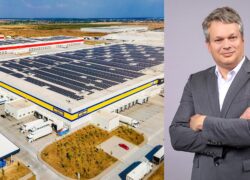
In an interview with CIJ EUROPE, Gijs Klomp, Business Development Manager for Romania at WDP, shared insights into the company’s operations and future strategies in Romania, where WDP has established a significant presence since 2007. With a portfolio nearing 2 million sqm, Romania remains the company’s sole market in Central Europe, and according to Klomp, it presents ample room for further expansion.

“We know the country well, and our footprint here is large,” Klomp noted. “At the moment, Romania is big enough for us to continue growing.” He highlighted that WDP’s warehousing portfolio in Romania has a significant focus on production-oriented projects, with build-to-suit facilities being a key specialty, especially for the light industry and food retail sectors. The company has developed numerous complex solutions for food retailers, including temperature-controlled units.

While discussing Romania’s growing demand for warehousing, Klomp observed that although demand is rising, it’s not increasing at the same rate as in previous years. “The retail market is growing, volumes are up, and the industrial side is stable with slight growth,” he said. Klomp pointed out that vacancy rates are low, but the challenge lies in translating increased demand into higher rents to offset rising construction costs.

Klomp also addressed trends in the Romanian logistics market, noting that more companies are viewing Romania as a regional hub for Central and South-Eastern Europe. This shift is driven by Romania’s strategic location, market size, and improving infrastructure. “Several clients are servicing multiple jurisdictions from Romania,” Klomp explained. He also highlighted the impact of Bucharest’s new outer ring road, which is making previously hard-to-reach areas more accessible, opening up new opportunities for businesses to tap into cheaper labor pools.

Labor availability, according to Klomp, has become a top priority for WDP’s clients when choosing a location. He mentioned that the growing concern over labor shortages is pushing some companies to consider automation, with technologies like robot picking already being implemented in some warehouses.

Infrastructure remains a challenge in Romania, Klomp admitted. “Generally speaking, the infrastructure is still poor, although improvements are underway. But these changes take time and add uncertainty.” He also pointed to Romania’s non-Schengen status (for land borders) as a hurdle, particularly in terms of border efficiency and the unpredictability of waiting times. Klomp described anticipated full Schengen membership as a “big milestone” for Romania.

On Romania’s broader role in the European logistics network, Klomp described the country as a “new Poland,” with a growing regional importance and improving international reputation. Romania’s advantages, including its large market, major seaport, energy independence, and expanding highway network, make it increasingly attractive for businesses.

Klomp also praised Romania’s permitting process, which he found to be less time demanding than in other countries like the Netherlands or Czech Republic. However, he noted that fire safety regulations are more stringent due to past incidents, particularly in multi-tenant buildings.

Sustainability and technology are key focuses for WDP, with Klomp explaining that the company has an ESG policy and aims to be future-proof. Although Romania lags behind Western markets in sustainability, WDP is committed to implementing biodiversity initiatives and constructing environmentally friendly facilities.

Looking ahead, Klomp mentioned several upcoming projects, including a new facility for a major food retailer in Bucharest and a build-to-suit distribution center for a veterinary pharmaceuticals company in Baia Mare. WDP is also exploring the potential for multimodal terminals, with plans to develop land in Constanța, leveraging its railway connection and proximity to the seaport.

“Our strategy is sustainable growth,” Klomp emphasized, adding that WDP remains focused on build-to-suits and acquiring income-producing assets in prime locations. The company’s flexible approach allows them to adapt to market conditions while continuing to expand their presence in Romania’s evolving logistics landscape.

Source: ©CIJ EUROPE

HIH secures major tenant for Mywest office building in Frankfurt City West

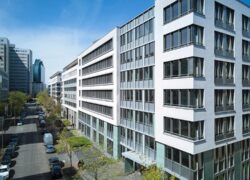
HIH Invest Real Estate (HIH Invest) has successfully leased around 5,400 square meters of office space in the Mywest building at Franklinstrasse 50, located in Frankfurt City West. The new tenant, an insurance company, plans to relocate its entire operations to the site.

Built in 2003, the Mywest office building spans approximately 9,000 square meters over seven floors and is part of a real estate individual fund managed by HIH Invest. It features modern amenities, including a two-level underground car park with 110 parking spaces, electric charging stations, a reception area, and a green courtyard. The building is conveniently located near public transport hubs such as Westbahnhof station, along with nearby shops, restaurants, and hotels.

“We plan to modernize the space in 2025 to meet the tenant’s specifications, including the creation of a larger reception area and enhancements to the green courtyard, which will offer employees a relaxing outdoor environment. Additionally, we are aiming to achieve BREEAM certification for the building,” said Simon Hüttmann, Senior Asset Manager at HIH Real Estate.

Despite the recent lease, approximately 2,700 square meters of office space remain available on the first and second floors of Mywest. Another long-term lease for the ground floor, comprising 980 square meters, was signed in 2023 with the Berufsfortbildungswerk (bfw) vocational training center.

Markus Leuchte, Head of Letting Management Frankfurt am Main, highlighted the building’s flexibility and modern design as key factors in attracting tenants. “Mywest offers flexible floor plans that can be customized to accommodate open-space, multi-space, or individual office concepts. This appealed to our new tenant, who sought to downsize from their previous headquarters while transitioning to a more modern work environment,” Leuchte explained.

The building’s space can be divided into up to three rental areas per floor, with options ranging from 400 square meters to the full floor size of approximately 1,300 square meters, making it a versatile option for future tenants.

Poland Would a reduction in interest rates and a drop in mortgage rates boost sales?

Would a reduction in interest rates and a fall in mortgage rates revive housing sales? How much of an impetus to purchase would cheaper standard loans without the Start-up Loan be? Could lower interest rates drive up housing sales

Zbigniew Juroszek, CEO of Atal:
There is no doubt that the high level of interest rates has a strong and negative impact on the situation in the real estate market. At present, mortgages in Poland are among the most expensive in Europe – the average interest rate on new commitments fluctuates around 8 per cent. This strongly reduces the demand for flats and the creditworthiness of buyers. Their situation is improved by the relatively high dynamics of wage growth, which, on the other hand, raises production costs, not without influence on the growth of housing prices.
The banks’ offer, with its high margins and predominance of fixed-interest products, does not encourage purchases either. Customers admit that as soon as there is an opportunity in the future to refinance a loan, move to a lower interest rate and fit into the cycle of rate reductions, they will gladly take advantage of such an option.

A gradual reduction of mortgage interest rates in Poland would make the discussion about state subsidies less relevant. This is because a standard offer would allow many families to realise their housing plans who, without subsidies, cannot now afford to take out a loan commitment. Also, given the proposed design of the subsidy scheme with its many restrictions, a rate cut would naturally exclude some potential beneficiaries.

Tomasz Kaleta, managing director of sales and marketing at Develia:
A reduction in interest rates and a drop in mortgage interest rates would certainly have a positive impact on the revival of housing sales, especially among customers who are currently hesitant to make a purchase decision. Lower interest rates could also indirectly influence the decisions of cash buyers for investment purposes. With interest rates on deposits and other low-risk financial instruments falling, investors are looking for alternative ways to invest capital, and real estate is often seen as a stable and attractive long-term investment.

In turn, lower interest rates on standard mortgages, without the support of the Start-up Loan scheme, could become a significant driver of demand. For many customers who do not qualify for government programmes, a cheaper loan could be a real incentive to decide to buy a home.

Agata Zambrzycka, sales and marketing director at Aurec Home:
Creditworthiness is definitely better than it was two years ago, but due to high interest rates, people earning the minimum wage still have to postpone the dream of buying their own property. Small interest rate cuts will not radically change this situation. Even a 1.75 pp drop in interest rates will not bring about a revolution in loan instalments. For example, for a 25-year loan of PLN 500,000, the instalment with a margin of 2.3 pp (the average for loans with variable interest rates) will drop from the current PLN 3,900 to around PLN 3,350. This is quite a difference, but borrowers in 2020-2021 were paying around PLN 2250 per month with the same terms.
It is worth noting that in the last three years, most of the newly granted loans had periodically fixed interest rates, so the rate cut will not affect the instalments of these commitments. In order to restore balance in the real estate market, long-term measures are needed, such as releasing land owned by state-owned companies for new development investments or streamlining administrative procedures.

Magdalena Gosk, Sales Leader BPI Real Estate Poland:
For many customers, cheaper credit is a key argument in the decision-making process of buying a property. Especially now, when the market is experiencing a prolonged decision-making process. The reduction in interest rates and the drop in mortgage interest rates is always an additional impulse for the revival of housing sales. Cheaper loans increase the creditworthiness of buyers by lowering monthly instalments, which could encourage people who, for financial reasons at least, have so far held back their decision to buy.

In the case of standard loans, on the other hand, without support programmes, a lower interest rate would be an important factor influencing the purchase decision. Most customers are looking for attractive financing terms. Cheaper loans would make the standard offer more competitive and could attract new buyers who previously did not qualify for more expensive loans.

Joanna Chojecka, sales and marketing director for Warsaw and Wrocław at Robyg Group:
We see positive trends in the market – lower inflation, funds from the EU and a stabilised economy allow us to assume that demand for flats will grow. Unfortunately, the supply is still low, there is a shortage of flats, especially in Warsaw, where the interest in purchase is the highest. This is the result of administrative procedures that are too slow and need to be definitely accelerated. Access to attractive housing finance for Poles is very important, but regardless of government programmes, we see that banks are preparing more and more interesting credit offers. Therefore, we are confident that the housing market will continue to grow and that the reduction of interest rates will have a slight impact on this growth.

Zuzanna Należyta, commercial director at Eco Classic:
At the moment, we are facing limited demand due to high interest rates. Many people simply do not have the opportunity to purchase a flat. The introduction of the programme in the announced form would certainly help especially those purchasing flats for their own needs. We estimate that the restrictions on the BK2% programme and the large supply will result in an upturn, but will not contribute to an increase in prices.

Marcin Michalec, CEO of Okam Capital:
A reduction in interest rates and thus an increase in creditworthiness would certainly allow some potential buyers to purchase flats. This, however, according to expert forecasts, may realistically happen only in 2025. At the same time, lower mortgage instalments could also encourage more people to purchase premises for investment purposes. Either of these forms, whether we are talking about government programmes of preferential loans for the first flat or cheaper mortgages – could have a positive impact on the recovery of the market.

Andrzej Gutowski, Sales Director of Ronson Development:
A reduction in interest rates and a drop in mortgage interest rates would certainly revive sales in the property market. The development market, including investment purchases, is strongly dependent on the level of interest rates. The years 2020 and 2021, when rates were at record lows, saw a lot of movement in real estate.
Even the mere announcement of a possible interest rate cut has a psychological impact. It can prompt buyers to make a decision. Cheaper loans, even without a ‘Start-up Loan,’ could become a significant impetus to buy for many potential customers.

Damian Tomasik, CEO of Alter Investment:
Currently, we have the most expensive loans in Europe and therefore, a reduction in interest rates and a decrease in mortgage interest rates would certainly boost sales. Mortgage loans are a key instrument for financing the purchase of real estate, and their preferential forms can significantly reduce the barrier to entry for many potential buyers.

Lower lending rates, without additional support programmes, could be a strong incentive, especially for those who were planning to buy but were holding back their decision in the face of high financing costs. It is worth noting that every percentage point, or even fraction thereof, of a reduction in mortgage interest rates significantly reduces the total cost of the loan in the long term, making the purchase of a property more attractive and cost-effective.

Source: dompress.pl
Photo: ROBYG, Royal Residence

EU inflation lows to 2.1% in September, Czech Republic Sees Increase

Inflation across European Union countries slowed to 2.1% in September, down from 2.4% in August, according to a report released today by the European statistics office, Eurostat. However, the Czech Republic bucked the trend, with inflation rising to 2.8% from 2.4% in August. The data, harmonized to fit the EU’s calculation methodology, differs from figures released by the Czech Statistical Office (ČSÚ).

In the eurozone, inflation also eased, falling to 1.7% in September from 2.2% in August. This was slightly lower than Eurostat’s initial flash estimate, which had placed inflation at 1.8%. On a month-on-month basis, prices fell by 0.1% across both the eurozone and the EU as a whole in September. In the Czech Republic, prices decreased by 0.5% compared to August.

Looking back a year, inflation was much higher. In September 2023, EU inflation stood at 4.9%, while the eurozone recorded 4.3%. The inflation rate in the Czech Republic was significantly higher at 8.3% at the same time last year.

Among EU nations, Ireland reported the lowest inflation in September at 0%, followed by Lithuania with 0.4%, and Slovenia and Italy at 0.7%. Conversely, Romania recorded the highest inflation at 4.8%, followed by Belgium with 4.3% and Poland at 4.2%.

Of the 27 EU countries, annual inflation dropped in 20, increased in five, and remained unchanged in two between August and September.

In the eurozone, services were the biggest driver of annual inflation, contributing 1.76 percentage points. This was followed by food, alcohol, and tobacco, which contributed 0.47 points, and non-energy industrial goods, which added 0.12 points. Energy, meanwhile, helped curb price growth with a negative contribution of -0.60 percentage points.

According to the ČSÚ, inflation in the Czech Republic reached 2.6% in September, compared to 2.2% in August. This increase was primarily driven by rising food and fuel prices, according to the office.

Source: Eurostat, ČSÚ and CTK

Ministry of Health projects CZK 11 bil. deficit in health insurance for 2024, aims recover in 2025

The Ministry of Health has announced that public health insurance is projected to run a deficit of CZK 11 billion this year, with total expenditures expected to reach CZK 502.6 billion. The Ministry plans to recover the shortfall in 2025, anticipating revenues of CZK 529.7 billion. However, only CZK 5 billion will be available for increases in healthcare reimbursements, according to Tomas Troch, Director of the Price Regulation and Reimbursement Department at the Ministry.

The proposed reimbursement decree for 2025, which outlines how healthcare funds will be distributed, has drawn criticism from some sectors of the healthcare industry. General practitioners (GPs) and outpatient specialists have expressed their dissatisfaction, threatening to close their clinics in protest by the end of October. Small hospitals are also considering a petition to the Constitutional Court. “We will continue negotiations with GPs and outpatient specialists in the coming days,” Troch said, emphasizing that the decree serves as a baseline and additional funds may be set aside by insurance companies.

The Ministry’s proposal to increase reimbursements by 3.3% year-on-year is backed by an April government resolution, which instructed the Ministry to ensure the public health insurance system remains balanced in 2025.

Troch explained that CZK 3 billion of this year’s deficit is attributed to an agreement with hospital doctors that led to salary increases, adding, “This is a mandated cost we must account for in 2025, not just for VZP, but for all health insurers.”

Next year, the state’s contribution for state-insured individuals is set to rise by just 2.7%. This increase is based on inflation and real wage growth over the past two years. As a result, total year-on-year revenues are expected to grow by CZK 27.4 billion. However, only CZK 5 billion will be allocated for growth in healthcare payments, representing an average increase of just 1.1%—the smallest in recent years.

The final version of the decree is scheduled to be published by the Ministry of Health at the end of October. The current proposal outlines the largest increase of 11.5% for center-based drugs, which include modern treatments for serious diseases that can only be prescribed by select medical centers. Aftercare services are set to increase by 11%, followed by prescription drugs (5.8%) and medical devices (5.5%). Among healthcare areas, physical therapy (5.4%) and outpatient specialists (4.6%) are seeing the most growth. General practitioners, many of whom are protesting the proposal, will see a more modest reimbursement increase of 2.8%.

Source: CTK

Moravian-Silesian region to demolish 72 buildings after devastating floods

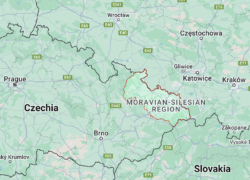
Following the catastrophic floods that struck Moravia and Silesia in mid-September, authorities in the Moravian-Silesian Region have decided to demolish 72 buildings, including 37 family homes. Radim Kuchař, director of the Moravian-Silesian firefighters, announced the decision today, stating that the majority of the buildings set for demolition are located in the upper reaches of the Opava River in the Bruntál district. Hard-hit areas include the towns of Zátor, Široká Niva—where even the local cinema was destroyed—Brantice, Holčovice, Karlovice, and parts of Vrbno pod Pradědem.

In addition, six buildings in Nová Ves, Ostrava, will also be demolished. According to Kuchař, two dozen demolitions were carried out directly by firefighters, especially in cases where structures posed a threat to nearby buildings. The remaining demolitions were handled by private companies or homeowners themselves.

Larger towns were not spared from the destruction either. In Krnov, three buildings have been or will soon be torn down, including one owned by the town hall. “The city of Krnov has recorded its first municipally-owned building that was so severely damaged by the floods that demolition was necessary. The property on Minorite Square, formerly a pet shop, will be demolished. We are working to find alternative premises for the tenant,” said city spokeswoman Dita Círová.

Josef Bělica, Deputy Governor of the Moravian-Silesian Region, reported that nearly 400 soldiers with 98 pieces of equipment are still active in the region. In Holčovice, 121 properties remain without gas, including a senior home currently relying on gas supplied by tanker trucks. Gas services are expected to be restored to most of the affected homes by the end of October.

Electricity remains cut off in 31 houses in the region. Bělica noted that the electricity grid’s capacity is sufficient to allow residents to use electric heating if necessary. He also mentioned that energy provider CEZ has already replaced 3,000 water-damaged electricity meters, with more replacements underway.

Flood Damage Estimated at CZK 2.9 Billion

Meanwhile, state-owned enterprise Povodí Moravy (Morava River Basin) has estimated property damage caused by the September floods at CZK 2.9 billion. This figure is still being refined as assessments continue. The Šumperk region was hit hardest, with damage estimates reaching CZK 2 billion. Key rivers affected include the Branná, Krupá, Desná, Morava, Merta, and Mírovka, according to Jana Kučerová, head of external relations at Povodí Moravy.

“The floodwaters severely damaged the banks and infrastructure of these rivers, including retaining walls, flood protection dams, and various structures within the river channels such as steps and weirs,” Kučerová said. “In many places, significant deposits of debris need to be cleared, and bank collapses must be repaired.”

Reconstruction efforts to repair the damage are expected to take significant time and resources, with the total cost of repairs still to be confirmed.

Source: CTK
Image: Google maps

Industry leaders weigh in on ECB’s interest rate decision

The European Central Bank’s (ECB) anticipated interest rate decision has drawn reactions from key players in the real estate and finance sectors. As the ECB opted for a widely expected 25 basis point cut, industry leaders weighed in on the potential implications for the economy and real estate market.

Peter Axmann, Head of Real Estate Clients, Hamburg Commercial Bank, highlighted that the decision had already been factored into current interest rate levels for long-term maturities. “Given the decline in inflation to below the critical two percent mark, today’s move was no surprise,” he stated. “With an inverted yield curve in play, we do not anticipate any drastic reduction in long-term rates, although a slight decline of up to 0.25 percentage points by year-end remains possible.”

Prof. Dr. Felix Schindler, Head of Research & Strategy at HIH Invest, echoed similar sentiments, noting that the ECB’s rate cut reflects the slowing inflationary pressures and a weak economic environment. “The focus will likely remain on core inflation, which remains high,” Schindler said. “The cut aids in normalising the yield curve and reduces variable financing costs, which should help provide a boost to the real estate markets. Long-term capital market yields have already dropped significantly, offering additional support for real estate investments.”

Francesco Fedele, CEO of BF.direkt AG, expressed cautious optimism about the decision, stressing that while the ECB has often been criticized for delayed reactions, it’s better to be late than early when combating inflation. “A premature rate cut could undermine market confidence in the ECB’s commitment to controlling inflation, potentially driving long-term interest rates upward,” Fedele warned. “For the real estate sector, particularly concerning ten-year financing, market confidence in the ECB’s inflation strategy is crucial.”

Sascha Nöske, Chairman of the Board at STRATEGIS AG, pointed out that the real estate transaction market has been facing challenges due to a disconnect between supply and demand prices. “Interest rates play a vital role in bridging this gap,” Nöske remarked. “The ECB’s latest rate cut is a key step towards revitalizing the residential property market, particularly benefiting private homebuyers.”

As the ECB moves to manage inflation while promoting economic growth, the real estate sector will likely be closely watching how these rate changes play out in the coming months.

New Polish planning act brings major changes to spatial planning and the real estate market

The real estate market in Poland is set for significant shifts following the enactment of the new Planning Act on 24 September 2023. This legislation, aimed at streamlining and standardising spatial planning processes, will have a direct impact on developers, investors, and local governments, particularly affecting industrial project investments. The new law seeks to enhance transparency, shorten procedures, and align spatial plans with real development needs, while also introducing fresh challenges and restrictions. Jacek Szkuta, Director of the Land Department at AXI IMMO, sheds light on what the market can expect as these changes take full effect by 2026.

Current Issues in Spatial Planning

The existing spatial planning system is primarily governed by three documents: provincial spatial development plans, municipal development studies, and local spatial plans. However, the lack of legal standing for development studies allowed for land development condition (LDC) decisions that often contradicted long-term strategies, leading to urban chaos. As a result, municipalities have struggled with disorganised development, particularly in cases where non-industrial areas were used for industrial projects.

New Rules: General Plans

Under the new law, general plans will replace the current condition studies, bringing more precision and accessibility to planning processes. Municipalities that currently lack comprehensive local master plans must adopt them by 1 January 2026. These plans will dictate local development and zoning decisions, limiting the flexibility seen in previous years. Existing local development plans will remain in force until they expire.

“Local general plans will define planning zones with clear parameters such as development intensity, building height, and biologically active areas,” explains Jacek Szkuta. “This will reduce the possibility of arbitrary interpretations by officials and impose a five-year validity period on LDCs, curbing land speculation and pushing for quicker project execution.”

Development Addition Zones: A New Approach

A key feature of the new law is the introduction of development addition zones, designed to encourage infill development in existing built-up areas. Each municipality will be required to establish such zones based on urban studies, allowing for a variety of functions, from residential to industrial uses. For the industrial sector, this marks a significant change, as LDCs outside these designated zones will be restricted.

Exceptions to this rule will allow for some flexibility in reconstructing or expanding existing buildings. Moreover, LDCs issued before the law comes into force will not be subject to the new five-year expiration rule.

Integrated Investment Plan: A New Tool for Investors

While the new regulations introduce stricter zoning rules, they also offer tools to facilitate investment projects. The integrated investment plan (IIP) allows investors to negotiate project conditions with municipalities, provided the projects align with general plans. This new mechanism replaces the previous “Lex Developer” law and applies to all types of investments, not just residential.

“The integrated investment plan enables faster project implementation through cooperation with municipalities, with investors covering infrastructure costs,” says Szkuta. “This law encourages better space management and long-term strategic planning, but also requires flexibility from investors and effective management from municipalities.”

Impact on the Industrial Investment Market

The new regulations offer both opportunities and challenges for the industrial real estate sector. On the one hand, greater transparency and predictability will benefit investors, providing clearer guidelines and potentially reducing wait times for planning permissions. On the other hand, limiting land development outside designated zones could shrink the pool of available land, driving up competition and prices in key locations.

For those opting to use the IIP, there is an opportunity to develop more complex projects in areas not traditionally earmarked for industrial use, provided they can meet infrastructure requirements.

“The 2023 Planning Act introduces reforms that will improve investment predictability and streamline spatial planning,” concludes Szkuta. “While the changes present opportunities for increased transparency and administrative efficiency, they will also challenge the market by limiting available land for new projects, particularly in the industrial sector.”

Source: AXI IMMO

front page info
LATEST NEWS