Thursday, 27 August 2026
Skanska has expanded its role in the development of a new academic facility for Florida Gulf Coast University in Fort Myers, securing an additional contract worth $85 million, equivalent to approximately SEK 790 million.
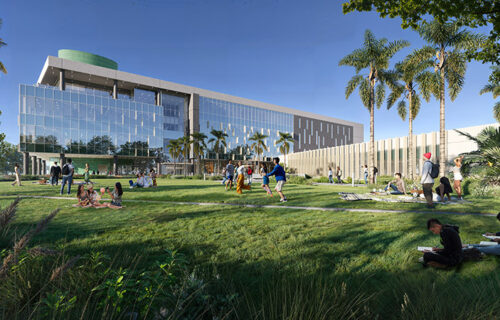
The latest agreement covers work associated with the university’s new Marieb Hall South, a health sciences facility that will become the largest academic building on the Florida Gulf Coast University campus when completed. Skanska will include the additional contract value in its U.S. order bookings for the third quarter of 2026.
The project comprises approximately 14,700 sqm, or 158,000 sq ft, of new space. Alongside conventional classrooms and offices, the building will accommodate specialist laboratories, simulation facilities and concession areas, reflecting its focus on health sciences education.
The development also includes associated site and infrastructure works required to integrate the new building into the wider university campus.
The specialist facilities are a significant component of the project. Simulation and laboratory environments generally require more complex building systems and technical infrastructure than conventional teaching space, making health sciences buildings an increasingly specialised segment of the education construction market.
Marieb Hall South will expand the physical infrastructure available for Florida Gulf Coast University’s health sciences programmes while consolidating teaching, practical training and specialist laboratory functions within a single large academic facility.
The $85 million announced by Skanska represents an additional contract rather than a stated total development cost. The information released by the contractor does not specify the overall investment value of Marieb Hall South, and the latest contract should therefore not be interpreted as the full cost of the project.
Construction started during summer 2026 and is scheduled to continue for approximately two years, with completion expected in summer 2028.
The contract adds another substantial institutional project to Skanska’s U.S. construction order book and highlights continuing investment in specialist university infrastructure. Unlike conventional classroom development, health sciences facilities combine educational property with laboratory and clinical-style environments, increasing both their technical complexity and long-term importance to university campuses.
For Florida Gulf Coast University, the project represents a significant expansion of its academic estate. For the construction market, it provides another example of capital being directed towards specialised education and healthcare-training infrastructure, where universities increasingly require buildings capable of supporting practical, technology-intensive teaching alongside traditional academic functions.