Bratislava’s new-build market surges in 2024: Challenges and trends await in 2025

In 2024, Bratislava’s new-build market experienced a remarkable resurgence, with apartment sales more than doubling compared to 2023. This significant growth occurred despite stable average prices, highlighting the market’s strong demand for housing. However, the upcoming year promises new challenges, shaped by legislative changes and evolving economic conditions.

Sales of newly built apartments reached 1,664 units in 2024, a sharp increase from the 773 units sold in 2023, according to Bencont Investments. This growth was particularly pronounced in the fourth quarter, driven by an anticipated VAT increase from 20% to 23% in 2025. Many buyers expedited transactions to secure lower prices, resulting in a flurry of sales activity toward the end of the year.

The average price of new-build apartments in Bratislava remained unchanged at €5,013 per square meter, including VAT. Despite this price stability, analysts observed a significant shift in consumer behavior. Buyers increasingly favored smaller, more affordable apartments, which led to an 8.3% year-on-year increase in the average price per square meter of sold units, reaching €4,805. The average size of sold apartments, however, remained steady at 58.2 square meters, reflecting sustained demand for compact living spaces.

A pivotal factor behind the surge in sales was the legislative push to increase the VAT rate. Buyers were motivated to finalize transactions in 2024, saving thousands of euros on down payments and overall costs. “The savings were most significant for completed properties, with differences amounting to thousands or even tens of thousands of euros for high-end units,” explained Marian Búlik, financial analyst at OVB Allfinanz Slovensko. This urgency to capitalize on lower VAT rates spurred robust sales, particularly in the latter half of the year.

The growing interest in smaller apartments was evident in the sales breakdown. Two-bedroom flats accounted for 44% of all transactions, with Bratislava II and Bratislava IV districts leading the way. These areas offered more affordable housing options, attracting a diverse range of buyers. According to Real Estate Union analyst Vladimír Kubrický, two-bedroom flats continue to be a long-term favorite among investors, given their versatility and broad appeal.

Despite the strong demand, the supply of new-build apartments declined. By the end of 2024, the market offered 3,353 units across 96 projects, a reduction driven by rapid sales outpacing the launch of new developments. Completed apartments accounted for 37.5% of the supply, down from 43% earlier in the year, underscoring the shrinking availability of ready-to-move-in homes.

Developers benefited significantly from this surge in demand. In the early months of 2024, incentives such as free parking spaces or complimentary kitchen installations were common. However, these promotions became unnecessary in the fourth quarter as buyers rushed to secure properties ahead of the VAT hike. While demand is expected to cool in early 2025, experts predict a gradual recovery later in the year, supported by falling mortgage interest rates and continued growth in real estate prices.

Looking ahead, rising property prices remain a concern. The VAT increase is likely to exert upward pressure on prices in 2025. However, analysts believe that a steady influx of new projects could help stabilize the market. “We anticipate rising sales will be adequately supplemented by new supply, keeping base prices relatively stable, excluding VAT,” said Bencont Investments analyst Rudolf Bruchánik.

The broader economic landscape will also influence the market. While falling interest rates are expected to improve housing affordability, challenges such as inflation and legislative uncertainties could temper growth. The European Central Bank’s cautious approach to monetary easing and potential eurozone economic slowdowns may further shape market dynamics.

Another critical factor impacting the market is the functionality of key institutions, such as the cadastral registry, which plays a vital role in property transactions. According to Finančný kompas managing director Matej Dobiš, disruptions in these systems could create anomalies in the market, influencing prices and transaction volumes. “We’ve already observed shifts in loan volumes, with November 2024 seeing a significant drop compared to previous highs in March 2022,” Dobiš noted.

Despite these challenges, the preference for homeownership over long-term rentals remains strong. Rising rental costs and high demand for rental properties in 2024 further reinforced the appeal of buying a home. “Buying a home is economically advantageous in the long term, with similar monthly costs as renting but the added benefit of property ownership after 20 or 30 years,” Búlik emphasized.

As Bratislava’s new-build market moves into 2025, the focus will shift to addressing supply constraints and adapting to changing economic conditions. The anticipated stabilization of housing prices, coupled with ongoing project development, offers hope for continued market growth. However, the sector must navigate challenges related to inflation, buyer behavior, and legislative changes to sustain its momentum.

The year 2024 marked a turning point for Bratislava’s real estate market, with record sales and renewed investor interest. As the city enters a new phase of growth, the balance between demand, supply, and affordability will be key to shaping its future.

Source: Trend
Photo: Čerešne Residence II, ITB Development

Young borrowers increasingly default on debts, say collection agencies

The number of young people aged 18 to 30 who default on their debts has been steadily increasing in recent years, with a particular spike in unpaid short-term loans, according to a survey conducted by the Czech News Agency among debt collection agencies. This trend has resulted in a noticeable drop in the average age of individuals struggling with debt, a decline of one to two years, according to Jana Tatýrková, executive director of the Association of Collection Agencies.

The defaults among younger borrowers often involve short-term loans ranging from tens of thousands of crowns, typically overdue by three or more months, noted Anežka Pavlíková, director of Fincollect. Since 2019, the number of young borrowers in default has risen by 18 percent. However, Pavlíková pointed out that for larger loans, such as consumer loans and mortgages, the profile of clients in default remains predominantly individuals over the age of 35.

Microloans, in particular, have become a significant issue for younger borrowers. Jakub Zetek, chief operating officer of M.B.A. Finance, reported that nearly half of the clients his firm deals with for defaulted microloans are under the age of 30. He noted a troubling pattern among this demographic, where many take out multiple loans in quick succession. “The first loan is often for something necessary, but subsequent loans are used to cover earlier debts, creating a cycle that often ends in insolvency,” Zetek explained. “Unlike their parents, this generation views borrowing and even default as normal and less of a cause for concern.”

Data from Redogan, another debt collection agency, indicates a sharp rise in microcredit defaults among under-30 clients, increasing by almost 10 percent in the last six months. Redogan’s sales director, Radek Pospíšil, highlighted another worrying trend: insolvencies among young borrowers have surged, rising from three to eight percent of the claims handled by the agency over the past year.

Experts attribute this trend to shifting financial behaviors among younger generations. Pavlíková described many millennials and members of Generation Z as driven by a desire for immediate gratification and a consumer lifestyle. “They want the latest phone or computer, go on vacations, or enjoy other experiences without waiting or saving up. Many overestimate their financial capacity and fail to budget for their expenses,” she said.

A survey conducted by GfK last autumn sheds light on the financial challenges faced by Generation Z. The data revealed that 60 percent of individuals from this cohort earn below the national average, and one-third lack savings to cover even a month’s worth of expenses. Additionally, 11 percent of young respondents admitted they were struggling to meet their monthly financial obligations.

The growing tendency of young borrowers to rely on credit for consumer goods and experiences underscores a significant cultural and economic shift. Unlike older generations, who were more inclined to save and adopt conservative financial habits, today’s youth are navigating a world where credit is more accessible but also more dangerous if mismanaged.

Debt collection agencies caution that the rising rate of defaults and insolvencies among younger borrowers is a clear signal of the need for financial education and better budgeting practices. With economic pressures and societal norms increasingly pushing young people toward a debt-reliant lifestyle, the consequences could lead to long-term financial instability for many.

Source: CTK

Netflix maintains leadership in Poland’s streaming market despite slight decline in Q4 2024

Netflix continues to dominate the Polish subscription video-on-demand (SVOD) market, holding a 32% share in the fourth quarter of 2024. However, this represents a slight decline of one percentage point compared to the previous quarter, according to the latest data from JustWatch.

The streaming giant remains at the forefront of Poland’s competitive SVOD landscape, despite increasing competition from other platforms. Amazon Prime Video, Disney+, and Max (formerly HBO Max) showed notable gains during the quarter, reflecting a dynamic shift in viewer preferences.

Disney+ demonstrated the most significant growth, increasing its market share by two percentage points by the end of 2024. Amazon Prime Video, Max, and Player also experienced a one-percentage-point rise in market share. On the other hand, Viaplay and Netflix saw slight declines, losing 1% and 2% of their respective market shares over the course of the year.

By the end of Q4 2024, Amazon Prime Video solidified its position as the second-largest player in the Polish SVOD market with a 13% share, followed by Disney+ at 12%. Apple TV+ accounted for 9%, while Player captured 8%. Viaplay, a popular streaming service for sports and entertainment, held 5% of the market, with smaller platforms collectively accounting for the remaining 4%.

The results highlight the increasing fragmentation of the Polish streaming market, with a growing number of platforms competing for viewers’ attention. “Disney+ has successfully capitalized on its strong content library and strategic growth initiatives, continuing to increase its foothold in Poland,” said a JustWatch representative.

The report also noted the resurgence of Max (HBO Max’s rebranded service), which has gained traction due to its revamped content offering and a more user-friendly interface. Similarly, Amazon Prime Video’s steady growth can be attributed to its competitive pricing, exclusive content, and bundling with other Amazon services, which appeal to a broad range of subscribers.

Despite Netflix’s slight decline, the platform remains the market leader, thanks to its extensive library of original programming and consistent release of popular titles. However, experts suggest that the platform faces increasing pressure to innovate and adapt as competition intensifies in Poland and globally.

“The streaming market in Poland is undergoing significant transformation, driven by new entrants, local adaptations, and evolving consumer preferences,” said a media analyst. “Platforms like Disney+ and Amazon Prime Video are gaining ground, while regional players such as Player are carving out niches with locally tailored content.”

The report also highlighted a notable trend in streaming habits, with more viewers opting for multiple subscriptions to access a broader variety of content. This trend has been fueled by the diversification of offerings, including local programming, live sports, and exclusive series, across various platforms.

Looking ahead, industry experts predict further shifts in Poland’s SVOD market as newer entrants and emerging platforms seek to challenge established players. As the competition intensifies, platforms will likely focus on pricing strategies, exclusive partnerships, and diverse content to attract and retain subscribers in a rapidly evolving landscape.

Netflix, while still the leader, may need to explore innovative ways to maintain its dominance, including investments in local content and improved user engagement. Meanwhile, the rising popularity of Disney+, Max, and other competitors underscores a market that is increasingly diverse and dynamic, reflecting global trends in the streaming industry.

The Polish streaming market continues to grow, driven by an expanding subscriber base and heightened competition. With 2025 expected to bring more developments and changes in the SVOD landscape, viewers will likely benefit from a wider array of choices and improved offerings as platforms vie for market share.

Crescon completes Aldrov resort project and begins new development in Pec pod Sněžkou

Vítkovice has completed the second phase of its luxury Aldrov Resort project in the Krkonoše Mountains town of Vítkovice. With the final phase now approved, the entire high-end mountain resort is fully operational, offering an extensive range of amenities and services. Only 20% of the 144 apartments remain available for purchase, providing prospective buyers with a last chance to invest in this sought-after location.

Following the completion of Aldrov Resort, Crescon has already embarked on its next mountain real estate project, Zahrádky 1000 in Pec pod Sněžkou. The new development will feature 33 exclusive apartments and is expected to set a new standard for luxury mountain living.

The Aldrov Resort consists of nine modern residential buildings offering apartments ranging in size from 37 to 263 square meters, with layouts from 1+kk to 6+kk. The project is distinguished by its comprehensive infrastructure, which includes:
• A wellness center with a swimming pool, whirlpool, and sauna world
• A fitness room and a children’s playroom
• Two on-site restaurants – the newly opened Hospoda Maják, offering traditional Czech cuisine, and Aldrovka, featuring a modern wooden interior that harmonizes with the mountain setting
• A conference area for events, weddings, and even private concerts

Apartments at Aldrov Resort offer a unique investment opportunity, with owners able to use their properties for personal recreation while benefiting from commercial rental income. The resort is managed by Aldrov Servis, a professional hotel operator with extensive international experience, ensuring that owners can enjoy their investment without concerns about day-to-day management.

“We are delighted that Aldrov Resort has been completed exactly as planned, delivering on our promises to buyers in terms of quality, infrastructure, and services,” said Radek Zábrodský, director of Crescon. “This achievement gives us confidence as we move forward with our next holiday property development, Zahrádky 1000, where we will uphold the same high standards.”

Building on Aldrov Resort, Crescon is now constructing the Zahrádky 1000 project, situated in Pec pod Sněžkou, one of the most attractive ski resorts in the Czech Republic. The development will offer 33 luxury apartments, ranging from 1+kk to 4+kk layouts, located directly next to the Zahrádky ski slope.

The new residential complex will feature premium amenities, including:
• A private wellness area with a sauna and relaxation lounge
• Underground parking and secure storage for seasonal equipment
• High-end furnishings using a blend of natural and modern materials

Owners at Zahrádky 1000 will have the option to either use their apartments for personal enjoyment or generate income through professional rental management services.

The success of Aldrov Resort highlights the increasing demand for luxury mountain properties that offer a combination of investment potential and leisure appeal. Compared to city-based investment apartments, mountain properties provide hassle-free ownership, with professional management handling rentals, maintenance, and guest services.

“Our apartments allow owners to enjoy their investment without the usual burdens of property management. With year-round demand for accommodation in the Krkonoše Mountains, buyers can expect solid returns and a worry-free experience,” added Zábrodský.

The Krkonoše Mountains are one of the most popular destinations for both winter and summer tourism. In winter, residents can enjoy access to the nearby Aldrov ski resort and Špindlerův Mlýn, the largest ski area in the Czech Republic. During the summer months, the region offers extensive hiking and cycling trails, a rope park, a bike park, and even golf and mini-golf facilities.

For those seeking relaxation, the resort provides outdoor yoga spaces and wellness programs, ensuring a balanced lifestyle.

Polish commercial real estate investment market sees significant growth in 2024

The Polish commercial real estate investment market witnessed a remarkable resurgence in 2024, with more than 120 transactions totaling over EUR 4.8 billion. This represents a 136% increase in transaction volume compared to 2023, with the number of deals growing by 50% year-on-year. While this performance nearly matched the 2015-2017 annual average of EUR 4.6 billion, it remains around 30% below the record-breaking levels observed between 2018 and 2022.

Diverse Investment Sectors Drive Market Growth

The office and retail sectors accounted for the largest shares of investment activity in 2024, representing 34.4% and 33.9% of the total volume, respectively. Notably, three major retail transactions—worth approximately EUR 1.063 billion—significantly boosted the sector’s performance. The warehouse and industrial sector contributed over 26% to the total investment volume, reflecting sustained interest in logistics properties. Investors also showed growing interest in hotels, purpose-built student accommodation (PBSA), and institutional rental housing (BtR/PRS).

“The substantial 136% increase in investment volume demonstrates investors’ renewed confidence in the Polish market,” said Mark Richardson, Head of Investment at Savills. “Key transactions across multiple sectors highlight investors’ diverse strategies, with a focus not only on prime locations but also on niche segments such as student housing and institutional rentals.”

Record-Breaking Fourth Quarter

The final quarter of 2024 proved to be the most active period, accounting for 48% of total investment volume. Major deals during this time included the sale of a 49% stake in CPI Property Group to Sona Asset Management, as well as the acquisition of two major shopping centers—Silesia Shopping Centre in Katowice and **Magnolia Park in Wrocław—**by Nepi Rockcastle.

Investor Landscape and Market Entrants

Domestic investors were responsible for around 10% of the total transactions, investing nearly EUR 0.5 billion across more than 40 deals. Their purchases included three office buildings designated for public institutions. Meanwhile, investors from Central and Eastern Europe, including Ukraine and the Baltic states, accounted for 20% of total transaction volume, while South African investors contributed over 20%.

New investors entered the Polish market in 2024, including South Africa’s Emira Property Fund, which acquired a 25% stake in DL Invest, and the UK’s Sona Asset Management, which secured a 49% stake in CPI Property Group. Estonian investment firm Summus Capital also made its debut with the purchase of two office buildings.

Office Sector Makes a Strong Comeback

The office sector recorded around 45 transactions, with a total value exceeding EUR 1.64 billion—a nearly fourfold increase compared to 2023. Warsaw accounted for the bulk of investments at EUR 1.34 billion, with an additional EUR 298 million invested in regional cities.

Some office buildings were acquired for direct use by their new owners, including purchases by public institutions and private buyers such as the acquisition of the Mazowiecka 2/4 property and the Bokserska Office Center. Others were bought with plans for redevelopment, such as the transformation of the Curtis Plaza and the myhive Mokotów complex from office to residential use.

“The resurgence of the office sector underscores the growing appeal of Poland’s regional cities,” noted Jacek Kalużny, Head of Operational Capital Markets at Savills. “Investors are now focusing on both prime Warsaw locations and emerging office hubs.”

Retail Sector Attracts Major Investments

Investment in the retail sector exceeded EUR 1.6 billion, with over EUR 1 billion coming from three major deals, including the sale of a six-shopping-center portfolio to Star Capital Finance for EUR 285 million. Investors continue to focus on retail parks and smaller retail properties, which have demonstrated resilience amid changing consumer habits.

High-profile transactions included the sale of BIG Gorzów and Glinianka retail parks to Big Shopping Centers and smaller retail sites such as Smart Park Syców and Smart Park Zgorzelec, acquired by Newgate Investment. Nepi Rockcastle emerged as the most active investor in the sector, acquiring key retail assets to expand its portfolio.

Warehouse and Industrial Sector Sees Steady Growth

The warehouse and industrial sector witnessed 30 deals in 2024, with a total value of **EUR 1.26 billion—**a 27% year-on-year increase. Investors focused primarily on modern logistics facilities in strategic locations, reinforcing Poland’s role as a major logistics hub in Central and Eastern Europe.

A significant highlight for 2025 is the expected Ares Management Corporation’s acquisition of GLP Capital Partners’ international portfolio, which includes assets in Poland. The deal, valued at USD 3.7 billion, is expected to further boost the sector.

Living Sector Gains Momentum

Investment in the living sector, including PBSA and institutional rental housing, totaled EUR 141 million in 2024. One of the standout transactions was the acquisition of LivinnX Krakow dormitory (now Basecamp) by Xior Student Housing, representing 20% of the total annual sector volume.

The BtR sector also saw significant activity, with transactions such as the purchase of properties at Siennicka 29A in Warsaw and Wrocławska 53J in Kraków. Forward funding projects, including Griffin Capital Partners’ investment in LifeSpot Ostrobramska 86, highlight the sector’s growing appeal.

A key development in the sector was the launch of a private dormitory platform by Signal Capital Partners, Griffin Capital Partners, and Echo Investment, aiming to establish a portfolio of 5,000 student beds within the next three to five years.

Outlook for 2025: Continued Growth and Investor Confidence

Experts anticipate continued growth in the Polish commercial real estate market, supported by the diversification of investment sectors and the strong presence of foreign investors. The office sector is expected to maintain its momentum, while the retail and logistics segments remain attractive due to their resilience and strategic importance.

With increasing demand for student accommodation and rental housing, the living sector is set to expand further, particularly in key academic cities such as Warsaw, Kraków, and Wrocław.

As the market regains pre-pandemic levels of activity, Poland continues to cement its position as a prime investment destination in Central and Eastern Europe, attracting both regional and international investors eager to capitalize on its growth potential.

Link to report in PDF format below.

Czech economic sentiment declines in January as consumer confidence weakens

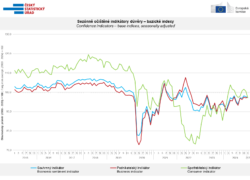
The Czech Republic’s composite confidence indicator, which measures overall economic sentiment, declined slightly in January, falling by 0.3 points to 97.4, compared to the previous month. The downturn was driven primarily by a decline in consumer confidence, which dropped by 3.4 points to 97.1, while business confidence showed a marginal improvement, rising by 0.4 points to 97.5, according to the latest data.

Within the business sector, sentiment varied across industries. Confidence in the industrial sector saw a notable increase of 4.3 points, reflecting optimism about production and demand. However, confidence declined in other areas, with selected service sectors experiencing a drop of 3.4 points, the construction sector falling by 1.8 points, and trade sector confidence stagnating at -0.8 points.

Consumer confidence, in contrast, weakened for the second consecutive month. The share of consumers who expect the overall economic situation to worsen over the next twelve months saw a slight increase. Similarly, an increasing number of households anticipate a deterioration in their financial situation over the coming year, with more consumers reporting a worse financial position compared to the previous twelve months.

Despite growing concerns about future economic conditions, consumer attitudes towards major purchases remained relatively unchanged, with the proportion of respondents viewing the current period as unfavorable for significant expenditures staying stable.

Overall, the decline in economic sentiment reflects lingering uncertainty among Czech consumers, while the business sector remains cautiously optimistic in certain industries. Economic analysts will closely monitor future developments to assess whether business confidence gains can offset the persistent concerns among households.

Source: Czech Statistical Office

PPF Group acquires Czech Republic’s largest hotel, ÚOHS approved the transaction

PPF Group, owned by Czech billionaire Renáta Kellnerová and her family, has received regulatory approval to acquire Quinn Hotels Praha, the owner of Hilton Prague, the largest hotel in the Czech Republic. The Czech Office for the Protection of Competition (ÚOHS) approved the transaction, confirming that the merger poses no threat to market competition. The financial details of the deal were not disclosed, but industry experts estimate its value to be in the billions of Czech crowns. According to reports from Hospodářské noviny, the purchase price could range between CZK 6.25 billion and CZK 8.25 billion, with the bid potentially exceeding €350 million (over CZK 8.8 billion).

Quinn Hotels Praha, which currently owns Hilton Prague, is controlled by Irish investors, with its sole shareholder being Quinn Group Luxembourg Hotels. According to the company’s 2023 financial statements, Quinn Hotels Praha reported a net turnover of CZK 1.3 billion, closing the year with a loss of CZK 160 million, following a CZK 239 million profit in 2022. A valuation by CBRE in late 2022 estimated the hotel’s worth at €250.4 million, or more than CZK 6 billion.

PPF is acquiring Quinn Hotels Praha through its real estate subsidiary, PPF Real Estate. According to Robert Ševela, Chairman of the Board of PPF Real Estate Holding, the acquisition aligns with the company’s comprehensive approach to real estate investment, which spans various sectors, including tourism, congress tourism, and event organization. “The Hilton Prague investment perfectly complements our strategy of creating long-term, sustainable value through active property management,” Ševela stated.

Recent reports indicate that PPF Group has partnered with billionaire Michal Strnad to establish a joint venture aimed at real estate investments. Their new company, Majestic Hospitality, was registered in December 2024, with PPF holding a 70% stake through PPF Real Estate and Strnad’s Industry SPV owning the remaining 30%. The joint venture was formed shortly after PPF announced its agreement to acquire Quinn Hotels Praha.

Source: CTK
Photo: Hilton Prague

Czech property market sees rising prices for older apartments and houses across most regions

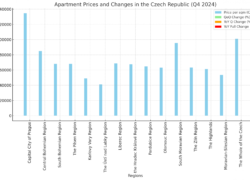
The prices of older apartments and family houses increased in nearly all regions of the Czech Republic in 2024, driven by rising demand and improving economic conditions. According to an analysis conducted by the EHS, which collects data from Bezrealitka and Maxima offices, only the Karlovy Vary region saw a decline in house prices.

The analysis found that older apartments in good condition experienced a 9% increase, reaching an average price of 100,941 CZK per square meter. Rental prices followed a similar upward trend, rising to 328 CZK per square meter. House prices also saw an increase, rising by 7% throughout the year, ending at an average of 57,902 CZK per square meter. The report attributes these price hikes to improved economic conditions and lower interest rates, which have encouraged the middle class to return to the housing market.

In Prague, apartment prices in good condition saw moderate growth for most of the year, eventually reaching 134,696 CZK per square meter by the end of 2024. This represents a 5% increase quarter-on-quarter and an 8% increase year-on-year. The surge in demand, fueled by an increasing number of buyers, was a key driver behind the price growth. The market for family houses in the capital was divided into two categories: older houses requiring renovation on the outskirts and high-end villas. The average price for family houses in Prague reached 114,280 CZK per square meter, marking a 6% year-on-year increase.

The demand for homeownership that originated in Prague has now extended to the Central Bohemian Region. Interest in apartments in this region has increased significantly, with demand rising by two to five times, particularly in locations offering direct railway connections to Prague and travel times within an hour to the city center. Cities such as Kladno, Beroun, Neratovice, Roudnice nad Labem, Brandýs nad Labem, Lysá nad Labem, and Nymburk saw notable growth in demand. By the end of 2024, apartment prices in the region rose to 84,920 CZK per square meter, reflecting an 11% increase year-on-year and a 5% rise quarter-on-quarter. In contrast, the prices of family houses in the region remained stable at under 70,000 CZK per square meter.

A similar trend was observed in the South Moravian Region, particularly in Brno, where interest in property purchases tripled over the year. Apartment prices remained steady at around 95,000 CZK per square meter throughout the second half of 2024, showing a 16% increase year-on-year and a 13% increase compared to the full-year average. Family house prices in the region fluctuated throughout the year but eventually returned to their starting levels, with the average house priced at 56,822 CZK per square meter at the end of 2024.

Rental prices also increased across major cities. In Prague, rents averaged 401 CZK per square meter, peaking at 412 CZK in December. This represents a 10% year-on-year increase. The Central Bohemian towns experienced similar growth, with rents averaging 290 CZK per square meter and rising to 305 CZK in December. Areas near Prague or along major railway routes saw the most significant rental growth. In Brno and its surrounding areas, rental prices averaged 320 CZK per square meter, with increasing demand in satellite towns such as Tišnov, Kuřim, Blansko, and Vyškov.

Overall, the Czech real estate market saw steady growth in property values and rental rates in 2024, driven by increasing demand and improving economic conditions. As interest rates continue to decline and demand remains strong, further growth is anticipated in the coming year, particularly in well-connected suburban areas.

Source: EHS and CTK

DOUGLAS secures 46,200 sqm lease for distribution centre at CTPark Warsaw South

CTP has signed a 10-year lease agreement with DOUGLAS, the European leader in the omnichannel premium beauty segment, for 46,200 square meters of warehouse and office space at CTPark Warsaw South. The new facility will serve as DOUGLAS’ main distribution centre in Poland and the company’s third global logistics hub, supporting its omnichannel sales operations across Central Europe and the Baltic states.

DOUGLAS will fully occupy the WARS 01 building, which includes 1,317 square meters of office space and 44,940 square meters of warehouse area. This strategic location will enable the beauty retailer to store up to 8 million products at a time, capable of fully supplying 350 physical perfumeries. The facility will play a pivotal role in distributing products within Poland, as well as to Lithuania, Latvia, and Estonia, while also catering to other European markets with private label products.

Having entered the Polish market more than 24 years ago, DOUGLAS continues to expand its presence by investing in both physical store expansions and digital growth. The company’s investment in modern logistics infrastructure reflects its commitment to meeting growing customer expectations through efficient and sustainable supply chain solutions.

The decision to establish a distribution hub at CTPark Warsaw South was influenced by the park’s outstanding ESG credentials and its ability to provide tailored warehousing solutions. The DOUGLAS building is one of only ten warehouse properties in Poland to achieve the BREEAM Outstanding certification, the highest rating in sustainability standards.

The facility has been customized to meet DOUGLAS’ operational needs, incorporating features such as enhanced natural light penetration, advanced DALI lighting systems with additional sensors, and state-of-the-art fire protection standards. The site will be further equipped with security and monitoring systems, robotic automation, and a Smart Metering System to optimize utility consumption. To support sustainability goals, the facility will rely on heat pump technology for heating and cooling, while a 0.5 MWp photovoltaic system will be installed on the roof to enhance energy efficiency.

Piotr Flugel, Managing Director for Poland at CTP, expressed enthusiasm about the collaboration, stating: “We are pleased to welcome DOUGLAS to CTPark Warsaw South. This facility offers a strategic location, modern infrastructure, and leading ESG standards, making it an optimal environment for their central distribution centre. With a 10-year lease in place, we are committed to supporting DOUGLAS in achieving their supply chain objectives.”

Michal Niechaj, Supply Chain Director Corporate Brands & CEE Region at DOUGLAS, highlighted the strategic importance of the new facility, saying: “This distribution centre represents a significant milestone in our supply chain strategy. It will not only support our omnichannel delivery model across Central and Eastern Europe but also serve the broader European market by distributing our exclusive brands. This reinforces our commitment to operational excellence and customer satisfaction.”

Estonia: Ülemiste City Enhances Comfort and Efficiency with Elevator Data

Ülemiste City, the largest business campus in the Baltics, has achieved a groundbreaking milestone in smart building technology by using elevator data to optimize heating, ventilation, and air conditioning (HVAC) systems. The innovative collaboration between KONE, Mainor Ülemiste, and R8 Technologies has resulted in up to a 36% reduction in energy consumption and emissions, setting a new benchmark for sustainable commercial real estate operations.

Managing indoor climate in large commercial buildings has always been a challenge, with property managers striving to balance tenant comfort with energy efficiency. Recognizing this challenge, the partners turned to an unconventional data source—elevator movement patterns—to gain valuable insights into building occupancy and adjust energy usage accordingly.

KONE, a global leader in elevator and escalator manufacturing, had already been utilizing 24/7 Connect technology to collect data for predictive maintenance and improved people flow within buildings. This prompted the partners to explore whether the same data could be leveraged to enhance energy efficiency across the campus. According to Rene Klesment, CTO of Mainor Ülemiste, the idea was simple yet effective: if elevator data could provide insights into how and when people move within the building, HVAC systems could automatically adjust heating and cooling levels to match occupancy trends.

Ülemiste City served as the ideal testing ground for this innovative approach. The partners selected an eight-year-old, 13-floor building with six elevators to serve as a pilot project, using it as a real-life testbed to experiment with future technologies. HVAC systems, which account for up to 70% of a building’s total energy consumption, were identified as a critical area for potential efficiency improvements.

R8 Technologies, a fast-growing technology company specializing in AI-driven building management solutions, played a pivotal role in the project by integrating their proprietary AI software, R8 Jenny, into the building’s automation systems. The AI solution analyzed elevator usage data and created adaptive occupancy-based climate control strategies. As explained by Siim Täkker, CEO of R8 Technologies, the system was able to predict behavioral patterns, such as a typical 90% office vacancy by 5 PM on Fridays, while also dynamically adjusting for unusual events like office parties or public holidays.

Täkker emphasized the efficiency of the solution, stating that no additional sensors or hardware installations were required. Instead, existing elevator data was seamlessly integrated into the building’s digital infrastructure, maximizing resource utilization and minimizing investment costs. “We didn’t have to add new sensors or cameras because we could leverage elevators as an information source. It was a great way to maximize the use of existing infrastructure,” he said.

The results of the pilot project were remarkable. The test building saw a significant reduction in both energy consumption and carbon emissions, with projected annual savings of up to €50,000 and 140 tons of CO2 emissions. Importantly, the optimization process was carried out without disrupting tenant comfort—there were no complaints from occupants regarding temperature fluctuations, indicating a seamless transition to a smarter energy management system.

The success of the Ülemiste City project highlights the potential for similar solutions to be applied across other commercial properties worldwide. Tero Hottinen, Vice President and Head of Strategic Partnerships at KONE, noted that this project exemplifies how elevator data can go beyond its traditional applications. “We were able to take our elevator data ‘out of the shaft’ so to speak, combine it with advanced algorithms, and use it as a secret sauce to optimize HVAC systems,” he said. He also expressed optimism about expanding the concept to other operational areas such as maintenance scheduling and janitorial services, further enhancing building efficiency and sustainability.

Looking to the future, the success of this collaboration demonstrates how smart technology can create a more sustainable built environment while maintaining high levels of tenant satisfaction. The Ülemiste City initiative serves as a blueprint for the future of commercial real estate, where data-driven solutions are not only improving operational efficiency but also contributing to broader sustainability goals.

As businesses worldwide continue to focus on reducing their environmental footprint, the Ülemiste City project stands as a testament to the power of innovation, collaboration, and the intelligent use of data to create better, more efficient spaces for people to work and thrive.

Source: Kone
Photos: Ülemiste City, © Mainor Ülemiste and Kone

front page info
LATEST NEWS