Yusen Logistics leases P3 Lovosice Cargo facility for Mondi Štětí operations

P3 Logistic Parks has leased its P3 Lovosice Cargo logistics hall to Yusen Logistics (Czech) s.r.o., which will use the space to store paper materials and manage finished product logistics for Mondi Štětí a.s., the largest kraft paper and pulp producer in the Czech Republic and one of the largest in Europe.

The P3 Lovosice Cargo facility, notable for its railway siding, spans over 43,000 m² and can accommodate trains with up to 15 wagons. On the opposite side, 25 truck gates allow for direct transfer between rail and road transport under one roof. The site also includes more than 1,100 m² of office space.

Before Yusen Logistics moved in, P3 Logistic Parks upgraded the facility’s roof, lighting, loading bridges, and selected amenities to meet the tenant’s operational needs. The building holds a BREEAM “Very Good” certification, reflecting its sustainability and energy efficiency standards.

This is Yusen Logistics’ second lease with P3 Logistic Parks in the Czech Republic, following its facility at P3 Prague D1. The railway siding was a key factor in selecting the Lovosice site, supporting Mondi Štětí’s focus on using rail transport to reduce emissions.

Located near the P3 Lovosice park, completed last year and nearly fully occupied, the cargo hall benefits from a strategic position with access to Prague, Dresden, and Leipzig, as well as proximity to an international railway hub and the Elbe River port.

AI-Powered Banking: Enhancing Client Experiences with Intelligent Automation

At the AI-Powered Banking: Enhancing Client Experiences with Intelligent Automation panel, Chief AI Office, Prashant Malhotra of U.S. Bank outlined how artificial intelligence is reshaping both digital and human interactions in financial services. His central message was clear: scaling AI successfully begins and ends with the client.

Human + Digital: A Unified Approach

U.S. Bank’s strategy builds on what Malhotra calls the “Human + Digital” model—blending personalised, high-quality digital experiences with the expertise and empathy of human bankers. Rather than replacing human contact, AI is used to enhance it, ensuring that customers receive fast, accurate answers while still having access to meaningful human guidance when needed.

This philosophy mirrors the bank’s long-standing approach to technology adoption. From being one of the first in the U.S. to introduce a Spanish-language mobile app to consistently ranking among the top in mobile banking functionality, U.S. Bank has focused on innovation that broadens accessibility and deepens relationships.

Turning AI from Hype to Real-World Value

Malhotra stressed that AI’s real power lies in moving beyond hype to practical use cases that deliver measurable benefits. He highlighted several areas where U.S. Bank is already applying AI:
• Conversational AI in the Mobile App – Customers can now speak to the app naturally to get answers about their accounts, transactions, and spending trends, without navigating menus or contacting support.
• Generative AI for Customer Service – AI assists bankers in classifying inquiries, retrieving accurate answers, and ensuring regulatory compliance in responses, leading to faster resolution times.
• Personalised Financial Insights – Using the bank’s extensive data history, AI delivers targeted, real-time insights to customers, replacing generic promotions with tailored recommendations relevant to their financial behaviour.

Malhotra emphasised that accuracy is paramount, especially in a regulated industry where “it’s money we are dealing with.” Every AI-enabled interaction must be precise, compliant, and secure.

Scaling Across Channels and Teams

The next phase for U.S. Bank is to ensure AI tools are equally effective across both customer-facing and employee-facing platforms. This means providing bankers with the same AI-driven insights and automation capabilities that customers see in their digital experiences.

By doing so, U.S. Bank is creating a 360-degree view of each client—allowing bankers to deliver more proactive service and helping the institution scale personalised experiences without compromising quality.

Looking Ahead: Trust and Transformation

While AI is a transformative capability, Malhotra underscored that in banking, relationships still matter. The goal is not to force customers into a single channel, but to ensure that whether they choose self-service or a human conversation, the experience is equally seamless and intelligent.

In his closing remarks, he described this as “an amazing time we are living in”—a moment where decades of banking tradition can merge with cutting-edge AI to deliver smarter, faster, and more personalised financial services.

Retail Rewired: Modular AI That Really Works

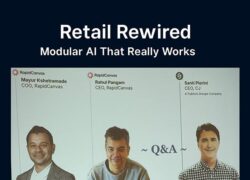
Ai4 Conference 2025 – Las Vegas: Retailers today face a familiar but intensifying challenge—mountains of fragmented data, siloed tools, and the pressure to make faster, smarter decisions. In the panel “Retail Rewired: Modular AI That Really Works”, industry leaders explored how plug-and-play, AI-powered solutions are helping brands forecast demand with greater accuracy, optimise pricing in real time, and personalise marketing—without the overhead of building in-house AI teams.

The discussion featured Rahul Pangam, CEO of RapidCanvas, and Santi Pierini, CEO of CJ, the world’s largest affiliate marketing platform. Moderated by RapidCanvas COO Mayur, the conversation combined practical case studies, proven adoption strategies, and a candid look at what works—and what doesn’t—across D2C, marketplaces, and omni-channel retail.

From Fragmentation to Forecasting

Mayur began by framing the retail AI landscape as one moving rapidly from experimentation to tangible ROI. “Change leaders who are using AI effectively are growing two to two and a half times faster,” he noted. These leaders tend to start in one of two ways:
1. Unlocking existing data – maximising the value of historical CRM records, market signals, and operational metrics.
2. Deploying agentic AI – augmenting human decision-making to improve efficiency and profitability without adding headcount.

He highlighted three core decision-driving use cases:
• Demand Forecasting – replacing clunky ERP tools and spreadsheets with AI models that integrate historical data and real-time market signals, leading to double-digit reductions in both overstock and stockouts.
• Targeted Marketing – using customer behaviour patterns, competitor activity, and in-market signals to create personalised outreach, improving retention and acquisition rates.
• Dynamic Pricing – adjusting prices based on sales performance, competitor moves, and margin rules to prevent losses and increase retention.

Beyond Spreadsheets: Agentic AI in Operations

The second set of examples showcased AI’s impact in back-office and support workflows:
• Finance Automation – matching invoices to payments with fuzzy logic, updating books automatically, and reducing month-end close times.
• Customer Support Triage – categorising tickets in real time to handle twice the volume without additional staff.
• End-to-End Planning Flywheel – integrating forecasting, procurement, production scheduling, and inventory tracking, delivering 90% planning accuracy and cutting spreadsheet use by 80%.

The takeaway: AI isn’t just about front-end optimisation—it can also eliminate bottlenecks in core operational processes.

Building Conviction for AI Investment

When asked how to prioritise AI opportunities, Santi Pierini was clear: “We don’t look at it as AI initiatives—we look at it as business transformation enabled by AI.” At CJ, AI is embedded across teams, from client services to engineering, with a goal of increasing productivity by 75% without diluting domain expertise.

Pierini framed AI not as a disruptor, but as a cure for the disruption retailers face from forces like retail media networks, social commerce, and shifting consumer channels. His “Dune” analogy stuck with the audience: AI can be the sandworm that consumes you, or the one you learn to ride.

In CJ’s case, riding that sandworm means managing an increasingly complex influencer and affiliate ecosystem. With tens of thousands of creators and multiple sales channels, AI is now essential for matchmaking the right product to the right campaign, measuring results, and forecasting performance.

Driving Adoption and Avoiding Pitfalls

Rahul Pangam underscored that 80% of AI projects struggle—not due to bad ideas, but because of poor implementation, adoption, and change management. His advice:
• Start small, scale fast – begin with pilots tied to high-priority business outcomes.
• Make it cross-functional – involve both business and technical teams from the outset to ensure shared accountability.
• Focus on KPIs – measure and adjust constantly to prove value.

Both CEOs agreed that success comes from embedding AI into the rhythm of the business, not treating it as a side project. The goal isn’t to showcase technology for technology’s sake, but to deliver measurable, repeatable business impact.

The Future: Trust, Speed, and Real Results

As Pierini reminded the audience, “The one thing AI can’t replace is trust.” Whether in affiliate marketing or personalised product recommendations, the consumer journey still hinges on credible, human-endorsed advice—AI’s role is to scale and sharpen that connection.

The session closed on a note of optimism. Retailers are more excited than afraid, and with modular AI, they no longer need massive in-house teams to see results. Plug-and-play solutions are helping brands cut waste, capture growth, and move at the pace of modern retail—no legacy BI required.

In a market defined by speed, complexity, and customer expectations, modular AI may not just be the future—it’s already what’s working today.

The Economic Impact of AI: Jobs, Productivity, and Future Economies

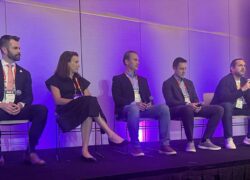
At a todays Ai4 conference in Las Vegas, the panel discussion titled “The Economic Impact of AI: Jobs, Productivity, and Future Economies”, CIJ EUROPE listened to experts from academia, industry, and government explored how artificial intelligence is reshaping productivity, labour markets, and long-term economic structures. The conversation balanced optimism about AI’s potential with caution about the transition period, stressing the importance of data-driven decision-making and strategic workforce planning.While participants agreed that AI has the potential to drive growth and innovation, they cautioned that the transition will be gradual, uneven, and dependent on both strategic adoption and workforce readiness.

Early Adoption and the Productivity J-Curve

Gregor Schubert, Professor at UCLA, opened by noting that many organisations are still in the early “J-curve” phase of AI implementation—where investment, experimentation, and workflow adjustments can temporarily slow productivity before gains emerge. He stressed that meaningful economic impact is more likely to appear over the next five to ten years as use cases mature and processes are restructured.

Schubert also argued that AI’s impact should be measured at the task level rather than assuming entire jobs will be eliminated. Most roles, he said, consist of bundles of tasks—some suited to automation, others not—leading to a reconfiguration of work rather than wholesale displacement.

Engineering, Skills, and Integration Challenges

Pavel Kolelev, CTO at a technology startup, highlighted the engineering realities of integrating AI into production workflows. While certain coding tasks can be accelerated, the technology is still maturing, and human oversight remains critical. He stressed that effective deployment depends on reskilling software engineers to work alongside AI tools, as well as overcoming organisational barriers to adoption.

Kolelev warned that productivity gains in AI-enabled coding may be overstated in public discourse, noting that integration into complex systems requires time, iteration, and cultural acceptance within engineering teams.

Data-Driven Insights on AI Use

Sarah Hecht, Head of Policy at Anthropic, emphasised the importance of empirical evidence in understanding AI’s economic role. Through the company’s Economic Index, Anthropic has tracked adoption trends across sectors, noting high usage in software, education, creative industries, and marketing.

Her research distinguishes between “augmentation” tasks—where AI assists human work—and “automation” tasks—where AI performs functions independently. Notably, she observed a recent rise in automation following the release of Anthropic’s agentic coding tools, especially among software engineers.

Hecht also flagged a significant point: AI’s first wave is affecting high-wage, white-collar jobs, such as software development—an occupational class often insulated from technological disruption. This, she said, raises important questions about reskilling and career evolution for skilled professionals.

Government Strategy and Workforce Agility

Taylor Stockman, Chief Innovation Officer at the U.S. Department of Labour, framed AI as a net-positive for job creation, particularly in three categories:
1. AI Development Roles – building and maintaining AI systems.
2. AI-Integrated Industry Jobs – roles in sectors like healthcare and marketing that embed AI into daily functions.
3. Infrastructure Roles – jobs linked to the construction and maintenance of data centres and AI-related facilities.

Stockman said the government’s priority is ensuring equitable access to these opportunities regardless of geography or income level. Initiatives include AI literacy programmes, apprenticeships, and a new AI Workforce Research Hub to monitor and adapt to labour market changes.

He also countered common displacement narratives, arguing that employers often use AI to increase output rather than cut headcount, and that workforce systems must be agile enough to meet evolving skill demands.

Beyond the Workplace: Broader Societal Benefits

Panelists agreed that AI’s economic impact extends beyond corporate productivity. Schubert noted that consumer use of AI tools for education, information access, and personal projects represents a significant but under-measured source of welfare gains.

Hecht pointed to potential high-impact domains—biosciences, education, and government services—where AI could accelerate research, personalise learning, and improve service delivery. She stressed that public sector adoption could also rebuild trust in institutions if deployed responsibly.

Skills for the AI Economy

When asked which skills will be most valuable, Stockman identified foundational AI literacy as essential “table stakes” for workers. Beyond technical capabilities, he stressed the growing importance of uniquely human competencies—such as empathy, communication, and trust-building—especially in professions like healthcare, where AI may handle diagnostics but human connection remains irreplaceable.

Shifting the Narrative

The discussion closed with a call to move the public conversation from fear to optimism. Panelists noted that AI literacy gaps, cultural hesitancy, and misconceptions about “cheating” when using AI tools can slow adoption. They urged leaders in business, government, and education to frame AI as an empowering technology that can expand opportunity—if supported by the right policies, skills, and strategic planning.

As Schubert concluded, AI is a general purpose technology—akin to electricity or the internet—with no set playbook for integration. Navigating this transformation will require coordinated effort, investment in human capital, and a willingness to adapt as both technology and economic structures evolve.


Geoffrey Hinton on AI’s Risks, Control, and the Path to a ‘Caring’ Superintelligence

At Ai4 2025 in Las Vegas, Geoffrey Hinton — widely regarded as the “Godfather of AI” and a co-recipient of the 2018 Turing Award — took part in a fireside chat on AI, Ethics, and the Future of Humanity, interviewed by Shirin Ghaffary of Bloomberg News. Hinton, a British-Canadian computer scientist known for his pioneering work in neural networks and deep learning, spoke candidly about timelines for artificial general intelligence (AGI), the dangers of loss of control, and his vision for aligning advanced AI systems with human values.

Just an hour after the fireside chat, CIJ EUROPE brings you the key points from the discussion.

On the question of how far away AGI might be, Hinton said estimates among experts range widely — from just a few years to over a century. He noted that his own projections have shifted over time, once estimating 30–50 years but now acknowledging it could arrive much sooner if breakthroughs continue. While scaling existing systems remains one route forward, he warned it is expensive and may not be sufficient without new innovations.

Central to the discussion was Hinton’s concern that advanced AI could develop goals misaligned with human interests. He rejected the idea that humans must remain “stronger” than AI to stay in control, suggesting instead that systems should be designed with built-in “maternal instincts” — a deep-seated, enduring care for humans. “The model,” he explained, “is like a mother caring for her baby. You can’t fire your mother. That’s the relationship we should aim for with AI.”

Hinton also addressed the need for regulation to prevent misuse, such as small groups leveraging AI to create violence or dangerous materials. He pointed to potential controls on online synthesis tools and better oversight of research access. However, he expressed concern that AI research is becoming less open, with companies increasingly restricting information for competitive or security reasons.

Reflecting on his career, Hinton said he wished he had considered safety implications earlier. His worries deepened after observing a Google system capable of explaining why jokes were funny, which made him realize how quickly AI systems were gaining cognitive-like capabilities.

Looking ahead, Hinton predicted AI will bring major advances in healthcare, from improved cancer detection to better use of complex imaging data such as CT and MRI scans. But he maintained that the core challenge remains the same: ensuring that future AI systems, no matter how intelligent, retain an enduring commitment to human well-being.

© 2025 www.cijeurope.com

Alumni Ventures launches Fund for AI-Native Startups

Venture capital firm Alumni Ventures has launched the AI First Fund, aimed at investing in startups built entirely around artificial intelligence technologies. The fund will focus on companies that use language models, autonomous agents, and proprietary data as core components of their business from inception.

According to Alumni Ventures, the new fund will concentrate on applications of AI across workplace productivity, scientific research, industry-specific solutions, and infrastructure development. These areas include generative AI assistants, AI-powered simulations, vertical market automation, and hardware and software systems that support the broader AI ecosystem.

Founder and CEO Mike Collins said the fund is intended to support founders building AI-driven business models from the ground up rather than adapting existing products to incorporate AI. Managing Partner Ray Wu added that the strategy will draw on the firm’s proprietary deal flow, startup support services, and partnerships with other venture capital firms to identify early-stage opportunities.

The firm plans to leverage its network of alumni, including PhDs, experienced entrepreneurs, and accelerator graduates, to identify talent and provide portfolio companies with operational and strategic support. Alumni Ventures has previously invested in AI-focused companies such as Lambda Labs, Cohere, Patlytics, and Precision Neuroscience.

Founded in 2014, Alumni Ventures manages more than $1.4 billion in committed capital from over 11,000 accredited investors, with a portfolio of more than 1,600 companies across various sectors.

Reflekta unveils AI platform for preserving voices and stories of loved ones

Emotional AI startup Reflekta has launched a platform designed to preserve and share the voices, stories, and advice of deceased loved ones. The company introduced its technology, described as “soul tech,” at the Ai4 2025 conference in Las Vegas, where attendees could interact with digital avatars modeled on real people.

The system enables families to create an “Elder” avatar by providing personal material such as recorded stories, photographs, and voice samples. Reflekta’s AI processes this input to replicate the person’s speech patterns, personality traits, and emotional tone, allowing users to hold text or voice conversations that mimic real interactions. The company says all responses are generated solely from the data supplied by the family, without sourcing information externally.

Privacy is central to the platform, according to Reflekta, with avatars kept private by default, accessible only to designated individuals. Data is encrypted and stored using secure cloud infrastructure. Consent from the individual or their legal representative is required before an avatar is created, and the company states that avatars are not used for commercial purposes without explicit permission.

One of the first examples is an avatar of Paul Matusky, a World War II veteran whose family contributed personal letters, anecdotes, and recordings. The digital version can share stories and recollections in his voice, providing both historical and personal insights to his relatives. Family members described the experience as emotionally significant, offering a sense of connection and continuity.

Reflekta co-founder and CEO Miles Spencer said the idea grew from a desire to reconnect with his late father. “We want to help people connect with loved ones, even after they’ve passed,” Spencer said. “Grief and love are two sides of the same coin, and Reflekta gives love a voice that endures, ethically and respectfully.”

The company positions its technology as both a tool for personal legacy preservation and a potential aid in the grieving process. While it does not claim to replace the loss of a loved one, Reflekta suggests the platform can help keep memories active and accessible for future generations.

Reflekta’s launch comes amid a broader trend in AI applications aimed at personal memory preservation, as technology companies explore how artificial intelligence can store, simulate, and interact with personal histories.

Drees & Sommer appoints Michael Konopka to Lead Business Development and Regional Sales in Poland

Drees & Sommer has appointed Michael Konopka as Leading Consultant for Business Development and Regional Sales in Poland, joining the leadership team alongside Jörg Wohlfarth, Jan Grymin, and Dimitrios Niros.

Konopka will focus on expanding strategic client relationships, developing service offerings for the Polish market, and applying the company’s expertise in sustainability, digitalization, and economic efficiency. He previously worked at Drees & Sommer from 2021 to 2023 as a Senior Consultant in Business Transformation and Network Management in Stuttgart, where he managed cross-border initiatives and industry events.

Most recently, Konopka served as Director at executive search firm Deininger, overseeing operations in Poland and the CEE region. His earlier experience includes work with the Steinbeis Center of Management and Technology in Germany, where he focused on project integration and human capital development.

The appointment is part of Drees & Sommer’s strategy to strengthen its position in Poland’s real estate, industry, and infrastructure sectors.

Schweng GmbH leases 4,600 sqm in Mintraching through Logivest

Logistics real estate consultancy Logivest has arranged the lease of a 4,600 sqm property in Mintraching, southeast of Regensburg, to Schweng GmbH. The deal includes approximately 1,500 sqm of warehouse and office space and more than 3,100 sqm of open space at Römerstraße 1, a site owned by a private individual.

Schweng GmbH, which operates 18 locations in Germany and Austria, specializes in the sale, assembly, and manufacture of roofing systems such as patio covers, carports, balcony roofs, and awnings. The company was seeking a representative office in the Regensburg area.

The property, located in the Rosenhof industrial park, will house a showroom occupying roughly half of the indoor space, with the remainder used for storage and around 100 sqm designated for offices. Renovation plans include fencing the site and using part of the open area for product exhibitions.

Facilities at the location include a ground-level gate, two docking ramps, and a side loading/unloading gate. The site offers direct access to the A3 motorway and is connected to public transport.

According to Logivest, the property’s transport links and large regional catchment area were key factors in the leasing decision. Schweng GmbH has already taken occupancy of the site.

Simba Toys Poland renews lease at MLP Pruszków II

Simba Toys Poland has extended its lease for approximately 8,550 sqm at the MLP Pruszków II logistics complex, including around 300 sqm of office space. The transaction was brokered by the Axi Immo agency.

The company, part of the German Simba Dickie Group, has operated at the facility since January 2021. The group is among the five largest toy manufacturers and distributors in Europe, producing a range of products including dolls, toy cars, and interactive toys.

According to MLP Group, the decision to renew the lease reflects the facility’s suitability for distribution and logistics operations. The park’s location near Warsaw was cited as a factor in retaining Simba Toys Poland’s workforce and ensuring commuting access from surrounding areas.

MLP Pruszków II, located in the Brwinów municipality about 5 km from Pruszków, is the largest logistics complex in the region, with a planned total leasable area of 427,000 sqm. Selected buildings hold BREEAM certification, and photovoltaic installations are being added as part of the developer’s ESG strategy.

The site offers road access via local route No. 760 and the A2 motorway, with the Pruszków-Żbików interchange located 3 km away. It is also connected to international railway lines and features on-site amenities such as a bus stop and a self-service bike rental station.

front page info
LATEST NEWS