Modern technology in historic buildings: Navigating the challenges of museum modernization

Poland’s market for adapting historic buildings is expanding by about 15% annually, as developers increasingly see value in restoring heritage properties such as old factories and Renaissance palaces. These projects often achieve rents 20–35% higher than standard office buildings, largely due to the integration of advanced HVAC systems. However, installing such technology in historic structures presents both technical and regulatory challenges.

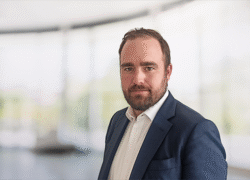
According to Marcin Kosieniak, MEP specialist and co-owner of PM Projekt, early consultation with heritage conservators is critical. “Any visible changes to a façade, vaulted ceilings, or interior details can be questioned. Even minor elements like ventilation grilles require approval in listed buildings,” he notes. The lack of space for technical infrastructure in historic structures means HVAC components must often be hidden within cornices, built-in furniture, or behind parapets on rooftops.

Museums present additional complexities. Climate control is essential not only for visitor comfort but also for protecting collections. Advanced building management systems, automated blinds, air-flow algorithms, and heat recovery systems are used to maintain strict temperature and humidity levels. In a Wrocław museum modernization project, the HVAC system was designed to respond automatically to occupancy levels, regulate sunlight exposure, and reuse recovered heat for dehumidification.

Historic buildings, often built with vapor-permeable materials and without moisture insulation, require careful ventilation planning to avoid dampness, condensation, and material degradation when repurposed for functions with higher humidity loads.

While installation costs in historic buildings are typically 30–50% higher due to custom solutions and conservation requirements, operational savings can be significant. Modern HVAC systems can reduce energy costs by 30–40%, translating into substantial annual savings for large facilities. Investors who lead in adapting heritage properties with high climate standards can secure a competitive advantage, offering unique spaces with environmental controls comparable to new-build offices while commanding premium rents.
Geosan Development secures permit for 283-unit Re.Start Petynka project in Prague 6

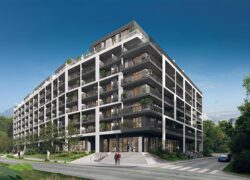
Geosan Development has obtained a valid building permit for its Re.Start Petynka residential project in Prague 6, with construction scheduled to begin in September 2025 and completion expected in the third quarter of 2028. The development will be built on a long-vacant site near the Petynka swimming pool and will comprise 283 residential units across nine floors. Approximately 40% of the apartments have already been sold.

Initial sales were dominated by smaller one- and two-room units, but interest in larger layouts and premium apartments on the upper floors has increased. The later sales phases will include maisonette units and four penthouses with terraces, green atriums, and views of Prague Castle.

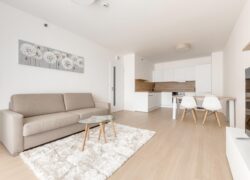
The project offers a mix of compact studios, two-room apartments, practical family layouts, and high-end units. Smaller apartments, with sizes up to 30 m² for studios and up to 48 m² for two-room layouts, have attracted investor interest due to their suitability for both long- and short-term rentals.

A commercial section on the ground floor will provide retail and services for residents and the surrounding area. Negotiations are underway with potential tenants, including a supermarket, with announcements expected during construction.

Re.Start Petynka is located in a quiet residential area with access to green spaces such as Kajetánka Park, Maxe van der Stoela Park, and the gardens of Břevnov Monastery. Local amenities are available on nearby Bělohorská Street, while the Nový Smíchov shopping center is a 10-minute drive away. The site is well connected by public transport and car, offering a balance between city accessibility and a calm neighborhood setting.

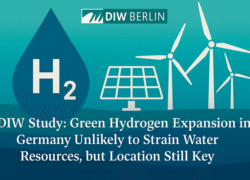
Green hydrogen expansion in Germany unlikely to strain water resources, but location still key

A study by the German Institute for Economic Research (DIW Berlin) concludes that Germany’s planned expansion of green hydrogen production will not create widespread water shortages, although local water availability could influence where new electrolysis plants are built. The analysis, based on model projections for 2030, finds that water demand for electrolysis will remain low in relation to total water consumption in nearly all regions, even under scenarios of significant hydrogen production growth.

Germany currently consumes about 46 terawatt hours of hydrogen annually, most of it “grey hydrogen” made from natural gas. By 2030, demand is expected to more than double, with a substantial share coming from green hydrogen produced using renewable electricity and water. The study finds that if the federal government’s planned hydrogen core network is completed, production could be concentrated in areas where both renewable energy and water are abundant, particularly in northern states. Without the network, production would be more decentralized and closer to industrial consumers, but even then, water demand for electrolysis would generally remain below 0.5% of state-level water use.

The cost of water for electrolysis is minimal, averaging around 0.6% of total production costs, assuming the pipeline network is in place. The DIW researchers recommend accelerating network development to allow siting in regions with stable water resources and integrating water stress considerations more explicitly into permitting and subsidy processes. They also suggest improving transparency on water pricing to assess its role in investment decisions.

Electrolysis uses electricity to split water into hydrogen and oxygen, requiring about nine liters of purified water per kilogram of hydrogen produced, plus additional water for cooling. In cases of freshwater scarcity, desalinated seawater could be an alternative, though at higher cost. The study estimates that meeting Germany’s target of ten gigawatts of electrolysis capacity by 2030 would require about 26 million cubic meters of water annually — roughly 0.15% of current national water withdrawals.

Source: DIW Berlin

Deka Immobilien sells health centre in Finland

Deka Immobilien has sold an health centre in Helsinki for around EUR 100 million. The property is part of the real estate assets of the open-ended real estate fund WestInvest ImmoValue, which targets exclusively institutional investors. Finnish investor VVT, which specialises in commercial real estate in Finland’s largest cities, is acquiring the property for its VVT Property Fund ll KY fund.

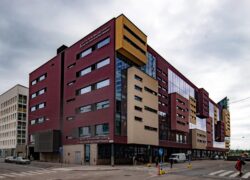
The Kalasatama Health Centre comprises 19,800 sqm of leasable space and 35 parking spaces. It is located around three kilometres east of the Central Business District, directly on the coast in the Finnish capital. The property was completed in 2017 and is fully leased on a long-term basis with the City of Helsinki as the main tenant.

The sale sees the fund management of WestInvest ImmoValue taking advantage of a favourable sales opportunity while at the same time divesting itself of a property that no longer aligns with its strategy. Investors have generated a positive performance contribution with the property over the holding period of around ten years.

Photo: hel.fi

Savills Poland completes 25,000 sqm in office lease deals in H1 2025

Savills Poland’s tenant representation team completed lease transactions totaling around 25,000 sq m in the first half of 2025, covering both Warsaw and several regional cities. The deals reflected varied client requirements and a broad geographic scope, underscoring shifting priorities in the office market.

The largest share of activity took place in central Warsaw, particularly in Śródmieście, where more than 13,000 sq m was leased. Mokotów, another key business hub in the capital, accounted for nearly 8,000 sq m of transactions. In Wrocław, the team advised on agreements for approximately 3,000 sq m. Most transactions involved lease extensions and relocations within existing office stock.

A notable deal during the period was the renegotiation of XTB’s lease in the Skyliner office building in Warsaw. The agreement, covering nearly 4,400 sq m across three floors, secures the fintech company’s presence in the tower for the coming years.

Savills advised a range of clients from sectors including finance, IT, tax advisory, light manufacturing, and healthcare. The team’s approach focused on tailoring leasing strategies to each tenant’s operational needs, with growing emphasis placed on building quality, flexible lease terms, and efficient space use—factors increasingly prioritised as workplace models evolve.

Savills’ involvement in this process enabled the development of solutions tailored to the tenant’s long-term needs, taking into account the flexibility of the agreement and the optimal use of the available space. Thanks to our support, XTB was able to make an informed decision to continue its operations in a prestigious location, which is in line with the strategy for further growth of this dynamically expanding organization, comments Karol Grejbus, Associate Director, Office Agency, Tenant Representation, Savills Poland.

“We are seeing an increasingly conscious and selective approach to office space planning by companies. The quality of the building, flexible lease terms and optimal use of space are becoming increasingly important. This is the result of the evolution of the work model and growing tenant expectations,” says Jarosław Pilch, Head of Tenant Representation, Office Agency, Savills Poland.

Outlet Park Szczecin expands with new regional brands and store upgrades

Outlet Park Szczecin, owned by EPP and the only outlet center in Western Pomerania, is expanding its fashion and services portfolio with several new and relocated tenants. Three brands – JACK & JONES, Evenemen, and premium optician OUTLY – have made their regional debut at the center. JACK & JONES, a global denim brand, has opened its first store in the province, while Polish menswear brand Evenemen has launched its first Szczecin location, offering formal clothing and accessories. OUTLY has also opened, bringing a selection of designer eyewear and on-site eye testing.

In addition to the new openings, footwear retailer eobuwie is scheduled to launch in the autumn with a multi-brand offer covering casual, premium, and sports styles. Several existing tenants have expanded their presence, including VENEZIA, TATUUM, WITTCHEN, and Pako Lorente, adding more space to their stores. Meanwhile, Lee Wrangler and German Optiker have relocated within the center, introducing refreshed interiors to better showcase their ranges.

The recent changes cover almost 1,800 sqm of retail space. According to EPP, the combination of premium brands with outlet pricing, alongside leisure and service options, has been key to maintaining high occupancy levels and ongoing tenant interest. The mix of long-standing retailers expanding their space and new regional entrants reflects the center’s strategy to strengthen its offer and maintain its position in the local retail market.

AFI Home retains 70% of tenants as demand for modern rental housing grows in Prague

AFI Home reports that 70% of tenants in its Prague rental portfolio have renewed their leases for another year, according to data for the first half of the year. The company manages nearly 900 apartments across several locations, with only 30% of units returning to the market for new tenants.

The retention rate is attributed to a combination of stability, service quality, and convenience. AFI Home properties offer 24/7 security, professional maintenance, and amenities such as supermarkets, laundry facilities, coworking spaces, and well-designed communal areas. Fully furnished apartments, available for immediate occupancy, have proven popular among expatriates, young professionals, and tenants in transitional situations.

Tenants who do leave typically do so for work-related relocations. AFI Home operates residences including AFI Home Třebešín, AFI Home Karlín, and AFI Home Kolbenova, all located with access to public transport and local services.

The company is expanding its portfolio with two major developments: AFI Home Nová Elektra, offering 291 apartments, and AFI Home V Korytech, which will add 519 units. Both projects will include additional services intended to enhance tenant convenience and meet demand for modern rental housing in Prague.

Poland: Personal liability of Management Board members in bankruptcy proceedings

In Poland, management board members can face personal financial liability if they fail to respond appropriately to signs of insolvency. This liability may extend to their private assets and arises from three key legal provisions: Article 299 of the Commercial Companies Code (KSH), Article 116 of the Tax Ordinance (OP), and Article 21(3) of the Bankruptcy Law (PU). Each establishes different conditions, burdens of proof, and possible defenses.

The obligation to act does not depend on a board member’s subjective belief but on the company’s objective financial condition. There are two main legal grounds for insolvency. The first is the inability to meet due financial obligations. This can be clear, such as when the company has no funds or financing options, or presumed when at least two debts remain unpaid for over three months. The second is when liabilities exceed assets for a continuous period of at least 24 months, taking into account both book and market values. In either case, the management board has 30 days to file for bankruptcy or initiate restructuring.

Under Article 299 KSH, board members may be liable to creditors if enforcement against the company fails. Defenses include timely filing for bankruptcy, proving absence of fault, or showing that the creditor suffered no damage. Article 116 OP deals specifically with unpaid tax liabilities and offers fewer defenses; it does not allow exemption on the basis of no damage. Article 21(3) PU concerns liability for damages caused by missing the bankruptcy filing deadline. Here, damage is presumed, and the only defenses are timely filing, opening of restructuring proceedings, or proving no fault.

These regimes differ in scope and severity. Article 299 offers the broadest defense options, while Article 116 and Article 21(3) are stricter and allow less room for argument. In all cases, liability can arise from neglect, even without intent.

Practical considerations include recognising early signs of insolvency, monitoring liquidity and liabilities, documenting board actions, understanding that responsibility is shared among all members, and acting promptly—restructuring is only effective if initiated early enough. Filing for bankruptcy does not automatically end operations; courts often appoint a temporary supervisor to assess the company’s condition, and applications can be withdrawn if circumstances improve.

Factual check:
• The legal references to Articles 299 KSH, 116 OP, and 21(3) PU are correct under Polish law.
• The 30-day deadline for filing after insolvency arises is accurate.
• The description of insolvency grounds matches statutory definitions.
• The statement on presumed damage under Article 21(3) PU aligns with established interpretation.
• What is missing is specific recent case law examples, statistical data on how often board members are held liable, and practical differences in how courts apply these provisions in tax vs. civil cases. Including these would provide a fuller picture of real-world application.

Author: Expert commentary prepared by Mateusz Haśkiewicz – qualified restructuring advisor, legal advisor, president of the management board of Haśkiewicz Dyła Restrukturyzacje Upadłości sp. z o.o.

Logistics operator leases space at Panattoni Park Koszalin

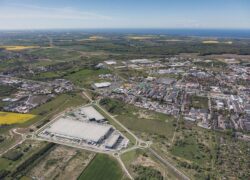
A major logistics company has opened a new branch at Panattoni Park Koszalin, leasing nearly 9,000 sqm of warehouse and operational space. The site is located 4 km from the S6 expressway and 3 km from Koszalin’s city centre, offering access to distribution networks in north-western Poland and supporting last-mile delivery operations.

The facility is Panattoni’s first multi-tenant development in Koszalin and provides over 65,000 sqm of warehouse space. It is BREEAM-certified and designed to meet modern operational and environmental standards. Its location near the S6 route linking Szczecin and Gdańsk, as well as national road 11 to Poznań, allows efficient connections to domestic and international markets. Proximity to the city and local universities also supports recruitment and workforce availability.

Following this lease, 2,335 sqm of space remains available, suitable for local businesses or logistics providers seeking a smaller distribution hub. The remaining units are ready for immediate occupancy and can be adapted for specific operational needs, including semi-cross-dock configurations.

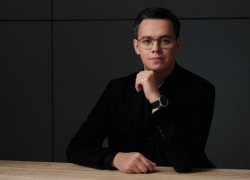
David Štrouf joins Savills investment team as Associate Director Czech Republic

Savills has appointed David Štrouf as Associate Director in its Investment team, effective 1 August. Štrouf, who has a background in private equity and real estate consulting, brings experience from due diligence and strategic advisory work across multiple sectors. He has been involved in transactions with a combined asset value of over €1.3 billion in the CEE region.

Before joining Savills, Štrouf was part of the Prague Principal Investor & Private Equity practice at The Boston Consulting Group, where he worked on due diligence and strategy projects, including transactions such as the vendor due diligence of Packeta Group and the acquisition of Invia Group. Earlier, at Cushman & Wakefield, he participated in more than 15 commercial due diligence processes across real estate asset classes, including the 2022 disposal of Tesco’s cross-border portfolio and the structuring of a forward funding agreement between Logport and Invesco for Logport Prague West.

Štrouf holds degrees in International Management and Business Administration from the University of Economics in Prague and SUNY Empire State College.

front page info
LATEST NEWS