Hungary’s youth surge challenges long-standing political order ahead of April vote

Hungary’s upcoming parliamentary election is increasingly being shaped by a clear divide between generations, as younger voters show growing support for a political alternative to the country’s long-serving leadership, while older citizens largely remain aligned with the current government.

In the weeks leading up to the 12 April vote, grassroots campaigning by younger supporters has become more visible across smaller towns and regional centres. Many in their twenties, having grown up entirely under the same political leadership, are now actively engaging in efforts to encourage change, reflecting a broader shift in political participation among younger Hungarians.

At the centre of this momentum is Péter Magyar, a former insider of the governing political structure who has repositioned himself as a challenger. His political platform has gained rapid traction, particularly among voters who had previously remained disengaged from public life. Surveys conducted in recent months suggest that younger demographics are significantly more inclined to support his movement, while backing for the ruling party remains strongest among pensioners and in rural areas.

Analysts point to a deeper structural transition underway. A generation that once defined Hungary’s political direction following the end of communism is now being confronted by a younger cohort shaped by different priorities, including economic prospects, transparency in governance and the country’s broader international alignment. This shift is not only ideological but also reflects changing expectations about the role of institutions and public accountability.

Recent political developments have further intensified engagement, particularly among younger voters. A high-profile controversy in 2024 involving a presidential pardon triggered widespread public reaction and is widely seen as a catalyst for renewed interest in political participation. In its aftermath, new political forces have emerged, reshaping the electoral landscape and narrowing what was once a dominant lead for the governing party.

Despite these changes, the outcome of the election remains uncertain. The incumbent leadership continues to benefit from established support networks, particularly outside major cities, as well as policies that resonate with older voters, including pension measures and family-related incentives. The campaign has also increasingly emphasised stability and continuity, framing the election as a choice between experience and risk.

The contest has grown more polarised in recent weeks, with disputes over institutional fairness, media conditions and campaign practices adding to an already tense political environment. While opposition forces appear to have gained momentum, Hungary’s electoral dynamics suggest that turnout and regional voting patterns will play a decisive role.

As the country approaches election day, the balance between continuity and change may ultimately rest on whether the emerging political engagement among younger voters translates into a sustained shift at the ballot box.


GIOŚ relocates headquarters to HOP office building in Warsaw

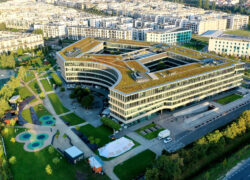
Chief Inspectorate for Environmental Protection (GIOŚ) has leased 4,600 sqm of office space in the HOP building at 132/134 Chmielna Street in Warsaw. The institution has been operating from the new location since January 2026 under a long-term lease agreement.

GIOŚ is a public administration body responsible for overseeing compliance with environmental regulations in Poland. Its responsibilities include inspections, environmental monitoring across air, water, soil and noise, as well as oversight of waste management and cooperation with other public services.

The HOP office building, owned by Syrena Real Estate, has undergone refurbishment in recent years with backing from PineBridge Benson Elliot. The upgrade included changes to the building’s façade and the creation of a public square of approximately 600 sqm in front of the property. Interior updates include co-working space, conference facilities totalling around 1,000 sqm, bicycle infrastructure and electric vehicle charging points in the underground car park.

The building provides more than 14,000 sqm of leasable space across six above-ground floors and one underground level. It holds BREEAM In-Use Excellent and WELL Health and Safety certifications, as well as a “Barrier-Free Facility” designation.

Other tenants at HOP include YOPE, Aplikacje Krytyczne, BNP Paribas Bank Polska, ERM Polska, Evergreen and Żabka. Syrena Real Estate also has its headquarters in the building. A LUPO Pasta Fresca restaurant operates on the ground floor.

Bel-Pol leases 5,600 sqm at Panattoni Park Warsaw North III

Bel-Pol has leased more than 5,600 sqm of warehouse and office space at Panattoni Park Warsaw North III, a logistics development in the north-eastern part of the Warsaw market. AXI IMMO advised the tenant.

The company, which operates a nationwide network of around 100 showrooms, continues to develop its logistics infrastructure alongside its retail and e-commerce operations. Its product range includes flooring and door solutions for private clients, architects and contractors.

Zdzisław Strumidło, Vice-President of the Management Board at Bel-Pol, said: “We have decided to launch a new Bel-Pol warehouse in Kobyłka, which will significantly strengthen our logistical and operational capabilities in the Warsaw region. This is an important stage in the further growth of our company and a response to the increasing demands of the market and our business partners. This investment marks another step in delivering Bel-Pol’s long-term development strategy, aimed at improving operational efficiency, enhancing the quality of customer service and consistently strengthening our market position. As part of the transaction, the company will occupy more than 5,150 sqm of modern warehouse space, supplemented by approximately 500 sqm of functional office and staff facilities. The new location has also been designed to provide employees with comfortable, safe and modern working conditions that meet the highest organisational and technological standards. The opening of the Kobyłka warehouse also confirms our ongoing commitment to supporting the local economy and maintaining our long-term presence in the region.”

Klaudia Markowska, Associate Director, Industrial & Logistics Agency at AXI IMMO, said: “After many years of operating in its previous location, the client decided to relocate and expand, choosing the north-eastern part of Warsaw as the new direction for development. Excellent transport accessibility – the immediate proximity of the ring road of Warsaw and the location right next to a major road junction – was a key factor, ensuring smooth logistics and distribution operations. Equally important were the greater possibilities for future expansion and flexible scaling of the business, which in today’s market conditions constitute an essential element of long-term operational strategy. Finalizing this transaction also marked the completion of the commercialisation process for the entire park.”

Sylwia Robakiewicz-Mokwińska, Asset Management Director at Panattoni, added: “We are pleased to welcome Bel-Pol as a tenant at Panattoni Park Warsaw North III. The high standard of the facility and its excellent location will provide the tenant with stable conditions for further growth. Another lease agreement confirms the attractiveness of this project for the business community. Panattoni’s developments combine technical quality, flexibility and long-term value for tenants, supporting the growth of both local companies and businesses operating on international markets.”

Panattoni Park Warsaw North III is located in Kobyłka, near the S8 expressway. The project is planned to comprise three warehouse buildings with a total area of approximately 75,000 sqm and is expected to obtain BREEAM certification at the Excellent level.

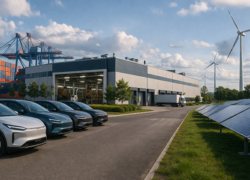
Chinese capital in Europe’s EV sector: will Poland attract investment or remain a sales market?

EU tariffs on Chinese electric vehicles were introduced to support European manufacturers, but they are also contributing to a shift in strategy among Chinese companies. Rather than relying solely on exports, several manufacturers are increasing their focus on establishing production capacity within Europe, reflecting a broader “local for local” approach.

This trend is visible across the automotive and battery sectors, where Chinese firms are exploring or developing projects in multiple European countries. The outcome for individual markets, including Poland, will depend on investment conditions, regulatory frameworks and geopolitical considerations.

When selecting locations for large-scale manufacturing projects such as battery plants, investors typically assess energy costs, labour availability, logistics, incentive schemes and regulatory stability. Within Europe, Hungary and Spain are often cited alongside Poland as competing destinations, reflecting their differing cost structures and policy approaches.

Chinese automotive brands have expanded their presence in several European markets, including Poland. However, claims of “double-digit” market share in Poland in 2025 should be treated with caution. While registrations of Chinese brands have increased rapidly, publicly available industry data suggests their overall market share remains below 10 percent, albeit growing. In the plug-in hybrid segment, Chinese manufacturers have gained share, but statements that they account for over half of new registrations are likely overstated. The broader trend remains that demand for electric and hybrid vehicles in Europe continues to grow, while affordability constraints persist, creating opportunities for new entrants.

Poland’s industrial and logistics sector continues to show stable demand. Annual gross take-up has exceeded 6 million sqm in recent years, although this varies depending on methodology and timing. New supply has slowed compared with peak levels, and vacancy rates in the range of 7–8 percent are broadly consistent with market reports. A high share of lease renegotiations reflects tenant retention rather than a clear expansion in new demand.

Comments from market participants highlight differences in how Chinese investors perceive European markets. Jan Kamoji-Czapiński of Colliers said: “In China, investors are accustomed to a model where the administration acts as a comprehensive service centre, supporting the investor at every stage – from permits to recruitment. In Europe, they encounter a fragmented system of institutions, which can be a source of uncertainty… they are increasingly turning to professional consultants in tax, legal and property matters.” Tammy Tang, Managing Director of Colliers in China, added: “Chinese investors are familiar with Western Europe and appreciate its mature industrial structure. At the same time, interest in Poland has been growing significantly over the last five years… investors analyse the stability of the business environment, the availability of workers and openness to foreign capital.”

Energy costs remain a key factor in battery production. Spain has generally reported lower industrial electricity prices than Poland and Hungary in recent periods, although exact figures vary depending on contracts, subsidies and market conditions. Poland’s electricity grid is widely considered reliable, though precise comparative uptime figures are difficult to verify across countries. Labour costs in Hungary are typically lower than in Poland and Spain, while Poland benefits from a relatively large workforce, including foreign labour. Spain offers access to a broader labour pool but is often seen as more regulated.

From a logistics perspective, Poland’s proximity to Germany and major EU manufacturing hubs is a recognised advantage, particularly for automotive supply chains. Access to Baltic ports such as Gdańsk and Gdynia supports trade flows. Hungary, as a landlocked country, relies on overland transport, while Spain’s logistics strengths are more regionally focused.

In terms of incentives, Hungary has actively used state aid to attract industrial investment, often through individually negotiated packages. Poland’s system is more standardised, based on instruments such as the Polish Investment Zone, offering tax incentives with regional variations. While Poland is generally seen as a stable regulatory environment, investor perception can be influenced by political signals and broader geopolitical positioning.

Geopolitical considerations are playing a growing role in investment decisions. Poland’s alignment with the United States and its cautious stance towards China may be viewed differently by investors compared with countries that pursue a more open approach to Chinese capital. There is evidence that some investment projects in Europe have been reassessed or relocated between countries, although such decisions are typically driven by a combination of economic, regulatory and political factors rather than geopolitics alone.

The expansion of Chinese manufacturing capacity in Europe is progressing, although unevenly across markets. For Poland, the outcome will depend on how it balances competitiveness, regulatory clarity and geopolitical positioning. The question is not only whether Chinese capital will enter Europe, but how individual countries position themselves within this evolving industrial landscape.

Source: Colliers

Royal Wilanów changes ownership in Warsaw transaction exceeding €100 million

Capital Park Group has sold the Royal Wilanów complex in Warsaw to Czech real estate fund WOOD & Company in a transaction valued at over €100 million. The property provides 37,000 sqm of lettable space and is fully leased.

Located in the Wilanów district of Warsaw, the mixed-use scheme includes approximately 25,000 sqm of office space within a five-storey Class A building. The remainder is allocated to retail and service functions, including dining, shops, a kindergarten, fitness facilities and medical services. The complex also provides 908 underground parking spaces. Tenants include Hilti Polska, Erbud, Carrefour Polska, MJM Holdings, Benefit Systems, Lindt & Sprüngli Polska, Medicover and LUXMED.

“Royal Wilanów is much more than just a building for us. It has also been the headquarters of our company for many years. Since its opening in 2015, we have been consistently developing this place and taking care of its day-to-day operations, watching with pride as it became an integral part of the Wilanów district and a popular destination for the local community. We are pleased that the project is now in very good hands and we remain involved as the property manager, ensuring continuity for our tenants and partners,” said Marcin Juszczyk, Managing Partner and Vice President of the Management Board at Capital Park Group.

Following the acquisition, WOOD & Company has increased its exposure to the Polish office market. The transaction represents its fifth investment in Poland and its third office asset in Warsaw, after Astrum Business Park and Concept Tower.

“Royal Wilanów is a unique complex that combines offices with retail, services and leisure areas, creating a vibrant environment for both tenants and the local community. A diversified base of more than 80 tenants and the building’s historically high occupancy perfectly reflect our investment strategy focused on high-quality assets with attractive long-term returns,” said Jan Kolb, Investment Manager at WOOD Real Estate.

“The acquisition of the Royal Wilanów project is fully aligned with our long-term investment strategy, which aims to strengthen exposure in key Central European markets, particularly Poland, one of the largest and most liquid real estate markets in the region. The transaction contributes to the further geographical diversification of the Office and Retail sub-funds’ portfolios and supports the stability of long-term returns,” added Jiří Hrbáček, Portfolio Manager at WOOD Real Estate.

CBRE, MDDP and Greenberg Traurig advised Capital Park Group on the sale, while WOOD & Company was advised by Avison Young, CMS and Koda.

HIH Projektentwicklung starts conversion of Hanover Hanomag site into school

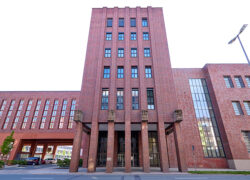
HIH Projektentwicklung has begun the conversion of two existing buildings on the Hanomag site in Hanover-Linden into an integrated comprehensive school. Construction works commenced in November 2025 following the granting of planning permission, with completion targeted for June 2027.

The project, located on Göttinger Straße, involves the redevelopment of a former Telekom call centre and will deliver approximately 10,700 sqm of school space. Once operational, the facility is expected to accommodate between 700 and 800 pupils across four classes per year group. The school will serve as interim capacity for the City of Hanover while other educational facilities undergo refurbishment.

An adjacent administration building, originally completed in 2013 and extending to around 5,600 sqm, has already been repurposed. Since early 2026, it has housed the city’s consolidated Schools Department.

The municipality has secured a long-term lease on both buildings. In addition to internal reconfiguration works to meet educational requirements, the scheme includes the transformation of an existing car park into outdoor school space.

LIST BiB, part of LIST Bau Bielefeld, has been appointed as the main contractor, with Team Kaufmann responsible for building services planning. Architectural design is being handled by Hanover-based architekten sks.

The scheme represents HIH Projektentwicklung’s second office-to-school conversion and forms part of its broader strategy to reposition existing assets for alternative uses, including educational infrastructure, in cooperation with institutional investors.

International Monetary Fund warns conflict-related energy shock may slow global growth

A report by economists at the International Monetary Fund (IMF) indicates that the recent conflict involving Iran is adding pressure to the global economic outlook, particularly for countries already recovering from earlier disruptions. The analysis describes the situation as a global but uneven shock, with differing impacts depending on countries’ economic structures, exposure to energy imports and available financial buffers.

The IMF notes that the most immediate effects are being transmitted through energy markets. Disruptions linked to the closure of the Strait of Hormuz and damage to regional infrastructure have affected global supply, contributing to a sharp increase in oil prices in March. The Strait typically handles around 25 to 30 percent of global oil flows and about 20 percent of liquefied natural gas, making it a critical route for global energy trade. According to the IMF, this represents one of the most significant disruptions to oil markets in recent decades.

The impact is uneven across regions. Energy-importing economies in Europe and Asia are facing higher fuel and production costs, while some countries in Africa and Asia are encountering difficulties securing supplies even at elevated prices. In contrast, certain energy-exporting economies may benefit from higher prices, although gains depend on their ability to maintain export volumes.

Beyond energy, the conflict is also affecting global supply chains. Rerouting of shipping traffic has increased transport and insurance costs and extended delivery times. Disruptions to the trade of key inputs, including fertilisers and industrial materials, are adding further pressure. Around one-third of global fertiliser shipments typically pass through the Strait of Hormuz, and interruptions to these flows are raising concerns about agricultural production and food prices, particularly as the planting season begins in parts of the Northern Hemisphere.

The IMF highlights that low-income countries are particularly exposed to these developments. Higher food and fertiliser costs risk reducing access to basic goods, while tighter financial conditions and declining levels of international assistance may limit their ability to respond. In these economies, food accounts for a significantly larger share of household spending, increasing vulnerability to price increases.

The report also points to inflation as a key transmission channel. Sustained increases in energy and food prices are likely to push consumer prices higher globally. Historically, prolonged periods of elevated oil prices have been associated with higher inflation and slower economic growth. The IMF warns that this could also affect inflation expectations, potentially feeding into wage and price-setting behaviour and making it more difficult for policymakers to stabilise prices without slowing economic activity.

Financial markets have also reacted to the conflict. According to the IMF, global equity prices have declined, bond yields have risen and market volatility has increased, contributing to tighter financial conditions. These effects are more pronounced in emerging markets and lower-income economies, where higher borrowing costs and weaker currencies may increase debt burdens and complicate refinancing.

The IMF emphasises that the overall economic impact will depend on the duration and scale of the conflict, as well as the extent of disruption to infrastructure and supply chains. A shorter conflict could lead to temporary price spikes, while a prolonged period of instability may keep energy prices elevated and sustain pressure on inflation and growth.

The institution has called on governments to adopt targeted and country-specific policy responses, particularly in economies with limited fiscal space or foreign exchange reserves. It also stated that it stands ready to provide policy advice, capacity support and financial assistance where needed, in coordination with international partners.

Source: IMF

MLP Group fully leases MLP Wrocław park

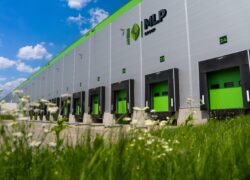
iLogic has leased approximately 3,400 sqm of space at the MLP Wrocław logistics centre, bringing the park to full occupancy. The tenant was advised during the transaction by BNP Paribas Real Estate Poland.

Under the agreement, around 3,100 sqm will be used for warehouse operations and 300 sqm for office and staff areas. The company is expected to take full access to the space at the beginning of 2027.

iLogic, based in Wrocław, has operated since 2019 as a distributor of tools and equipment, including products from the Delphi Tools brand, with a focus on online sales.

Agnieszka Góźdź, Member of the Management Board and Chief Development Officer at MLP Group, said: “The highly attractive offering of our logistics parks means that tenant interest remains exceptionally strong. In practice, this means that any vacated space is very quickly taken up by a new user. MLP Wrocław is the best example of this, as the facility has once again been fully leased in a short period of time.”

Bartosz Wilczyński, Senior Consultant, Industrial and Logistics Agency at BNP Paribas Real Estate Poland, added: “One of the key selection criteria was the precisely defined location in Wrocław, indicated by the tenant at an early stage of the process. Despite the more limited availability of modern warehouse space in this area, a facility meeting the company’s operational requirements was secured. An important element of the transaction was also the developer’s flexible approach — both in terms of commercial conditions and the ability to tailor the office and social space to the tenant’s individual needs. The selected space provides iLogic with operational comfort and appropriate conditions for further business development, which was also an important factor in choosing this location.”

MLP Wrocław comprises approximately 66,000 sqm of warehouse space across five buildings, located in the north-eastern part of the city in the Psie Pole district. The park is situated около 14 km from the city centre, with access to the E67 national road and the S8 expressway, providing connections to Warsaw and other regions of Poland.

Etem Gestamp and Rezolv Energy sign cross-border wind power agreement

Etem Gestamp and Rezolv Energy have signed a 10-year virtual power purchase agreement (VPPA) covering electricity from the VIFOR wind project in Romania. The agreement will see the Sofia-based manufacturer procure power for its operations in Bulgaria from the 461 MW wind farm located in Buzău County, which is approaching commissioning.

The transaction represents the first publicly announced cross-border wind PPA involving Bulgaria. It is also Rezolv Energy’s first agreement of 2026 and the third PPA signed by Etem Gestamp.

Under the agreement, electricity generated at the VIFOR project will contribute to reducing the environmental footprint of Etem Gestamp’s industrial operations. The company previously entered into a 10-year agreement in 2022 to purchase the full output of a solar plant in Bulgaria. The addition of wind generation is intended to complement this supply and support a more balanced energy consumption profile.

The company stated that the agreement supports its broader transition in manufacturing, including increased electrification, improved energy efficiency and greater use of renewable energy sources. It expects that renewable energy could account for around 70 percent of its energy mix by 2027.

The partnership is also intended to contribute to emission reductions across the automotive supply chain, where both companies are active.

For Rezolv Energy, the agreement is its seventh PPA across Romania and Bulgaria and its second with an automotive-related company. In 2024, it signed a 10-year VPPA with Bekaert for approximately 100 GWh of electricity per year from the same wind project. The company has also concluded agreements with T-Mobile Czech Republic, Slovak Telekom and Ardagh Glass Packaging-Europe.

Fewer vacancies reported to job centres despite mixed labour market signals

The Labour Market Indicator, which signals potential changes in unemployment, declined by nearly one percentage point in March, reversing a sharp increase recorded in February. In that month, the registered unemployment rate rose by 0.1 percentage points compared with January and stood 0.7 percentage points higher than a year earlier.

These figures are influenced by regulatory changes introduced in June last year, when new legislation governing public employment services came into force. As a result, comparisons over time remain limited. At the same time, cyclical factors, including weaker labour demand reported by businesses, continue to affect the data, alongside the impact of institutional changes.

Only a portion of job vacancies created in the economy are reported to employment offices. The share of such vacancies increased steadily from around 2013, reaching a peak in 2017, before declining in subsequent years. One measure of this trend is the ratio of registered vacancies to newly registered unemployed individuals. This stood at 0.35 in November 2013, rose to 1.23 in November 2017, fell to 0.70 in November 2024 and declined further to 0.30 in November 2025. This indicates that, in recent periods, there have been fewer vacancies available per newly registered jobseeker than in earlier years.

A notable drop in vacancies reported to job centres has been observed since June 2025, when the ePraca system replaced the previous CBOP platform. Since then, the monthly inflow of vacancies has averaged around 40 percent of the levels recorded in the same months of the previous year. While this may reflect reduced employer demand, the system change also limits comparability and suggests that some recruitment activity may be shifting to alternative channels.

In February 2026, the number of vacancies submitted to labour offices increased by 20 percent month-on-month, although the total remained relatively low at around 25,000 nationwide. Data from the Job Vacancy Barometer, which tracks online job advertisements, showed a modest increase in February following four consecutive months of decline. However, vacancy levels remain below those recorded a year earlier.

Taken together, these indicators suggest that labour demand has weakened, although the decline appears less pronounced when measured through online job postings than through employment office data. The discrepancy reflects structural changes in recruitment practices, including the growing use of specialised job platforms and direct hiring methods, as well as instances where positions are filled without formal advertisements.

Survey data from Poland’s statistics office indicate subdued employer sentiment. Assessments of the overall situation in the industrial sector have deteriorated slightly on a monthly basis, while employment outlook indicators remain negative and close to their lowest levels in recent years.

The legislative changes introduced in mid-2025 were intended to expand access to jobcentre registration, support labour market activation and adjust certain administrative measures. While these reforms may influence unemployment figures through higher registration levels and slower outflows, recent data show limited short-term impact. In February 2026, the inflow of newly registered unemployed individuals was 3.5 percent lower than in January and around 3 percent below the level recorded a year earlier.

At the same time, the number of people leaving unemployment due to taking up work increased by 15 percent month-on-month in February, reaching a level comparable to that of February 2025. Over the period from June 2025 to February 2026, however, the average monthly outflow into employment remained broadly unchanged compared with the previous year, while new registrations were stable overall and slightly lower on an annual basis. This suggests that, so far, the new regulatory framework has not significantly altered participation in public employment services.

Source: BIEC

front page info
LATEST NEWS