Romanian permits for residential buildings decreasing

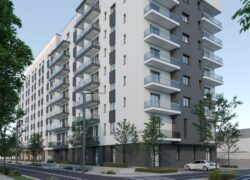
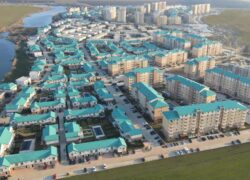
In the first four months, 10,770 building permits for residential buildings were issued, down 2.1% compared to the same period in 2024, according to data from the National Institute of Statistics (INS). Decreases were recorded in the following development regions: North-East (-266 permits), South-Muntenia (-96) and Bucharest-Ilfov (-44),” INS data shows. Increases were recorded in the following development regions: West (+117 permits), Center (+24), South-West Oltenia (+14), South-East (+11) and North-West (+10).

In April 2025, 3,140 building permits were issued for residential buildings (+1.5% compared to March 2025), with a total usable area of 659,764 sqm (-7.3%). Of the total building permits for residential buildings, 70.1% are for rural areas. In territorial terms, this increase is reflected in the following development regions: North-West (+67 permits), West (+26), North-East (+20), South-East (+19) and South-Muntenia (+16). Decreases were recorded in the following development regions: South-West Oltenia (-68 permits), Bucharest-Ilfov (-30) and Center (-5).

Source: Profit.ro

Developers plan 32,000 new apartments in Bucharest over the next three years

Developers intend to bring approximately 32,000 new apartments to the residential market in the capital by the end of 2028.

The Theodor Pallady area, located in the southeast of the city, is expected to host over 5,700 units, while in the north of the capital, the Pipera neighborhood plans to develop another 4,438 apartments. The Drumul Taberei neighborhood completes the top of the areas where the most new apartments are planned with 2,341 units, according to Imobiliare.ro data.

The next positions in the ranking of neighborhoods where developers plan the most new apartments are occupied by Băneasa (2,340 units), Colentina (1,657 units), Străuleşti (1,355 units), Obor (1,333 units), Militari (1,261 units), Rahova (1,220 units) and Berceni (1,194 units).

Currently, of the 37,530 homes available for sale in the Capital in Q1/2025, only 23% are properties completed in the last five years according to Imobiliare.ro.

FortonMKA launches new shopping mall in Ohrid, North Macedonia

North Macedonia’s commercial real estate advisory firm FortonMka opened a shopping mall in Ohrid.

The shopping centre covers an area of over 17,000 square meters and offers parking for more than 250 vehicles. The shopping mall is expected to create over 200 new jobs in sales and customer service, as well as in logistics, maintenance, and supply operations. Some of the brands present at the commercial center are: “Sinsay”, “NewYorker”, “D Sport”, Zito Market, UNO, “Playpark.

FortonMka operates as an independent affiliate of global commercial real estate services firm Cushman & Wakefield.

CEDER 2025 in review: Navigating Challenges in Romania’s Construction Sector

One of the topics touched upon by the “Sector-Specific Trends, Part 1” panel held at CEDER 2025 was the state of the construction sector in Romania. Moderator Silviu Stratulat, Managing Partner of Stratulat Albulescu Attorney at Law, described the sector as still “booming”, but noted that it faces significant and complex challenges that impact the broader real estate market.

Claudiu Bisnel, Managing Partner for Brisk Group, highlighted key pressure points within the industry, underscoring the need for enhanced efficiency. A primary concern is the shortage of skilled professionals. Claudiu Bisnel stated: “We experience a shortage of labour. The current Romanian market is short of 50,000 specialists, which puts a lot of pressure on quality, puts a lot of pressure on time of delivery and directly on costs”. This deficit not only strains project timelines and budgets, but also risks compromising the final quality of construction.

Adding to these difficulties are bureaucratic obstacles within the permitting process. Statistics cited by Bisnel indicate that “bureaucracy in the permitting process is contributing to [a] three to six-month delay in the actual delivery of the project”. Furthermore, inconsistent interpretation of urbanist regulations by local authorities can unfavourably impact the construction process. As a countermeasure, Bisnel noted: “when it comes to [the] actual backlog of permitting issues, that you can tackle through a leaner type of management, digitalised way of looking at things. We saw that this kind of process is being implemented as we are speaking. And I think it’s the right way to a more fluent way of getting permits and approvals when it comes to local authorities, leaves less way to interpretation.”

Economic factors, such as inflation causing volatility in material prices and the potential impact of tax increases like VAT, also contribute to cost pressures. As Geanina Ungureanu, Head of Retail at CPI Property Group noted regarding construction projects, the VAT increase means “you’re asking yourself if those prices will stay the same or we have to redo all our calculations and budgets for this development”.

To counteract these challenges, Claudiu Bisnel advocates strongly for efficiency. This can be achieved through measures like modular construction and prefabrication, which reduce on-site labour needs and improve control: “Control the waste management, control the efficiency in delivery, reduce the actual labour requirement, because you produce this in a controlled environment, in a factory. You have a pre-assembled element of a building, which you can bring on site with specialists, a reduced number.” Although these measures can be seen as costly, “on the long run, there isn’t any question about the efficiency brought by such a process and how this can exponentially accelerate and better, if you may, our construction environment.”

Digitalisation, including BIM management, is also crucial for ironing out design risks and streamlining processes. Moreover, a “thorough due diligence process” is essential from the outset, particularly for industrial and retail projects, to identify and manage risks related to road connections and utilities, thus preventing future delays and cost overrun.

CEDER 2025 in review: A Comparative Look Among CEE Peers

Panellists invited to take part in the “Market Growth Projections” panel discussion held at CEDER 2025 examined Romania’s real estate market in relation to its CEE neighbours, identifying similarities and differences between the situation in Romania and countries like Poland, Hungary, and the Czech Republic.

A notable point of contrast is the perceived level of predictability. Aurelia Luca, Executive Vice President Operations Hungary and Romania at Skanska suggested that Romania currently misses the “clear predictability” found in other markets, even with differing political landscapes, where “we know how to plan”. This can lead to a “wait and see” sentiment among some investors.

In terms of market maturity, Miroslav Tavel, Managing Partner of OPC Holding, indicated that Romania is arguably “something like six or seven years behind the other countries, mostly Slovakia, the Czech Republic and Poland”. However, this perceived lag isn’t necessarily negative, as it translates into “plenty of opportunity”, particularly in “underserved secondary cities” where tenant hunger is evident, and in asset classes which are still untapped in Romania.

Financing conditions also drew comparisons. Joao Saracho de Almeida, Managing Director of Solida Capital Europe found Romanian banking practices surprising regarding amortisation rates, noting that a standard “five, four percent […] per year” is “completely unheard of in other countries” like Germany, Poland, or Hungary. This difference “does not contribute for, first, better prices in the market. Second, more liquidity”. He also added: “I don’t see the Romanian banks really hungry for real estate business. I think it’s something that you need to cultivate.”

Talking about Romania’s still unrealised potential for growth, Joao Saracho de Almeida compared the country to Poland saying “[In] Poland […] the country understood jointly that they would need to follow one path if they want to embrace this growth. And I think that this is the challenge, I would say, for Romania today — is that the society, in my opinion, needs to come and converge at some point. […] I really think this is missing in the country, a long-term vision, a long-term leadership for the country.”

Debates arose regarding yields. While Vlad Dragoescu, Director and CEE Head of Portfolio Management at Revetas Capital questioned why an investor would “pay 8% here, when you can pay 8% in Poland or in Germany”, Joao Saracho de Almeida countered, stating “there is definitely a motivation for people to come to Romania, because the yields are different”. He maintained that the yield for a prime asset in Warsaw is “not the same yield as a prime asset in Bucharest”, and there is still a “big spread still between Poland and Romania and other markets in CEE and Romania”, providing an “incentive for investors to be looking at Romania”.

Panellists found similarities between the political uncertainties in Romania and Hungary, with Vlad Dragoescu giving Hungary as an example of what Romania might turn into in the coming period: “Imagine a market like this, where you don’t have liquidity, you don’t have new companies entering […]. This is where we’re heading. I think on the short run, on the long run, […] for sure we need to be prepared.” Later in the discussion, Aurelia Luca added some nuance to the issue: “Since I’m also covering Hungary, I can also give a bit of an insight from there. It’s not only the market itself […] but it’s about also the product and who is building that product. […] Other than that, again, I think it’s also the quality of the product, because maybe it sounds like a broken record, this location, location, location and […] the quality of tenancy, which is extremely important.”

M Core acquires retail park project in Bucharest

Real estate group M Core has acquired a retail park project in eastern Bucharest from the Călin and Alina Dobra family. The project is located on a portion of the former Energomontaj factory site on Ilioara Street, adjacent to plots previously sold to Kaufland and Lidl.

Last autumn, the Dobra family secured building permits for a Kaufland hypermarket and a Lidl store on part of the site, a prerequisite for the sale of the land to the two German retailers. Kaufland acquired approximately 21,600 square meters, while Lidl took possession of around 9,600 square meters.

Following these transactions, the Dobra family retained a 31,600-square-meter plot, where they planned a retail development consisting of two buildings—one with a built area of nearly 3,000 square meters and another of about 3,800 square meters. The development also includes 381 parking spaces, five of which are designated for electric vehicles.

M Core has initiated construction on the retail park, which will complement the neighboring Kaufland and Lidl stores. Completion is scheduled for the end of this year.

Source: Profit.ro

CEDER 2025 in review: Romania’s Real Estate Market Amidst Political and Economic Uncertainty

The “Market Growth Projections” panel discussion held at CEDER 2025 aimed to shed some light on the implications of the current political events and potential economic shifts, and the outlook for market growth and investment. Moderated by Andrei Văcaru, Head of Capital Markets CEE at iO Partners, the discussion highlighted a sense of caution mixed with underlying optimism about the market’s long-term potential.

Aurelia Luca, Executive Vice President Operations Hungary and Romania at Skanska, articulated the challenge represented by the uncertainty surrounding the Romanian presidential elections, stating, “What we miss is predictability. […] We need […] to wait and understand what would be the impact on the market”. This lack of a clear direction leads to a “wait and see” sentiment amongst investors. Anca Merdescu, Head of Investments at Square 7, part of M Core, added some nuance to the sentiment by quoting an article: “When you live in a permanent crisis situation, like we are, I think, witnessing for the last few years, waiting for stability is like waiting for a train that never comes. And there is also a cost in waiting, that’s clear”.

Beyond political outcomes, potential changes in the taxation system are widely anticipated due to Romania’s credit risk and deficits. Vlad Dragoescu, Director, CEE Head of Portfolio Management at Revetas Capital, warned of the short-term economic impacts: “Whatever is happening on Sunday [May 18th] will give us a mid- to long-term pathway for Romania. But on the short run, regardless what’s happening […] still we’re going to have fiscal changes, we’re going to have consumption compression. […] So, we need to be prepared”.
He further expressed his opinion that these changes, coupled with reduced liquidity from banks prioritising lending to the state, could lead to increased finance costs and pressure on margins for landlords and tenants, potentially resulting in distressed assets.

However, several panellists emphasised that uncertainty also presents opportunities for investors. Joao Saracho de Almeida, Managing Director at Solida Capital Europe, suggested avoiding over-analysis of potential scenarios, highlighting the “incredible adaptability” of “the human and business factor”. He believes that “whatever will be the decision on Sunday, I’m sure Romania will continue on a growth path”, and that “in moments of more turbulence, there is the opportunity to make the best deals”. Francisc Peli, Founding Partner at PeliPartners, echoed this, advising, “In times of uncertainty, you don’t have to be idle because that’s where you miss opportunities”. Miroslav Tavel, Managing Partner at OPC Holding, acknowledged the “short-term uncertainty” but stressed their “long-term strategy” and strong belief in the Romanian market. He pointed to Romania’s advantages such as cost, land availability, new tenant entry, and underserved secondary cities, which offer “plenty of opportunity”.

Romanian Market analysis: Aesthetics, functionality, and security

According to internal analyses by key players in the real estate market such as Fabrica de Profile, Pinum, and Ambito, beyond the classic elements in purchasing a home — location, neighborhood, price — the new triad of the modern home is based on the details that “cannot be seen” but are essential in the architecture of purchasing decisions.

Thus, this year’s trends emphasize continuity in preferences for refined designs; however, what has changed is the timing of their intervention in the project. We no longer talk about “details at the end,” but about architectural elements integrated from the concept phase.

Pinum, a door manufacturer with over 30 years of history in the Romanian market, has observed a growing interest in innovative products and premium materials. “Romanians are not only more interested in material quality but have also become knowledgeable, capable of making well-informed decisions. In Q1 2025, we observe a clear shift toward more premium materials, moving from standard decorative foils to higher-end options such as painted or veneered finishes. While the budget segment was still popular in Q1 2024, demand is progressively shifting towards the mid-high segment. This change is fueled by economic developments over the last decade, which enable customers to afford higher-quality products, as well as greater maturity in the selection process,” Pinum’s analysis reveals.

The same trend is observed in flooring, where SPC (Stone Plastic Composite) has become extremely popular, according to Pinum. Most often, when customers arrive at a showroom, they directly request SPC, signaling that the product has quickly consolidated its position in consumer preferences due to its appearance, durability, and ease of installation. Light finishes remain dominant in the mid-high market segment, maintaining their top position. However, in the first quarter of this year, there is a clear increase in preference for atypical finishes, indicating that Romanians collaborate more frequently with interior designers who give them the courage and context for bolder choices.

An example of this, provided by Pinum, is the Greige Soft Touch finish, available in multiple collections and gaining more ground — a notable evolution, especially considering it was launched only in mid-2024. Whereas in Q1 2024 white decisively dominated preferences, in Q1 2025 there is a clear diversification of the color palette.

Fabrica de Profile (FDP) also speaks of a refinement in Romanian tastes when choosing design elements. According to FDP’s analysis, in the first months of 2025, the most sought-after models, consistent with 2024 trends, were decorative interior moldings, corner pieces, and corner beads. Although no major changes were noted compared to the same period last year, FDP identifies a refinement of tastes, with customers becoming increasingly attentive to details and eager for decorative solutions that combine functionality with strong aesthetic impact. Whereas there was a time when Romanians chose certain decorative profiles but preferred to handle the installation themselves, now many opt for professional installation, not only for a simpler process but also for a flawless final result.

“Decoration is no longer a whim but an essential part of the architectural concept. Customers know exactly what they want for their home: lasting beauty, adaptable solutions, and professional installation. We see more and more residential and commercial projects that include decorative elements from the early design stages. The message is clear: the market is evolving, and the focus is shifting towards well-thought-out solutions with long-term aesthetic and functional value. We can thus speak of a shift from visual aesthetics to one with meaning, which now relates to mood and people’s well-being,” states Dan Panciu, CEO of Fabrica de Profile.

Home aesthetics are shifting from visual to tactile, functional, and customized

An often overlooked aspect is the role of texture and adaptability in the purchasing decision. While color used to be the key factor, now the differentiator comes from the product’s ability to be personalized. From bifacial doors (with two different faces) to 3D decorative panels, fluid walls, or paintable moldings, the emphasis is on the client’s freedom of expression. Additionally, interest in atypical finishes has increased, indicating closer collaboration with designers and a move toward premium solutions—not only in terms of price but also as a gesture of personal identity.

“If in Q1 2024 the minimalist style clearly dominated preferences, in Q1 2025 we observe a slight decline. Interior design has become an increasingly present topic on social media, influencing consumer tastes. Currently, more elaborate, personalized styles with strong visual accents are promoted—clients are looking for products that bring character and uniqueness to the space, not just simplicity,” explains Francesco Curcio, CEO of Pinum.

Companies have responded to these market trends with innovative products, easy to adapt to any space and any requirement. This was the reason why Pinum introduced a new collection of exterior doors with a pivot system, specially designed for clients seeking performance, design, and exclusivity. In the short and medium term, Pinum believes that the highest-performing products will be doors equipped with modern hardware—hidden hinges, magnetic locks, and other premium closing systems—features that have become essential in defining a quality product.

Fabrica de Profile has also introduced new products that bring versatility and character to the space. “Compared to 2024, the year 2025 brings to the forefront fluid, organic shapes—a trend that is starting to gain ground especially in contemporary projects. However, these directions do not exclude each other: classic models remain relevant, being successfully integrated into elegant or traditionally influenced interiors. This very diversity motivates us to develop complementary collections capable of responding to each client’s needs and desires,” states FDP’s analysis.

It also shows that 3D panels are rapidly gaining ground due to their versatility and the spectacular visual effect they offer in a space, being solutions that completely transform a room and provide creative freedom of expression—this is why more and more clients are including them in their interior design projects.

“Cheap and good” – officially outdated. Romanians are seeking long-term value

The common message from the real estate market is clear: Romanian customers no longer accept superficial solutions. The massive sales of polyurethane profiles and doors with concealed hardware are not accidental but the result of a mature decision-making process. This is also reflected in how budgets are perceived: customers no longer see the door, baseboard, or corner molding just as functional objects, but as investments in the aesthetic value of the space—and implicitly, in the investment value of the home.

According to Pinum, budgets allocated for finishes have increased in Q1 2025 compared to the same period last year, and this evolution is supported by a change in product perception—the door is no longer viewed merely as a functional element but as an integral part of the space’s design. Romanians are more willing to invest in superior quality products, aware that these decisively contribute to the overall look and value of the home.

“Romanians no longer ask ‘how much does it cost?’ but ‘why does it cost that much?’ and this is the first sign of maturity, of relating to living space—not just visually, but functionally. The market has evolved, and the door is no longer a simple closure or a design piece; it becomes an integral part of a space that emphasizes comfort, sustainability, and durability,” declares Francesco Curcio, CEO of Pinum.

“Invisible” infrastructure – from overlooked detail to key element in the purchasing decision

An essential addition to the modern home landscape comes from Ambito: electrical networks and installation security are becoming selection criteria, not just “technical details.” Customers are starting to bring specialists who verify whether the design complies with standards, and the term “technical security” is entering the decision-making vocabulary.

Trends in this field are subtle but decisive: the integration of LED lighting, the use of eco-friendly materials, changes in the operating criteria for networks through legislative updates aimed at increased safety in use.

Thus, we can speak of a paradigm shift from price to trust in the “hidden” quality of a home. This is also identified by Fabrica de Profile, which notes a growing demand for decorative thermal insulation systems—elements that not only provide aesthetic value to the home but also increase energy efficiency, thereby enhancing both comfort and the property’s value.

According to Ambito, regarding the electrical network, the basic criteria have not changed significantly; operational functionality and design remain key, but a third criterion has emerged in recent years: technical security. “There are increasingly more clients who hire consultants to verify, prior to purchase, the compliance of the design and construction with legislation and technical standards, as well as the quality of execution. The home purchase budget is correlated with the construction budget, and clients know exactly what they will receive. Differences between projects arise from design, complexity, and security elements in network operation,” Ambito’s analysis states.

Hassoun Ghassan builds residential towers in Pantelimon

Antrepozite Frigorifice PGA has obtained the urban planning certificate for the demolition of existing buildings on a plot of land on Fântânica Street no. 36. The document shows that the plans for this land provide for the construction of a residential complex, with high-rise blocks of 14, 15 and 16 floors. The investment is expected to be carried out in stages.

The company Antrepozite Frigorifice PGA is 100% owned by Hassoun Ghassan, a Romanian citizen of Syrian origin.

In the past, the Persepolis Development company, owned by Manochehr Saadati-Sohi and Hassoun Ghassan, merged several industrial properties in the Pantelimon neighborhood to develop a residential complex consisting of nine blocks.

Source: economica.net

Radisson Hotel Group expands with four hotels in Romania

Radisson Hotel Group continues its expansion in Romania with a series of new developments.

One of the notable additions is the recent signing of the Radisson RED Bucharest Old Town. This innovative project involves the transformation of an office building from the 1940s, which historically served as offices for the Institute of Hydroelectric Studies. The building will be completely renovated and reused to offer 104 guest rooms in the historic area of the Old Town.

Further enriching the diversified offer in the region, Radisson Hotel Group presents the Radisson Blu Grand Mountain Resort, Brasov, scheduled to open in early 2027. The resort will offer a wide range of outdoor activities, such as hiking, skiing and mountain biking.

In addition, Radisson Blu Resort & Residences, Mamaia, will open in 2028. Located on the Black Sea coast, this project will have 234 hotel rooms and 102 residences.
Radisson Lagoon Hotel Bucharest will be located in Bucharest’s central district, Lagoon City. This luxury urban resort-style hotel will have 323 rooms, a spa, a 1,100 sqm sandy beach and access to a 10,000 sqm lagoon.

front page info
LATEST NEWS