Montana Aerospace installs photovoltaic power plants at its factories in Romania

The Swiss group Montana Aerospace has completed a photovoltaic power plant, co-financed by the PNRR program, located at its factory in Dumbrăvița, and the construction of two others, at its other sites in Romania, is underway.

“Universal Alloy Corporation Europe (UAC Europe) is taking an important step towards sustainability by implementing three solar panel projects at its locations in Romania. These initiatives are intended to generate 30% of the electricity consumption required by UACE, marking a significant contribution to the company’s environmental objectives,” the company said.

The solar panel project is being implemented by a joint venture formed by Emsens Prod, Solar Eco System and Romproiect Electro. The company’s investment is EUR 3.8 million and the subsidy is EUR 1.5 million.

Source: economica.net

Romanian residential building permits increase in 2024

Between January and November 2024, 33,156 building permits for residential buildings were issued in Romania, marking a 3.3% increase compared to the same period in 2023, according to data from the National Institute of Statistics.

The growth in permits was observed in several development regions, including South-Muntenia and West (+391 permits each), Bucharest-Ilfov (+224), North-East (+99), North-West (+62), South-West Oltenia (+59), and South-East (+6). However, the Center region experienced a decline of 172 permits.

In November 2024, 2,729 permits were issued for residential buildings, reflecting a 13.8% decline compared to October 2024. The total usable area covered by these permits decreased significantly by 35.3%, amounting to 671,217 square meters. Of the total permits issued, 72.3% were for projects in rural areas.

Despite the monthly decrease, November 2024 showed an improvement compared to the same month in 2023, with a 1.1% rise in the number of permits issued and a 6% increase in the total useful area.

The data underscores continued growth in residential construction, particularly in specific regions, while also reflecting seasonal and regional variations in activity.

Source: Profit.ro

Almost 20% more houses sold in the Capital in the last month of 2024

Official data provided by the National Agency for Cadastre and Real Estate Publicity (ANCPI) show that in December 2024, 18.7% more homes were sold in the capital than in November, more precisely 5,136 properties, compared to 4,326 units bought in the penultimate month of 2024.

“2024 was a year that offered a lot of investment opportunities for the Bucharest real estate market. The sales of new apartments, houses and villas had significant month-on-month increases, which proves the interest in real estate, both for investors who are buying with the aim of getting attractive returns from rental or resale operations, and for those who want to improve their living comfort,” says Vlad Musteață, CEO of North Bucharest Investments.

Demand for residential properties strengthened in the last month of 2024 and across the country. According to ANCPI, a total of 15,650 homes were traded in Romania. After Bucharest, the top cities with the most sales are Timis with 1,145 units sold, Constanța with 1,009 units, Cluj with 978 and Brasov with 867 homes purchased in December 2024.

“The capital’s modern infrastructure, the positioning of the available properties and the accessibility to famous educational institutions, hospitals, major shopping areas or office centers are important arguments for the rising trend of demand for real estate in Bucharest,” emphasizes Vlad Musteață.

In this context of overall market growth, North Bucharest Investments reported for the month of December 2024 a total of 143 transactions in the Capital, with a cumulative value of EUR 22 million. Compared with November 2024, when 126 transactions were carried out, North Bucharest Investments recorded a monthly increase of 13% at the end of last year.

Żabka Group grows in Romania with froo, Exorigo-Upos supports implementation

Żabka Group, the European ultimate convenience ecosystem, has launched its expansion into the Romanian market with the new froo brand. Exorigo-Upos, with whom the company has worked for many years on the Polish market, was chosen as the implementation partner. The froo stores are modeled on their Polish counterparts.

The execution of orders of this magnitude requires a wide range of skills and an in-depth understanding of all retail processes and local conditions. The IT work carried out by Exorigo-Upos for the froo – a chain of modern convenience stores in Romania – started in February 2024 and lasted four months. The process involved many people working on a daily basis in the Romanian branch and a team of specialists from Poland.

“Setting up a business in another country always presents many challenges. However, the Romanian market does not hold many secrets for us, as we have been present there for nine years. Thanks to our extensive skills and knowledge of software, hardware and retail services, we were able to take on such a complex project. We work on store openings and CCTV installations in froo chain. We also provide fiscal printers and 1st and 2nd line support services for froo. An important role is played by our residents who support the head office staff on site,” says Michał Koźliński, Director of Tech Support & Service Centre at Exorigo-Upos.

The installation of CCTV systems in Romania is subject to strict regulations, including police approval of the project. Permits have to be obtained and contractors have to be trained. Another seemingly mundane challenge was Romania’s complex road infrastructure, which ultimately required the coordination of multiple shipments. Dozens of pallets of equipment arrived on time, while ensuring that project costs were optimised.

Griffes Achieves Record 85000 sqm Office Transactions in 2024

Griffes reports an exceptional year in 2024, closing a record-breaking 85,000 sqm of office space, the largest volume of transactions mediated in 2024.

Griffes’ activity outside Bucharest accounted for 25% of its total transaction volume, with Cluj-Napoca leading the way. This city continued to attract investments, particularly from technology and IT companies looking to tap into its skilled talent pools and favorable business environments.

In Cluj-Napoca, Griffes facilitated the largest new office lease in the city over the past 5 years, a 10,000 sqm relocation for a leading technology company. Griffes also supported the entry of Copeland into the market, securing premium office space for their operations within Iulius Group’s portfolio.

Bucharest continued to dominate as Romania’s primary business hub, accounting for approximately 75% of Griffes’ total transaction volume in 2024. One of the most notable transactions was Genpact’s renewal of 30,000 sqm at Hermes Business Park, marking the largest office leasing deal in Bucharest in the last decade.

Approximately 36% of Griffes’ transactions involved relocations, while 64% represented contract renewals.

The total value of contracts mediated by Griffes in 2024 exceeded EUR 95 million, with an average lease duration of 6 years. Griffes’ efforts created an estimated EUR 200 million in value for landlords, ensuring long-term stability for tenants and income generation for landlords.

“This year, we’ve embraced every challenge and opportunity to redefine what it means to create value for tenants and landlords. Our work has gone beyond transactions – it’s been about shaping spaces that align with the visions of our clients. Whether through a record-setting renewal in Bucharest or a landmark lease in Cluj-Napoca, we’ve shown that personalized solutions and a deep understanding of market dynamics make all the difference. Regional university centers are stepping confidently onto the stage as major business hubs, and we’re thrilled to be part of their evolution,” said Andreea Păun, Managing Partner at Griffes.

International Workplace Group opens new space in Vastint Business Garden

International Workplace Group, the world’s largest provider of hybrid work solutions with brands such as Spaces and Regus, is opening a state-of-the-art flexible workspace in Bucharest, in the Vastint Business Garden building.

The new Spaces location, with a total area of 1900 sqm, will include amenities such as private offices, meeting rooms, co-working spaces and creative spaces. IWG’s “Design Your Own Office” service also allows companies to fully customize their space according to their needs.

“We are strengthening our presence in the Bucharest region with this latest opening. As a major business hub, Bucharest is a fantastic place to expand our plans. The demand for high-quality flexible workspaces continues to grow rapidly as hybrid working becomes the new standard. We are very excited to collaborate with Vastint Romania to develop the Spaces brand under a management agreement that will add a state-of-the-art workspace to their building,” said Mark Dixon, CEO & Founder of International Workplace Group PLC.

Source: economica.net

La Cocoș is expanding with new stores in the coming years

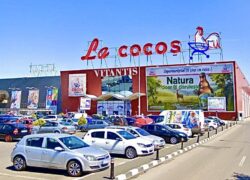
The hypermarket chain “La Cocoș” controlled by the Nica family from Ploiești, officially confirms the opening of its first store in Brașov, on January 24, 2025, within the Brintex Complex, on Șoseaua Cristianului no. 7, Bartolomeu neighborhood.

The company is also preparing to open 12 new stores in the next 3-5 years, 3 of which in 2025. The discounter is the only local chain of stores that, in 2023, approached the RON 1 billion threshold in turnover.

In September 2024, the European Bank for Investment and Development (EBRD) announced a capital investment of up to EUR 15 million, together with private equity funds CEECAT Capital and Morphosis Capital, to acquire the majority stake in La Cocoș. Following the investment, the founding shareholder will retain a minority stake and continue to lead the company, the EBRD states.

Source: Profit.ro

Cambridge School of Bucharest returns to the famous Maria Lahovary house in Bucharest

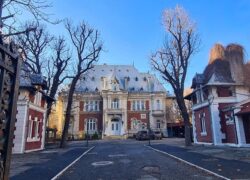
The private educational institution Cambridge School of Bucharest will return to its headquarters in the historic neo-Renaissance monument in central Bucharest, after the school owners bought the building at auction from Fathi Taher’s descendants.

The company M.T. Property, which owned the Lahovary palace on Dorobanti, went into reorganization in 2017 and went bankrupt in 2022, after Fathi Taher’s death. During the bankruptcy proceedings, the building was sold at the starting price of EUR 6.35 million to Mancinis Romania.

The property on Calea Dorobanti no. 39 consists of a plot of land of approximately 3,300 square meters and buildings with a total built area of 507 square meters.

Source: Profit.ro

Soceram to build the largest AAC factory in the country, in Târgu Cărbuneşti

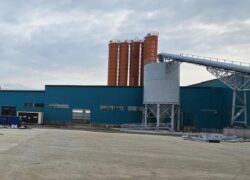
Soceram will build the largest AAC factory in the country, in Târgu Cărbuneşti and will generate over 100 jobs in the first phase, announced the President of the Gorj County Council, Cosmin Popescu.

“The strategic investments started in 2024 in Gorj County are becoming a reality! In 2025, the Gorj County Council team continues to focus on economic development and creating opportunities for our community. It is excellent news that the Soceram factory in Târgu Cărbuneşti is taking shape. This major project will generate over 100 jobs in the first phase, contributing significantly to local well-being. It will become the largest AAC factory in the country, producing construction materials including for export,” said Cosmin Popescu.

According to him, work is currently underway on the gas supply network and the preparation of the land for the project.

Colliers: Romania remains one of the most affordable property markets in CEE

Rising average incomes outpacing price growth has improved housing affordability in Romania, setting it apart from other Central and Eastern European (CEE) countries such as Poland, the Czech Republic, and Hungary, where prices and rents have experienced significant increases, according to the latest analysis by Colliers. In Bucharest, house prices have increased by approximately 50% over the past five years, while Cluj-Napoca has seen an 80% rise. By comparison, most major cities in the region have reported increases of 80% to 100% during the same period.

“While overall housing affordability in Romania appears favorable, there are notable differences across market segments. New homes in desirable areas are often beyond the reach of average wage earners. When factoring in financing costs, affordability decreases further due to high interest rates. Moreover, the gap between the cost of renting and owning has become increasingly evident, with renting often proving to be the more economical choice. In Bucharest, the average rent represents around 45% of a monthly salary, significantly lower than in other capitals in the region, such as Warsaw or Bratislava, where it approaches 70%. This makes renting a more affordable option than buying, particularly in the context of mortgage rates that far exceed rental costs for similar apartments”, explains Gabriel Blăniță, Director & Advisory Services la Colliers România.

In recent years, the residential rental segment has gained significant traction in Romania. Developers and investors are drawn to the potential for rising property values and the relative affordability of rents, according to Colliers consultants. This trend is further supported by the rapid economic growth of major cities like Bucharest and aligns with recent developments in comparable markets such as Prague and Warsaw.

However, Romania remains one of the countries with the lowest mortgage penetration rates in the European Union – less than 2% of the total housing stock, compared to 15% in Hungary, 14% in Poland, and 26% in the Czech Republic. Limited access to financing has slowed the pace of new housing developments. Nevertheless, investment in the rental sector provides a sustainable, long-term solution to meet housing demand.

“The prospect of rising property prices, combined with the advantages of the rental market, is driving a paradigm shift in the real estate sector. Residential rental projects are becoming increasingly appealing to investors due to their stability and long-term returns. The economic growth of Romania’s major cities, particularly Bucharest, plays a key role in fueling this interest”, adds Gabriel Blăniță.

The residential market in Romania continues to grow steadily, marked by affordability and dynamism despite the challenges facing the CEE-6 region. Investments in the rental sector and the development of mixed-use projects present significant long-term opportunities, further solidifying Romania’s position as an appealing destination for international investors.


front page info
LATEST NEWS