Spire Global leases space in CUBE property near Munich for German expansion

Catella Investment Management GmbH and Catella Real Estate AG have signed a long-term lease agreement with Spire Global for approximately 1,200 square meters of office and light industrial space in the CUBE complex in Taufkirchen, near Munich. The space will support Spire Global’s expansion into Germany, providing facilities for offices, development, assembly, and product testing.

Spire Global, an aerospace company with operations in the US, Canada, Luxembourg, and the UK, is establishing its German branch in the CUBE property. The company operates a large network of multi-purpose satellites and will use the leased space as part of its European growth strategy.

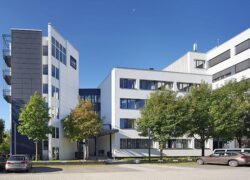
CUBE was acquired by Catella in 2014 for the special real estate fund “Immo-Spezial – Wirtschaftsregion Süddeutschland.” Originally built in 1973 and expanded in 1989, the complex includes two buildings with a total of 16,500 square meters of office and commercial space. Catella, in partnership with turn Real Estate GmbH, is repositioning the property to accommodate a wider range of uses, including medical offices, commercial housing, production, gastronomy, and educational facilities. Planned upgrades also include improved accessibility and additional shared spaces.

Michael Keune, Managing Director of Catella Investment Management, noted that the leasing agreement reflects the success of the repositioning strategy, which aims to update existing buildings without demolition. The project demonstrates how legacy assets can be adapted for modern business needs.

Spire Global CTO Gabiel Oehme stated that the new space provides the flexibility the company needs as it builds a long-term presence in the region, citing the local talent pool and proximity to other innovative companies in the aerospace sector.

Located on the southern edge of Munich, the CUBE complex benefits from access to the Taufkirchen S-Bahn station and nearby motorway connections, offering convenient transportation links to Munich’s city center and airport.

Legal and advisory support for the lease was provided by DLA Piper, while IGENUS Immobilien GmbH & Co. KG acted as the leasing broker.

GCC markets remain resilient amid mixed global signals in July 2025

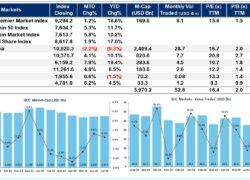
The Gulf Cooperation Council (GCC) financial markets displayed a steady performance in July 2025, as mixed global signals and regional developments shaped investor sentiment. According to Kamco Invest’s “GCC Markets Monthly Report – July 2025,” most GCC equity markets closed the month in positive territory, with Qatar, Abu Dhabi, and Dubai leading gains, while Bahrain and Oman registered declines.

Qatar’s stock market posted the region’s strongest performance in July, gaining 8.1%, driven by robust earnings and growing investor confidence. Abu Dhabi’s ADX rose 3.6%, while Dubai’s DFM gained 3.3%, supported by positive corporate results and increased trading activity. In contrast, Bahrain’s market fell 1.2% and Oman dipped 0.5%, reflecting weaker investor sentiment in those markets.

Saudi Arabia’s Tadawul index remained relatively stable, edging up by 0.4% for the month. The broader TASI index hovered near the 12,000-point mark, supported by strong earnings in the banking and materials sectors. However, trading volumes were mixed, and retail investor participation showed signs of moderation.

Market capitalization across the GCC increased by $64.1 billion in July, with Saudi Arabia accounting for nearly 80% of the total monthly gain. Year-to-date, GCC markets have added around $167 billion in market capitalization.

Sector-wise, the GCC saw strong gains in telecom, utilities, and capital goods, while the pharma and transportation sectors posted the steepest losses during the month. The telecom index led with an 11.2% gain.

In the fixed income space, GCC sovereign bond yields tracked US Treasury trends, reflecting expectations of a prolonged period of high interest rates amid persistent inflation concerns. The US Federal Reserve maintained its policy stance in July, and markets adjusted expectations for a rate cut timeline accordingly.

On the IPO front, Saudi Arabia continued to dominate GCC listings activity. The Kingdom hosted five IPOs in July alone, raising more than $1 billion. Key listings included Modern Mills Co. and Middle East Pharmaceutical Industries, underscoring investor interest in consumer and healthcare sectors.

Kamco Invest’s report suggests that while macroeconomic uncertainties and interest rate dynamics remain in focus, GCC markets are likely to benefit from stable oil prices, strong fiscal positions, and ongoing economic diversification efforts. Investor attention in the coming months is expected to remain on corporate earnings, US economic policy, and regional listing activity.

Construction begins on new City Park Warsaw building, adding 10,000 sqm of flexible space

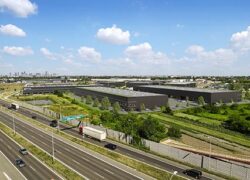
Construction has started on the latest phase of City Park Warsaw, expanding Poland’s largest Small Business Units (SBU) complex. The new building will add 10,000 sqm of space combining warehouse and office functions, bringing the park’s total area to over 45,000 sqm upon completion.

The project is designed to meet growing demand from companies seeking operationally independent spaces that balance functionality and cost efficiency. The facility will meet BREEAM Excellent certification standards and will include energy-efficient features such as heat pumps, photovoltaic systems, water recovery infrastructure, and charging facilities for electric vehicles.

The building offers separate warehouse and office modules with ground-level access, loading docks, private entrances, and no shared areas. Office units are air-conditioned, well-lit, and delivered in a fit-out ready condition. For many users, the space will function not only as a warehouse but as a base of operations for logistics, meetings, or testing.

Ideal Idea, the project’s developer, is overseeing the entire process in-house, from design and construction to ongoing property management. The direct involvement of the developer enables quicker decision-making and responsiveness to tenant needs.

The building is situated along the S2 expressway, offering strong visibility and access from across Warsaw. Five modules remain available, each offering approximately 568 sqm of warehouse and 127 sqm of office space, with the option to lease multiple units. Flexible office layouts are also available on the upper floor. The building is scheduled to be ready for occupancy by March 1, 2026, with early access possible from February.

Ideal Idea was founded in 2008 by Andrzej Dużyński and specializes in developing urban SBU parks that combine warehouse functionality with Class A office space. The company currently manages over 100,000 sqm of gross leasable area across Warsaw and Wrocław.

GARBE Industrial establishes GARBE Regeneration to focus on brownfield redevelopment

GARBE Industrial is expanding its operations with the launch of GARBE Regeneration, a new subsidiary dedicated to identifying and redeveloping underutilised land. The new company will formally begin operations on 1 August 2025 and will focus on the revitalisation of brownfield sites, acquisition of development rights, and preparation of land for industrial, logistics, and commercial use.

The initiative responds to a declining supply of newly zoned development land in Germany and increasing constraints on land availability. GARBE Regeneration is intended to support the reuse of land that has previously remained vacant or contaminated, bringing it back into productive economic use.

The new entity will be jointly led by Maik Zeranski, currently a member of the GARBE Industrial management board responsible for development, and Rick Mädel, a specialist in brownfield redevelopment. Mädel brings over a decade of experience in the field and is the founder of Brownfield24 and chairman of the German Brownfield Association (DEBV). The management team also includes Adrian Zellner, GARBE Industrial’s Head of Business Development, who will continue in his current role while contributing to the new unit.

GARBE Regeneration will initially concentrate on industrial, logistics, and commercial projects. According to Zeranski, the redevelopment of brownfield land requires complex technical, legal, and economic coordination that benefits from being handled within a dedicated structure. The spin-off will allow for a more systematic and effective approach to such projects.

The company’s strategy is shaped by findings from GARBE Research, which indicate that in core logistics hubs like North Rhine-Westphalia, land development capacity may be fully exhausted by 2037. GARBE Regeneration is thus positioned as part of a broader effort to implement sustainable land use policies across Germany and Europe.

Rick Mädel emphasised that the reuse of brownfield land is no longer a secondary strategy but an essential element of future real estate development. By focusing on regeneration rather than expansion, the company aims to support long-term regional sustainability.

Neo Natolin project in Warsaw prioritizes sustainable construction and environmental integration

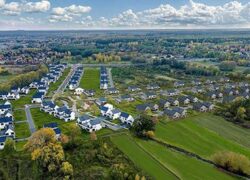
Real Management S.A. is advancing the construction of Neo Natolin, a residential estate located on Korbońskiego Street in Warsaw’s Wilanów district, with a strong focus on environmental responsibility and sustainable urban planning. The development features semi-detached single-family homes with private gardens, built using low-emission materials and designed to align with ecological principles.

The project integrates solutions such as heat pumps, ventilation systems with carbon filters, and infrastructure for electric vehicle charging and photovoltaic installations. Fireplaces and fossil fuel-based heating have been excluded from the design, and natural, low-emission materials have been used throughout the construction process.

The site plan includes landscaped areas, a retention reservoir for water management, and plantings that enhance biodiversity. In the first phase, 95 trees and more than 9,300 shrubs, grasses, and perennials were introduced, with species chosen to support pollinators and natural habitats.

Each plot in the estate has been planned with 70 percent of its area as biologically active space. Recreational features such as green squares, a pond, and play areas have also been incorporated into the layout.

Neo Natolin will eventually consist of around 200 homes. The first 84 were completed in summer 2024, and the second phase will add 58 more in various sizes ranging from 190 to 258 square meters. Construction of the next segment is scheduled to start in the third quarter of 2025.

The architectural concept for the project was developed by the APA Wojciechowski studio.

Stradivarius opens first store in Saarland at EUROPA-Galerie Saarbrücken

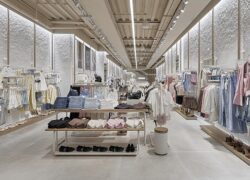
Fashion retailer Stradivarius opened its first store in Saarland at the EUROPA-Galerie shopping centre in Saarbrücken. The new store occupies approximately 975 square metres on the ground floor and offers a range of clothing, footwear, jewellery, and accessories. The leasing was managed by Sonae Sierra, which oversees the EUROPA-Galerie on behalf of owner Union Investment.

The addition of Stradivarius broadens the shopping centre’s retail offering and reflects the continued development of the fashion segment within the city centre. The EUROPA-Galerie is a frequent destination for shoppers from both Saarland and neighbouring France.

Stradivarius, part of the Inditex Group, operates over 800 stores in more than 60 countries. Since 2023, the brand has expanded its presence in Germany, with the Saarbrücken location marking its eighth store. Other Inditex brands, including Pull&Bear and Bershka, are already present in the EUROPA-Galerie.

Located near the main railway station, the EUROPA-Galerie features more than 1,050 parking spaces and hosts a mix of fashion, electronics, grocery, and food service retailers. It opened in October 2010 and is managed by Sierra Germany.

Brno and Ostrava Office Market Update: H1 2025 Regional Research Forum Data

The Regional Research Forum, a consortium of CBRE, Colliers, Cushman & Wakefield, iO Partners, Knight Frank, and Savills, has released office market data for Brno and Ostrava for the first half of 2025. The data offers a transparent overview of regional trends, supply, vacancy rates, and rental levels.

In Brno, one new office building—Titanium Skylight X, developed by JRA Estate—was completed in the first half of the year, adding 10,900 sqm to the city’s stock. This brings Brno’s total modern office inventory to 704,900 sqm, with 73% classified as Class A space. Office construction continues with ten projects underway totaling 103,100 sqm, including major developments such as Dornych (27,600 sqm), Ponávka A4 (16,800 sqm), and Cerit III (10,800 sqm), the latter scheduled for completion in the second half of 2025.

Tenant demand in Brno was led by the energy sector, which contributed the most significant leasing activity. The largest transaction was a pre-lease of 10,500 sqm in Nová Zbrojovka D4 by an energy company, followed by deals involving Sudop Real and Abugo. The vacancy rate rose to 12.7%, up 1.1 percentage points year-on-year. Prime headline rents increased slightly to between €17 and €18 per sqm per month.

In Ostrava, modern office stock stood at 245,700 sqm at the end of H1 2025. No new completions were recorded, and only one project—the Václav multifunctional building (3,000 sqm)—is under construction, with completion expected in 2027. Leasing activity was led by Satum Czech’s new lease of 1,900 sqm in IQ Ostrava. Other deals involved financial and technology sector companies. The vacancy rate declined to 10.7%, a drop of 1.1 percentage points year-on-year. Rents remained stable at €14.00 to €14.50 per sqm per month.

Overall, Brno continues to demonstrate strong development activity relative to its market size, driven by a qualified labor force and demand for modern space. In contrast, Ostrava’s market remains stable but with limited new supply in the pipeline.

KINGSTONE RE and Fiera Partner to expand German access to Canadian real estate

KINGSTONE Real Estate (“KINGSTONE RE”), an investment manager based in Munich, and Fiera Real Estate, an affiliate of Fiera Capital Corporation (“Fiera Capital”) (TSX: FSZ), a global asset manager headquartered in Montreal, will enter into a collaborative venture. The objective is to open up the Canadian real estate market for German investors. To this end, KINGSTONE RE will handle share sales to German investors and manage their accounts. The company will focus on superannuation schemes and insurance companies, among other investors. These will be able to acquire shares in target strategies of Fiera Real Estate via institutional strategies yet to be launched in Luxembourg. Fiera Real Estate has approximately CAD 11.6 billion in real assets under management (“AuM”) (as of 31st March 2025). Globally, Fiera Capital has approximately CAD 161.6 billion in AuM (as of 31st March 2025) and more than 800 employees on its payroll (as of 31st March 2025).

The first target strategy is the Fiera Real Estate CORE Strategy, an open-ended core investment vehicle with approximately CAD 5 billion in AuM that focuses on logistics, residential, office and retail real estate. Going forward, there will be an option to buy into other Canadian target strategies of Fiera Real Estate as add-on investment.

Dr. Tim Schomberg, CEO and co-founder of KINGSTONE RE, commented: “As an internationally active enterprise, collaborating with a major and well-established partner like Fiera Real Estate is an important milestone for us. The collaboration combines our European structuring and fundraising competency with the Canadian market and real estate know-how of Fiera Real Estate.”

Wenzel Hoberg, Global Head of Real Estate at Fiera Real Estate, said: “Canada stands out as one of the world’s most stable and attractive real estate markets, supported by strong demographics, a predictable regulatory environment, and political stability. Cities like Toronto and Vancouver continue to see some of the fastest population growth in North America, driving long-term demand across key asset classes. Through this partnership with KINGSTONE RE, we’re opening the door for German investors to access these opportunities through our proven Canadian strategies.”

Friedrich von Carlowitz, Managing Director of the subsidiary KINGSTONE Capital Advisory GmbH and responsible for the fundraising, added: “In addition to many macroeconomic arguments that unambiguously speak in favour of Canada, we were equally impressed by Fiera Real Estate and its outstanding track record. The Fiera Real Estate CORE Strategy outperformed the MSCI/REALPAC Canada Quarterly Property Fund Index in 40 out of 46 quarters as of 31st March – notably as a result of stable rental income and active asset management.”

Alain Meyer, Managing Director, Head of Dach at Fiera Capital, commented: “We are delighted to provide German investors with access to our Canadian real estate strategies through this collaboration with KINGSTONE RE. Investor appetite for resilient, income-generating real estate remains strong, and our proven track record across Canada’s most robust asset classes, particularly logistics, residential and offices, positions us well to meet that demand. Partnering with KINGSTONE RE is a natural fit given their strong reputation and deep understanding of the German institutional market.”

Photo: Wenzel Hoberg, Copyright: Fiera Real Estate, Friedrich von Carlowitz, Copyright: KINGSTONE RE, Alain Meyer, Copyright: Fiera Capital and Dr. Tim Schomberg, Copyright: KINGSTONE.

CIJ Awards Czech Republic 2025: Honouring a Quarter Century of Excellence in Real Estate

One of the Czech Republic’s most prestigious real estate events returns this winter as the 25th edition of the CIJ Awards Czech Republic is set to take place on 1st December 2025 at the elegant Marriott Hotel in Prague. Marking a significant milestone, this landmark edition will celebrate a quarter century of recognising excellence, innovation, and leadership in the built environment.

This year’s theme, “Future Real Estate in the City,” underscores the event’s forward-thinking focus and its dedication to spotlighting the visionaries shaping tomorrow’s urban spaces. From developers and investors to architects, consultants, and legal professionals, the CIJ Awards Czech Republic will bring together the most influential players in the property sector for an evening of celebration and industry reflection.

The gala evening will be complemented by an elevated dining experience, featuring locally sourced ingredients transformed into imaginative culinary creations. Guests will also be treated to a curated entertainment program, designed to enhance the festive and sophisticated atmosphere of the awards presentation.

Robert Fletcher, CEO and Editor-in-Chief of CIJ EUROPE and the CIJ Awards Czech Republic, remarked, “This year’s 25th edition of the CIJ Awards Czech Republic will feature a distinguished lineup of entertainment acts curated specifically for this milestone occasion. I look forward with great anticipation to presenting what promises to be a memorable and celebratory gala evening.”

With more than 30 award categories spanning development, transactions, asset management, and professional services, the CIJ Awards continue to highlight the very best achievements across all segments of commercial and residential real estate. Among the most anticipated honors are:
• Best Commercial Property Investment Transaction of the Year
• Best Asset Management Company of the Year
• Best Adaptive Reuse / Urban Regeneration Project
• Best Flexible Workspace / Hybrid Office Project of the Year
• Leadership of the Year
• Grand Prix – a jury-selected distinction for overall excellence.

The event also features a strong promotional platform for sponsors, with tailored partnership packages offering extensive exposure across CIJ Europe’s media channels, awards guidebooks, newsletters, and event branding. Opportunities include general and associate partnerships, welcome drinks sponsorships, and individual category presentation rights.

With 25 years of tradition, the CIJ Awards Czech Republic continues to set the benchmark for recognition within the real estate sector. This year’s edition promises to be not only a celebration of past accomplishments but also an inspiring look ahead to the future of property in Central Europe.

For nomination submissions visit: www.awards.cijeurope.com

CIJ Awards Czech Republic 2025
– Marriott Hotel, Prague
– 1 December 2025
– Celebrating the present and future of real estate.

ESG, Flexibility, and Investment Shifts

ESG, Flexibility, and Investment Shifts: CBRE’s Jana Prokopcová on the Future of Czech Commercial Real Estate

In a recent CIJ EUROPE Q&A with Jana Prokopcová, Head of Research at CBRE Czech Republic, we discussed how ESG standards, changing occupier expectations, and evolving investment strategies are reshaping the Czech commercial real estate market. From retrofitting legacy office and retail assets to emerging trends in sustainability and flexibility, Prokopcová offers a detailed look at how developers, landlords, and investors are responding to new pressures and opportunities across the sector.

How are developers and landlords in the Czech Republic responding to the growing pressure to retrofit or reposition older office and retail properties to meet ESG and tenant expectations?

Developers and landlords in the Czech Republic are increasingly focused on retrofitting older properties to meet modern ESG benchmarks and tenant expectations. In the office segment, outdated buildings are being upgraded to improve energy performance, reduce environmental impact, and enhance indoor comfort. Renovations often involve modernizing infrastructure and creating flexible, hybrid-ready workspaces to keep pace with shifting workplace models and maintain market competitiveness.

What specific ESG-related requirements—such as certifications, energy efficiency upgrades, or reporting obligations—are now most critical for maintaining asset liquidity and investor interest?

ESG performance is becoming central to maintaining asset value and liquidity. Energy efficiency improvements—particularly those that result in better EPC (Energy Performance Certificate) ratings—are seen as essential. Certifications such as BREEAM, LEED, and WELL are also increasingly important. Banks and financial institutions are aligning green financing terms with a building’s energy profile, making high EPC ratings a key factor in securing capital and attracting institutional investors.

From an occupier perspective, how have tenant demands changed in recent years and what are the most important features now being requested in office and retail leasing negotiations?

Office occupiers now prioritize flexibility, modular layouts, and health-focused features like air quality and natural light. Hybrid work models have led to new requirements in space planning. Sustainability is also a major driver: according to CBRE’s European Office Occupier Sentiment Survey, 84% of occupiers now consider sustainable building features a priority, with growing demand for bike and scooter storage (80%) and EV charging stations (69%). In retail, tenants increasingly focus on experiential environments, integrated digital capabilities, and operational efficiency tied to sustainability targets.

How are investment strategies evolving in light of increased regulatory oversight and sustainability criteria, particularly for legacy retail or non-core office assets?

Older retail and office assets are now viewed through a value-add lens—provided they can be upgraded to meet current regulatory and ESG expectations. Investors are split in their strategies: some are divesting from underperforming assets without viable ESG potential, while others are acquiring properties that can be repositioned to meet higher standards. The direction depends on risk appetite and long-term investment horizon, but ESG compliance is becoming a fundamental consideration in both cases.

What types of commercial properties are currently seen as most resilient or attractive in the Czech market and how important is flexibility in use or design to future-proofing their long-term value?

The Czech commercial real estate investment market had a strong start to the year, with €2.2 billion transacted in H1 2025—already exceeding the full-year 2024 volume of €1.98 billion. We’re seeing investment activity across all sectors. In H1, industrial assets led with a 27% share of total volume, followed by hotels (23%) and offices (17%). However, these proportions are likely to change over the course of the year, depending on the successful closing of several large ongoing transactions.

Flexibility in design and use is becoming increasingly important—not only to accommodate evolving tenant requirements but also to safeguard long-term asset value. Investors are also diversifying into alternative sectors such as rental housing, student accommodation, and healthcare facilities to hedge against market volatility and enhance resilience.


front page info
LATEST NEWS