DP World secures €25 million EBRD green loan for Constanța container terminal

DP World has secured a green loan of up to €25 million from the European Bank for Reconstruction and Development (EBRD) to support the electrification of its Constanța South Container Terminal in Romania.

The financing is the first green loan awarded to the terminal and forms part of a wider €100 million investment programme aimed at modernising operations and reducing carbon emissions by more than 6,000 tonnes annually.

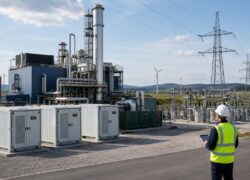
The project is intended to accelerate the decarbonisation of DP World’s Romanian operations by replacing diesel-powered equipment with electric alternatives and introducing shore power infrastructure, allowing vessels to connect to the local electricity grid while berthed. The company said the upgrades are expected to improve air quality, reduce noise and increase operational efficiency.

The investment programme combines EBRD financing with grants from the European Union and the Romanian government. In addition to the EBRD loan, the project has received a €19.7 million grant through the European Union’s Alternative Fuels Infrastructure Facility (AFIF), part of the Connecting Europe Facility, with the EBRD acting as the EU’s implementation partner. A further €7.5 million has been allocated through Romania’s Transport Programme 2021–2027.

The first phase of the investment, valued at €53.8 million, will establish the electrical infrastructure required for terminal electrification, including new power distribution networks, transformer stations and shore power systems. It also includes a new connection to the port’s main electricity grid, upgrades to access roads and the introduction of ten electric terminal tractors with charging infrastructure.

The second phase, valued at €46.2 million, will involve the acquisition of additional electric equipment, including remotely operated electric rubber-tyred gantry cranes, two electric mobile harbour cranes and additional electric terminal tractors.

“In today’s trading environment, the most competitive ports are also the most sustainable. This investment aligns the development of Constanța South Container Terminal with DP World’s global commitment to reducing emissions while helping customers build more resilient and sustainable supply chains,” said Svitlana Balaban, Chief Executive Officer of DP World Constanța.

Victoria Zinchuk, EBRD Director for Romania, said the investment would strengthen the Port of Constanța’s role as a strategic logistics hub on the Black Sea while improving energy efficiency across Romania’s logistics sector.

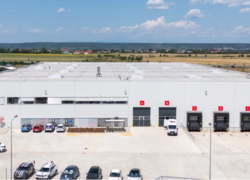
The electrification programme follows a series of recent investments by DP World in Constanța. In 2024, the company opened a new project cargo terminal and a roll-on/roll-off (Ro-Ro) terminal following a €65 million investment. It also completed a 119,000 sqm multimodal logistics platform in December 2025, further strengthening the port’s role as a gateway linking Central Europe with the Black Sea region, Ukraine, Georgia and Moldova.

Hines sells Warsaw’s Sky Office Center to Polish private investor

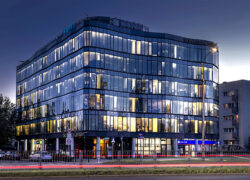
Hines has sold Sky Office Center, a Class A office building in Warsaw’s Mokotów Business District, to a private Polish investor. Avison Young acted as the seller’s exclusive investment adviser throughout the transaction.

Located at 31 Rzymowskiego Street, the property offers approximately 4,800 sqm of gross leasable area and benefits from access to Warsaw’s public transport network as well as the nearby S79 expressway and A2 motorway.

At the time of the sale, the six-storey office building was fully multi-let to a mix of international and domestic occupiers, including New Balance, PKO Bank Polski, Fabet and Totalizator Sportowy. The property also holds a BREEAM In-Use Excellent certification.

According to Avison Young, the transaction reflects continued activity by domestic investors in Poland’s office investment market.

“This transaction is another example of the growing appetite among Polish investors for office assets. Domestic capital has become significantly more active in the commercial real estate market over the past two years, both in terms of transaction numbers and invested capital. Notably, the largest office investment transaction completed during the first half of 2026 was also acquired by Polish capital,” said Artur Czuba, Director of the Investment Department at Avison Young.

Legal advisers for the transaction were Pinsent Masons on behalf of the seller and DLP Duch / Lisicki & Partners representing the buyer.

Germany: Companies step up efforts to preserve knowledge as baby boomers retire

German companies are increasingly taking steps to retain critical knowledge as large numbers of baby boomers approach retirement, although one in five businesses still lacks a structured strategy to preserve employees’ expertise, according to a new survey by trade credit insurer Atradius.

Around 13.4 million people from Germany’s baby boomer generation are expected to reach or exceed the statutory retirement age of 67 by 2039. Atradius warns that the departure of experienced employees risks accelerating knowledge loss at a time when many sectors continue to face skilled labour shortages.

The survey found that 61% of companies rely on structured handovers, allowing retiring employees to train their successors over a period of six to twelve months. Around 55% document processes and practical know-how in internal systems, while 36% retain former employees as external consultants or part-time advisers for specialist issues.

“The continued involvement of retiring employees creates benefits for both sides. Companies retain valuable expertise while retirees remain connected to the organisation,” said Frank Liebold, Country Director Germany at Atradius.

Other knowledge-transfer measures include cross-generational mentoring, structured exit interviews and employee-produced instructional videos. Despite growing interest in artificial intelligence, only 3% of companies currently use AI tools to automatically capture organisational knowledge from documents and email communications. Meanwhile, 20% of businesses have no systematic approach to preserving institutional knowledge.

The survey also examined employee retention strategies. Team events were the most frequently cited measure, adopted by nearly 32% of companies, followed by performance-related bonuses (31%). Remote working options and fitness benefits were each offered by around 29% of respondents, while 24% provide training budgets. Company-funded health insurance, inflation-related bonuses and public transport subsidies were less common, and only about 6% of businesses use a four-day working week as a retention tool.

Automation was found to play only a limited role in addressing labour shortages. More than half of surveyed companies said automation has little or no significance in compensating for unfilled positions, while only 18% reported that automation plays a major role in managing workforce vacancies.

The survey was conducted in May and June 2026 among more than 330 German companies from sectors including automotive, construction, chemicals, financial services, IT, manufacturing, consumer goods, transport and agriculture. Respondents ranged from businesses with annual revenues below €5 million to companies generating more than €1 billion, employing between fewer than 100 and more than 1,500 people.

WING to develop new build-to-suit headquarters for KPMG in Budapest

WING will develop a new purpose-built headquarters for KPMG on Budapest’s Váci Road, marking the largest new office leasing transaction in the Hungarian capital so far in 2026.

The office building, comprising more than 8,000 sqm, is scheduled for completion in autumn 2029 and will become the long-term headquarters of KPMG Hungary. The project will be delivered under a build-to-suit (BTS) model, with the entire building designed exclusively around the tenant’s operational requirements.

Located on one of Budapest’s main office corridors, close to KPMG’s current offices, the seven-storey building will accommodate approximately 1,100 employees. The development will include a 300-seat conference centre, a dedicated meeting floor, a landscaped internal courtyard and a two-and-a-half-level underground car park providing 140 parking spaces.

According to WING, build-to-suit headquarters remain relatively uncommon in the Budapest office market, particularly for single occupiers of this scale.

Tibor Tatár, Head of Residential and Office Developments at WING Hungary, said the project demonstrates the level of cooperation required for bespoke office developments.

“Build-to-suit projects require a particularly high level of trust because every aspect of the development is designed around the tenant’s operational needs. In this case, the building has been planned from the outset to support KPMG’s organisational structure and long-term business objectives. A corporate headquarters is much more than an office building; it reflects a company’s culture, values and long-term vision,” he said.

Rezső Rózsai, CEO of KPMG Hungary, said the company wanted to remain on Váci Road while securing a modern headquarters designed exclusively for its operations.

“When selecting the location for our new headquarters, maintaining our presence in an established business location was an important consideration. We also wanted a building where KPMG would be the sole occupier over the long term, providing a working environment that reflects our corporate culture and supports both employees and clients. Sustainability, energy efficiency and flexibility for our future operational needs were also key requirements,” he said.

WING said the project builds on its experience in delivering customised corporate headquarters across Hungary. Over the past two decades, the developer has completed headquarters projects for companies including Magyar Telekom, RTL Hungary, Ericsson, E.ON, evosoft, Lightware, Allianz, General Electric and Philip Morris.

KPMG was advised on the lease transaction by iO Partners Hungary, while WING’s legal adviser was DLA Piper Hungary.

ANCPI cyberattack delays property transactions as Romania’s housing market gains momentum

The cyberattack that disrupted the systems of Romania’s National Agency for Cadastre and Land Registration (ANCPI) has interrupted property transactions at a time when the country’s residential market was recovering from a slow start to the year, according to Crosspoint Real Estate, the Romanian associate of Savills.

Data compiled by Crosspoint from ANCPI shows that apartment transactions fell by 16.6% year-on-year during the first quarter of 2026. Activity then recovered, with residential sales increasing by 2.2% in April, nearly 16% in May and more than 26% in June compared with the same months of 2025.

More than a week after the cyberattack, key land registry services remain unavailable. Land Book extracts and property title registrations, both essential for completing real estate transactions, cannot currently be issued.

The disruption comes shortly before changes to Romania’s VAT regime take effect on 1 August. From that date, the VAT rate for certain new homes will increase from 9% to 21%. The measure applies to properties pre-contracted before 1 August 2025 for which a 20% deposit has been paid. According to Crosspoint, the higher VAT could increase the purchase price of an individual property by as much as €14,000.

“The impact of the ANCPI disruption extends well beyond the VAT changes. Every procedure requiring Land Book extracts or title registration has effectively been put on hold. The delays are also affecting permitting documentation and the entire transaction process, not just the signing of sales contracts,” said Oana Popescu, Head of Residential at Crosspoint Real Estate.

She warned that longer delays could begin to affect buyer behaviour.

“If the disruption continues for more than two weeks, the risks increase significantly. Buyers may begin to question their decisions, compare alternative properties or reconsider agreed prices. Such reactions could lead to transactions being cancelled that would otherwise have been completed,” Popescu said.

For buyers who have already entered into pre-sale agreements, the interruption is creating additional legal and financial challenges. Crosspoint notes that contracts may need to be amended because of force majeure provisions, while fluctuations in the euro exchange rate could increase costs during the delay.

According to the consultancy, the consequences extend beyond the residential property market.

“When real estate transactions are delayed, the capital tied to those deals does not automatically move into other parts of the economy. This interrupts the normal flow of investment and has indirect consequences for consumption and broader economic activity,” Popescu said.

NEPI Rockcastle to expand Karolinka Shopping Centre in Opole by 11,000 sqm

NEPI Rockcastle has announced plans to expand Karolinka Shopping Centre in Opole, southwestern Poland, with an 11,000 sqm extension that will add 30 retail units as part of a broader modernisation of the scheme.

Building permits have already been obtained, with construction expected to begin later this autumn. The project will also include a new underground car park and the refurbishment of the shopping centre’s façade to integrate the existing and newly developed sections.

The developer said the additional retail space has been designed to accommodate fashion brands that are not currently represented in the Opole market due to a shortage of suitable premises. Leasing discussions with prospective tenants are already at an advanced stage.

“Our decision to expand and modernise Karolinka Shopping Centre is driven by strong market demand. The new retail units are intended to provide space for brands seeking to enter the Opole market while ensuring the centre remains competitive in a changing retail environment,” said Paulina Kurdziel-Świeczka, Asset Manager at NEPI Rockcastle.

Marius Barbu, Chief Operating Officer at NEPI Rockcastle, said the project forms part of the company’s wider strategy of improving and expanding its retail portfolio.

“Portfolio optimisation is one of the key elements of our growth strategy. By modernising and expanding existing shopping centres, we aim to better serve local markets while increasing the income-generating potential of our assets,” he said.

Karolinka Shopping Centre currently offers approximately 70,000 sqm of retail space and is the largest shopping destination in Opole. The centre comprises around 170 retail and service outlets, ranging from grocery stores and home furnishing retailers to fashion brands and restaurants. It also provides more than 2,500 parking spaces.

Located around three kilometres from Opole city centre, the shopping centre serves a catchment area of approximately 235,000 residents living within a 30-minute drive.

Opole, one of Poland’s oldest cities, is an important regional centre for education, administration and commerce, benefiting from transport links to Wrocław and Katowice. Its economy is supported by the service sector, retail and light manufacturing industries.

Poland’s vaccine dispute with Pfizer raises questions over contract enforcement

A legal dispute between Poland and Pfizer over unused COVID-19 vaccine doses has entered a new phase after the pharmaceutical company moved to secure payment by targeting funds destined for the Polish Air Navigation Services Agency (PAŻP), extending the impact of the case beyond the healthcare sector.

In April, a civil court in Brussels issued a non-final judgment ordering Poland to accept delivery of approximately 64 million COVID-19 vaccine doses and pay Pfizer around €1.3 billion, in addition to interest and legal costs. The court rejected Poland’s arguments that changing circumstances, reduced vaccine demand, the economic effects of the war in Ukraine and alleged abuse of market dominance justified modifying or terminating the contract. Poland has appealed the decision, although the ruling may be enforced while the appeal is pending.

The proceedings are taking place in Belgium because the vaccine procurement agreement, negotiated by the European Commission on behalf of EU member states, is governed by Belgian law.

Following the ruling, Pfizer sought to enforce the judgment by freezing funds that Eurocontrol was scheduled to transfer to PAŻP. Eurocontrol collects air navigation charges from airlines operating across Europe before distributing the relevant amounts to national air navigation service providers.

For PAŻP, these payments represent more than 80% of its operating revenue. The agency is responsible for managing Polish airspace, financing air traffic control operations, maintaining radar and communications systems and supporting aviation infrastructure.

Although the freeze has raised concerns about the agency’s finances, the Polish government has stated that it would provide financial support if required. As a result, aviation experts do not expect any immediate disruption to air traffic, with any funding shortfall likely to be covered temporarily through the state budget.

The dispute illustrates the broader legal and financial consequences of long-term public procurement contracts concluded during emergency situations. Governments entering into large-scale agreements during periods of uncertainty often face the challenge of balancing supply security against the risk of future oversupply if circumstances change.

Legal specialists generally note that contracts remain binding even when economic or political conditions evolve, unless contractual provisions or applicable law provide grounds for amendment or termination. At the same time, enforcement measures affecting third-party public institutions can raise questions about proportionality, particularly where the targeted entity was not directly involved in negotiating or performing the original agreement.

The case also highlights wider procurement challenges. During the pandemic, governments across Europe sought to secure sufficient vaccine supplies amid considerable uncertainty over future demand. While this approach reduced the risk of shortages, it also increased the possibility of surplus orders if vaccination needs later declined.

The outcome of Poland’s appeal will determine the country’s final legal obligations under the vaccine agreement. Regardless of the court’s final decision, the dispute has already drawn attention to the importance of designing emergency procurement contracts that provide legal certainty while retaining sufficient flexibility to address significant changes in market conditions over the life of the agreement.

Source: WEI

German logistics rents remain stable as prime markets continue to grow

Average rents for logistics properties across Germany remained largely stable during the first half of 2026, although several of the country’s largest logistics markets continued to record moderate rental growth, according to the latest analysis from REALOGIS.

The consultancy examined rental trends for new-build and existing industrial and logistics space across 33 German markets, covering both completed lease transactions and landlord asking rents for big-box properties of at least 10,000 sqm.

Across all 33 markets, prime rents for new-build logistics space remained unchanged year-on-year at an average of €7.58 per sqm per month. In Germany’s eight largest logistics markets—Berlin, Hamburg, Munich, Frankfurt, Cologne, Düsseldorf, the Ruhr region and Stuttgart—average prime rents increased by 2.1% to €9.19 per sqm.

“The figures confirm that the market remains fundamentally stable, while the gap between high-quality space in established locations and average properties continues to widen,” said Christian Beran, Managing Director Germany at REALOGIS. “Rental growth is currently concentrated in locations where high-quality space and limited availability coincide.”

Eight of the 33 markets recorded higher prime rents for new-build properties, while rents remained unchanged in 15 markets and declined in ten. Dresden posted the strongest annual increase of 9.1%, whereas Hanover recorded the largest decline of 10%.

Munich remained Germany’s most expensive logistics market, with prime rents for new developments reaching €14.00 per sqm, an increase of 3.7% compared with the first half of 2025. Hamburg followed at €9.50 per sqm after a 5.6% increase, matching Augsburg, where prime rents remained unchanged.

Average minimum rents for new-build space increased only marginally to €6.40 per sqm. Within the eight largest logistics markets, minimum rents rose by 1.8% to €7.36 per sqm. Hamburg recorded the strongest increase at 13.4%, while Leipzig and Erfurt experienced the largest declines.

The widest spread between minimum and prime rents for new developments was recorded in Munich, where minimum rents remained at €9.50 per sqm while prime rents increased to €14.00 per sqm.

The existing property segment also recorded moderate rental growth. Average prime rents increased by 1.1% to €6.64 per sqm across the 33 markets, while the eight largest logistics markets posted a stronger increase of 3.2% to €8.08 per sqm.

Munich again recorded the strongest annual growth among existing properties, with prime rents rising by 14.3% to €12.00 per sqm. Hamburg followed with a 5.1% increase to €9.25 per sqm, while Augsburg recorded a 6.3% rise to €8.50 per sqm.

Minimum rents for existing logistics space increased by 0.8% nationwide to an average of €5.21 per sqm, while the top eight markets recorded growth of 2.6% to €6.29 per sqm. Hamburg saw the largest increase at 13.6%, whereas Magdeburg experienced the steepest decline.

Munich also recorded the widest rental range in the existing property segment. Prime rents increased to €12.00 per sqm, while minimum rents rose to €8.00 per sqm, reflecting continued demand for well-located, high-quality logistics space in Germany’s most expensive market.

According to REALOGIS, rental growth during the first half of 2026 remained concentrated in selected prime locations where supply continues to be constrained, while most regional markets experienced stable pricing with only limited movement.

Former CET Grozăvești Plant in Bucharest to Become “Energy District”

The capital’s electricity and thermal energy producer, ELCEN, is waiting to obtain demolition permits for some of CET Grozăvești’s old assets, to make way for the “Energy District”, an urban regeneration project, with new buildings that will house all state-owned energy companies, along with the Ministry of Energy.


“Immediately after obtaining the demolition permits, the entire demolition of the existing buildings on the site of the future project, in the Grozăvești CET area, will begin…Following the release of the land, the project will continue with the execution of the complex works of diverting the main heating and natural gas networks that currently cross the site of the future project. The actual construction stage of the “Energy District” will be started immediately after obtaining the final authorization, the feasibility study and technical and economic indicators having already been approved by the ELCEN Board of Directors,” the company announced.


The estimated value of the investment is approximately RON 600 million, with the project benefiting from non-reimbursable financing through the Modernization Fund.


Source: economica.net

Prima Development Group Attracts EUR 37 mln Financing from Banca Transilvania for Residential Project in Bucharest

Real estate developer Prima Development Group from Oradea has attracted EUR 37 million financing from Banca Transilvania for the construction of the first two phases of the Prima Solis residential complex, developed on the former Antrefrig platform, in eastern Bucharest, a project that will include almost 1,700 apartments upon completion.

According to the developer, almost half of the apartments in the first phase of the project have already been contracted six months after the launch of sales.


“In a market that is maturing and in which access to bank financing has become a credibility test for developers, the support of a solid financial partner is also a confirmation of the solidity of our project,” adds Adrian Stoichină, co-CEO of PRIMA Development Group.


The complex is being developed according to the nZEB (Nearly Zero Energy Building) standard, which requires low energy consumption and high energy efficiency.

front page info
LATEST NEWS