Sunday, 4 October 2026
Union Investment has signed a long-term lease for almost 10,000 sqm at its landmark Seestern 3 office building in Düsseldorf, reinforcing demand for high-quality office space in established German business locations while preparing the property for the next phase of its tenant mix.
The new occupier, described as a global technology group, has agreed to lease 9,666 sqm of office space, 179 sqm of storage space and 140 parking spaces under a 10-year agreement that will commence in the second quarter of 2027. Financial terms and the tenant’s identity were not disclosed.
The transaction comes ahead of the planned relocation of Deutsche Telekom, which currently occupies part of the building and is expected to vacate the relevant space during the third quarter of 2027. According to Union Investment, the early commitment from the incoming tenant will allow refurbishment works to begin immediately after the existing occupier moves out, helping to minimise vacancy and maintain the building’s leasing momentum.
Sven Lintl, Head of Asset Management DACH at Union Investment, said the agreement reflects the company’s active asset management strategy, noting that discussions are already underway with additional prospective occupiers for other space that will become available following Deutsche Telekom’s departure.
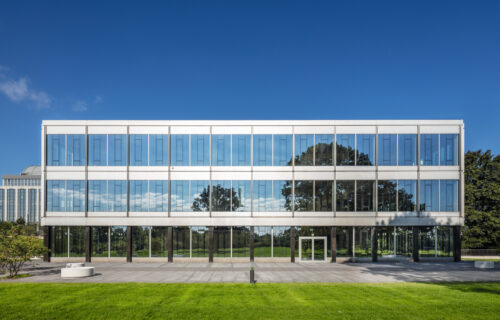
Seestern 3, located in Düsseldorf’s established Seestern office district on the left bank of the Rhine, comprises approximately 33,000 sqm of lettable space and forms part of the UniImmo: Europa open-ended real estate fund, having been held within the portfolio since 1999.
Originally designed in 1961 by architect Helmut Rhode as the headquarters of the Horten department store group, the building is regarded as one of Germany’s earliest purpose-built open-plan office developments. Union Investment completed an extensive refurbishment between 2013 and 2015, modernising the property while preserving its architectural character.
Today, the LEED Gold-certified office building combines modern workplace standards with landscaped outdoor areas, including private parkland, internal courtyards and terrace space. The building and its surrounding park are protected as a historic landmark.
The leasing transaction highlights continued occupier demand for well-located, sustainable office buildings despite a slower investment market across Germany. While overall office transaction activity remains below long-term averages, modern buildings with strong environmental credentials and flexible workspace continue to attract corporate tenants seeking to consolidate into higher-quality premises.
Cushman & Wakefield advised on the leasing transaction, while RKW Architektur was responsible for planning the tenant fit-out.