Tuesday, 25 August 2026
Germany’s automotive industry is undergoing a structural transformation driven by the shift to electric vehicles, increased competition from Chinese manufacturers and changing consumer preferences, according to a new market assessment by Atradius.
The report cites forecasts from Oxford Economics that German automotive production will decline by 2.6% in 2026, followed by a further 1.8% contraction in 2027.
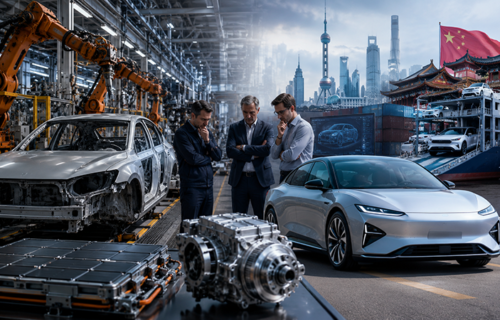
According to Atradius, German manufacturers face growing pressure as competition increasingly centres on software, battery technology and digital capabilities rather than traditional engineering strengths. The report argues that Chinese electric vehicle manufacturers have gained competitive advantages through vertically integrated supply chains, economies of scale and shorter product development cycles.
Atradius says these factors are contributing to weaker sales and profitability for some German manufacturers, alongside workforce reductions and production restructuring.
The report also highlights increasing pressure on automotive suppliers, particularly lower-tier component manufacturers. It notes that electric vehicles typically require significantly fewer components than vehicles powered by internal combustion engines, increasing the challenges for suppliers whose businesses remain focused on conventional powertrain technologies.
According to Atradius, companies that have not diversified their product portfolios or invested in technologies linked to electric mobility face greater restructuring risks. At the same time, the insurer notes that some suppliers are successfully adapting their operations and remain well positioned for the transition.
The report argues that regulatory requirements, including stricter carbon dioxide emissions standards, are accelerating the industry’s transformation. It also suggests that administrative procedures and data protection requirements have slowed progress in areas such as autonomous driving and digital mobility technologies.
Atradius further notes that government incentives for electric vehicles have had mixed results, while trade measures designed to protect European industry could increase input costs and contribute to international trade tensions.
Looking ahead, the report says Germany’s automotive sector will continue to face significant competitive challenges. By comparison, Oxford Economics forecasts 1.9% growth for China’s automotive industry in 2026.
Atradius concludes that companies with specialised technologies, strong partnerships in areas such as battery storage and successful business transformation strategies are likely to be better positioned as the sector continues to evolve.
The report also points to changing consumer behaviour, with purchasing decisions increasingly influenced by affordability, digital features and sustainability considerations. According to Atradius, consumers are also showing a greater preference for vehicle leasing over outright ownership.