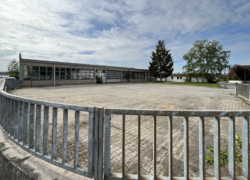
Quick Service Logistics expands operations at CTPark Budapest East

CTP has announced a lease expansion with Quick Service Logistics at its CTPark Budapest East logistics park, bringing the company’s total occupied space to 7,200 square meters. This expansion reflects the successful collaboration between CTP and Quick Service Logistics, highlighting CTP’s commitment to customer flexibility and support for tenant growth.

Quick Service Logistics, now operating in its third generation, offers comprehensive logistics services tailored to the hospitality industry, particularly for international fast food chains. Their operations include purchasing, stocking, warehousing, and distribution, serving over 4,000 restaurants across ten countries. The company specializes in the storage and handling of temperature-sensitive ingredients.

The expansion comes as a result of a strong professional partnership between CTP and Quick Service Logistics, with CTP providing customer-oriented services that help the logistics provider maintain and enhance its market position. CTP’s flexibility in lease terms and its unique property features, including temperature-controlled facilities, have further facilitated this collaboration.

CTPark Budapest East’s logistics hall boasts a BREEAM ‘Very Good’ rating, reflecting CTP’s commitment to sustainability. The company is also enhancing its existing properties, with the ULL2 building undergoing a complete renovation that includes the installation of solar panels, facade upgrades, and a heat pump system for cooling and heating.

By modernizing its buildings and focusing on sustainability, CTP aims to reduce its environmental impact, acknowledging that the real estate sector contributes significantly to global carbon emissions. CTP is committed to participating in the fight against climate change as part of its corporate social responsibility.

Strategically located in Üllő, just 8 kilometers southeast of Budapest, CTPark Budapest East sits at the intersection of the M0 ring road and M4 motorway. This prime location, a short drive from Budapest International Airport, positions it as an ideal hub for logistics and manufacturing companies.

Ferenc Haiman, Manager of Quick Service Logistics Hungaria, expressed enthusiasm about the partnership, stating, “We have developed a great partnership with CTP, which is why we have expanded our operations here. The unique requirements of our business demand special building conditions, particularly in temperature control. The hall’s capabilities and ongoing upgrades, including solar panels, enhance our competitiveness and strengthen our market position.”

Péter Tar, Senior Business Developer at CTP Hungary, added, “We are thrilled to announce Quick Service Logistics’ expansion in our park. Our goal is to cultivate long-term partnerships and continuously adapt to the needs of our tenants. By implementing sustainable developments that align with Quick Service Logistics’ requirements, we aim to reduce operating costs while supporting ESG objectives.”

Historic Europe Hotel reopens today as W Prague on Wenceslas Square

The former Europe Hotel, a storied Art Nouveau landmark on Prague’s Wenceslas Square, reopens today as the W Prague after extensive renovations. The hotel, closed since 2013, has been transformed under the Marriott Group’s luxury W Hotels brand, according to spokesperson Petr Kostka.

Real estate consultancy Cushman & Wakefield reports that Prague’s hospitality sector has seen recent growth, with the Cloud One Hotel opening this year and the Intercontinental Hotel—soon to be the Fairmont Golden Prague—scheduled for reopening in 2025.

Owned by Exim Tours founder Ferid Nasr, who purchased it from Julius Meinl in 2019, the revamped hotel preserves the glamour of its early 20th-century roots. The restoration was a high-value project, with estimated costs between €1,740 to €2,750 per square meter, or up to 70,000 CZK, says Cushman & Wakefield’s Martin Hocek. A modern extension in the courtyard required a substantial investment.

W Prague will offer 161 rooms, including a presidential suite, alongside multiple dining venues, a rooftop bar with a terrace, an indoor pool, and a wellness center.

Originally built in 1872 in Neo-Renaissance style by architect Josef Schulz, the hotel was redesigned in the early 1900s in Art Nouveau style. It became known as a luxurious destination under restaurateur Karel Šroubek, hosting elite guests and offering renowned cuisine. After decades of decline, the hotel is now ready to welcome guests once more, revitalizing its legacy as a symbol of luxury in the heart of Prague.

Source: CTK
Photos: Marriott.com

Poland: Proxi.cloud report reveals 12.4% year-on-year drop in shopping center traffic for Q3

According to a recent report by Proxi.cloud, traffic in galleries and shopping centers declined by approximately 12.4% year-on-year in the third quarter of 2024. The report also indicates a nearly 10% decrease in the number of unique customers visiting these venues. Additionally, the average duration of visits decreased by 18 seconds, while the total time spent in facilities fell by more than five minutes.

The analysis reveals that all voivodships experienced a decline in traffic, with the smallest drop observed in Świętokrzyskie at 4.7%, followed by Mazowieckie at 5.5% and Opolskie at 8.4%. In contrast, the Podkarpackie voivodeship recorded the largest decline at 21.3%, with Warmińsko-Mazurskie at 20.5% and Podlaskie at 18.1%.

Mateusz Nowak from Proxi.cloud commented on the situation, stating, “The decrease in traffic can significantly impact retail businesses. This trend can be attributed to factors such as economic slowdown and shifts in consumer purchasing habits, including the increased use of e-commerce platforms. The growth of discount and large grocery stores may also be contributing to reduced foot traffic in traditional shopping facilities.”

The report further indicates a 9.9% decline in the number of unique customers in shopping centers and galleries, with all voivodships reflecting this trend. The smallest declines occurred in Mazovia (6.1%), Opolskie (7.1%), and Wielkopolska (7.4%), while the most significant decreases were noted in Podkarpackie and Warmińsko-Mazurskie, both at 14.4%, and Świętokrzyskie at 13.5%.

Nowak added, “A nearly 10% reduction in unique shoppers is concerning for shopping malls, likely driven by the growing popularity of e-commerce. Many customers may have shifted to ordering products online with delivery options, while others could be reducing their visits due to deteriorating economic conditions.”

Despite the overall decline, two voivodships reported an increase in purchasing frequency year-on-year: Świętokrzyskie and Mazovian. The average visit duration fell by 18 seconds from last year, while the average total time spent in shopping facilities decreased by just over five minutes.

The Proxi.cloud study, based on data from the third quarter of 2024 compared to the same period last year, analyzed consumer behavior in over 710 retail outlets, using a sample size of more than 1.5 million unique consumers. The data excludes holidays and non-commercial Sundays to provide a clearer picture of consumer traffic.

Source: Proxi.cloud and ISBnews

Empira Research: Stabilisation in German residential investment market amid economic tensions

Germany’s residential investment market is showing signs of recovery, according to the latest report from Empira Group. The Swiss-based investment manager reports an impressive €5.9 billion in investments across residential portfolios with 30 or more units in Germany for the first three quarters of 2024, marking a 50% year-over-year increase. Yet, as demand pressures mount in major cities, the sector’s future remains uncertain.

Despite ongoing inflation control measures, the German economy faces challenges, with the government revising its 2024 growth projection to -0.2%. In contrast, the U.S. economy is set to grow by 2.5%, a stark comparison against Germany’s cautious outlook. “Germany’s economic climate shows stagnation signs, but in the real estate sector, we’re beginning to see price stability and rising demand,” commented Prof. Dr. Steffen Metzner, Empira Group’s Head of Research. Metzner noted that in the U.S., economic forecasts are heavily tied to the approaching presidential election, adding layers of uncertainty.

Residential Market Demand Grows Amid Supply Shortfalls

Supply shortages are further straining Germany’s top metropolitan areas. The new construction sector remains cautious, with the business climate index barely above last year’s figures. In August alone, 50.6% of companies reported order deficits, while cancellations affected 11.7% of firms. New housing completions are on a downtrend, with expectations dropping from 225,000 units this year to 175,000 by 2026.

Even with these constraints, residential investment in portfolios over 30 units rose notably, though it remains 51% below historical norms. “The market appears to be gradually stabilising,” stated Metzner, noting investor interest remains high even as long-term volumes remain below average.

Rental Prices Climb in Germany’s Major Markets

In Germany’s top-tier cities, rental rates are rising, outpacing the national index, which recorded a 2.2% increase over the past year. Frankfurt and Hamburg led the trend, with rents climbing by 5.1% and 4.2%, respectively. Meanwhile, purchase prices in major cities are mixed, with notable declines in Hamburg (-7.5%) and Cologne (-3.0%), while Berlin, Munich, and Stuttgart saw stable prices.

While uncertainties persist, Empira’s data indicates resilience within Germany’s residential investment market, offering cautious optimism for investors navigating the economic complexities of 2024.

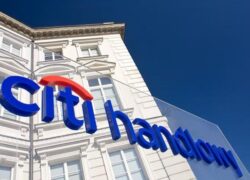
VeloBank and Nest Bank eye Citi Handlowy’s retail segment

The owners of VeloBank and Nest Bank—Cerberus Capital Management and AnaCap Financial Partners, respectively—have shown interest in acquiring the retail segment of Citi Handlowy, according to reports by Puls Biznesu.

Cerberus Capital reportedly signaled its intent to Citigroup, and AnaCap Financial Partners has also submitted an offer. While it remains unclear whether these offers are binding or preliminary, the interest highlights a potential shift in Poland’s retail banking market.

Both Citigroup and Cerberus declined to comment on the matter. AnaCap partner James Culverhouse also refrained from commenting on what he described as market speculation.

Citi Handlowy first announced plans to divest its retail banking segment in 2021, following Citigroup’s decision to exit retail banking in 13 markets. After briefly pausing, Citi Handlowy resumed its search for a buyer in November 2023. Talks with potential investors were anticipated early this year, according to Citi Handlowy’s CEO, Elżbieta Czetwertyńska.

Established from a merger of Bank Handlowy in Warsaw and Citibank Poland, Citi Handlowy has been a key player on the Warsaw Stock Exchange since 1997. At the end of 2023, the bank held assets totaling PLN 73.39 billion.

Source: ISBnews, VeloBank and Nest Bank
Photo: Citi Handlowy

Poland: Special purpose loans drop by 2.1%, cash loans surge by 40.7% in September

Loan companies saw a sharp divergence in lending trends in September, with special-purpose loans falling 2.1% year-on-year while cash loans experienced a substantial increase of 40.7%, the Credit Information Bureau (BIK) reported.

In total, companies granted 691,000 special-purpose loans, a 25% drop in volume, totaling PLN 0.489 billion, a 2.1% decrease from last year. Conversely, cash loans surged by 20.5%, with 485,000 loans issued, amounting to PLN 1.291 billion. The average special-purpose loan value in September was PLN 707, marking a 30.4% increase over last year, while the average cash loan rose to PLN 2,661, a 16.8% increase.

For the first nine months of 2024, the lending landscape expanded notably, with loan companies granting 6.1 million loans totaling PLN 4.383 billion, a year-on-year increase of 62.6% in volume and 74.1% in value. Cash loans specifically saw significant growth, with 4.2 million units issued at a total of PLN 10.87 billion, representing a 54.9% increase from the previous year.

In terms of volume, special-purpose loans remained the most commonly issued, while cash loans dominated in overall value, according to BIK.

Source: BIK and ISBnews

Poland: Bank Millennium reaches 24,600 settlements with Swiss Franc borrowers by Q3 2024

Bank Millennium finalized 1,088 new settlements with Swiss Franc mortgage borrowers in Q3 2024, bringing the total to 24,600 since the program’s launch. This reflects the bank’s ongoing effort to mitigate legal risks associated with foreign currency mortgage loans, Bank Millennium President João Bras Jorge announced.

“With these additional settlements, we have now resolved 40% of the active Swiss Franc credit agreements as of the program’s launch,” said Jorge, noting that legal claims related to foreign currency mortgages have decreased to under 1,500 cases. An increasing number of these claims now involve repaid loans, which make up 19% of all active claims.

Bank Millennium’s quarterly report highlighted that expenses tied to foreign currency mortgage portfolios, including reserves, settlements, and legal costs, dropped by 13% year-over-year to PLN 738 million before tax. Despite this decline, legal risks continue to weigh on the bank’s core operations. Cumulative legal risk reserves reached PLN 533 million before tax in Q3, while total reserves for 2024’s first nine months stood at PLN 1.656 billion, reflecting updated estimates on potential claims.

Bank Millennium, a major player in Poland since its 2003 rebranding, is backed by Portuguese shareholder Banco Comercial Português (Millennium bcp), Portugal’s largest commercial bank. The bank reported total assets of PLN 125.5 billion as of year-end 2023.

Source: Bank Millennium and ISBnews

Logivest facilitates Deufol’s logistics hub in Nittenau

Global logistics provider Deufol has expanded its operations in the Upper Palatinate, securing a 5,000-square-meter property for logistics and storage in Nittenau, with assistance from real estate advisor Logivest. The property, located at Bayerwaldstraße 4 and owned by a private individual, offers Deufol close proximity to a key client, a prominent machinery and component manufacturer, enabling efficient goods flow management within the region.

The site includes a robustly built 2,500-square-meter hall with ground-level access gates, complemented by an additional 2,500 square meters of open space. “Positioned between major routes B16 and B85 and near the A93 freeway, the location provides quick access to Regensburg, where Deufol operates several branches,” said Alexander Meiringer, Consultant for Industrial and Logistics Letting at Logivest. “The proximity to the Czech border also enhances its value for international logistics.”

Deufol has already commenced operations at the new facility, strengthening its strategic foothold in the region.

Poland’s GDP to grow 3.1% in 2024 with rate cuts expected by March, EY forecasts

Poland’s economy is projected to expand by 3.1% in 2024, with growth accelerating to 3.6% in 2025 before moderating to 2.9% in 2026, according to EY economists. Inflation is expected to remain a challenge, with forecasts suggesting it will peak at 5% in 2025 — the highest rate in the EU. EY predicts the National Bank of Poland (NBP) will initiate an interest rate cut cycle in March 2025, starting with a 25-basis-point reduction.

“Central and Eastern Europe (CEE) is set to lead in GDP growth, driven by strong wage growth and inflation expected to stay below 5%,” EY noted. The region’s growth will be bolstered by EU fund absorption, relaxed monetary policies, and a rebound in Western European export demand.

Poland’s competitive labor market is enhancing productivity, as shown by a 9% rise in real GDP per hour in Q2 2024 compared to pre-pandemic levels. This outpaced gains in both the U.S. and Europe. The report highlights that Polish economic expansion is fueled by increasing real income, continued wage growth, rising investments, and robust exports supported by the EU Recovery Fund and defense spending.

Meanwhile, EY forecasts the euro area to see modest growth rates of 0.8% in 2024, 1.3% in 2025, and 1.5% in 2026. Germany faces particular economic challenges, with issues in key sectors and a restrictive fiscal approach dampening its recovery, according to EY’s Chief Economist for Europe and Central Asia, Marek Rozkrut.

Poland, Hungary, Croatia, and Slovakia are experiencing significant price pressures, particularly in services, driven by wage increases above 10%. EY anticipates Poland to record the highest inflation rate in the EU in 2025, with energy price deregulation adding to the pressure.

The National Bank of Poland is expected to introduce four rate cuts of 25 basis points from March to September 2025, followed by a larger 50-basis-point cut in 2026, aiming to curb inflation below 3.5% by that year. Interest rates are projected to settle at 4.25% by 2026, reflecting Poland’s strong economic momentum, EY concluded.

Source: EY and ISBnews

Polish government moves to strengthen homeland defense with recruitment and education amendments

The Polish government aims to adopt an amendment to the Homeland Defense Act and Higher Education and Science Act in the fourth quarter, aiming to streamline recruitment for military service and offer financial incentives for soldiers pursuing studies abroad. The proposed changes are outlined in the Council of Ministers’ legislative agenda.

The draft amendment proposes enhancements to the Armed Forces’ recruitment process, including provisions for soldiers to study abroad with potential reimbursement upon completion, stronger data privacy protections, and funding support through the Armed Forces Support Fund. It also includes measures for improved participation in training exercises and the creation of new disciplinary bodies with clearly defined competencies.

Additional updates include easing regulatory requirements by reducing certain administrative steps in granting allowances and incentives for both professional and non-professional soldiers. Military education is also a focal point, with the amendment clarifying that subsidies to military universities for educating civilian students will not count as defense spending.

Other proposed adjustments address military family support, such as limiting simultaneous travel assignments for soldier spouses caring for young children, and allowing inactive reserve soldiers to take on roles within NATO, EU, and international organizations stationed in Poland.

The amendment reflects the government’s ongoing commitment to strengthening Poland’s defense readiness and supporting the personal and professional development of its military personnel.

Source: ISBnews

LATEST NEWS