BIG InfoMonitor: 25% of Poles are not ready for sudden loss of income

Despite the high percentage of people who declare to have savings (82%), only every fourth Pole has resources to live for more than half a year in the event of a sudden loss of sources of income, according to the survey “Scale and the goals of collecting savings by Poles”, performed on behalf of BIG InfoMonitor.

At the same time, 54% of respondents expect to be forced to reduce their basic expenses in order not to reach for the funds accumulated for the “black hour”. In the last six months, 1/3 of Poles had to spend their savings on basic needs, and one in three people are considering looking for an additional source of income to accumulate savings.

“The growing cost of living and the feeling of economic instability force Poles to make the most of the savings on an ongoing basis, which were initially intended to provide a security for the future. These people most often added electricity, rent or to purchase food products and medical services. This is a worrying signal that indicates the depletion of the financial cushion of many families. Such a situation poses a risk of further reductions in the level of consumption and reduction of investment in education, health and personal development, which in the long term may negatively affect the economy and financial condition of Poles” – said President of BIG InfoMonitor Słamir Grzelczak.

According to the BIG InfoMonitor survey, Poles pay off an average of 18% of their monthly income, and half of respondents are in the range of 10% to 24%. On the other hand, slightly more than one in four respondents (27%) puts less than 10% of their salary, which may indicate significant difficulties in finding a larger amount due to daily liabilities.

Almost every third of the respondents (32 %) have no more than PLN 5,000. This is almost as much as from 1 tactical 2025 will be the minimum monthly wage under an employment contract. In practice, this is the amount that, in the event of a crisis, is enough to secure the basic expenditure for a very short period. The largest group accumulated savings ranging from PLN 10 to 30 thousand (17%). Only 13% of Poles managed to accumulate savings in excess of PLN 100,000, indicated in the material.

The main argument for a cost-effective approach to your finances is to hedge against unexpected expenses (48%) and protection against loss of a permanent source of income (33%). Nevertheless, in the last half of the year, every third Pole had to reach for the accumulated funds to cover basic needs, such as bills (12 %), grocery shopping (11%) or health care (11%) and although this is less by 11% less than a year earlier, it is still a significant indicator of the financial burden of households, it is also reported.

Important goals of saving savings include: leisure/exit (23%), where after a decrease in 2023, the scale of saving for this purpose increased significantly (+9 percentage point), including security for the duration of retirement (17%) and medical and health goals (16%).

At the same time, 34% of respondents had to benefit from external assistance, i.e.: a loan or loan to cover basic needs, with 8% experiencing this this year. Poles are increasingly considering the search for additional sources of income in the face of rising living costs and pressure to increase savings. According to a BIG InfoMonitor survey, 35% of respondents are considering taking up an additional job to improve their financial situation.

“The increase in the number of people using external assistance in the face of financial difficulties indicates deeper structural problems in the financial situation of Poles. Many people, despite the desire to limit expenses, are unable to cover their basic needs on their own. This means that changing habits, including reducing spending on many products and services that improve the life situation, and often are the basis for decent functioning, becomes a common strategy. This is one of the reasons for the real decline in retail sales in September. In addition, a significant percentage of people who feel the need to take up additional work only highlights the growing concerns of the country’s residents related to maintaining financial stability. If we are already talking about financial stability, and more specifically about its lack, according to our data, on average, the consumer is over PLN 33,400 arrears. This means that only a small part of the people pointing to have savings in the survey would be able to pay their debts thanks to them” – added the chief analyst of BIGMonitor Waldemar Rogowski.

Source: BIG InfoMonitor and ISBnews
Panattoni constructs AI-driven distribution Hub for Auchan near Warsaw

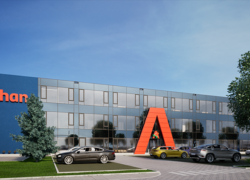
Panattoni is advancing logistics innovation with a fully automated, AI-controlled distribution center for Auchan Polska in Wilcza Góra, near Warsaw. Designed as a bespoke (BTS) facility, the center will handle orders for Auchan’s upgraded online platform using advanced AI and machine learning systems developed by UK-based Ocado.

The Wilcza Góra facility marks the latest stage in Auchan’s digital transformation, following the April launch of its enhanced e-commerce platform focused on customer convenience and personalization. The new center will support faster, flexible delivery options, with up to 40,000 products available, including same-day deliveries. “Our high-tech distribution center will be a game-changer for the Polish market, particularly in optimizing last-mile logistics and the order picking process,” noted Piotr Dopierała, Supply Chain & Logistics Director at Auchan Retail Polska.

Construction of the 18,000 sqm center, which began in Q3 2024, is scheduled for completion by June 2025, with early access for Auchan planned in March 2025. Operations are expected to launch in Q4 2025, after the installation of Ocado’s automated technology. The facility is designed for scalability, enabling Auchan to handle surges in demand efficiently, especially during peak seasons.

Marek Dobrzycki, Partner at Panattoni, emphasized the center’s strategic importance: “This innovative distribution hub will elevate Auchan’s e-commerce capabilities, a vital part of its growth. Leveraging our extensive experience in developing large-scale logistics centers, we are proud to support Auchan in this forward-thinking venture.”

The design includes specialized zones for various food storage needs, with dedicated areas for refrigerated items (maintained at 2°C to 5°C) and frozen goods (-20°C to -22°C). Additionally, the facility will feature covered loading docks, high-strength flooring, and a sprinkler system certified to FM Global standards.

Reflecting Panattoni’s commitment to sustainable development, the center is targeting a BREEAM Excellent certification. Energy-efficient measures include motion-controlled LED lighting, optimized delivery routes to reduce CO₂ emissions, and automated packaging to cut waste. The roof is also being reinforced to support future solar panel installations.

Wilcza Góra’s proximity to the S7 expressway and Auchan’s established shopping center in Piaseczno underscores its strategic location, facilitating streamlined logistics for one of Poland’s leading retail brands.

Romania report: 63% of mortgage seekers opt for newer homes; 40% employed by multinationals

A recent report by online mortgage broker Ipotecare.ro and SVN Credit Romania reveals a trend among Romanian mortgage applicants favoring newer homes: 63% of applicants are targeting properties delivered after 2010 or currently under construction, while 40% are employed by multinational companies. Another 18% work in state-owned enterprises.

The majority of mortgage applicants, aged 25-40, have stable incomes, with 79% earning a wage and 21% reporting alternative sources, such as freelance work, dividends, or copyrights. The average mortgage amount in Romania for 2024 is around EUR 62,000, contributing to the EUR 5.5 billion in total mortgage loans issued nationally this year. This represents a 49% increase compared to the same period in 2023, with the national mortgage balance reaching EUR 21.6 billion, a 2% rise from last year.

Of those seeking mortgages, 42% work in small businesses or have non-traditional income sources, while a notable 23% of buyers are opting for homes completed between 1978 and 2010. Just 11% are choosing homes built before 1978. The highest loan amounts are typically accessed by buyers over 45, who comprise 13% of the applicant pool. In contrast, younger buyers under 25 make up only 3.1%.

“The data confirms that purchasing a property with a mortgage correlates strongly with maturity and stability, both professionally and personally,” said Alexandru Rădulescu, managing partner of SVN Romania | Credit & Financial Solutions. He emphasized the importance of carefully planned decisions regarding mortgage financing, as these often influence buyers’ professional and personal trajectories.

Fixed interest rates continue to dominate, making up 98% of mortgages granted this year.

Ipotecare.ro, an online broker, employs advanced algorithms to tailor optimal financing solutions, while SVN Romania | Credit & Financial Solutions remains a significant player in the mortgage brokerage market, with over EUR 91 million in mortgages brokered in 2023 across its 17 offices in Romania.

Source: Ipotecare.ro and SVN Credit Romania

European retail markets hit new high in Global Retail Attractiveness Index

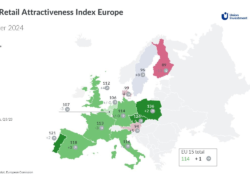
European retail markets are showing sustained recovery, as the Global Retail Attractiveness Index (GRAI) for Europe reached 114 points in Q3 2024, up from 113 points a year prior. According to Union Investment and GfK, consumer confidence is driving this growth, with eight European countries seeing moderate to strong gains. Sweden and the Czech Republic led the charge, posting increases of 8 and 6 points, respectively. However, declines were noted in Finland (-13 points), Denmark (-4 points), France, and Belgium (-3 points each).

The EU-15 ranking places Poland (136 points), the Czech Republic (126 points), and Portugal (121 points) at the top, with Spain (118 points) and Italy (116 points) close behind. Germany improved to 6th place (114 points), benefiting from a slight uptick in consumer confidence despite ongoing retailer caution. Finland, Denmark, Austria, and Sweden remained lower in the rankings, with Finland trailing at 89 points.

“European consumer sentiment continues to rise, but dips in retailer sentiment and labour market indicators are tempering the EU-15 index gains,” said Markus Diers, Head of Asset Management Retail at Union Investment. “Retailer optimism is cautious, yet the improved consumer outlook reflects resilience in Europe’s retail sector.”

Overseas Markets Stabilize but Lag Behind Europe

Overseas retail markets remain steady yet underwhelming, with North America and Asia-Pacific still trailing Europe. The GRAI for North America rose by a single point to 98, primarily driven by improved retail sales (up 4 points), though consumer sentiment dropped to 58 points. Asia-Pacific also saw slight gains, reaching 95 points, although a weak labour market (97 points) weighed on the region.

In North America, the U.S. gained two points, while Canada experienced the steepest decline (-5 points), securing its spot as the lowest-ranked country in the GRAI global ranking. Asia-Pacific’s performance was mixed, with Japan gaining 4 points and South Korea dropping by 6 points.

As European retail markets continue to show promise, global counterparts have significant ground to cover to match Europe’s upward trajectory in the GRAI.

CTP secures eighth BREEAM Excellent rating of 2024 for sustainable business park portfolio in Poland

CTP has been awarded the BREEAM International New Construction V6 certificate at the Excellent level with an overall score of 74.6% for warehouses GPOR1 and GPOR2 at its logistics and industrial business park CTPark Gdańsk Port. This means that, CTP has received the BREEAM Excellent accreditation for eight facilities in its Polish portfolio in 2024 alone.

The GPOR1 and GPOR2 buildings received the highest scores in the certification process in the categories of management (89/100), materials (89/100), waste management (86/100), energy (84/100) or water resources (78/100).

“This year alone, we have carried out BREEAM certification for six of our facilities. This is now being joined by two more that are part of the CTPark Gdańsk Port complex. It is in a strategic location from the point of view of carrying out cross-border logistics processes. This allows tenants to increase the scale of their operations, reach more markets and, at the same time, meet their ESG strategies, which are currently one of the main competitive advantages for companies in virtually every sector of the economy. Sustainable real estate provides, among other things, the possibility to optimise operating costs or reduce the carbon footprint, which in the context of the CSRD is a very important asset,’ says Adam Targowski, Group Head of ESG, CTP.

The CTPark Gdańsk Port complex was built on a 21.3-hectare site, located in the direct vicinity of the DCT terminal – the largest container terminal on the Baltic Sea, the Gdańsk North Railway Port, as well as national road 89, the Tri-City northern bypass and the A1 motorway. As part of this investment, CTP Polska has so far built two halls with a total area of 117,000 sqm. The facilities are largely commercialised. Among others, BayWa r.e., Morska Agencja Gdynia and NEFAB Packaging Poland are carrying out their operations in them.

At the end of August this year, CTP announced the purchase of a 140,000 sqm plot located within the Pomeranian Investment Centre (PCI), on which the next phase of the CTPark Gdańsk Port complex will be built. There, the developer will offer classic big box space (CTSpace), as well as smaller rental units starting from 400 sqm, known as CTPBox and CTFlex.

In addition to CTPark Gdańsk Port, since the beginning of this year CTP Poland has obtained BREEAM certification for a total of six buildings across CTPark Warsaw South, CTPark Opole, CTPark Sulechów and CTPark Iłowa.

BNP Paribas Bank Polska provides EUR 21.5 million financing for MLP Group’s warehouse development

BNP Paribas Bank Polska S.A. has granted financing of EUR 21.5 million to MLP Group for the refinancing of a 34,600-square-meter warehouse at the MLP Pruszków II logistics center near Warsaw. Legal advisory for the bank in this transaction was provided by Kycia Legal Banking Finance.

“We are pleased to have secured this financing with a reputable financial partner. This loan supports our growth strategy, reinforcing our financial stability and ability to expand operational activities,” said Monika Dobosz, CFO and Board Member of MLP Group S.A.

Marek Kowalski, Head of Structured and Real Estate Finance at BNP Paribas Bank, expressed enthusiasm for the continued partnership: “We value our longstanding collaboration with MLP Group and appreciate its commitment to sustainable practices. We look forward to supporting the company’s future growth.”

MLP Pruszków II: A Prime Logistics Hub Near Warsaw

Located in Brwinów, approximately five kilometers from Pruszków, MLP Pruszków II is the region’s largest logistics center, aiming for a total lease area exceeding 424,000 square meters. The development adheres to the highest sustainability standards, having earned BREEAM certification. Aligned with MLP Group’s ESG goals, photovoltaic installations are currently being added to facility rooftops.

The site boasts strategic connectivity with central Warsaw and key highways, including the A2 motorway just three kilometers away, as well as international railway lines, making it an ideal hub for both domestic and international distribution. The logistics park also offers on-site amenities, including a bus stop and a Nextbike bike rental station for accessible commuting options.

Under its build-and-hold strategy, MLP Group retains and manages completed logistics parks, offering built-to-suit solutions and long-term tenant support.

This financing partnership reinforces MLP Group’s commitment to expanding its modern logistics infrastructure, solidifying MLP Pruszków II as a leading logistics center in Central Europe.

King Cross Marcelin reaches full occupancy amid expanding retail offer

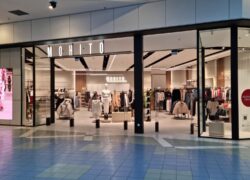
EPP’s King Cross Marcelin shopping center in Poznań has achieved full occupancy, a major milestone following an extensive expansion of its retail lineup. Since the start of the year, the mall has added ten new tenants, including popular names like Deichmann, Hebe, Intimissimi Uomo, Tchibo, and Recman. Furthermore, twenty existing brands have renewed their leases, with some, such as LPP Group’s MOHITO, House, and Cropp, opting to expand their presence. Altogether, these new leases and renewals cover over 4,000 square meters of space.

“With a range of new brands joining, we’ve curated an offer that addresses our customers’ diverse needs. Achieving full occupancy in Poznań’s competitive market is a testament to King Cross Marcelin’s strength and enduring appeal among tenants,” said Joanna Dudzic, EPP’s Asset Manager.

King Cross Marcelin’s new retail lineup includes Deichmann, which offers a wide selection of footwear for all ages, and Tchibo, known for coffee accessories as well as practical products for everyday use. Other new tenants include Wakacje.pl, a travel agency, Teletorium, a smartphone accessories shop, and Hebe, a cosmetics chain with exclusive products like GOSH, HEAN, and Karl Lagerfeld, set to open in December.

Expanding its appeal to male shoppers, the mall has added Recman, a Polish brand known for high-quality men’s fashion, alongside casualwear from Cambric and KUBENZ. The newly introduced Intimissimi Uomo further strengthens the men’s apparel selection.

The center also saw lease renewals from established names, including Sizeer, Intimissimi, Calzedonia, Giacomo Conti, and SWISS. Kandulski’s Confectionery and Esotiq have opted to renovate their spaces to better align with customer expectations.

As one of Poznań’s pioneering shopping centers, King Cross Marcelin, located in the city’s western area, hosts around 120 stores spanning diverse categories like fashion, sports, multimedia, and jewelry. Anchor tenants include Auchan hypermarket, H&M, Medicine, New Yorker, Sinsay, CCC, MediaMarkt, Empik, and Sephora. For dining, options range from SPHINX restaurant and Marché Kitchen to McDonald’s, KFC, and Starbucks. Additionally, the mall is home to Gravitacja, the largest entertainment center in Greater Poland, along with services like shoemaking, tailoring, laundry, car washing, and a post office. Ample parking with 2,000 spaces further enhances convenience for shoppers.

As King Cross Marcelin reaches this occupancy milestone, it reinforces its status as a premier retail destination in Poznań, offering a blend of established brands, innovative newcomers, and lifestyle services that cater to a broad spectrum of customer needs.

Kolejkowo to bring unique miniature world to Warsaw Towers with major new lease

Kolejkowo, renowned for its intricate miniature exhibitions showcasing Polish and international landmarks, is set to open a 1,110-square-meter space in the Warsaw Towers, nearly filling the entire first floor of the CA Immo-owned building. This will be the company’s fourth location, following established sites in Wrocław, Gliwice, and Jelenia Góra. The new Warsaw Kolejkowo is expected to welcome visitors in mid-March 2025.

Kolejkowo has been captivating audiences since 2014 with meticulously crafted railway and cityscape models that pay homage to the unique histories and architecture of each exhibition location. Known for its large-scale displays in Wrocław and Gliwice, each spanning approximately 900 square meters, Kolejkowo features hundreds of model trains, authentic structures, and detailed figures. In Jelenia Góra, visitors are invited to observe the art of model-making in a workshop setting, gaining insight into the creation of these complex displays.

“The Warsaw Kolejkowo exhibition will transport visitors to some of the most iconic places in Warsaw and the Mazovia region,” said Jakub Paczyński, CEO of Kolejkowo. “This new, central location makes our exhibition accessible to both Varsovians and tourists. Every detail tells a story, capturing familiar places with unparalleled precision. We are thrilled for the grand opening!”

Agata Wołos, Senior Asset Manager at CA Immo, highlighted Warsaw Towers’ unique attributes as the perfect setting for the Kolejkowo attraction: “Our prime location in the heart of Warsaw with views of the Palace of Culture and Science, combined with our modernized interiors and flexible office-retail spaces, makes Warsaw Towers ideal for businesses and attractions alike. Kolejkowo’s choice of Warsaw Towers brings a new dimension to our building, and we’re confident it will become a must-see destination in the city.”

Situated at 39 Sienna Street, Warsaw Towers is a 15-story class A office building offering 22,000 square meters of leasable space, with 21,000 square meters designated for offices and an additional 1,000 square meters for retail and dining options. Its location is central to major landmarks, including the Palace of Culture and Science, the Central Railway Station, and Złote Tarasy shopping center. Aligned with sustainable development principles, Warsaw Towers holds a BREEAM In-Use certification at ‘Excellent’ for Building Management and ‘Very Good’ for Asset Performance, supporting tenants’ ESG goals.

Kolejkowo was represented in this transaction by the consulting agency 88 Group, with CBRE supporting the landlord.

As Kolejkowo prepares to open in Warsaw Towers, the iconic building will soon welcome a new wave of visitors, eager to explore miniature worlds that capture Poland’s beloved landscapes and landmarks in exquisite detail.

Revetas Group completes sale of Trinity One office complex in Warsaw to Longvilliers

Revetas Group has announced the successful sale of the Trinity One office complex in Warsaw to Longvilliers. Financial terms of the transaction were not disclosed.

Eric Assimakopoulos, Founding Partner at Revetas, commented on the sale, noting, “Through detailed market analysis, we identified the ideal buyer to continue the growth of this asset in alignment with Longvilliers’ investment strategy. This transaction not only highlights Trinity One’s strategic versatility but also underscores Warsaw’s growing appeal for well-situated assets in Central and Eastern Europe.”

Located in Warsaw’s Służewiec Przemysłowy district at the intersection of Domaniewska and Suwak streets, Trinity One is a premier class-A office complex. Spanning seven floors across three interconnected towers, it offers over 19,820 square meters of high-grade office space, capable of accommodating diverse tenants with flexible floorplates of up to 2,900 square meters. The complex boasts strong transport connectivity via tram, bus, train, and car, along with access to the most extensive amenities in the area. Additionally, Trinity One includes a spacious rooftop terrace with panoramic city views, designed as an ideal spot for breaks or informal client meetings.

The office complex also features Warsaw’s largest parking facilities in the area, with a three-level underground garage and surface parking accommodating a total of 727 vehicles.

Avison Young acted as the exclusive broker representing Revetas in the sale, while DLA Piper provided legal advisory services. The buyer, Longvilliers, was represented by the Polish law firm DMS.

Colliers survey: Dedicated workspace and routine key to boosting office attendance

Companies are ramping up efforts to encourage employees to return to the office by implementing hybrid work models and rethinking workspace configurations to better meet today’s workforce needs. According to a July survey conducted by Colliers, which included over 500 respondents, employees with a dedicated workspace and structured routine are more inclined to work from the office regularly. Among the main factors influencing return rates are stability, commute convenience, managerial expectations for in-person presence, and access to designated spaces that cater to diverse work tasks. These aspects, Colliers consultants note, not only support productivity but also foster essential face-to-face interactions and collaboration.

Romania has seen a notable rise in office attendance over the last 18 months, with approximately 55% of employees returning to office spaces in the first half of this year compared to 40% in early 2023. Colliers, Romania’s largest office property management firm, managing nearly 600,000 square meters of office space, attributes this upward trend to increased structure and stability within the workplace.

The survey shows that the number of days employees spend in the office largely depends on the level of autonomy they have in scheduling. Those with a company-set schedule average 3.6 days per week in the office, while those with more flexible, self-determined schedules attend about two days per week. Colliers data indicates that 65% of employees follow a structured schedule, with 46% adhering to company-set hours and 19% following team-agreed schedules, while only one-third have complete autonomy in their work hours.

Many companies have shifted to open-plan workspaces to ensure employees have a spot when they come in. However, the survey finds that employees with assigned workstations are more consistent, working an average of 3.3 days weekly at the office, compared to an average of 1.7 days among those without designated spots. Employees who come into the office at least three days a week often have access to personal workstations, whereas those attending one to two days generally use shared spaces.

“Factors like a consistent schedule, an allocated workspace, and clear expectations from managers positively impact employees’ willingness to come to the office,” explains Daniela Popescu, Director of Tenant Services & Workplace Advisory at Colliers. “While flexibility and autonomy appeal to many, a dedicated workspace fosters stability and ownership, which in turn promotes in-person collaboration. We see that tailored spaces supporting specific work tasks and needs can also be a strong motivator.”

The Colliers survey also finds that office attendance preferences vary across generations, with Millennials and Gen X employees—accustomed to pre-pandemic office culture—attending more frequently, while Gen Z employees, many of whom started their careers remotely, often prefer flexible, hybrid setups.

Company perks play a role in office attendance, with free coffee topping the list, available to 60% of respondents. Free parking and flexible hours are also common. Larger companies, particularly those with over 250 employees, typically offer the most comprehensive benefit packages. Social events, team-building activities, and professional development opportunities are also among the top offerings aimed at enhancing employee engagement.

Commute time remains a notable barrier to full office returns. The survey shows that employees’ one-way commute averages 30 minutes, with public transportation taking roughly 40 minutes and private car commutes about 10 minutes less. In Bucharest, 47% of employees drive to work, with similar numbers relying on public transport. For commutes under 40 minutes, cars are the preferred option, while public transit takes precedence for longer distances.

With hybrid work expected to remain prevalent, the Colliers survey underscores the balance between flexibility and routine in optimizing office attendance. Stability, structured spaces, and supportive benefits appear crucial as companies look to re-engage employees in a post-pandemic workplace.

Source: Colliers
Photo: Daniela Popescu, Director of Tenant Services & Workplace Advisory, Colliers

LATEST NEWS