Prague City Hall challenges real estate auction amid allegations of misconduct

The Prague City Hall has decided to pursue appeals against the results of last year’s auction of properties formerly owned by entrepreneur Jaromír Soukup. The city’s councillors voted to defend their position using all legal means, following suspicions of leaked information that may have influenced the auction process.

The properties were acquired by the city in a forced auction for CZK 649 million, just under the CZK 650 million limit set by councillors for the purchase. However, concerns arose that a second participant may have deliberately driven up the bidding price after gaining access to insider information. The municipality has filed a blanket appeal, which will now be supplemented with further justification.

Deputy Mayor Jiří Pospíšil (TOP 09), Deputy Mayor Jana Komrsková (Pirates), and representative Hana Kordová Marvanová (ind.) have also filed a criminal complaint related to the auction, with the municipality joining as a potential victim.

Should the appeal succeed, the auction will be repeated. Councillor Adam Zábranský (Pirates) indicated that the city would likely participate again but with a reduced maximum bid due to the previous outcome.

If the court confirms the validity of the auction, Zábranský suggested the city consider an offer from the second-highest bidder, the investment fund IFIS, which proposed purchasing the property for CZK 647.9 million, its bid during the auction. However, this proposal has met resistance from the STAN coalition movement.

STAN representative Antonín Klecanda emphasized that the properties are strategic assets essential for public development. “The land represents an opportunity to develop education, sport, and other public services,” he stated at an extraordinary city council meeting.

The municipality has expressed interest in using the land for a campus to address the shortage of secondary school capacity. The Kobra Praha hockey club, which operates an ice rink near the auctioned properties, also supports retaining the land for public use. “This is a unique opportunity to expand school infrastructure and connect education with sports development,” the club said in a statement.

The auctioned properties previously housed Empresa Media, a company owned by Jaromír Soukup. Recently, entrepreneur Jan Čermák acquired Empresa Media, along with Barrandov TS and Media Master, amid insolvency proceedings. The court has allowed the reorganization of these companies.

The outcome of the city’s appeal and the future of the properties remain uncertain, but the case underscores the importance of transparency and strategic planning in public asset acquisitions.

Source: CTK

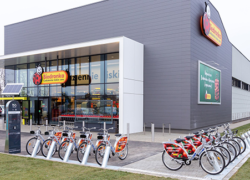
Biedronka’s sales grow by 4.8% in Q4 2024

Sales for the Biedronka chain, owned by the Jeronimo Martins Group, increased by 4.8% year-on-year (y/y) in PLN during the fourth quarter of 2024. In euro terms, sales grew by 7.6% y/y to reach €6.11 billion, according to preliminary results released by the company. Comparable store sales (LFL), calculated in PLN, rose by 1.1% y/y during this period.

For the full year, sales in local currency increased by 4.1%, with LFL growth at -0.3%. In euros, sales reached €23.6 billion, reflecting a 9.6% increase compared to 2023. Despite a weak food retail market, Biedronka recorded a volume increase compared to the strong performance in 2023, supported by efforts to stabilize consumer basket prices.

In 2024, Biedronka contributed 70.4% of the Jeronimo Martins Group’s total revenue, up from 70.2% in the previous year. The group’s overall sales grew by 4.9% y/y to €33.47 billion.

Biedronka successfully completed its expansion program for 2024, opening 187 new stores, resulting in a net increase of 161 locations after redeveloping 280 existing outlets. At the end of 2024, the chain operated 3,730 stores with a total sales area of 2.67 million square meters, compared to 2.53 million square meters at the end of 2023.

Biedronka’s consistent growth and strategic expansion further solidify its leadership in Poland’s retail market, positioning it strongly for continued success in 2025.

Source: Biedronka and ISBnews

US chip import limit challenges Poland’s long-term tech planning

Poland will utilize less than 10% of the import limit set by the US administration for advanced semiconductor chips this year. However, the restrictions pose significant challenges for long-term planning, according to Dariusz Standerski, Deputy Minister of Digitalization.

“This year and next, the limit imposed by the US will not halt the development of artificial intelligence in Poland. However, in the long term, it creates uncertainty due to the arbitrary nature of decisions made by the US administration, often detached from established trade rules,” Standerski said on Polish Radio Programme One.

Poland plans to double its computing capacity using public funds and resources in 2025, remaining well within the annual limit of 50,000 chips, with potential expansion to 100,000 chips. “There won’t be an issue this year,” Standerski noted.

The concern arises in multi-year planning, where uncertainties around future US policies and potential shifts in global trade dynamics complicate public procurement and infrastructure development. “The current map is tentatively set until 2027, but a new administration could change this entirely, creating challenges not only for Poland but for other European countries as well,” he added.

Poland’s embassy in the US has sought clarification from the American administration on the restrictions. Standerski also highlighted the European Commission’s opposition to the policy, emphasizing that “EU countries should not face differentiated treatment in this matter.”

The US has included Poland on a list of countries subject to restrictions on importing advanced chips, including those produced by Nvidia. The decision has drawn criticism for its potential to hinder technological advancements and planning across Europe.

The limitations on semiconductor imports reflect broader geopolitical and trade tensions, as the US seeks to control access to critical technologies. Despite Poland’s current ability to operate within the imposed limits, the uncertainty surrounding future policies presents a pressing concern for national and regional technology strategies.

Source: Polish Minister of Digitalization and ISBnews

BSH expands in Poland with new small home appliances factory

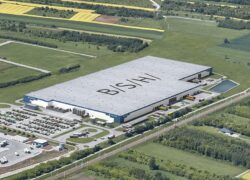
BSH Home Appliances Group, Europe’s leading home appliances manufacturer, is bolstering its operations in Poland with the construction of a state-of-the-art factory for small home appliances. The facility, to be built by Panattoni, a global leader in industrial real estate development, will be located in Rudna Wielka near Rzeszów.

The new factory, valued at nearly 600 million PLN, is set to replace BSH’s current production site, with construction scheduled for completion by mid-2026. Spanning 73,000 square meters, the facility will house production halls, logistics areas, and office spaces, all designed to meet high sustainability standards.

“With this new factory, we are paving the way for further growth in Rzeszów and expanding our production capabilities,” said Richard Dalacker, Head of BSH’s Rzeszów branch. “We are not only creating a modern facility but also ensuring ergonomic and safe working conditions for our employees.”

The new factory will employ over 1,000 people, focusing on high-quality working conditions with features such as abundant natural daylight, spacious communication paths, and a modern cafeteria. Situated just five kilometers from Rzeszów, the site benefits from excellent transport links, including proximity to highways and public transportation.

Konrad Pokutycki, President of BSH Poland, emphasized the significance of this investment. “This project marks another milestone for BSH and underscores our confidence in Poland as a strategic location. Over the past 30 years, we have invested nearly 1.5 billion euros in Poland, creating over 7,000 jobs across six factories, logistics centers, R&D facilities, and shared service centers. This new factory reaffirms our long-term commitment to the Podkarpacie region and the Polish market,” he said.

This project continues the successful partnership between BSH and Panattoni, following the construction of BSH’s dishwasher factory in Łódź. “We are proud to collaborate once again with BSH on this strategic investment,” said Marek Dobrzycki, Partner at Panattoni. “This factory will not only meet BSH’s needs but also contribute to the growth of the region and the broader home appliances industry in Poland.”

BSH has been operating in the Podkarpacie region for 12 years, producing Bosch Tassimo capsule coffee machines and vacuum cleaners distributed globally. Recently, the company expanded its production lines to include vertical cordless Bosch vacuum cleaners, including the advanced Bosch Unlimited 10 model. The region also hosts BSH’s R&D center for small home appliances, which will soon move to a modernized facility, further reinforcing Rzeszów’s role in BSH’s global operations.

New logistics building in Lübeck: Logivest leads project management and exclusive marketing

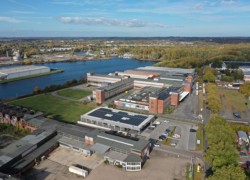
A new sustainable logistics facility is set to rise on a former industrial site in Lübeck’s city harbor. Logivest, a comprehensive logistics real estate consultant, has been entrusted with the project’s planning, management, and exclusive marketing. The development is backed by IM4 Log, the owner and investor.

The property, located at Glashüttenweg 33-35, spans approximately 70,000 square meters near the A1 motorway, a strategic location for logistics operations. Plans include a 40,000 square meter warehouse and logistics building, featuring office and mezzanine spaces as well as city docks tailored for last-mile logistics, with an additional 2,000 square meters of storage and office capacity.

The development meets the latest ESG PV-Ready standards, highlighting its commitment to sustainability. “This project is particularly exciting because it allows us to transform a brownfield site into a state-of-the-art logistics hub,” said Carsten Felix, Managing Director of Logivest Projektmanagement GmbH.

The facility is designed for operational flexibility, offering a 24/7 permit, 12-meter hall height (UKB), five-tonne floor load capacity, and at least one ramp door per 1,000 square meters. The project also remains open to built-to-suit solutions, providing customization opportunities for potential tenants.

With the preliminary building permit and demolition permit already secured, construction is expected to begin this year, contingent on marketing progress. The project promises to bring modern, efficient logistics infrastructure to Lübeck, further revitalizing the area.

Centralis expands portfolio with two prime acquisitions in Germany’s serviced apartment sector

Centralis Immobilien GmbH (Centralis), a leading property developer and investor specializing in serviced apartments and hotels in prime locations, has acquired two landmark properties in Bonn and Düsseldorf, reinforcing its growth trajectory in Germany’s hospitality sector. The total project volume for these acquisitions is approximately EUR 50 million, with plans for comprehensive modernisation and strategic repositioning of both assets to align with ESG standards.

Landmark Acquisition: Sternhotel in Bonn

Centralis has acquired the iconic Sternhotel in Bonn, a property with a 400-year history and a central location on the city’s marketplace, adjacent to the historic city hall and prime retail areas. Previously under family ownership for 120 years, the 5,600 sq m property is fully let and houses an 80-room hotel spanning 3,900 sq m, along with 140 sq m of retail space, 560 sq m for cafés and restaurants, and Bonn’s oldest cinema with three screens.

The modernisation plans for Sternhotel include replacing building services, integrating district heat, installing photovoltaics, and implementing energy-efficient technologies to achieve ESG compliance. The aim is to transform the property into a refurbished, energy-efficient core asset with long-term leases in place.

Düsseldorf City Centre Hotel to Become Serviced Apartments

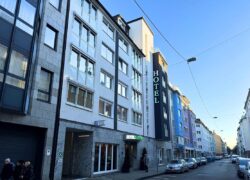
The second acquisition is a centrally located hotel at Pionierstrasse 6 in Düsseldorf, near the CBD, main railway station, and Königsallee. Originally built in 1952 and expanded in 2001, the property features 92 rooms and a 50-space underground car park, with a total floor area of 3,200 sq m.

Centralis plans to convert the hotel into 98 serviced apartments, integrating ESG-compliant upgrades such as district heat, a combined heat and power plant, photovoltaics, and an optimised building envelope. Upon completion, the property will be leased on a long-term basis to limehome, a leading operator of digitalised designer apartments in Europe.

Strategic Vision for 2025

Dr. Fabian Vieregge, founder and Managing Director of Centralis, remarked:
“In 2024, our countercyclical approach proved highly successful. As we move into 2025, we are identifying opportunities that represent the most attractive market entry points since the 2007/2008 financial crisis. We believe modern hospitality concepts, particularly serviced apartments in city centres, will play an increasingly prominent role in the hospitality asset class.”

The acquisitions in Bonn and Düsseldorf align with Centralis’ strategy to establish innovative hospitality concepts in Germany’s primary and select secondary cities. This follows the company’s November 2024 announcement of a project to construct 88 serviced apartments in Hamburg. In 2025, Centralis plans to significantly expand its project volume, targeting individual developments of up to EUR 50 million alongside further strategic acquisitions.

These latest moves solidify Centralis’ position as a forward-thinking leader in the evolving serviced apartment and hospitality market in Germany.

Palmira Capital Partners acquires business park in Ratingen from RHENIUM

Palmira Capital Partners (Palmira) has purchased a centrally located business park in Ratingen on Kaiserswerther Strasse for its UIC II (Unternehmensimmobilienclub 2) fund. This acquisition marks the full deployment of UIC II’s capital. Preparations for the launch of UIC 3, the next fund in the successful Unternehmensimmobilien series, are already underway.

The property spans a 27,500 sq m plot, offering approximately 18,700 sq m of rental space. Of this, 12,000 sq m is allocated to hall areas, and 6,700 sq m is designated for office and social spaces. The business park is fully leased to 16 tenants, highlighting its strong market position.

The seller, an individual fund managed by RHENIUM Asset Management (RHENIUM), owned and optimized the property over the past decade. The purchase price remains undisclosed.

Palmira received legal and tax advisory support from Dentons, Düsseldorf, with x.project conducting technical and environmental due diligence. NAI Apollo acted as property advisor for the buyer. RHENIUM was advised by REIUS, Hamburg.

This acquisition further solidifies Palmira’s position in the business park segment and sets the stage for future investment through the forthcoming UIC 3 fund.

Poland: Will changes to the town and country planning act ease housing development

What effects will the amendment to the Planning and Development Act have on housing projects? During the transition period, which runs until the end of 2025, will there be noticeable adjustments in the planning and zoning system, the adoption of local development plans, or the procedure for issuing zoning decisions? How will these new planning rules influence the operations of development companies? Will they streamline the process of implementing new investments?

Piotr Byrski, Business Manager Portfolio Kraków, Matexi Polska:
Last year’s amendment to the Act on spatial planning and development is a necessary, but much overdue document from the perspective of spatial planning. In the long term, with clear rules, greater transparency and plans for digitisation, the new regulations should make administrative procedures more predictable.

However, in the interim period, the legislator has imposed heavy obligations and considerable time pressure on local governments, which have been obliged to adopt municipal general plans by the end of 2025. The effect of the pace of changes required to be implemented may result in temporary difficulties for investors as municipalities adjust to the new requirements. Failure of municipalities to meet the statutory deadline for adopting a general plan may lead to investment paralysis in areas not covered by existing local plans.

The complexity of the changes related to the spatial planning reform and investors’ awareness of how lengthy planning processes can be, especially in large urban centres, mean that currently land covered by a decision granting planning permission, or at least, a valid local development plan, is of greater interest to buyers.

After 1 January 2026, decisions on development conditions will only be able to be issued in so-called areas of development completion (OUZ). The municipality will be able to designate these areas in the general plan (but will not be obliged to do so). The legislator’s aim in this case was to tidy up the space and reduce the spatial ‘chaos’ resulting from dispersed development. Some properties may therefore, in the situation of not having applied for a WZ by the end of 2024, definitively lose development opportunities. ‘New’ vuzettes will have a 5-year validity period, but all previously issued decisions (i.e. before the end of 2025) will remain valid indefinitely. The introduction of the above changes has, in the interim period, resulted in a significant increase in the number of planning applications submitted by Architecture Departments across the country.

The General Plan – a kind of constitution for the space – will instead be the implementation of the Borough’s development strategy. The latter is the key planning document that sets the long-term vision and directions for the municipality, serving to improve the quality of life of its residents and socio-economic development. Municipalities are therefore now faced with the need to draw them up or, at best, update them. This is because the reliability and quality of the assumptions adopted therein will determine, in accordance with the Act’s assumptions, whether it will be possible to designate new areas for housing development in the General Plan.

The significance of the entry into force of the new legislation will vary from city to city. In Kraków, for example, there are currently 270 local plans in force, covering almost 80 per cent of the city’s area, and another 60 plans are in the process of being adopted and will be proceeded with under the ‘old’ rules even after the General Plan comes into force. Warsaw is in a different situation, where the ratio is only over 40 per cent, and drawing up new plans or obtaining new zoning decisions will require compliance with the provisions of the General Plan from 2026. Although the adoption of the General Plan will provide the basis for updating the MPZPs already in force, it is difficult to assume that municipalities will willingly embark on this task after the effort it represents for them to adjust to the obligations arising from the spatial planning reform.

It is also worth mentioning a new tool introduced by the reform of the Spatial Planning and Development Act. Integrated Investment Plans (IIPs). The investor, in agreement with the Municipality, with the consent of the Municipality Council and with the participation of the public through consultations, signs an urban planning agreement with the aim of realising the main investment and, within the framework of public participation, a complementary investment (according to a closed catalogue of such investments defined in the Act, e.g. a park, a school, a kindergarten or a road). In Krakow alone, five MIP applications have been submitted to the Mayor during the ongoing interim period, and the first of these in December 2024 gained the favour of the City Council and was forwarded for further processing. The almost unanimous approval of the City Council – albeit the only one so far – has already been recognised by investors. This allows us to hope with hope that this new tool – despite its complicated and lengthy procedure – will make it possible to realise investments to the benefit and in accordance with the expectations not only of investors, but also of the Municipality and local communities. This is because in Krakow, none of the previously submitted applications under the housing speculative law (‘lex deweloper’), of which ZPI is the statutory successor, has so far been successful, and which also required the approval of the City Council.

Karol Dzięcioł, management consultant for business development at Develia:
The new zoning regulations will significantly affect residential development. The amended law introduces many new and quite revolutionary solutions. In as little as 12 months, all studies of land use conditions and directions will cease to be valid. Instead, each municipality will be obliged to adopt a master plan. Given the state of progress, this deadline seems difficult, if not impossible, to meet. The consequence of not having a basic planning document will be paralysis in the issuing of many administrative decisions.

The regulations on obtaining decisions on development conditions (WZ) will also change, including the area of analysis of the surroundings and the rules for determining the height of buildings, and consequently there will be a restriction on the possibility of obtaining them for the so-called development supplement areas. If the municipality does not designate these areas in its general plans, it will not be possible to obtain such a decision. At present, in the interim, the key changes concern the area of analysis arbitrarily limited to 3 times the frontage of the plot, but no more than 250 m. It seems that many investors, after the local authorities have lined up master plans in which their sites will be outside the development addition area, may want to be off to the races, before the new regulations come into force, to take advantage of the old procedures.

There will also be the introduction of the Integrated Investment Plan (IIP), a document prepared together with the urban planning agreement by the municipality and the investor during the negotiation process. It will ultimately be approved by the municipal council. The new solution will oblige the investor to negotiate a package of investments needed, in the opinion of the municipality, in a given location, in exchange for the possibility of realising the development project on the basis of the general plan, and in the interim period the ZPI must be consistent with the study of conditions.

The Integrated Investment Plans formula seems likely to succeed for large developments, but, like the housing spec, it will not necessarily be applied on a mass scale. The key problem here will be the organisational complexities and the range of potential contractual expectations in relation to investment budgets.
In my opinion, there will be a significant increase in the potential of the areas covered by old zoning plans, as these do not expire. It will therefore be possible to carry out investments on these areas in accordance with the guidelines set out in the plans, regardless of the status of the master plan. This may make the land acquisition process even more difficult.

I believe that the beginnings may be difficult for all representatives of the real estate market, including developers, who will probably have to face the lengthening of the time it takes to obtain administrative decisions, the increase in investment costs, or the reduction in the availability of development land.

Magda Kwiatkowska, legal advisor to Ronson Development:
In the long term, the new legislation aims to reduce planning chaos through the introduction of the municipality’s master plan. Developers will gain a more predictable planning framework, which may speed up the decision-making process already at the stage of deciding to buy land.

The risk, however, is that the municipalities will be heavily burdened with new obligations. Currently, the investment process is still taking place under the old rules, which involves an intense ‘race against time’ on the part of investors and developers.

We are concerned about the potential paralysis in the issuing of zoning decisions that may result from the implementation of the new rules. In addition, we regret that the so-called ‘lex deweloper’, which allowed flexible development in areas without local plans, will cease to apply.

Ultimately, the changes have the potential to tidy up the spatial planning process and make it more predictable, but the current period of adjustment requires developers to be very flexible and to cooperate with administrative bodies in order to implement investments effectively.

Source: dompress.pl
Photo: Na Okrzei, Praga, Warsaw, Matexi Polska

Warsaw Chopin airport sets record with 21.3 million passengers in 2024

Warsaw Chopin Airport achieved a record-breaking 21.28 million passengers in 2024, marking its busiest year to date. The total included 19.67 million international travelers and 1.62 million domestic passengers, according to the airport’s announcement.

International routes accounted for the majority of traffic, with nearly 14 million passengers traveling within the Schengen area and over 7.5 million on non-Schengen routes. Charter flights also saw significant demand, serving over 3 million passengers, or approximately 14% of the total traffic.

August was the busiest month, with 2,176,633 passengers, while January, reflecting seasonal patterns, recorded the lowest traffic at 1,380,831 passengers. December saw a record for the month, with 1,610,383 passengers handled (+17% year-on-year), and the single busiest day of the year was August 2, when the airport served 60,579 travelers.

The airport also reported record cargo throughput in 2024, handling over 117,000 tons, a 13% increase compared to the previous year.

“Passenger traffic is growing dynamically in Poland and the region, and we are actively working to expand our infrastructure and services to meet rising expectations. Chopin Airport is increasingly becoming a gateway to the world, welcoming more travelers every year,” said Andrzej Ilków, President of PPL, which operates the airport.

The airport’s top five regular destinations were London, Paris, Amsterdam, Frankfurt, and Brussels, while the most popular charter destinations were Antalya, Marsa Alam, Hurghada, Sharm El Sheikh, and Rhodes. Leading carriers included PLL LOT, Wizz Air, Enter Air, Lufthansa, and Ryanair.

“The record-breaking year of 2024 cements our position as a leading airport in Central and Eastern Europe,” noted a PPL board member for sales and finance. “Our investment in modernizing infrastructure and expanding long-haul networks is key to maintaining competitiveness. New routes, like Addis Ababa introduced in summer 2024, and the reinstated LOT connection to Lisbon, reflect the growing opportunities for our passengers. Despite capacity challenges, 2025 is shaping up to be another exciting year.”

Warsaw Chopin Airport’s record year underscores its role as a critical hub in the region, with growing connectivity and infrastructure developments paving the way for further success.

CBRE Poland: Slight housing price declines possible if weak sales persist in 2025

Housing prices in Poland may experience slight declines in 2025 if the trend of lower apartment sales continues, according to Agnieszka Mikulska, a housing market expert at CBRE. While more frequent developer promotions are likely, significant price reductions remain unlikely.

“With the announced end of the ‘Safe Credit 2%’ program and no clear prospects for new government support for buyers, coupled with the distant timeline for interest rate cuts, we do not anticipate a significant recovery in housing sales in the near term,” Mikulska stated.

The expiration of government-backed programs has prompted many buyers to delay property purchases. Data from CBRE and REDNET Property Group revealed that only 9,600 units were sold in Warsaw’s primary market from January to September 2024, representing a nearly 30% decline compared to the same period in 2023. Similar downturns were observed in other major cities, including Krakow, Wrocław, Poznań, and the Tri-City region.

The reform of spatial planning, set to be implemented by the end of 2025, may influence market conditions. Under the reform, municipalities are required to adopt general plans to replace existing spatial development studies, which could simplify procedures and increase the availability of land for housing. Additionally, the “supply law,” expected to be adopted by the Council of Ministers in the first quarter of 2025, may further enhance land availability. However, the timing and impact of these changes remain uncertain.

Despite reduced sales, housing prices have stayed elevated. “If weak sales persist in 2025, we could see minor price reductions and more frequent promotions by developers. However, significant price cuts are unlikely,” Mikulska noted.

One potential long-term solution to high housing prices is the development of the affordable housing sector seen in other parts of Europe. However, Mikulska emphasized that such an initiative would require substantial collaboration among various stakeholders.

While regulatory changes and market adjustments may offer some relief, the housing market in 2025 is expected to remain challenging, shaped by high prices, subdued demand, and evolving government policies.

LATEST NEWS