Sunday, 18 October 2026
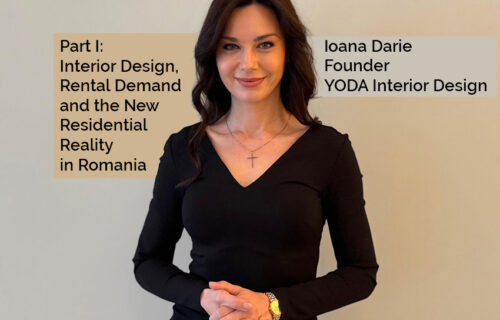
Romania’s residential market is entering a more cautious and price-sensitive cycle, but according to Ioana Darie, Founder of YODA Interior Design, demand for well-designed and functional homes remains resilient, particularly in the medium and premium segments.
In a CIJ EUROPE Q&A, Ioana discussed how inflation, slowing sales, changing rental strategies and shifting buyer expectations are reshaping residential interiors across Romania. She also explained why developers are increasingly focusing on turnkey rental-ready apartments, how social media has altered consumer expectations and why functionality is becoming one of the most important differentiators in modern housing.
Ioana believes the slowdown affecting Romania is part of a broader European correction rather than an isolated local issue. She pointed to declining sales across Italy and Poland, where some medium and premium product categories have reportedly seen declines of between 20 and 40 percent amid inflationary pressures and geopolitical uncertainty.
“We have a context of a generic crisis in Europe,” she said. “Romania is not outside of this situation.”
She also noted that wider economic uncertainty, including layoffs in sectors affected by automation and AI adoption, is creating additional pressure on consumer confidence. At the same time, however, higher-income buyers continue to spend selectively on quality residential environments.
“With our business, we are working with people on a certain level of income and expectation,” Ioana said. “They are cautious but not dramatically speaking.”
A growing share of YODA Interior Design’s work now comes from partnerships with developers and investors seeking to position completed apartments for the rental market rather than immediate resale. Ioana believes many developers will increasingly retain assets and focus on generating rental income during slower transaction periods.
“The developers will resist with their properties,” she said. “They will not stay with them empty. We have to furnish it and propose it for rent.”
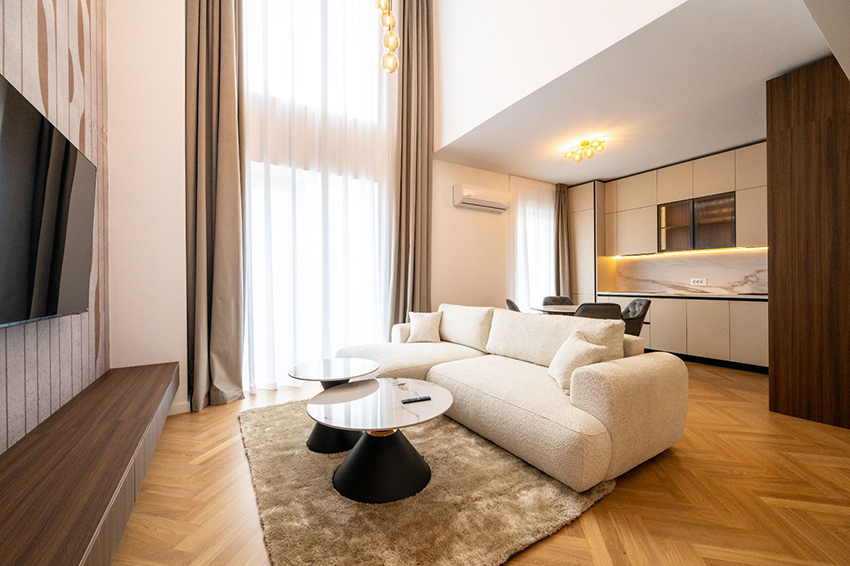
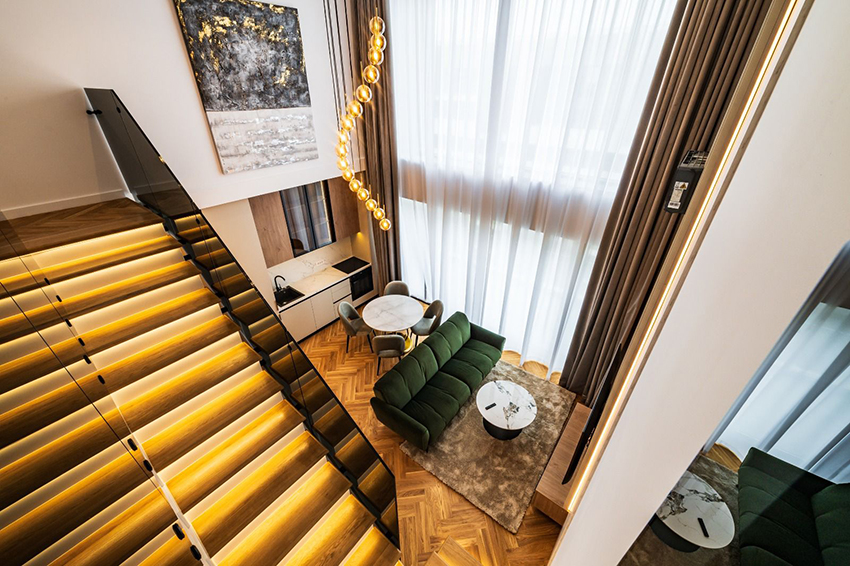
This trend has increased demand for turnkey furnishing solutions designed specifically around return-on-investment calculations. Ioana explained that YODA Interior Design generally recommends investors to allocate approximately 15 percent of the value of a property toward fit-out and furnishing in order to achieve competitive rents and maintain long-term durability.
The interior design company structures each apartment around a clearly defined tenant profile. A two-bedroom apartment may be designed for a young family or hybrid-working couple, while studios are tailored toward mobile professionals or younger tenants.
“We create an imaginary brief where the person will come and stay there for at least 2 years,” she explained.
According to Ioana, most investors today prioritise durable materials, neutral palettes and efficient layouts over highly personalised concepts. YODA Interior Design frequently advises landlords against overly expressive interiors that could narrow the potential tenant pool.
“If the client wants to rent the apartment, then our expertise is to present a neutral palette of colours, very heavy duty and very effective in time,” she said.
The company’s most common furnishing budget for a one-bedroom apartment currently stands at around €25,000 plus VAT, including appliances and custom-made furniture. Roughly half of that budget is typically allocated to bespoke storage and cabinetry systems.
“Nowadays the dimensions are very narrow, and you have to maximise the storage,” Ioana said. “Everything is custom made.”
She argued that many developers still underestimate the importance of functionality in residential layouts. Common issues include poorly positioned laundry connections, inadequate storage space, narrow circulation zones and inefficient entrances that create frustration for occupants after move-in.
“I think constructors should think more about how the person will feel living in this space,” she said.
Ioana pointed to practical details such as storage near entrances, accessible utility areas and unobstructed circulation routes as essential aspects of residential planning that are often neglected during development.
The discussion also explored how buyer expectations have evolved since the pandemic. According to Ioana, the sharp increase in residential prices between 2021 and 2023 fundamentally changed how buyers evaluate value and quality.
She noted that average apartment pricing in Bucharest rose significantly after the pandemic period, particularly in premium locations and projects benefiting from strong demand and migration flows linked to the war in Ukraine.
“Now the people who are buying apartments are interested in good quality furnishing because it will be much more expensive in five or seven years to change everything,” she said.
Social media has also dramatically changed how clients consume design inspiration. Ioana acknowledged that platforms such as Instagram and TikTok have created much more visually informed clients, but often at the expense of practicality.
“We all consume social media more than we need,” she said. “It’s an overload of visuals.”
According to Ioana, younger buyers frequently arrive with highly specific online references that may not suit the scale, functionality or long-term requirements of real apartments. The designer’s role, she argued, is not to dismiss these ideas but to guide clients toward more balanced and sustainable decisions.
“We are not here to manipulate the taste,” she said. “We are here to figure out what they really want.”
One example involved a successful young Romanian professional returning from London who initially requested an entirely pink apartment inspired by social media imagery. Through material studies, consultations and revised concepts, the final project evolved into a more balanced and timeless design.
“It was not about changing her personality,” Ioana said. “It was about helping her realise what would last in time.”
Ioana also believes staging services remain underused in Romania’s residential market. She encouraged developers and agents with difficult-to-sell apartments to reconsider presentation quality and furnishing strategies before focusing only on price reductions.
“If they have apartments that are not moving at all, ask for a staging service,” she said.
Ultimately, Ioana sees interior design becoming increasingly tied to asset performance, rental positioning and long-term property value rather than simply aesthetics.
“You buy an apartment, but the investment is not stopped,” she concluded. “You have to finish it, furnish it and give it a purpose in the end.”
© 2026 cij.world